

- gettectonic.com - Page 36
AI and Related Tools Boost Holiday Sales

AI and Related Tools Boost Holiday Sales

AI Drives Holiday Sales in 2024: A Record-Breaking Shopping Season with Rising Returns Artificial intelligence (AI) played a transformative role in shaping the 2024 holiday shopping season, with Salesforce reporting that AI-powered tools influenced $229 billion, or 19%, of global online sales. Based on data from 1.5 billion global shoppers and 1.6 trillion page views, AI tools such as product recommendations, targeted promotions, and customer service significantly boosted sales, marking a 6% year-over-year increase in engagement. Generative AI features, including conversational agents, saw a 25% surge in usage during the holiday period compared to earlier months, further highlighting their role in shaping consumer behavior. Mobile commerce amplified AI’s influence, with nearly 70% of global online sales being placed via smartphones. On Christmas Day alone, mobile orders accounted for 79% of transactions, showcasing the shift toward mobile-first shopping. “Retailers who have embraced AI and conversational agents are already reaping the benefits, but these tools will become even more critical in the new year as retailers aim to minimize revenue losses from returns and reengage with shoppers,” said Caila Schwartz, Salesforce’s Director of Consumer Insights. Record-Breaking Sales and Rising Returns Online sales hit .2 trillion globally and 2 billion in the U.S. during the holiday season, but returns surged to $122 billion globally—a 28% increase compared to 2023. Salesforce attributed this spike to evolving shopping habits like bracketing (buying multiple sizes to ensure fit) and try-on hauls (bulk purchasing for social media content), which have become increasingly common. The surge in returns presents a challenge to retailers, potentially eroding profit margins. To address this, many are turning to AI-powered solutions for streamlining returns processes. According to Salesforce, 75% of U.S. shoppers expressed interest in using AI agents for returns, with one-third showing strong enthusiasm for such tools. The Role of AI in Enhancing the Holiday Shopping Experience AI-powered chatbots saw a 42% year-over-year increase in usage during the holiday season, supporting customers with purchases, returns, and product inquiries. These conversational agents, combined with AI-driven loyalty programs and targeted promotions, were instrumental in engaging customers and increasing conversion rates. AI’s influence extended to social commerce, with platforms like TikTok Shop and Instagram driving 20% of global holiday sales. Personalized recommendations and advertisements, powered by AI algorithms, significantly boosted social media referral traffic, which grew by 8% year-over-year. Mobile Commerce and AI Synergy Mobile devices were the dominant force in holiday shopping, generating 2 billion in global online sales and 5 billion in the U.S. Orders placed via smartphones peaked on Christmas Day, with mobile accounting for 79% of all transactions. This mobile-first trend highlights the growing importance of integrating AI into mobile commerce to enhance the shopping experience. AI Integration Expands Across Retail Operations In the UK, retailers are increasingly leveraging AI to optimize operations and improve personalization. A study by IMRG and Scurri revealed that 57% of UK online retailers used generative AI for content creation in 2024, while 31% implemented AI-informed product search tools. By 2025, 75% of UK retailers plan to adopt AI for marketing efforts, and 42% aim to use AI-powered product information management systems to streamline processes. Tesco, for example, uses AI to analyze Clubcard data, enabling tailored product recommendations, healthier purchasing choices, and waste reduction. Meanwhile, Must Have Ideas, a homeware retailer, has launched an AI-driven TV shopping channel powered by proprietary software, Spark, which automates programming schedules based on real-time stock levels and market trends. Looking Ahead The 2024 holiday season underscored the transformative potential of AI in retail. While AI-powered tools drove record sales and engagement, the rise in returns presents a challenge that retailers must address to protect their bottom line. As AI continues to evolve, its role in shaping consumer behavior, streamlining operations, and enhancing customer experiences will become even more integral in the retail landscape. Like Related Posts Who is Salesforce? Who is Salesforce? Here is their story in their own words. From our inception, we’ve proudly embraced the identity of Read more Salesforce Marketing Cloud Transactional Emails Salesforce Marketing Cloud Transactional Emails are immediate, automated, non-promotional messages crucial to business operations and customer satisfaction, such as order Read more Salesforce Unites Einstein Analytics with Financial CRM Salesforce has unveiled a comprehensive analytics solution tailored for wealth managers, home office professionals, and retail bankers, merging its Financial Read more AI-Driven Propensity Scores AI plays a crucial role in propensity score estimation as it can discern underlying patterns between treatments and confounding variables Read more

Read More
Rethinking Technology in Local Government

Rethinking Technology in Local Government

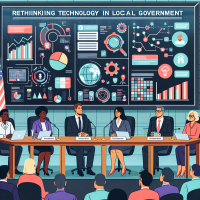
Rethinking Technology in Local Government: A Call to Action By Richard Young, Head of Local Government, Salesforce The latest survey from Salesforce and LGC underscores an urgent need for a technology transformation in local government. Legacy systems and fragmented infrastructure remain significant roadblocks to digital progress, with nearly half of respondents identifying them as barriers to adoption. Outdated, disconnected systems limit efficiency, frustrate staff and residents, and prevent seamless data sharing—ultimately hindering councils from delivering modern, responsive services. Breaking Down Silos: A Unified Approach To move beyond fragmented solutions, councils must embrace a connected digital ecosystem that integrates systems, data, and stakeholders. Salesforce enables this shift through: ✅ MuleSoft – Seamlessly integrates legacy and modern systems, allowing for real-time data sharing and eliminating silos.✅ Salesforce Customer 360 – Provides a single, unified view of residents, enabling personalized, consistent service delivery across all touchpoints. By adopting a resident-first approach, councils can streamline operations, enhance engagement, and deliver services more effectively. Overcoming Barriers to Digital Transformation While the benefits of modern technology are clear, our survey reveals significant challenges to implementation, including: Salesforce supports councils through these challenges by providing: 🎓 Comprehensive training programs – Equipping staff with the skills to confidently adopt new technology.🤝 Shared service models – Encouraging collaboration across councils to pool resources and scale best practices.🚀 The Government Innovators Network – A knowledge-sharing platform connecting public sector leaders and private technology partners to drive innovation. By focusing on incremental modernization and ROI-driven deployments, councils can maximize value while staying within budget constraints. Empowering Councils for the Future To truly future-proof local government, technology must be: ✔ User-friendly – Intuitive systems reduce friction, enabling both staff and residents to self-service with ease.✔ Scalable and secure – Protecting against cyber threats and evolving challenges.✔ Designed for impact – Fostering collaboration between public and private sectors to drive long-term innovation. Salesforce has already made a measurable impact: 🏛 A UK council integrated over 30 legacy systems, reducing administrative overhead by 40% and increasing resident satisfaction by 25%.🇦🇺 An Australian local authority centralized resident engagement, cutting service request response times by 50%. Across the globe, we are transforming council operations, governance, and resident experiences. A Connected Future Starts Now Now is the time for councils to rethink their approach to technology. By embracing scalable, integrated solutions, they can deliver better services, empower staff, and put residents at the heart of every decision. Together, we can reimagine local government—creating a more connected, efficient, and empowered future. Richard Young, Head of Local Government, Salesforce Like Related Posts Who is Salesforce? Who is Salesforce? Here is their story in their own words. From our inception, we’ve proudly embraced the identity of Read more Salesforce Marketing Cloud Transactional Emails Salesforce Marketing Cloud Transactional Emails are immediate, automated, non-promotional messages crucial to business operations and customer satisfaction, such as order Read more Salesforce Unites Einstein Analytics with Financial CRM Salesforce has unveiled a comprehensive analytics solution tailored for wealth managers, home office professionals, and retail bankers, merging its Financial Read more AI-Driven Propensity Scores AI plays a crucial role in propensity score estimation as it can discern underlying patterns between treatments and confounding variables Read more

Read More

Reward-Guided Speculative Decoding

Salesforce AI Research Unveils Reward-Guided Speculative Decoding (RSD): A Breakthrough in Large Language Model (LLM) Inference Efficiency Addressing the Computational Challenges of LLMs The rapid scaling of large language models (LLMs) has led to remarkable advancements in natural language understanding and reasoning. However, inference—the process of generating responses one token at a time—remains a major computational bottleneck. As LLMs grow in size and complexity, latency and energy consumption increase, posing challenges for real-world applications that demand cost efficiency, speed, and scalability. Traditional decoding methods, such as greedy and beam search, require repeated evaluations of large models, leading to significant computational overhead. Even parallel decoding techniques struggle to balance efficiency with output quality. These challenges have driven research into hybrid approaches that combine lightweight models with more powerful ones, optimizing speed without sacrificing performance. Introducing Reward-Guided Speculative Decoding (RSD) Salesforce AI Research introduces Reward-Guided Speculative Decoding (RSD), a novel framework designed to enhance LLM inference efficiency. RSD employs a dual-model strategy: Unlike traditional speculative decoding, which enforces strict token matching between draft and target models, RSD introduces a controlled bias that prioritizes high-reward outputs—tokens deemed more accurate or contextually relevant. This strategic bias significantly reduces unnecessary computations. RSD’s mathematically derived threshold mechanism dictates when the target model should intervene. By dynamically blending outputs from both models based on a reward function, RSD accelerates inference while maintaining or even enhancing response quality. This innovation addresses the inefficiencies inherent in sequential token generation for LLMs. Technical Insights and Benefits of RSD RSD integrates two models in a sequential, cooperative manner: This mechanism is guided by a binary step weighting function, ensuring that only high-quality tokens bypass the target model, significantly reducing computational demands. Key Benefits: The theoretical foundation of RSD, including the probabilistic mixture distribution and adaptive acceptance criteria, provides a robust framework for real-world deployment across diverse reasoning tasks. Empirical Results: Superior Performance Across Benchmarks Experiments on challenging datasets—such as GSM8K, MATH500, OlympiadBench, and GPQA—demonstrate RSD’s effectiveness. Notably, on the MATH500 benchmark, RSD achieved 88.0% accuracy using a 72B target model and a 7B PRM, outperforming the target model’s standalone accuracy of 85.6% while reducing FLOPs by nearly 4.4×. These results highlight RSD’s potential to surpass traditional methods, including speculative decoding (SD), beam search, and Best-of-N strategies, in both speed and accuracy. A Paradigm Shift in LLM Inference Reward-Guided Speculative Decoding (RSD) represents a significant advancement in LLM inference. By intelligently combining a draft model with a powerful target model and incorporating a reward-based acceptance criterion, RSD effectively mitigates computational costs without compromising quality. This biased acceleration approach strategically bypasses expensive computations for high-reward outputs, ensuring an efficient and scalable inference process. With empirical results showcasing up to 4.4× faster performance and superior accuracy, RSD sets a new benchmark for hybrid decoding frameworks, paving the way for broader adoption in real-time AI applications. Like1 Related Posts Who is Salesforce? Who is Salesforce? Here is their story in their own words. From our inception, we’ve proudly embraced the identity of Read more Salesforce Marketing Cloud Transactional Emails Salesforce Marketing Cloud Transactional Emails are immediate, automated, non-promotional messages crucial to business operations and customer satisfaction, such as order Read more Salesforce Unites Einstein Analytics with Financial CRM Salesforce has unveiled a comprehensive analytics solution tailored for wealth managers, home office professionals, and retail bankers, merging its Financial Read more AI-Driven Propensity Scores AI plays a crucial role in propensity score estimation as it can discern underlying patterns between treatments and confounding variables Read more

Read More
understand ai chatbots

Understand AI Chatbots

AI chatbots are software programs that use artificial intelligence (AI) and natural language processing (NLP) to simulate human-like conversations with users. They can understand and respond to text or voice input, helping with various tasks like customer service, sales, and information retrieval.  How they work: What they can do: Benefits of using AI chatbots: Like Related Posts Who is Salesforce? Who is Salesforce? Here is their story in their own words. From our inception, we’ve proudly embraced the identity of Read more Salesforce Marketing Cloud Transactional Emails Salesforce Marketing Cloud Transactional Emails are immediate, automated, non-promotional messages crucial to business operations and customer satisfaction, such as order Read more Salesforce Unites Einstein Analytics with Financial CRM Salesforce has unveiled a comprehensive analytics solution tailored for wealth managers, home office professionals, and retail bankers, merging its Financial Read more AI-Driven Propensity Scores AI plays a crucial role in propensity score estimation as it can discern underlying patterns between treatments and confounding variables Read more
Read More
Tectonic Salesforce Integrations

Guide to Reinventing Your Business for the Digital Age

Digital Transformation: The Complete Guide to Reinventing Your Business for the Digital Age What Is Digital Transformation? Digital transformation is the strategic adoption of digital technologies to fundamentally reshape business processes, culture, and customer experiences. It’s not just about upgrading IT systems—it’s a holistic reinvention of how a company operates, competes, and delivers value in an increasingly digital world. “Every digital transformation begins and ends with the customer.”— Marc Benioff, Chairman & Co-CEO, Salesforce Digitization vs. Digitalization vs. Digital Transformation Concept Definition Example Digitization Converting analog data to digital Scanning paper invoices into PDFs Digitalization Using digital tools to improve existing processes CRM systems replacing Rolodexes Digital Transformation Reimagining business models with digital-first strategies Netflix shifting from DVDs to streaming Why Digital Transformation Matters 1. Customer Expectations Are Evolving 2. Employees Demand Modern Tools 3. Industry Disruption Is Accelerating Key Drivers of Digital Transformation Real-World Examples of Digital Transformation 1. Banking: From Branches to Apps 2. Retail: Personalization at Scale 3. Insurance: Proactive Risk Management How to Start Your Digital Transformation Step 1: Assess Your Current State Step 2: Build a Cross-Functional Strategy Step 3: Choose the Right Technology Step 4: Foster a Digital-First Culture Avoiding Common Pitfalls 🚫 Mistake: Buying disconnected point solutions✅ Fix: Invest in an integrated platform 🚫 Mistake: Treating it as an “IT project”✅ Fix: Make it a company-wide initiative 🚫 Mistake: Ignoring change management✅ Fix: Get employee buy-in early The Future of Digital Transformation Ready to Transform? Start small, think big, and put your customers at the center. The businesses that thrive in the next decade will be those that embrace continuous digital evolution. Need help? Contact us. Like Related Posts Who is Salesforce? Who is Salesforce? Here is their story in their own words. From our inception, we’ve proudly embraced the identity of Read more Salesforce Marketing Cloud Transactional Emails Salesforce Marketing Cloud Transactional Emails are immediate, automated, non-promotional messages crucial to business operations and customer satisfaction, such as order Read more Salesforce Unites Einstein Analytics with Financial CRM Salesforce has unveiled a comprehensive analytics solution tailored for wealth managers, home office professionals, and retail bankers, merging its Financial Read more AI-Driven Propensity Scores AI plays a crucial role in propensity score estimation as it can discern underlying patterns between treatments and confounding variables Read more

Read More
Salesforce’s AI Energy Score

Salesforce’s AI Energy Score

Salesforce’s AI Energy Score: Setting a New Standard for AI Sustainability Understanding AI’s Environmental Impact As AI adoption accelerates globally, concerns about its environmental footprint have grown. Due to AI’s reliance on power-intensive data centers, the technology consumes vast amounts of energy and water, raising sustainability challenges. To address this, Salesforce, in collaboration with Hugging Face, Cohere, and Carnegie Mellon University, has introduced the AI Energy Score—a pioneering tool designed to measure and compare AI models’ energy efficiency. The AI Energy Score Launch The AI Energy Score will debut at the AI Action Summit on February 10, 2025, where leaders from over 100 countries, along with private sector and civil society representatives, will convene to discuss AI’s role in sustainability. Recognized by the French Government and the Paris Peace Forum, this initiative marks a significant step toward transparent and accountable AI development. “We are at a critical moment where the rapid acceleration of both the climate crisis and AI innovation intersect,” says Boris Gamazaychikov, Head of AI Sustainability at Salesforce.“AI’s environmental impact has remained largely opaque, with little transparency around its energy consumption. The AI Energy Score provides a standardized framework to disclose and compare these impacts, removing a key blocker to making sustainable AI the norm.” What Is the AI Energy Score? Developed in partnership with Hugging Face, Cohere, and Carnegie Mellon University, the AI Energy Score aims to establish clear and standardized energy consumption metrics for AI models. “The AI Energy Score is a major milestone for sustainable AI,” says Dr. Sasha Luccioni, AI & Climate Lead at Hugging Face. “By creating a transparent rating system, we address a key blocker for reducing AI’s environmental impact. We’re excited to launch this initiative and drive industry-wide adoption.” Key features of the AI Energy Score include: ✅ Standardized energy ratings – A framework for evaluating AI models’ energy efficiency✅ Public leaderboard – A ranking of 200+ AI models across 10 common tasks (e.g., text and image generation)✅ Benchmarking portal – A platform for submitting and assessing AI models, both open and proprietary✅ Recognizable energy use label – A 1–5 star system for easy identification of energy-efficient models✅ Label generator – A tool for AI developers to create and share standardized energy labels The Impact of the AI Energy Score The introduction of this score is expected to have far-reaching implications for the AI industry: 🔹 Driving market preference – Transparency will push demand for more energy-efficient AI models🔹 Incentivizing sustainable development – Public disclosure will encourage AI developers to prioritize efficiency🔹 Empowering informed decisions – AI users and businesses can make better choices based on energy efficiency data Salesforce’s Commitment to Sustainable AI Salesforce is leading by example, becoming the first AI model developer to disclose energy efficiency data for its proprietary models under this framework. This aligns with the company’s broader sustainability goals and ethical AI approach. Agentforce: AI Efficiency at Scale Salesforce’s Agentforce platform, introduced in 2024, is designed to deploy autonomous AI agents across business functions while maintaining energy efficiency. “Agentforce is built with sustainability at its core, delivering high performance while minimizing environmental impact,” explains Boris Gamazaychikov.“Unlike DIY AI approaches that require energy-intensive model training for each customer, Agentforce is optimized out of the box, reducing costly and carbon-heavy training.” Organizations are already leveraging Agentforce for impact-driven efficiencies: ✅ Good360 uses Agentforce to allocate donated goods more efficiently, cutting waste and emissions while saving 1,000+ employee hours annually✅ Businesses can reduce operational costs by optimizing AI model energy consumption “Reducing AI energy use isn’t just good for the environment—it lowers costs, optimizes infrastructure, and improves long-term profitability,” says Suzanne DiBianca, EVP & Chief Impact Officer at Salesforce.“We’re proud to work with industry leaders to build a more transparent AI ecosystem.” Addressing the AI Energy Challenge With AI-driven data center power usage projected to double by 2026, the AI Energy Score is a timely solution to help organizations manage and reduce their AI-related environmental impact. “The AI Energy Score isn’t just an energy-use metric—it’s a strategic business advantage,” adds Boris Gamazaychikov. “By helping organizations assess and optimize AI model energy consumption, it supports lower costs, better infrastructure efficiency, and long-term profitability.” As AI continues to evolve, sustainability must be part of the equation. The AI Energy Score is a major step in ensuring that the AI industry moves toward a more responsible, energy-efficient future.: Setting a New Standard for AI Sustainability Understanding AI’s Environmental Impact As AI adoption accelerates globally, concerns about its environmental footprint have grown. Due to AI’s reliance on power-intensive data centers, the technology consumes vast amounts of energy and water, raising sustainability challenges. To address this, Salesforce, in collaboration with Hugging Face, Cohere, and Carnegie Mellon University, has introduced the AI Energy Score—a pioneering tool designed to measure and compare AI models’ energy efficiency. The AI Energy Score Launch The AI Energy Score will debut at the AI Action Summit on February 10, 2025, where leaders from over 100 countries, along with private sector and civil society representatives, will convene to discuss AI’s role in sustainability. Recognized by the French Government and the Paris Peace Forum, this initiative marks a significant step toward transparent and accountable AI development. “We are at a critical moment where the rapid acceleration of both the climate crisis and AI innovation intersect,” says Boris Gamazaychikov, Head of AI Sustainability at Salesforce.“AI’s environmental impact has remained largely opaque, with little transparency around its energy consumption. The AI Energy Score provides a standardized framework to disclose and compare these impacts, removing a key blocker to making sustainable AI the norm.” What Is the AI Energy Score? Developed in partnership with Hugging Face, Cohere, and Carnegie Mellon University, the AI Energy Score aims to establish clear and standardized energy consumption metrics for AI models. “The AI Energy Score is a major milestone for sustainable AI,” says Dr. Sasha Luccioni, AI & Climate Lead at Hugging Face. “By creating a transparent rating system, we address a key blocker for reducing AI’s

Read More
Salesforce Sales Cloud Einstein

Salesforce Sales Cloud Einstein

Transforming Sales with Salesforce Sales Cloud Einstein In today’s data-driven business world, artificial intelligence (AI) is revolutionizing sales and customer relationship strategies. As the leading customer relationship management (CRM) platform, Salesforce introduces Sales Cloud Einstein, an AI-powered solution embedded within its Sales Cloud platform. This tool empowers businesses to streamline workflows, predict sales outcomes, and optimize customer engagement. This comprehensive insight explores the features, benefits, and costs of Sales Cloud Einstein, helping you determine how it can elevate your company’s sales performance. Key Features of Salesforce Sales Cloud Einstein Sales Cloud Einstein is packed with powerful AI-driven features, enabling sales teams to work smarter and close deals faster. Here are the key features: 1. Einstein Lead Scoring Automatically scores leads based on their likelihood to convert, using historical CRM data and patterns detected by AI. Key Metrics Impact Engagement history Prioritizes leads with recent activity Lead source Scores leads based on successful origins Demographics Highlights high-performing attributes like industry 2. Einstein Opportunity Scoring Assigns scores to opportunities in the pipeline, predicting their likelihood to close. Factor Impact on Scoring Stage progression Higher scores for quickly advancing deals Deal size Larger deals with strong progression rank higher Customer engagement Consistent interactions improve scores 3. Einstein Forecasting Delivers accurate sales forecasts by analyzing historical data, pipeline trends, and anomalies. Metric Value Added Pipeline health Predicts future revenue Win rate analysis Estimates likelihood of success Historical trends Enhances accuracy over time 4. Einstein Activity Capture Automatically logs customer interactions—emails, meetings, and calls—into Salesforce, reducing manual data entry. 5. Einstein Insights Provides actionable recommendations for the next best actions to close deals, using engagement history and deal data. 6. Einstein Email Insights Highlights key action items from emails using natural language processing (NLP). 7. Einstein Automated Contacts Detects and adds new contacts to Salesforce from emails and interactions, keeping records up to date. Benefits of Salesforce Sales Cloud Einstein Sales Cloud Einstein delivers a wide range of benefits: Costs of Salesforce Sales Cloud Einstein Sales Cloud Einstein is available as an add-on for Sales Cloud Enterprise or included in the Unlimited edition. Edition Cost (per user/month) Einstein Features Sales Cloud Enterprise $150 – $175 Lead Scoring, Opportunity Scoring, Activity Capture Sales Cloud Unlimited $300+ Full Einstein capabilities Add-On Pricing for Enterprise Edition: Feature Estimated Cost (per user/month) Einstein Forecasting $50 – $100 Einstein Activity Capture Available as an add-on Custom solutions (e.g., Einstein Discovery) may involve additional costs depending on the project scope and licensing requirements. Is Sales Cloud Einstein Right for Your Business? Sales Cloud Einstein is ideal if you: Final Thoughts Salesforce Sales Cloud Einstein is a game-changing tool that leverages AI to transform sales processes. With its powerful features and benefits, Einstein empowers businesses to boost productivity, enhance customer engagement, and drive revenue growth. Ready to integrate Einstein into your operations? Contact us for a personalized consultation and see how AI can elevate your sales performance. Like Related Posts Who is Salesforce? Who is Salesforce? Here is their story in their own words. From our inception, we’ve proudly embraced the identity of Read more Salesforce Marketing Cloud Transactional Emails Salesforce Marketing Cloud Transactional Emails are immediate, automated, non-promotional messages crucial to business operations and customer satisfaction, such as order Read more Salesforce Unites Einstein Analytics with Financial CRM Salesforce has unveiled a comprehensive analytics solution tailored for wealth managers, home office professionals, and retail bankers, merging its Financial Read more AI-Driven Propensity Scores AI plays a crucial role in propensity score estimation as it can discern underlying patterns between treatments and confounding variables Read more

Read More
ai

Generative AI Integration

What it is: How it works: Benefits: Example Use Cases: Like Related Posts Who is Salesforce? Who is Salesforce? Here is their story in their own words. From our inception, we’ve proudly embraced the identity of Read more Salesforce Marketing Cloud Transactional Emails Salesforce Marketing Cloud Transactional Emails are immediate, automated, non-promotional messages crucial to business operations and customer satisfaction, such as order Read more Salesforce Unites Einstein Analytics with Financial CRM Salesforce has unveiled a comprehensive analytics solution tailored for wealth managers, home office professionals, and retail bankers, merging its Financial Read more AI-Driven Propensity Scores AI plays a crucial role in propensity score estimation as it can discern underlying patterns between treatments and confounding variables Read more
Read More
Rule-Based vs. Machine Learning Deduplication Approaches

Rule-Based vs. Machine Learning Deduplication Approaches

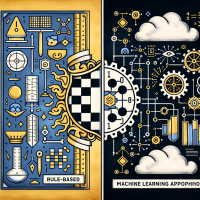
Choosing the Right Tool for Salesforce Deduplication: Rule-Based vs. Machine Learning Approaches When you browse Salesforce AppExchange for a deduplication solution, you’re presented with two primary options: rule-based deduplication tools or machine learning-powered applications. Both have their strengths, but understanding their methods will help you make an informed decision. Below, we’ll explore these approaches and their pros and cons to guide your choice. Why Salesforce’s Built-in Deduplication Falls Short Salesforce, while a powerful CRM, doesn’t excel at large-scale deduplication. Its native tools are limited to basic, rule-based matching, which may struggle with complexities like typos, inconsistent formatting, or unstructured data. Additionally, Salesforce’s deduplication features lack the scalability required for organizations dealing with large datasets or multiple data sources (e.g., third-party integrations, legacy systems). Businesses often need supplemental tools to address overlapping records or inconsistencies effectively. How Rule-Based Deduplication Works Popular rule-based tools on AppExchange, such as Cloudingo, DemandTools, DataGroomr, and Duplicate Check, require users to create filters that define what constitutes a duplicate. For example: Ultimately, the user manually defines the rules, deciding how duplicates are identified and handled. Benefits of Rule-Based Deduplication Drawbacks of Rule-Based Deduplication How Machine Learning-Based Deduplication Works Machine learning (ML)-powered tools rely on algorithms to identify patterns and relationships in data, detecting duplicates that may not be apparent through rigid rules. Key Features of ML Deduplication Techniques Used Benefits of ML-Based Deduplication Drawbacks of ML-Based Deduplication When to Choose Rule-Based vs. Machine Learning Deduplication Choose Rule-Based Deduplication If: Choose Machine Learning-Based Deduplication If: Selecting the Right Deduplication Tool When evaluating tools on AppExchange, consider these factors: Tectonic’s Closing Thoughts Rule-based and machine learning-based deduplication each serve distinct purposes. The right choice depends on your data’s complexity, the resources available, and your organization’s goals. Whether you’re seeking a quick, transparent solution or a powerful, scalable tool, AppExchange offers options to meet your needs and help maintain a clean Salesforce data environment. Like Related Posts Who is Salesforce? Who is Salesforce? Here is their story in their own words. From our inception, we’ve proudly embraced the identity of Read more Salesforce Marketing Cloud Transactional Emails Salesforce Marketing Cloud Transactional Emails are immediate, automated, non-promotional messages crucial to business operations and customer satisfaction, such as order Read more Salesforce Unites Einstein Analytics with Financial CRM Salesforce has unveiled a comprehensive analytics solution tailored for wealth managers, home office professionals, and retail bankers, merging its Financial Read more AI-Driven Propensity Scores AI plays a crucial role in propensity score estimation as it can discern underlying patterns between treatments and confounding variables Read more

Read More

Decision Domain Management

Roger’s first week in the office felt like a wilder than 8 second ride on a raging rodeo bull. Armed with top-notch academic achievements, he hoped to breeze through operational routines and impress his new managers. What he didn’t expect was to land in a whirlwind of half-documented processes, half-baked ideas, and near-constant firefighting. While the organization had detailed SOPs for simple, routine tasks—approving invoices, updating customer records, and shipping standard orders—Roger quickly realized that behind the structured facade, there was a deeper level of uncertainty. Every day, he heard colleagues discuss “strategic pivots” or “risky product bets.” There were whispers about AI-based initiatives that promised to automate entire workflows. Yet, when the conversation shifted to major decisions—like selecting the right AI use cases—leaders often seemed to rely more on intuition than any structured methodology. One afternoon, Roger was invited to a cross-functional meeting about the company’s AI roadmap. Expecting an opportunity to showcase his knowledge, he instead found himself in a room filled with brilliant minds pulling in different directions. Some argued that AI should focus on automating repetitive tasks aligned with existing SOPs. Others insisted that AI’s real value lay in predictive modeling—helping forecast new market opportunities. The debate went in circles, with no consensus on where or how to allocate AI resources. After an hour of heated discussion, the group dispersed, each manager still convinced of the merit of their own perspective but no closer to a resolution. That evening, as Roger stood near the coffee machine, he muttered to himself, “We have SOPs for simple tasks, but nothing for big decisions. How do we even begin selecting which AI models or agents to develop first?” His frustration led him to a conversation with a coworker who had been with the company for years. “We’re missing something fundamental here,” Roger said. “We’re rushing to onboard AI agents that can mimic our SOPs—like some large language model trained to follow rote instructions—but that’s not where the real value lies. We don’t even have a framework for weighing one AI initiative against another. Everything feels like guesswork.” His coworker shrugged. “That’s just how it’s always been. The big decisions happen behind closed doors, mostly based on experience and intuition. If you’re waiting for a blueprint, you might be waiting a long time.” That was Roger’s ;ight bulb moment. Despite all his academic training, he realized the organization lacked a structured approach to high-level decision-making. Sure, they had polished SOPs for operational tasks, but when it came to determining which AI initiatives to prioritize, there were no formal criteria, classifications, or scoring mechanisms in place. Frustrated but determined, Roger decided he needed answers. Two days later, he approached a coworker known for their deep understanding of business strategy and technology. After a quick greeting, he outlined his concerns—the disorganized AI roadmap meeting, the disconnect between SOP-driven automation and strategic AI modeling, and his growing suspicion that even senior leaders were making decisions without a clear framework. His coworker listened, then gestured for him to take a seat. “Take a breath,” they said. “You’re not the first to notice this gap. Let me explain what’s really missing.” Why SOPs Aren’t Enough The coworker acknowledged that the organization was strong in SOPs. “We’re great at detailing exactly how to handle repetitive, rules-based tasks—like verifying invoices or updating inventory. In those areas, we can plug in AI agents pretty easily. They follow a well-defined script and execute tasks efficiently. But that’s just the tip of the iceberg.” They leaned forward and continued, “Where we struggle, as you’ve discovered, is in decision-making at deeper levels—strategic decisions like which new product lines to pursue, or tactical decisions like selecting the right vendor partnerships. There’s no documented methodology for these. It’s all in people’s heads.” Roger tilted his head, intrigued. “So how do we fix something as basic but great impact as that?” “That’s where Decision Domain Management comes in,” he explained. In the context of data governance and management, data domains are the high-level blocks that data professionals use to define master data. Simply put, data domains help data teams logically group data that is of interest to their business or stakeholders. “Think of it as the equivalent of SOPs—but for decision-making. Instead of prescribing exact steps for routine tasks, it helps classify decisions, assess their importance, and determine whether AI can support them—and if so, in what capacity.” They broke it down further. The Decision Types “First, we categorize decisions into three broad types: Once we correctly classify a decision, we get a clearer picture of how critical it is and whether it requires an AI agent (good at routine tasks) or an AI model (good at predictive and analytical tasks).” The Cynefin Framework The coworker then introduced the Cynefin Framework, explaining how it helps categorize decision contexts: By combining Decision Types with the Cynefin Framework, organizations can determine exactly where AI projects will be most beneficial. Putting It into Practice Seeing the spark of understanding in Roger’s eyes, the coworker provided some real-world examples: ✅ AI agents are ideal for simple SOP-based tasks like invoice validation or shipping notifications. ✅ AI models can support complicated decisions, like vendor negotiations, by analyzing performance metrics. ✅ Strategic AI modeling can help navigate complex decisions, such as predicting new market trends, but human judgment is still required. “Once we classify decisions,” the coworker continued, “we can score and prioritize AI investments based on impact and feasibility. Instead of throwing AI at random problems, we make informed choices.” The Lightbulb Moment Roger exhaled, visibly relieved. “So the problem isn’t just that we lack a single best AI approach—it’s that we don’t have a shared structure for decision-making in the first place,” he said. “If we build that structure, we’ll know which AI investments matter most, and we won’t keep debating in circles.” The coworker nodded. “Exactly. Decision Domain Management is the missing blueprint. We can’t expect AI to handle what even humans haven’t clearly defined. By categorizing

Read More
unpatched ai

Unpatched.ai

The Mystery of Unpatched.ai: AI-Powered Vulnerability Discovery Raises Questions During January’s Patch Tuesday, Microsoft credited Unpatched.ai for reporting multiple high-severity vulnerabilities. Yet, despite its contributions, the AI-driven bug-finding tool remains an enigma to the cybersecurity community. Last month, Microsoft addressed 159 new vulnerabilities across its widely used products. Among them, Unpatched.ai was acknowledged for identifying three remote code execution flaws—CVE-2025-21186, CVE-2025-21366, and CVE-2025-21395—all of which affect Microsoft Access and received a CVSS score of 7.8. While Microsoft’s recognition highlights Unpatched.ai’s role in vulnerability discovery, little is known about the tool itself. Informa TechTarget reached out to multiple security vendors and experts for insights, but responses only deepened the mystery. A Cryptic Online Presence Unpatched.ai describes itself as “vulnerability discovery by an AI-guided cybersecurity platform” on its website. It provides a list of reported vulnerabilities, which consists solely of Microsoft-related flaws—primarily within Microsoft Access. The platform states that it collaborates with “select enterprise, government, and security vendors based in the U.S. and ally countries.” The company’s “About” page sheds some light on its mission, attributing its research to the need for greater transparency around unpatched software flaws: “We find unpatched issues in software to help customers better identify and manage cyber risk. Many issues are unknown or silently fixed by software vendors, hiding the true risk profile of their products. With the help of AI, we are developing an automated platform to help find and analyze these issues for our customers.” Beyond the website, Unpatched.ai maintains an X account, though much of its activity has been erased. A now-deleted post from January 29 warned that Microsoft’s patch for CVE-2025-21396 was insufficient. When contacted about the post, a Microsoft spokesperson responded, “We are aware of these reports and will take action as needed to help protect customers.” However, Microsoft did not provide additional background on Unpatched.ai. Attempts to reach Unpatched.ai directly have gone unanswered. Piecing Together the Puzzle Efforts to uncover more about Unpatched.ai yielded few concrete details. The domain was registered through Namecheap in September, with ownership masked by a privacy service based in Reykjavik, Iceland. Adam Barnett, lead software engineer at Rapid7, noted that beyond Unpatched.ai’s website, information is scarce. However, he identified a Reddit user, “Fit_Tie_9430,” who has claimed affiliation with the platform. This user shared details about Unpatched.ai’s vulnerability discoveries and linked to now-private YouTube videos demonstrating exploits against Microsoft Access vulnerabilities. Barnett pointed out that Unpatched.ai was also credited for a December Patch Tuesday flaw, CVE-2024-49142. Initially published without attribution, Microsoft later updated the advisory to acknowledge Unpatched.ai’s discovery. Interestingly, the Unpatched.ai website’s favicon—a simple “:)” emoticon—appears to reference the Windows Blue Screen of Death’s “:(” symbol. “It’s a nice touch,” Barnett said, “but I still don’t know who’s behind it. It could be just about anyone with the time, resources, and skills.” Other industry experts share the same uncertainty. Satnam Narang, senior staff research engineer at Tenable, observed that Unpatched.ai’s X account follows only a handful of infosec professionals. “It’s unclear if the service is still in a closed-door phase and will eventually provide more insights about its leadership and team, or who may be backing it,” he said. Alon Yamin, co-founder and CEO of Copyleaks, noted that an AI-driven vulnerability discovery platform was inevitable given the surge in software flaws. While AI can be a game-changer for proactive threat detection, he cautioned against potential misuse. “It’s crucial that Unpatched.ai is deployed carefully, responsibly, and ethically, with safeguards to prevent attackers from exploiting the vulnerabilities it identifies,” Yamin said. The Future of AI-Powered Bug Hunting AI-driven vulnerability discovery is an emerging focus in cybersecurity, though few major breakthroughs have been publicly confirmed. In November, Google announced it had discovered a zero-day vulnerability using AI. Google Project Zero and DeepMind’s AI-powered agent, Big Sleep, identified a buffer stack underflow flaw in the SQLite open-source database engine. With Unpatched.ai making waves yet remaining elusive, the cybersecurity community is left with more questions than answers. Is this the beginning of a new era in AI-powered vulnerability research, or is Unpatched.ai an outlier? Until more information surfaces, the mystery remains. Like Related Posts Who is Salesforce? Who is Salesforce? Here is their story in their own words. From our inception, we’ve proudly embraced the identity of Read more Salesforce Unites Einstein Analytics with Financial CRM Salesforce has unveiled a comprehensive analytics solution tailored for wealth managers, home office professionals, and retail bankers, merging its Financial Read more AI-Driven Propensity Scores AI plays a crucial role in propensity score estimation as it can discern underlying patterns between treatments and confounding variables Read more Tectonic’s Successful Salesforce Track Record Salesforce Technology Services Integrator – Tectonic has successfully delivered Salesforce in a variety of industries including Public Sector, Hospitality, Manufacturing, Read more

Read More
deepseek deep dive

Deep Dive into DeepSeek

DeepSeek: The AI Lab Turned Controversial Global Player You know we have to write about anything AI related that is making waves. And DeepSeek is definitely doing that. On April 14, 2023, High-Flyer announced the launch of a dedicated artificial general intelligence (AGI) lab, focused on AI research independent of its financial business. This initiative led to the incorporation of DeepSeek on July 17, 2023, with High-Flyer as its primary investor and backer. DeepSeek’s Breakthrough and the Debate on AI Development DeepSeek quickly gained attention in the AI world, with former India IT Minister Rajeev Chandrasekhar highlighting its impact. He stated that DeepSeek’s success reinforced the idea that better datasets and algorithms—rather than increased compute capacity—are the key to advancing AI capabilities. National Security Concerns: Hidden Risks in DeepSeek’s Code Despite its technological achievements, DeepSeek is now at the center of global controversy. Cybersecurity experts have raised serious concerns about the tool’s potential data-sharing links to the Chinese government. According to a report by ABC News, DeepSeek contains hidden code capable of transmitting user data directly to China. Ivan Tsarynny, CEO of the Ontario-based cybersecurity firm Feroot Security, conducted an analysis of DeepSeek’s code and discovered an embedded function that connects user data to CMPassport.com—the online registry for China Mobile, a state-owned telecommunications company. Key Concerns Raised by Cybersecurity Experts: Global Backlash and Regulatory Actions DeepSeek’s security concerns have sparked international scrutiny. Several governments and organizations have moved swiftly to restrict or ban its use: John Cohen, a former acting Undersecretary for Intelligence and Analysis at the U.S. Department of Homeland Security, described DeepSeek as one of the most blatant cases of suspected Chinese surveillance. He emphasized that it joins a growing list of Chinese tech firms identified as potential national security threats. The Future of DeepSeek DeepSeek’s rapid rise and subsequent scrutiny reflect the broader tensions between AI innovation and national security. As regulators worldwide assess its risks, the company’s future remains uncertain—caught between technological breakthroughs and growing geopolitical concerns. Like1 Related Posts Who is Salesforce? Who is Salesforce? Here is their story in their own words. From our inception, we’ve proudly embraced the identity of Read more Salesforce Unites Einstein Analytics with Financial CRM Salesforce has unveiled a comprehensive analytics solution tailored for wealth managers, home office professionals, and retail bankers, merging its Financial Read more AI-Driven Propensity Scores AI plays a crucial role in propensity score estimation as it can discern underlying patterns between treatments and confounding variables Read more Tectonic’s Successful Salesforce Track Record Salesforce Technology Services Integrator – Tectonic has successfully delivered Salesforce in a variety of industries including Public Sector, Hospitality, Manufacturing, Read more

Read More
collaboration between humans and AI

The Synergy of AI and Human Expertise in Modern Customer Service

The Balanced Approach to Customer Support In today’s demanding service landscape, businesses face a critical challenge: meeting rising customer expectations while maintaining operational efficiency. Research reveals that 77% of customers demand immediate interaction when contacting companies, while 65% expect organizations to adapt dynamically to their evolving needs. The solution lies not in choosing between artificial intelligence and human representatives, but in strategically combining their complementary strengths. The AI Advantage in Customer Service Artificial intelligence brings transformative capabilities to customer support operations: 1. Operational Efficiency 2. Intelligent Insights 3. Proactive Engagement Platforms like Salesforce’s Agentforce demonstrate AI’s potential, combining around-the-clock availability with continuous learning capabilities that adapt to changing customer needs while operating within established business parameters. The Irreplaceable Human Element While AI excels at efficiency, human representatives provide essential qualities that technology cannot replicate: 1. Emotional Intelligence 2. Complex Problem-Solving 3. Relationship Building The Power of Collaborative Service The most effective customer service strategies integrate AI and human capabilities through: 1. Intelligent Assistance ToolsPlatforms like Service Assistant demonstrate this synergy by: 2. Optimized Workflows 3. Continuous Improvement Implementing an Integrated Service Strategy Organizations can develop this balanced approach through: 1. Strategic Technology Deployment 2. Workforce Development 3. Performance Measurement The Future of Customer Service The most successful service organizations will be those that: By harmonizing artificial intelligence with human expertise, businesses can deliver the responsive, personalized service that modern customers demand while maintaining the authentic connections that build lasting loyalty. This balanced approach represents not just the present of customer service, but its future. Like Related Posts Who is Salesforce? Who is Salesforce? Here is their story in their own words. From our inception, we’ve proudly embraced the identity of Read more Salesforce Marketing Cloud Transactional Emails Salesforce Marketing Cloud Transactional Emails are immediate, automated, non-promotional messages crucial to business operations and customer satisfaction, such as order Read more Salesforce Unites Einstein Analytics with Financial CRM Salesforce has unveiled a comprehensive analytics solution tailored for wealth managers, home office professionals, and retail bankers, merging its Financial Read more AI-Driven Propensity Scores AI plays a crucial role in propensity score estimation as it can discern underlying patterns between treatments and confounding variables Read more

Read More
Unlocking the Future of AI with Phidata

Unlocking the Future of AI with Phidata

Unlocking the Future of AI with Phidata: Build Smarter, Faster, and Better In a world where artificial intelligence is at the core of innovation, developing intelligent systems that can understand, reason, and act is no longer a luxury—it’s a necessity. Yet, creating these systems from the ground up can feel daunting, even for experienced developers. Enter Phidata, a revolutionary platform that simplifies the process of building intelligent multi-modal agents and workflows. Phidata isn’t just a framework—it’s a transformative toolkit for crafting AI systems that think critically, collaborate effectively, and solve complex problems. Whether you’re a developer, data scientist, or AI enthusiast, Phidata empowers you to create agents with memory, knowledge, and advanced reasoning capabilities, all while seamlessly integrating cutting-edge tools. Here’s your guide to this groundbreaking platform. Why Phidata Stands Out Phidata reimagines how developers design and deploy AI agents by blending simplicity with robust functionality. Here’s what makes it a game-changer: Elegantly Simple Development Phidata’s intuitive design enables you to create powerful agents with minimal code. Clean, concise, and efficient, it’s as simple as writing a “Hello World!” script to set up an agent capable of performing tasks like web searches or data analysis. Unmatched Flexibility From integrating diverse tools to customizing agent instructions, Phidata equips your AI to tackle complex, real-world challenges effortlessly. Whether you’re building agents for financial forecasting, content creation, or automated research, Phidata has you covered. Multi-Modal Intelligence Phidata agents can seamlessly interact with multiple data types, including text, images, audio, and video. This multi-modal capability ensures adaptability across industries and use cases, from visual data analysis to language translation. Collaborative Multi-Agent Workflows Why settle for a single-agent approach when you can create teams of intelligent agents? Phidata enables collaborative multi-agent workflows, where agents work together to achieve shared objectives—like a team of digital coworkers, each bringing their unique expertise to the table. Intuitive User Interface Phidata’s sleek, user-friendly interface makes interacting with your agents effortless. Say goodbye to frustrating debugging and focus on what matters: building innovative solutions. Built-In Reasoning and Knowledge (RAG) Phidata integrates structured reasoning and knowledge retrieval directly into its framework. This ensures your agents deliver organized, insightful responses tailored to your needs—whether for decision-making or customer engagement. Real-Time Monitoring and Debugging Track your agents’ performance with Phidata’s built-in monitoring and debugging tools. Fine-tune their behavior, optimize workflows, and ensure peak performance at all times. Transform Possibilities Into Reality Phidata opens the door to limitless possibilities, empowering you to: Whether you’re automating workflows, analyzing data, or designing innovative applications, Phidata redefines what’s possible with AI. Take the leap into the future of intelligent systems and start building smarter today with Phidata. Like Related Posts Who is Salesforce? Who is Salesforce? Here is their story in their own words. From our inception, we’ve proudly embraced the identity of Read more Salesforce Marketing Cloud Transactional Emails Salesforce Marketing Cloud Transactional Emails are immediate, automated, non-promotional messages crucial to business operations and customer satisfaction, such as order Read more Salesforce Unites Einstein Analytics with Financial CRM Salesforce has unveiled a comprehensive analytics solution tailored for wealth managers, home office professionals, and retail bankers, merging its Financial Read more AI-Driven Propensity Scores AI plays a crucial role in propensity score estimation as it can discern underlying patterns between treatments and confounding variables Read more

Read More
Healthcare Cloud Computing

Member Experience in Healthcare

Member Experience in Healthcare: Why It Matters for Payers In today’s consumer-driven healthcare market, member experience is no longer a nice-to-have—it’s a competitive necessity for health payers. With rising consumer expectations and fierce competition during open enrollment, payers must prioritize seamless, digital-first interactions to attract, retain, and satisfy members—while also protecting their bottom line. What Is Member Experience for Health Payers? Member experience refers to how health plan beneficiaries interact with their insurers—from finding providers and filing claims to accessing customer support and digital tools. A positive experience means:✔ Ease of use (intuitive portals, quick claims processing)✔ Transparency (clear benefits, no surprise denials)✔ Responsive support (fast resolutions via phone, chat, or AI)✔ Personalized engagement (tailored recommendations, proactive outreach) Poor experiences, on the other hand, lead to frustration, distrust, and member churn. Why Member Experience Matters More Than Ever 1. Consumers Are Voting With Their Wallets 2. Payers Lag Behind Other Industries 3. Better Experience = Better Business Outcomes Investing in member experience drives:✅ Higher retention & acquisition (loyalty = lower marketing costs)✅ Reduced call center volume (AI & self-service cut costs)✅ Fewer claim disputes & appeals (transparency builds trust) What Do Members Actually Want? According to Accenture & Bain, top member demands include:🔹 Easy access to plan information (no digging through PDFs)🔹 Fast, omnichannel support (chat, phone, portal—all synced)🔹 Frictionless digital tools (mobile apps, AI chatbots, e-billing)🔹 Transparent claims & approvals (no surprise denials) Members who rate their plan as “very easy to use” are 2X more likely to stay. How Can Payers Improve Member Experience? 1. Boost Digital Maturity 2. Fix Pain Points First 3. Measure What Matters Key KPIs to track:📊 Net Promoter Score (NPS) – Would members recommend you?📊 First Call Resolution (FCR) – Are issues solved quickly?📊 Claims Processing Time – How fast are claims paid?📊 Retention Rate – Are members renewing? The Bottom Line Health payers can no longer afford slow, confusing, or frustrating member experiences. With consumer expectations rising, the winners will be those who: The future belongs to payers that treat members like valued customers—not just policyholders. “Member experience isn’t just about satisfaction—it’s about loyalty, retention, and growth. Payers that get it right will outperform those stuck in legacy models.”—Bain & Company, 2024 Ready to transform your member experience? Contact Tectonic, your health and life sciences partner. Like Related Posts Who is Salesforce? Who is Salesforce? Here is their story in their own words. From our inception, we’ve proudly embraced the identity of Read more Salesforce Marketing Cloud Transactional Emails Salesforce Marketing Cloud Transactional Emails are immediate, automated, non-promotional messages crucial to business operations and customer satisfaction, such as order Read more Salesforce Unites Einstein Analytics with Financial CRM Salesforce has unveiled a comprehensive analytics solution tailored for wealth managers, home office professionals, and retail bankers, merging its Financial Read more AI-Driven Propensity Scores AI plays a crucial role in propensity score estimation as it can discern underlying patterns between treatments and confounding variables Read more

Read More
gettectonic.com