
Salesforce Health and Life Sciences Solutions Archives - gettectonic.com - Page 2
Transforming Healthcare with Salesforce CRM For healthcare providers, adopting a CRM platform like Salesforce Health Cloud is invaluable for managing vast amounts of patient data effectively. Health Cloud empowers healthcare professionals to create personalized, one-to-one patient journeys, enabling a deep understanding of each patient’s needs, medical history, and preferences. This approach not only fosters a patient-friendly experience but also builds a strong rapport, ensuring that patients feel valued and understood. Health Cloud also facilitates seamless collaboration among healthcare providers across different departments. When patients require support from multiple professionals, the platform ensures coordinated, comprehensive care that considers their complete medical history. This collaborative approach strengthens patient trust and streamlines operations, demonstrating a provider’s commitment to patient-centered care. As healthcare organizations strive to meet rising patient expectations, Salesforce is at the forefront of driving transformative changes. Leveraging Salesforce cloud solutions allows providers to manage patient data efficiently, deliver higher-quality care, and turn industry challenges into opportunities for improvement. Salesforce CRM has significantly boosted patient engagement and satisfaction within the healthcare sector. By automating repetitive, manual tasks, Salesforce CRM enables healthcare professionals to devote more time to patient care. Tools like Patient Management Software

Healthcare’s Trust Crisis

Healthcare’s Trust Crisis: How Medical Misinformation Is Winning Over Young Patients New data from Edelman’s 2025 Trust and Health Report reveals a troubling shift: Patients—especially young adults—are increasingly dismissing medical professionals in favor of advice from family, friends, and social media influencers. The result? A growing medical misinformation epidemic that puts patient safety at risk. Young Patients Are Turning Away from Doctors—With Dangerous Consequences Even more alarming? 45% of young patients believe that “someone who’s done their own research can know as much as a doctor.” (Only 22% of adults over 55 agree.) The High Cost of Misinformation While social media and personal networks may feel more relatable, they lack the rigorous training of medical professionals—leading to dangerous misconceptions. Richard Edelman, CEO of Edelman, warns: “Personal experiences on social media now rival the believability of data from doctors and government. We must flood the digital space with fact-based, easy-to-understand health information—before misinformation does more harm.” Who Do Patients Actually Trust? While doctors remain the #1 trusted source (82%), patients also crave human connection: Jennifer Hauser, Edelman’s Global Health Co-Chair, explains: “Patients don’t just want textbook answers—they want to feel seen and understood. Credentials matter, but emotional trust matters just as much.” How Healthcare Can Fight Back To regain trust, medical professionals must:✅ Speak in plain language—not medical jargon.✅ Leverage relatable storytellers (like survivors or patient advocates) to share accurate info.✅ Meet patients where they are—using social media, influencers, and community voices to counter misinformation. The Bottom Line The battle against medical misinformation isn’t just about facts vs. falsehoods—it’s about who communicates them. If healthcare doesn’t adapt, trust will keep eroding, and patient safety will pay the price. The time to act is now. Like Related Posts Who is Salesforce? Who is Salesforce? Here is their story in their own words. From our inception, we’ve proudly embraced the identity of Read more Salesforce Marketing Cloud Transactional Emails Salesforce Marketing Cloud Transactional Emails are immediate, automated, non-promotional messages crucial to business operations and customer satisfaction, such as order Read more Salesforce Unites Einstein Analytics with Financial CRM Salesforce has unveiled a comprehensive analytics solution tailored for wealth managers, home office professionals, and retail bankers, merging its Financial Read more AI-Driven Propensity Scores AI plays a crucial role in propensity score estimation as it can discern underlying patterns between treatments and confounding variables Read more

Read More

Supercharge Salesforce Agentforce with OpenText AI-Powered Insights

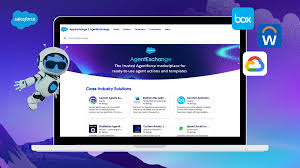
The future of intelligent customer engagement is here. OpenText and Salesforce are revolutionizing AI-driven workflows with deep content integration, empowering sales and service teams to work smarter, faster, and with greater accuracy. AI in Sales & Service: The Need for Trusted Data AI is transforming business operations:✅ 83% of AI-powered sales teams report revenue growth✅ 93% of service teams achieve time and cost savings But success depends on trusted data. With 98% of sales leaders emphasizing the need for accurate, secure, and compliant information, OpenText Content Cloud provides the foundation for reliable AI—seamlessly integrated with Salesforce. OpenText + Salesforce: AI Innovation Leaders Since 2016, OpenText has enhanced Salesforce with powerful content management solutions. Now, we’re taking it further with GenAI-powered automation:✔ OpenText™ Content Aviator delivers AI-driven insights from unstructured data (contracts, emails, documents)✔ Selected as a launch partner for the Agentforce Partner Network✔ First-to-market solution on Salesforce’s new AgentExchange—making AI agent deployment faster than ever Key Use Cases 🔹 Sales Teams – Summarize customer buying trends, auto-generate upsell recommendations🔹 Customer Service – Instantly resolve claims by extracting key details from documents🔹 Claims Processing – Automate approvals with AI-powered document analysis How It Works: AI Insights → Agentforce Actions OpenText Content Aviator for Agentforce unlocks hidden insights from unstructured content stored in OpenText Content Management, then feeds them directly into Salesforce Agentforce to trigger smart, automated actions. Key Benefits 🚀 Accelerate Sales Cycles – Auto-summarize contracts, identify upsell opportunities🎯 Enhance Customer Service – Resolve cases faster with AI-generated insights✍ Reduce Manual Work – Auto-update Salesforce records, eliminating errors📧 Personalize at Scale – Draft tailored email responses using AI insights Now Available ✔ Integrated with OpenText Content Management CE 25.1✔ Coming soon to OpenText Core Content SaaS (CE 25.3) OpenText Content Aviator and Salesforce Agentforce integration provides AI-driven insights for Sales and Customer Service teams, enhancing productivity and accelerating processes. This integration enables users to discover, summarize, and translate business workspace content directly within Agentforce, eliminating the need to switch applications. Essentially, it leverages AI to extract valuable insights from unstructured data like documents, contracts, and emails, and then uses those insights to drive data-driven actions within Agentforce What’s Next? The Future of AI-to-AI Integration This is just the beginning. OpenText is expanding AI-driven automation across the entire content lifecycle, with upcoming innovations including:🔹 More AI agents for sales, service, and operations🔹 Industry-specific solutions (banking, insurance, healthcare)🔹 Bi-directional AI – Blending insights from multiple AI systems for smarter decision-making OpenText™ Content Aviator puts AI into the hands of business users to leverage conversational search, discover content, or even summarize a document or workspace, offering new ways to interact with content and extract knowledge. Content Aviator enables organizations to combine the power of generative AI and large language models (LLMs) with OpenText content services platforms, including OpenText™ Core Content Management, OpenText™ Documentum™ Content Management (CM) and OpenText™ Content Management (Extended ECM), to make document management, knowledge discovery, and business process automation more efficient, effective and intelligent. Get Started Today ✅ Explore OpenText Content Aviator for Agentforce on Salesforce AgentExchange✅ Discover all OpenText-Salesforce integrations on the Salesforce AppExchange Unlock the power of AI-driven content intelligence—and transform the way your teams work. Contact Tectonic today to leverage AI-driven content intelligence. Like1 Related Posts Who is Salesforce? Who is Salesforce? Here is their story in their own words. From our inception, we’ve proudly embraced the identity of Read more Salesforce Marketing Cloud Transactional Emails Salesforce Marketing Cloud Transactional Emails are immediate, automated, non-promotional messages crucial to business operations and customer satisfaction, such as order Read more Salesforce Unites Einstein Analytics with Financial CRM Salesforce has unveiled a comprehensive analytics solution tailored for wealth managers, home office professionals, and retail bankers, merging its Financial Read more AI-Driven Propensity Scores AI plays a crucial role in propensity score estimation as it can discern underlying patterns between treatments and confounding variables Read more

Read More
Salesforce and Healthcare

Aligning Payers and Providers for True Patient-Centered Care

Patient-centered care is an approach to healthcare that prioritizes the patient’s needs, values, and preferences. It involves treating patients with respect, dignity, and compassion, and ensuring that they are actively involved in their own healthcare decisions. Key Principles of Patient-Centered Care: Benefits of Patient-Centered Care: Improved patient satisfaction and adherence to treatment plans, Enhanced health outcomes, Reduced healthcare costs, and Stronger patient-provider relationships. Examples of Patient-Centered Care: Patient-centered care is a holistic approach to healthcare that focuses on the patient as an individual. By empowering patients and respecting their needs, it aims to improve their health and overall well-being. The Shared Vision vs. Systemic Barriers All healthcare stakeholders agree on one fundamental principle: care should revolve around patients’ needs and preferences. Yet despite this shared goal, competing priorities between payers and providers often create friction that undermines patient-centered care delivery. Theresa Dreyer of the Health Care Transformation Task Force observes: “Payers and providers both want patients to receive accessible, appropriate care. But the current system’s structure frequently puts these groups at odds.” Defining Patient-Centered Care At its core, patient-centered care means: “Imagine the care you’d want for your own family members,” Dreyer suggests. “That’s the standard we should apply across healthcare.” The Fee-for-Service Roadblock The dominant fee-for-service (FFS) model creates inherent conflicts: “FFS turns cost containment into a zero-sum negotiation,” Dreyer explains. “Value-based models offer a collaborative alternative.” Value-Based Care as the Unifying Framework 1. Quality-Focused Contracting 2. Streamlined Prior Authorization 3. Holistic Care Integration The Preventive Care Imperative The long-term nature of prevention creates systemic challenges: “Diabetes management today prevents kidney failure tomorrow,” Dreyer notes. “We need payment models that reward this foresight.” Building Collaborative Solutions For Payers: For Providers: Joint Opportunities: The Path Forward The healthcare industry stands at an inflection point. By embracing value-based models that: Payers and providers can transform their relationship from adversarial to collaborative—with patients as the ultimate beneficiaries. As Dreyer concludes: “Beyond the contracting details and quality metrics, we must remember our shared purpose: helping people achieve and maintain health. When we center that mission, the rest follows.” Like Related Posts Who is Salesforce? Who is Salesforce? Here is their story in their own words. From our inception, we’ve proudly embraced the identity of Read more Salesforce Marketing Cloud Transactional Emails Salesforce Marketing Cloud Transactional Emails are immediate, automated, non-promotional messages crucial to business operations and customer satisfaction, such as order Read more Salesforce Unites Einstein Analytics with Financial CRM Salesforce has unveiled a comprehensive analytics solution tailored for wealth managers, home office professionals, and retail bankers, merging its Financial Read more AI-Driven Propensity Scores AI plays a crucial role in propensity score estimation as it can discern underlying patterns between treatments and confounding variables Read more
Read More
Salesforce Health Cloud

How Salesforce Health Cloud’s 360-Degree CRM View Enhances EHR Performance

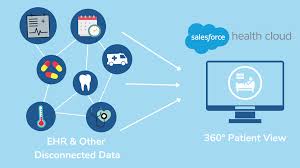
Salesforce Health Cloud is a powerful Customer Relationship Management (CRM) platform designed for healthcare, offering a comprehensive 360-degree view of patient data. By consolidating medical records, test results, and insurance details from multiple sources, it bridges the gap between clinical and non-clinical information in real time—empowering providers with actionable insights. Recent studies highlight the impact of healthcare CRM solutions: With AI-driven predictive analytics and seamless EHR integration, Salesforce Health Cloud is transforming care coordination. By eliminating data silos, streamlining workflows, and boosting patient engagement, it enhances EHR performance, clinical outcomes, and operational efficiency. In this insight, we explore how Salesforce Health Cloud’s 360-degree CRM view elevates EHR capabilities. Understanding EHRs and Healthcare CRMs What Are EHRs? Electronic Health Records (EHRs) are digital versions of patient charts, providing real-time access to authorized users. Unlike traditional paper records, EHRs enable seamless data sharing across: What Are Healthcare CRMs? Healthcare Customer Relationship Management (CRM) systems focus on patient engagement, care coordination, and experience optimization. Key features include: How a 360-Degree CRM View Boosts EHR Performance 1. Enhanced Data Integration & Visibility A 360-degree CRM view unifies clinical, administrative, financial, and patient interaction data into a single platform. This integration: 2. Optimized Operational Efficiency By integrating CRM data directly into EHRs, healthcare organizations can: 3. Personalized Patient Engagement A holistic CRM view helps providers understand each patient’s: This enables: 4. AI-Powered Actionable Insights Integrating AI and machine learning with a 360-degree CRM view allows: Tectonic’s Salesforce Health Cloud Solution Tectonic delivers customized Salesforce Health Cloud solutions to maximize efficiency, patient outcomes, and workflow optimization. Our expertise includes: ✔ Custom implementation tailored to your organization’s needs✔ Seamless integration with EHRs, billing systems, and patient engagement tools✔ Comprehensive training to empower care teams✔ Ongoing support for updates, performance tuning, and troubleshooting With Tectonic, unlock the full potential of Salesforce Health Cloud—transforming patient care and operational excellence. Ready to enhance your EHR performance? Let’s connect!  Like Related Posts Who is Salesforce? Who is Salesforce? Here is their story in their own words. From our inception, we’ve proudly embraced the identity of Read more Salesforce Marketing Cloud Transactional Emails Salesforce Marketing Cloud Transactional Emails are immediate, automated, non-promotional messages crucial to business operations and customer satisfaction, such as order Read more Salesforce Unites Einstein Analytics with Financial CRM Salesforce has unveiled a comprehensive analytics solution tailored for wealth managers, home office professionals, and retail bankers, merging its Financial Read more AI-Driven Propensity Scores AI plays a crucial role in propensity score estimation as it can discern underlying patterns between treatments and confounding variables Read more

Read More
Dementia Care and Telemedicine

Dementia Care and Telemedicine

How 3 Health Systems Are Leveraging Telemedicine for Dementia Care Telemedicine is expanding access to dementia care, particularly for rural and elderly patients, though challenges like technology barriers and sustainability remain. Dementia—an umbrella term for cognitive and memory disorders—affects millions of Americans directly and indirectly. By 2060, nearly 1 million people in the U.S. are projected to develop dementia. While no cure exists, the growing prevalence underscores the need for accessible and effective care solutions. Telehealth has emerged as a critical tool in meeting this demand. The rapid adoption of virtual care during the COVID-19 pandemic transformed dementia care delivery. A 2024 study found that telehealth use surged among dementia patients, particularly those with long travel distances to clinics and the oldest age groups. For health systems like the University of Mississippi Medical Center (UMMC), telemedicine has been a game-changer. “COVID-19 changed things almost overnight,” said Dr. Kim Tarver, associate professor of medicine and director of clinical services at UMMC’s MIND Center. “We have patients who travel three hours to see us. Being able to communicate without requiring a clinic visit every time is incredibly helpful.” UMMC is among several health systems integrating telehealth into dementia care, though challenges like technology access and financial sustainability persist. Telehealth’s Role in Dementia Care: Benefits and Applications Dementia care is uniquely suited for telehealth. Virtual visits allow for evaluations, treatment adjustments, and follow-ups while offering privacy and flexibility that in-person visits cannot. At UMMC, clinicians conduct cognitive assessments like the Montreal Cognitive Assessment (MoCA) remotely. A nurse guides patients through the test via screen-sharing, while caregivers assist with physical exam components when needed. “I’ll ask the caregiver to perform parts of the exam, like cerebellar function tests, while I observe via video,” Tarver explained. Though in-person visits are still used for verification, virtual assessments have proven comparably accurate. Telemedicine also enables family members to discuss concerns privately—especially valuable when patients are unaware of or resistant to acknowledging their condition. Extending Dementia Care Through Virtual Workforce Solutions Health systems are also using telehealth to expand their dementia care workforce. At the University of California, San Francisco (UCSF), unlicensed but trained care navigators support families, handling routine assessments and triaging complex cases to specialists. “Navigators manage caseloads of families, consulting licensed experts only when needed,” said Dr. Katherine Possin, a neurology professor at UCSF. “This extends the reach of our limited dementia specialist workforce.” Similarly, Banner Health’s Dementia Care Partners program employs health coaches (Certified Nursing Assistants) to conduct initial assessments and provide ongoing support, reducing clinician workload. “If I train 30 people who each support 3,000 patients, the impact multiplies rapidly,” said Dr. Ganesh Gopalakrishna of Banner Alzheimer’s Institute. Banner also uses Project ECHO, a telehealth-based training model, to educate community providers—from physicians to elder care attorneys—on dementia care best practices. Overcoming Telehealth Challenges in Dementia Care Despite its benefits, implementing telehealth in dementia care presents hurdles: The Future of Telehealth in Dementia Care Despite obstacles, providers see immense value in virtual dementia care—reducing caregiver burden, preventing unnecessary hospitalizations, and improving patients’ quality of life. “I hope telehealth becomes the standard of care,” Possin said. As health systems refine their approaches, telemedicine promises to play an increasingly vital role in dementia care—bridging gaps in access and delivering support to patients and families when they need it most. Tectonic can help you transform telehealth in your organization. Contact us today. Like Related Posts Who is Salesforce? Who is Salesforce? Here is their story in their own words. From our inception, we’ve proudly embraced the identity of Read more Salesforce Marketing Cloud Transactional Emails Salesforce Marketing Cloud Transactional Emails are immediate, automated, non-promotional messages crucial to business operations and customer satisfaction, such as order Read more Salesforce Unites Einstein Analytics with Financial CRM Salesforce has unveiled a comprehensive analytics solution tailored for wealth managers, home office professionals, and retail bankers, merging its Financial Read more AI-Driven Propensity Scores AI plays a crucial role in propensity score estimation as it can discern underlying patterns between treatments and confounding variables Read more

Read More
Return on Sales (ROS)

Return on Sales (ROS)

Return on Sales (ROS): Definition, Calculation & How to Improve It Want to know how efficiently your business converts sales into profit? Who doesn’t? Return on Sales (ROS) measures operational efficiency, helping you maximize earnings and identify wasteful spending. Even profitable businesses can struggle with cash flow if they overspend on marketing, R&D, or other expenses—leaving little profit despite high revenue. ROS answers: “How much profit do we keep from each dollar of sales?” Let’s break down what ROS is, how to calculate it, and strategies to improve it. What Is Return on Sales (ROS)? Return on Sales (ROS) is a profitability ratio that shows how much of your revenue turns into operating profit. Also called operating profit margin, it excludes interest and taxes, focusing purely on operational efficiency. Formula: ROS=(Operating ProfitNet Sales)×100ROS = (Net SalesOperating Profit​)×100 ROS vs. ROI vs. Net Profit Margin Metric What It Measures Key Difference ROS Profit from operations (before interest & taxes) Focuses on operational efficiency ROI (Return on Investment) Profit generated from an investment Measures effectiveness of capital spent (e.g., new equipment, marketing) Net Profit Margin Profit after all expenses (taxes, interest, etc.) Shows final profitability after all costs How to Calculate ROS Step-by-Step Formula Example Calculation Item Amount Revenue $10,000,000 Returns $1,000,000 COGS $2,000,000 Operating Expenses (SG&A) $4,000,000 Operating Profit $3,000,000 Net Sales $9,000,000 ROS = (3,000,0009,000,000)×100=∗∗33.3%∗∗ROS=(9,000,0003,000,000​)×100=∗∗33.3%∗∗ What Is a Good ROS? It depends on your industry. Here are average benchmarks: Industry Average ROS Healthcare 6-30%* Hotels 8-15% Manufacturing 6-8% Restaurants 3-7% Retail 2-5% Tech 10-20%+ *Higher for specialized services (e.g., surgical centers at 30%) Key Insight: If ROS declines as revenue grows, your costs may be rising too fast. 5 Ways to Improve Your ROS 1. Optimize Pricing Strategy 2. Reduce Costs 3. Boost Operational Efficiency 4. Improve Sales Process 5. Lower Customer Acquisition Cost (CAC) Why ROS Matters Pro Tip: Monitor ROS quarterly—if it drops, investigate rising costs or pricing issues. Summary ROS is a powerful metric for assessing how well your business turns sales into profit. By optimizing pricing, cutting costs, and improving efficiency, you can increase profitability and ensure sustainable growth. Like Related Posts Who is Salesforce? Who is Salesforce? Here is their story in their own words. From our inception, we’ve proudly embraced the identity of Read more Salesforce Marketing Cloud Transactional Emails Salesforce Marketing Cloud Transactional Emails are immediate, automated, non-promotional messages crucial to business operations and customer satisfaction, such as order Read more Salesforce Unites Einstein Analytics with Financial CRM Salesforce has unveiled a comprehensive analytics solution tailored for wealth managers, home office professionals, and retail bankers, merging its Financial Read more AI-Driven Propensity Scores AI plays a crucial role in propensity score estimation as it can discern underlying patterns between treatments and confounding variables Read more

Read More
AI-Driven Healthcare

The Future of Healthcare is Digital

Transforming Healthcare with Salesforce Health Cloud In our rapidly evolving healthcare world, digital transformation is no longer optional—it’s essential. Healthcare organizations must leverage innovative solutions to improve patient outcomes, streamline operations, and drive financial growth. Salesforce Health Cloud empowers providers, payers, and life sciences companies to deliver personalized, connected, and data-driven care. The Urgency of Digital Transformation in Healthcare Healthcare organizations face increasing pressure from regulatory requirements, patient expectations for seamless digital experiences, and operational inefficiencies. Traditional systems are often fragmented, making it difficult to provide a unified patient experience. Salesforce Health Cloud addresses these challenges by enhancing communication, centralizing data, and optimizing workflows. Key Benefits of Salesforce Health Cloud ✅ Enhanced Patient EngagementPatients expect convenience, transparency, and personalization. Health Cloud delivers seamless communication through patient portals, automated reminders, and AI-driven insights—leading to higher engagement and improved adherence to treatment plans. ✅ 360-Degree Patient ViewBy integrating data from electronic health records (EHRs), wearable devices, and other sources, Health Cloud provides a unified patient profile. This empowers providers and payers to make data-driven decisions that improve both clinical and business outcomes. ✅ Operational Efficiency & Cost ReductionHealth Cloud automates workflows, reduces redundancies, and improves productivity by integrating clinical, operational, and administrative processes. Real-time collaboration enhances care coordination across teams and organizations. ✅ AI-Powered Insights for Better Decision-MakingWith AI-driven analytics and predictive insights, healthcare organizations can identify at-risk populations, optimize resource allocation, and enhance population health management. Salesforce Einstein AI helps forecast trends and personalize care recommendations. ✅ Interoperability & Regulatory ComplianceNavigating complex healthcare regulations is easier with Health Cloud’s secure architecture, ensuring compliance while enabling seamless data exchange between systems and stakeholders. Why Healthcare Organizations Should Adopt Health Cloud Investing in digital transformation provides a competitive advantage by improving patient satisfaction, reducing operational costs, and driving better health outcomes. Salesforce Health Cloud enables organizations to future-proof their operations, boost revenue, and implement a seamless, value-based care model. Use Cases of Salesforce Health Cloud 🏥 Health Insurers – Improve member engagement, claims processing, and care management to enhance efficiency and reduce costs. 🏥 Hospitals & Health Systems – Streamline care coordination, minimize readmissions, and enhance patient experiences with personalized care plans. 🏥 Home Healthcare & Telemedicine – Enable remote patient monitoring and virtual care, improving accessibility while reducing hospital visits. 🏥 Life Sciences Companies – Accelerate drug development, streamline clinical trials, and enhance collaboration with providers and patients. The Future of Healthcare is Digital Salesforce Health Cloud is at the forefront of healthcare’s digital revolution. By leveraging AI, automation, and seamless integrations, healthcare leaders can improve patient experiences, drive operational efficiency, and ensure long-term success. Now is the time to embrace a data-driven approach to healthcare management. Like Related Posts Who is Salesforce? Who is Salesforce? Here is their story in their own words. From our inception, we’ve proudly embraced the identity of Read more Salesforce Marketing Cloud Transactional Emails Salesforce Marketing Cloud Transactional Emails are immediate, automated, non-promotional messages crucial to business operations and customer satisfaction, such as order Read more Salesforce Unites Einstein Analytics with Financial CRM Salesforce has unveiled a comprehensive analytics solution tailored for wealth managers, home office professionals, and retail bankers, merging its Financial Read more AI-Driven Propensity Scores AI plays a crucial role in propensity score estimation as it can discern underlying patterns between treatments and confounding variables Read more

Read More
Salesforce Lightning

Salesforce Lightning vs. Classic

Salesforce Lightning vs. Classic: The 2025 Decision Guide The Critical Choice for Modern Businesses As Salesforce phases out Classic (no updates since 2023), Lightning emerges as the only future-proof option with AI, mobile optimization, and superior analytics. Here’s what you need to know to make the right decision. Key Differences at a Glance Feature Lightning (2015+) Classic (Legacy) Interface Modern, component-based, drag-and-drop Text-heavy, tab-based Performance 50% faster load times, single-page app Slows with large datasets AI Integration Einstein AI for predictions & automation None Mobile Support Fully responsive design Limited functionality Customization Lightning App Builder, LWC components Rigid, requires coding (Visualforce) Security LockerService for component isolation Basic security protocols Analytics Interactive dashboards, real-time filters Static reports Why Lightning Dominates in 2025 1. Productivity Boost 2. AI-Powered Insights 3. Future-Proof Architecture 4. Cost Efficiency When Classic Might Still Work Consider Classic only if: Migration Made Simple Salesforce provides: The Verdict ✅ Choose Lightning if: You want AI, mobile access, and a scalable platform.⚠ Avoid Classic: It’s outdated, unsupported, and hampers growth. Next Steps: Pro Tip: Use Lightning Adoption Dashboards to track migration progress. Need help transitioning?  Contact Tectonic. Like1 Related Posts Who is Salesforce? Who is Salesforce? Here is their story in their own words. From our inception, we’ve proudly embraced the identity of Read more Salesforce Marketing Cloud Transactional Emails Salesforce Marketing Cloud Transactional Emails are immediate, automated, non-promotional messages crucial to business operations and customer satisfaction, such as order Read more Salesforce Unites Einstein Analytics with Financial CRM Salesforce has unveiled a comprehensive analytics solution tailored for wealth managers, home office professionals, and retail bankers, merging its Financial Read more AI-Driven Propensity Scores AI plays a crucial role in propensity score estimation as it can discern underlying patterns between treatments and confounding variables Read more
Read More
Healthcare Cloud Computing

Physicians Embrace AI for Documentation

Physicians Embrace AI for Documentation, But Diagnostic Concerns Persist A new survey reveals growing physician adoption of AI for clinical documentation and administrative tasks, yet lingering skepticism remains about its role in medical decision-making. According to Athenahealth’s fourth annual Physician Sentiment Survey, conducted by The Harris Poll, 68% of physicians using AI in their practice report increased reliance on the technology for clinical documentation over the past year. The top AI applications they value include: Shifting Perceptions of AI in Healthcare Physician attitudes toward AI are evolving: However, significant concerns persist: Interoperability Remains a Key Challenge While 91% of physicians agree that better data exchange between systems would improve patient outcomes, more than half report weekly frustrations accessing patient records from other providers. Additionally: Patient Portals: A Double-Edged Sword Though widely used, patient portals contribute to physician burnout: Job Satisfaction Shows Modest Gains Despite ongoing challenges, physician morale appears to be improving: The Path Forward: Balancing Innovation and Trust Dr. Nele Jessel, Chief Medical Officer at Athenahealth, noted: “AI is moving from hype to reality, and physicians are seeing real benefits in reducing administrative burdens. But we must ensure these tools are designed to support—not replace—clinical judgment, while improving efficiency across practices of all sizes.” As AI adoption grows, addressing diagnostic reliability, interoperability gaps, and workload pressures will be critical to sustaining physician trust and improving patient care. Key Takeaways:✅ AI use is rising for documentation, but diagnostic trust lags.⚠️ Interoperability frustrations persist, driving physician stress.📈 Job satisfaction is improving, yet burnout risks remain.🔮 Future success hinges on human-AI collaboration and better system integration. Like Related Posts Who is Salesforce? Who is Salesforce? Here is their story in their own words. From our inception, we’ve proudly embraced the identity of Read more Salesforce Marketing Cloud Transactional Emails Salesforce Marketing Cloud Transactional Emails are immediate, automated, non-promotional messages crucial to business operations and customer satisfaction, such as order Read more Salesforce Unites Einstein Analytics with Financial CRM Salesforce has unveiled a comprehensive analytics solution tailored for wealth managers, home office professionals, and retail bankers, merging its Financial Read more AI-Driven Propensity Scores AI plays a crucial role in propensity score estimation as it can discern underlying patterns between treatments and confounding variables Read more

Read More
AI Arms Race

AI-Powered Cancer Immunotherapy

AI-Powered Cancer Immunotherapy: How Predictive Models Are Personalizing Treatment The Challenge of Predicting Immunotherapy Success Immunotherapy—particularly immune checkpoint inhibitors (ICIs)—has revolutionized cancer treatment, offering long-term remission for some patients with lung cancer, melanoma, and kidney cancer. However, only 20-40% of patients respond to ICIs, and clinicians struggle to predict who will benefit. Current biomarkers like tumor mutational burden (TMB) and PD-L1 expression are expensive, inconsistent, and not universally applicable. This leaves doctors relying on trial-and-error approaches, delaying effective treatment and increasing costs. SCORPIO: An AI Tool Using Routine Blood Tests to Predict Treatment Response Researchers from Mount Sinai’s Tisch Cancer Institute and Memorial Sloan Kettering Cancer Center have developed SCORPIO, an AI model that predicts ICI effectiveness using routine blood tests and clinical data—eliminating the need for costly genomic sequencing. How SCORPIO Works Key Advantages Over Traditional Methods ✔ More accurate than PD-L1 & TMB testing in trials✔ Works across 21 cancer types (validated in 10,000+ patients)✔ Low-cost & scalable—uses existing lab tests✔ No specialized equipment needed, ideal for resource-limited settings Why This Matters for Cancer Care Next Steps: From Research to Real-World Use Before widespread adoption, SCORPIO will undergo prospective clinical trials to confirm real-world performance. Challenges include: The Future of AI in Immunotherapy SCORPIO is part of a growing wave of AI tools transforming oncology: As Diego Chowell, PhD (Mount Sinai) notes: “SCORPIO represents a major step toward democratizing precision oncology—making advanced cancer care accessible to all patients, not just those at specialized centers.” The Bottom Line AI is shifting immunotherapy from trial-and-error to predictive, personalized medicine. With tools like SCORPIO, the future of cancer treatment is smarter, faster, and more equitable. Next Frontier? Combining AI with real-time patient monitoring to dynamically adjust therapies—bringing us closer to truly adaptive cancer care. Like Related Posts Who is Salesforce? Who is Salesforce? Here is their story in their own words. From our inception, we’ve proudly embraced the identity of Read more Salesforce Marketing Cloud Transactional Emails Salesforce Marketing Cloud Transactional Emails are immediate, automated, non-promotional messages crucial to business operations and customer satisfaction, such as order Read more Salesforce Unites Einstein Analytics with Financial CRM Salesforce has unveiled a comprehensive analytics solution tailored for wealth managers, home office professionals, and retail bankers, merging its Financial Read more AI-Driven Propensity Scores AI plays a crucial role in propensity score estimation as it can discern underlying patterns between treatments and confounding variables Read more

Read More
Potential of GenAI in Healthcare

5 Key Use Cases for Generative AI in Healthcare Documentation

Generative AI (GenAI) holds significant promise for improving healthcare documentation, but clear regulations and standards are needed to maximize benefits while minimizing risks. Healthcare documentation encompasses medical histories, clinical notes, diagnostic results, treatment plans, prescriptions, and billing records. Studies show that clinicians spend more time on documentation than patient care—a major contributor to burnout. GenAI can help by automating electronic health record (EHR) data entry and drafting medical notes for clinician review. According to a February 2025 American Medical Association (AMA) survey, early GenAI adoption in healthcare focuses on administrative tasks that enhance documentation quality and efficiency. For example, Microsoft’s Dax Copilot saves clinicians five minutes per patient encounter, while Oracle Health Clinical AI Agent reduces documentation time by nearly 30%. Here are five key ways GenAI improves healthcare documentation: 1. Streamline Workflows GenAI reduces administrative burdens by automating documentation tasks, allowing clinicians to focus more on patient care. Key applications include: A JAMA Network Open (2024) study found AI-generated draft replies to patient messages reduced provider workload and emotional exhaustion, suggesting strong potential for workflow efficiency. 2. Improve Data Accuracy GenAI enhances documentation precision by identifying missing or inconsistent data. Applications include: By minimizing manual entry, GenAI helps prevent errors that lead to billing delays or compliance issues. 3. Optimize Medical Data Approximately 80% of healthcare data is unstructured (e.g., physician notes, scanned documents). GenAI transforms this into structured, usable formats by: This optimization improves interoperability and speeds up decision-making. 4. Reduce Clinician Burnout Physician burnout is often linked to excessive documentation. GenAI alleviates stress by: A UC San Diego (2024) study found that AI-assisted documentation helps clinicians engage more with patients, improving satisfaction and outcomes. 5. Enhance Patient Engagement GenAI improves patient interactions by: By reducing screen time during visits, GenAI helps clinicians build stronger patient relationships. Best Practices for GenAI in Healthcare Documentation To ensure safe and effective AI adoption:✔ Start with pilot programs – Test AI tools in controlled settings.✔ Train clinicians on AI review – Ensure staff can validate AI-generated content.✔ Notify patients about AI use – Maintain transparency in documentation.✔ Secure patient data – Encrypt and de-identify protected health information (PHI).✔ Maintain audit logs – Track AI-generated documentation for accuracy and compliance. Challenges & Future Outlook GenAI faces hurdles in data privacy, regulatory compliance, and liability. Until formal standards emerge, frameworks like the WHO’s AI Ethics Guidelines and Coalition for Health AI (CHAI) Assurance Standards can help guide responsible use. As multimodal AI models advance, GenAI will better adapt to clinician workflows. However, strong governance is essential to balance innovation with patient safety. Conclusion GenAI is transforming healthcare documentation by reducing burnout, improving accuracy, and enhancing patient engagement. By implementing best practices and robust governance, healthcare organizations can harness AI’s potential while mitigating risks. Content updated April 2025. Like Related Posts Who is Salesforce? Who is Salesforce? Here is their story in their own words. From our inception, we’ve proudly embraced the identity of Read more Salesforce Marketing Cloud Transactional Emails Salesforce Marketing Cloud Transactional Emails are immediate, automated, non-promotional messages crucial to business operations and customer satisfaction, such as order Read more Salesforce Unites Einstein Analytics with Financial CRM Salesforce has unveiled a comprehensive analytics solution tailored for wealth managers, home office professionals, and retail bankers, merging its Financial Read more AI-Driven Propensity Scores AI plays a crucial role in propensity score estimation as it can discern underlying patterns between treatments and confounding variables Read more

Read More
Healthcare Cloud Computing

Member Experience in Healthcare

Member Experience in Healthcare: Why It Matters for Payers In today’s consumer-driven healthcare market, member experience is no longer a nice-to-have—it’s a competitive necessity for health payers. With rising consumer expectations and fierce competition during open enrollment, payers must prioritize seamless, digital-first interactions to attract, retain, and satisfy members—while also protecting their bottom line. What Is Member Experience for Health Payers? Member experience refers to how health plan beneficiaries interact with their insurers—from finding providers and filing claims to accessing customer support and digital tools. A positive experience means:✔ Ease of use (intuitive portals, quick claims processing)✔ Transparency (clear benefits, no surprise denials)✔ Responsive support (fast resolutions via phone, chat, or AI)✔ Personalized engagement (tailored recommendations, proactive outreach) Poor experiences, on the other hand, lead to frustration, distrust, and member churn. Why Member Experience Matters More Than Ever 1. Consumers Are Voting With Their Wallets 2. Payers Lag Behind Other Industries 3. Better Experience = Better Business Outcomes Investing in member experience drives:✅ Higher retention & acquisition (loyalty = lower marketing costs)✅ Reduced call center volume (AI & self-service cut costs)✅ Fewer claim disputes & appeals (transparency builds trust) What Do Members Actually Want? According to Accenture & Bain, top member demands include:🔹 Easy access to plan information (no digging through PDFs)🔹 Fast, omnichannel support (chat, phone, portal—all synced)🔹 Frictionless digital tools (mobile apps, AI chatbots, e-billing)🔹 Transparent claims & approvals (no surprise denials) Members who rate their plan as “very easy to use” are 2X more likely to stay. How Can Payers Improve Member Experience? 1. Boost Digital Maturity 2. Fix Pain Points First 3. Measure What Matters Key KPIs to track:📊 Net Promoter Score (NPS) – Would members recommend you?📊 First Call Resolution (FCR) – Are issues solved quickly?📊 Claims Processing Time – How fast are claims paid?📊 Retention Rate – Are members renewing? The Bottom Line Health payers can no longer afford slow, confusing, or frustrating member experiences. With consumer expectations rising, the winners will be those who: The future belongs to payers that treat members like valued customers—not just policyholders. “Member experience isn’t just about satisfaction—it’s about loyalty, retention, and growth. Payers that get it right will outperform those stuck in legacy models.”—Bain & Company, 2024 Ready to transform your member experience? Contact Tectonic, your health and life sciences partner. Like Related Posts Who is Salesforce? Who is Salesforce? Here is their story in their own words. From our inception, we’ve proudly embraced the identity of Read more Salesforce Marketing Cloud Transactional Emails Salesforce Marketing Cloud Transactional Emails are immediate, automated, non-promotional messages crucial to business operations and customer satisfaction, such as order Read more Salesforce Unites Einstein Analytics with Financial CRM Salesforce has unveiled a comprehensive analytics solution tailored for wealth managers, home office professionals, and retail bankers, merging its Financial Read more AI-Driven Propensity Scores AI plays a crucial role in propensity score estimation as it can discern underlying patterns between treatments and confounding variables Read more
Read More

How Advanced Analytics is Reducing Clinical Waste in Healthcare

As U.S. healthcare spending surges—reaching $4.9 trillion in 2023, a 7.5% increase from the previous year—health systems are seeking innovative ways to curb unnecessary costs. One key area of focus? Clinical waste—avoidable medical services that drive up expenses without improving patient outcomes. MultiCare Health System, a 13-hospital network based in Washington, has successfully tackled this challenge using AI-powered clinical decision support (CDS) tools. Partnering with health tech company IllumiCare, MultiCare has reduced unnecessary lab tests and medication orders, saving $2.5 million while maintaining care quality. What is Clinical Waste? Clinical waste refers to unnecessary medical services—such as redundant lab tests, excessive imaging, or inappropriate prescriptions—that inflate costs without benefiting patients. Studies show: Dr. Arun T. Mathews, MultiCare’s Regional Chief Medical Officer, explains: “A patient doesn’t always need a daily blood draw. The extra data may not help—and could even harm them.” How MultiCare is Cutting Waste with AI MultiCare deployed IllumiCare’s Smart Ribbon, an EHR-integrated CDS tool that: Key Features: ✔ Passive vs. Active Alerts – Clinicians receive contextual nudges (e.g., switching from IV to oral meds when appropriate).✔ Automated Order Adjustments – If a doctor accepts a recommendation, the system updates the order automatically, reducing cognitive load.✔ Shared Savings Incentives – Physicians earn performance bonuses for adopting cost-effective practices. Overcoming Adoption Challenges Initially, clinicians ignored alerts, seeing them as extra work. MultiCare’s solution? Result: The Bigger Picture While cost savings matter, patient care remains the priority. As Dr. Mathews notes: “The real win? Fewer unnecessary needle sticks, faster IV-to-oral transitions, and a better patient experience.” What’s Next? MultiCare plans to expand the tool systemwide, proving that smart analytics + clinician engagement can reduce waste without sacrificing care quality. Advanced analytics in healthcare leverages data to identify and address inefficiencies, ultimately reducing clinical waste by optimizing resource allocation, streamlining operations, and improving patient care, leading to cost savings and better outcomes.  Key Takeaway:By combining AI-driven insights with physician incentives, health systems can cut waste, lower costs, and keep patient care at the forefront. Like Related Posts Who is Salesforce? Who is Salesforce? Here is their story in their own words. From our inception, we’ve proudly embraced the identity of Read more Salesforce Marketing Cloud Transactional Emails Salesforce Marketing Cloud Transactional Emails are immediate, automated, non-promotional messages crucial to business operations and customer satisfaction, such as order Read more Salesforce Unites Einstein Analytics with Financial CRM Salesforce has unveiled a comprehensive analytics solution tailored for wealth managers, home office professionals, and retail bankers, merging its Financial Read more AI-Driven Propensity Scores AI plays a crucial role in propensity score estimation as it can discern underlying patterns between treatments and confounding variables Read more

Read More
HIPAA

Salesforce HIPAA Compliance

Compliance plays a critical role in managing sensitive information, especially under regulations like the Health Insurance Portability and Accountability Act (HIPAA). Salesforce HIPAA Compliance. Enacted in 1996, HIPAA establishes national standards for safeguarding sensitive health information. Organizations and individuals who store, manage, or transmit healthcare data are subject to these regulations, which prioritize the confidentiality, integrity, and availability of patient information. While Salesforce provides tools to support HIPAA compliance, the responsibility for ensuring compliance ultimately lies with the data-processing organization or individual—not solely the platform itself. This insight explores Salesforce’s role in HIPAA compliance, key features for safeguarding electronic Protected Health Information (ePHI), and best practices for adhering to regulatory requirements. Understanding HIPAA Salesforce’s flexibility as a CRM platform allows it to serve industries that require HIPAA compliance, particularly healthcare and life sciences. At its core, HIPAA protects Protected Health Information (PHI)—any patient-identifiable information in medical records. PHI extends beyond traditional medical data to include names, addresses, birth dates, Social Security numbers, and more. When PHI is managed or transmitted electronically, it’s classified as electronic Protected Health Information (ePHI), which is subject to additional safeguards. Entities Covered by HIPAA HIPAA applies to several types of entities: While Salesforce is classified as a Business Associate, organizations using the platform remain responsible for adhering to HIPAA’s security requirements. Salesforce and the Business Associate Agreement (BAA) As a Business Associate, Salesforce must enter into a Business Associate Agreement (BAA) with healthcare organizations and other Covered Entities to define responsibilities and security measures for handling ePHI. The BAA outlines the Salesforce features and services eligible for HIPAA compliance. Notably: Without a signed BAA, organizations face significant penalties for HIPAA violations, even in the absence of a data breach. HIPAA-Compliant Salesforce Solutions Salesforce offers various solutions and features to support HIPAA compliance. These are categorized into platform security measures and specific compliant services: Key Security Features HIPAA-Compliant Services It’s important to note that not all Salesforce features are HIPAA-compliant, and proper configuration is critical to ensure compliance. Restrictions and Challenges While Salesforce offers robust security tools, some limitations and risks exist: Additionally, some Salesforce services, like certain social or mobile features in Health Cloud, are not compliant by default and require explicit mention in the BAA to be used with ePHI. Best Practices for HIPAA Compliance To maximize HIPAA compliance with Salesforce, organizations should: HIPAA Compliance Checklist Here’s a concise checklist to guide your HIPAA compliance efforts: Leveraging Third-Party Tools Solutions like GRAX can enhance HIPAA compliance in Salesforce by adding capabilities such as data backup, archiving, and recovery. GRAX’s security features include: However, integrating third-party solutions requires careful vetting to avoid compliance risks. Salesforce HIPAA Compliance Salesforce is a powerful tool for healthcare organizations, but achieving HIPAA compliance requires understanding its capabilities and limitations. A well-configured Salesforce environment, combined with diligent user management and third-party tools, can help organizations meet regulatory requirements while safeguarding patient data. By embracing best practices and staying informed about shared responsibilities, organizations can ensure HIPAA compliance, avoid penalties, and build trust with patients and stakeholders. Like Related Posts Who is Salesforce? Who is Salesforce? Here is their story in their own words. From our inception, we’ve proudly embraced the identity of Read more Salesforce Marketing Cloud Transactional Emails Salesforce Marketing Cloud Transactional Emails are immediate, automated, non-promotional messages crucial to business operations and customer satisfaction, such as order Read more Salesforce Unites Einstein Analytics with Financial CRM Salesforce has unveiled a comprehensive analytics solution tailored for wealth managers, home office professionals, and retail bankers, merging its Financial Read more AI-Driven Propensity Scores AI plays a crucial role in propensity score estimation as it can discern underlying patterns between treatments and confounding variables Read more

Read More
gettectonic.com