
Agentic AI Archives - gettectonic.com - Page 3
Salesforce Einstein SDR and Sales Coach Agents

Four Consumer Personas Driving Demand for AI Agents

Salesforce Research: Four Consumer Personas Driving Demand for AI Agents AI agents are transforming not just workplaces but everyday life—and consumers are eager to embrace them. According to a new Salesforce survey of 2,552 U.S. adults, four distinct personality types are shaping demand for agentic AI: “Consumer expectations for AI are as diverse as the people using it,” said Vala Afshar, Chief Digital Evangelist at Salesforce. “Brands that align AI agents with these personas will unlock powerful new ways to engage customers.” Why It Matters With 88% of consumers saying experience is as crucial as product quality, AI agents are set to raise the bar—delivering proactive, personalized, and conversational interactions. Businesses must adapt or risk falling behind. Meet the Four AI Agent Personas 1. The Smarty Pants (43%) – The Informed Decision-Maker 2. The Minimalist (22%) – The Simplicity Seeker 3. The Life-Hacker (16%) – The Efficiency Expert 4. The Tastemaker (15%) – The Curated Connoisseur The Business Imperative AI agents aren’t just a tech trend—they’re becoming a customer expectation. Companies that tailor AI experiences to these personas will win loyalty in an increasingly competitive landscape. “The future of AI isn’t one-size-fits-all,” said Afshar. “Brands need to map their AI strategies to real consumer needs—whether that’s efficiency, simplicity, personalization, or informed choices.” Methodology: Salesforce, in partnership with YouGov, surveyed 2,552 U.S. adults (18+) from April 3-7, 2025. Like Related Posts Who is Salesforce? Who is Salesforce? Here is their story in their own words. From our inception, we’ve proudly embraced the identity of Read more Salesforce Marketing Cloud Transactional Emails Salesforce Marketing Cloud Transactional Emails are immediate, automated, non-promotional messages crucial to business operations and customer satisfaction, such as order Read more Salesforce Unites Einstein Analytics with Financial CRM Salesforce has unveiled a comprehensive analytics solution tailored for wealth managers, home office professionals, and retail bankers, merging its Financial Read more AI-Driven Propensity Scores AI plays a crucial role in propensity score estimation as it can discern underlying patterns between treatments and confounding variables Read more

Read More
The Agentic Future

The Agentic Future

The “agentic future” refers to a future where AI agents play a significant role in various aspects of life, including work, decision-making, and even personal tasks. This future envisions AI agents as autonomous entities capable of making decisions, planning actions, and executing tasks without direct human supervision, essentially functioning as assistants or collaborators rather than just tools.  Here’s a look at what this future might entail: 1. Autonomous AI Assistants: 2. AI as a Collaborative Partner: 3. Challenges and Considerations: 4. Examples of Agentic AI in Action: 5. The Rise of Multi-Agent Systems: In conclusion, the “agentic future” is a vision of a world where AI agents are integrated into various aspects of life, enhancing productivity, personalization, and decision-making. While challenges and considerations remain, the potential for innovation and transformation is significant. Like Related Posts Who is Salesforce? Who is Salesforce? Here is their story in their own words. From our inception, we’ve proudly embraced the identity of Read more Salesforce Unites Einstein Analytics with Financial CRM Salesforce has unveiled a comprehensive analytics solution tailored for wealth managers, home office professionals, and retail bankers, merging its Financial Read more AI-Driven Propensity Scores AI plays a crucial role in propensity score estimation as it can discern underlying patterns between treatments and confounding variables Read more Tectonic’s Successful Salesforce Track Record Salesforce Technology Services Integrator – Tectonic has successfully delivered Salesforce in a variety of industries including Public Sector, Hospitality, Manufacturing, Read more

Read More
Dawn of Agentic Marketing

Dawn of Agentic Marketing

The Dawn of Agentic Marketing: How AI is Revolutionizing Campaign Execution Breaking the Marketing Gridlock Today’s marketers face an impossible equation:📈 59% more content demand year-over-year⏰ 68% shorter campaign timelines🔄 42% of time wasted on tool-switching and rework The result? Burned-out teams delivering generic campaigns at the speed of bureaucracy. The Salesforce + Typeface Breakthrough This partnership delivers the first end-to-end agentic marketing system that combines: Salesforce’s Intelligence✔ Real-time customer segments from Data Cloud✔ Predictive engagement scoring✔ Closed-loop performance data Typeface’s Creative Engine✔ AI-generated, brand-governed content✔ Multi-channel campaign assembly✔ Collaborative Spaces for human-AI teamwork How Agentic Marketing Works in Practice 1. Insight → Instant Audience (0-60 in Seconds) “Show me high-intent leads who abandoned carts after viewing summer collections” → AI parses 23 data points across CRM, web, and email→ Delivers segmented audiences with predicted conversion likelihood 2. AI-Assisted Campaign Creation *”What took 3 designers a week now happens before coffee cools” – CMO, Fortune 100 Retailer* 3. Human + AI Co-Creation Typeface Spaces enables:✍️ Real-time team editing🎨 Brand compliance guardrails🔍 Side-by-side variant testing 4. One-Click Omnichannel Launch Publish directly to:✉️ Marketing Cloud emails📱 Paid social platforms🌐 CMS-powered web pages No more:❌ Manual asset transfers❌ Platform-specific reformatting❌ Version control nightmares Proven Results That Matter Metric Improvement Campaign Speed 4 weeks → 3 days Email CTR +93% Production Costs -62% Personalization Depth 3 segments → 28 segments Why This Changes Everything The Future Is Already Here “Agentic marketing isn’t coming—it’s deployed. Our AI handles 60% of campaign execution, while my team focuses on customer journey strategy.”– VP of Digital, Global CPG Brand The age of guesswork is over. The era of insight-driven, AI-accelerated marketing has arrived. Like Related Posts Who is Salesforce? Who is Salesforce? Here is their story in their own words. From our inception, we’ve proudly embraced the identity of Read more Salesforce Marketing Cloud Transactional Emails Salesforce Marketing Cloud Transactional Emails are immediate, automated, non-promotional messages crucial to business operations and customer satisfaction, such as order Read more Salesforce Unites Einstein Analytics with Financial CRM Salesforce has unveiled a comprehensive analytics solution tailored for wealth managers, home office professionals, and retail bankers, merging its Financial Read more AI-Driven Propensity Scores AI plays a crucial role in propensity score estimation as it can discern underlying patterns between treatments and confounding variables Read more

Read More
Salesforce Data Cloud Hits $900M in Revenue

Salesforce Data Cloud Hits $900M in Revenue

Salesforce Data Cloud Hits $900M in Revenue, Powering the Future of AI-Driven Business As AI evolves toward autonomous agents, unified data has become the backbone of enterprise intelligence—ensuring accuracy, compliance, and actionable insights. Without it, AI outputs grow unreliable, and compliance risks surge. Salesforce Data Cloud is addressing this challenge by unifying fragmented data sources, enabling smarter AI-powered experiences. The platform just hit a major milestone in FY25, reaching 0M in annual recurring revenue (ARR)—a testament to its rapid adoption. Why Data Cloud Stands Out Unlike traditional data solutions that require costly overhauls, Data Cloud enables real-time data activation with:✔ Zero-copy architecture (no data duplication)✔ 270+ pre-built connectors (Zendesk, Shopify, Snowflake, and more)✔ Unified structured & unstructured data processing Rahul Auradkar, EVP & GM of Unified Data Services and Einstein at Salesforce, explains: “Data Cloud is the leading data activation layer because it harmonizes data from any source—powering every AI action, automation, and insight. Our hyperscale capabilities, governance, and open ecosystem help enterprises break down silos, creating the foundation for trusted AI.” The Strategic Power of Unified Data Data Cloud acts as an intelligent activation layer, pulling data from warehouses, lakes, CRMs, and external systems to create a single customer view. This fuels: Insulet, a medical device company, leveraged Data Cloud to enhance customer experiences. Amit Guliani, acting CTO, says: “Unified data helps us move from insights to action—delivering personalized solutions that simplify life for people with diabetes.” Industry Recognition & Real-World Impact Salesforce Data Cloud has been named a Leader in the 2025 Gartner Magic Quadrant for Customer Data Platforms and praised by IDC, Forrester, and Constellation Research. Wyndham Hotels & Resorts uses it to transform guest experiences. Scott Strickland, Chief Commercial Officer, shares: “Data Cloud gives our agents a unified view of reservations, loyalty, and CRM data—letting us anticipate needs and personalize stays across thousands of properties.” The Future: Agentic AI Powered by Real-Time Data Data Cloud is the foundation for autonomous AI agents, enabling:🔹 Proactive workflows (agents triggered by customer behavior)🔹 Self-optimizing operations (automated risk detection, dynamic responses)🔹 Trusted governance (GDPR compliance, access controls, security) Adam Berlew, CMO at Equinix, notes: “Data Cloud is shifting our marketing strategy, enabling AI-powered personalization and automation at scale—key to our competitive edge.” Conclusion: AI Runs on Unified Data As businesses transition to AI-first models, Salesforce Data Cloud ensures:✅ Agents act autonomously with real-time, trusted data✅ Humans focus on strategy while AI handles routine tasks✅ Every interaction is hyper-personalized With $900M in ARR and rapid enterprise adoption, Data Cloud is proving to be the essential engine for the next wave of AI-driven business. Key Takeaways: Salesforce Data Cloud isn’t just unifying data—it’s powering the future of intelligent business. Like Related Posts Who is Salesforce? Who is Salesforce? Here is their story in their own words. From our inception, we’ve proudly embraced the identity of Read more Salesforce Marketing Cloud Transactional Emails Salesforce Marketing Cloud Transactional Emails are immediate, automated, non-promotional messages crucial to business operations and customer satisfaction, such as order Read more Salesforce Unites Einstein Analytics with Financial CRM Salesforce has unveiled a comprehensive analytics solution tailored for wealth managers, home office professionals, and retail bankers, merging its Financial Read more AI-Driven Propensity Scores AI plays a crucial role in propensity score estimation as it can discern underlying patterns between treatments and confounding variables Read more

Read More
large concept model

Large Concept Models

Large Concept Models (LCMs) are a new type of language model that differ from traditional Large Language Models (LLMs) by working with concepts, rather than individual words, to process and generate language. Instead of focusing on tokens, LCMs focus on semantic representations at the sentence level, allowing for more abstract and nuanced reasoning.  Key Features of LCMs: How LCMs Differ from LLMs: Potential Applications of LCMs: Like Related Posts Who is Salesforce? Who is Salesforce? Here is their story in their own words. From our inception, we’ve proudly embraced the identity of Read more Salesforce Unites Einstein Analytics with Financial CRM Salesforce has unveiled a comprehensive analytics solution tailored for wealth managers, home office professionals, and retail bankers, merging its Financial Read more AI-Driven Propensity Scores AI plays a crucial role in propensity score estimation as it can discern underlying patterns between treatments and confounding variables Read more Tectonic’s Successful Salesforce Track Record Salesforce Technology Services Integrator – Tectonic has successfully delivered Salesforce in a variety of industries including Public Sector, Hospitality, Manufacturing, Read more
Read More
AI in Networking

The AI Workforce Revolution

The AI Workforce Revolution: How to Lead in the Age of Agentic Automation The Blended Workforce Era is Here AI agent adoption is projected to surge 327% in the next two years, transforming every industry. Managers will soon oversee teams where AI agents work alongside humans—handling tasks from customer service to data analysis. But success isn’t just about deploying AI—it’s about leading a high-performing hybrid workforce. Here’s how to prepare. 1. Address Employee Concerns Early AI anxiety is real. Proactively:✔ Communicate AI’s role—it’s for repetitive tasks (scheduling, data processing), not replacements.✔ Upskill teams for AI-augmented roles (creativity, judgment, strategy).✔ Follow Salesforce’s model: Host Agentforce Learning Days to train employees on AI collaboration. “The future of work isn’t humans vs. AI—it’s humans with AI.” — Jenny Simmons, VP of Learning, Salesforce 2. Onboard AI Agents Like a Pro Forget HR paperwork—AI integration is technical: Human Onboarding AI Agent Onboarding Training & mentorship Configuration & data setup Adapts to ambiguity Needs precise guardrails Needs motivation Requires monitoring & KPIs Key Steps: 3. Master AI Workforce Management Essential Skills for Hybrid Leaders 🔹 AI Delegation – Assign tasks based on strengths (AI = speed, humans = judgment).🔹 Data Literacy – Understand what fuels AI (data sources, biases, gaps).🔹 Ethical Oversight – Know when to override AI (e.g., financial advice for retirees). Example: An AI suggests a high-risk investment—but a human advisor knows the client prefers stability. 4. Build a Culture of Co-Creation ✅ Involve employees in AI rollout—make them co-pilots, not bystanders.✅ Celebrate AI-human wins (e.g., faster service, better insights).✅ Position AI as an enhancer—not a replacement. The Bottom Line The best leaders won’t just manage people—they’ll orchestrate human-AI symphonies. By upskilling teams, refining oversight, and fostering collaboration, you’ll unlock unprecedented productivity and innovation. 🚀 Next Steps: “The companies that thrive won’t just adopt AI—they’ll reimagine work around it.” Like Related Posts Who is Salesforce? Who is Salesforce? Here is their story in their own words. From our inception, we’ve proudly embraced the identity of Read more Salesforce Marketing Cloud Transactional Emails Salesforce Marketing Cloud Transactional Emails are immediate, automated, non-promotional messages crucial to business operations and customer satisfaction, such as order Read more Salesforce Unites Einstein Analytics with Financial CRM Salesforce has unveiled a comprehensive analytics solution tailored for wealth managers, home office professionals, and retail bankers, merging its Financial Read more AI-Driven Propensity Scores AI plays a crucial role in propensity score estimation as it can discern underlying patterns between treatments and confounding variables Read more

Read More
Agentic AI Race

The Evolution Beyond AI Agents

The Evolution Beyond AI Agents: What Comes Next? The Rapid Progression of AI Terminology The landscape of artificial intelligence has undergone a remarkable transformation in just three years. What began with ChatGPT and generative AI as the dominant buzzwords quickly evolved into discussions about copilots, and most recently, agentic AI emerged as 2024‘s defining concept. This accelerated terminology cycle mirrors fashion industry trends more than traditional technology adoption curves. Major players including Adobe, Qualtrics, Oracle, OpenAI, and Deloitte have recently launched agentic AI platforms, joining earlier entrants like Microsoft, AWS, and Salesforce. This rapid market saturation suggests the industry may already be approaching the next conceptual shift before many organizations have fully implemented their current AI strategies. Examining the Staying Power of Agentic AI Industry analysts present diverging views on the longevity of the agentic AI concept. Brandon Purcell, a Forrester Research analyst, acknowledges the pattern of fleeting AI trends while recognizing agentic AI’s potential for greater staying power. He cites three key factors that may extend its relevance: Klaasjan Tukker, Adobe’s Senior Director of Product Marketing, draws parallels to mature technologies that have become invisible infrastructure. He predicts agentic AI will follow a similar trajectory, becoming so seamlessly integrated that users will interact with it as unconsciously as they use navigation apps or operate modern vehicles. The Automotive Sector as an AI Innovation Catalyst The automotive industry provides compelling examples of advanced AI applications that transcend current “agentic” capabilities. Modern autonomous vehicles demonstrate sophisticated AI behaviors including: These implementations suggest that what the tech industry currently labels as “agentic” may represent only an intermediate step toward more autonomous, context-aware systems. The Definitional Challenges of Agentic AI The technology sector faces significant challenges in establishing common definitions for emerging AI concepts. Adobe’s framework describes agents as systems possessing three core attributes: However, as Scott Brinker of HubSpot notes, the term “agentic” risks becoming overused and diluted as vendors apply it inconsistently across various applications and functionalities. Interoperability as the Critical Success Factor For agentic AI systems to deliver lasting value, industry observers emphasize the necessity of cross-platform compatibility. Phil Regnault of PwC highlights the reality that enterprise environments typically combine solutions from multiple vendors, creating integration challenges for AI implementations. Three critical layers require standardization: Without such standards, organizations risk creating new AI silos that mirror the limitations of legacy systems. The Future Beyond Agentic AI While agentic AI continues its maturation process, the technology sector’s relentless innovation cycle suggests the next conceptual breakthrough may emerge sooner than expected. Historical naming patterns for AI advancements indicate several possibilities: As these technologies evolve, they may shed specialized branding in favor of more utilitarian terminology, much as “software bots” became normalized after their initial hype cycle. The automotive parallel suggests that truly transformative AI implementations may become so seamlessly integrated that their underlying technology becomes invisible to end users—the ultimate measure of technological maturity. Until that point, the industry will likely continue its rapid cycle of innovation and rebranding, searching for the next paradigm that captures the imagination as powerfully as “agentic AI” has in 2024. Like Related Posts Who is Salesforce? Who is Salesforce? Here is their story in their own words. From our inception, we’ve proudly embraced the identity of Read more Salesforce Marketing Cloud Transactional Emails Salesforce Marketing Cloud Transactional Emails are immediate, automated, non-promotional messages crucial to business operations and customer satisfaction, such as order Read more Salesforce Unites Einstein Analytics with Financial CRM Salesforce has unveiled a comprehensive analytics solution tailored for wealth managers, home office professionals, and retail bankers, merging its Financial Read more AI-Driven Propensity Scores AI plays a crucial role in propensity score estimation as it can discern underlying patterns between treatments and confounding variables Read more

Read More
AI Agents and Work

From AI Workflows to Autonomous Agents

From AI Workflows to Autonomous Agents: The Path to True AI Autonomy Building functional AI agents is often portrayed as a straightforward task—chain a large language model (LLM) to some APIs, add memory, and declare autonomy. Yet, anyone who has deployed such systems in production knows the reality: agents that perform well in controlled demos often falter in the real world, making poor decisions, entering infinite loops, or failing entirely when faced with unanticipated scenarios. AI Workflows vs. AI Agents: Key Differences The distinction between workflows and agents, as highlighted by Anthropic and LangGraph, is critical. Workflows dominate because they work reliably. But to achieve true agentic AI, the field must overcome fundamental challenges in reasoning, adaptability, and robustness. The Evolution of AI Workflows 1. Prompt Chaining: Structured but Fragile Breaking tasks into sequential subtasks improves accuracy by enforcing step-by-step validation. However, this approach introduces latency, cascading failures, and sometimes leads to verbose but incorrect reasoning. 2. Routing Frameworks: Efficiency with Blind Spots Directing tasks to specialized models (e.g., math to a math-optimized LLM) enhances efficiency. Yet, LLMs struggle with self-assessment—they often attempt tasks beyond their capabilities, leading to confident but incorrect outputs. 3. Parallel Processing: Speed at the Cost of Coherence Running multiple subtasks simultaneously speeds up workflows, but merging conflicting results remains a challenge. Without robust synthesis mechanisms, parallelization can produce inconsistent or nonsensical outputs. 4. Orchestrator-Worker Models: Flexibility Within Limits A central orchestrator delegates tasks to specialized components, enabling scalable multi-step problem-solving. However, the system remains bound by predefined logic—true adaptability is still missing. 5. Evaluator-Optimizer Loops: Limited by Feedback Quality These loops refine performance based on evaluator feedback. But if the evaluation metric is flawed, optimization merely entrenches errors rather than correcting them. The Four Pillars of True Autonomous Agents For AI to move beyond workflows and achieve genuine autonomy, four critical challenges must be addressed: 1. Self-Awareness Current agents lack the ability to recognize uncertainty, reassess faulty reasoning, or know when to halt execution. A functional agent must self-monitor and adapt in real-time to avoid compounding errors. 2. Explainability Workflows are debuggable because each step is predefined. Autonomous agents, however, require transparent decision-making—they should justify their reasoning at every stage, enabling developers to diagnose and correct failures. 3. Security Granting agents API access introduces risks beyond content moderation. True agent security requires architectural safeguards that prevent harmful or unintended actions before execution. 4. Scalability While workflows scale predictably, autonomous agents become unstable as complexity grows. Solving this demands more than bigger models—it requires agents that handle novel scenarios without breaking. The Road Ahead: Beyond the Hype Today’s “AI agents” are largely advanced workflows masquerading as autonomous systems. Real progress won’t come from larger LLMs or longer context windows, but from agents that can:✔ Detect and correct their own mistakes✔ Explain their reasoning transparently✔ Operate securely in open environments✔ Scale intelligently to unforeseen challenges The shift from workflows to true agents is closer than it seems—but only if the focus remains on real decision-making, not just incremental automation improvements. Like Related Posts Who is Salesforce? Who is Salesforce? Here is their story in their own words. From our inception, we’ve proudly embraced the identity of Read more Salesforce Unites Einstein Analytics with Financial CRM Salesforce has unveiled a comprehensive analytics solution tailored for wealth managers, home office professionals, and retail bankers, merging its Financial Read more AI-Driven Propensity Scores AI plays a crucial role in propensity score estimation as it can discern underlying patterns between treatments and confounding variables Read more Tectonic’s Successful Salesforce Track Record Salesforce Technology Services Integrator – Tectonic has successfully delivered Salesforce in a variety of industries including Public Sector, Hospitality, Manufacturing, Read more
Read More
Informatica, Agentforce, and Salesforce

Informatica, Agentforce, and Salesforce

Informatica and Salesforce Deepen AI Partnership to Power Smarter Customer Experiences Las Vegas, [May, 2025] – At Informatica World, Informatica (NYSE: INFA) announced an expanded collaboration with Salesforce to integrate its Intelligent Data Management Cloud (IDMC) with Salesforce Agentforce, enabling enterprises to deploy AI agents fueled by trusted, real-time customer data. Bringing Trusted Data to AI-Powered Workflows The integration centers on Informatica’s Master Data Management (MDM), which distills fragmented customer data into unified, accurate “golden records.” These records will enhance Agentforce AI agents—used by sales and service teams—to deliver: “Data is foundational for agentic AI,” said Tyler Carlson, SVP of Business Development at Salesforce. “With Informatica’s MDM, Salesforce customers can ground AI interactions in high-quality data for more targeted service and engagement.” Key Capabilities (Available H2 2025 on Salesforce AppExchange) “This is about action, not just insights,” emphasized Rik Tamm-Daniels, GVP of Strategic Ecosystems at Informatica. “We’re embedding reliable enterprise data directly into Agentforce to drive measurable outcomes.” Why It Matters As AI agents handle more customer interactions, data quality becomes critical. This partnership ensures Agentforce operates on clean, governed data—reducing hallucinations and bias while improving relevance. The MDM SaaS tools for Agentforce will enter pilot testing soon, with general availability slated for late 2025. Like Related Posts Who is Salesforce? Who is Salesforce? Here is their story in their own words. From our inception, we’ve proudly embraced the identity of Read more Salesforce Marketing Cloud Transactional Emails Salesforce Marketing Cloud Transactional Emails are immediate, automated, non-promotional messages crucial to business operations and customer satisfaction, such as order Read more Salesforce Unites Einstein Analytics with Financial CRM Salesforce has unveiled a comprehensive analytics solution tailored for wealth managers, home office professionals, and retail bankers, merging its Financial Read more AI-Driven Propensity Scores AI plays a crucial role in propensity score estimation as it can discern underlying patterns between treatments and confounding variables Read more
Read More
AI evolves with tools like Agentforce and Atlas

Salesforce Doubles Down on Agentic AI to Transform Partner Ecosystem

Salesforce is making a major push into agentic artificial intelligence with its newest offering, Agentforce for Partner Community, now integrated directly into the Salesforce Partner Community platform, according to Channel Futures. Lynne Zaledonis, EVP of Customer Success and Partner Marketing at Salesforce, hailed the tool as a “game-changing innovation” that enables consulting and systems integrator partners to tap into round-the-clock AI support, streamline operations, and accelerate case resolution through real-time conversational assistance. Unlike traditional chatbots, Agentforce doesn’t just fetch technical and programmatic answers—it can also execute actions, such as extending Trial Orgs. By tackling workflow inefficiencies and breaking down data silos, Salesforce aims to equip partners with the tools needed to guide clients through every stage of AI adoption, from initial assessment to full implementation. As consulting partners roll out Agentforce, Zaledonis noted that this shift toward AI-driven operations is reshaping business models and demanding new skill sets. To support partners in this transition, Salesforce is rolling out workshops, certifications, and strategic playbooks—helping them adapt, monetize, and spearhead the move toward an AI-powered future. Like Related Posts Who is Salesforce? Who is Salesforce? Here is their story in their own words. From our inception, we’ve proudly embraced the identity of Read more Salesforce Marketing Cloud Transactional Emails Salesforce Marketing Cloud Transactional Emails are immediate, automated, non-promotional messages crucial to business operations and customer satisfaction, such as order Read more Salesforce Unites Einstein Analytics with Financial CRM Salesforce has unveiled a comprehensive analytics solution tailored for wealth managers, home office professionals, and retail bankers, merging its Financial Read more AI-Driven Propensity Scores AI plays a crucial role in propensity score estimation as it can discern underlying patterns between treatments and confounding variables Read more

Read More
Agentic AI is Here

How IT Leaders Are Deploying Agentic AI to Transform Business Workflows

The next wave of enterprise AI isn’t just about chatbots—it’s about autonomous agents that execute complex workflows end-to-end. Leading CIOs and CTOs are now embedding agentic AI across sales, customer service, finance, and IT operations to drive efficiency, accuracy, and scalability. “We’re not just automating tasks—we’re reimagining how work gets done,” says Kellie Romack, CDIO at ServiceNow. The momentum is undeniable: So where are the biggest impacts? Here’s how forward-thinking execs are deploying AI agents today. 🚀 Top Use Cases for Agentic AI 1. Supercharging Sales & Pipeline Growth “Agentic AI helps sales teams focus on high-potential clients while automating routine follow-ups.” — Jay Upchurch, CIO, SAS 2. Hyper-Personalized Customer Experiences “We cut student research time from 35 minutes to under 3—freeing advisors for deeper mentorship.” — Siva Kumari, CEO, College Possible 3. Self-Healing IT & Security Operations Gartner predicts AI will reduce manual data integration work by 60%. 4. Frictionless Back-Office Automation “We’re targeting repetitive, rules-based workflows first—like finance and procurement.” — Milind Shah, CTO, Xerox 🔑 Key Implementation Insights What’s Working ✅ Start with high-volume, repetitive tasks (e.g., ticket routing, data entry)✅ Prioritize workflows with clean, structured data✅ Use AI for augmentation—not replacement Biggest Challenges ⚠️ Data integration hurdles (55% of leaders cite this as #1 blocker)⚠️ Governance & compliance risks⚠️ Testing non-deterministic AI outputs “The real breakthrough comes when AI agents collaborate across systems—not just operate in silos.” — Kellie Romack, ServiceNow 🔮 The Future: From Assistants to Autonomous Decision-Makers Early adopters see agentic AI evolving in three phases: Salesforce, Microsoft, and IBM are already rolling out agentic frameworks—but only 11% of enterprises have full-scale adoption today. “Soon, thousands of AI agents will work in the background like a digital workforce—always on, always improving.” — Romack Your Move Where could agentic AI eliminate bottlenecks in your workflows? The most successful implementations: The question isn’t if you’ll deploy AI agents—but where they’ll drive the most value first. How is your organization experimenting with agentic AI? Share your insights below! Like Related Posts Who is Salesforce? Who is Salesforce? Here is their story in their own words. From our inception, we’ve proudly embraced the identity of Read more Salesforce Marketing Cloud Transactional Emails Salesforce Marketing Cloud Transactional Emails are immediate, automated, non-promotional messages crucial to business operations and customer satisfaction, such as order Read more Salesforce Unites Einstein Analytics with Financial CRM Salesforce has unveiled a comprehensive analytics solution tailored for wealth managers, home office professionals, and retail bankers, merging its Financial Read more AI-Driven Propensity Scores AI plays a crucial role in propensity score estimation as it can discern underlying patterns between treatments and confounding variables Read more

Read More
agentic revolution

The Agentic AI Revolution

The Agentic AI Revolution: Reskilling and Trust as Competitive Imperatives The rise of agentic AI—autonomous systems capable of independent decision-making—isn’t just another tech trend; it’s a fundamental shift in how businesses operate. With AI agents projected to unlock $6 trillion in digital labor value, companies that fail to adapt risk being outpaced by AI-driven competitors. To thrive in this new era, business leaders must focus on two critical pillars: 1. Reskilling for the Age of AI Collaboration The Urgent Skills Gap Key Competencies for the AI Era ✅ Human-AI Collaboration – Managing AI agents, prompt engineering, and oversight✅ Strategic Thinking – Shifting from routine tasks to big-picture planning✅ Leadership & Management – Overseeing AI “teams” and decision flows A Call to Action for Businesses “With AI handling routine coding, developers can now focus on system architecture and innovation—but only if we equip them for this shift.” 2. Trust: The Foundation of AI Adoption The Risks of Unchecked AI Building a Trusted AI Framework 🛡️ Guardrails & Escalation Protocols – Define when AI must defer to humans🔐 Data Protection – Ensure compliance with zero-retention LLM policies (e.g., Einstein Trust Layer)📊 Transparency Tools – Give employees visibility into AI decision logic Salesforce’s Approach: Agentforce The Path Forward: AI + Humans in Partnership Why This Matters Now Key Takeaways for Leaders Linda SaundersCountry Manager & Senior Director of Solution Engineering, Africa | Salesforce “The future belongs to businesses that combine AI’s efficiency with human ingenuity—guided by an unwavering commitment to trust.” Ready to lead in the agentic AI era? The AI revolution isn’t coming—it’s here. The question is: Will your organization be a disruptor or disrupted? Like Related Posts Who is Salesforce? Who is Salesforce? Here is their story in their own words. From our inception, we’ve proudly embraced the identity of Read more Salesforce Marketing Cloud Transactional Emails Salesforce Marketing Cloud Transactional Emails are immediate, automated, non-promotional messages crucial to business operations and customer satisfaction, such as order Read more Salesforce Unites Einstein Analytics with Financial CRM Salesforce has unveiled a comprehensive analytics solution tailored for wealth managers, home office professionals, and retail bankers, merging its Financial Read more AI-Driven Propensity Scores AI plays a crucial role in propensity score estimation as it can discern underlying patterns between treatments and confounding variables Read more
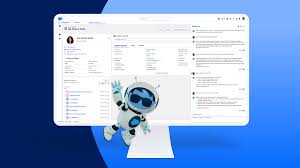
Read More
Agentic AI is Here

The Rise of Agentic AI

Beyond Predictive Models: The Rise of Agentic AI Agentic AI represents a fundamental shift from passive language models to dynamic systems capable of perception, reasoning, and action across digital and physical environments. Unlike traditional AI that merely predicts text, agentic architectures interact with the world, learn from feedback, and coordinate multiple specialized agents to solve complex problems. This evolution is built on three core principles: Core Principles of Agentic AI 1. Causality & Adaptive Decision-Making Traditional AI systems rely on statistical patterns, often producing plausible but incorrect responses. Agentic AI models cause-and-effect relationships, enabling iterative refinement when faced with unexpected outcomes. Example Applications: 2. Multimodal World Interaction Modern agentic systems integrate text, vision, and sensor data to interact with complex environments. Real-World Implementations: 3. Multi-Agent Collaboration Next-generation frameworks deploy specialized sub-agents that work in parallel rather than relying on single monolithic models. Implementation Examples: Key Components of Agentic Systems 1. Modular Skill Architectures Modern platforms enable: Use Case Scenario:A business intelligence agent that pulls real-time market data, analyzes trends, and generates reports while maintaining data governance standards 2. Multi-Agent Orchestration Advanced frameworks provide: Practical Application:Software development environments where coding, debugging, and security validation occur simultaneously through coordinated AI agents 3. Visual Environment Interaction Cutting-edge solutions bridge the gap between AI and graphical interfaces by: Implementation Example:Intelligent process automation that navigates legacy systems and modern applications without manual scripting Advanced Implementation Patterns 1. Knowledge-Enhanced Agents Example Implementation:Customer service systems that access order history, product details, and support documentation before responding 2. Human Oversight Integration Use Case:Medical diagnostic support that flags uncertain cases for professional review 3. Persistent Context Management Application Example:Project management assistants that track progress, dependencies, and timelines over weeks or months Industry Applications Sector Agentic AI Solutions Software Development Automated testing, debugging, and deployment pipelines Healthcare Integrated diagnostic systems combining multiple data sources Education Adaptive learning systems with personalized tutoring Financial Services Real-time fraud detection and risk analysis Manufacturing Dynamic process optimization and quality control Current Challenges & Research Directions Getting Started with Agentic AI For organizations beginning their agentic AI journey: The Path Forward Agentic AI represents a fundamental evolution from conversational systems to active, adaptive problem-solvers. By combining causal reasoning, specialized collaboration, and real-world interaction, these systems are moving us closer to truly intelligent automation. The future belongs to AI systems that don’t just process information – but perceive, decide, and act in dynamic environments. Organizations that embrace this paradigm today will be positioned to lead in the AI-powered economy of tomorrow. Like Related Posts Who is Salesforce? Who is Salesforce? Here is their story in their own words. From our inception, we’ve proudly embraced the identity of Read more Salesforce Unites Einstein Analytics with Financial CRM Salesforce has unveiled a comprehensive analytics solution tailored for wealth managers, home office professionals, and retail bankers, merging its Financial Read more AI-Driven Propensity Scores AI plays a crucial role in propensity score estimation as it can discern underlying patterns between treatments and confounding variables Read more Tectonic’s Successful Salesforce Track Record Salesforce Technology Services Integrator – Tectonic has successfully delivered Salesforce in a variety of industries including Public Sector, Hospitality, Manufacturing, Read more

Read More
Salesforce Launches AI-Powered Agentforce for HR Service to Transform Employee Support

Salesforce Launches AI-Powered Agentforce for HR Service to Transform Employee Support

Salesforce Inc. (NYSE: CRM) today unveiled Agentforce for HR Service, a new AI-powered solution designed to revolutionize employee support by automating routine HR tasks and delivering personalized, conversational assistance. Built on Salesforce’s existing HR Service platform, Agentforce for HR Service integrates directly into Slack and Employee Portals, enabling workers to manage common requests—such as time-off approvals, benefits updates, and payroll inquiries—through natural language interactions. For more sensitive or complex issues, the AI seamlessly hands off conversations to human HR representatives with full context, ensuring a smooth transition. AI as a Digital HR Partner HR teams are under increasing pressure, with 57% of professionals reporting they are overcapacity, according to a 2024 Society for Human Resource Management (SHRM) study. Agentforce aims to alleviate this strain by handling high-volume, repetitive tasks while allowing HR specialists to focus on strategic initiatives and employee well-being. Key capabilities include: Proven Results at Salesforce Salesforce has already deployed Agentforce for HR internally, reporting a 96% self-service resolution rate across nearly 10 million employee inquiries. “The future of work is humans and agents collaborating,” said Nathalie Scardino, President and Chief People Officer at Salesforce. “We’re leading this shift by empowering HR teams to scale support while maintaining a human touch.” Industry Adoption Underway Early adopters like Indeed Inc. are already using Agentforce to streamline hiring and employee support. Analysts see strong potential for AI to redefine HR efficiency. “HR, like every department, is being asked to do more with less,” noted Rebecca Wettemann, Principal Analyst at Valoir. “Agentforce enables HR teams to deliver faster, more consistent support by centralizing data and automating workflows.” Availability Agentforce for HR Service is now available via the Agentforce Platform, HR Service Console, and Employee Portal, with Slack integration coming in June. For more details, visit Salesforce.com. About SalesforceSalesforce is the global leader in CRM, empowering companies to connect with customers in a whole new way. For more information, visit Salesforce News. Why This Matters Salesforce’s latest innovation underscores its commitment to AI-driven productivity, positioning HR as the next frontier for agentic AI adoption. Like Related Posts Who is Salesforce? Who is Salesforce? Here is their story in their own words. From our inception, we’ve proudly embraced the identity of Read more Salesforce Marketing Cloud Transactional Emails Salesforce Marketing Cloud Transactional Emails are immediate, automated, non-promotional messages crucial to business operations and customer satisfaction, such as order Read more Salesforce Unites Einstein Analytics with Financial CRM Salesforce has unveiled a comprehensive analytics solution tailored for wealth managers, home office professionals, and retail bankers, merging its Financial Read more AI-Driven Propensity Scores AI plays a crucial role in propensity score estimation as it can discern underlying patterns between treatments and confounding variables Read more

Read More
gettectonic.com