
Large Concept Models (LCMs) are a new type of language model that differ from traditional Large Language Models (LLMs) by working with concepts, rather than individual words, to process and generate language. Instead of focusing on tokens, LCMs focus on semantic representations at the sentence level, allowing for more abstract and nuanced reasoning.
Key Features of LCMs:
- Concept-level processing: LCMs work with high-level semantic representations called concepts, which can correspond to entire sentences or cohesive ideas.
- Sentence embeddings: They utilize sentence embeddings, like those from the SONAR embedding space, to capture semantic meaning.
- Abstract reasoning: LCMs are designed to reason about abstract ideas and their interconnections, enabling more human-like understanding and problem-solving.
- Language and modality agnosticism: They are not tied to specific languages or modalities (like text, speech, or vision), making them more versatile than traditional LLMs.
- Multi-lingual and multi-modal: LCMs can support over 200 languages and various modalities, offering broader capabilities.
How LCMs Differ from LLMs:
- Focus on tokens vs. concepts: LLMs process input and generate output at the token level, while LCMs operate at the concept level.
- Embedding space: LCMs work in a high-dimensional embedding space, while LLMs typically operate on discrete token sequences.
- Reasoning capabilities: LCMs are designed to enable abstract reasoning and understanding of complex ideas, while LLMs may struggle with more intricate concepts.
Potential Applications of LCMs:
- Improved language understanding: LCMs could lead to more accurate and nuanced language understanding, going beyond simple word-level analysis.
- Enhanced creative generation: They could be used to generate more creative and original content by understanding the underlying concepts and relationships.
- Multilingual and multi-modal applications: LCMs’ language and modality agnosticism opens up possibilities for applications across different languages and media.
- Reasoning and problem-solving: LCMs could be used to solve complex problems by understanding the concepts involved and their relationships.

Who is Salesforce? Here is their story in their own words. From our inception, we've proudly embraced the identity of Read more

Salesforce has unveiled a comprehensive analytics solution tailored for wealth managers, home office professionals, and retail bankers, merging its Financial Read more
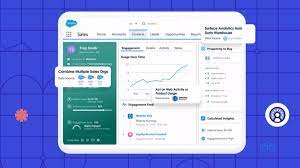
AI plays a crucial role in propensity score estimation as it can discern underlying patterns between treatments and confounding variables Read more

Salesforce Technology Services Integrator - Tectonic has successfully delivered Salesforce in a variety of industries including Public Sector, Hospitality, Manufacturing, Read more


