

AI Tools Archives - gettectonic.com - Page 8
salesforce end to end

Salesforce and Google Announcement

Salesforce (NYSE:CRM) has entered into a deal with Google (NASDAQ:GOOGL) to offer its customer relations management software, Agentforce artificial intelligence assistants, and Data Cloud offerings through Google Cloud, the companies announced today. Google and Salesforce already have many of the same clients, and this new deal will allow for more product integration between Google Workspace and Salesforce’s customer relationship management and AI offerings. Salesforce already uses Amazon (AMZN) Web Services for much of its cloud computing. “Our mutual customers have asked us to be able to work more seamlessly across Salesforce and Google Cloud, and this expanded partnership will help them accelerate their AI transformations with agentic AI, state-of-the-art AI models, data analytics, and more,” said Thomas Kurian, CEO of Google Cloud. The deal is expected to total $2.5B over the next seven years, according to a report by Bloomberg. Salesforce and Google today announced a major expansion of their strategic partnership, delivering choice in the models and capabilities businesses use to build and deploy AI-powered agents. In today’s constantly evolving AI landscape, innovations like autonomous agents are emerging so quickly that businesses struggle to keep pace. This expanded partnership provides crucial flexibility, empowering customers to develop tailored AI solutions that meet their specific needs, rather than being locked into a single model provider. Google Cloud is at the forefront of enterprise AI innovation with millions of developers building with Google’s cutting-edge Gemini models and on Google Cloud’s AI-optimized infrastructure. This expanded partnership will empower Salesforce customers to build Agentforce agents using Gemini and to deploy Salesforce on Google Cloud. This is an expansion of the existing partnership that allows customers to use data from Data Cloud and Google BigQuery bi-directionally via zero-copy technology—further equipping customers with the data, AI, trust, and actions they need to bring autonomous agents into their businesses. Additionally, this integration empowers Agentforce agents with the ability to reference up-to-the-minute data, news, current events, and credible citations, substantially enhancing their contextual awareness and ability to deliver accurate, evidence-backed responses. For example, in supply chain management and logistics, an agent built with Agentforce could track shipments and monitor inventory levels in Salesforce Commerce Cloud and proactively identify potential disruptions using real-time data from Google Search, including weather conditions, port congestion, and geopolitical events. Availability is expected in the coming months. AI: Unlocking the Power of Choice and Flexibility with Gemini and Agentforce Businesses need the freedom to choose the best models for their needs rather than be locked into one vendor. In 2025, Google’s Gemini models will also be available for prompt building and reasoning directly within Agentforce. With Gemini and Agentforce, businesses will benefit from: For example, an insurance customer can submit a claim with photos of the damage and an audio voicemail from a witness. Agentforce, using Gemini, can then help the insurance provider deliver better customer experiences by processing all these inputs, assessing the claim’s validity, and even using text-to-speech to contact the customer with a resolution, streamlining the traditionally lengthy claims process. Availability is expected this year. Trust: Salesforce Platform deployed on Google Cloud Customers will be able to use Salesforce’s unified platform (Agentforce, Data Cloud, Customer 360) on Google Cloud’s highly secure, AI-optimized infrastructure, benefiting from features like dynamic grounding, zero data retention, and toxicity detection provided by the Einstein Trust Layer. Once Salesforce products are available on Google Cloud, customers will also have the ability to procure Salesforce offerings through the Google Cloud Marketplace, opening up new possibilities for global businesses to optimize their investments across Salesforce and Google Cloud and benefiting thousands of existing joint customers. Action: Enhanced Employee Productivity and Customer Service with AI-Powered Integrations Millions use Salesforce and Google Cloud daily. This partnership prioritizes choice and flexibility, enabling seamless cross-platform work. New and deeper connections between platforms like Salesforce Service Cloud and Google Cloud’s Customer Engagement Suite, as well as Slack and Google Workspace, will empower AI agents and service representatives with unified data access, streamlined workflows, and advanced AI capabilities, regardless of platform. Salesforce and Google Cloud are deeply integrating their customer service platforms—Salesforce Service Cloud and Google Cloud’s Customer Engagement Suite—to create a seamless and intelligent support experience. Expected later this year, this unified approach empowers AI agents in Service Cloud with: Salesforce and Google Cloud are also exploring deeper integrations between Slack and Google Workspace, boosting productivity and creating a more cohesive digital workspace for teams and organizations. The companies are currently exploring use cases such as: Expanding Partnership Capabilities and Integrations This partnership goes beyond core product integrations to deliver a more connected and intelligent data foundation for businesses. Expected availability throughout 2025: This landmark partnership between Salesforce and Google represents a strategic paradigm shift in enterprise AI deployment, emphasizing infrastructure innovation, AI capability enhancement, and enterprise value. The integration of Google Search grounding provides a unique competitive advantage, offering real-time, factual responses backed by the world’s most comprehensive search engine. The companies are committed to ongoing innovation and deeper collaboration to empower businesses with even more powerful solutions. Like1 Related Posts Who is Salesforce? Who is Salesforce? Here is their story in their own words. From our inception, we’ve proudly embraced the identity of Read more Salesforce Marketing Cloud Transactional Emails Salesforce Marketing Cloud Transactional Emails are immediate, automated, non-promotional messages crucial to business operations and customer satisfaction, such as order Read more Salesforce Unites Einstein Analytics with Financial CRM Salesforce has unveiled a comprehensive analytics solution tailored for wealth managers, home office professionals, and retail bankers, merging its Financial Read more AI-Driven Propensity Scores AI plays a crucial role in propensity score estimation as it can discern underlying patterns between treatments and confounding variables Read more


Read More
Neuro-symbolic AI

Neuro-symbolic AI

Neuro-Symbolic AI: Bridging Neural Networks and Symbolic Processing for Smarter AI Systems Neuro-symbolic AI integrates neural networks with rules-based symbolic processing to enhance artificial intelligence systems’ accuracy, explainability, and precision. Neural networks leverage statistical deep learning to identify patterns in large datasets, while symbolic AI applies logic and rules-based reasoning common in mathematics, programming languages, and expert systems. The Balance Between Neural and Symbolic AIThe fusion of neural and symbolic methods has revived debates in the AI community regarding their relative strengths. Neural AI excels in deep learning, including generative AI, by distilling patterns from data through distributed statistical processing across interconnected neurons. However, this approach often requires significant computational resources and may struggle with explainability. Conversely, symbolic AI, which relies on predefined rules and logic, has historically powered applications like fraud detection, expert systems, and argument mining. While symbolic systems are faster and more interpretable, their reliance on manual rule creation has been a limitation. Innovations in training generative AI models now allow more efficient automation of these processes, though challenges like hallucinations and poor mathematical reasoning persist. Complementary Thinking ModelsPsychologist Daniel Kahneman’s analogy of System 1 and System 2 thinking aptly describes the interplay between neural and symbolic AI. Neural AI, akin to System 1, is intuitive and fast—ideal for tasks like image recognition. Symbolic AI mirrors System 2, engaging in slower, deliberate reasoning, such as understanding the context and relationships in a scene. Core Concepts of Neural NetworksArtificial neural networks (ANNs) mimic the statistical connections between biological neurons. By modeling patterns in data, ANNs enable learning and feature extraction at different abstraction levels, such as edges, shapes, and objects in images. Key ANN architectures include: Despite their strengths, neural networks are prone to hallucinations, particularly when overconfident in their predictions, making human oversight crucial. The Role of Symbolic ReasoningSymbolic reasoning underpins modern programming languages, where logical constructs (e.g., “if-then” statements) drive decision-making. Symbolic AI excels in structured applications like solving math problems, representing knowledge, and decision-making. Algorithms like expert systems, Bayesian networks, and fuzzy logic offer precision and efficiency in well-defined workflows but struggle with ambiguity and edge cases. Although symbolic systems like IBM Watson demonstrated success in trivia and reasoning, scaling them to broader, dynamic applications has proven challenging due to their dependency on manual configuration. Neuro-Symbolic IntegrationThe integration of neural and symbolic AI spans a spectrum of techniques, from loosely coupled processes to tightly integrated systems. Examples of integration include: History of Neuro-Symbolic AIBoth neural and symbolic AI trace their roots to the 1950s, with symbolic methods dominating early AI due to their logical approach. Neural networks fell out of favor until the 1980s when innovations like backpropagation revived interest. The 2010s saw a breakthrough with GPUs enabling scalable neural network training, ushering in today’s deep learning era. Applications and Future DirectionsApplications of neuro-symbolic AI include: The next wave of innovation aims to merge these approaches more deeply. For instance, combining granular structural information from neural networks with symbolic abstraction can improve explainability and efficiency in AI systems like intelligent document processing or IoT data interpretation. Neuro-symbolic AI offers the potential to create smarter, more explainable systems by blending the pattern-recognition capabilities of neural networks with the precision of symbolic reasoning. As research advances, this synergy may unlock new horizons in AI capabilities. Like Related Posts Who is Salesforce? Who is Salesforce? Here is their story in their own words. From our inception, we’ve proudly embraced the identity of Read more Salesforce Unites Einstein Analytics with Financial CRM Salesforce has unveiled a comprehensive analytics solution tailored for wealth managers, home office professionals, and retail bankers, merging its Financial Read more AI-Driven Propensity Scores AI plays a crucial role in propensity score estimation as it can discern underlying patterns between treatments and confounding variables Read more Tectonic’s Successful Salesforce Track Record Salesforce Technology Services Integrator – Tectonic has successfully delivered Salesforce in a variety of industries including Public Sector, Hospitality, Manufacturing, Read more

Read More
Generative AI Prompts with Retrieval Augmented Generation

AI Prompts for Small Businesses

How AI Prompts Can Help Small Businesses Win More Customers Getting new customers can be a challenge for small businesses. You may be eager to explore artificial intelligence (AI) but unsure where to begin. The answer? AI prompts—a simple yet powerful way to automate and optimize sales efforts. This guide explores five AI prompts designed to enhance your sales process, from personalized outreach to lead generation. Let’s dive in! What Is an AI Prompt? An AI prompt is a specific instruction or question given to an AI tool to generate responses or perform tasks. The more precise the prompt, the better the results. For small businesses, AI prompts can: Why AI Matters for Small Business Sales AI is a game-changer for small business sales. It provides insights into customer behavior, streamlines processes, and enhances decision-making. Unlike enterprise AI applications, SMB-focused AI helps automate repetitive tasks, allowing sales teams to focus on relationship-building and closing deals. A strong starting point? AI-powered CRM tools. Integrating AI with your CRM unlocks predictive analytics, automation, and smarter customer engagement. In fact, small businesses using Salesforce AI have reported: AI Prompts vs. Traditional Sales Methods AI-Powered Prompts Traditional Sales Methods Automated lead generation Manual lead hunting Personalized sales emails Generic mass emails Instant follow-ups Delayed responses AI-generated sales scripts Improvised pitches Smart objection handling Reactive responses 5 AI Prompts to Supercharge Your Sales 1. Lead Generation Prompt Objective: Identify potential leads quickly. AI Prompt: “Generate a list of 10 potential leads based on [industry, location, company size].” How It Helps: AI scans data to find ideal customers, saving time and improving outreach accuracy. Example Output: 2. Sales Email Drafting Prompt Objective: Craft compelling emails that boost click rates. AI Prompt: “Write a persuasive sales email to [target] highlighting our [product/service] and inviting them to a demo.” How It Helps: AI generates tailored emails that resonate with prospects, improving open and response rates. Example Output: Subject: Transform Your Operations with Our CRMHi [First Name],I noticed your business is growing rapidly in [industry]. Our CRM can streamline operations and boost efficiency. Let’s schedule a quick demo this week—let me know your availability![Your Name] 3. Customer Follow-Up Prompt Objective: Keep potential customers engaged. AI Prompt: “Write a follow-up email to [customer] who expressed interest in our [product/service], including a gentle reminder and any new updates.” How It Helps: AI ensures timely, professional follow-ups, maintaining engagement without being pushy. Example Output: Subject: Following Up on Our ConversationHi [First Name],I wanted to check in on our discussion about [product/service]. We recently introduced [new feature], which could be a great fit for you. Let me know if you’d like to reconnect.Thanks,[Your Name] 4. Sales Pitch Script Prompt Objective: Develop a persuasive pitch. AI Prompt: “Create a 2-minute sales pitch for our [product/service] emphasizing key benefits and unique selling points.” How It Helps: A well-structured pitch increases confidence and improves conversion rates. Example Output: “Hello! My name is [Your Name] from [Company Name]. We specialize in [product/service]. What sets us apart is [unique benefit]. Our solution has helped companies like yours achieve [specific results]. Interested in learning more?” 5. Objection Handling Prompt Objective: Overcome sales objections effectively. AI Prompt: “List two common objections about our [product/service] and provide persuasive responses.” How It Helps: Prepares sales teams with effective responses to common objections, increasing deal closures. Example Output: Objection: “It’s too expensive.”Response: “Our solution pays for itself within months through increased efficiency.” Objection: “We’re happy with our current provider.”Response: “That’s great! Many of our clients felt the same until they saw how much more they could achieve with our features.” Unlock Growth with AI-Powered Sales Using AI prompts for sales isn’t just an experiment—it’s a proven way to boost efficiency, personalization, and success. Businesses that embrace AI-driven strategies will outpace competitors and scale faster. Ready to transform your sales game? Start using AI prompts today! Contact Tectonic. Like Related Posts Who is Salesforce? Who is Salesforce? Here is their story in their own words. From our inception, we’ve proudly embraced the identity of Read more Salesforce Marketing Cloud Transactional Emails Salesforce Marketing Cloud Transactional Emails are immediate, automated, non-promotional messages crucial to business operations and customer satisfaction, such as order Read more Salesforce Unites Einstein Analytics with Financial CRM Salesforce has unveiled a comprehensive analytics solution tailored for wealth managers, home office professionals, and retail bankers, merging its Financial Read more AI-Driven Propensity Scores AI plays a crucial role in propensity score estimation as it can discern underlying patterns between treatments and confounding variables Read more

Read More
Build Launch and Track Campaigns

How to Create Professional Meeting Minutes Without MS Co-Pilot

Ever wondered how to draft professional meeting minutes without relying on MS Co-Pilot? While tools like Microsoft Teams can record meetings and generate transcripts, they often come with limitations. For instance, MS Teams requires an MS Co-Pilot subscription to analyze transcripts and create meeting minutes, and even with that, crafting effective prompts for such tools is essential for generating useful outputs. Recently, a colleague sent a meeting recording—without a transcript—and asked us to create the minutes. Here’s how we accomplished this task, step by step. Step 1: Transcribing the Meeting Recording Since AI models cannot directly process audio or video, the first step was to generate a text transcript of the recording. I used Microsoft Word’s Dictate → Transcribe feature, but encountered a roadblock: the recording exceeded the tool’s 300MB file size limit (it was 550MB). To bypass this, I extracted the audio from the video using VLC Media Player, a versatile media tool: With the audio file ready, I returned to Microsoft Word. This time, the smaller file successfully transcribed into a 45-page text document of decent quality. Step 2: Crafting a Prompt for Meeting Minutes Creating effective meeting minutes with an AI model requires a detailed, structured prompt. Think of it as giving precise instructions to a chef—vagueness leads to unsatisfactory results. I started with a simple XML-style prompt for ChatGPT (GPT-4), using tags to organize key elements: plaintextCopyEditYou are an expert in creating meeting minutes from a given transcript. Analyze the provided transcript and generate professional meeting minutes with the specified structure. <transcript> {{meeting_transcript.docx}} </transcript> <structure> – Main Points Discussed – Decisions, Resolutions, and Agreements – Summary of Differing Opinions (if any) – Action Items: Tasks assigned, responsible parties, and deadlines – Follow-Ups: Topics to revisit in future meetings </structure> <instructions> – Stick strictly to the transcript content. – Do not invent or infer information. – Keep the minutes objective, factual, and concise. – Ensure clarity and self-containment for future reference. </instructions> This prompt acted as a baseline, providing clarity and structure for the model to extract and summarize relevant details from the transcript. Step 3: Refining the Prompt Using Anthropic’s Workbench To improve the clarity and effectiveness of the prompt, I used Anthropic’s Workbench, which offers an automatic prompt enhancement tool. The goal was to refine the structure and optimize the instructions. Here’s the improved version generated by Anthropic: plaintextCopyEditYou are an expert in creating professional meeting minutes from transcripts. Analyze the provided transcript and organize the information systematically before drafting the minutes. <meeting_transcript> {{meeting_transcript.docx}} </meeting_transcript> <analysis_structure> 1. Main Points Discussed: – Key topics with relevant quotes from the transcript. 2. Decisions and Agreements: – Summary of resolutions with supporting quotes. 3. Differing Opinions (if any): – Notable disagreements or alternative viewpoints. 4. Action Items: – Tasks, responsible parties, and deadlines. 5. Follow-Up Topics: – Issues or items to revisit in future meetings. </analysis_structure> <guidelines> – Follow the analysis structure before drafting the final minutes. – Use clear, concise language and a professional tone. – Avoid unnecessary details and stick to transcript content. – Ensure the minutes are self-contained and explanatory. </guidelines> This enhanced prompt incorporated a “chain-of-thought” methodology, guiding the model to analyze and organize the information step by step before drafting the final minutes. Exploring Other Tools: OpenAI’s Prompt Improver I also tested OpenAI’s Prompt Improver in its Chat Playground, which generated a similarly refined prompt: plaintextCopyEditCreate professional meeting minutes from the provided transcript. Use the following structure and guidelines to ensure accuracy and clarity: **Transcript:** – File: {{meeting_transcript.docx}} **Structure:** – Main Points Discussed – Decisions and Agreements – Differing Opinions (if any) – Action Items – Follow-Up Topics **Instructions:** – Maintain objectivity and stick to the transcript content. – Use concise yet explanatory language. – Adhere strictly to the structure for clarity and reference. – Avoid unnecessary embellishments or personal insights. **Output Format:** – Use bullet points for clarity, with no more than one level of indentation. – Ensure the minutes are self-contained and useful for future reference. While effective, OpenAI’s output lacked the chain-of-thought methodology and example formatting provided by Anthropic’s tool, which resulted in less structured meeting minutes. Key Takeaways By following this approach, you can produce professional meeting minutes efficiently—no MS Co-Pilot subscription required. Like Related Posts Who is Salesforce? Who is Salesforce? Here is their story in their own words. From our inception, we’ve proudly embraced the identity of Read more Salesforce Unites Einstein Analytics with Financial CRM Salesforce has unveiled a comprehensive analytics solution tailored for wealth managers, home office professionals, and retail bankers, merging its Financial Read more AI-Driven Propensity Scores AI plays a crucial role in propensity score estimation as it can discern underlying patterns between treatments and confounding variables Read more Tectonic’s Successful Salesforce Track Record Salesforce Technology Services Integrator – Tectonic has successfully delivered Salesforce in a variety of industries including Public Sector, Hospitality, Manufacturing, Read more

Read More
Scope of Generative AI

Generative AI Game Changer for Cybersecurity

Generative AI: A Game Changer for Cybersecurity—Both Good and Bad Generative AI is revolutionizing cybersecurity, enabling both cybercriminals and defenders to operate faster, smarter, and at a larger scale. How Hackers Leverage GenAI Cybercriminals are using generative AI to: One real-world example: In early 2024, fraudsters used a deepfake of a multinational company’s CFO to trick an employee into transferring $25 million. How Cybersecurity Teams Use GenAI for Defense Enterprise security teams are adopting generative AI to: According to a 2024 CrowdStrike survey, 64% of cybersecurity professionals are already researching or using AI tools, with 69% planning to invest further within a year. The Risks of AI in Cybersecurity Despite its benefits, AI introduces new risks: Security leaders must balance AI adoption with human oversight to maximize its defensive potential while minimizing unintended risks. As AI continues to shape the cybersecurity landscape, both attackers and defenders must adapt to stay ahead. Like Related Posts Who is Salesforce? Who is Salesforce? Here is their story in their own words. From our inception, we’ve proudly embraced the identity of Read more Salesforce Unites Einstein Analytics with Financial CRM Salesforce has unveiled a comprehensive analytics solution tailored for wealth managers, home office professionals, and retail bankers, merging its Financial Read more AI-Driven Propensity Scores AI plays a crucial role in propensity score estimation as it can discern underlying patterns between treatments and confounding variables Read more Tectonic’s Successful Salesforce Track Record Salesforce Technology Services Integrator – Tectonic has successfully delivered Salesforce in a variety of industries including Public Sector, Hospitality, Manufacturing, Read more

Read More
Salesforce Life Sciences Cloud and Honeywell

Salesforce Life Sciences Cloud and Honeywell

Honeywell’s TrackWise® Quality solution suite, in combination with Salesforce Life Sciences Cloud, will provide a comprehensive software platform for pharmaceutical and medical technology companies. Honeywell has expanded its strategic partnership with Salesforce, Inc. to introduce an integrated software platform designed for the life sciences industry. This platform, which includes Honeywell’s TrackWise Quality, Salesforce Life Sciences Cloud, Agentforce, and other solutions, aims to help pharmaceutical and medical technology companies accelerate the delivery of critical medications and healthcare devices with enhanced safety and cost efficiency. By digitizing and automating quality and compliance processes, Honeywell’s TrackWise Quality enables companies to manufacture products more efficiently, mitigate risks, reduce production costs, and bring safer products to market faster. Salesforce Life Sciences Cloud consolidates diverse data sources—such as clinical test results and medical records—to optimize interactions between pharmaceutical and medtech organizations, healthcare professionals, partners, and patients. This collaboration underscores the shared commitment of Honeywell and Salesforce to advancing automation and efficiency in the life sciences sector. “Our ongoing commitment to providing innovative software to manufacturers of critical life-supporting treatments centers around fostering trust between providers and patients,” said Frank Defesche, SVP & GM, Life Sciences at Salesforce. “The long-standing collaboration between Salesforce and Honeywell strengthens the life sciences industry by enhancing quality interactions and products, ultimately leading to improved patient outcomes.” “Partnering with Salesforce allows us to leverage our combined expertise in life sciences to drive operational efficiency, improve quality, and enhance patient-centric solutions through technology,” said Sunil Pandita, Vice President & General Manager of Honeywell Life Sciences. “From assisting patients in finding life-changing clinical trials to detecting anomalies in pharmaceutical manufacturing, Honeywell and Salesforce technologies are enabling better patient care.” Honeywell’s TrackWise Quality fosters a proactive approach to quality management by integrating industry best practices, advanced tracking and analytics, and artificial intelligence (AI) capabilities. This empowers life sciences companies to harness data more effectively, optimize performance, and enhance decision-making processes. Salesforce Life Sciences Cloud serves as a comprehensive, AI-powered engagement platform for pharmaceutical and medtech companies. Built on Sales Cloud and Service Cloud, it streamlines processes such as automating pharmacy benefit verification and expediting the screening of clinical trial candidates. These enhancements improve patient access, medication adherence, and accelerate diverse patient recruitment while reducing trial attrition. Additional Salesforce solutions within the platform include Agentforce, Data Cloud, and Analytics. As part of its continued commitment to life sciences customers, Honeywell has joined the Salesforce Agentforce Partner Network, a global ecosystem of partners developing solutions for regulatory-compliant training materials for life sciences professionals. To learn more about Honeywell’s industry-leading technologies for life sciences, visit: www.honeywell.com/us/en/industries/life-sciences. Salesforce, Salesforce Life Sciences Cloud, Agentforce, Data Cloud, and other names are trademarks of Salesforce, Inc. About Honeywell Honeywell is a diversified operating company serving a wide range of industries worldwide. Its business aligns with three key megatrends—automation, the future of aviation, and energy transition—supported by the Honeywell Accelerator operating system and Honeywell Forge IoT platform. As a trusted partner, Honeywell helps organizations address complex global challenges, delivering innovative solutions through its Aerospace Technologies, Industrial Automation, Building Automation, and Energy and Sustainability Solutions segments. For more news and updates on Honeywell, visit www.honeywell.com/newsroom. Like Related Posts Who is Salesforce? Who is Salesforce? Here is their story in their own words. From our inception, we’ve proudly embraced the identity of Read more Salesforce Marketing Cloud Transactional Emails Salesforce Marketing Cloud Transactional Emails are immediate, automated, non-promotional messages crucial to business operations and customer satisfaction, such as order Read more Salesforce Unites Einstein Analytics with Financial CRM Salesforce has unveiled a comprehensive analytics solution tailored for wealth managers, home office professionals, and retail bankers, merging its Financial Read more AI-Driven Propensity Scores AI plays a crucial role in propensity score estimation as it can discern underlying patterns between treatments and confounding variables Read more

Read More
The Hidden Risks of Over-Reliance on AI

The Hidden Risks of Over-Reliance on AI

Are Marketers Trusting AI Too Much? How to Avoid Losing Your Strategic Edge AI tools have revolutionized how marketers approach research, content creation, and decision-making. However, an overreliance on these tools could undermine critical thinking and strategic planning, leaving marketers vulnerable in a fast-evolving landscape. Here’s how to balance the power of automation with human insight. The Rise of AI in Search and Marketing In late December, SEO consultancy Previsible shared a striking report: Google’s search dominance has plateaued and is now being challenged by AI-assisted search tools. These tools, such as ChatGPT, Claude, and Google’s own AI-enhanced search, are growing in popularity due to their ability to deliver contextually relevant and personalized results. Unlike traditional search, which relies on keyword matching, AI-driven search processes intent and context. This shift is reshaping how users find information and make decisions. How AI Is Changing User Behavior The increasing sophistication of AI tools brings both opportunities and risks. Users often trust AI-generated outputs without question, assuming they’re accurate and complete. Traditional search, by contrast, forces users to critically analyze and filter multiple sources. This blind trust in AI mirrors the concept of “System 1 thinking,” as described by Nobel Prize-winning psychologist Daniel Kahneman in Thinking, Fast and Slow. As AI models like ChatGPT operate primarily as “System 1 thinkers,” users risk adopting a similar approach, bypassing critical analysis in favor of convenience. The Hidden Risks of Over-Reliance on AI Younger marketers may be especially at risk of falling into this trap. Many are using AI tools like ChatGPT to summarize information or generate ideas, often without questioning the accuracy of the outputs. For B2B marketers, the allure of AI lies in its speed and perceived accuracy. However, this reliance on automation could lead to a generation of marketers who lack the ability—or inclination—to think strategically. The danger is clear: unchecked dependence on AI tools could foster a “groupthink” mentality, where creativity and critical thinking are sidelined. Without intervention, marketing departments risk becoming overly reliant on tools that were designed to enhance human efforts, not replace them. How Marketing Leaders Can Address This Threat To counter this trend, marketing leaders must actively promote the development of strategic skills. Here’s how: In a world increasingly driven by AI, marketers who can blend automation with strategic thinking will be best positioned for success. Using AI to Enhance, Not Replace, Strategic Thinking AI should empower marketers to make better decisions—not serve as the sole decision-maker. As one professor aptly put it, “Use AI to become a better student, not to be the student.” The key is balance. By combining the intuitive capabilities of AI with the deliberate, analytical approach of System 2 thinking, marketers can leverage technology without sacrificing creativity or strategy. In short, AI is a tool—not a replacement for human ingenuity. Those who recognize this distinction will thrive in an increasingly automated world. Like Related Posts Who is Salesforce? Who is Salesforce? Here is their story in their own words. From our inception, we’ve proudly embraced the identity of Read more Salesforce Marketing Cloud Transactional Emails Salesforce Marketing Cloud Transactional Emails are immediate, automated, non-promotional messages crucial to business operations and customer satisfaction, such as order Read more Salesforce Unites Einstein Analytics with Financial CRM Salesforce has unveiled a comprehensive analytics solution tailored for wealth managers, home office professionals, and retail bankers, merging its Financial Read more AI-Driven Propensity Scores AI plays a crucial role in propensity score estimation as it can discern underlying patterns between treatments and confounding variables Read more

Read More
AI Arms Race

AI-Powered Cancer Immunotherapy

AI-Powered Cancer Immunotherapy: How Predictive Models Are Personalizing Treatment The Challenge of Predicting Immunotherapy Success Immunotherapy—particularly immune checkpoint inhibitors (ICIs)—has revolutionized cancer treatment, offering long-term remission for some patients with lung cancer, melanoma, and kidney cancer. However, only 20-40% of patients respond to ICIs, and clinicians struggle to predict who will benefit. Current biomarkers like tumor mutational burden (TMB) and PD-L1 expression are expensive, inconsistent, and not universally applicable. This leaves doctors relying on trial-and-error approaches, delaying effective treatment and increasing costs. SCORPIO: An AI Tool Using Routine Blood Tests to Predict Treatment Response Researchers from Mount Sinai’s Tisch Cancer Institute and Memorial Sloan Kettering Cancer Center have developed SCORPIO, an AI model that predicts ICI effectiveness using routine blood tests and clinical data—eliminating the need for costly genomic sequencing. How SCORPIO Works Key Advantages Over Traditional Methods ✔ More accurate than PD-L1 & TMB testing in trials✔ Works across 21 cancer types (validated in 10,000+ patients)✔ Low-cost & scalable—uses existing lab tests✔ No specialized equipment needed, ideal for resource-limited settings Why This Matters for Cancer Care Next Steps: From Research to Real-World Use Before widespread adoption, SCORPIO will undergo prospective clinical trials to confirm real-world performance. Challenges include: The Future of AI in Immunotherapy SCORPIO is part of a growing wave of AI tools transforming oncology: As Diego Chowell, PhD (Mount Sinai) notes: “SCORPIO represents a major step toward democratizing precision oncology—making advanced cancer care accessible to all patients, not just those at specialized centers.” The Bottom Line AI is shifting immunotherapy from trial-and-error to predictive, personalized medicine. With tools like SCORPIO, the future of cancer treatment is smarter, faster, and more equitable. Next Frontier? Combining AI with real-time patient monitoring to dynamically adjust therapies—bringing us closer to truly adaptive cancer care. Like Related Posts Who is Salesforce? Who is Salesforce? Here is their story in their own words. From our inception, we’ve proudly embraced the identity of Read more Salesforce Marketing Cloud Transactional Emails Salesforce Marketing Cloud Transactional Emails are immediate, automated, non-promotional messages crucial to business operations and customer satisfaction, such as order Read more Salesforce Unites Einstein Analytics with Financial CRM Salesforce has unveiled a comprehensive analytics solution tailored for wealth managers, home office professionals, and retail bankers, merging its Financial Read more AI-Driven Propensity Scores AI plays a crucial role in propensity score estimation as it can discern underlying patterns between treatments and confounding variables Read more

Read More
The AI Adoption Paradox

The AI Adoption Paradox

The AI Adoption Paradox: Why Society Struggles to Keep Up with Rapid Innovation Public discourse around artificial intelligence (AI) oscillates between extremes. Is AI overhyped, or is it truly a civilization-altering force? Are foundation models intelligent, or merely sophisticated statistical tools? Is artificial general intelligence (AGI) imminent, or is the concept fundamentally flawed? Most observers land somewhere in the middle: AI is impressive but exaggerated, useful but not truly “intelligent,” and AGI remains distant. Yet, to some, these debates miss the point entirely. AI is already reshaping industries, automating workflows, and demonstrating capabilities that resemble human reasoning. The real question isn’t whether AI is transformative—it’s why adoption lags so far behind innovation. The Slow March of Progress In 2014, while working on an outsourcing initiative, one observer questioned why certain tasks required human labor at all. A video by CGP Grey, “Humans Need Not Apply,” crystallized the idea that automation would eventually render many jobs obsolete. A decade later, AI and robotics have advanced dramatically—yet daily life remains largely unchanged. McKinsey Global Institute (MGI) projected in 2015 that automation would gain traction by 2025. OpenAI’s release of ChatGPT in late 2022 accelerated that timeline, yet adoption remains sluggish. Despite 300 million weekly ChatGPT users, only 10 million pay for the service—less than 0.3% of the global workforce. Even with AI embedded in countless applications, the predicted 15% automation of baseline work has yet to materialize. The Bottlenecks: Design, Enterprise Hesitation, and Human Resistance 1. Clunky Interfaces Stifle Mass Adoption AI’s biggest hurdle may be poor user experience. OpenAI’s breakthrough wasn’t just GPT-3—it was ChatGPT’s accessible interface, which brought AI to the masses. Yet, two years later, the platform remains largely unchanged. Most users treat it like a search engine, unaware of its full potential. Model naming conventions further confuse consumers. What is “Gemini 1.5 Flash”? Is “Opus” better than “Haiku”? If AI companies want mass adoption, they must simplify branding and prioritize intuitive design. 2. Enterprises: Caught Between Disruption and Inertia While venture funding for AI startups surged to $101 billion in 2024, most investment flows into B2B companies selling to legacy firms—the very organizations AI could eventually displace. Many enterprises remain hesitant, citing hallucinations, security risks, and integration challenges. Employees, meanwhile, bypass restrictions, uploading sensitive data to third-party AI tools—deepening management’s distrust. The result? A widening gap between AI’s capabilities and its real-world implementation. 3. Human Stubbornness: The Biggest Roadblock The final barrier is psychological. Many professionals treat AI as an abstract concept rather than a practical tool. Consulting firms, for example, may sprinkle AI buzzwords into presentations but resist hands-on experimentation. Mastery requires practice—yet few invest the time needed to harness AI effectively. The Path Forward AI’s potential is undeniable, but its impact hinges on overcoming adoption inertia. Companies must: For individuals, the imperative is clear: Those who embrace AI will outpace those who don’t. The technology is here—the only question is who will use it first, and who will be left behind. As the saying goes: You don’t need to outrun the bear—just the other humans. Like Related Posts Who is Salesforce? Who is Salesforce? Here is their story in their own words. From our inception, we’ve proudly embraced the identity of Read more Salesforce Unites Einstein Analytics with Financial CRM Salesforce has unveiled a comprehensive analytics solution tailored for wealth managers, home office professionals, and retail bankers, merging its Financial Read more AI-Driven Propensity Scores AI plays a crucial role in propensity score estimation as it can discern underlying patterns between treatments and confounding variables Read more Tectonic’s Successful Salesforce Track Record Salesforce Technology Services Integrator – Tectonic has successfully delivered Salesforce in a variety of industries including Public Sector, Hospitality, Manufacturing, Read more

Read More
Prompt Decorators

Prompt Decorators

Prompt Decorators: A Structured Approach to Enhancing AI Responses Artificial intelligence has transformed how we interact with technology, offering powerful capabilities in content generation, research, and problem-solving. However, the quality of AI responses often hinges on how effectively users craft their prompts. Many encounter challenges such as vague answers, inconsistent outputs, and the need for repetitive refinement. Prompt Decorators provide a solution—structured prefixes that guide AI models to generate clearer, more logical, and better-organized responses. Inspired by Python decorators, this method standardizes prompt engineering, making AI interactions more efficient and reliable. The Challenge of AI Prompting While AI models like ChatGPT excel at generating human-like text, their outputs can vary widely based on prompt phrasing. Common issues include: Without a systematic approach, users waste time fine-tuning prompts instead of getting useful answers. What Are Prompt Decorators? Prompt Decorators are simple prefixes added to prompts to modify AI behavior. They enforce structured reasoning, improve accuracy, and customize responses. Example Without a Decorator: “Suggest a name for an AI YouTube channel.”→ The AI may return a basic list of names without justification. Example With +++Reasoning Decorator: “+++Reasoning Suggest a name for an AI YouTube channel.”→ The AI first explains its naming criteria (e.g., clarity, memorability, relevance) before generating suggestions. Key Prompt Decorators & Their Uses Decorator Function Example Use Case +++Reasoning Forces AI to explain logic before answering “+++Reasoning What’s the best AI model for text generation?” +++StepByStep Breaks complex tasks into clear steps “+++StepByStep How do I fine-tune an LLM?” +++Debate Presents pros and cons for balanced discussion “+++Debate Is cryptocurrency a good investment?” +++Critique Evaluates strengths/weaknesses before suggesting improvements “+++Critique Analyze the pros and cons of online education.” +++Refine(N) Iteratively improves responses (N = refinement rounds) “+++Refine(3) Write a tagline for an AI startup.” +++CiteSources Includes references for claims “+++CiteSources Who invented the printing press?” +++FactCheck Prioritizes verified information “+++FactCheck What are the health benefits of coffee?” +++OutputFormat(FMT) Structures responses (JSON, Markdown, etc.) “+++OutputFormat(JSON) List top AI trends in 2024.” +++Tone(STYLE) Adjusts response tone (formal, casual, etc.) “+++Tone(Formal) Write an email requesting a deadline extension.” Why Use Prompt Decorators? Real-World Applications The Future of Prompt Decorators As AI evolves, Prompt Decorators could: Conclusion Prompt Decorators offer a simple yet powerful way to enhance AI interactions. By integrating structured directives, users can achieve more reliable, insightful, and actionable outputs—reducing frustration and unlocking AI’s full potential. Like Related Posts Who is Salesforce? Who is Salesforce? Here is their story in their own words. From our inception, we’ve proudly embraced the identity of Read more Salesforce Marketing Cloud Transactional Emails Salesforce Marketing Cloud Transactional Emails are immediate, automated, non-promotional messages crucial to business operations and customer satisfaction, such as order Read more Salesforce Unites Einstein Analytics with Financial CRM Salesforce has unveiled a comprehensive analytics solution tailored for wealth managers, home office professionals, and retail bankers, merging its Financial Read more AI-Driven Propensity Scores AI plays a crucial role in propensity score estimation as it can discern underlying patterns between treatments and confounding variables Read more

Read More
Potential of GenAI in Healthcare

5 Key Use Cases for Generative AI in Healthcare Documentation

Generative AI (GenAI) holds significant promise for improving healthcare documentation, but clear regulations and standards are needed to maximize benefits while minimizing risks. Healthcare documentation encompasses medical histories, clinical notes, diagnostic results, treatment plans, prescriptions, and billing records. Studies show that clinicians spend more time on documentation than patient care—a major contributor to burnout. GenAI can help by automating electronic health record (EHR) data entry and drafting medical notes for clinician review. According to a February 2025 American Medical Association (AMA) survey, early GenAI adoption in healthcare focuses on administrative tasks that enhance documentation quality and efficiency. For example, Microsoft’s Dax Copilot saves clinicians five minutes per patient encounter, while Oracle Health Clinical AI Agent reduces documentation time by nearly 30%. Here are five key ways GenAI improves healthcare documentation: 1. Streamline Workflows GenAI reduces administrative burdens by automating documentation tasks, allowing clinicians to focus more on patient care. Key applications include: A JAMA Network Open (2024) study found AI-generated draft replies to patient messages reduced provider workload and emotional exhaustion, suggesting strong potential for workflow efficiency. 2. Improve Data Accuracy GenAI enhances documentation precision by identifying missing or inconsistent data. Applications include: By minimizing manual entry, GenAI helps prevent errors that lead to billing delays or compliance issues. 3. Optimize Medical Data Approximately 80% of healthcare data is unstructured (e.g., physician notes, scanned documents). GenAI transforms this into structured, usable formats by: This optimization improves interoperability and speeds up decision-making. 4. Reduce Clinician Burnout Physician burnout is often linked to excessive documentation. GenAI alleviates stress by: A UC San Diego (2024) study found that AI-assisted documentation helps clinicians engage more with patients, improving satisfaction and outcomes. 5. Enhance Patient Engagement GenAI improves patient interactions by: By reducing screen time during visits, GenAI helps clinicians build stronger patient relationships. Best Practices for GenAI in Healthcare Documentation To ensure safe and effective AI adoption:✔ Start with pilot programs – Test AI tools in controlled settings.✔ Train clinicians on AI review – Ensure staff can validate AI-generated content.✔ Notify patients about AI use – Maintain transparency in documentation.✔ Secure patient data – Encrypt and de-identify protected health information (PHI).✔ Maintain audit logs – Track AI-generated documentation for accuracy and compliance. Challenges & Future Outlook GenAI faces hurdles in data privacy, regulatory compliance, and liability. Until formal standards emerge, frameworks like the WHO’s AI Ethics Guidelines and Coalition for Health AI (CHAI) Assurance Standards can help guide responsible use. As multimodal AI models advance, GenAI will better adapt to clinician workflows. However, strong governance is essential to balance innovation with patient safety. Conclusion GenAI is transforming healthcare documentation by reducing burnout, improving accuracy, and enhancing patient engagement. By implementing best practices and robust governance, healthcare organizations can harness AI’s potential while mitigating risks. Content updated April 2025. Like Related Posts Who is Salesforce? Who is Salesforce? Here is their story in their own words. From our inception, we’ve proudly embraced the identity of Read more Salesforce Marketing Cloud Transactional Emails Salesforce Marketing Cloud Transactional Emails are immediate, automated, non-promotional messages crucial to business operations and customer satisfaction, such as order Read more Salesforce Unites Einstein Analytics with Financial CRM Salesforce has unveiled a comprehensive analytics solution tailored for wealth managers, home office professionals, and retail bankers, merging its Financial Read more AI-Driven Propensity Scores AI plays a crucial role in propensity score estimation as it can discern underlying patterns between treatments and confounding variables Read more
Read More
Leveraging Data to Enhance Customer Experiences

Leveraging Data to Enhance Customer Experiences

Imagine leveraging your organization’s existing data to enhance customer experiences, enable faster decision-making, and boost efficiency. With the combined power of Data + AI + CRM, this becomes a reality. The Foundation: CRM as the Single Source of Truth At the heart of this transformation is Customer Relationship Management (CRM)—technology that centralizes customer records, providing a unified view for every department. But CRM data alone only tells part of the story. Most businesses store valuable data across various systems. By integrating Artificial Intelligence (AI), you can unify and harness this data to generate insights, automate processes, and create predictive models that drive smarter business decisions. AI: Your Ultimate Business Co-Pilot AI—especially generative AI—is a game-changer. It doesn’t just analyze data; it creates. From predicting customer behavior to generating personalized content, AI enhances productivity and innovation. When AI is integrated with your business systems, it acts as a powerful assistant, uncovering new opportunities and streamlining operations. Even more transformative are autonomous AI agents. These intelligent assistants engage with customers and teams through natural conversations, helping scale operations without increasing workload or costs. How Data + AI + CRM Work Together Each component is powerful alone, but together they create better customer experiences, faster decision-making, and increased efficiency. Let’s explore how this synergy benefits different business areas. Business Area What Data + AI + CRM Can Do Sales AI-generated, hyper-personalized emails streamline prospecting and save reps valuable time. AI agents engage inbound leads via chat, optimizing sales interactions. Customer Service AI auto-generates responses using real-time data, speeding up issue resolution. Post-interaction summaries capture key details for future reference. AI agents provide 24/7 customer support, freeing up human agents for complex cases. Marketing AI analyzes CRM data to generate personalized landing pages and campaign content. Assistive AI identifies trends and helps teams engage audiences more effectively. Commerce AI predicts product demand based on CRM and social data, ensuring optimal inventory and merchandising decisions. AI agents manage site experiences to optimize business operations. IT AI-driven code generation automates repetitive tasks, improving development efficiency and consistency. AI supports low-code solutions, enabling seamless IT operations. Implementing a Trusted Generative AI Strategy The potential of AI is immense, but responsible implementation is key. To build trust and ensure safe, effective AI adoption, focus on these core areas: ✅ Build Trust – Establish ethical AI guidelines, conduct risk assessments, and use transparency tools like the Einstein Trust Layer to mitigate bias. ✅ Ready Your Technology – Align on data metrics, enhance productivity through automation, and unify data under a single source of truth. ✅ Empower Your People – Foster continuous learning, equip teams with AI-driven tools, and customize AI agents to complement human expertise. The Future of Business: Data + AI + CRM AI continues to evolve, offering new ways to drive success. As businesses integrate autonomous agents and AI-driven insights, the potential for growth, efficiency, and customer satisfaction only expands. This is just the beginning—by implementing Data + AI + CRM strategically, your organization is poised to lead in the next era of digital transformation. Like Related Posts Who is Salesforce? Who is Salesforce? Here is their story in their own words. From our inception, we’ve proudly embraced the identity of Read more Salesforce Marketing Cloud Transactional Emails Salesforce Marketing Cloud Transactional Emails are immediate, automated, non-promotional messages crucial to business operations and customer satisfaction, such as order Read more Salesforce Unites Einstein Analytics with Financial CRM Salesforce has unveiled a comprehensive analytics solution tailored for wealth managers, home office professionals, and retail bankers, merging its Financial Read more AI-Driven Propensity Scores AI plays a crucial role in propensity score estimation as it can discern underlying patterns between treatments and confounding variables Read more

Read More
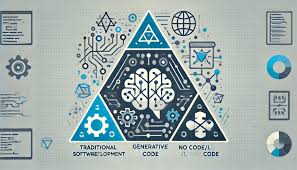
No-Code Generative AI

Generative-Driven Development

Nowhere has the rise of generative AI tools been more transformative than in software development. It began with GitHub Copilot’s enhanced autocomplete, which then evolved into interactive, real-time coding assistants like Aider and Cursor that allow engineers to dictate changes and see them applied live in their editor. Today, platforms like Devin.ai aim even higher, aspiring to create autonomous software systems capable of interpreting feature requests or bug reports and delivering ready-to-review code. At its core, the ambition of these AI tools mirrors the essence of software itself: to automate human work. Whether you were writing a script to automate CSV parsing in 2005 or leveraging AI today, the goal remains the same—offloading repetitive tasks to machines. What makes generative AI tools distinct, however, is their focus on automating the work of automation itself. Framing this as a guiding principle enables us to consider the broader challenges and opportunities generative AI brings to software development. Automate the Process of Automation The Doctor-Patient Strategy Most contemporary generative AI tools operate under what can be called the Doctor-Patient strategy. In this model, the GenAI tool acts on a codebase as a distinct, external entity—much like a doctor treats a patient. The relationship is one-directional: the tool modifies the codebase based on given instructions but remains isolated from the architecture and decision-making processes within it. Why This Strategy Dominates: However, the limitations of this strategy are becoming increasingly apparent. Over time, the unidirectional relationship leads to bot rot—the gradual degradation of code quality due to poorly contextualized, repetitive, or inconsistent changes made by generative AI. Understanding Bot Rot Bot rot occurs when AI tools repeatedly make changes without accounting for the macro-level architecture of a codebase. These tools rely on localized context, often drawing from semantically similar code snippets, but lack the insight needed to preserve or enhance the overarching structure. Symptoms of Bot Rot: Example:Consider a Python application that parses TPS report IDs. Without architectural insight, a code bot may generate redundant parsing methods across multiple modules rather than abstracting the logic into a centralized model. Over time, this duplication compounds, creating a chaotic and inefficient codebase. A New Approach: Generative-Driven Development (GDD) To address the flaws of the Doctor-Patient strategy, we propose Generative-Driven Development (GDD), a paradigm where the codebase itself is designed to enable generative AI to enhance automation iteratively and sustainably. Pillars of GDD: How GDD Improves the Development Lifecycle Under GDD, the traditional Test-Driven Development (TDD) cycle (red, green, refactor) evolves to integrate AI processes: This complete cycle eliminates the gaps present in current generative workflows, reducing bot rot and enabling sustainable automation. Over time, GDD-based codebases become easier to maintain and automate, reducing error rates and cycle times. A Day in the Life of a GDD Engineer Imagine a GDD-enabled workflow for a developer tasked with updating TPS report parsing: By embedding AI into the development process, GDD empowers engineers to focus on high-level decision-making while ensuring the automation process remains sustainable and aligned with architectural goals. Conclusion Generative-Driven Development represents a significant shift in how we approach software development. By prioritizing architecture, embedding automation into the software itself, and writing GenAI-optimized code, GDD offers a sustainable path to achieving the ultimate goal: automating the process of automation. As AI continues to reshape the industry, adopting GDD will be critical to harnessing its full potential while avoiding the pitfalls of bot rot. Like Related Posts Who is Salesforce? Who is Salesforce? Here is their story in their own words. From our inception, we’ve proudly embraced the identity of Read more Salesforce Unites Einstein Analytics with Financial CRM Salesforce has unveiled a comprehensive analytics solution tailored for wealth managers, home office professionals, and retail bankers, merging its Financial Read more AI-Driven Propensity Scores AI plays a crucial role in propensity score estimation as it can discern underlying patterns between treatments and confounding variables Read more Tectonic’s Successful Salesforce Track Record Salesforce Technology Services Integrator – Tectonic has successfully delivered Salesforce in a variety of industries including Public Sector, Hospitality, Manufacturing, Read more

Read More
AI and Related Tools Boost Holiday Sales

AI and Related Tools Boost Holiday Sales

AI Drives Holiday Sales in 2024: A Record-Breaking Shopping Season with Rising Returns Artificial intelligence (AI) played a transformative role in shaping the 2024 holiday shopping season, with Salesforce reporting that AI-powered tools influenced $229 billion, or 19%, of global online sales. Based on data from 1.5 billion global shoppers and 1.6 trillion page views, AI tools such as product recommendations, targeted promotions, and customer service significantly boosted sales, marking a 6% year-over-year increase in engagement. Generative AI features, including conversational agents, saw a 25% surge in usage during the holiday period compared to earlier months, further highlighting their role in shaping consumer behavior. Mobile commerce amplified AI’s influence, with nearly 70% of global online sales being placed via smartphones. On Christmas Day alone, mobile orders accounted for 79% of transactions, showcasing the shift toward mobile-first shopping. “Retailers who have embraced AI and conversational agents are already reaping the benefits, but these tools will become even more critical in the new year as retailers aim to minimize revenue losses from returns and reengage with shoppers,” said Caila Schwartz, Salesforce’s Director of Consumer Insights. Record-Breaking Sales and Rising Returns Online sales hit .2 trillion globally and 2 billion in the U.S. during the holiday season, but returns surged to $122 billion globally—a 28% increase compared to 2023. Salesforce attributed this spike to evolving shopping habits like bracketing (buying multiple sizes to ensure fit) and try-on hauls (bulk purchasing for social media content), which have become increasingly common. The surge in returns presents a challenge to retailers, potentially eroding profit margins. To address this, many are turning to AI-powered solutions for streamlining returns processes. According to Salesforce, 75% of U.S. shoppers expressed interest in using AI agents for returns, with one-third showing strong enthusiasm for such tools. The Role of AI in Enhancing the Holiday Shopping Experience AI-powered chatbots saw a 42% year-over-year increase in usage during the holiday season, supporting customers with purchases, returns, and product inquiries. These conversational agents, combined with AI-driven loyalty programs and targeted promotions, were instrumental in engaging customers and increasing conversion rates. AI’s influence extended to social commerce, with platforms like TikTok Shop and Instagram driving 20% of global holiday sales. Personalized recommendations and advertisements, powered by AI algorithms, significantly boosted social media referral traffic, which grew by 8% year-over-year. Mobile Commerce and AI Synergy Mobile devices were the dominant force in holiday shopping, generating 2 billion in global online sales and 5 billion in the U.S. Orders placed via smartphones peaked on Christmas Day, with mobile accounting for 79% of all transactions. This mobile-first trend highlights the growing importance of integrating AI into mobile commerce to enhance the shopping experience. AI Integration Expands Across Retail Operations In the UK, retailers are increasingly leveraging AI to optimize operations and improve personalization. A study by IMRG and Scurri revealed that 57% of UK online retailers used generative AI for content creation in 2024, while 31% implemented AI-informed product search tools. By 2025, 75% of UK retailers plan to adopt AI for marketing efforts, and 42% aim to use AI-powered product information management systems to streamline processes. Tesco, for example, uses AI to analyze Clubcard data, enabling tailored product recommendations, healthier purchasing choices, and waste reduction. Meanwhile, Must Have Ideas, a homeware retailer, has launched an AI-driven TV shopping channel powered by proprietary software, Spark, which automates programming schedules based on real-time stock levels and market trends. Looking Ahead The 2024 holiday season underscored the transformative potential of AI in retail. While AI-powered tools drove record sales and engagement, the rise in returns presents a challenge that retailers must address to protect their bottom line. As AI continues to evolve, its role in shaping consumer behavior, streamlining operations, and enhancing customer experiences will become even more integral in the retail landscape. Like Related Posts Who is Salesforce? Who is Salesforce? Here is their story in their own words. From our inception, we’ve proudly embraced the identity of Read more Salesforce Marketing Cloud Transactional Emails Salesforce Marketing Cloud Transactional Emails are immediate, automated, non-promotional messages crucial to business operations and customer satisfaction, such as order Read more Salesforce Unites Einstein Analytics with Financial CRM Salesforce has unveiled a comprehensive analytics solution tailored for wealth managers, home office professionals, and retail bankers, merging its Financial Read more AI-Driven Propensity Scores AI plays a crucial role in propensity score estimation as it can discern underlying patterns between treatments and confounding variables Read more

Read More
understand ai chatbots

Understand AI Chatbots

AI chatbots are software programs that use artificial intelligence (AI) and natural language processing (NLP) to simulate human-like conversations with users. They can understand and respond to text or voice input, helping with various tasks like customer service, sales, and information retrieval.  How they work: What they can do: Benefits of using AI chatbots: Like Related Posts Who is Salesforce? Who is Salesforce? Here is their story in their own words. From our inception, we’ve proudly embraced the identity of Read more Salesforce Marketing Cloud Transactional Emails Salesforce Marketing Cloud Transactional Emails are immediate, automated, non-promotional messages crucial to business operations and customer satisfaction, such as order Read more Salesforce Unites Einstein Analytics with Financial CRM Salesforce has unveiled a comprehensive analytics solution tailored for wealth managers, home office professionals, and retail bankers, merging its Financial Read more AI-Driven Propensity Scores AI plays a crucial role in propensity score estimation as it can discern underlying patterns between treatments and confounding variables Read more

Read More
gettectonic.com