

AI Tools Archives - gettectonic.com - Page 5
agents and copilots

Copilots and Agents

Which Agentic AI Features Truly Matter? Modern large language models (LLMs) are often evaluated based on their ability to support agentic AI capabilities. However, the effectiveness of these features depends on the specific problems AI agents are designed to solve. The term “AI agent” is frequently applied to any AI application that performs intelligent tasks on behalf of a user. However, true AI agents—of which there are still relatively few—differ significantly from conventional AI assistants. This discussion focuses specifically on personal AI applications rather than AI solutions for teams and organizations. In this domain, AI agents are more comparable to “copilots” than traditional AI assistants. What Sets AI Agents Apart from Other AI Tools? Clarifying the distinctions between AI agents, copilots, and assistants helps define their unique capabilities: AI Copilots AI copilots represent an advanced subset of AI assistants. Unlike traditional assistants, copilots leverage broader context awareness and long-term memory to provide intelligent suggestions. While ChatGPT already functions as a form of AI copilot, its ability to determine what to remember remains an area for improvement. A defining characteristic of AI copilots—one absent in ChatGPT—is proactive behavior. For example, an AI copilot can generate intelligent suggestions in response to common user requests by recognizing patterns observed across multiple interactions. This learning often occurs through in-context learning, while fine-tuning remains optional. Additionally, copilots can retain sequences of past user requests and analyze both memory and current context to anticipate user needs and offer relevant suggestions at the appropriate time. Although AI copilots may appear proactive, their operational environment is typically confined to a specific application. Unlike AI agents, which take real actions within broader environments, copilots are generally limited to triggering user-facing messages. However, the integration of background LLM calls introduces a level of automation beyond traditional AI assistants, whose outputs are always explicitly requested. AI Agents and Reasoning In personal applications, an AI agent functions similarly to an AI copilot but incorporates at least one of three additional capabilities: Reasoning and self-monitoring are critical LLM capabilities that support goal-oriented behavior. Major LLM providers continue to enhance these features, with recent advancements including: As of March 2025, Grok 3 and Gemini 2.0 Flash Thinking rank highest on the LMArena leaderboard, which evaluates AI performance based on user assessments. This competitive landscape highlights the rapid evolution of reasoning-focused LLMs, a critical factor for the advancement of AI agents. Defining AI Agents While reasoning is often cited as a defining feature of AI agents, it is fundamentally an LLM capability rather than a distinction between agents and copilots. Both require reasoning—agents for decision-making and copilots for generating intelligent suggestions. Similarly, an agent’s ability to take action in an external environment is not exclusive to AI agents. Many AI copilots perform actions within a confined system. For example, an AI copilot assisting with document editing in a web-based CMS can both provide feedback and make direct modifications within the system. The same applies to sensor capabilities. AI copilots not only observe user actions but also monitor entire systems, detecting external changes to documents, applications, or web pages. Key Distinctions: Autonomy and Versatility The fundamental differences between AI copilots and AI agents lie in autonomy and versatility: If an AI system is labeled as a domain-specific agent or an industry-specific vertical agent, it may essentially function as an AI copilot. The distinction between copilots and agents is becoming increasingly nuanced. Therefore, the term AI agent should be reserved for highly versatile, multi-purpose AI systems capable of operating across diverse domains. Notable examples include OpenAI’s Operator and Deep Research. Like1 Related Posts Who is Salesforce? Who is Salesforce? Here is their story in their own words. From our inception, we’ve proudly embraced the identity of Read more Salesforce Marketing Cloud Transactional Emails Salesforce Marketing Cloud Transactional Emails are immediate, automated, non-promotional messages crucial to business operations and customer satisfaction, such as order Read more Salesforce Unites Einstein Analytics with Financial CRM Salesforce has unveiled a comprehensive analytics solution tailored for wealth managers, home office professionals, and retail bankers, merging its Financial Read more AI-Driven Propensity Scores AI plays a crucial role in propensity score estimation as it can discern underlying patterns between treatments and confounding variables Read more

Read More

How AI Can Help Canadian Manufacturers Stay Competitive in a Changing Economy

Canada’s manufacturing sector faces mounting pressures—from a weak Canadian dollar to persistent supply chain disruptions. According to Salesforce’s Trends in Manufacturing Report, 63% of Canadian manufacturers say supply chain issues that began years ago still linger today, while unexpected equipment downtime costs large producers 8% of annual revenue. To navigate these challenges and future-proof operations, Canadian manufacturers must embrace AI-driven modernization—leveraging data intelligence, predictive analytics, and autonomous AI agents to boost efficiency, cut costs, and unlock new revenue streams. The Data Accessibility Challenge While 84% of Canadian manufacturers recognize the need to modernize, many struggle to extract real value from their digital investments. Key findings reveal: The problem? Siloed data prevents manufacturers from delivering real-time insights to frontline workers and AI tools—hindering predictive maintenance, inventory optimization, and customer service improvements. How AI Agents Drive Manufacturing Efficiency To maximize AI’s impact, manufacturers need a unified data platform (like Salesforce’s Manufacturing Data Cloud) that integrates: Autonomous AI agents (powered by natural language processing) can then automate decision-making, such as:✅ Detecting sales contract deviations and auto-correcting pricing or fulfillment issues.✅ Predicting equipment failures and scheduling proactive maintenance.✅ Optimizing stock levels by auto-reordering when inventory dips. 3 Key Areas Where AI Delivers Immediate ROI The Path Forward: Building an AI-Ready Foundation With economic uncertainty looming, Canadian manufacturers must act now to:🔹 Break down data silos (integrate IoT, ERP, and CRM systems).🔹 Deploy AI agents for autonomous decision-making in sales, maintenance, and logistics.🔹 Train teams to work alongside AI—not against it. The bottom line? AI isn’t just a competitive advantage—it’s becoming a necessity for survival in modern manufacturing. By harnessing connected data and intelligent automation, Canadian manufacturers can cut costs, boost productivity, and secure their future in an unpredictable global market. Ready to modernize? Start by auditing your data infrastructure—because AI is only as powerful as the insights it can access. Tectonic can help. Like Related Posts Who is Salesforce? Who is Salesforce? Here is their story in their own words. From our inception, we’ve proudly embraced the identity of Read more Salesforce Marketing Cloud Transactional Emails Salesforce Marketing Cloud Transactional Emails are immediate, automated, non-promotional messages crucial to business operations and customer satisfaction, such as order Read more Salesforce Unites Einstein Analytics with Financial CRM Salesforce has unveiled a comprehensive analytics solution tailored for wealth managers, home office professionals, and retail bankers, merging its Financial Read more AI-Driven Propensity Scores AI plays a crucial role in propensity score estimation as it can discern underlying patterns between treatments and confounding variables Read more

Read More
Salesforce Platform

How Agentic Automation Builds Lasting Customer Relationships

Why Agentic Automation?Customers now engage with brands across 8+ channels, demanding consistency and personalization at every touchpoint. Yet: 73% of customers expect better personalization as tech evolves (Salesforce “State of the AI Connected Customer”) 1 .Only 31% of marketers feel confident unifying customer data (Salesforce “State of Marketing”) 43% still use fragmented personalization, mixing mass messaging with targeted efforts Traditional automation falls short—but AI-powered agents bridge the gap, acting as intelligent assistants that autonomously execute tasks, personalize interactions, and optimize campaigns in real time. What is Agentic Automation?Agents are AI systems that understand, decide, and act—handling everything from customer service queries to full campaign orchestration. Unlike rule-based automation, they:✅ Learn & adapt based on real-time data✅ Multitask (e.g., draft emails, adjust ad spend, qualify leads simultaneously)✅ Work across silos, unifying data for seamless customer journeys The 5 Key Attributes of an AgentRole – What it’s designed to do (e.g., optimize social campaigns, nurture leads) Trusted Data – Access to CRM, engagement history, brand guidelines 2 .Actions – Skills like content generation, A/B testing, performance tracking Channels – Where it operates (email, social, chat, ads) Guardrails – Ethical limits, compliance rules, brand voice guidelines Example: A social media agent can: Analyze past performance & trends Generate post ideas aligned with brand voice Schedule content & adjust targeting in real time Escalate sensitive issues to humans How Agents Transform the Customer Lifecycle1. Awareness: Smarter Campaign CreationAutonomously generates audience segments, ad copy, and campaign briefs Optimizes spend by pausing low-performing ads & reallocating budgets Personalizes content based on real-time engagement data 2. Conversion: Automated Lead NurturingEngages website visitors with dynamic recommendations Scores & routes leads to sales teams based on intent signals Orchestrates follow-ups via email, SMS, or chat 3. Engagement: Hyper-Personalized ExperiencesRecommends products/content based on browsing history A/B tests messaging across channels Adjusts journeys in real time (e.g., swaps promo offers if a customer hesitates) 4. Retention & Loyalty: Proactive Relationship-BuildingIdentifies at-risk customers & triggers re-engagement offers Handles service inquiries (returns, tech support) via chat/SMS Escalates complex issues to human agents seamlessly The Marketer’s Advantage: From Tactical to StrategicAgents don’t replace marketers—they amplify their impact:🔹 Eliminate grunt work (e.g., manual reporting, repetitive follow-ups)🔹 Break down data silos, unifying CRM, ads, and service history🔹 Make real-time decisions (e.g., pausing ads, adjusting discounts)🔹 Scale 1:1 personalization without added headcount Example: An agent can: Draft a win-back email for a lapsing customer Sync it with their past purchases & service tickets Send it via their preferred channel (email/SMS) Track opens/clicks & trigger a follow-up if ignored Getting Started: Building Your Agent FoundationUnify Your Data – Integrate CRM, marketing tools, and service platforms. Define Key Roles – Start with one high-impact use case (e.g., lead nurturing). Set Guardrails – Ensure brand compliance, privacy, and ethical AI use. Test & Refine – Use feedback loops to improve accuracy and relevance. “Agents are like a tireless, data-driven marketing assistant—freeing you to focus on strategy while they handle execution.” The Future: AI + Human CollaborationThe next era of marketing isn’t about choosing between automation and human touch—it’s about combining them. Agents will: Handle routine interactions, letting teams focus on high-value creativity Predict customer needs before they arise Drive unprecedented efficiency (e.g., 275K+ hours saved annually at Salesforce) Ready to transform your marketing? Start small, scale fast, and let agents turn data into lasting relationships. Key Takeaway: Agentic automation isn’t just efficiency—it’s smarter, faster, and more personal customer engagement at scale. Like Related Posts Who is Salesforce? Who is Salesforce? Here is their story in their own words. From our inception, we’ve proudly embraced the identity of Read more Salesforce Marketing Cloud Transactional Emails Salesforce Marketing Cloud Transactional Emails are immediate, automated, non-promotional messages crucial to business operations and customer satisfaction, such as order Read more Salesforce Unites Einstein Analytics with Financial CRM Salesforce has unveiled a comprehensive analytics solution tailored for wealth managers, home office professionals, and retail bankers, merging its Financial Read more AI-Driven Propensity Scores AI plays a crucial role in propensity score estimation as it can discern underlying patterns between treatments and confounding variables Read more

Read More
Can Tech Companies Use Generative AI for Good?

AI and the Future of IT Careers

AI and the Future of IT Careers: Jobs That Remain Secure As AI technology advances, concerns about job security in the IT sector continue to grow. AI excels at handling repetitive, high-speed tasks and has made significant strides in software development and error prediction. However, while AI offers exciting possibilities, the demand for human expertise remains strong—particularly in roles that require interpersonal skills, strategic thinking, and decision-making. So, which IT jobs are most secure from AI displacement? To answer this question, industry experts shared their insights: Their forecasts highlight the IT roles most resistant to AI replacement. In all cases, professionals should enhance their AI knowledge to stay competitive in an evolving landscape. Top AI-Resistant IT Roles 1. Business Analyst Role Overview:Business analysts act as a bridge between IT and business teams, identifying technology opportunities and facilitating collaboration to optimize solutions. Why AI Won’t Replace It:While AI can process vast amounts of data quickly, it lacks emotional intelligence, relationship-building skills, and the ability to interpret nuanced human communication. Business analysts leverage these soft skills to understand software needs and drive successful implementations. How to Stay Competitive:Develop strong data analysis, business intelligence (BI), communication, and presentation skills to enhance your value in this role. 2. Cybersecurity Engineer Role Overview:Cybersecurity engineers protect organizations from evolving security threats, including AI-driven cyberattacks. Why AI Won’t Replace It:As AI tools become more sophisticated, cybercriminals will exploit them to develop advanced attack strategies. Human expertise is essential to adapt defenses, investigate threats, and implement security measures AI alone cannot handle. How to Stay Competitive:Continuously update your cybersecurity knowledge, obtain relevant certifications, and develop a strong understanding of business security needs. 3. End-User Support Professional Role Overview:These professionals assist employees with technical issues and provide hands-on training to ensure smooth software adoption. Why AI Won’t Replace It:Technology adoption is becoming increasingly complex, requiring personalized support that AI cannot yet replicate. Human interaction remains crucial for troubleshooting and user training. How to Stay Competitive:Pursue IT certifications, strengthen customer service skills, and gain experience in enterprise software environments. 4. Data Analyst Role Overview:Data analysts interpret business and product data, generate insights, and predict trends to guide strategic decisions. Why AI Won’t Replace It:AI can analyze data, but human oversight is needed to ensure accuracy, recognize context, and derive meaningful insights. Companies will continue to rely on professionals who can interpret and act on data effectively. How to Stay Competitive:Specialize in leading BI platforms, gain hands-on experience with data visualization tools, and develop strong analytical thinking skills. 5. Data Governance Professional Role Overview:These professionals set policies for data usage, access, and security within an organization. Why AI Won’t Replace It:As AI handles increasing amounts of data, the need for governance professionals grows to ensure ethical and compliant data management. How to Stay Competitive:Obtain a degree in computer science or business administration and seek training in data privacy, security, and governance frameworks. 6. Data Privacy Professional Role Overview:Data privacy professionals ensure compliance with data protection regulations and safeguard personal information. Why AI Won’t Replace It:With AI collecting vast amounts of personal data, organizations require human experts to manage legal compliance and maintain trust. How to Stay Competitive:Develop expertise in privacy laws, cybersecurity, and regulatory compliance through certifications and training programs. 7. IAM Engineer (Identity and Access Management) Role Overview:IAM engineers develop and implement systems that regulate user access to sensitive data. Why AI Won’t Replace It:The growing complexity of digital identities and security protocols requires human oversight to manage, audit, and secure access rights. How to Stay Competitive:Pursue a computer science degree, gain experience in authentication frameworks, and build expertise in programming and operating systems. 8. IT Director Role Overview:IT directors oversee technology strategies, manage teams, and align IT initiatives with business goals. Why AI Won’t Replace It:Leadership, motivation, and strategic decision-making are human-driven capabilities that AI cannot replicate. How to Stay Competitive:Develop strong leadership, business acumen, and team management skills to effectively align IT with organizational success. 9. IT Product Manager Role Overview:Product managers oversee tech adoption, service management, and organizational change strategies. Why AI Won’t Replace It:Effective product management requires a human touch, particularly in change management and stakeholder communication. How to Stay Competitive:Pursue project management training and certifications while gaining experience in software development and enterprise technology. Staying AI-Proof: Learning AI Expert Insights on Future IT Careers Final Thoughts As AI continues to reshape the IT landscape, the key to job security lies in adaptability. Professionals who develop AI-related skills and focus on roles that require human judgment, creativity, and leadership will remain indispensable in the evolving workforce. Like1 Related Posts Who is Salesforce? Who is Salesforce? Here is their story in their own words. From our inception, we’ve proudly embraced the identity of Read more Salesforce Unites Einstein Analytics with Financial CRM Salesforce has unveiled a comprehensive analytics solution tailored for wealth managers, home office professionals, and retail bankers, merging its Financial Read more AI-Driven Propensity Scores AI plays a crucial role in propensity score estimation as it can discern underlying patterns between treatments and confounding variables Read more Tectonic’s Successful Salesforce Track Record Salesforce Technology Services Integrator – Tectonic has successfully delivered Salesforce in a variety of industries including Public Sector, Hospitality, Manufacturing, Read more

Read More
AI-Driven Healthcare

AI is Revolutionizing Clinical Trials and Drug Development

Clinical trials are a cornerstone of drug development, yet they are often plagued by inefficiencies, long timelines, high costs, and challenges in patient recruitment and data analysis. Artificial intelligence (AI) is transforming this landscape by streamlining trial design, optimizing patient selection, and accelerating data analysis, ultimately enabling faster and more cost-effective treatment development. Optimizing Clinical Trials A study by the Tufts Center for the Study of Drug Development estimates that bringing a new drug to market costs an average of $2.6 billion, with clinical trials comprising a significant portion of that expense. “The time-consuming process of recruiting the right patients, collecting data, and manually analyzing it are major bottlenecks,” said Mohan Uttawar, co-founder and CEO of OneCell. AI is addressing these challenges by improving site selection, patient recruitment, and data analysis. Leveraging historical data, AI identifies optimal sites and patients with greater efficiency, significantly reducing costs and timelines. “AI offers several key advantages, from site selection to delivering results,” Uttawar explained. “By utilizing past data, AI can pinpoint the best trial sites and patients while eliminating unsuitable candidates, ensuring a more streamlined process.” One compelling example of AI’s impact is Exscientia, which designed a cancer immunotherapy molecule in under 12 months—a process that traditionally takes four to five years. This rapid development highlights AI’s potential to accelerate promising therapies from concept to patient testing. Enhancing Drug Development Beyond clinical trials, AI is revolutionizing the broader drug development process, particularly in refining trial protocols and optimizing site selection. “A major paradigm shift has emerged with AI, as these tools optimize trial design and execution by leveraging vast datasets and streamlining patient recruitment,” Uttawar noted. Machine learning plays a crucial role in biomarker discovery and patient stratification, essential for developing targeted therapies. By analyzing large datasets, AI uncovers patterns and insights that would be nearly impossible to detect manually. “The availability of large datasets through machine learning enables the development of powerful algorithms that provide key insights into patient stratification and targeted therapies,” Uttawar explained. The cost savings of AI-driven drug development are substantial. Traditional computational models can take five to six years to complete. In contrast, AI-powered approaches can shorten this timeline to just five to six months, significantly reducing costs. Regulatory and Ethical Considerations Despite its advantages, AI in clinical trials presents regulatory and ethical challenges. One primary concern is ensuring the robustness and validation of AI-generated data. “The regulatory challenges for AI-driven clinical trials revolve around the robustness of data used for algorithm development and its validation against existing methods,” Uttawar highlighted. To address these concerns, agencies like the FDA are working on frameworks to validate AI-driven insights and algorithms. “In the future, the FDA is likely to create an AI-based validation framework with guidelines for algorithm development and regulatory compliance,” Uttawar suggested. Data privacy and security are also crucial considerations, given the vast datasets needed to train AI models. Compliance with regulations such as HIPAA, ISO 13485, GDPR, and 21CFR Part 820 ensures data protection and security. “Regulatory frameworks are essential in defining security, compliance, and data privacy, making it mandatory for AI models to adhere to established guidelines,” Uttawar noted. AI also has the potential to enhance diversity in clinical trials by reducing biases in patient selection. By objectively analyzing data, AI can efficiently recruit diverse patient populations. “AI facilitates unbiased data analysis, ensuring diverse patient recruitment in a time-sensitive manner,” Uttawar added. “It reviews selection criteria and, based on vast datasets, provides data-driven insights to optimize patient composition.” Trends and Predictions The adoption of AI in clinical trials and drug development is expected to rise dramatically in the coming years. “In the next five years, 80-90% of all clinical trials will likely incorporate AI in trial design, data analysis, and regulatory submissions,” Uttawar predicted. Emerging applications, such as OneCell’s AI-based toolkit for predicting genomic signatures from high-resolution H&E Whole Slide Images, are particularly promising. This technology allows hospitals and research facilities to analyze medical images and identify potential cancer patients for targeted treatments. “This toolkit captures high-resolution images at 40X resolution and analyzes them using AI-driven algorithms to detect morphological changes,” Uttawar explained. “It enables accessible image analysis, helping physicians make more informed treatment decisions.” To fully realize AI’s potential in drug development, stronger collaboration between AI-focused companies and the pharmaceutical industry is essential. Additionally, regulatory frameworks must evolve to support AI validation and standardization. “Greater collaboration between AI startups and pharmaceutical companies is needed,” Uttawar emphasized. “From a regulatory standpoint, the FDA must establish frameworks to validate AI-driven data and algorithms, ensuring consistency with existing standards.” AI is already transforming drug development and clinical trials, enhancing efficiencies in site selection, patient recruitment, and data analysis. By accelerating timelines and cutting costs, AI is not only making drug development more sustainable but also increasing access to life-saving treatments. However, maximizing AI’s impact will require continued collaboration among technology innovators, pharmaceutical firms, and the regulatory bodies. As frameworks evolve to ensure data integrity, security, and compliance, AI-driven advancements will further shape the future of precision medicine—ultimately improving patient outcomes and redefining healthcare. Like Related Posts Who is Salesforce? Who is Salesforce? Here is their story in their own words. From our inception, we’ve proudly embraced the identity of Read more Salesforce Unites Einstein Analytics with Financial CRM Salesforce has unveiled a comprehensive analytics solution tailored for wealth managers, home office professionals, and retail bankers, merging its Financial Read more AI-Driven Propensity Scores AI plays a crucial role in propensity score estimation as it can discern underlying patterns between treatments and confounding variables Read more Tectonic’s Successful Salesforce Track Record Salesforce Technology Services Integrator – Tectonic has successfully delivered Salesforce in a variety of industries including Public Sector, Hospitality, Manufacturing, Read more
Read More
Public Group vs Queue in Salesforce

Transforming Crisis Management with Intelligent Technology

Transforming Crisis Management with Intelligent Technology In high-pressure disaster scenarios where every second counts, AI is emerging as a force multiplier for response teams. From predictive analytics to real-time decision support, artificial intelligence is revolutionizing how organizations prepare for, manage, and recover from catastrophic events. Here are seven pivotal areas where AI delivers measurable impact across the disaster lifecycle. Here is a new Public Sector Solution from AI 1. Predictive Scenario Planning & Stress Testing AI Advantage: Dynamically generates realistic disaster simulations 2. Autonomous Response Systems AI Advantage: Subsecond reaction times with precision execution 3. Intelligent Log Analysis & Threat Detection AI Advantage: Pattern recognition across petabyte-scale telemetry 4. Crisis Communication Orchestration AI Advantage: Multi-channel coordination at scale 5. Real-Time Situational Awareness AI Advantage: Fusion of disparate data streams 6. Resource Optimization Engine AI Advantage: Calculates optimal recovery sequences 7. Continuous Improvement Loop AI Advantage: Institutionalizes lessons learned Implementation Roadmap The Future of AI in Disaster Response Emerging capabilities include: While AI won’t replace human judgment in crises, it’s becoming an indispensable force multiplier. Organizations adopting these tools gain measurable advantages in response speed, resource efficiency, and long-term resilience building. The key lies in strategic implementation – using AI where it excels while maintaining human oversight where nuance matters most. Like Related Posts Who is Salesforce? Who is Salesforce? Here is their story in their own words. From our inception, we’ve proudly embraced the identity of Read more Salesforce Unites Einstein Analytics with Financial CRM Salesforce has unveiled a comprehensive analytics solution tailored for wealth managers, home office professionals, and retail bankers, merging its Financial Read more AI-Driven Propensity Scores AI plays a crucial role in propensity score estimation as it can discern underlying patterns between treatments and confounding variables Read more Tectonic’s Successful Salesforce Track Record Salesforce Technology Services Integrator – Tectonic has successfully delivered Salesforce in a variety of industries including Public Sector, Hospitality, Manufacturing, Read more

Read More

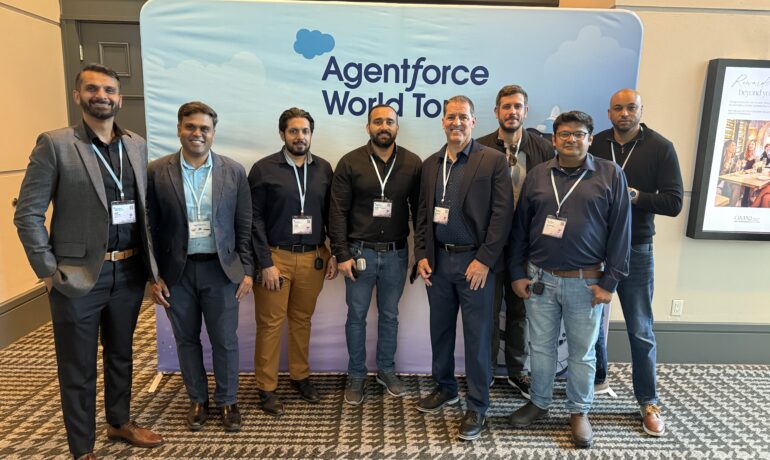
Tectonic Shook Things Up at AgentForce World Tour in Denver

The Tectonic team attended Salesforce’s Denver AgentForce World Tour this week. It was a great experience to develop our AgentBlazer team and a true seismic time was had by all! AI Agents were the topic of conversation and kept things lively! One almost expected to meet an Agentic Robot around every corner. We were all excited to network with Salesforce, customers, and partners alike. Key Takeaways Autonomous AI agents can understand and interpret customers’ questions using natural language, with minimal human intervention. Here’s what you need to know. The AI Assistant Revolution: Empowering Every Employee Imagine if every person in your company—from the CEO to frontline employees—had a dedicated assistant at their fingertips. An assistant who:✔ Knows your customers inside out✔ Delivers instant, data-driven insights✔ Helps prioritize next best actions Thanks to AI agents, this future is already here—and it’s transforming how businesses operate. How AI Agents Are Supercharging Teams 1. Instant Insights, No Manual Work 🔹 Generative AI agents analyze your trusted customer data in seconds—eliminating hours of manual research.🔹 Sales, service, and marketing teams get real-time recommendations, allowing them to focus on high-impact work. 2. Scaling Teams Without Adding Headcount 🔹 AI agents handle routine tasks—customer inquiries, data entry, meeting prep—freeing employees for strategic work.🔹 Quickly ramp up productivity during peak demand without overburdening staff. 3. Proactive Problem-Solving 🔹 AI doesn’t just react—it predicts.🔹 Identifies risks, suggests optimizations, and prevents small issues from becoming big ones. 4. Personalized Support for Every Role 🔹 Sales: AI suggests the best leads, crafts follow-ups, and forecasts deals.🔹 Service: Resolves common cases instantly, escalating only when needed.🔹 Leadership: Delivers real-time business insights for faster decisions. The Future of Work Is AI-Augmented AI agents aren’t replacing humans—they’re empowering them. By automating the mundane and enhancing decision-making, they help teams:✅ Work smarter, not harder✅ Deliver better customer experiences✅ Stay ahead of the competition The question isn’t if your company should adopt AI agents—it’s how soon you can start leveraging them. Tectonic, a trusted Salesforce partner, is here to help. Ready to explore AI-powered productivity? Let’s talk about the right AI strategy for your business. AI Agents: Your Intelligent Digital Workforce What Is an AI Agent? An AI agent is an autonomous artificial intelligence system that understands, processes, and responds to customer inquiries—without human intervention. Built using platforms like Agentforce, these agents leverage machine learning (ML) and natural language processing (NLP) to handle tasks ranging from simple FAQs to complex problem-solving. Unlike traditional AI, which requires manual programming for each task, AI agents continuously learn and improve from interactions, becoming smarter over time. How Do AI Agents Work? AI agents operate through a seamless four-step process: 💡 Result? Faster resolutions, happier customers, and more efficient teams. 6 Game-Changing Benefits of AI Agents Feature Impact 1. 24/7 Availability Instant support across time zones. 2. Hyper-Efficiency Handle thousands of queries simultaneously—no wait times. 3. Smarter Escalations Auto-route complex cases to the best-suited human agent. 4. Personalized Experiences Tailor responses using real-time customer data. 5. Scalability Grow support capacity without hiring more staff. 6. Data-Backed Insights Uncover trends to optimize operations & CX. “72% of companies already deploy AI—with generative AI adoption accelerating.” – McKinsey AI Agents in Action: Industry Use Cases 🏦 Finance ✔ Personalized wealth advice based on spending habits✔ Auto-summarize client cases for faster resolutions 🏭 Manufacturing ✔ Predict equipment failures before they happen✔ Optimize supply chain decisions with real-time data 🛒 Retail & Consumer Goods ✔ Smart inventory tracking (e.g., flagging stock discrepancies)✔ AI-generated promo content for targeted campaigns 🚗 Automotive ✔ Proactive vehicle maintenance alerts via telematics✔ Dynamic dealership promotions to boost sales 🏥 Healthcare ✔ Automated patient scheduling with the right specialist✔ Clinical trial matching using AI-driven eligibility checks Join the AI Revolution with Agentforce AI agents aren’t just tools—they’re productivity multipliers that help teams:✅ Work faster with automated workflows✅ Serve customers better with personalized AI assistance✅ Stay ahead with predictive insights 📈 Ready to transform your business? Connect with Tectonic today, or check out our Agentforce Quickstart offering. Connect with the Tectonic Agentforce team and launch your Agentic Revolution. AI Agents: The Ultimate Productivity Multiplier for Every Team AI agents aren’t just transforming customer service—they’re revolutionizing how every department operates. From 24/7 customer support to hyper-personalized marketing campaigns, AI agents help teams work smarter, move faster, and deliver exceptional experiences. Here’s how AI agents supercharge key business functions: 🤝 AI Agents for Service Teams Never miss a customer inquiry—even at 2 AM.✔ Instant, 24/7 support across email, chat, and social media✔ Smart escalation—AI routes complex cases to human agents with full context✔ Brand-consistent responses powered by your CRM data 🔹 With Agentforce for Service, deploy AI agents in minutes using prebuilt templates—or customize them for your unique needs. 💰 AI Agents for Sales Teams Turn every lead into a conversation—automatically.✔ Autonomous lead engagement—AI answers product questions & books meetings✔ Always-on SDRs—Agentforce Sales Development Reps qualify leads 24/7✔ Controlled escalation—Set rules for when & how AI hands off to your team 🔹 No more missed opportunities—AI keeps your pipeline full while your reps focus on closing. 🛍️ AI Agents for Commerce Teams Personal shopping assistants—powered by AI.✔ Smart product recommendations based on browsing & purchase history✔ Guided shopping experiences—AI helps customers find what they need faster✔ Omnichannel support—Engage shoppers on your site, WhatsApp, and more 🔹 Boost conversions with AI that acts like your best sales associate—for every customer. 📢 AI Agents for Marketing Teams Campaigns that write, optimize, and improve themselves.✔ AI-generated campaign briefs—audience targeting, messaging & KPIs✔ Automated content creation—draft ads, emails & social posts in your brand voice✔ Performance optimization—AI analyzes results & suggests improvements 🔹 With Agentforce Campaigns, launch better campaigns in hours—not weeks. Why AI Agents? The Bottom Line ✅ Scale operations without scaling headcount✅ Deliver instant, personalized experiences 24/7✅ Free your team to focus on high-value work “Companies using AI agents see 40% faster response times and 30% higher customer satisfaction.” Ready to deploy your AI workforce? See how Agentforce can transform your business #FutureOfWork

Read More
Salesforce Launches Nature-Focused AI Accelerator to Power Environmental Nonprofits

Salesforce Launches Nature-Focused AI Accelerator to Power Environmental Nonprofits

San Francisco, April 2025 – Salesforce has unveiled a groundbreaking nature-focused AI accelerator, empowering mission-driven organizations to scale their impact in forest conservation, regenerative agriculture, water access, and corporate sustainability. The new initiative, part of Salesforce’s Agents for Impact program, leverages agentic AI—an advanced form of autonomous artificial intelligence capable of independent decision-making, learning, and real-time action—to help nonprofits overcome resource barriers and amplify their environmental efforts. Why AI for Nature? Climate change and biodiversity loss demand urgent, scalable solutions. Yet, many nonprofits struggle with limited staffing, funding, and technical expertise. According to Salesforce research: “To fully harness nature’s potential for global resilience, we need innovation that matches the scale of the challenge,” says Sunya Norman, SVP of Impact at Salesforce. “Agentic AI enables nonprofits to achieve more with fewer resources—transforming how we protect and restore our planet.” Meet the AI-Powered Nonprofits Salesforce’s accelerator supports five organizations deploying AI for measurable environmental impact: 🌳 Forest Stewardship Council (FSC) 🌾 Rare 💧 Global Water Center ⚖️ Fair Trade USA 🏢 Ceres Beyond the Accelerator: Salesforce’s Broader Sustainability Push The Agents for Impact program aligns with Salesforce’s commitment to responsible AI development. Recently, the company: “Transparency, like the AI Energy Score, is critical,” says Ariane Thomas, Global Tech Director of Sustainability at L’Oréal. “By sharing energy data, we can collectively reduce AI’s environmental footprint.” The Future of AI for Good This accelerator marks a major leap in using AI to protect ecosystems, support farmers, and drive corporate sustainability. With Salesforce’s support, nonprofits can now scale their impact like never before—proving that technology and nature can work hand in hand. Ready to see AI drive real environmental change? Learn more about Salesforce’s Agents for Impact program.  Like Related Posts Who is Salesforce? Who is Salesforce? Here is their story in their own words. From our inception, we’ve proudly embraced the identity of Read more Salesforce Marketing Cloud Transactional Emails Salesforce Marketing Cloud Transactional Emails are immediate, automated, non-promotional messages crucial to business operations and customer satisfaction, such as order Read more Salesforce Unites Einstein Analytics with Financial CRM Salesforce has unveiled a comprehensive analytics solution tailored for wealth managers, home office professionals, and retail bankers, merging its Financial Read more AI-Driven Propensity Scores AI plays a crucial role in propensity score estimation as it can discern underlying patterns between treatments and confounding variables Read more

Read More
Salesforce Foundations

Salesforce Products

Salesforce Products: A Complete Guide to Powering Your Business Growth Transform Your Business with Salesforce’s Integrated Solutions For companies focused on growth, efficiency, and exceptional customer experiences, Salesforce provides a comprehensive suite of cloud-based tools that adapt to your unique business needs. Whether you’re managing sales pipelines, marketing campaigns, customer service operations, or eCommerce platforms, Salesforce offers specialized solutions that work together seamlessly. Core Salesforce Products for Every Business Function 1. Sales Cloud: The Ultimate Sales Acceleration Platform “Since implementing Sales Cloud, our reps spend 30% more time selling and 40% less time on admin work.” – Enterprise Sales Director 2. Service Cloud: Revolutionizing Customer Support 3. Marketing Cloud: Personalized Engagement at Scale 4. Commerce Cloud: Unified Shopping Experiences Enhancing Your Salesforce Ecosystem Experience Cloud: Build Digital Communities Data & Analytics: Smarter Decision Making Customization & Integration Why Companies Choose Salesforce ✅ Proven Scalability: From startups to Fortune 500 enterprises✅ Continuous Innovation: 3 major releases per year with new features✅ Trusted Security: Enterprise-grade protection for your data✅ Global Ecosystem: 150,000+ certified consultants and developers Getting Started with Salesforce Whether you’re evaluating CRM options or planning a digital transformation, Salesforce offers: Next Steps:Explore Salesforce products in depth or speak with a solutions consultant to identify the right tools for your business needs. Like Related Posts Who is Salesforce? Who is Salesforce? Here is their story in their own words. From our inception, we’ve proudly embraced the identity of Read more Salesforce Marketing Cloud Transactional Emails Salesforce Marketing Cloud Transactional Emails are immediate, automated, non-promotional messages crucial to business operations and customer satisfaction, such as order Read more Salesforce Unites Einstein Analytics with Financial CRM Salesforce has unveiled a comprehensive analytics solution tailored for wealth managers, home office professionals, and retail bankers, merging its Financial Read more AI-Driven Propensity Scores AI plays a crucial role in propensity score estimation as it can discern underlying patterns between treatments and confounding variables Read more

Read More
TEC Mailing Solutions Introduces AI First Step for Agentforce

TEC Mailing Solutions Introduces AI First Step for Agentforce

TEC Mailing Solutions Introduces AI First Step for Agentforce: Real-Time Address Validation for Salesforce Sun Prairie, WI – April 10, 2025 – TEC Mailing Solutions, a leader in address verification and mailing automation, today announced AI First Step for Agentforce®, a new program designed to enhance Salesforce data quality with real-time USPS National Change of Address (NCOA) updates. The Challenge: Outdated Data Undermines AI & CRM Efficiency With 100,000 Americans moving daily, B2C organizations struggle to maintain accurate customer addresses in Salesforce. Traditional verification methods standardize but don’t update addresses—leading to:❌ Failed deliveries❌ Wasted marketing spend❌ Inaccurate AI insights (Agentforce® relies on stale data) Manual updates take up to three months—far too slow for AI-driven operations. The Solution: AI First Step with Verify and Confirm™ TEC’s Verify and Confirm™ for Salesforce® integrates real-time NCOA updates, ensuring:✔ Instant address validation & correction✔ Cross-object consistency (Contacts, Accounts, Opportunities)✔ Automated workflows with continuous feedback loops✔ Improved reporting & AI model accuracy “AI is only as good as the data it uses,” said Scott Eganhouse, VP at TEC Mailing Solutions. “Without real-time NCOA updates, Agentforce® and other AI tools make decisions on outdated information—costing businesses time and money.” How It Works Why It Matters for AI & Agentforce® Get Started ✅ For Salesforce users: Elevate your AI and CRM performance with Verify and Confirm™.📧 Contact: sales@tecmailing.com🌐 Learn more: verifyconfirmncoa.com About TEC Mailing Solutions TEC Mailing Solutions provides SaaS-based address hygiene, mailing, and fulfillment automation for CRM, ERP, and digital printing systems. Its flagship tools—MailListCleaner®, MailPreparer™, Verify & Confirm™, and more—power billions of transactions annually for healthcare, retail, and financial services clients. Like Related Posts Who is Salesforce? Who is Salesforce? Here is their story in their own words. From our inception, we’ve proudly embraced the identity of Read more Salesforce Marketing Cloud Transactional Emails Salesforce Marketing Cloud Transactional Emails are immediate, automated, non-promotional messages crucial to business operations and customer satisfaction, such as order Read more Salesforce Unites Einstein Analytics with Financial CRM Salesforce has unveiled a comprehensive analytics solution tailored for wealth managers, home office professionals, and retail bankers, merging its Financial Read more AI-Driven Propensity Scores AI plays a crucial role in propensity score estimation as it can discern underlying patterns between treatments and confounding variables Read more
Read More
Salesforce Managed Services

Key Signs Your Business Needs a Salesforce Support & Maintenance Partner

Salesforce is a powerful CRM platform, but simply implementing it doesn’t guarantee success. To maximize ROI, businesses need continuous optimization, expert guidance, and proactive maintenance—something an in-house team may struggle to provide alone. Discover the key signs your business needs a Salesforce support and maintenance partner. Many companies invest in Salesforce expecting high returns but end up facing: These challenges turn Salesforce into a cost center rather than a revenue-driving platform. If you’re noticing these issues, it’s time to consider a Salesforce support and maintenance partner. This insight explores the critical warning signs and how a managed services provider can help. What Is a Salesforce Support & Maintenance Partner? A Salesforce support and maintenance partner is a specialized provider that manages, optimizes, and secures your Salesforce org. They provide you: ✔ Proactive Monitoring – 24/7 performance checks to prevent downtime, security breaches, and data decay.✔ Expert Guidance – Certified professionals resolve feature stagnation (unused automation/AI tools) and boost user adoption.✔ Strategic Roadmaps – Align Salesforce with business goals for long-term success.✔ Elimination of Technical Debt – Reduce technology noise slowing down your org. Why Are They Crucial? ✅ Cost Efficiency – Avoid hiring full-time specialists.✅ Risk Mitigation – Ensure compliance, security, and data integrity.✅ ROI Maximization – Unlock advanced features and improve team efficiency. A trusted partner like Tectonic identifies warning signs early, preventing short- and long-term inefficiencies. 9 Key Signs You Need a Salesforce Support & Maintenance Partner 1. Declining User Adoption The Problem: Employees avoid Salesforce due to poor training, complex workflows, or inefficient processes.Why It Matters: Low adoption wastes your CRM investment. (Only 36% of agents upsell due to lack of training—Salesforce State of Service Report.)The Solution: 2. Security & Compliance Risks The Problem: Unclear GDPR/HIPAA compliance, outdated security settings, or unauthorized access attempts.Why It Matters: Data breaches lead to fines, legal risks, and lost trust. (Non-compliance costs $14.8M on average—Globalscape.)The Solution: 3. Rising Ticket Backlogs The Problem: IT teams are overwhelmed with unresolved requests, slowing operations.Why It Matters: Delays hurt sales cycles, employee morale, and customer satisfaction.The Solution: 4. Underutilized Salesforce Features The Problem: Only basic functions (leads/contacts) are used—AI, automation, and analytics are ignored.Why It Matters: Manual processes slow growth. (Only 49% of service orgs use AI—Salesforce.)The Solution: 5. Poor Data Quality & Duplicates The Problem: Duplicate leads, missing fields, and inaccurate reports lead to bad decisions.Why It Matters: Poor data costs .9M annually (Gartner).The Solution: 6. Increasing Downtime The Problem: Frequent crashes, slow reports, or integration failures.Why It Matters: Downtime = lost sales & productivity. (Meta lost $100M in 2 hours in 2024.)The Solution: 7. Lack of Strategic Roadmap The Problem: No clear upgrade plan, leading to disorganized workflows.Why It Matters: 30-70% of CRM projects fail due to poor planning.The Solution: 8. Unstable Customizations The Problem: Apex triggers, Flows, or Lightning components break after updates.Why It Matters: Patchwork fixes increase technical debt & admin workload.The Solution: 9. Slow Salesforce Performance The Problem: Reports load slowly, or users face “Service Unavailable” errors.Why It Matters: A 100ms delay can hurt conversions by 7% (Akamai).The Solution: Conclusion If you’re experiencing any of these issues, your Salesforce org needs expert care. A managed services partner like Tectonic helps:✔ Reduce downtime✔ Improve performance✔ Boost user adoption✔ Enhance security & compliance With 24/7 proactive support, strategic roadmaps, and advanced feature utilization, Tectonic ensures your Salesforce investment drives revenue—not costs. Need help optimizing Salesforce? Contact Tectonic today for a free assessment. Like1 Related Posts Who is Salesforce? Who is Salesforce? Here is their story in their own words. From our inception, we’ve proudly embraced the identity of Read more Salesforce Marketing Cloud Transactional Emails Salesforce Marketing Cloud Transactional Emails are immediate, automated, non-promotional messages crucial to business operations and customer satisfaction, such as order Read more Salesforce Unites Einstein Analytics with Financial CRM Salesforce has unveiled a comprehensive analytics solution tailored for wealth managers, home office professionals, and retail bankers, merging its Financial Read more AI-Driven Propensity Scores AI plays a crucial role in propensity score estimation as it can discern underlying patterns between treatments and confounding variables Read more

Read More
digital transformation for tourism

Digital Transformation for Tourism

The digital revolution is in full swing, with individuals and businesses increasingly interacting through social networks and digital devices. In this new era, consumers have grown more discerning, leveraging mobile technology to make informed decisions about products, services, and trusted providers. As mobile apps become integral to daily life, organizations are compelled to reinvent their customer value propositions and operating models through digital transformation to remain competitive in today’s market. Digital transformation has become a critical priority across industries, with the tourism sector standing out as a prime example of significant disruption driven by digital technologies. According to McKinsey & Company, the tourism industry has been undergoing a digital revolution for over a decade, transforming how travelers plan, book, and experience their trips. This shift has led to changing consumer behaviors, with travelers now demanding more personalized and seamless experiences. The push toward digital adoption in tourism is accelerating. A Skift survey found that 83% of respondents view digital transformation as a top priority. Tourism businesses are increasingly investing in technology to enhance customer experiences, optimize operations, and drive revenue growth. To boost enterprise agility, companies must make strategic decisions across five key dimensions of their operating models: One of the most notable impacts of digital transformation is the revolution in the booking process. Travelport Digital estimates that over 700 million people will book trips online by 2023, marking a 15% increase from previous years. Key statistics highlight this global shift in traveler preferences: Mobile apps have become essential tools for travelers, enabling them to research, plan, and book trips seamlessly. In the hospitality and tourism sector, key digital transformation trends include: Emerging technologies like cognitive computing, omnichannel models, and advanced personalization are further reshaping the future of the industry. Artificial intelligence (AI) and machine learning are increasingly used to tailor travel experiences based on consumer preferences and behaviors, as noted by GlobalData. AI also improves operational efficiency, with chatbots handling customer inquiries effectively. Augmented reality (AR) and virtual reality (VR) are enhancing customer experiences by allowing travelers to explore destinations virtually before booking. Meanwhile, social media continues to play a pivotal role in promoting tourism businesses and reaching new audiences. In conclusion, digital transformation is no longer optional for tourism businesses—it is a necessity to remain competitive. The adoption of digital technologies has fundamentally reshaped the travel experience, and businesses must embrace this evolution to meet changing consumer expectations and maintain relevance in an increasingly digital world. Like1 Related Posts Who is Salesforce? Who is Salesforce? Here is their story in their own words. From our inception, we’ve proudly embraced the identity of Read more Salesforce Marketing Cloud Transactional Emails Salesforce Marketing Cloud Transactional Emails are immediate, automated, non-promotional messages crucial to business operations and customer satisfaction, such as order Read more Salesforce Unites Einstein Analytics with Financial CRM Salesforce has unveiled a comprehensive analytics solution tailored for wealth managers, home office professionals, and retail bankers, merging its Financial Read more AI-Driven Propensity Scores AI plays a crucial role in propensity score estimation as it can discern underlying patterns between treatments and confounding variables Read more

Read More
How AI is Transforming Self-Appraisals

How AI is Transforming Self-Appraisals

How AI is Transforming Self-Appraisals—Making Them Easier and Fairer for Employees and Managers Performance reviews are often dreaded—evaluating a year’s worth of your hard work can feel overwhelming, and many struggle to articulate their achievements objectively. But AI is changing that, making self-assessments more efficient, balanced, and even empowering—especially for groups like women, who often face biases in traditional reviews. The Rise of AI in Performance Reviews AI-powered tools are increasingly being used to streamline self-appraisals, helping employees structure their evaluations and align them with company goals. According to Microsoft’s 2024 Work Trend Index, 75% of knowledge workers—including engineers, scientists, and lawyers—already use AI in some capacity. The demand is clear: When Oracle introduced an AI-driven performance review system in 2023, 89% of employees said they were willing to be early adopters. “That shows how much people believe in this technology and how much they need it,” said Triparna de Vreede, a professor at the University of South Florida who studies AI and workplace well-being. Why Traditional Reviews Fall Short Conventional performance evaluations are often subjective, influenced by recency bias (where recent mistakes overshadow past successes) and workplace power dynamics. Employees may not always understand how their work contributes to broader business goals, while managers can struggle to provide unbiased feedback. “If you did great things all year but made one mistake last month, that can overshadow everything,” de Vreede explained. “AI helps standardize feedback so employees don’t feel like favoritism is at play.” How AI Improves the Process The Gender Gap in Self-Assessments Women frequently face challenges in performance reviews. A Textio study found that 38% of feedback for high-performing women contained exaggerated or clichéd language, and 75% were called “emotional”—compared to just 11% of men. Additionally, women tend to undersell their achievements. A 2022 National Bureau of Economic Research study found that women rated their performance at 46 out of 100, while men gave themselves 61. “AI can help women confidently showcase their impact without imposter syndrome getting in the way,” said de Vreede. The Human Touch Still Matters Despite AI’s benefits, human oversight remains crucial. Privacy concerns, transparency about data usage, and ensuring softer skills (like communication and teamwork) are evaluated fairly all require human judgment. “AI can’t fully understand human nuances, but it can prompt employees to reflect on them,” de Vreede noted. “The best reviews come from a collaboration between AI and the employee—not just AI doing all the work.” The Future of AI in Performance Reviews Companies like Oracle and Textio (used by 25% of Fortune 500 firms) are already refining AI-powered evaluations. However, de Vreede cautions against over-reliance: employees must still self-refect rather than letting AI do all the thinking. “AI can draft your review, but you need to refine it,” she said. “Otherwise, the evaluation loses its meaning.” As AI continues to evolve, it promises to make performance reviews less stressful, more accurate, and fairer for everyone—finally turning a dreaded process into one that actually helps employees grow. Salesforce AI can significantly enhance performance reviews by automating tasks, analyzing data, and providing actionable insights. AI tools can help streamline the review process, generate clearer and more unbiased feedback, and even predict future performance trends. Salesforce Einstein, for example, can analyze vast amounts of employee data to identify patterns and generate insights that inform performance reviews.  Here’s how Salesforce AI can be used in performance reviews: 1. Automating and Streamlining the Process: 2. Enhancing Accuracy and Objectivity: 3. Providing Actionable Insights: Examples of Salesforce AI Tools for Performance Reviews: Like Related Posts Who is Salesforce? Who is Salesforce? Here is their story in their own words. From our inception, we’ve proudly embraced the identity of Read more Salesforce Marketing Cloud Transactional Emails Salesforce Marketing Cloud Transactional Emails are immediate, automated, non-promotional messages crucial to business operations and customer satisfaction, such as order Read more Salesforce Unites Einstein Analytics with Financial CRM Salesforce has unveiled a comprehensive analytics solution tailored for wealth managers, home office professionals, and retail bankers, merging its Financial Read more AI-Driven Propensity Scores AI plays a crucial role in propensity score estimation as it can discern underlying patterns between treatments and confounding variables Read more
Read More
MuleSoft B2B and B2C With AI

AI in B2B Marketing

AI in B2B Marketing: The Game-Changer You Can’t Afford to Ignore The B2B marketing landscape is undergoing an AI revolution. While some businesses are already leveraging artificial intelligence to drive unprecedented growth, others risk falling behind. Here’s why AI isn’t just the future—it’s the present competitive edge in B2B marketing. The AI Imperative in B2B Marketing AI is no longer optional—it’s the key to smarter targeting, hyper-efficient campaigns, and data-driven decision-making. 6 Ways AI is Transforming B2B Marketing 1. Hyper-Personalization at Scale AI analyzes behavioral data, past interactions, and firmographics to deliver bespoke content for each prospect.✅ Example: HubSpot’s AI recommends next-best content based on engagement history, boosting conversions by 30%+. 2. Predictive Lead Scoring & Analytics AI identifies high-intent leads and predicts churn risks before they happen.📊 Impact: Companies using AI lead scoring see 50%+ higher win rates (Gartner).✅ Example: Marketo’s AI prioritizes leads with the highest conversion potential, optimizing sales efforts. 3. AI-Powered Content Creation From SEO-optimized blogs to personalized email sequences, AI generates high-quality content in minutes.🛠 Tools: Jasper, ContentBot, and ChatGPT streamline B2B content production. 4. Conversational AI & Chatbots AI chatbots handle lead qualification, FAQs, and meeting scheduling—24/7.💡 Stat: AI chatbots will drive B+ in B2B sales by 2024 (Juniper Research).✅ Example: Drift’s AI engages visitors in real-time, cutting response times by 90%. 5. Automated Social Media Optimization AI determines the best posting times, hashtags, and content types for maximum engagement.📱 Tools: Hootsuite AI and Sprout Social analyze trends to boost engagement by 40%. 6. Smarter Ad Targeting & Budget Optimization AI adjusts bidding strategies, audience segments, and creatives in real-time.📈 Result: Businesses using AI-driven ads see 20-30% lower CAC. The Future: AI as Your Marketing Co-Pilot The Bottom Line B2B marketers who ignore AI will lose to competitors who embrace it. The question isn’t if you should adopt AI—it’s how fast you can integrate it into your strategy. 🚀 Next Steps: AI isn’t replacing marketers—it’s empowering them to work smarter, faster, and more effectively. Ready to transform your B2B marketing with AI? Like Related Posts Who is Salesforce? Who is Salesforce? Here is their story in their own words. From our inception, we’ve proudly embraced the identity of Read more Salesforce Marketing Cloud Transactional Emails Salesforce Marketing Cloud Transactional Emails are immediate, automated, non-promotional messages crucial to business operations and customer satisfaction, such as order Read more Salesforce Unites Einstein Analytics with Financial CRM Salesforce has unveiled a comprehensive analytics solution tailored for wealth managers, home office professionals, and retail bankers, merging its Financial Read more AI-Driven Propensity Scores AI plays a crucial role in propensity score estimation as it can discern underlying patterns between treatments and confounding variables Read more

Read More

Get a Grip on Agentforce

Salesforce Agentforce: The Next Evolution in AI Automation Salesforce is a powerhouse for sales, customer support, and marketing. While automations and integrations already help streamline workflows, Salesforce Agentforce takes efficiency to a whole new level. This guide breaks down what Agentforce is, how it works, and five impactful ways to use it in your organization. What is Salesforce Agentforce? Agentforce is Salesforce’s AI-driven automation tool that enables businesses to deploy autonomous AI agents for tasks like managing customer requests, scheduling meetings, and optimizing sales pipelines. Unlike basic chatbots, these AI agents operate independently—analyzing data, making decisions, and executing actions without constant user input. How AI Agents Work Traditional AI tools like ChatGPT and Jasper assist with tasks when prompted, but AI agents go further. They: With Agentforce, Salesforce users can automate more than ever before—including delegating routine decisions to AI. 5 Ways to Use Salesforce Agentforce 1. Enhancing Customer Support with AI Agents AI agents go beyond standard chatbots by dynamically searching company data in real time to provide personalized support. They can: 2. Automating Routine Support Tasks Many customer requests are too complex for basic automation but still repetitive for human agents. AI agents can independently process requests like: ✔ Updating reservations (restaurants, hotels, events)✔ Redeeming loyalty points (e-commerce, retail)✔ Processing refunds (subscriptions, software)✔ Rescheduling appointments (professional services, healthcare) 3. Delivering Smarter, Data-Driven Sales Engagement AI agents can identify opportunities for engagement based on real-time customer data. Instead of waiting for reps to manually review accounts, AI agents can: 4. Launching Workflows Directly from Chat Apps Sales and project teams often brainstorm in chat apps like Slack. Instead of manually transferring ideas into Salesforce, Agentforce can: 5. Scaling Sales Training with AI Sales training is essential but resource-intensive. AI agents can roleplay as prospects, allowing reps to: Take Your AI Automation to the Next Level With Salesforce Agentforce, businesses can go beyond basic automation and deploy intelligent AI agents that handle repetitive tasks, optimize workflows, and drive better customer experiences. FAQ: Salesforce Agentforce What makes Agentforce different from regular automation?Unlike traditional automation, Agentforce AI agents can act independently—analyzing data, making decisions, and executing workflows without human intervention. Is Agentforce the same as Microsoft Copilot?No. While both use AI, Agentforce deploys autonomous AI agents that complete tasks, while Copilot assists users in real time with insights and recommendations. Who should use Agentforce?Salesforce admins, sales teams, and customer support leaders who want to automate complex workflows and free up their teams for high-value tasks. Looking to supercharge your Salesforce automation? Start with Agentforce today. Like1 Related Posts Who is Salesforce? Who is Salesforce? Here is their story in their own words. From our inception, we’ve proudly embraced the identity of Read more Salesforce Marketing Cloud Transactional Emails Salesforce Marketing Cloud Transactional Emails are immediate, automated, non-promotional messages crucial to business operations and customer satisfaction, such as order Read more Salesforce Unites Einstein Analytics with Financial CRM Salesforce has unveiled a comprehensive analytics solution tailored for wealth managers, home office professionals, and retail bankers, merging its Financial Read more AI-Driven Propensity Scores AI plays a crucial role in propensity score estimation as it can discern underlying patterns between treatments and confounding variables Read more

Read More
gettectonic.com