Enterprise Archives - gettectonic.com - Page 2
Ensuring Trust in AI Agent Deployment

Ensuring Trust in AI Agent Deployment

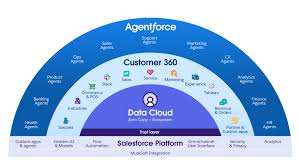
Ensuring Trust in AI Agent Deployment: A Secure Approach to Business Transformation The Imperative for Trustworthy AI Agents AI agents powered by platforms like Agentforce represent a significant advancement in business automation, offering capabilities ranging from enhanced customer service to intelligent employee assistance. However, organizations face a critical challenge in adopting this technology: establishing sufficient trust to deploy AI agents with sensitive data and core business operations. Recent industry research highlights prevalent concerns: Salesforce has maintained trust as its foundational value throughout its 25-year history, adapting this principle across technological evolutions from cloud computing to generative AI. The company now applies this same rigorous approach to AI agent deployment through a comprehensive trust framework. The Four Essential Components of Trusted AI Implementation 1. Comprehensive Data Governance Framework The reliability of AI agents depends fundamentally on data quality and security. The Salesforce platform addresses this through: Data Protection Systems Advanced Data Management Industry experts emphasize that robust AI systems require equally robust data foundations. 2. Secure Integration Architecture AI agents require safe interaction channels with other systems: 3. Built-in Development Safeguards The platform incorporates multiple layers of protection throughout the AI lifecycle: 4. Proprietary Trust Layer A specialized security interface between users and large language models offers: Case Study: Healthcare Transformation with Precina Precina’s implementation demonstrates the platform’s capabilities in a regulated environment. By unifying patient records through Agentforce while maintaining HIPAA compliance, the organization achieved: Precina’s CTO noted that Salesforce’s cybersecurity standards enabled trust equivalent to their own care standards when handling patient information. Enterprise AI: Balancing Innovation and Responsibility Salesforce leadership emphasizes that the company’s quarter-century of experience in secure solutions uniquely positions it to guide enterprises through AI adoption. The integration of unified data management, intuitive development tools, and embedded governance enables organizations to deploy AI solutions that are both transformative and responsible. The recommended implementation approach includes: In the evolving landscape of enterprise AI, Salesforce positions trust not just as a corporate value but as a critical competitive differentiator for organizations adopting these technologies. Like Related Posts Who is Salesforce? Who is Salesforce? Here is their story in their own words. From our inception, we’ve proudly embraced the identity of Read more Salesforce Marketing Cloud Transactional Emails Salesforce Marketing Cloud Transactional Emails are immediate, automated, non-promotional messages crucial to business operations and customer satisfaction, such as order Read more Salesforce Unites Einstein Analytics with Financial CRM Salesforce has unveiled a comprehensive analytics solution tailored for wealth managers, home office professionals, and retail bankers, merging its Financial Read more AI-Driven Propensity Scores AI plays a crucial role in propensity score estimation as it can discern underlying patterns between treatments and confounding variables Read more

Read More
Salesforce AI Agents and New Data Cloud Features

Salesforce CDP and Data Cloud

What is the difference between Salesforce CDP and data Cloud? AI Overview Salesforce Data Cloud and Salesforce CDP (Customer Data Platform) are closely related, but Data Cloud is a broader, more comprehensive platform. Data Cloud extends the core CDP functionality to encompass all business data, not just customer data, and integrates it with the broader Salesforce ecosystem according to saasguru.  Here’s a breakdown of the key differences: Salesforce CDP (Now part of Data Cloud): Salesforce Data Cloud: Key Differences Summarized: In essence, Data Cloud is a more mature and broader evolution of the original CDP functionality, extending its benefits to a wider range of business data and applications within the Salesforce ecosystem according to Salesforce Ben.  Like Related Posts Who is Salesforce? Who is Salesforce? Here is their story in their own words. From our inception, we’ve proudly embraced the identity of Read more Salesforce Marketing Cloud Transactional Emails Salesforce Marketing Cloud Transactional Emails are immediate, automated, non-promotional messages crucial to business operations and customer satisfaction, such as order Read more Salesforce Unites Einstein Analytics with Financial CRM Salesforce has unveiled a comprehensive analytics solution tailored for wealth managers, home office professionals, and retail bankers, merging its Financial Read more AI-Driven Propensity Scores AI plays a crucial role in propensity score estimation as it can discern underlying patterns between treatments and confounding variables Read more

Read More
Autonomous GUI Interaction

Autonomous GUI Interaction

GTA1: Salesforce AI’s Breakthrough in Autonomous GUI Interaction Salesforce AI Research has unveiled GTA1, a next-generation graphical user interface (GUI) agent that redefines autonomous human-computer interaction. Unlike traditional agents limited by rigid workflows, GTA1 operates seamlessly in real operating system environments—starting with Linux—achieving a 45.2% task success rate on the OSWorld benchmark. This surpasses OpenAI’s CUA (Computer-Using Agent) and sets a new standard for open-source GUI automation. Why GUI Agents Struggle—And How GTA1 Fixes It Most GUI agents fail at two critical points: Benchmark Dominance GTA1 outperforms both open and proprietary models across key tests: Benchmark GTA1-7B Score Competitor Scores OSWorld (Task Success) 45.2% OpenAI CUA: 42.9% ScreenSpot-Pro (Grounding) 50.1% UGround-72B: 34.5% OSWorld-G (Linux GUI) 67.7% Prior SOTA: 58.1% Notably, smaller GTA1 models (7B params) outperform larger alternatives, proving efficiency isn’t just about scale. Key Innovations The Future of Agentic UI Interaction GTA1 proves that robust GUI automation doesn’t require proprietary models or bloated architectures. By combining:✔ Adaptive planning (test-time scaling)✔ Precision grounding (RL-driven clicks)✔ Clean data pipelines Salesforce AI delivers an open, scalable framework for the next era of digital assistants. What’s next? Expect GTA1 to expand beyond Linux—bringing autonomous, error-resistant UI agents to enterprise workflows. Like Related Posts Who is Salesforce? Who is Salesforce? Here is their story in their own words. From our inception, we’ve proudly embraced the identity of Read more Salesforce Marketing Cloud Transactional Emails Salesforce Marketing Cloud Transactional Emails are immediate, automated, non-promotional messages crucial to business operations and customer satisfaction, such as order Read more Salesforce Unites Einstein Analytics with Financial CRM Salesforce has unveiled a comprehensive analytics solution tailored for wealth managers, home office professionals, and retail bankers, merging its Financial Read more AI-Driven Propensity Scores AI plays a crucial role in propensity score estimation as it can discern underlying patterns between treatments and confounding variables Read more

Read More
AWS Salesforce

AWS Unveils New Agent-Based AI Tools

AWS Unveils New Agent-Based AI Tools, Doubles Down on Developer-Focused Innovation At the AWS Summit New York City 2025, Amazon Web Services (AWS) announced a suite of new agent-based AI tools, reinforcing its commitment to agentic AI—a paradigm shift where AI systems not only generate responses but autonomously take actions. Key Announcements: Why Agentic AI? AWS believes agentic AI is transforming technology by enabling hyper-automation—where AI doesn’t just analyze or summarize but acts on behalf of users. To accelerate adoption, AWS is investing an additional 0M in its Generative AI Innovation Center. “The goal is to help organizations move beyond generative AI to AI that can take action,” said Taimur Rashid, AWS Managing Director of Generative AI Innovation. Industry Reactions: A Developer-First Approach Analysts note AWS is targeting enterprise developers with advanced tooling, differentiating itself from low-code platforms like Salesforce. However, Mark Beccue (Omdia) cautions:“AWS risks missing buyers by focusing too narrowly on developers. They need a clearer end-to-end story.” Partner Perspective: Solving Real-World AI Challenges John Balsavage (A&I Solutions Inc.), an AWS partner, highlights AgentCore Observability as critical for improving AI agent accuracy:“90% accuracy isn’t enough—we need full traceability to reach 100%.” He also praised Kiro, AWS’s new agentic IDE, for simplifying AI prompting:“It generates better requirements, helping developers build more effectively.” AWS Marketplace Expansion & New Integrations AWS also launched: Challenges Ahead While AWS aims to simplify AI development, analysts question: “AWS is trying to be the middle ground between raw AI tools and fully packaged solutions,” said Andersen. “Execution will be key.” The Bottom Line AWS is betting big on agentic AI, arming developers with powerful tools—but success hinges on bridging the gap between technical capability and business impact. Like Related Posts Who is Salesforce? Who is Salesforce? Here is their story in their own words. From our inception, we’ve proudly embraced the identity of Read more Salesforce Marketing Cloud Transactional Emails Salesforce Marketing Cloud Transactional Emails are immediate, automated, non-promotional messages crucial to business operations and customer satisfaction, such as order Read more Salesforce Unites Einstein Analytics with Financial CRM Salesforce has unveiled a comprehensive analytics solution tailored for wealth managers, home office professionals, and retail bankers, merging its Financial Read more AI-Driven Propensity Scores AI plays a crucial role in propensity score estimation as it can discern underlying patterns between treatments and confounding variables Read more

Read More
Agentforce 3 and AI Agents

Agentforce Quantum Leap

Salesforce Unveils Agentforce 3: The Next Generation of Enterprise AI Agents Revolutionizing Digital Labor with Unprecedented Visibility and Control Salesforce (NYSE: CRM) announced Agentforce 3, a groundbreaking upgrade to its industry-leading digital labor platform that empowers enterprises to scale AI agents with complete confidence. This release addresses the critical challenge organizations face: the inability to effectively monitor and optimize their growing AI workforce. Why Agentforce 3 Matters Now Key Innovations in Agentforce 3 1. Command Center: Total AI Workforce Observability The new Command Center provides enterprise leaders with: “With Command Center, we can see what’s working, optimize in real time, and scale support with confidence,” says Ryan Teeples, CTO of 1-800Accountant. 2. Open Ecosystem for Trusted Interoperability Agentforce 3 introduces native support for Model Context Protocol (MCP) — the “USB-C for AI” — enabling: 3. Enhanced Atlas Architecture The platform’s foundation now delivers: Enterprise-Ready Solutions Industry-Specific Acceleration “Agentforce enables us to act strategically across all markets,” notes Athina Kanioura, Chief Strategy Officer at PepsiCo. The Future of Digital Labor “Agentforce 3 represents a quantum leap in how humans and AI collaborate,” says Adam Evans, EVP of Salesforce AI. “We’re delivering the visibility, control, and trust enterprises need to make agent velocity their competitive advantage.” With its unique combination of observability, interoperability, and enterprise readiness, Agentforce 3 is poised to redefine productivity standards across industries. Like Related Posts Who is Salesforce? Who is Salesforce? Here is their story in their own words. From our inception, we’ve proudly embraced the identity of Read more Salesforce Marketing Cloud Transactional Emails Salesforce Marketing Cloud Transactional Emails are immediate, automated, non-promotional messages crucial to business operations and customer satisfaction, such as order Read more Salesforce Unites Einstein Analytics with Financial CRM Salesforce has unveiled a comprehensive analytics solution tailored for wealth managers, home office professionals, and retail bankers, merging its Financial Read more AI-Driven Propensity Scores AI plays a crucial role in propensity score estimation as it can discern underlying patterns between treatments and confounding variables Read more

Read More
AWS Salesforce

AWS Doubles Down on Agentic AI with New Developer Tools at NYC Summit

At its AWS Summit New York City 2025 conference, Amazon Web Services unveiled a comprehensive suite of agent-based AI tools, signaling its strategic bet on what it calls “the next fundamental shift in enterprise AI.” Core Offerings: Building Blocks for Agentic Systems The cloud leader introduced Amazon Bedrock AgentCore, now in preview, which provides seven foundational services for deploying AI agents at scale: “This represents a step function change in what’s possible for AI agents,” said Swami Sivasubramanian, AWS VP for Agentic AI, during his keynote. The suite supports any AI framework or model while addressing critical enterprise requirements around security and scalability. Complementary AI Infrastructure Updates AWS also announced: The company is backing these technical investments with an additional $100 million for its Generative AI Innovation Center, focusing on hyperautomation use cases. Developer-Centric Approach Faces Mixed Reactions Analysts note AWS’s strategy differs from competitors by targeting professional developers rather than citizen developers: “It’s geared toward the hardcore professional developer,” said Jason Andersen of Moor Insights & Strategy, contrasting AWS’s CLI-heavy approach with Salesforce’s low-code solutions. However, Omdia’s Mark Beccue cautioned: “When talking about agents, you must have the complete story.” He suggested the developer focus might overlook key decision-makers. Ecosystem Expansion Notable ecosystem developments include: Early adopters like A&I Solutions President John Balsavage highlight observability tools as critical for improving agent accuracy beyond current 90% benchmarks. Challenges Ahead While AWS aims to simplify complex AI orchestration, analysts question whether it can: The summit also revealed AWS Academy is providing free certification exam vouchers to over 6,600 students, potentially growing its AI-skilled workforce. Meanwhile, Anthropic (an AWS partner) launched new analytics for its Claude Code assistant. Like Related Posts Who is Salesforce? Who is Salesforce? Here is their story in their own words. From our inception, we’ve proudly embraced the identity of Read more Salesforce Marketing Cloud Transactional Emails Salesforce Marketing Cloud Transactional Emails are immediate, automated, non-promotional messages crucial to business operations and customer satisfaction, such as order Read more Salesforce Unites Einstein Analytics with Financial CRM Salesforce has unveiled a comprehensive analytics solution tailored for wealth managers, home office professionals, and retail bankers, merging its Financial Read more AI-Driven Propensity Scores AI plays a crucial role in propensity score estimation as it can discern underlying patterns between treatments and confounding variables Read more

Read More
agent2agent protocol explained

Google’s Agent2Agent Protocol Explained

Google’s Agent2Agent Protocol (A2A): The Open Standard for AI Agent Collaboration A New Era of AI Interoperability On April 9, 2025, Google introduced the Agent2Agent Protocol (A2A), a standardized framework enabling AI agents to discover, communicate, and collaborate across different platforms securely. Just months later, on June 23, 2025, Google donated A2A—including its specifications, SDKs, and developer tools—to the Linux Foundation, ensuring neutral, open governance for the protocol’s future. “By contributing A2A, Google is ensuring neutral governance for the project for the remainder of its existence.”— Mike Dolan, SVP, Legal & Strategic Programs, Linux Foundation This move prevents any single company from controlling A2A, fostering an open ecosystem where AI agents from different vendors can seamlessly interact. How A2A Works: Secure, Scalable AI Collaboration A2A defines two types of agents: Key Features 🔹 Agent Cards – Each agent advertises its capabilities (name, functions, authentication methods) without exposing proprietary logic or internal data.🔹 HTTPS-Based Messaging – Secure, real-time communication between agents.🔹 Task Delegation & Progress Tracking – Agents exchange structured messages to update on task status or request additional input.🔹 Enterprise-Grade Security – No exposure of internal states, ensuring data privacy and IP protection. Why A2A Matters Without a universal protocol, AI agent integration is manual, brittle, and hard to scale. A2A solves this by:✅ Eliminating point-to-point custom integrations✅ Enabling dynamic task routing & resource allocation✅ Reducing human intervention in automated workflows Early Adoption & Industry Support Over 100 companies—including AWS, Cisco, Microsoft, Salesforce, SAP, and ServiceNow—have endorsed A2A. A Technical Steering Committee (with members from these firms) now governs the protocol’s evolution. “PayPal, ServiceNow, and Salesforce already support A2A and are integrating it into their platforms.”— Rao Surapaneni, VP & GM, Google Cloud The Future of AI Agent Ecosystems While A2A has strong momentum, alternative protocols like: more are also emerging. However, A2A’s open governance, enterprise security, and broad industry backing position it as a leading candidate for universal AI agent interoperability. What’s Next? As businesses deploy more AI agents, A2A could become the TCP/IP of AI collaboration—a foundational layer enabling autonomous, cross-platform workflows. Sourced from Matt Vartabedian’s article in NoJitter. Like Related Posts Who is Salesforce? Who is Salesforce? Here is their story in their own words. From our inception, we’ve proudly embraced the identity of Read more Salesforce Marketing Cloud Transactional Emails Salesforce Marketing Cloud Transactional Emails are immediate, automated, non-promotional messages crucial to business operations and customer satisfaction, such as order Read more Salesforce Unites Einstein Analytics with Financial CRM Salesforce has unveiled a comprehensive analytics solution tailored for wealth managers, home office professionals, and retail bankers, merging its Financial Read more AI-Driven Propensity Scores AI plays a crucial role in propensity score estimation as it can discern underlying patterns between treatments and confounding variables Read more

Read More
salesforce tags

Salesforce Tags and Topics

Mastering Record Organization with Tags & Topics in Salesforce Streamline Your Data with Powerful Tagging What Are Topics and Tags? ✔ Available in all Salesforce editions✔ Works in both Classic & Lightning Experience Key Benefits of Using Topics & Tags ✅ Find related records instantly – Group accounts, contacts, and opportunities by theme✅ Improve search efficiency – Filter records faster with intuitive labels✅ Maintain consistency – Standardize categorization across teams✅ Flexible personalization – Add custom tags for your workflow How to Use Topics in Lightning Experience Working with Tags for Faster Navigation 🔹 Add Tags 🔹 Search with Tags 🔹 Remove Tags Classic vs. Lightning: Key Differences Feature Lightning Experience Salesforce Classic Topic Management “Related” tab on topic pages Requires Chatter enabled (via “Records” tab) Tagging Directly on record pages Same functionality Best Practices for Effective Tagging ✔ Keep topics broad (e.g., “Healthcare” vs. “Cardiology”)✔ Use consistent naming (avoid duplicates like “Client” vs. “Customer”)✔ Train teams on tagging standards to maintain clean data Pro Tip: Combine topics for company-wide organization with personal tags for individual workflows! Get Started Today ⚡ Boost productivity – Stop wasting time searching for records📊 Enhance reporting – Build smarter dashboards with tagged data Need help setting up? Check Salesforce Trailhead for hands-on tutorials! Like Related Posts Who is Salesforce? Who is Salesforce? Here is their story in their own words. From our inception, we’ve proudly embraced the identity of Read more Salesforce Marketing Cloud Transactional Emails Salesforce Marketing Cloud Transactional Emails are immediate, automated, non-promotional messages crucial to business operations and customer satisfaction, such as order Read more Salesforce Unites Einstein Analytics with Financial CRM Salesforce has unveiled a comprehensive analytics solution tailored for wealth managers, home office professionals, and retail bankers, merging its Financial Read more AI-Driven Propensity Scores AI plays a crucial role in propensity score estimation as it can discern underlying patterns between treatments and confounding variables Read more

Read More
Healthcare Cloud Computing

How Salesforce Health Cloud is Transforming Modern Hospitals

The healthcare industry faces unprecedented challenges: delivering personalized patient care, maintaining strict compliance, and optimizing operational efficiency—all while managing complex data ecosystems. Salesforce Health Cloud has won as a leading solution, empowering hospitals to meet these demands through intelligent, integrated technology. Here’s why forward-thinking healthcare organizations are adopting Health Cloud—and how it’s reshaping hospital operations. 1. Personalized Patient Engagement Today’s patients expect seamless, consumer-grade experiences from their healthcare providers. Salesforce Health Cloud enables hospitals to:✔ Deliver mobile-responsive patient portals for easy access to records and appointments.✔ Automate personalized follow-ups (e.g., medication reminders, post-visit surveys).✔ Tailor communication based on patient history and preferences. Why it matters: Engaged patients adhere better to treatment plans and report higher satisfaction—key drivers of improved outcomes. 2. Seamless Care Team Coordination Fragmented care—where specialists, nurses, and administrators work in silos—leads to inefficiencies and errors. Health Cloud connects all stakeholders on a unified platform, enabling:✔ Real-time collaboration across departments.✔ Centralized patient histories (no more chasing down records).✔ Automated task assignments and progress tracking. Why it matters: Coordinated care reduces redundancies, improves accuracy, and elevates patient trust. 3. AI-Powered Decision-Making Health Cloud goes beyond data storage—it turns information into actionable intelligence with:✔ Real-time analytics on treatment outcomes, readmission risks, and patient satisfaction.✔ Predictive tools to identify high-risk patients before complications arise.✔ Custom dashboards for performance tracking at every level. Why it matters: Data-driven decisions lead to better resource allocation, fewer errors, and higher-quality care. 4. Unified Patient Data Management Hospitals juggle EHRs, lab systems, billing software, and more—often with no integration. Health Cloud consolidates all data into a single source of truth, offering:✔ A 360-degree patient view (medical history, appointments, insurance, social determinants of health).✔ Secure, instant access for authorized providers.✔ Reduced manual entry and duplicate records. Why it matters: Disjointed data causes delays and mistakes. Centralization improves efficiency and patient safety. 5. Built-In HIPAA Compliance & Security Healthcare data breaches cost millions and erode trust. Health Cloud provides:✔ Enterprise-grade encryption and access controls.✔ Audit trails for all data interactions.✔ Pre-configured HIPAA-compliant workflows. Why it matters: Compliance isn’t optional. Health Cloud protects sensitive data without sacrificing usability. 6. Scalability for Future Growth Whether expanding services, adding telehealth, or integrating new EHRs, Health Cloud adapts effortlessly thanks to:✔ Open APIs for seamless interoperability.✔ Modular design to add features as needs evolve.✔ Cloud-based flexibility to scale across locations. Why it matters: Healthcare never stands still. A future-proof system ensures long-term success. 7. Operational Efficiency & Cost Savings Administrative waste drains hospital resources. Health Cloud automates routine tasks, including:✔ Appointment scheduling and reminders.✔ Referral management and prior authorizations.✔ Case management workflows. Why it matters: Streamlined operations cut costs, reduce staff burnout, and improve patient throughput. The Bottom Line Salesforce Health Cloud isn’t just another IT tool—it’s a strategic asset that bridges the gap between patient care and operational excellence. Hospitals leveraging its full potential see:✅ Higher patient satisfaction (through personalized engagement).✅ Stronger care team alignment (breaking down silos).✅ Smarter decision-making (powered by AI and analytics).✅ Lower compliance risks (with built-in security). As healthcare evolves, the hospitals that thrive will be those that embrace connected, intelligent platforms like Health Cloud. The question isn’t if to adopt it—but how soon your organization can start reaping the benefits. Ready to transform your hospital’s operations? Salesforce Health Cloud is the proven solution for healthcare’s toughest challenges. Contact Tectonic to learn more. Like Related Posts Who is Salesforce? Who is Salesforce? Here is their story in their own words. From our inception, we’ve proudly embraced the identity of Read more Salesforce Marketing Cloud Transactional Emails Salesforce Marketing Cloud Transactional Emails are immediate, automated, non-promotional messages crucial to business operations and customer satisfaction, such as order Read more Salesforce Unites Einstein Analytics with Financial CRM Salesforce has unveiled a comprehensive analytics solution tailored for wealth managers, home office professionals, and retail bankers, merging its Financial Read more AI-Driven Propensity Scores AI plays a crucial role in propensity score estimation as it can discern underlying patterns between treatments and confounding variables Read more

Read More
Preparing for Salesforce's Permission Set Revolution

Preparing for Salesforce’s Permission Set Revolution

Tectonic Shift: Preparing for Salesforce’s Permission Set Revolution The Future of Salesforce Access Management Salesforce is fundamentally transforming how enterprises manage user permissions. By Spring 2026, the platform will begin phasing out profile-based permissions in favor of a permission set-centric model—a tectonic shift in access governance that demands strategic preparation. This evolution presents both challenges and opportunities: Why Salesforce is Making This Change Legacy profile-based permissions have become unsustainable for modern enterprises, creating: The new permission set model delivers:✔ Modular, role-based access controls✔ Reduced management overhead✔ Enhanced audit capabilities✔ Dynamic alignment with business needs Note: Some profile functionality (login hours, page layouts) will remain, but core object/field permissions will migrate to permission sets. Tectonic’s Proven Transition Framework As a leader in Salesforce transformations, Tectonic has developed a comprehensive approach to permission set migration: 1. Strategic Assessment 2. Intelligent Design 3. Automated Deployment 4. Organizational Enablement Beyond Compliance: Strategic Advantages This transition represents more than a technical requirement—it’s an opportunity to: Building Your Transition Team The permission set revolution will reshape Salesforce talent needs. Tectonic offers dual solutions: 1. Expert Consultants 2. Managed Services Why Partner with Tectonic? Prepare for the Shift The clock is ticking toward Spring 2026. Organizations that start their transition now will: Ready to transform your access management strategy? Tectonic’s Salesforce experts can guide your organization through every phase of this critical transition. Like Related Posts Who is Salesforce? Who is Salesforce? Here is their story in their own words. From our inception, we’ve proudly embraced the identity of Read more Salesforce Marketing Cloud Transactional Emails Salesforce Marketing Cloud Transactional Emails are immediate, automated, non-promotional messages crucial to business operations and customer satisfaction, such as order Read more Salesforce Unites Einstein Analytics with Financial CRM Salesforce has unveiled a comprehensive analytics solution tailored for wealth managers, home office professionals, and retail bankers, merging its Financial Read more AI-Driven Propensity Scores AI plays a crucial role in propensity score estimation as it can discern underlying patterns between treatments and confounding variables Read more

Read More
Revenue Cloud

Salesforce Revenue Cloud Advanced

Salesforce Revenue Cloud Advanced (RCA): The Ultimate Quote-to-Cash Solution Revolutionize Your Revenue Operations Salesforce Revenue Cloud Advanced (RCA) is an end-to-end revenue management platform that transforms complex quote-to-cash processes into automated, compliant, and customer-centric experiences. Designed for mid-market and enterprise organizations, RCA empowers businesses to: ✔ Simplify CPQ, billing, and revenue recognition✔ Ensure compliance with ASC 606/IFRS 15✔ Accelerate deal velocity✔ Manage multi-channel revenue streams Ideal for: SaaS, Manufacturing, High Tech, Healthcare, and other industries with subscription models, usage-based pricing, and dynamic bundling. Key Capabilities of Revenue Cloud Advanced 1. Intelligent CPQ (Configure, Price, Quote) 2. Flexible Billing & Monetization 3. Accurate Revenue Recognition 4. Partner & Channel Management Who Benefits from RCA? Team Key Value Sales Faster quoting, guided selling, deal acceleration Finance Automated revenue compliance, reduced manual errors RevOps End-to-end process automation, scalability IT Pre-built integrations, low technical debt Why Choose Salesforce RCA? Native to the Salesforce Ecosystem Seamlessly integrates with: AI-Powered Insights Enterprise-Grade Scalability Transform Your Revenue Lifecycle ✅ Close deals faster with AI-guided selling✅ Eliminate billing errors with automation✅ Stay audit-ready with compliant revenue reporting✅ Scale effortlessly as your business grows Ready to optimize your quote-to-cash process? Contact Tectonic today. Like Related Posts Who is Salesforce? Who is Salesforce? Here is their story in their own words. From our inception, we’ve proudly embraced the identity of Read more Salesforce Marketing Cloud Transactional Emails Salesforce Marketing Cloud Transactional Emails are immediate, automated, non-promotional messages crucial to business operations and customer satisfaction, such as order Read more Salesforce Unites Einstein Analytics with Financial CRM Salesforce has unveiled a comprehensive analytics solution tailored for wealth managers, home office professionals, and retail bankers, merging its Financial Read more AI-Driven Propensity Scores AI plays a crucial role in propensity score estimation as it can discern underlying patterns between treatments and confounding variables Read more

Read More
gettectonic.com