AI Agents Archives - gettectonic.com - Page 23
Salesforce and IBM Partnership

Salesforce and IBM Partnership

Salesforce and IBM are advancing their longstanding partnership by focusing on transforming sales and service processes with AI, particularly for organizations in regulated industries that seek to leverage enterprise data for automation. The collaboration aims to deliver pre-built AI agents and tools that integrate seamlessly within customers’ IT environments, enabling them to use their proprietary data while maintaining full control over their systems. By merging Salesforce’s Agentforce, a suite of autonomous agents, with IBM’s watsonx capabilities, the partnership will empower businesses to utilize AI agents within their daily applications. IBM’s watsonx Orchestrate will enhance Agentforce with autonomous agents that improve productivity, security, and regulatory compliance. Additionally, IBM customers will have the ability to interact with these agents via Slack, facilitating dynamic conversational experiences. Planned integrations between Salesforce Data Cloud and IBM Data Gate for watsonx will enable access to business data from IBM Z mainframes and Db2 databases, supporting AI workflows across the Agentforce platform. This integration will enhance data analysis and fuel AI-driven processes. Customers will also benefit from a broader range of AI model and deployment options through integration with IBM watsonx.ai. This will include access to IBM’s Granite foundation models, designed for enterprise applications. Enhancing Business Automation with Tailored Autonomous Agents Through the Agentforce Partner Network, businesses can develop and customize AI agents to interact with various enterprise tools and platforms. These agents are designed to perform multi-step tasks, make decisions based on triggers or interactions, and seek user approval for actions beyond their scope. They will help automate routine tasks, increase efficiency, streamline operations, and enhance customer service. IBM’s watsonx Orchestrate will integrate with Salesforce Agentforce to develop new pre-built agents for specific business challenges. These agents will leverage data and AI from both Salesforce and IBM to address various needs: Expanding Data Integration for AI Salesforce and IBM are also advancing data integration strategies through the Zero Copy integration between Salesforce Data Cloud and watsonx.data. This allows data to remain in place while being utilized for AI use cases, without duplication. Joint customers, particularly in financial services, insurance, manufacturing, and telecommunications, will leverage this integration to access and use mainframe datasets from IBM Z and Db2 databases on Salesforce’s platform. IBM will be the first Zero Copy partner to facilitate data flow between IBM Z and Salesforce Cloud, offering secure access to critical enterprise data and enhancing AI agent functionality. With IBM Z handling over 70% of global transaction value, this partnership ensures high standards of security, privacy, and compliance. Improving Efficiency with Slack and IBM watsonx Orchestrate IBM customers will now engage with watsonx Orchestrate agents directly within Slack, supporting AI app experiences with a new interface. This integration allows for seamless interaction with AI agents, automating tasks and enhancing collaboration across systems without leaving Slack. Expanding AI Model and Deployment Options with watsonx.ai A new integration with watsonx.ai will enable customers to deploy customized large language models (LLMs) within Salesforce Model Builder. This includes access to a range of third-party models and IBM’s Granite foundation models, which offer transparency and compliance with regulatory requirements. IBM Granite models are expected to be available within the Salesforce ecosystem by October. Partnering with IBM Consulting for Tailored AI Solutions IBM Consulting will leverage its expertise in Salesforce and AI to help joint customers accelerate the implementation of Agentforce. Through IBM Consulting Advantage, the AI-powered delivery platform, businesses will receive support in selecting, customizing, deploying, and scaling AI agents to meet specific industry needs. Customer Perspective Tectonic is transforming its service stations into preferred journey stops with the help of Salesforce and IBM. The collaboration offers unprecedented flexibility in AI utilization, enabling Tectonic to deliver hyper-personalized services through Agentforce and IBM’s watsonx AI, enhancing customer engagement and satisfaction. Like Related Posts Who is Salesforce? Who is Salesforce? Here is their story in their own words. From our inception, we’ve proudly embraced the identity of Read more Salesforce Marketing Cloud Transactional Emails Salesforce Marketing Cloud Transactional Emails are immediate, automated, non-promotional messages crucial to business operations and customer satisfaction, such as order Read more Salesforce Unites Einstein Analytics with Financial CRM Salesforce has unveiled a comprehensive analytics solution tailored for wealth managers, home office professionals, and retail bankers, merging its Financial Read more AI-Driven Propensity Scores AI plays a crucial role in propensity score estimation as it can discern underlying patterns between treatments and confounding variables Read more


Read More
Copado Unveils AI Agents

Copado Unveils AI Agents

Copado Unveils AI Agents to Automate Key DevOps Tasks for Salesforce Applications Copado has introduced a suite of generative AI agents designed to automate common tasks that DevOps teams frequently encounter when building and deploying applications on Salesforce’s software-as-a-service (SaaS) platform. This announcement comes ahead of the Dreamforce 2024 conference hosted by Salesforce. These AI agents are the result of over a decade of data collection by Copado, according to David Brooks, Copado’s vice president of products. The initial AI agents will focus on code generation and test automation, with future agents tackling user story creation, deployment scripts, and application environment optimization. Unlike AI co-pilot tools that assist with code generation, Copado’s agents will fully automate tasks, Brooks explained. DevOps teams will be able to orchestrate these AI agents to streamline workflows, making best DevOps practices more accessible to a wider range of development teams. As AI continues to reshape DevOps, more tasks will be automated using agentic AI. This approach involves creating AI agents trained on a specific, narrow dataset, ensuring higher accuracy compared to general-purpose large language models (LLMs) that pull data from across the web. While it’s unclear how quickly agentic AI will transform DevOps, Brooks noted that in the future, teams will consist of both human engineers and AI agents assigned to specific tasks. DevOps engineers will still be essential for overseeing the accuracy of these tasks, but many of the repetitive tasks that often lead to burnout will be automated. As the burden of routine work decreases, organizations can expect the pace of code writing and application deployment to significantly accelerate. This could lead to a shift in how DevOps teams approach application backlogs, enabling the deployment of more applications that might have previously been sidelined due to resource constraints. In the interim, Brooks advises DevOps teams to begin identifying which routine tasks can be assigned to AI agents. Doing so will free up human engineers to manage workflows at a scale that was once unimaginable, positioning teams to thrive in the AI-driven future of DevOps. Like Related Posts Who is Salesforce? Who is Salesforce? Here is their story in their own words. From our inception, we’ve proudly embraced the identity of Read more Salesforce Marketing Cloud Transactional Emails Salesforce Marketing Cloud Transactional Emails are immediate, automated, non-promotional messages crucial to business operations and customer satisfaction, such as order Read more Salesforce Unites Einstein Analytics with Financial CRM Salesforce has unveiled a comprehensive analytics solution tailored for wealth managers, home office professionals, and retail bankers, merging its Financial Read more AI-Driven Propensity Scores AI plays a crucial role in propensity score estimation as it can discern underlying patterns between treatments and confounding variables Read more
Read More
Salesforce Advanced AI Models

Salesforce Advanced AI Models

Salesforce has introduced two advanced AI models—xGen-Sales and xLAM—designed to enhance its Agentforce platform, which seamlessly integrates human agents with autonomous AI for greater business efficiency. xGen-Sales, a proprietary AI model, is tailored for sales tasks such as generating customer insights, summarizing calls, and managing pipelines. By automating routine sales activities, it enables sales teams to focus on strategic priorities. This model enhances Agentforce’s capacity to autonomously handle customer interactions, nurture leads, and support sales teams with increased speed and precision. The xLAM (Large Action Model) family introduces AI models designed to perform complex tasks and trigger actions within business systems. Unlike traditional Large Language Models (LLMs), which focus on content generation, xLAM models excel in function-calling, enabling AI agents to autonomously execute tasks like initiating workflows or processing data without human input. These models vary in size and capability, from smaller, on-device versions to large-scale models suitable for industrial applications. Salesforce AI Research developed the xLAM models using APIGen, a proprietary data-generation pipeline that significantly improves model performance. Early xLAM models have already outperformed other large models in key benchmarks. For example, the xLAM-8x22B model ranked first in function-calling tasks on the Berkeley Leaderboards, surpassing even larger models like GPT-4. These AI innovations are designed to help businesses scale AI-driven workflows efficiently. Organizations adopting these models can automate complex tasks, improve sales operations, and optimize resource allocation. The non-commercial xLAM models are available for community review on Hugging Face, while proprietary versions will power Agentforce. xGen-Sales has completed its pilot phase and will soon be available for general use. Like Related Posts Who is Salesforce? Who is Salesforce? Here is their story in their own words. From our inception, we’ve proudly embraced the identity of Read more Salesforce Marketing Cloud Transactional Emails Salesforce Marketing Cloud Transactional Emails are immediate, automated, non-promotional messages crucial to business operations and customer satisfaction, such as order Read more Salesforce Unites Einstein Analytics with Financial CRM Salesforce has unveiled a comprehensive analytics solution tailored for wealth managers, home office professionals, and retail bankers, merging its Financial Read more AI-Driven Propensity Scores AI plays a crucial role in propensity score estimation as it can discern underlying patterns between treatments and confounding variables Read more

Read More
Agentforce to the Team

Agentforce to the Team

Salesforce has introduced the Agentforce Atlas Reasoning Engine, a platform designed to perform tasks autonomously with minimal human intervention. Agentforce to the Team changes everything about AI. Businesses can feed the engine data, assign tasks, and step away, as the system is capable of completing work independently. This launch closely follows OpenAI’s recent advancements in artificial intelligence, highlighting the ongoing collaboration between Salesforce and Sam Altman’s firm. Agentforce to the Team-makes me hear “Honey, I’m home”, coming from the front door. The Agentforce Atlas Reasoning Engine is designed to analyze data, make decisions, and execute tasks with high reliability and accuracy, echoing the features of OpenAI’s latest AI model. Salesforce positions this as part of the “Third Wave of AI,” where intelligent agents go beyond assisting humans to actively driving business outcomes without frequent oversight. According to Salesforce CEO Marc Benioff, these agents are deeply integrated into customer workflows, anticipating needs and improving growth by taking proactive action at every touchpoint. Benioff emphasized the revolutionary nature of Agentforce, which he claims will surpass existing AI platforms by offering highly accurate, low-hallucination results. It integrates seamlessly across Salesforce’s ecosystem, benefiting users from industries such as financial services, healthcare, and government. Early adopters, such as Wiley, report a 40% increase in case resolution, with Agentforce handling routine customer service tasks more efficiently than previous chatbots. Disney also saw improved results, noting that Atlas delivered twice the accuracy of other AI tools they had benchmarked. However, the autonomous nature of these agents raises concerns about job displacement, particularly for workers involved in repetitive, low-impact tasks. While Salesforce advocates for reskilling workers to transition into higher-value roles, many organizations struggle to effectively implement such initiatives. The time required to upskill workers may not align with the rapid adoption of AI technologies like Agentforce. Agentforce aims to address common enterprise challenges by offering out-of-the-box solutions for sales, marketing, and customer service roles. The low-code platform allows businesses to customize their AI agents without extensive technical expertise, ensuring that they can scale capacity and improve efficiency. Salesforce plans to showcase Agentforce at its upcoming Dreamforce conference, aiming to onboard 1,000 customers to the platform. The launch signifies Salesforce’s strategic push to dominate the enterprise AI landscape, leveraging its vast data and platform to deliver more value to its customers. Despite its potential, Agentforce introduces new risks, especially in areas like data privacy and ethical AI deployment. Salesforce emphasizes its commitment to addressing these issues by incorporating ethical guardrails, such as toxicity filters. Industry analysts remain cautiously optimistic, noting that while the technology holds promise, the real test will come as more organizations adopt it and integrate it into their workflows. In summary, Salesforce’s Agentforce Atlas Reasoning Engine represents a significant leap in enterprise AI, moving beyond basic AI copilots to fully autonomous agents. While it offers substantial benefits in productivity and efficiency, its impact on the workforce and the challenges of widespread AI adoption will require ongoing attention. By Tectonic’s Shannan Hearne, Solutions Architect Like Related Posts Who is Salesforce? Who is Salesforce? Here is their story in their own words. From our inception, we’ve proudly embraced the identity of Read more Salesforce Marketing Cloud Transactional Emails Salesforce Marketing Cloud Transactional Emails are immediate, automated, non-promotional messages crucial to business operations and customer satisfaction, such as order Read more Salesforce Unites Einstein Analytics with Financial CRM Salesforce has unveiled a comprehensive analytics solution tailored for wealth managers, home office professionals, and retail bankers, merging its Financial Read more AI-Driven Propensity Scores AI plays a crucial role in propensity score estimation as it can discern underlying patterns between treatments and confounding variables Read more

Read More
Oracle Fusion Cloud

Oracle Fusion Cloud

Oracle has unveiled over 50 role-based AI agents in the Oracle Fusion Cloud Applications Suite as of Wednesday. This suite offers a range of applications designed to help enterprises manage various functions. The newly introduced AI agents aim to assist employees and managers by automating business processes. According to Oracle executives at the CloudWorld 2024 conference in Las Vegas, these agents are tailored to improve efficiency across different functions. In Oracle Fusion Cloud Human Capital Management, the AI agents support shift scheduling, assist with hiring, manage requests to fill or create new positions, and help employees understand their benefits. In Oracle Fusion Cloud Supply Chain, Manufacturing AI Agents provide contextual insights and recommendations for handling order requests and suggest maintenance and repair actions for various assets. The AI agents within Oracle Fusion Cloud Customer Experience assist with planning and research tasks, automate contract workflow and approval processes, and facilitate communication with sales representatives. Oracle has yet to announce the release date for these AI agents. The Next Stage of GenAIThe introduction of AI agents represents an evolution of generative AI, moving beyond chatbots to technology that performs tasks autonomously. “These AI agents are engineered to automate routine tasks and offer personalized insights and recommendations,” noted Sid Nag, Gartner Research analyst. This development underscores a shift in the generative AI market from ideation to practical implementation. “These are very pragmatic and practical ideas,” said Mark Beccue, an analyst at TechTarget’s Enterprise Strategy Group. “It’s a use case we’ve been anticipating, where AI helps complete tasks effectively.” Oracle’s AI Agents for its Fusion Cloud Applications Suite align with the vision for enterprise software vendors, Beccue added. ServiceNow AI AgentsOracle is not alone in embedding AI agents into business applications. On September 10, ServiceNow announced plans to integrate agentic workflows into its platform. The initial AI Agent applications from ServiceNow will focus on Customer Service Management and IT Service Management. These agents are designed to identify and resolve issues independently while still being overseen by human operators. ServiceNow’s AI Agents are expected to launch in November 2024 as part of a limited release. The company also introduced the Now Assist Skill Kit, enabling enterprises to develop custom generative AI skills tailored to specific business needs. Single Task vs. Multitask AgentsA key consideration with AI agents is whether they can handle single tasks or multitask across multiple applications. Mark Beccue suggests that the ability to perform tasks across various applications could lead to a new user interface where AI agents manage tasks seamlessly across different systems. “It’s a vision for the future of AI agents,” Beccue remarked. It remains to be seen how these AI agents will address industry-specific regulations and compliance requirements, particularly in highly regulated sectors such as finance. Additional AI FeaturesOracle has also introduced new AI capabilities in other applications. Oracle Cloud ERP now includes predictive cash forecasting, narrative reporting, and automated transaction records within Oracle Fusion Cloud Sustainability. In Oracle Cloud CX, new features include assisted authoring to help sales teams engage buyers with AI-generated content and advanced AI capabilities in Oracle CX Unity for detecting signals based on role, title, and topic engagement. Like Related Posts Who is Salesforce? Who is Salesforce? Here is their story in their own words. From our inception, we’ve proudly embraced the identity of Read more Salesforce Unites Einstein Analytics with Financial CRM Salesforce has unveiled a comprehensive analytics solution tailored for wealth managers, home office professionals, and retail bankers, merging its Financial Read more AI-Driven Propensity Scores AI plays a crucial role in propensity score estimation as it can discern underlying patterns between treatments and confounding variables Read more Tectonic’s Successful Salesforce Track Record Salesforce Technology Services Integrator – Tectonic has successfully delivered Salesforce in a variety of industries including Public Sector, Hospitality, Manufacturing, Read more

Read More
Salesforce and Tenyx

Salesforce and Tenyx

Salesforce has announced its acquisition of AI voice agent firm Tenyx, with the deal expected to close in the third quarter. While the financial terms have not been disclosed, Tenyx’s co-founders, CEO Itamar Arel and CTO Adam Earle, along with their team, will join Salesforce as part of the acquisition. This move comes after Salesforce, under pressure from activist investors, previously shifted away from acquisitions and increased its share buybacks following the dissolution of its mergers and acquisitions committee. However, the company is now pursuing strategic acquisitions to boost revenue growth. Conversational AI forthe Enterprise Tenyx Voice is an Interactive Virtual Agent (IVA) built from the ground up leveraging today’s modern AI stack. Built by a team with a proven track record in voice AI, and leveraging a unique core AI and voice platform, Tenyx promises to redefine customer interactions for the enterprise. Tenyx Voice is an Interactive Virtual Agent (IVA) built from the ground up leveraging today’s modern AI stack. Built by a team with a proven track record in voice AI, and leveraging a unique core AI and voice platform, Tenyx promises to redefine customer interactions for the enterprise. Industries and Use Cases If 2023 was the year of large language models (LLMs), 2024 is shaping up to be the year of voice agents. When ChatGPT made waves globally, startups, tech firms, and entrepreneurs rushed to discover business use cases for the new technology. The ideal applications targeted tasks that are costly, time-consuming, and hard to scale. Voice agents and automated customer service systems quickly emerged as one of the most promising solutions. However, many companies deploying these systems aren’t fully considering their impact on customers. That’s why Tenyx is launching its inaugural Voice AI Consumer Report. We surveyed hundreds of Americans across different age groups, races, geographies, and genders to better understand their preferences and experiences with AI-powered voice agents. Here are the key findings: What this means: Frustrating Calls Hurt Your Brand Imagine calling customer service for a quick solution, only to be met by an automated voice agent that can’t understand your request or handle complex issues. It’s a common and frustrating experience. Our data shows that nearly 7 in 10 people express frustration or annoyance with today’s automated voice agents—sentiments that can severely damage customer loyalty and business outcomes. “Our report highlights a major disconnect between consumer expectations and the performance of current automated voice agents,” says Itamar Arel, CEO of Tenyx. “While these systems promise efficiency and cost savings, they often fall short when it comes to addressing consumers’ nuanced needs.” Incomplete AI Systems Drive Customer Churn Subpar AI systems are driving customers away. Two-thirds of respondents said they wouldn’t return to a company after a negative experience with its AI voice agent. In fact, 67% still prefer interacting with human agents over automated ones. Why? Current AI voice agents struggle with complex issues and fail to provide the empathy and problem-solving skills that human agents, or more advanced AI systems, offer. Selective Deployment and Industry-Specific Agents Matter Our data shows that consumers are more accepting of voice agents in certain industries than others. Sectors like healthcare, restaurants, and telecoms saw the highest satisfaction with AI voice agents, while airlines, banking, and hotels ranked the lowest. This highlights the importance of selective deployment and tailoring voice agents for specific industries to better meet customer needs. Looking Ahead: The Promise of Perfect Automation Despite the skepticism, there’s hope. Two-thirds of respondents indicated they’d embrace automated voice agents if these systems could match the performance of human agents. This is exactly what we’re working on at Tenyx—building scalable, reliable AI agents that serve businesses and customers globally. “As leaders in voice AI technology, Tenyx is dedicated to closing the gap between consumer expectations and technological capabilities,” Arel says. “Our mission is to equip businesses with AI solutions that not only streamline operations but also boost customer satisfaction.” Like1 Related Posts Who is Salesforce? Who is Salesforce? Here is their story in their own words. From our inception, we’ve proudly embraced the identity of Read more Salesforce Marketing Cloud Transactional Emails Salesforce Marketing Cloud Transactional Emails are immediate, automated, non-promotional messages crucial to business operations and customer satisfaction, such as order Read more Salesforce Unites Einstein Analytics with Financial CRM Salesforce has unveiled a comprehensive analytics solution tailored for wealth managers, home office professionals, and retail bankers, merging its Financial Read more AI-Driven Propensity Scores AI plays a crucial role in propensity score estimation as it can discern underlying patterns between treatments and confounding variables Read more
Read More
Army of AI Bots

Army of AI Bots

Salesforce Inc. has announced a significant upgrade with the launch of Industries AI, a new automation platform designed to handle a wide range of time-consuming tasks, enhancing productivity across various sectors. We are NOT advocating that the next war will be fought with AI Bots. We aren’t even suggesting there is anything negative about these bots. However, if the next war were to be information and data based, who knows. Industries AI will be integrated into all 15 of Salesforce’s cloud platforms, including Sales Cloud, Data Cloud, Service Cloud, Commerce Cloud, and Marketing Cloud. This expansive solution is capable of managing over 100 common tasks, from matching patients with clinical trials and providing maintenance alerts for vehicles and machinery, to streamlining recruitment processes and enhancing government services. The launch of Industries AI responds to findings from Salesforce’s Trends in AI for CRM Report, which indicated that over 75% of business leaders are concerned about missing out on AI advancements if they do not adopt the technology soon. With a 700% increase in urgency to implement AI over the past six months, many organizations struggle with the resources and expertise needed to develop and train AI models. Salesforce aims to address this by offering a ready-made framework for creating AI agents tailored to industry-specific needs, utilizing each customer’s proprietary data within the Salesforce platform. Industries AI will provide a foundation for quickly deploying autonomous agents, with setup times estimated at just a few minutes. To assist customers in leveraging AI automation, Salesforce has created use case libraries for each of its cloud platforms, featuring over 100 capabilities at launch. These capabilities span multiple industries: Salesforce will begin rolling out Industries AI capabilities in October 2024, with some features available by February 2025. The company plans to regularly update Industries AI with new capabilities as part of its annual Salesforce releases. Jeff Amann, executive vice president and general manager of Salesforce Industries, emphasized that this innovation aims to make powerful AI accessible to all enterprises, regardless of size or budget. “Organizations can now easily start with AI solutions tailored to their specific challenges, enhancing efficiency and productivity across various functions,” he said. Like Related Posts Who is Salesforce? Who is Salesforce? Here is their story in their own words. From our inception, we’ve proudly embraced the identity of Read more Salesforce Marketing Cloud Transactional Emails Salesforce Marketing Cloud Transactional Emails are immediate, automated, non-promotional messages crucial to business operations and customer satisfaction, such as order Read more Salesforce Unites Einstein Analytics with Financial CRM Salesforce has unveiled a comprehensive analytics solution tailored for wealth managers, home office professionals, and retail bankers, merging its Financial Read more AI-Driven Propensity Scores AI plays a crucial role in propensity score estimation as it can discern underlying patterns between treatments and confounding variables Read more
Read More
Salesforce AI Agents Explained

Salesforce AI Agents Explained

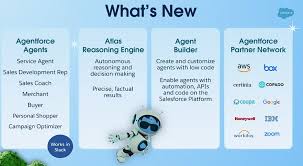
Salesforce’s AI Agents: Revolutionizing Enterprise Sales and Service for the Future In the rapidly evolving landscape of artificial intelligence (AI), Salesforce continues to lead the charge, transforming enterprise operations with cutting-edge AI agents. With the introduction of Agentforce, Salesforce is not just enhancing sales and service departments but reshaping business processes across sectors. This comprehensive exploration highlights how Salesforce’s AI agents are changing the game, offering enterprise-level executives insights into their revolutionary potential. Salesforce AI Agents Explained. AI Agents: Beyond Autonomous Vehicles A fitting analogy to grasp the progression of AI agents is the evolution of autonomous vehicles. Just as self-driving cars advance from basic driver assistance to full autonomy, AI agents evolve from simple automation to more complex decision-making. Salesforce’s Chief Product Officer, David Schmaier, draws this comparison: “In the autonomous driving world, we have levels of autonomy, from level zero to level five. AI agents for enterprises follow a similar path.” At the core of this evolution is what Salesforce defines as the “agentic” phase of AI. Unlike generative AI that follows instructions to create content, agentic AI autonomously determines and takes actions based on broader goals. Schmaier notes, “We’re at the point where AI not only creates content but takes strategic actions. It’s like having an infinite pool of interns handling mundane tasks so human employees can focus on higher-value activities.” Agentforce: Salesforce’s Next-Generation AI Platform Agentforce is the latest addition to Salesforce’s AI arsenal, unveiled during their Q2 ’25 earnings call and now positioned as a significant milestone in AI development. With Agentforce, organizations can build and manage autonomous agents for tasks across various business functions—not just customer service. This versatility is highlighted by Marc Benioff, Salesforce’s CEO, who described the energy around Agentforce during a recent briefing as “palpable.” Agentforce builds on Salesforce’s data management, security, and customization expertise, uniting these capabilities into an AI framework. Schmaier explains, “It’s about creating trusted, enterprise-ready agents, not just deploying a large language model. We’ve developed over 100 out-of-the-box use cases, from sales account summaries to service reply recommendations, all customizable and easy to deploy.” Agentforce “In Every App” A key announcement is the integration of Agentforce in every app across Salesforce’s product suite, including Sales, Service, Marketing, and Commerce Agents. The Atlas reasoning engine, Agent Builder, and a partner network were also introduced to further enhance its capabilities. The Atlas Reasoning Engine acts as the “brain” behind Agentforce, autonomously generating plans and refining them based on actions it needs to perform, such as running business processes or engaging customers through preferred channels. What Makes an AI Agent? Salesforce AI Agents Explained Building an AI agent with Agentforce requires five key elements: These components leverage existing Salesforce infrastructure, making it easier for businesses to deploy agents through Agent Builder, which is part of the new Agentforce Studio. Agents vs. Chatbots Unlike traditional chatbots, which provide pre-programmed responses, Salesforce’s AI agents use large language models (LLMs) and generative AI to interpret and autonomously execute customer requests based on CRM data. This distinction allows AI agents to perform tasks that go beyond simple queries, driving efficiency in customer service, sales, and other business areas. Practical Applications: Sales, Service, and Marketing Salesforce’s AI agents offer tangible business benefits. For instance, Sales Agent, available as both a Sales Development Representative (SDR) and Sales Coach, automates lead nurturing and inquiry management. It utilizes CRM data to deliver personalized pitches, handle objections, and even suggest meeting times—freeing sales teams to focus on more strategic tasks. In customer service, AI agents manage routine inquiries, allowing human representatives to address more complex customer needs. In marketing, AI agents generate data-driven insights to personalize campaigns, improving customer engagement and conversion rates. The Security and Trust Foundation Security and trust remain core to Salesforce’s approach to AI. The Einstein Trust Layer ensures that data protection, privacy, and ethical guidelines are maintained throughout AI interactions. Schmaier emphasizes, “Our platform defines what data agents can access and how they use it, adhering to strict data integrity standards.” The Trust Layer also prevents AI from training on customer data without consent, ensuring transparency and security. A Partnership Between Humans and AI-Salesforce AI Agents Explained Salesforce’s vision emphasizes the synergy between human employees and AI agents. As Schmaier points out, “AI agents handle routine tasks and deliver insights, allowing employees to focus on more creative and strategic work.” This human-AI partnership boosts productivity and innovation, ultimately improving business outcomes. The Future of AI in Business As AI technology advances, Salesforce is already working on next-generation capabilities for Agentforce, including predictive analytics and more sophisticated autonomous agents. Schmaier forecasts, “These agents will handle a wider range of tasks and provide deeper insights and recommendations.” With Agentforce launching in October 2024, businesses can expect significant returns on investment, thanks to its cost-efficient model starting at $2 per conversation. In summary, Salesforce’s Agentforce is a game-changing innovation, blending AI and human intelligence to transform sales, service, and marketing. As more details unfold, it’s clear that Agentforce will redefine the future of business operations—driving efficiency, personalization, and strategic success. Like1 Related Posts Who is Salesforce? Who is Salesforce? Here is their story in their own words. From our inception, we’ve proudly embraced the identity of Read more Salesforce Marketing Cloud Transactional Emails Salesforce Marketing Cloud Transactional Emails are immediate, automated, non-promotional messages crucial to business operations and customer satisfaction, such as order Read more Salesforce Unites Einstein Analytics with Financial CRM Salesforce has unveiled a comprehensive analytics solution tailored for wealth managers, home office professionals, and retail bankers, merging its Financial Read more AI-Driven Propensity Scores AI plays a crucial role in propensity score estimation as it can discern underlying patterns between treatments and confounding variables Read more
Read More
Slack Expands AI Features

Slack Expands AI Features

Slack is introducing several new AI-driven features, including the integration of AI-powered agents from Salesforce and other leading partners across the platform. The Big Picture: As part of its evolution, the Salesforce-owned company aims to position Slack as a hub where humans collaborate seamlessly with an increasing number of bots and AI agents. Key Updates: Ahead of Salesforce’s Dreamforce conference, Slack announced its support for agents from partners such as Adobe, Anthropic, Cohere, Perplexity, Writer, and more, alongside Salesforce’s own Agentforce. Additionally, Slack is enhancing its AI capabilities, expanding its AI-driven transcription features to include informal video chat sessions, known as “huddles.” Why It Matters: This move aligns with Salesforce’s broader strategy of leveraging generative AI to power autonomous agents that can take independent action, moving beyond the traditional role of AI as a co-pilot merely assisting humans. What They’re Saying: “Slack’s vision of becoming an AI-powered work operating system fits perfectly with the growing role of agents in the workplace,” said Slack CEO Denise Dresser in a statement to Axios. While Dresser didn’t disclose how many paying customers have adopted Slack’s AI features, it’s worth noting that these features require a separate monthly fee. Initially, Slack planned to require companies to pay for AI features for all users or none, but the company later shifted this approach following customer feedback. And Slack Expands AI Features with New Agent Integrations Slack is introducing several new AI-driven features, including the integration of AI-powered agents from Salesforce and other leading partners across the platform. The Big Picture: As part of its evolution, the Salesforce-owned company aims to position Slack as a hub where humans collaborate seamlessly with an increasing number of bots and AI agents. Key Updates: Ahead of Salesforce’s Dreamforce conference, Slack announced its support for agents from partners such as Adobe, Anthropic, Cohere, Perplexity, Writer, and more, alongside Salesforce’s own Agentforce. Additionally, Slack is enhancing its AI capabilities, expanding its AI-driven transcription features to include informal video chat sessions, known as “huddles.” Why It Matters: This move aligns with Salesforce’s broader strategy of leveraging generative AI to power autonomous agents that can take independent action, moving beyond the traditional role of AI as a co-pilot merely assisting humans. What They’re Saying: “Slack’s vision of becoming an AI-powered work operating system fits perfectly with the growing role of agents in the workplace,” said Slack CEO Denise Dresser in a statement to Axios. While Dresser didn’t disclose how many paying customers have adopted Slack’s AI features, it’s worth noting that these features require a separate monthly fee. Initially, Slack planned to require companies to pay for AI features for all users or none, but the company later shifted this approach following customer feedback. Like Related Posts Who is Salesforce? Who is Salesforce? Here is their story in their own words. From our inception, we’ve proudly embraced the identity of Read more Salesforce Marketing Cloud Transactional Emails Salesforce Marketing Cloud Transactional Emails are immediate, automated, non-promotional messages crucial to business operations and customer satisfaction, such as order Read more Salesforce Unites Einstein Analytics with Financial CRM Salesforce has unveiled a comprehensive analytics solution tailored for wealth managers, home office professionals, and retail bankers, merging its Financial Read more AI-Driven Propensity Scores AI plays a crucial role in propensity score estimation as it can discern underlying patterns between treatments and confounding variables Read more

Read More

Agentforce in Healthcare

The healthcare industry is on the brink of a digital revolution, and in this era, Salesforce Agentforce—a new AI technology in healthcare—is set to play a pivotal role in providing innovative solutions that enhance AI-driven patient engagement, streamline processes, and improve overall AI services in healthcare. Salesforce Agentforce AI integration in healthcare will lead to significant cost reductions and improved operational efficiency. Healthcare organizations that leverage Agentforce have reported substantial improvements in productivity by automating administrative tasks and streamlining workflows. In this insight, we’ll explore Salesforce Agentforce—the new AI technology in healthcare—the role of conversational AI in healthcare, and what the future holds for AI-driven medical solutions. What is Agentforce and How Does It Support Healthcare? Salesforce’s Agentforce is designed to provide healthcare organizations with fully tailored AI-powered agents that can operate various tasks. These AI agents can handle customer support enquiries, assist in sales processes, and even provide real-time coaching for healthcare professionals. Agentforce AI agents can manage appointment scheduling, follow-ups, and patient enquiries efficiently. The agents also integrate robust data protection protocols to ensure all patient information is securely handled, helping healthcare providers streamline administrative processes while maintaining high standards of security and compliance. By leveraging these AI services in healthcare, organizations can optimize workflows and improve overall efficiency. Challenges in Healthcare AI Integration Healthcare organisations can face several challenges when integrating new AI technology in healthcare. These challenges include data security concerns, the complexity of managing diverse patient needs, and ensuring workflow efficiency. One of the key obstacles is gaining a unified, up-to-date view of patients, providers, and payers while still ensuring multi-channel communication. Data security is a top priority for healthcare institutions, as they must safeguard patient information while complying with stringent regulations. Salesforce Agentforce tackles these challenges by providing advanced security measures, automated workflow optimisation, and real-time decision-making support. Pre-Built Use Cases for Healthcare Salesforce’s Agentforce includes multiple out-of-the-box AI capabilities that enhance AI patient engagement and improve healthcare operations. Some of its key applications include: • Intelligent Document Processing: AI-driven data extraction from medical records reduces administrative workload, allowing healthcare professionals to focus on patient care. • Medical History Summarization: AI agents summarize patient medical histories, prescriptions, andfactors that influence health and well-being, enabling caregivers to make more informed decisions. • Automated Appointment Scheduling: AI-driven systems manage patient appointments, reducing wait times and improving the overall patient experience. • Claims Processing Optimization: AI consolidates data for claims processing, reducing delays and enhancing revenue cycle management. • Trial Candidate Matching: AI-driven algorithms identify suitable candidates for clinical trials by analyzing demographic and medical data. Custom AI Agents for Healthcare Agentforce also enables healthcare organizations to create custom AI agents designed for specific operational needs. These AI agents help automate repetitive tasks, improve AI patient engagement, and optimize care management processes. • Patient Services: AI-driven chatbots summarize medical histories, generate personalized emails, and assist with healthcare assessments. • Provider Network Management: AI optimizes provider networks by assessing provider details and minimizing patient wait times. • Program and Patient Outcome Management: AI offers real-time insights into patient adherence to programs and provides recommendations to improve satisfaction rates. • Benefits Verification: AI streamlines benefits verification through automated call scripts and pharmacy benefits summaries. The Future of AI in Healthcare As AI technology continues to evolve, we can expect deeper integration of AI services in healthcare, particularly in robotic-assisted surgeries, automated patient monitoring, and virtual healthcare assistants. These innovations will not only enhance patient engagement but also reduce the burden on healthcare professionals by automating time-consuming administrative tasks. Conversational AI in healthcare is set to play an even bigger role in the industry. AI-powered chatbots and virtual assistants will become more sophisticated, offering more accurate diagnoses, providing mental health support, and assisting in real-time patient interactions. This will lead to a more seamless, accessible, and efficient healthcare system. With these developments, healthcare providers will need to continue prioritising AI ethics, data security, and compliance to ensure that AI implementation remains both safe and effective. By leveraging trusted AI solutions like Agentforce, healthcare organizations can stay ahead of the curve, delivering cutting-edge care while maintaining operational efficiency. Implementing Agentforce with Tectonic AI Consulting and Integration Specialists – Partnering with the right AI implementation experts ensures smooth integration and better alignment with your healthcare operational goals. Organizations working with Tectonic, a trusted AI and Salesforce implementation partner, can accelerate the deployment of Agentforce, ensuring optimal efficiency and productivity. Tectonic specializes in integrating new AI technology in healthcare to enhance operational efficiency and improve AI patient engagement. Our Salesforce team has helped multiple healthcare organizations seamlessly implement Agentforce, ensuring that AI-driven workflows are tailored to meet the specific needs of their providers and patients. By working with Tectonics, healthcare organizations can leverage: • Seamless AI Integration: Ensuring that Agentforce aligns with existing systems and operational workflows. • Custom AI Development: Designing AI-powered solutions that address key industry challenges. • Ongoing Support and Optimization: Continuous monitoring and improvement to maximise the effectiveness of conversational AI in healthcare. Healthcare providers who collaborate with Tectonic can unlock the full potential of Agentforce, leading to enhanced patient experiences and streamlined operations. The adoption of new AI technology in healthcare will reshape the industry. Agentforce addresses key challenges in healthcare by offering conversational AI in healthcare, AI-powered automation, and data-driven decision-making support. As AI continues to evolve, Agentforce will play an increasingly vital role in optimising AI services in healthcare, empowering medical professionals, and ensuring better patient outcomes. Contact Tectonic today to learn more about implementing Agentforce and modernising your healthcare services. Content updated February 2025. Like Related Posts Who is Salesforce? Who is Salesforce? Here is their story in their own words. From our inception, we’ve proudly embraced the identity of Read more Salesforce Marketing Cloud Transactional Emails Salesforce Marketing Cloud Transactional Emails are immediate, automated, non-promotional messages crucial to business operations and customer satisfaction, such as order Read more Salesforce Unites Einstein Analytics with Financial CRM Salesforce has unveiled a comprehensive analytics solution tailored

Read More
Salesforce Climbs on Back of AI

Salesforce Climbs on Back of AI

Shares of Salesforce (CRM.N) climbed approximately 4% on Thursday as investors responded positively to the customer relationship management software maker’s strong quarterly performance and its strategic focus on artificial intelligence to fuel growth. Salesforce has been making significant investments to integrate AI technologies into its existing products, including its messaging platform Slack, to enhance functionality and attract more customers. “We continue to see Salesforce as an underappreciated AI winner due to its unique data and early success in developing and deploying GenAI agents,” noted Goldman Sachs analyst Kash Rangan. Despite concerns from Wall Street that reduced cloud spending might impact Salesforce in a challenging economy, the software-as-a-service (SaaS) company exceeded expectations with better-than-anticipated revenue, profit, and margins in the second quarter. Additionally, Salesforce raised its profit forecast for the fiscal year ending January 2025, as margins continue to improve, largely due to restructuring efforts undertaken last year. The stock is currently trading at 24.49 times Wall Street’s profit expectations, compared to 52.11 for SaaS peer ServiceNow and 13.30 for cloud contact center firm Five9 (FIVN.O), according to LSEG data. If the gains hold, Salesforce could add about billion to its market capitalization, bringing its valuation to 8 billion as of Wednesday’s close. However, Barclays analyst Raimo Lenschow cautioned, “We think these results alone are not sufficient to drive a sustainable rally from here. For that, we need additional catalysts, which could come with the new AI solutions,” set to be unveiled at Dreamforce and launched in October. Some analysts suggest that ongoing growth in the coming quarters may be driven by Salesforce’s customer support platform, Agentforce, which has yet to be commercially released. Like Related Posts Who is Salesforce? Who is Salesforce? Here is their story in their own words. From our inception, we’ve proudly embraced the identity of Read more Salesforce Marketing Cloud Transactional Emails Salesforce Marketing Cloud Transactional Emails are immediate, automated, non-promotional messages crucial to business operations and customer satisfaction, such as order Read more Salesforce Unites Einstein Analytics with Financial CRM Salesforce has unveiled a comprehensive analytics solution tailored for wealth managers, home office professionals, and retail bankers, merging its Financial Read more AI-Driven Propensity Scores AI plays a crucial role in propensity score estimation as it can discern underlying patterns between treatments and confounding variables Read more
Read More
Salesforce Einstein SDR and Sales Coach Agents

Salesforce Einstein SDR and Sales Coach Agents

Salesforce Introduces Autonomous AI Sales Agents: Einstein SDR Agent and Einstein Sales Coach Agent Salesforce, the leading CRM for sales, has announced two new fully autonomous AI sales agents: Einstein Sales Development Rep (SDR) Agent and Einstein Sales Coach Agent. These groundbreaking agents, set to be generally available in October, are designed to help sales teams accelerate growth by handling key sales functions autonomously. Built on the Einstein 1 Agentforce Platform, these agents are poised to transform how sales teams operate, allowing them to focus on more complex deals while automating routine tasks. Einstein SDR Agent: Automating Pipeline 24/7 The Einstein SDR Agent autonomously engages with inbound leads, nurturing pipelines around the clock. Unlike traditional chatbots, which can only respond to pre-programmed queries, the Einstein SDR Agent uses advanced AI to make decisions, prioritize actions, and handle various lead interactions. Whether it’s answering product questions, managing objections, or booking meetings, the SDR Agent ensures that every response is trusted, accurate, and personalized, grounded in your company’s CRM and external data. Key features of the Einstein SDR Agent include: Einstein Sales Coach Agent: Enhancing Seller Performance Through AI-Driven Role-Play Einstein Sales Coach Agent takes sales enablement to the next level by autonomously engaging in role-plays with sellers. Whether simulating a buyer during discovery, pitch, or negotiation calls, the Sales Coach Agent uses generative AI to convert text into speech, providing a realistic training environment. This agent helps sellers refine their skills by offering personalized feedback based on real deal contexts. Key features of the Einstein Sales Coach Agent include: Accenture’s Collaboration with Salesforce Accenture, a global leader in business consulting, will leverage these new AI agents to enhance deal team effectiveness, scale support for more deals, and allow their sales teams to concentrate on the most complex transactions. According to Sara Porter, Global Sales Excellence Lead at Accenture, these AI-driven tools will empower their sales practitioners with advanced technology and processes to drive more intelligent customer conversations and accelerate revenue. Salesforce’s Vision for AI in Sales Salesforce sees these autonomous AI agents as a key part of the future of sales. By integrating AI that can generate high-quality pipeline and provide personalized coaching, sales teams can focus on higher-value deals and better prepare for them. Ketan Karkhanis, EVP and GM of Sales Cloud, emphasizes that every AI conversation must translate into ROI, and these new agents are designed to do just that by augmenting human sales teams to accelerate growth. Availability Both Einstein SDR Agent and Einstein Sales Coach Agent will be generally available in October, with additional functionalities expected to be rolled out throughout the year. Learn More: Note: Any unreleased services or features mentioned here are not currently available and may be subject to changes. Customers should base their purchasing decisions from Salesforce on currently available features. Like Related Posts Who is Salesforce? Who is Salesforce? Here is their story in their own words. From our inception, we’ve proudly embraced the identity of Read more Salesforce Marketing Cloud Transactional Emails Salesforce Marketing Cloud Transactional Emails are immediate, automated, non-promotional messages crucial to business operations and customer satisfaction, such as order Read more Salesforce Unites Einstein Analytics with Financial CRM Salesforce has unveiled a comprehensive analytics solution tailored for wealth managers, home office professionals, and retail bankers, merging its Financial Read more AI-Driven Propensity Scores AI plays a crucial role in propensity score estimation as it can discern underlying patterns between treatments and confounding variables Read more

Read More
Not Ready For All That AI

Not Ready For All That AI

The Hesitation Towards Digital Workers It appears that people are not ready for “digital workers” just yet. This is the lesson Sarah Franklin, CEO of Lattice, a human resources and performance management platform, has learned. Lattice offers tools such as performance coaching, talent reviews, onboarding automation, and compensation management to over 5,000 organizations worldwide. Discovering the entire workplace is Not Ready For All That AI shouldn’t be so surprising. What is a Digital Employee? According to Franklin, digital employees are avatars like Devin the engineer, Harvey the lawyer, Einstein the service agent, and Piper the sales agent, who have “entered the workforce and become our colleagues.” These are not real workers; they are AI-powered bots introduced by companies like Salesforce and startups like Cognition.ai and Qualified to perform tasks in lieu of humans. For instance, Salesforce’s Einstein helps sales and marketing professionals predict revenues, complete tasks, and liaise with prospects. Cognition’s software engineer Devin plans and executes complex engineering tasks, learning and correcting mistakes over time. Qualified’s sales rep Piper converts inbound website traffic into pipeline, working tirelessly without the need for health insurance, paid time off, or retirement plans. Lattice’s Bold Move Seeing an opportunity, Franklin announced on July 9 that Lattice would begin supporting digital employees as part of its platform, treating them like any other employee. She proclaimed, “Today Lattice is making AI history. We will be the first to give digital workers official employee records in Lattice. Digital workers will be securely onboarded, trained, and assigned goals, performance metrics, appropriate systems access, and even a manager, just as any person would be.” The Backlash The pushback was immediate and intense, particularly on LinkedIn. Sawyer Middeleer, an executive at a firm using AI for sales research, criticized the move, saying, “Treating AI agents as employees disrespects the humanity of your real employees. Worse, it implies that you view humans simply as ‘resources’ to be optimized and measured against machines.” Scott Burgess, a self-employed marketing executive, was even more direct, calling the move “terrifying” and expressing concerns about the impact on human workers. The backlash was strong enough to force Franklin to suspend the plans just three days after the announcement. The Reality of AI While these concerns are legitimate, the question remains: aren’t “digital employees” inevitable? AI is currently overhyped. Embarrassing AI failures from Google, the underwhelming performance of Microsoft’s Copilot AI, and the rudimentary capabilities of current digital assistants demonstrate that AI is still in its infancy. Most executives view AI at this stage as untrustworthy. Timing is Everything Franklin made the same mistake that Microsoft, Google, and other big tech platforms have made: overhyping something not yet ready for prime time to gain a marketing edge. Her vision was not flawed, but the execution was premature. AI is still early in its development, and society is still grappling with its implications. Digital employees will undoubtedly work alongside human employees in the future, but clearly, that future is not today. Like Related Posts Who is Salesforce? Who is Salesforce? Here is their story in their own words. From our inception, we’ve proudly embraced the identity of Read more Salesforce Marketing Cloud Transactional Emails Salesforce Marketing Cloud Transactional Emails are immediate, automated, non-promotional messages crucial to business operations and customer satisfaction, such as order Read more Salesforce Unites Einstein Analytics with Financial CRM Salesforce has unveiled a comprehensive analytics solution tailored for wealth managers, home office professionals, and retail bankers, merging its Financial Read more AI-Driven Propensity Scores AI plays a crucial role in propensity score estimation as it can discern underlying patterns between treatments and confounding variables Read more
Read More
gettectonic.com