

Anthropic Archives - gettectonic.com - Page 3
Google Prepares AI-Powered Jarvis Agent

Google Prepares AI-Powered Jarvis Agent

Google Prepares AI-Powered Jarvis Agent for Automated Browser Tasks in Chrome Google is reportedly gearing up to launch “Project Jarvis,” an AI-powered browser agent designed to automate tasks directly within the Chrome ecosystem. According to The Information, the tool is expected to roll out in December to select users and will leverage Google’s advanced Gemini 2.0 AI model. Jarvis aims to simplify repetitive online tasks, such as organizing information or booking reservations, offering a seamless and efficient digital assistant embedded within Chrome. This initiative reflects Google’s broader vision to enhance user experiences by automating web-based routines, making its browser a central hub for task automation. Anthropic Expands Desktop Automation with Claude 3.5 Sonnet Anthropic, a key player in the AI landscape, has advanced its Claude 3.5 model with a new “Computer Use” feature, enabling direct interaction with a user’s desktop. This update allows Claude to perform tasks such as typing, clicking, and managing multiple applications, making it a powerful tool for automating workflows like data entry, document management, and customer service. Available through APIs and platforms like Amazon Bedrock and Google Cloud’s Vertex AI, Claude’s new capabilities position it as a versatile solution for businesses seeking desktop-level automation, contrasting Google Jarvis’s browser-specific approach. By interpreting screen elements, Claude’s “Computer Use” mode supports broader applications beyond web tasks, offering businesses an edge in efficiency and scalability. How Google Jarvis Stands Out Unlike Anthropic’s desktop-oriented Claude Sonnet, Google Jarvis focuses on automating tasks within Chrome. Jarvis analyzes screenshots of web pages, interprets user commands, and executes actions like clicks or data entry. While still in development, Jarvis’s design suggests a future where mundane web-based tasks are seamlessly handled by AI. Powered by Google’s Gemini 2.0 language model, Jarvis is tailored for users who prioritize web-specific functions, creating a user-friendly assistant that requires no external software. This aligns with Google’s strategy to deepen integration within its ecosystem, making Chrome a more intuitive and productive environment. Microsoft’s Copilot Agents Lead Business Automation Microsoft, meanwhile, continues to enhance its Copilot AI agents, particularly within Dynamics 365. These specialized agents are designed to automate industry-specific workflows, from lead qualification in sales to financial data reconciliation. Unlike Google Jarvis or Anthropic Claude, Microsoft’s Copilot agents target enterprise users, embedding automation within business applications like Teams, Outlook, and SharePoint. With tools like Copilot Studio, organizations can customize workflows to meet specific needs, offering a level of flexibility that resonates with enterprise clients. Early adopters, including Vodafone and Cognizant, have reported significant productivity gains through these integrations. Microsoft’s efforts position Copilot as a robust partner for day-to-day operations, transforming tasks like analysis, project coordination, and document management into automated, efficient processes. Competing Visions for AI Agents As Google, Anthropic, and Microsoft refine their AI strategies, they’re carving out distinct niches in the AI agent landscape: These approaches highlight the diverse applications of AI agents, from enhancing individual user experiences to transforming business operations. Like Related Posts Who is Salesforce? Who is Salesforce? Here is their story in their own words. From our inception, we’ve proudly embraced the identity of Read more Salesforce Marketing Cloud Transactional Emails Salesforce Marketing Cloud Transactional Emails are immediate, automated, non-promotional messages crucial to business operations and customer satisfaction, such as order Read more Salesforce Unites Einstein Analytics with Financial CRM Salesforce has unveiled a comprehensive analytics solution tailored for wealth managers, home office professionals, and retail bankers, merging its Financial Read more AI-Driven Propensity Scores AI plays a crucial role in propensity score estimation as it can discern underlying patterns between treatments and confounding variables Read more

Read More
Transforming the Role of Data Science Teams

Transforming the Role of Data Science Teams

GenAI: Transforming the Role of Data Science Teams Challenges, Opportunities, and the Evolving Responsibilities of Data Scientists Generative AI (GenAI) is revolutionizing the AI landscape, offering faster development cycles, reduced technical overhead, and enabling groundbreaking use cases that once seemed unattainable. However, it also introduces new challenges, including the risks of hallucinations and reliance on third-party APIs. For Data Scientists and Machine Learning (ML) teams, this shift directly impacts their roles. GenAI-driven projects, often powered by external providers like OpenAI, Anthropic, or Meta, blur traditional lines. AI solutions are increasingly accessible to non-technical teams, but this accessibility raises fundamental questions about the role and responsibilities of data science teams in ensuring effective, ethical, and future-proof AI systems. Let’s explore how this evolution is reshaping the field. Expanding Possibilities Without Losing Focus While GenAI unlocks opportunities to solve a broader range of challenges, not every problem warrants an AI solution. Data Scientists remain vital in assessing when and where AI is appropriate, selecting the right approaches—whether GenAI, traditional ML, or hybrid solutions—and designing reliable systems. Although GenAI broadens the toolkit, two factors shape its application: For example, incorporating features that enable user oversight of AI outputs may prove more strategic than attempting full automation with extensive fine-tuning. Differentiation will not come from simply using LLMs, which are widely accessible, but from the unique value and functionality they enable. Traditional ML Is Far from Dead—It’s Evolving with GenAI While GenAI is transformative, traditional ML continues to play a critical role. Many use cases, especially those unrelated to text or images, are best addressed with ML. GenAI often complements traditional ML, enabling faster prototyping, enhanced experimentation, and hybrid systems that blend the strengths of both approaches. For instance, traditional ML workflows—requiring extensive data preparation, training, and maintenance—contrast with GenAI’s simplified process: prompt engineering, offline evaluation, and API integration. This allows rapid proof of concept for new ideas. Once proven, teams can refine solutions using traditional ML to optimize costs or latency, or transition to Small Language Models (SMLs) for greater control and performance. Hybrid systems are increasingly common. For example, DoorDash combines LLMs with ML models for product classification. LLMs handle cases the ML model cannot classify confidently, retraining the ML system with new insights—a powerful feedback loop. GenAI Solves New Problems—But Still Needs Expertise The AI landscape is shifting from bespoke in-house models to fewer, large multi-task models provided by external vendors. While this simplifies some aspects of AI implementation, it requires teams to remain vigilant about GenAI’s probabilistic nature and inherent risks. Key challenges unique to GenAI include: Data Scientists must ensure robust evaluations, including statistical and model-based metrics, before deployment. Monitoring tools like Datadog now offer LLM-specific observability, enabling teams to track system performance in real-world environments. Teams must also address ethical concerns, applying frameworks like ComplAI to benchmark models and incorporating guardrails to align outputs with organizational and societal values. Building AI Literacy Across Organizations AI literacy is becoming a critical competency for organizations. Beyond technical implementation, competitive advantage now depends on how effectively the entire workforce understands and leverages AI. Data Scientists are uniquely positioned to champion this literacy by leading initiatives such as internal training, workshops, and hackathons. These efforts can: The New Role of Data Scientists: A Strategic Pivot The role of Data Scientists is not diminishing but evolving. Their expertise remains essential to ensure AI solutions are reliable, ethical, and impactful. Key responsibilities now include: By adapting to this new landscape, Data Scientists will continue to play a pivotal role in guiding organizations to harness AI effectively and responsibly. GenAI is not replacing them; it’s expanding their impact. Like Related Posts Who is Salesforce? Who is Salesforce? Here is their story in their own words. From our inception, we’ve proudly embraced the identity of Read more Salesforce Unites Einstein Analytics with Financial CRM Salesforce has unveiled a comprehensive analytics solution tailored for wealth managers, home office professionals, and retail bankers, merging its Financial Read more AI-Driven Propensity Scores AI plays a crucial role in propensity score estimation as it can discern underlying patterns between treatments and confounding variables Read more Tectonic’s Successful Salesforce Track Record Salesforce Technology Services Integrator – Tectonic has successfully delivered Salesforce in a variety of industries including Public Sector, Hospitality, Manufacturing, Read more

Read More

Real-World Insights and Applications

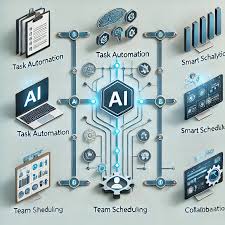
Salesforce’s Agentforce empowers businesses to create and deploy custom AI agents tailored to their unique needs. Built on a foundation of flexibility, the platform leverages both Salesforce’s proprietary AI models and third-party models like those from OpenAI, Anthropic, Amazon, and Google. This versatility enables businesses to automate a wide range of tasks, from generating detailed sales reports to summarizing Slack conversations. AI in Action: Real-World Insights and Applications The “CXO AI Playbook” by Business Insider explores how organizations across industries and sizes are adopting AI. Featured companies reveal their challenges, the decision-makers driving AI initiatives, and their strategic goals for the future. Salesforce’s approach with Agentforce aligns with this vision, offering advanced tools to address dynamic business needs and improve operational efficiency. Building on Salesforce’s Legacy of Innovation Salesforce has long been a leader in AI integration. It introduced Einstein in 2016 to handle scripted tasks like predictive analytics. As AI capabilities evolved, Salesforce launched Einstein GPT and later Einstein Copilot, which expanded into decision-making and natural language processing. By early 2024, these advancements culminated in Agentforce—a platform designed to provide customizable, prebuilt AI agents for diverse applications. “We recognized that our customers wanted to extend our AI capabilities or create their own custom agents,” said Tyler Carlson, Salesforce’s VP of Business Development. A Powerful Ecosystem: Agentforce’s Core Features Agentforce is powered by the Atlas Reasoning Engine, Salesforce’s proprietary technology that employs ReAct prompting to enable AI agents to break down problems, refine their responses, and deliver more accurate outcomes. The engine integrates seamlessly with Salesforce’s own large language models (LLMs) and external models, ensuring adaptability and precision. Agentforce also emphasizes strict data privacy and security. For example, data shared with external LLMs is subject to limited retention policies and content filtering to ensure compliance and safety. Key Applications and Use Cases Businesses can leverage tools like Agentbuilder to design and scale AI agents with specific functionalities, such as: Seamless Integration with Slack Currently in beta, Agentforce’s Slack integration brings AI automation directly to the workplace. This allows employee-facing agents to execute tasks and answer queries within the communication tool. “Slack is valuable for employee-facing agents because it makes their capabilities easily accessible,” Carlson explained. Measurable Impact: Driving Success with Agentforce Salesforce measures the success of Agentforce by tracking client outcomes. Early adopters report significant results, such as a 90% resolution rate for customer inquiries managed by AI agents. As adoption grows, Salesforce envisions a robust ecosystem of partners, AI skills, and agent capabilities. “By next year, we foresee thousands of agent skills and topics available to clients, driving broader adoption across our CRM systems and Slack,” Carlson shared. Salesforce’s Agentforce represents the next generation of intelligent business automation, combining advanced AI with seamless integrations to deliver meaningful, measurable outcomes at scale. Like Related Posts Who is Salesforce? Who is Salesforce? Here is their story in their own words. From our inception, we’ve proudly embraced the identity of Read more Salesforce Marketing Cloud Transactional Emails Salesforce Marketing Cloud Transactional Emails are immediate, automated, non-promotional messages crucial to business operations and customer satisfaction, such as order Read more Salesforce Unites Einstein Analytics with Financial CRM Salesforce has unveiled a comprehensive analytics solution tailored for wealth managers, home office professionals, and retail bankers, merging its Financial Read more AI-Driven Propensity Scores AI plays a crucial role in propensity score estimation as it can discern underlying patterns between treatments and confounding variables Read more
Read More
Shift From AI Agents to AI Agent Tool Use

Shift From AI Agents to AI Agent Tool Use

The focus of AI development is evolving—from creating autonomous AI Agents to expanding the tools they use, significantly boosting their capabilities and flexibility. Tool access, described and utilized through natural language, is now a critical factor in the functionality and reach of these agents, enabling them to tackle increasingly complex tasks. The Role of Tools in AI Agent Effectiveness AI Agents thrive in user-specific environments like desktops, where rich context enables them to perform tasks more effectively. Instead of just scaling model power, leading AI companies such as OpenAI and Anthropic are pivoting toward tool-enabled frameworks, allowing agents to interact directly with computer GUI navigation for multi-step workflows. This shift positions tools as essential components of AI ecosystems, bridging the gap between raw computational power and actionable user outcomes. OpenAI’s “Operator” and the Future of Autonomous Agents OpenAI is set to release Operator, an AI Agent designed to autonomously perform tasks such as coding and travel booking on a user’s computer. Available as a research preview in January, Operator is part of a broader industry trend toward Agentic Tools that enable seamless, multi-step task execution with minimal user oversight. This approach reflects a shift toward real-time AI capabilities, moving beyond model-centric enhancements to unlock practical, task-driven use cases for AI Agents. Anthropic’s Desktop AI Agent Anthropic is also advancing the field with a reference implementation for computer use, enabling rapid deployment of AI-powered desktop agents. This implementation allows users to leverage Claude, Anthropic’s AI model, in a virtual machine environment with powerful tools for GUI interaction, command-line operations, and file management. Key Features This system provides a controlled yet versatile environment for AI Agents to operate in a safe, flexible, and efficient manner. Technical Implementation To deploy Anthropic’s computer-use demo: bashCopy codeexport ANTHROPIC_API_KEY=%your_api_key% docker run -e ANTHROPIC_API_KEY=<Your Anthropic API Key Goes Here> -v $HOME/.anthropic:/home/computeruse/.anthropic -p 5900:5900 -p 8501:8501 -p 6080:6080 -p 8080:8080 -it ghcr.io/anthropics/anthropic-quickstarts:computer-use-demo-latest Tools Overview Each session starts fresh but maintains state within the session, enabling smooth task execution. The Bigger Picture AI Agents are no longer defined solely by their autonomous capabilities. Instead, their success now hinges on how effectively they utilize tools to extend their reach and flexibility. Whether it’s through GUI navigation, command-line interactions, or file management, tool access is transforming the way AI Agents deliver value to users. By focusing on tools rather than just AI model power, companies like OpenAI and Anthropic are building the foundation for a new era of AI-driven productivity. Expect to see more advancements in Agentic Tool design, as the emphasis shifts from autonomy to capability. Like Related Posts Who is Salesforce? Who is Salesforce? Here is their story in their own words. From our inception, we’ve proudly embraced the identity of Read more Salesforce Marketing Cloud Transactional Emails Salesforce Marketing Cloud Transactional Emails are immediate, automated, non-promotional messages crucial to business operations and customer satisfaction, such as order Read more Salesforce Unites Einstein Analytics with Financial CRM Salesforce has unveiled a comprehensive analytics solution tailored for wealth managers, home office professionals, and retail bankers, merging its Financial Read more AI-Driven Propensity Scores AI plays a crucial role in propensity score estimation as it can discern underlying patterns between treatments and confounding variables Read more

Read More
Agentforce Custom AI Agents

Agentforce Custom AI Agents

Salesforce Introduces Agentforce: A New AI Platform to Build Custom Digital Agents Salesforce has unveiled Agentforce, its latest AI platform designed to help companies build and deploy intelligent digital agents to automate a wide range of tasks. Building on Salesforce’s generative AI advancements, Agentforce integrates seamlessly with its existing tools, enabling businesses to enhance efficiency and decision-making through automation. Agentforce Custom AI Agents. With applications like generating reports from sales data, summarizing Slack conversations, and routing emails to the appropriate departments, Agentforce offers businesses unprecedented flexibility in automating routine processes. The Problem Agentforce Solves Salesforce’s journey in AI began in 2016 with the launch of Einstein, a suite of AI tools for its CRM software. While Einstein automated some tasks, its capabilities were largely predefined and lacked the flexibility to handle complex, dynamic scenarios. The rapid evolution of generative AI opened new doors for improving natural language understanding and decision-making. This led to innovations like Einstein GPT and later Einstein Copilot, which laid the foundation for Agentforce. With Agentforce, businesses can now create prebuilt or fully customizable agents that adapt to unique business needs. Agentforce Custom AI Agents “We recognized that our customers want to extend the agents we provide or build their own,” said Tyler Carlson, Salesforce’s Vice President of Business Development. How Agentforce Works At the heart of Agentforce is the Atlas Reasoning Engine, a proprietary technology developed by Salesforce. It leverages advanced techniques like ReAct prompting, which allows AI agents to break down problems into steps, reason through them, and iteratively refine their actions until they meet user expectations. Key Features: Ensuring Security and Compliance Given the potential risks of integrating third-party LLMs, Salesforce has implemented robust safeguards, including: AI in Action: Real-World Applications One notable use case of Agentforce is its collaboration with Workday to develop an AI Employee Service Agent. This agent helps employees find answers to HR-related questions using a company’s internal policies and documents. Another example involves agents autonomously managing general email inboxes by analyzing message intent and forwarding emails to relevant teams. “These agents are not monolithic or tied to a single LLM,” Carlson explained. “Their versatility lies in combining different models and technologies for better outcomes.” Measuring Success Salesforce gauges Agentforce’s success through client outcomes and platform adoption. For example, some users report that Agentforce resolves up to 90% of customer inquiries autonomously. Looking ahead, Salesforce aims to expand the Agentforce ecosystem significantly. “By next year, we want thousands of agent skills and topics available for customers to leverage,” Carlson added. A Platform for the Future of AI Agentforce represents Salesforce’s vision of creating autonomous AI agents that empower businesses to work smarter, faster, and more efficiently. With tools like Agentbuilder and integrations across its ecosystem, Salesforce is positioning Agentforce as a cornerstone of AI-led innovation, helping businesses stay ahead in a rapidly evolving technological landscape. Like1 Related Posts Who is Salesforce? Who is Salesforce? Here is their story in their own words. From our inception, we’ve proudly embraced the identity of Read more Salesforce Marketing Cloud Transactional Emails Salesforce Marketing Cloud Transactional Emails are immediate, automated, non-promotional messages crucial to business operations and customer satisfaction, such as order Read more Salesforce Unites Einstein Analytics with Financial CRM Salesforce has unveiled a comprehensive analytics solution tailored for wealth managers, home office professionals, and retail bankers, merging its Financial Read more AI-Driven Propensity Scores AI plays a crucial role in propensity score estimation as it can discern underlying patterns between treatments and confounding variables Read more

Read More
AI platform for automated task management

AI platform for automated task management

Salesforce Doubles Down on AI Innovation with Agentforce Salesforce, renowned for its CRM software used by over 150,000 businesses, including Amazon and Walmart, continues to push the boundaries of innovation. Beyond its flagship CRM, Salesforce also owns Slack, the popular workplace communication app. Now, the company is taking its AI capabilities to the next level with Agentforce—a platform that empowers businesses to build and deploy AI-powered digital agents for automating tasks such as creating sales reports and summarizing Slack conversations. What Problem Does Agentforce Solve? Salesforce has been leveraging AI for years, starting with the launch of Einstein in 2016. Einstein’s initial capabilities were limited to basic, scriptable tasks. However, the rise of generative AI created an opportunity to tackle more complex challenges, enabling tools to make smarter decisions and interpret natural language. This evolution led to a series of innovations—Einstein GPT, Einstein Copilot, and now Agentforce—a flexible platform offering prebuilt and customizable agents designed to meet diverse business needs. “Our customers wanted more. Some wanted to tweak the agents we offer, while others wanted to create their own,” said Tyler Carlson, Salesforce’s VP of Business Development. The Technology Behind Agentforce Agentforce is powered by Salesforce’s Atlas Reasoning Engine, developed in-house to drive smarter decision-making. The platform integrates with AI models from leading providers like OpenAI, Anthropic, Amazon, and Google, offering businesses a variety of tools to choose from. Slack, which Salesforce acquired in 2021, plays a pivotal role as a testing ground for these AI agents. Currently in beta, Agentforce’s Slack integration allows businesses to implement automations directly where employees work, enhancing usability. “Slack makes these tools easy to use and accessible,” Carlson noted. How Agentforce Stands Out Customizing AI for Business Needs With tools like Agentbuilder, businesses can create AI agents tailored to specific tasks. For instance, an agent could prioritize and sort incoming emails, respond to HR inquiries, or handle customer support using internal data. One standout example is Salesforce’s partnership with Workday to develop an AI-powered service agent for employee questions. Driving Results and Adoption Salesforce has already seen promising results from early trials, with Agentforce resolving 90% of customer inquiries autonomously. The company aims to expand adoption and functionality, allowing these agents to handle even larger workloads. “We’re building a bigger ecosystem of partners and skills,” Carlson emphasized. “By next year, we want Agentforce to be a must-have for businesses.” With Agentforce, Salesforce continues to cement its role as a leader in AI innovation, helping businesses work smarter, faster, and more effectively. Like Related Posts Who is Salesforce? Who is Salesforce? Here is their story in their own words. From our inception, we’ve proudly embraced the identity of Read more Salesforce Marketing Cloud Transactional Emails Salesforce Marketing Cloud Transactional Emails are immediate, automated, non-promotional messages crucial to business operations and customer satisfaction, such as order Read more Salesforce Unites Einstein Analytics with Financial CRM Salesforce has unveiled a comprehensive analytics solution tailored for wealth managers, home office professionals, and retail bankers, merging its Financial Read more AI-Driven Propensity Scores AI plays a crucial role in propensity score estimation as it can discern underlying patterns between treatments and confounding variables Read more

Read More
Consider AI Agents Personas

Consider AI Agents Personas

Treating AI Agents as Personas: Introducing the Era of Agent-Computer Interaction The UX landscape is evolving. While the design community has quickly adopted Large Language Models (LLMs) as tools, we’ve yet to fully grasp their transformative potential. With AI agents now deeply embedded in digital products, they are shifting from tools to active participants in our digital ecosystems. This change demands a new design paradigm—one that views AI agents not just as extensions of human users but as independent personas in their own right. The Rise of Agent-Computer Interaction AI agents represent a new class of users capable of navigating interfaces autonomously and completing complex tasks. This marks the dawn of Agent-Computer Interaction (ACI)—a paradigm where user experience design encompasses the needs of both human users and AI agents. Humans still play a critical role in guiding and supervising these systems, but AI agents must now be treated as distinct personas with unique goals, abilities, and requirements. This shift challenges UX designers to consider how these agents interact with interfaces and perform their tasks, ensuring they are equipped with the information and resources necessary to operate effectively. Understanding AI Agents AI agents are intelligent systems designed to reason, plan, and work across platforms with minimal human intervention. As defined during Google I/O, these agents retain context, anticipate needs, and execute multi-step processes. Advances in AI, such as Anthropic’s Claude and its ability to interact with graphical interfaces, have unlocked new levels of agency. Unlike earlier agents that relied solely on APIs, modern agents can manipulate graphical user interfaces much like human users, enabling seamless interaction with browser-based applications. This capability creates opportunities for new forms of interaction but also demands thoughtful design choices. Two Interaction Approaches for AI Agents Design teams must evaluate these methods based on the task’s complexity and transparency requirements, striking the right balance between efficiency and oversight. Designing Experiences Considering AI Agents Personas As AI agents transition into active users, UX design must expand to accommodate their specific needs. Much like human personas, AI agents require a deep understanding of their capabilities, limitations, and workflows. Creating AI Agent Personas Developing personas for AI agents involves identifying their unique characteristics: These personas inform interface designs that optimize agent workflows, ensuring both agents and humans can collaborate effectively. New UX Research Methodologies UX teams should embrace innovative research techniques, such as A/B testing interfaces for agent performance and monitoring their interaction patterns. While AI agents lack sentience, they exhibit behaviors—reasoning, planning, and adapting—that require careful study and design consideration. Shaping the AI Mind AI agents derive their reasoning capabilities from Large Language Models (LLMs), but their behavior and effectiveness are shaped by UX design. Designers have a unique role in crafting system prompts and developing feedback loops that refine LLM behavior over time. Key Areas for Designer Involvement: This work positions UX professionals as co-creators of AI intelligence, shaping not just interfaces but the underlying behaviors that drive agent interactions. Keeping Humans in the Loop Despite the rise of AI agents, human oversight and control remain essential. UX practitioners must prioritize transparency and trust in agent-driven systems. Key Considerations: Using tools like agentic experience maps—blueprints that visualize the interactions between humans, agents, and products—designers can ensure AI systems remain human-centered. A New Frontier for UX The emergence of AI agents heralds a shift as significant as the transition from desktop to mobile. Just as mobile devices unlocked new opportunities for interaction, AI agents are poised to redefine digital experiences in ways we can’t yet fully predict. By embracing Agent-Computer Interaction, UX designers have an unprecedented opportunity to shape the future of human-AI collaboration. Those who develop expertise in designing for these intelligent agents will lead the way in creating systems that are not only powerful but also deeply human-centered. Like Related Posts Who is Salesforce? Who is Salesforce? Here is their story in their own words. From our inception, we’ve proudly embraced the identity of Read more Salesforce Unites Einstein Analytics with Financial CRM Salesforce has unveiled a comprehensive analytics solution tailored for wealth managers, home office professionals, and retail bankers, merging its Financial Read more AI-Driven Propensity Scores AI plays a crucial role in propensity score estimation as it can discern underlying patterns between treatments and confounding variables Read more Tectonic’s Successful Salesforce Track Record Salesforce Technology Services Integrator – Tectonic has successfully delivered Salesforce in a variety of industries including Public Sector, Hospitality, Manufacturing, Read more

Read More
Evaluating RAG With Needle in Haystack Test

Agentic RAG

Agentic RAG: The Next Evolution of AI-Powered Knowledge Retrieval From RAG to Agentic RAG: A Paradigm Shift in AI Applications While Retrieval-Augmented Generation (RAG) dominated AI advancements in 2023, agentic workflows are now driving the next wave of innovation in 2024. By integrating AI agents into RAG pipelines, developers can build more powerful, adaptive, and intelligent LLM-powered applications. This article explores:✔ What is Agentic RAG?✔ How it works (single-agent vs. multi-agent architectures)✔ Implementation methods (function calling vs. agent frameworks)✔ Enterprise adoption & real-world use cases✔ Benefits & limitations Understanding the Foundations: RAG & AI Agents What is Retrieval-Augmented Generation (RAG)? RAG enhances LLMs by retrieving external knowledge before generating responses, reducing hallucinations and improving accuracy. Traditional (Vanilla) RAG Pipeline: Limitations of Vanilla RAG: ❌ Single knowledge source (no dynamic tool integration).❌ One-shot retrieval (no iterative refinement).❌ No reasoning over retrieved data quality. What Are AI Agents? AI agents are autonomous LLM-driven systems with: The ReAct Framework (Reason + Act) What is Agentic RAG? Agentic RAG embeds AI agents into RAG pipelines, enabling:✅ Multi-source retrieval (databases, APIs, web search).✅ Dynamic query refinement (self-correcting searches).✅ Validation of results (quality checks before generation). How Agentic RAG Works Instead of a static retrieval step, an AI agent orchestrates: Agentic RAG Architectures 1. Single-Agent RAG (Router) 2. Multi-Agent RAG (Orchestrated Workflow) Implementing Agentic RAG Option 1: LLMs with Function Calling Example: Function Calling with Ollama python Copy def ollama_generation_with_tools(query, tools_schema): # LLM decides tool use → executes → refines response … Option 2: Agent Frameworks Why Enterprises Are Adopting Agentic RAG Real-World Use Cases 🔹 Replit’s AI Dev Agent – Helps debug & write code.🔹 Microsoft Copilots – Assist users in real-time tasks.🔹 Customer Support Bots – Multi-step query resolution. Benefits ✔ Higher accuracy (validated retrievals).✔ Dynamic tool integration (APIs, web, databases).✔ Autonomous task handling (reducing manual work). Limitations ⚠ Added latency (LLM reasoning steps).⚠ Unpredictability (agents may fail without safeguards).⚠ Complex debugging (multi-agent coordination). Conclusion: The Future of Agentic RAG Agentic RAG represents a leap beyond traditional RAG, enabling:🚀 Smarter, self-correcting retrieval.🤖 Seamless multi-tool workflows.🔍 Enterprise-grade reliability. As frameworks mature, expect AI agents to become the backbone of next-gen LLM applications—transforming industries from customer service to software development. Ready to build your own Agentic RAG system? Explore frameworks like LangChain, CrewAI, or OpenAI’s function calling to get started. Like Related Posts Who is Salesforce? Who is Salesforce? Here is their story in their own words. From our inception, we’ve proudly embraced the identity of Read more Salesforce Unites Einstein Analytics with Financial CRM Salesforce has unveiled a comprehensive analytics solution tailored for wealth managers, home office professionals, and retail bankers, merging its Financial Read more AI-Driven Propensity Scores AI plays a crucial role in propensity score estimation as it can discern underlying patterns between treatments and confounding variables Read more Tectonic’s Successful Salesforce Track Record Salesforce Technology Services Integrator – Tectonic has successfully delivered Salesforce in a variety of industries including Public Sector, Hospitality, Manufacturing, Read more

Read More
AI Agents and Digital Transformation

Ready for AI Agents

Brands that can effectively integrate agentic AI into their operations stand to gain a significant competitive edge. But as with any innovation, success will depend on balancing the promise of automation with the complexities of trust, privacy, and user experience.

Read More
Is the Future Agentic for ERP?

The Shift from AI Agents to Agentic Workflows & Data Synthesis

Why Is the Focus Moving Away from AI Agents (for Now)? Companies like Salesforce and ServiceNow made bold moves toward AI Agents, but the reality is that the technology has yet to reach the accuracy required for reliable production use. While AI Agent demos and prototypes generate excitement, their real-world performance tells a different story. For instance, Claude AI Agent Computer Interface (ACI) operates at just 14% of human performance. A study from TheAgentFactory highlights that AI Agents currently have a success rate of only 20%, a stark contrast to the expectations set by marketing hype. Even with advancements like OpenAI’s Operator, AI Agents using web browsing capabilities have reached 30-50% accuracy—still significantly lower than human performance levels, which exceed 70%. Additionally, recent research reveals AI Agents relying on web browsing are vulnerable to malicious pop-ups, making them susceptible to security threats. Currently, AI Agents perform tasks using two main methods: Both methods essentially treat the user interface as the API, an approach that bypasses the need for individual API integrations. However, the practical limitations—accuracy, security, and cost—have led organizations to pivot toward Agentic Workflows as a more viable solution. Why the Shift to Agentic Workflows? Knowledge work is broken. Studies indicate that employees spend 30% of their time searching for information, while also struggling to answer complex questions and synthesize insights from disparate sources. Agentic Workflows provide a structured approach to these challenges by: A key aspect of this shift is data synthesis—the ability to consolidate and analyze information from multiple sources to provide a single, actionable answer. For example, ChatGPT’s Deep Research isn’t a new model but a new agentic capability that conducts multi-step research on the internet, achieving in minutes what would take a human hours. Similarly, LlamaIndex’s concept of Agentic RAG (Retrieval-Augmented Generation) focuses on synthesizing data for an “audience of one”—delivering precise insights at the moment they are needed. In the coming months, expect to see an increased focus on personalized agentic workflows, data synthesis, and desktop orchestration—a shift toward AI as a facilitator rather than an autonomous decision-maker. The Rise of Reasoning & Problem-Solving AI Modern AI models are evolving to integrate reasoning as a core capability, allowing them to tackle complex problems through systematic decomposition. Rather than relying solely on direct outputs, these models: Previously, users had to manually instruct models on reasoning through structured prompts and few-shot learning. Now, AI models are increasingly learning these capabilities natively, reducing the need for extensive prompt engineering. Moving Forward: Solving Real Business Challenges Organizations must shift their focus from chasing specific tools—whether it’s RAG-based solutions, prompt engineering, or AI Agents—to solving real-world business problems. With new technologies emerging at an unprecedented pace, the true measure of success is not in mastering the latest trend, but in applying technology to deliver tangible value. Whether it’s enhancing customer experiences, streamlining operations, or solving industry-specific challenges, the key question remains: How can we use AI to drive meaningful, measurable impact? By embracing this mindset, businesses can future-proof their operations and stay ahead in an ever-evolving digital landscape. Like Related Posts Who is Salesforce? Who is Salesforce? Here is their story in their own words. From our inception, we’ve proudly embraced the identity of Read more Salesforce Marketing Cloud Transactional Emails Salesforce Marketing Cloud Transactional Emails are immediate, automated, non-promotional messages crucial to business operations and customer satisfaction, such as order Read more Salesforce Unites Einstein Analytics with Financial CRM Salesforce has unveiled a comprehensive analytics solution tailored for wealth managers, home office professionals, and retail bankers, merging its Financial Read more AI-Driven Propensity Scores AI plays a crucial role in propensity score estimation as it can discern underlying patterns between treatments and confounding variables Read more

Read More
Anthropic’s New Approach to RAG

Anthropic’s New Approach to RAG

advanced RAG methodology demonstrates how AI can overcome traditional challenges, delivering more precise, context-aware responses while maintaining efficiency and scalability.

Read More
Generative AI Overview

Generative AI Overview

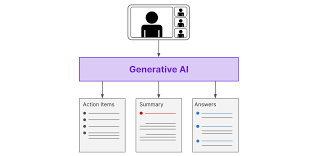
Editor’s Note: AI Cloud, Einstein GPT, and other cloud GPT products are now Einstein. For the latest on Salesforce Einstein The Rise of Generative AI: What It Means for Business and CRM Generative artificial intelligence (AI) made headlines in late 2022, sparking widespread curiosity and questions about its potential impact on various industries. What is Generative AI? Generative AI is a technology that creates new content—such as poetry, emails, images, or music—based on a set of input data. Unlike traditional AI, which focuses on classifying or predicting, generative AI can produce novel content with a human-like understanding of language, as noted by Salesforce Chief Scientist Silvio Savarese. However, successful generative AI depends on the quality of the input data. “AI is only as good as the data you give it, and you must ensure that datasets are representative,” emphasizes Paula Goldman, Salesforce’s Chief Ethical and Humane Use Officer. How Does Generative AI Work? Generative AI can be developed using several deep learning approaches, including: Other methods include Variational Autoencoders (VAEs) and Neural Radiance Fields (NeRFs), which generate new data or create 2D and 3D images based on sample data. Generative AI and Business Generative AI has captured the attention of global business leaders. A recent Salesforce survey found that 67% of IT leaders are focusing on generative AI in the next 18 months, with 33% considering it a top priority. Salesforce has long been exploring generative AI applications. For instance, CodeGen helps transform simple English prompts into executable code, and LAVIS makes language-vision AI accessible to researchers. More recently, Salesforce’s ProGen project demonstrated the creation of novel proteins using AI, potentially advancing medicine and treatment development. Ketan Karkhanis, Salesforce’s Executive VP and GM of Sales Cloud, highlights that generative AI benefits not just large enterprises but also small and medium-sized businesses (SMBs) by automating proposals, customer communications, and predictive sales modeling. Challenges and Ethical Considerations Despite its potential, generative AI poses risks, as noted by Paula Goldman and Kathy Baxter of Salesforce’s Ethical AI practice. They stress the importance of responsible innovation to ensure that generative AI is used safely and ethically. Accuracy in AI recommendations is crucial, and the authoritative tone of models like ChatGPT can sometimes lead to misleading results. Salesforce is committed to building trusted AI with embedded guardrails to prevent misuse. As generative AI evolves, it’s vital to balance its capabilities with ethical considerations, including its environmental impact. Generative AI can increase IT energy use, which 71% of IT leaders acknowledge. Generative AI at Salesforce Salesforce has integrated AI into its platform for years, with Einstein AI providing billions of daily predictions to enhance sales, service, and customer understanding. The recent launch of Einstein GPT, the world’s first generative AI for CRM, aims to transform how businesses interact with customers by automating content creation across various functions. Salesforce Ventures is also expanding its Generative AI Fund to $500 million, supporting AI startups and fostering responsible AI development. This expansion includes investments in companies like Anthropic and Cohere. As Salesforce continues to lead in AI innovation, the focus remains on creating technology that is inclusive, responsible, and sustainable, paving the way for the future of CRM and business. The Future of Business: AI-Powered Leadership and Decision-Making Tomorrow’s business landscape will be transformed by specialized, autonomous AI agents that will significantly change how companies are run. Future leaders will depend on these AI agents to support and enhance their teams, with AI chiefs of staff overseeing these agents and harnessing their capabilities. New AI-powered tools will bring businesses closer to their customers and enable faster, more informed decision-making. This shift is not just a trend—it’s backed by significant evidence. The Slack Workforce Index reveals a sevenfold increase in leaders seeking to integrate AI tools since September 2023. Additionally, Salesforce research shows that nearly 80% of global workers are open to an AI-driven future. While the pace of these changes may vary, it is clear that the future of work will look vastly different from today. According to the Slack Workforce Index, the number of leaders looking to integrate AI tools into their business has skyrocketed 7x since September 2023. Mick Costigan, VP, Salesforce Futures In the [still] early phases of a major technology shift, we tend to over-focus on the application of technology innovations to existing workflows. Such advances are important, but closing the imagination gap about the possible new shapes of work requires us to consider more than just technology. It requires us to think about people, both as the customers who react to new offerings and as the employees who are responsible for delivering them. Some will eagerly adopt new technology. Others will resist and drag their feet. Like1 Related Posts Who is Salesforce? Who is Salesforce? Here is their story in their own words. From our inception, we’ve proudly embraced the identity of Read more Salesforce Marketing Cloud Transactional Emails Salesforce Marketing Cloud Transactional Emails are immediate, automated, non-promotional messages crucial to business operations and customer satisfaction, such as order Read more Salesforce Unites Einstein Analytics with Financial CRM Salesforce has unveiled a comprehensive analytics solution tailored for wealth managers, home office professionals, and retail bankers, merging its Financial Read more AI-Driven Propensity Scores AI plays a crucial role in propensity score estimation as it can discern underlying patterns between treatments and confounding variables Read more
Read More
Einstein Copilot Studio

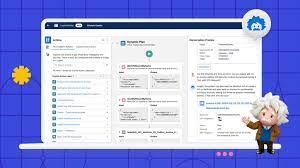
Einstein Copilot Studio Explained

Einstein Copilot Studio Explained: Crafting and Personalizing a Reliable AI Assistant Enterprises aiming to personalize Einstein Copilot can leverage the newly introduced Einstein Copilot Studio. This platform enables the construction and customization of AI assistants, incorporating pertinent prompts, skills, and AI models tailored for specific sales, service, marketing, commerce, and IT tasks. Beyond the confines of Salesforce applications, companies can seamlessly integrate Einstein Copilot into consumer-facing channels. This extension enhances customer interactions by embedding AI assistants into websites for real-time chat capabilities or integrating with popular messaging platforms such as Slack, WhatsApp, or SMS. Einstein Copilot Studio comprises the following key components: Just as Microsoft has introduced its own Copilot solutions, powered by generative AI, Salesforce is tapping into the power of LLMs to empower sales, marketing, and customer service professionals. Building on Salesforce’s existing range of Einstein AI features, the company announced “Einstein 1” this year – the next generation of the Salesforce platform. Einstein 1 is a comprehensive suite of tools that empowers users to bring AI into their everyday workflows. The Einstein Copilot (Salesforce Copilot) solution is at the core of this solution, alongside the new Copilot studio and the Einstein Trust Layer. Contact Tectonic today to explore the value of Einstein Copilot Studio for your company., Like2 Related Posts Who is Salesforce? Who is Salesforce? Here is their story in their own words. From our inception, we’ve proudly embraced the identity of Read more Salesforce Marketing Cloud Transactional Emails Salesforce Marketing Cloud Transactional Emails are immediate, automated, non-promotional messages crucial to business operations and customer satisfaction, such as order Read more Salesforce Unites Einstein Analytics with Financial CRM Salesforce has unveiled a comprehensive analytics solution tailored for wealth managers, home office professionals, and retail bankers, merging its Financial Read more AI-Driven Propensity Scores AI plays a crucial role in propensity score estimation as it can discern underlying patterns between treatments and confounding variables Read more
Read More
Salesforce Einstein Copilot

What’s Included in Einstein Copilot Studio?

Christmas came early this year with Salesforce’s announcement of Einstein Copilot Studio. Einstein Copilot Studio will encompass the following features: By Tectonic’s Salesforce Marketing Consultant, Shannan Hearne Like1 Related Posts Who is Salesforce? Who is Salesforce? Here is their story in their own words. From our inception, we’ve proudly embraced the identity of Read more Salesforce Marketing Cloud Transactional Emails Salesforce Marketing Cloud Transactional Emails are immediate, automated, non-promotional messages crucial to business operations and customer satisfaction, such as order Read more Salesforce Unites Einstein Analytics with Financial CRM Salesforce has unveiled a comprehensive analytics solution tailored for wealth managers, home office professionals, and retail bankers, merging its Financial Read more AI-Driven Propensity Scores AI plays a crucial role in propensity score estimation as it can discern underlying patterns between treatments and confounding variables Read more

Read More
gettectonic.com