

Automation Archives - gettectonic.com - Page 4
Government-Citizen Communication

Salesforce’s Vision for Smarter, More Efficient Government Services

Agentic AI: Salesforce’s Vision for Smarter, More Efficient Government Services Transforming Public Sector Service Delivery with AI At the recent Agentforce World Tour in London, Kishan Chetan, Salesforce’s Global Service Cloud Lead, outlined how agentic AI is revolutionizing government operations—streamlining citizen services, reducing bureaucratic friction, and improving efficiency. The Challenge: Meeting Rising Citizen Expectations Citizens today expect fast, seamless, and personalized services—similar to what they experience with private sector giants like Amazon or Uber. Yet many government agencies struggle with:🔹 Complex, manual processes (e.g., DMV queues, permit approvals)🔹 Disjointed data silos (policy docs, case files, eligibility criteria)🔹 Overburdened staff (high administrative workloads leading to burnout) The Solution: Agentic AI + Unified Data Salesforce’s approach combines intelligent automation with harmonized data to: ✔ Automate Routine Tasks – License renewals, appointment scheduling, FAQs✔ Retrieve Policy & Eligibility Info Instantly – No more digging through PDFs✔ Proactively Notify Citizens – Alerts for deadlines, document submissions Real-World Impact: The Data Foundation: Zero-Copy Integration Why Traditional Systems Fail Most agencies store data across:📁 Legacy databases📝 Unstructured documents (PDFs, policies, case notes)🌐 External sources (press releases, regulatory updates) Problem: AI can’t work effectively with fragmented data. Salesforce Data Cloud: The Key to Smarter AI Salesforce’s “zero-copy” integration allows agencies to:🔹 Access data in real time without costly migrations🔹 Unify structured & unstructured sources (e.g., policy docs + CRM records)🔹 Power AI with context-aware insights “Government is knowledge-centric—you need to understand policies, eligibility, and case history. AI can’t do that without clean, connected data.”— Kishan Chetan, Salesforce Agentic AI in Action: Use Cases 1. Social Care Management 2. Grant & Permit Approvals 3. Citizen Self-Service 4. Policy Compliance The Human-AI Partnership Contrary to fears of job displacement, Chetan emphasized that agentic AI augments—not replaces—civil servants:✅ Frees up time for complex decision-making✅ Reduces burnout by automating repetitive tasks✅ Enhances service quality with 24/7 availability Example: Global Alignment with Digital Government Initiatives Salesforce’s strategy aligns with:🇬🇧 UK’s Blueprint for Digital Government – AI as a core enabler🇪🇺 EU’s Digital Decade – 100% online public services by 2030🇺🇸 US AI Executive Order – Modernizing federal workflows The Road Ahead 2025 Priorities for Public Sector AI:🚀 Expanding pre-built solutions (e.g., welfare eligibility engines)🤖 Multi-agent collaboration – AI systems coordinating across departments🔐 Ethical AI governance – Bias detection, transparency tools Bottom Line: Agentic AI is not just a tech upgrade—it’s a public trust accelerator. By delivering faster, fairer, and more transparent services, governments can rebuild citizen confidence in the digital age. 🔗 Explore Salesforce’s Public Sector AI Solutions🔗 Read Forrester’s Take on GovTech Trends “The future of government isn’t just digital—it’s intelligently autonomous.” Like Related Posts Who is Salesforce? Who is Salesforce? Here is their story in their own words. From our inception, we’ve proudly embraced the identity of Read more Salesforce Marketing Cloud Transactional Emails Salesforce Marketing Cloud Transactional Emails are immediate, automated, non-promotional messages crucial to business operations and customer satisfaction, such as order Read more Salesforce Unites Einstein Analytics with Financial CRM Salesforce has unveiled a comprehensive analytics solution tailored for wealth managers, home office professionals, and retail bankers, merging its Financial Read more AI-Driven Propensity Scores AI plays a crucial role in propensity score estimation as it can discern underlying patterns between treatments and confounding variables Read more

Read More
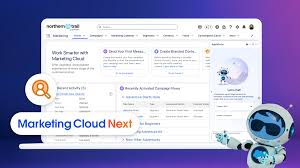
Salesforce Launches Marketing Cloud Next

Salesforce Launches Marketing Cloud Next

Salesforce Launches Marketing Cloud Next: The End of “Do-Not-Reply” Marketing Say goodbye to one-way marketing. Salesforce just unveiled Marketing Cloud Next, a fully agentic AI-powered platform that transforms how brands engage with customers—turning static campaigns into dynamic, two-way conversations. Why This Changes Everything Today’s consumers expect personalized, real-time interactions—yet most marketing emails still come from “no-reply@company.com“ addresses, offering zero ability to respond. Salesforce is flipping the script: How It Works: AI as Your Co-Pilot Marketing Cloud Next doesn’t replace humans—it augments them. Think of it as a “seasoned team member” that handles grunt work while marketers focus on strategy: “It’s the end of ‘do-not-reply,’” says Bobby Jania, CMO of Salesforce Marketing Cloud. “Humans don’t send emails expecting no response—why should brands?” The Bigger Shift: AI-Driven Expectations Once customers experience conversational marketing, they’ll demand it everywhere. (Remember how ride-sharing made waiting 10 minutes for a taxi feel archaic?) Salesforce is betting that static, one-way campaigns will soon seem just as outdated. But there’s a catch: Not every brand is ready to hand the reins to AI. While some will use Agentforce for full autonomy, others will keep humans in the loop—for now. Available Now—But Is the Market Ready? Marketing Cloud Next rolls out to existing customers in July 2025, integrating with Salesforce’s CRM, Data Cloud, and LinkedIn for closed-loop analytics. The bottom line? Salesforce isn’t just selling a tool—it’s pushing a new paradigm: marketing where every message is a conversation, and AI does the heavy lifting. The question is: Will customers embrace chatty bots—or miss the simplicity of “STOP” to unsubscribe? Like Related Posts Who is Salesforce? Who is Salesforce? Here is their story in their own words. From our inception, we’ve proudly embraced the identity of Read more Salesforce Marketing Cloud Transactional Emails Salesforce Marketing Cloud Transactional Emails are immediate, automated, non-promotional messages crucial to business operations and customer satisfaction, such as order Read more Salesforce Unites Einstein Analytics with Financial CRM Salesforce has unveiled a comprehensive analytics solution tailored for wealth managers, home office professionals, and retail bankers, merging its Financial Read more AI-Driven Propensity Scores AI plays a crucial role in propensity score estimation as it can discern underlying patterns between treatments and confounding variables Read more
Read More
salesforce shield encryption

Monitoring and Debugging Platform Events in Salesforce

Introduction to Platform Events Platform Events in Salesforce provide a robust mechanism for real-time communication between applications, enabling seamless integration and automation across systems. These events follow a publish-subscribe model, allowing both Salesforce and external applications to exchange data efficiently. While Platform Events are transient by nature, Salesforce offers several methods to track and analyze event records for debugging and monitoring purposes. Key Characteristics of Platform Events Why Monitor Platform Events? Organizations should track Platform Event records to: Methods to Track Platform Event Records 1. Using Event Monitoring in Setup Steps to access event logs: Available information: 2. Querying Events via API Using Salesforce APIs: 3. Real-time Debugging in Developer Console Debugging process: 4. Creating Debug Triggers for Event Subscriptions Sample trigger for monitoring: java Copy Download trigger TrackPlatformEvents on YourPlatformEvent__e (after insert) { for (YourPlatformEvent__e event : Trigger.New) { System.debug(‘Event Received – ID: ‘ + event.ReplayId); System.debug(‘Event Data: ‘ + event.EventData__c); } } Viewing logs: 5. Advanced Replay with CometD For external system integrations: 6. Third-Party Monitoring Solutions Consider these enhanced monitoring options: Best Practices for Event Monitoring Conclusion Effective monitoring of Platform Events is essential for maintaining reliable integrations in Salesforce. By combining native tools like Event Monitoring and Developer Console with API queries and custom triggers, organizations can ensure proper event delivery and quickly resolve integration issues. For complex implementations, extending monitoring capabilities with third-party tools provides additional visibility into event-driven architectures. Like Related Posts Who is Salesforce? Who is Salesforce? Here is their story in their own words. From our inception, we’ve proudly embraced the identity of Read more Salesforce Marketing Cloud Transactional Emails Salesforce Marketing Cloud Transactional Emails are immediate, automated, non-promotional messages crucial to business operations and customer satisfaction, such as order Read more Salesforce Unites Einstein Analytics with Financial CRM Salesforce has unveiled a comprehensive analytics solution tailored for wealth managers, home office professionals, and retail bankers, merging its Financial Read more AI-Driven Propensity Scores AI plays a crucial role in propensity score estimation as it can discern underlying patterns between treatments and confounding variables Read more
Read More
Smart Communications Partners with Salesforce

Smart Communications Partners with Salesforce

Smart Communications Partners with Salesforce to Revolutionize Digital Customer Experience MANILA, Philippines — Smart Communications, the leading mobile services provider under PLDT Inc., has partnered with Salesforce to launch a next-generation digital storefront powered by Salesforce Commerce Cloud. This strategic collaboration will transform how over 50 million prepaid and postpaid subscribers in the Philippines discover, purchase, and manage telecom services—all through a seamless, AI-driven digital experience. A Unified Digital Storefront for Seamless Transactions Smart’s new platform will enable customers to: “This transformation positions Smart for long-term success in the Philippines’ competitive telecom market,” said Abraham Cuevas, Country Manager at Salesforce Philippines. AI, Automation & Scalability at the Core The solution leverages Salesforce AI, MuleSoft, and Service Cloud to:🔹 Personalize offers using customer data insights.🔹 Streamline order fulfillment with automated workflows.🔹 Integrate seamlessly with Smart’s existing CRM and backend systems. “Salesforce Commerce Cloud’s robust architecture empowers our customers with unmatched convenience,” said Gilbert Gaw, SVP of IT & Transformation at Smart & PLDT. Future Expansion: Enterprise & Beyond Smart is also exploring extending this platform to its enterprise segment, further enhancing B2B sales and support. Why It Matters:With rising digital adoption in the Philippines, this partnership ensures Smart stays ahead by delivering frictionless, scalable, and intelligent customer experiences. Like Related Posts Who is Salesforce? Who is Salesforce? Here is their story in their own words. From our inception, we’ve proudly embraced the identity of Read more Salesforce Marketing Cloud Transactional Emails Salesforce Marketing Cloud Transactional Emails are immediate, automated, non-promotional messages crucial to business operations and customer satisfaction, such as order Read more Salesforce Unites Einstein Analytics with Financial CRM Salesforce has unveiled a comprehensive analytics solution tailored for wealth managers, home office professionals, and retail bankers, merging its Financial Read more AI-Driven Propensity Scores AI plays a crucial role in propensity score estimation as it can discern underlying patterns between treatments and confounding variables Read more

Read More
Tools to Liberate Salesforce Data

Absa Bank Makes History as Africa’s First Financial Institution to Deploy Agentic AI for Customers

A Watershed Moment for African Banking Innovation Absa Bank has achieved a groundbreaking milestone by becoming: The announcement was made at Salesforce’s Agentforce World Tour in Johannesburg, showcasing Africa’s growing leadership in financial technology innovation. Meet Abby: The AI Banker Redefining Customer Service Powered by Salesforce’s Agentforce platform, Absa’s AI agent Abby represents a quantum leap beyond traditional chatbots: ✔ Contextual Intelligence – Understands complex banking needs about loans, investments, and cross-border payments✔ Autonomous Decision-Making – Takes actions within predefined safety parameters✔ Multi-System Integration – Accesses banking systems and web resources in real-time✔ Human-Like Engagement – Provides personalized recommendations like a skilled banker “Abby isn’t just another chatbot following scripts,” explained Lindelani Ramukumba, Absa’s Head of Relationship Banking Technology. “This is AI that comprehends customer needs and responds with banking expertise – a first for African financial services.” Rapid Deployment with Rigorous Safeguards The implementation demonstrates the agility of modern AI platforms: “Absa’s achievement proves that African banks can lead in AI innovation,” noted Linda Saunders, Salesforce South Africa Country Manager. “This isn’t just automation – it’s intelligent banking assistance at scale.” The Future of African Banking Absa’s deployment signals a transformative shift in financial services: With Abby, Absa isn’t just adopting AI – they’re redefining what’s possible in African banking. “The future of banking isn’t just digital – it’s intelligently autonomous. Africa is now leading that charge.” Like Related Posts Who is Salesforce? Who is Salesforce? Here is their story in their own words. From our inception, we’ve proudly embraced the identity of Read more Salesforce Marketing Cloud Transactional Emails Salesforce Marketing Cloud Transactional Emails are immediate, automated, non-promotional messages crucial to business operations and customer satisfaction, such as order Read more Salesforce Unites Einstein Analytics with Financial CRM Salesforce has unveiled a comprehensive analytics solution tailored for wealth managers, home office professionals, and retail bankers, merging its Financial Read more AI-Driven Propensity Scores AI plays a crucial role in propensity score estimation as it can discern underlying patterns between treatments and confounding variables Read more

Read More
FormAssembly Gov Cloud Achieves FedRAMP High Impact Authorization

Modernizing Government CX

Modernizing Government CX: How AI and Unified Platforms Can Transform Public Services Government agencies are under growing pressure to deliver personalized, proactive digital experiences that rival private-sector interactions. Yet many still struggle with disconnected legacy systems, strict compliance demands, and limited budgets. Emerging technologies—particularly AI and cloud platforms—offer solutions, but adoption remains a challenge. In a recent FedScoop podcast, Mia Jordan, former Federal CIO (USDA, Department of Education) and current Public Sector Transformation Advisor at Salesforce, breaks down the key hurdles—and how agencies can overcome them. The Core Challenge: “Digital but Not Connected” Many agencies have digitized services, but silos persist, leading to:🔹 “Swivel chair chaos” – Staff juggle multiple systems, slowing response times.🔹 Frustrating constituent experiences – Citizens face fragmented, confusing processes.🔹 Missed opportunities for automation – Manual work bogs down efficiency. “The challenge isn’t about will—it’s about wiring,” says Jordan. “Agencies may be digital, but they’re not always connected.” The Solution: Secure, Unified Engagement Platforms To bridge gaps, agencies need: 1. FedRAMP-Authorized Cloud Solutions Salesforce’s Agentforce and Marketing Cloud now hold FedRAMP High authorization, enabling secure, AI-driven engagement—even for high-sensitivity programs. 2. A Single System for Outreach “Too often, engagement lives in silos—an email tool here, a website there, a separate CRM,” Jordan notes. A unified platform (like Salesforce Marketing Cloud) ensures:✅ Consistent messaging across email, web, and SMS.✅ Real-time data sharing between teams.✅ Automated workflows to reduce manual tasks. 3. AI Agents That Go Beyond Chatbots Unlike basic chatbots, AI agents (like those in Salesforce Agentforce):🔹 Learn and act proactively – Drafting tailored content, triaging inquiries, flagging incomplete forms.🔹 Operate within existing systems – No disruptive overhauls needed. A Real-World Example: Rural Broadband, Transformed Jordan recalls the 2017 USDA rural broadband initiative, where: Today, a unified platform + AI agents could:✔ Automate application reviews.✔ Provide live dashboards for policymakers.✔ Guide citizens with personalized updates. The Big Win: Restoring Trust Through Clarity “Now you can guide people through their journey with clarity and confidence,” says Jordan. “That improves trust in government.” 🔗 Listen to the full podcast: [Here] TL;DR: Government CX doesn’t have to lag behind the private sector. With unified platforms + AI, agencies can cut chaos, boost efficiency, and rebuild public trust. Should all federal programs adopt AI-driven engagement? Share your take below. Like Related Posts Who is Salesforce? Who is Salesforce? Here is their story in their own words. From our inception, we’ve proudly embraced the identity of Read more Salesforce Marketing Cloud Transactional Emails Salesforce Marketing Cloud Transactional Emails are immediate, automated, non-promotional messages crucial to business operations and customer satisfaction, such as order Read more Salesforce Unites Einstein Analytics with Financial CRM Salesforce has unveiled a comprehensive analytics solution tailored for wealth managers, home office professionals, and retail bankers, merging its Financial Read more AI-Driven Propensity Scores AI plays a crucial role in propensity score estimation as it can discern underlying patterns between treatments and confounding variables Read more

Read More
what is a data lake

Data Lake – Investment or Liability

Your $15+ Billion Data Lake Investment Just Became a Liability—Here’s How to Fix It You’re not alone. 85% of big data projects fail (Gartner), and despite the $15.2B data lake market growing 20%+ in 2023, most companies still can’t extract value from their unstructured text data. Bill Inmon—the “Godfather of Data Warehousing”—calls these failed projects “data swamps.” Why Your Current Approach Is Failing Vendors push the same broken solution: “Just add ChatGPT to your data lake!” Bad idea. Here’s why: 1. ChatGPT Is Bleeding Your Budget But cost isn’t the real problem—the fundamental flaw is worse. 2. ChatGPT Generates Text, Not Data When analyzing 10,000 customer support tickets, you don’t need essays—you need: ChatGPT gives you more text to read—the opposite of what you need. 3. The 95% Waste Problem Inmon’s key insight: Only 5% of ChatGPT’s knowledge is relevant to your business. You’re paying for: Your bank doesn’t need Dallas Cowboys stats. 4. Unreliable for Mission-Critical Decisions The Corporate AI Arms Race Nobody Wins Banks, insurers, and healthcare firms are each spending millions building identical LLMs—when they only need a fraction of the functionality. It’s like buying a 500-tool Swiss Army knife when you only need a screwdriver. The Solution: Business Language Models (BLMs) Instead of bloated, generic LLMs, BLMs focus on two things: Microsoft, Bayer, and Rockwell Automation are already adopting domain-specific AI—because it works. Real-World BLM Examples ✅ Banking BLM: ✅ Restaurant BLM: Crucially, these vocabularies don’t overlap. Why BLMs Win Don’t Build Your Own BLM (69 Complexity Factors Await) Inmon’s team identified 69 challenges, including: Pre-built BLMs already cover 90% of industries—customization is minimal (just 1% of terms). From Data Swamp to Strategic Asset BLMs transform unstructured text into queryable data, enabling: Industry results: Your Roadmap The Choice Is Yours The AI market will hit $631B by 2028—early adopters of BLMs will dominate. Your data lake doesn’t have to be a swamp. The tools to fix it exist today. Will you act before the window closes? Like Related Posts Who is Salesforce? Who is Salesforce? Here is their story in their own words. From our inception, we’ve proudly embraced the identity of Read more Salesforce Unites Einstein Analytics with Financial CRM Salesforce has unveiled a comprehensive analytics solution tailored for wealth managers, home office professionals, and retail bankers, merging its Financial Read more AI-Driven Propensity Scores AI plays a crucial role in propensity score estimation as it can discern underlying patterns between treatments and confounding variables Read more Tectonic’s Successful Salesforce Track Record Salesforce Technology Services Integrator – Tectonic has successfully delivered Salesforce in a variety of industries including Public Sector, Hospitality, Manufacturing, Read more
Read More
Analytics tools like Einstein Analytics can identify patterns and trends in patient data, helping healthcare providers optimize workflows and improve the effectiveness of care delivery.

AgentForce and Healthcare

The AI Agent Revolution in Healthcare The healthcare industry is undergoing a seismic shift with the emergence of autonomous AI agents. Salesforce’s Agentforce, launched in September 2024, is at the forefront of this transformation, introducing intelligent, action-oriented AI agents specifically designed for healthcare’s complex ecosystem. Unlike conventional chatbots or virtual assistants, Agentforce agents can:✅ Analyze and reason through multi-step clinical workflows✅ Securely access and act on EHRs, payer systems, and operational databases✅ Execute decisions with human-like judgment but machine efficiency With 42% of health systems already reporting ROI from AI implementations, Agentforce promises to amplify these benefits by reducing administrative burdens by up to 30% while improving both provider satisfaction and patient outcomes. Agentforce in Action: Transforming Healthcare Operations Out-of-the-Box Healthcare Capabilities Agentforce comes pre-configured with specialized healthcare skills: Case Study: Prior Authorization Revolution Current Reality:❌ 16-minute average staff time per auth request❌ 38% initial denial rate due to missing information❌ 72-hour average processing time With Agentforce:✔ AI completes 89% of auths autonomously in <90 seconds✔ 92% first-pass approval rate✔ Full documentation auto-filed in EHR Impact: $2.3M annual savings per 200-bed hospital + faster treatment initiation Enterprise-Grade Healthcare AI Built for Trust Custom AI That Adapts to Your Workflows The Tectonic Trust Framework We extend Salesforce’s Einstein Trust Layer with:🔒 Military-grade encryption for PHI at rest/in transit🛡️ AI Governance Console for compliance monitoring⚖️ Explainable AI with decision audit trails Your Agentforce Implementation Partner: Tectonic Implementing healthcare AI requires deep domain expertise. Tectonic’s certified team delivers: The Road Ahead: AI’s Evolving Role in Healthcare Critical Success Factor:Interoperability maturity will separate leaders from laggards. Systems with API-first architectures will unlock 3-5x more AI value. The Time to Act is Now Agentforce represents healthcare’s single largest automation opportunity since EHR adoption, but success requires:🔹 Strategic prioritization of high-value use cases🔹 Architectural readiness for AI integration🔹 Ongoing optimization as models and regulations evolve Forward-thinking health systems are already achieving: Like Related Posts Who is Salesforce? Who is Salesforce? Here is their story in their own words. From our inception, we’ve proudly embraced the identity of Read more Salesforce Marketing Cloud Transactional Emails Salesforce Marketing Cloud Transactional Emails are immediate, automated, non-promotional messages crucial to business operations and customer satisfaction, such as order Read more Salesforce Unites Einstein Analytics with Financial CRM Salesforce has unveiled a comprehensive analytics solution tailored for wealth managers, home office professionals, and retail bankers, merging its Financial Read more AI-Driven Propensity Scores AI plays a crucial role in propensity score estimation as it can discern underlying patterns between treatments and confounding variables Read more

Read More
Data Governance for the AI Enterprise

A Strategic Approach to Governing Enterprise AI Systems

The Imperative of AI Governance in Modern Enterprises Effective data governance is widely acknowledged as a critical component of deploying enterprise AI applications. However, translating governance principles into actionable strategies remains a complex challenge. This article presents a structured approach to AI governance, offering foundational principles that organizations can adapt to their needs. While not exhaustive, this framework provides a starting point for managing AI systems responsibly. Defining Data Governance in the AI Era At its core, data governance encompasses the policies and processes that dictate how organizations manage data—ensuring proper storage, access, and usage. Two key roles facilitate governance: Traditional data systems operate within deterministic governance frameworks, where structured schemas and well-defined hierarchies enable clear rule enforcement. However, AI introduces non-deterministic challenges—unstructured data, probabilistic decision-making, and evolving models—requiring a more adaptive governance approach. Core Principles for Effective AI Governance To navigate these complexities, organizations should adopt the following best practices: Multi-Agent Architectures: A Governance Enabler Modern AI applications should embrace agent-based architectures, where multiple AI models collaborate to accomplish tasks. This approach draws from decades of distributed systems and microservices best practices, ensuring scalability and maintainability. Key developments facilitating this shift include: By treating AI agents as modular components, organizations can apply service-oriented governance principles, improving oversight and adaptability. Deterministic vs. Non-Deterministic Governance Models Traditional (Deterministic) Governance AI (Non-Deterministic) Governance Interestingly, human governance has long managed non-deterministic actors (people), offering valuable lessons for AI oversight. Legal systems, for instance, incorporate checks and balances—acknowledging human fallibility while maintaining societal stability. Mitigating AI Hallucinations Through Specialization Large language models (LLMs) are prone to hallucinations—generating plausible but incorrect responses. Mitigation strategies include: This mirrors real-world expertise—just as a medical specialist provides domain-specific advice, AI agents should operate within bounded competencies. Adversarial Validation for AI Governance Inspired by Generative Adversarial Networks (GANs), AI governance can employ: This adversarial dynamic improves quality over time, much like auditing processes in human systems. Knowledge Management: The Backbone of AI Governance Enterprise knowledge is often fragmented, residing in: To govern this effectively, organizations should: Ethics, Safety, and Responsible AI Deployment AI ethics remains a nuanced challenge due to: Best practices include: Conclusion: Toward Responsible and Scalable AI Governance AI governance demands a multi-layered approach, blending:✔ Technical safeguards (specialized agents, adversarial validation).✔ Process rigor (knowledge certification, human oversight).✔ Ethical foresight (bias mitigation, risk-aware automation). By learning from both software engineering and human governance paradigms, enterprises can build AI systems that are effective, accountable, and aligned with organizational values. The path forward requires continuous refinement, but with strategic governance, AI can drive innovation while minimizing unintended consequences. Like Related Posts Who is Salesforce? Who is Salesforce? Here is their story in their own words. From our inception, we’ve proudly embraced the identity of Read more Salesforce Unites Einstein Analytics with Financial CRM Salesforce has unveiled a comprehensive analytics solution tailored for wealth managers, home office professionals, and retail bankers, merging its Financial Read more AI-Driven Propensity Scores AI plays a crucial role in propensity score estimation as it can discern underlying patterns between treatments and confounding variables Read more Tectonic’s Successful Salesforce Track Record Salesforce Technology Services Integrator – Tectonic has successfully delivered Salesforce in a variety of industries including Public Sector, Hospitality, Manufacturing, Read more

Read More
The Power of Sales Automation

The Power of Sales Automation

The Power of Sales Automation: Key Benefits & Tools Sales automation streamlines repetitive tasks, allowing sales teams to focus on high-impact activities while improving accuracy, scalability, and customer engagement. Here’s how automation transforms sales operations: Key Benefits of Sales Automation ✅ Increased EfficiencyAutomation eliminates manual tasks, enabling sales teams to work smarter—not harder—and prioritize strategic efforts like closing deals. ✅ Boosted ProductivityBy handling routine processes, automation frees up time for sales reps to engage in relationship-building and revenue-driving activities. ✅ Enhanced Customer ExperienceAutomated follow-ups, personalized messaging, and timely responses create a seamless and positive buyer journey. ✅ Reduced ErrorsMinimizes human mistakes in data entry, follow-ups, and reporting, ensuring more reliable sales operations. ✅ Accurate ForecastingReal-time data and AI-driven insights improve sales predictions, helping teams make smarter decisions. ✅ Effortless ScalabilityGrow your sales operations without proportionally increasing overhead, making expansion more cost-effective. Common Sales Automation Tasks 🔹 Lead GenerationAutomated tools identify and qualify leads through social media, web forms, and AI-driven prospecting. 🔹 Email MarketingPersonalized drip campaigns nurture leads and keep prospects engaged at every stage. 🔹 Sales Call SchedulingAI-powered schedulers book meetings and send reminders, reducing back-and-forth emails. 🔹 Data ManagementCRM automation ensures customer records stay updated, improving sales team efficiency. 🔹 Quote GenerationInstant, customized quotes speed up the sales cycle and reduce manual work. 🔹 Sales ForecastingAI analyzes trends and historical data to predict future performance with greater accuracy. Top Sales Automation Tools 📌 CRM SystemsThe backbone of sales automation, centralizing customer data and streamlining workflows (e.g., Salesforce, HubSpot). 📌 Sales Engagement PlatformsAutomate outreach with sequenced emails, calls, and follow-ups (e.g., Outreach, SalesLoft). 📌 Lead Generation ToolsAI-powered solutions to find and qualify prospects (e.g., LinkedIn Sales Navigator, ZoomInfo). 📌 Email Marketing SoftwareDesign and deploy automated campaigns (e.g., Mailchimp, ActiveCampaign). 📌 AI-Powered Sales AssistantsAdvanced tools that predict customer needs, personalize interactions, and automate complex tasks (e.g., Conversica, Gong). The Future of Sales: Smarter, Faster, More Efficient Sales automation isn’t just about cutting costs—it’s about empowering teams to sell more effectively. By leveraging AI and automation, businesses can enhance productivity, improve customer relationships, and scale operations seamlessly. Is your sales team ready to automate? Like Related Posts Who is Salesforce? Who is Salesforce? Here is their story in their own words. From our inception, we’ve proudly embraced the identity of Read more Salesforce Marketing Cloud Transactional Emails Salesforce Marketing Cloud Transactional Emails are immediate, automated, non-promotional messages crucial to business operations and customer satisfaction, such as order Read more Salesforce Unites Einstein Analytics with Financial CRM Salesforce has unveiled a comprehensive analytics solution tailored for wealth managers, home office professionals, and retail bankers, merging its Financial Read more AI-Driven Propensity Scores AI plays a crucial role in propensity score estimation as it can discern underlying patterns between treatments and confounding variables Read more

Read More
Critical Imperative of Salesforce Testing

Critical Imperative of Salesforce Testing

The Critical Imperative of Salesforce Testing: Why “Just Config” Isn’t Enough Salesforce: The Beating Heart of Modern Business Salesforce has evolved far beyond a simple CRM—it now powers sales pipelines, automates service workflows, orchestrates marketing campaigns, and drives mission-critical operations for organizations of all sizes. Yet, as its capabilities expand, one discipline remains dangerously underestimated: rigorous, structured testing. The Dangerous Myth: “It’s Just Configuration” Many assume that because Salesforce is low-code/no-code, it doesn’t require thorough testing. But today’s Salesforce environments are complex ecosystems where:✔ A misconfigured Flow can break an entire lead process.✔ An unchecked integration can corrupt data across systems.✔ An untested Lightning component can frustrate users and tank adoption. The reality?🔴 Minor errors cause major disruptions.🔴 Testing isn’t optional—it’s a business imperative. Why Salesforce Testing Can’t Be Ignored 1. The Hidden Complexity of Salesforce Modern Salesforce orgs are interconnected webs of: Every Salesforce release (Spring, Summer, Winter) introduces changes that can break existing functionality—making proactive testing essential. 2. The Staggering Cost of Poor Testing Skipping proper QA leads to: Risk Impact Revenue Loss Broken sales processes → lost deals User Distrust Buggy UX → low adoption & shadow systems Data Corruption Failed integrations → bad reporting & decisions Compliance Fines Security gaps → GDPR/HIPAA violations Technical Debt Patchwork fixes → slower innovation Fact: Fixing a post-launch defect costs 10x–100x more than catching it early. From Ad-Hoc to Strategic: Building a Testing Framework The Problem with “Just Click Around” Testing Many teams rely on informal manual checks, but this approach:❌ Misses edge cases❌ Fails to scale❌ Wastes time on repetitive tasks The Solution: Structured Testing A disciplined QA strategy includes: The Future: A Culture of Quality Testing shouldn’t be an afterthought—it’s a shared responsibility requiring:✅ Continuous validation (test early, test often)✅ Risk-based prioritization (focus on mission-critical processes)✅ Feedback loops (learn from defects to prevent repeats) Leaders who invest in Salesforce QA: Next Steps: Building Your Testing Blueprint Before diving into automation, master:🔹 Manual test case design🔹 Environment management🔹 Stakeholder alignment Ready to transform your Salesforce quality? Contact Tectonic today. Quality isn’t expensive—neglecting it is. Like Related Posts Who is Salesforce? Who is Salesforce? Here is their story in their own words. From our inception, we’ve proudly embraced the identity of Read more Salesforce Marketing Cloud Transactional Emails Salesforce Marketing Cloud Transactional Emails are immediate, automated, non-promotional messages crucial to business operations and customer satisfaction, such as order Read more Salesforce Unites Einstein Analytics with Financial CRM Salesforce has unveiled a comprehensive analytics solution tailored for wealth managers, home office professionals, and retail bankers, merging its Financial Read more AI-Driven Propensity Scores AI plays a crucial role in propensity score estimation as it can discern underlying patterns between treatments and confounding variables Read more

Read More
Salesforce Absorbs AI Recruitment Startup Moonhub

Salesforce Absorbs AI Recruitment Startup Moonhub

Salesforce Absorbs AI Recruitment Startup Moonhub in Talent Acquisition Push Salesforce has effectively acquired Moonhub, an AI-powered recruitment startup, though the financial terms remain undisclosed. The move follows Salesforce’s recent $8 billion deal for Informatica and its purchase of Convergence.ai, signaling aggressive expansion in enterprise AI. Moonhub, a Menlo Park-based firm founded in 2022 by ex-Meta engineer Nancy Xu, announced on its website that its team would transition to Salesforce, an early investor. While Salesforce clarified to TechCrunch that this does not constitute a formal acquisition (Moonhub will cease operations), key personnel will join the tech giant to bolster its AI initiatives, including Agentforce, Salesforce’s AI agent ecosystem. Why Moonhub? Moonhub specialized in AI-driven talent sourcing, automating candidate discovery, outreach, onboarding, and payroll. Its clients included Fortune 500 companies, and it had raised $14.4 million from backers like Khosla Ventures, GV (Google Ventures), and Salesforce Ventures. Xu emphasized cultural alignment, stating: “Salesforce shares our core values—customer trust and a belief in AI’s role in global innovation. Together, we’ll accelerate this mission.” The Bigger Picture: AI’s HR Takeover The deal reflects the rapid adoption of AI in HR, with 93% of Fortune 500 CHROs already deploying such tools (Gallup). However, reactions remain mixed as automation reshapes recruitment. What’s Next? With Moonhub’s team now inside Salesforce, expect tighter integration of AI agents into Salesforce’s talent solutions. Meanwhile, the startup’s standalone product will sunset, marking another example of Big Tech absorbing innovative AI ventures. Key Takeaways:✅ Moonhub’s team joins Salesforce (no formal acquisition, but a strategic absorption).🤖 Focus on AI recruitment tools (automated hiring, onboarding, payroll).📈 Part of Salesforce’s broader AI push (following Informatica, Convergence.ai deals).💡 HR AI adoption is booming—but not without controversy. Update: Clarified acquisition status per Salesforce’s statement. Like Related Posts Who is Salesforce? Who is Salesforce? Here is their story in their own words. From our inception, we’ve proudly embraced the identity of Read more Salesforce Marketing Cloud Transactional Emails Salesforce Marketing Cloud Transactional Emails are immediate, automated, non-promotional messages crucial to business operations and customer satisfaction, such as order Read more Salesforce Unites Einstein Analytics with Financial CRM Salesforce has unveiled a comprehensive analytics solution tailored for wealth managers, home office professionals, and retail bankers, merging its Financial Read more AI-Driven Propensity Scores AI plays a crucial role in propensity score estimation as it can discern underlying patterns between treatments and confounding variables Read more

Read More
Salesforce’s AI Evolution

Salesforce Acquires Convergence.ai

Salesforce Acquires Convergence.ai to Supercharge Its AI Agent Capabilities Salesforce today announced the completion of its acquisition of Convergence.ai, a leader in adaptive AI agents that autonomously navigate complex digital workflows. The move accelerates Salesforce’s Agentforce platform, bringing advanced AI that can perceive, reason, and adapt in real time—transforming how businesses automate tasks. Why This Matters: AI That Thinks (and Acts) Like a Human Most AI automation today follows rigid scripts, failing when faced with unexpected errors or UI changes. Convergence’s breakthrough agents dynamically adjust to challenges like: By integrating this tech into Agentforce, Salesforce aims to deliver AI that doesn’t just assist but independently executes complex workflows—from customer service escalations to supply chain approvals. The Vision: Autonomous Agents as Co-Workers “Imagine AI that doesn’t just follow orders but intelligently navigates digital chaos,” said Adam Evans, EVP of Salesforce AI. “With Convergence, Agentforce will handle end-to-end tasks with human-like adaptability.” Key opportunities include:✅ Self-healing workflows – Agents reroute around errors without human intervention✅ Cross-platform orchestration – Seamless handoffs between CRM, ERP, and legacy systems✅ Industry-specific automation – Pre-built agents for healthcare, finance, and retail London: Salesforce’s New AI Innovation Hub The acquisition establishes London as a cornerstone of Salesforce’s AI R&D, with Convergence’s team forming the core of a new AI research lab. “The UK’s talent pool is unmatched for pioneering AI,” noted Jayesh Govindarajan, Salesforce’s EVP of AI/ML Engineering. What’s Next? “This isn’t just about automation—it’s about redefining work,” said Marvin Purtorab, Convergence’s CEO. “With Salesforce, we’ll scale AI that operates as fluidly as humans.” TL;DR: Salesforce just bought Convergence.ai to build AI agents that autonomously troubleshoot and adapt in real time—no more brittle, scripted bots. The future? AI coworkers that navigate messy digital work like humans. Will this make AI agents indispensable—or unpredictable? Share your take below. Like Related Posts Who is Salesforce? Who is Salesforce? Here is their story in their own words. From our inception, we’ve proudly embraced the identity of Read more Salesforce Marketing Cloud Transactional Emails Salesforce Marketing Cloud Transactional Emails are immediate, automated, non-promotional messages crucial to business operations and customer satisfaction, such as order Read more Salesforce Unites Einstein Analytics with Financial CRM Salesforce has unveiled a comprehensive analytics solution tailored for wealth managers, home office professionals, and retail bankers, merging its Financial Read more AI-Driven Propensity Scores AI plays a crucial role in propensity score estimation as it can discern underlying patterns between treatments and confounding variables Read more

Read More

Revolutionizing Healthcare with Salesforce Einstein AI

Imagine reducing patient no-shows by 30%, cutting administrative workload in half, and delivering hyper-personalized care—all powered by AI. This isn’t the future of healthcare; it’s what leading providers are achieving today with Salesforce Einstein. Why Healthcare Needs AI Now More Than Ever With rising patient expectations and staffing shortages, healthcare organizations must work smarter—not harder. Salesforce Einstein integrates predictive analytics, intelligent automation, and AI-driven insights directly into clinical and administrative workflows to: ✔ Prevent patient risks before they escalate✔ Automate repetitive tasks wasting staff time✔ Personalize care at scale✔ Forecast operational needs with precision But success depends on strategic implementation—which is where Salesforce healthcare consultants make the difference. How Salesforce Einstein Transforms Healthcare 1. Predictive Patient Risk Scoring 🔍 Identifies high-risk patients (readmissions, no-shows, sepsis) using real-time EHR, claims, and behavioral data. ✅ Proven Impact: Cleveland Clinic reduced missed appointments by 25% using AI-driven reminders. 2. Intelligent Workflow Automation 🤖 Auto-assigns cases, schedules follow-ups, and verifies insurance—freeing staff for patient care. ✅ Proven Impact: A multi-location practice cut case handling time by 40% with smart routing. 3. AI-Powered Virtual Assistants 💬 Chatbots handle 80% of routine queries (appointments, billing, FAQs), escalating only complex issues. ✅ Proven Impact: Johns Hopkins reduced call center wait times by 50%. 4. Real-Time Clinical Decision Support ⚠️ Alerts care teams to critical changes (e.g., abnormal labs, medication conflicts) for faster intervention. ✅ Proven Impact: A hospital network improved early sepsis detection by 35%. 5. Hyper-Personalized Patient Engagement 📲 Tailors communications (SMS, email, portal) based on individual preferences and behaviors. ✅ Proven Impact: Mayo Clinic boosted care plan adherence by 20% with personalized journeys. Real-World Success Stories Organization Use Case Result Kaiser Permanente AI-driven staffing forecasts 15% fewer overtime hours Belle Medical Geo-targeted patient promotions 30% higher campaign conversion Johns Hopkins AI triage for patient inquiries 50% faster case resolution The Key to Maximizing ROI? Expert Implementation Salesforce Einstein’s power comes from strategic deployment. The right consulting partner ensures: 🔹 Seamless integration with EHRs, telehealth, and legacy systems🔹 HIPAA-compliant AI workflows🔹 Change management for staff adoption🔹 Ongoing optimization based on real-world performance Tectonic’s healthcare-specialized Salesforce consultants have helped providers: Ready to Transform Your Healthcare Organization? ⚡ Book a free consultation to discover how Salesforce Einstein can: Let’s build a smarter, AI-powered healthcare system—together. Contact Tectonic today! Like Related Posts Who is Salesforce? Who is Salesforce? Here is their story in their own words. From our inception, we’ve proudly embraced the identity of Read more Salesforce Marketing Cloud Transactional Emails Salesforce Marketing Cloud Transactional Emails are immediate, automated, non-promotional messages crucial to business operations and customer satisfaction, such as order Read more Salesforce Unites Einstein Analytics with Financial CRM Salesforce has unveiled a comprehensive analytics solution tailored for wealth managers, home office professionals, and retail bankers, merging its Financial Read more AI-Driven Propensity Scores AI plays a crucial role in propensity score estimation as it can discern underlying patterns between treatments and confounding variables Read more

Read More
gettectonic.com