AWS Archives - gettectonic.com - Page 4
Generative AI in Marketing

Generative AI in Marketing

Generative Artificial Intelligence (GenAI) continues to reshape industries, providing product managers (PMs) across domains with opportunities to embrace AI-focused innovation and enhance their technical expertise. Over the past few years, GenAI has gained immense popularity. AI-enabled products have proliferated across industries like a rapidly expanding field of dandelions, fueled by abundant venture capital investment. From a product management perspective, AI offers numerous ways to improve productivity and deepen strategic domain knowledge. However, the fundamentals of product management remain paramount. This discussion underscores why foundational PM practices continue to be indispensable, even in the evolving landscape of GenAI, and how these core skills can elevate PMs navigating this dynamic field. Why PM Fundamentals Matter, AI or Not Three core reasons highlight the enduring importance of PM fundamentals and actionable methods for excelling in the rapidly expanding GenAI space. 1. Product Development is Inherently Complex While novice PMs might assume product development is straightforward, the reality reveals a web of interconnected and dynamic elements. These may include team dependencies, sales and marketing coordination, internal tooling managed by global teams, data telemetry updates, and countless other tasks influencing outcomes. A skilled product manager identifies and orchestrates these moving pieces, ensuring product growth and delivery. This ability is often more impactful than deep technical AI expertise (though having both is advantageous). The complexity of modern product development is further amplified by the rapid pace of technological change. Incorporating AI tools such as GitHub Copilot can accelerate workflows but demands a strong product culture to ensure smooth integration. PMs must focus on fundamentals like understanding user needs, defining clear problems, and delivering value to avoid chasing fleeting AI trends instead of solving customer problems. While AI can automate certain tasks, it is limited by costs, specificity, and nuance. A PM with strong foundational knowledge can effectively manage these limitations and identify areas for automation or improvement, such as: 2. Interpersonal Skills Are Irreplaceable As AI product development grows more complex, interpersonal skills become increasingly critical. PMs work with diverse teams, including developers, designers, data scientists, marketing professionals, and executives. While AI can assist in specific tasks, strong human connections are essential for success. Key interpersonal abilities for PMs include: Stakeholder management remains a cornerstone of effective product management. PMs must build trust and tailor their communication to various audiences—a skill AI cannot replicate. 3. Understanding Vertical Use Cases is Essential Vertical use cases focus on niche, specific tasks within a broader context. In the GenAI ecosystem, this specificity is exemplified by AI agents designed for narrow applications. For instance, Microsoft Copilot includes a summarization agent that excels at analyzing Word documents. The vertical AI market has experienced explosive growth, valued at .1 billion in 2024 and projected to reach .1 billion by 2030. PMs are crucial in identifying and validating these vertical use cases. For example, the team at Planview developed the AI Assistant “Planview Copilot” by hypothesizing specific use cases and iteratively validating them through customer feedback and data analysis. This approach required continuous application of fundamental PM practices, including discovery, prioritization, and feedback internalization. PMs must be adept at discovering vertical use cases and crafting strategies to deliver meaningful solutions. Key steps include: Conclusion Foundational product management practices remain critical, even as AI transforms industries. These core skills ensure that PMs can navigate the challenges of GenAI, enabling organizations to accelerate customer value in work efficiency, time savings, and quality of life. By maintaining strong fundamentals, PMs can lead their teams to thrive in an AI-driven future. AI Agents on Madison Avenue: The New Frontier in Advertising AI agents, hailed as the next big advancement in artificial intelligence, are making their presence felt in the world of advertising. Startups like Adaly and Anthrologic are introducing personalized AI tools designed to boost productivity for advertisers, offering automation for tasks that are often time-consuming and tedious. Retail brands such as Anthropologie are already adopting this technology to streamline their operations. How AI Agents WorkIn simple terms, AI agents operate like advanced AI chatbots. They can handle tasks such as generating reports, optimizing media budgets, or analyzing data. According to Tyler Pietz, CEO and founder of Anthrologic, “They can basically do anything that a human can do on a computer.” Big players like Salesforce, Microsoft, Anthropic, Google, and Perplexity are also championing AI agents. Perplexity’s CEO, Aravind Srinivas, recently suggested that businesses will soon compete for the attention of AI agents rather than human customers. “Brands need to get comfortable doing this,” he remarked to The Economic Times. AI Agents Tailored for Advertisers Both Adaly and Anthrologic have developed AI software specifically trained for advertising tasks. Built on large language models like ChatGPT, these platforms respond to voice and text prompts. Advertisers can train these AI systems on internal data to automate tasks like identifying data discrepancies or analyzing economic impacts on regional ad budgets. Pietz noted that an AI agent can be set up in about a month and take on grunt work like scouring spreadsheets for specific figures. “Marketers still log into 15 different platforms daily,” said Kyle Csik, co-founder of Adaly. “When brands in-house talent, they often hire people to manage systems rather than think strategically. AI agents can take on repetitive tasks, leaving room for higher-level work.” Both Pietz and Csik bring agency experience to their ventures, having crossed paths at MediaMonks. Industry Response: Collaboration, Not Replacement The targets for these tools differ: Adaly focuses on independent agencies and brands, while Anthrologic is honing in on larger brands. Meanwhile, major holding companies like Omnicom and Dentsu are building their own AI agents. Omnicom, on the verge of merging with IPG, has developed internal AI solutions, while Dentsu has partnered with Microsoft to create tools like Dentsu DALL-E and Dentsu-GPT. Havas is also developing its own AI agent, according to Chief Activation Officer Mike Bregman. Bregman believes AI tools won’t immediately threaten agency jobs. “Agencies have a lot of specialization that machines can’t replace today,” he said. “They can streamline processes, but

Read More
salesforce agentforce rapid deployment

Businesses Face New Challenges

Businesses Face New Challenges: AI as the Key to Better Customer Experiences and EfficiencyModern businesses are under growing pressure to deliver exceptional customer experiences while boosting operational efficiency. To meet these demands, companies are turning to AI-powered solutions at an unprecedented pace. According to Capgemini’s 2024 Report on Harnessing the Value of Generative AI, 82% of organizations plan to integrate autonomous agents into their operations within the next one to three years. Agentforce: Salesforce’s Groundbreaking SolutionDriving this transformation is Salesforce’s Agentforce, launched in late 2024. This cutting-edge platform empowers businesses to build autonomous applications capable of handling customer interactions, automating operational tasks, and enabling employees to focus on strategic priorities. Beyond Chatbots: What Sets Agentforce Apart Unlike traditional chatbots or systems reliant on manual input, Agentforce acts autonomously. It retrieves relevant data, devises actionable plans, and executes tasks seamlessly. Equipped with real-time data capabilities, it adapts dynamically while maintaining compliance with secure, customizable guidelines. Agentforce not only performs tasks efficiently but also ensures contextually relevant and insightful interactions. It transitions tasks to human employees when necessary, providing summarized interactions and actionable recommendations to ensure smooth handoffs. Revolutionizing Customer Service: 24/7 Availability Without Delays Agentforce elevates customer service by engaging with users across various communication channels using natural language. It draws from trusted sources such as CRM systems, internal knowledge bases, and external platforms to deliver accurate and timely responses. For example, customers can use Agentforce to track orders, reschedule appointments, or resolve issues via platforms like WhatsApp or Apple Business Chat. By managing routine inquiries, Agentforce allows human agents to focus on complex, high-empathy issues requiring critical thinking. Supporting Sales Teams: From Lead Nurturing to Closing Deals Sales teams often face time constraints, and Agentforce addresses this by autonomously managing repetitive tasks such as answering product questions, scheduling meetings, and following up with leads. This allows sales professionals to concentrate on high-value deals. Agentforce can also act as an AI sales coach, using CRM data to simulate role-playing scenarios tailored to specific opportunities. This enables sales teams to refine skills like negotiation and objection handling. Notably, organizations that invest in sales coaching report a 16.7% revenue increase, even with minimal managerial input. With Agentforce, this process becomes scalable, offering real-time insights and actionable feedback to enhance performance. Transforming E-Commerce: Personalized Shopping Experiences Agentforce reshapes e-commerce by delivering personalized shopping experiences. Buyer Agents assist customers with natural-language product searches, offering tailored recommendations and enabling conversational reorders via mobile platforms. For returning customers, this creates a seamless, convenient experience. For larger-scale operations, Merchant Agents leverage conversational interfaces to create promotions, analyze store performance, and recommend strategies for improving key metrics. Streamlining Marketing Campaigns with Agentforce Agentforce’s Campaign Agent redefines marketing by automating every stage of the campaign lifecycle. From generating campaign briefs and audience segments to creating personalized content and building customer journeys in Salesforce Flow, the Campaign Agent accelerates workflows with unmatched precision. Using real-time analytics, the Campaign Agent monitors performance and identifies underperforming areas, offering proactive recommendations to optimize campaigns. This eliminates reliance on manual adjustments and ensures campaigns remain agile and effective. Focusing on Strategic Work A key advantage of Agentforce is its ability to handle repetitive tasks, freeing employees to focus on more complex and strategic activities. Whether addressing intricate customer needs, negotiating major deals, or developing innovative strategies, employees can dedicate their energy to driving long-term success. By automating routine processes and providing actionable insights, Agentforce not only enhances operational efficiency but also boosts employee satisfaction. Salesforce’s Bold Vision Salesforce CEO Marc Benioff shared the company’s ambitious goal: “Our vision is to empower one billion agents with Agentforce by the end of 2025. This is what AI is meant to be.” This statement underscores Salesforce’s commitment to delivering transformative AI solutions with tangible impact for businesses worldwide. Like Related Posts Who is Salesforce? Who is Salesforce? Here is their story in their own words. From our inception, we’ve proudly embraced the identity of Read more Salesforce Marketing Cloud Transactional Emails Salesforce Marketing Cloud Transactional Emails are immediate, automated, non-promotional messages crucial to business operations and customer satisfaction, such as order Read more Salesforce Unites Einstein Analytics with Financial CRM Salesforce has unveiled a comprehensive analytics solution tailored for wealth managers, home office professionals, and retail bankers, merging its Financial Read more AI-Driven Propensity Scores AI plays a crucial role in propensity score estimation as it can discern underlying patterns between treatments and confounding variables Read more

Read More
Scope of Generative AI

Generative AI Game Changer for Cybersecurity

Generative AI: A Game Changer for Cybersecurity—Both Good and Bad Generative AI is revolutionizing cybersecurity, enabling both cybercriminals and defenders to operate faster, smarter, and at a larger scale. How Hackers Leverage GenAI Cybercriminals are using generative AI to: One real-world example: In early 2024, fraudsters used a deepfake of a multinational company’s CFO to trick an employee into transferring $25 million. How Cybersecurity Teams Use GenAI for Defense Enterprise security teams are adopting generative AI to: According to a 2024 CrowdStrike survey, 64% of cybersecurity professionals are already researching or using AI tools, with 69% planning to invest further within a year. The Risks of AI in Cybersecurity Despite its benefits, AI introduces new risks: Security leaders must balance AI adoption with human oversight to maximize its defensive potential while minimizing unintended risks. As AI continues to shape the cybersecurity landscape, both attackers and defenders must adapt to stay ahead. Like Related Posts Who is Salesforce? Who is Salesforce? Here is their story in their own words. From our inception, we’ve proudly embraced the identity of Read more Salesforce Unites Einstein Analytics with Financial CRM Salesforce has unveiled a comprehensive analytics solution tailored for wealth managers, home office professionals, and retail bankers, merging its Financial Read more AI-Driven Propensity Scores AI plays a crucial role in propensity score estimation as it can discern underlying patterns between treatments and confounding variables Read more Tectonic’s Successful Salesforce Track Record Salesforce Technology Services Integrator – Tectonic has successfully delivered Salesforce in a variety of industries including Public Sector, Hospitality, Manufacturing, Read more

Read More
deepseek deep dive

DeepSeek iOS App Poses Major Privacy Risks

Security Alert: DeepSeek iOS App Poses Major Privacy Risks Cybersecurity researchers at NowSecure have issued a stark warning about the iOS version of DeepSeek, currently the third most popular app on the App Store. Their analysis reveals serious security flaws, making the app a major privacy risk that users should delete immediately. According to NowSecure’s findings, DeepSeek: Additionally, DeepSeek relies on ByteDance’s Volcano Engine, tying it to TikTok’s parent company, further raising privacy and regulatory concerns. For personal devices, this poses a significant security risk. For company-owned iPhones, the risks are even greater, especially regarding data privacy and compliance. US Regulators Take Action DeepSeek’s security risks have drawn scrutiny from U.S. lawmakers concerned about national security and data privacy. Representatives Josh Gottheimer (D-NJ) and Darin LaHood (R-IL) have introduced the No DeepSeek on Government Devices Act, seeking to ban the app from government-issued phones. While the full text of the bill is not yet available, legislators cite research indicating that DeepSeek’s code is “directly linked to the Chinese Communist Party” and capable of transmitting user data to China Mobile, a Chinese state-owned telecom firm sanctioned by the U.S. For those concerned about data security, the safest approach is to remove DeepSeek from your device and, if necessary, switch to a locally-run model that does not transmit data externally. HPE Warns Employees of Data Breach Meanwhile, Hewlett Packard Enterprise (HPE) has notified employees of a nation-state attack that may have compromised personal data. In a letter sent to staff, HPE disclosed that an unauthorized party accessed its cloud email environment, potentially exposing employee information. While the impact appears limited—only ten employees were affected, according to Massachusetts’ data breach report—the breach raises concerns about targeted cyberattacks on enterprise tech firms. HPE had previously disclosed a similar attack in January 2024, attributing it to Russia’s Cozy Bear hacking group, which is known for infiltrating high-profile networks. Reports suggest this latest breach also targeted Microsoft Office 365 accounts, highlighting ongoing threats to corporate cloud environments. Takeaway From DeepSeek’s security risks to HPE’s cyberattack, these incidents underscore the importance of data privacy, secure app usage, and robust enterprise security measures. Whether for personal or corporate security, staying informed and taking proactive steps is critical in today’s evolving digital landscape. Like Related Posts Who is Salesforce? Who is Salesforce? Here is their story in their own words. From our inception, we’ve proudly embraced the identity of Read more Salesforce Unites Einstein Analytics with Financial CRM Salesforce has unveiled a comprehensive analytics solution tailored for wealth managers, home office professionals, and retail bankers, merging its Financial Read more AI-Driven Propensity Scores AI plays a crucial role in propensity score estimation as it can discern underlying patterns between treatments and confounding variables Read more Tectonic’s Successful Salesforce Track Record Salesforce Technology Services Integrator – Tectonic has successfully delivered Salesforce in a variety of industries including Public Sector, Hospitality, Manufacturing, Read more

Read More
No-Code Generative AI

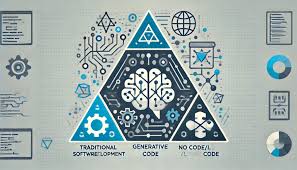
Generative-Driven Development

Nowhere has the rise of generative AI tools been more transformative than in software development. It began with GitHub Copilot’s enhanced autocomplete, which then evolved into interactive, real-time coding assistants like Aider and Cursor that allow engineers to dictate changes and see them applied live in their editor. Today, platforms like Devin.ai aim even higher, aspiring to create autonomous software systems capable of interpreting feature requests or bug reports and delivering ready-to-review code. At its core, the ambition of these AI tools mirrors the essence of software itself: to automate human work. Whether you were writing a script to automate CSV parsing in 2005 or leveraging AI today, the goal remains the same—offloading repetitive tasks to machines. What makes generative AI tools distinct, however, is their focus on automating the work of automation itself. Framing this as a guiding principle enables us to consider the broader challenges and opportunities generative AI brings to software development. Automate the Process of Automation The Doctor-Patient Strategy Most contemporary generative AI tools operate under what can be called the Doctor-Patient strategy. In this model, the GenAI tool acts on a codebase as a distinct, external entity—much like a doctor treats a patient. The relationship is one-directional: the tool modifies the codebase based on given instructions but remains isolated from the architecture and decision-making processes within it. Why This Strategy Dominates: However, the limitations of this strategy are becoming increasingly apparent. Over time, the unidirectional relationship leads to bot rot—the gradual degradation of code quality due to poorly contextualized, repetitive, or inconsistent changes made by generative AI. Understanding Bot Rot Bot rot occurs when AI tools repeatedly make changes without accounting for the macro-level architecture of a codebase. These tools rely on localized context, often drawing from semantically similar code snippets, but lack the insight needed to preserve or enhance the overarching structure. Symptoms of Bot Rot: Example:Consider a Python application that parses TPS report IDs. Without architectural insight, a code bot may generate redundant parsing methods across multiple modules rather than abstracting the logic into a centralized model. Over time, this duplication compounds, creating a chaotic and inefficient codebase. A New Approach: Generative-Driven Development (GDD) To address the flaws of the Doctor-Patient strategy, we propose Generative-Driven Development (GDD), a paradigm where the codebase itself is designed to enable generative AI to enhance automation iteratively and sustainably. Pillars of GDD: How GDD Improves the Development Lifecycle Under GDD, the traditional Test-Driven Development (TDD) cycle (red, green, refactor) evolves to integrate AI processes: This complete cycle eliminates the gaps present in current generative workflows, reducing bot rot and enabling sustainable automation. Over time, GDD-based codebases become easier to maintain and automate, reducing error rates and cycle times. A Day in the Life of a GDD Engineer Imagine a GDD-enabled workflow for a developer tasked with updating TPS report parsing: By embedding AI into the development process, GDD empowers engineers to focus on high-level decision-making while ensuring the automation process remains sustainable and aligned with architectural goals. Conclusion Generative-Driven Development represents a significant shift in how we approach software development. By prioritizing architecture, embedding automation into the software itself, and writing GenAI-optimized code, GDD offers a sustainable path to achieving the ultimate goal: automating the process of automation. As AI continues to reshape the industry, adopting GDD will be critical to harnessing its full potential while avoiding the pitfalls of bot rot. Like Related Posts Who is Salesforce? Who is Salesforce? Here is their story in their own words. From our inception, we’ve proudly embraced the identity of Read more Salesforce Unites Einstein Analytics with Financial CRM Salesforce has unveiled a comprehensive analytics solution tailored for wealth managers, home office professionals, and retail bankers, merging its Financial Read more AI-Driven Propensity Scores AI plays a crucial role in propensity score estimation as it can discern underlying patterns between treatments and confounding variables Read more Tectonic’s Successful Salesforce Track Record Salesforce Technology Services Integrator – Tectonic has successfully delivered Salesforce in a variety of industries including Public Sector, Hospitality, Manufacturing, Read more

Read More
Tectonic Salesforce Integrations

Guide to Reinventing Your Business for the Digital Age

Digital Transformation: The Complete Guide to Reinventing Your Business for the Digital Age What Is Digital Transformation? Digital transformation is the strategic adoption of digital technologies to fundamentally reshape business processes, culture, and customer experiences. It’s not just about upgrading IT systems—it’s a holistic reinvention of how a company operates, competes, and delivers value in an increasingly digital world. “Every digital transformation begins and ends with the customer.”— Marc Benioff, Chairman & Co-CEO, Salesforce Digitization vs. Digitalization vs. Digital Transformation Concept Definition Example Digitization Converting analog data to digital Scanning paper invoices into PDFs Digitalization Using digital tools to improve existing processes CRM systems replacing Rolodexes Digital Transformation Reimagining business models with digital-first strategies Netflix shifting from DVDs to streaming Why Digital Transformation Matters 1. Customer Expectations Are Evolving 2. Employees Demand Modern Tools 3. Industry Disruption Is Accelerating Key Drivers of Digital Transformation Real-World Examples of Digital Transformation 1. Banking: From Branches to Apps 2. Retail: Personalization at Scale 3. Insurance: Proactive Risk Management How to Start Your Digital Transformation Step 1: Assess Your Current State Step 2: Build a Cross-Functional Strategy Step 3: Choose the Right Technology Step 4: Foster a Digital-First Culture Avoiding Common Pitfalls 🚫 Mistake: Buying disconnected point solutions✅ Fix: Invest in an integrated platform 🚫 Mistake: Treating it as an “IT project”✅ Fix: Make it a company-wide initiative 🚫 Mistake: Ignoring change management✅ Fix: Get employee buy-in early The Future of Digital Transformation Ready to Transform? Start small, think big, and put your customers at the center. The businesses that thrive in the next decade will be those that embrace continuous digital evolution. Need help? Contact us. Like Related Posts Who is Salesforce? Who is Salesforce? Here is their story in their own words. From our inception, we’ve proudly embraced the identity of Read more Salesforce Marketing Cloud Transactional Emails Salesforce Marketing Cloud Transactional Emails are immediate, automated, non-promotional messages crucial to business operations and customer satisfaction, such as order Read more Salesforce Unites Einstein Analytics with Financial CRM Salesforce has unveiled a comprehensive analytics solution tailored for wealth managers, home office professionals, and retail bankers, merging its Financial Read more AI-Driven Propensity Scores AI plays a crucial role in propensity score estimation as it can discern underlying patterns between treatments and confounding variables Read more

Read More
unpatched ai

Unpatched.ai

The Mystery of Unpatched.ai: AI-Powered Vulnerability Discovery Raises Questions During January’s Patch Tuesday, Microsoft credited Unpatched.ai for reporting multiple high-severity vulnerabilities. Yet, despite its contributions, the AI-driven bug-finding tool remains an enigma to the cybersecurity community. Last month, Microsoft addressed 159 new vulnerabilities across its widely used products. Among them, Unpatched.ai was acknowledged for identifying three remote code execution flaws—CVE-2025-21186, CVE-2025-21366, and CVE-2025-21395—all of which affect Microsoft Access and received a CVSS score of 7.8. While Microsoft’s recognition highlights Unpatched.ai’s role in vulnerability discovery, little is known about the tool itself. Informa TechTarget reached out to multiple security vendors and experts for insights, but responses only deepened the mystery. A Cryptic Online Presence Unpatched.ai describes itself as “vulnerability discovery by an AI-guided cybersecurity platform” on its website. It provides a list of reported vulnerabilities, which consists solely of Microsoft-related flaws—primarily within Microsoft Access. The platform states that it collaborates with “select enterprise, government, and security vendors based in the U.S. and ally countries.” The company’s “About” page sheds some light on its mission, attributing its research to the need for greater transparency around unpatched software flaws: “We find unpatched issues in software to help customers better identify and manage cyber risk. Many issues are unknown or silently fixed by software vendors, hiding the true risk profile of their products. With the help of AI, we are developing an automated platform to help find and analyze these issues for our customers.” Beyond the website, Unpatched.ai maintains an X account, though much of its activity has been erased. A now-deleted post from January 29 warned that Microsoft’s patch for CVE-2025-21396 was insufficient. When contacted about the post, a Microsoft spokesperson responded, “We are aware of these reports and will take action as needed to help protect customers.” However, Microsoft did not provide additional background on Unpatched.ai. Attempts to reach Unpatched.ai directly have gone unanswered. Piecing Together the Puzzle Efforts to uncover more about Unpatched.ai yielded few concrete details. The domain was registered through Namecheap in September, with ownership masked by a privacy service based in Reykjavik, Iceland. Adam Barnett, lead software engineer at Rapid7, noted that beyond Unpatched.ai’s website, information is scarce. However, he identified a Reddit user, “Fit_Tie_9430,” who has claimed affiliation with the platform. This user shared details about Unpatched.ai’s vulnerability discoveries and linked to now-private YouTube videos demonstrating exploits against Microsoft Access vulnerabilities. Barnett pointed out that Unpatched.ai was also credited for a December Patch Tuesday flaw, CVE-2024-49142. Initially published without attribution, Microsoft later updated the advisory to acknowledge Unpatched.ai’s discovery. Interestingly, the Unpatched.ai website’s favicon—a simple “:)” emoticon—appears to reference the Windows Blue Screen of Death’s “:(” symbol. “It’s a nice touch,” Barnett said, “but I still don’t know who’s behind it. It could be just about anyone with the time, resources, and skills.” Other industry experts share the same uncertainty. Satnam Narang, senior staff research engineer at Tenable, observed that Unpatched.ai’s X account follows only a handful of infosec professionals. “It’s unclear if the service is still in a closed-door phase and will eventually provide more insights about its leadership and team, or who may be backing it,” he said. Alon Yamin, co-founder and CEO of Copyleaks, noted that an AI-driven vulnerability discovery platform was inevitable given the surge in software flaws. While AI can be a game-changer for proactive threat detection, he cautioned against potential misuse. “It’s crucial that Unpatched.ai is deployed carefully, responsibly, and ethically, with safeguards to prevent attackers from exploiting the vulnerabilities it identifies,” Yamin said. The Future of AI-Powered Bug Hunting AI-driven vulnerability discovery is an emerging focus in cybersecurity, though few major breakthroughs have been publicly confirmed. In November, Google announced it had discovered a zero-day vulnerability using AI. Google Project Zero and DeepMind’s AI-powered agent, Big Sleep, identified a buffer stack underflow flaw in the SQLite open-source database engine. With Unpatched.ai making waves yet remaining elusive, the cybersecurity community is left with more questions than answers. Is this the beginning of a new era in AI-powered vulnerability research, or is Unpatched.ai an outlier? Until more information surfaces, the mystery remains. Like Related Posts Who is Salesforce? Who is Salesforce? Here is their story in their own words. From our inception, we’ve proudly embraced the identity of Read more Salesforce Unites Einstein Analytics with Financial CRM Salesforce has unveiled a comprehensive analytics solution tailored for wealth managers, home office professionals, and retail bankers, merging its Financial Read more AI-Driven Propensity Scores AI plays a crucial role in propensity score estimation as it can discern underlying patterns between treatments and confounding variables Read more Tectonic’s Successful Salesforce Track Record Salesforce Technology Services Integrator – Tectonic has successfully delivered Salesforce in a variety of industries including Public Sector, Hospitality, Manufacturing, Read more

Read More
copilots and agentic ai

Transforming Industries and Redefining Workflows

The Rise of Agentic AI: Transforming Industries and Redefining Workflows Artificial Intelligence (AI) is evolving faster than we anticipated. No longer limited to predicting outcomes or generating content, AI systems are now capable of handling complex tasks and making autonomous decisions. This new era—driven by Agentic AI—is set to redefine the workplace and transform industries. From Prediction to Autonomy: The Three Waves of AI To understand where we’re headed, it’s important to see how far AI has come. Arun Parameswaran, SVP & MD of Salesforce India, describes it as a fundamental shift: “What has changed with agents is their ability to handle complex reasoning… and, most importantly, to take action.” Unlike previous AI models that recommend or predict, Agentic AI executes tasks, reshaping customer experiences and operational workflows. Agentic AI in Action: Industry Applications At a recent Mint x Salesforce India deep-dive event on AI, industry leaders explored how Agentic AI is driving transformation across sectors. The panel featured: Here’s how Agentic AI is already making an impact: 1. Revolutionizing Customer Support Traditional chatbots have limited capabilities. Agentic AI, however, understands urgency and context. 2. Accelerating Business Decisions In finance and supply chain management, AI agents analyze vast amounts of data and execute decisions autonomously. 3. Transforming Travel & Aviation Airlines are leveraging AI to optimize booking systems, reduce costs, and enhance efficiency. 4. Automating Wealth Management AI agents in financial services monitor markets, adjust strategies, and offer personalized investment recommendations in real time. The Risks & Responsibilities of Agentic AI With great autonomy comes great responsibility. The potential of Agentic AI is vast—but so are the challenges: The Future of Work: AI as a Partner, Not a Replacement Despite concerns about job displacement, AI is more likely to reshape rather than replace roles. What Are AI Agents? AI agents go beyond traditional models like ChatGPT or Gemini. They are proactive, self-learning systems that: They fall into two categories: “AI agents don’t just wait for commands; they anticipate needs and act,” says Dr. Tomer Simon, Chief Scientist at Microsoft Research Israel. AI Agents in the Workplace: A Shift in Roles AI agents streamline processes, but they don’t eliminate the need for human oversight. Salesforce’s Agentforce is a prime example: “Companies need to integrate AI, not fear it. Those who fail to adopt AI tools risk drowning in tasks AI can handle,” warns Dr. Omri Allouche, Chief Scientist at Gong. The Road Ahead: AI-Driven Business Growth Agentic AI is not about replacing people—it’s about empowering them. As organizations re-evaluate workflows and embrace AI collaboration, the companies that act early will gain a competitive edge in efficiency and innovation. Final Thought The AI revolution is here, and Agentic AI is at its forefront. The key question isn’t whether AI will transform industries—it’s how organizations will adapt and thrive in this new era. Like Related Posts Who is Salesforce? Who is Salesforce? Here is their story in their own words. From our inception, we’ve proudly embraced the identity of Read more Salesforce Marketing Cloud Transactional Emails Salesforce Marketing Cloud Transactional Emails are immediate, automated, non-promotional messages crucial to business operations and customer satisfaction, such as order Read more Salesforce Unites Einstein Analytics with Financial CRM Salesforce has unveiled a comprehensive analytics solution tailored for wealth managers, home office professionals, and retail bankers, merging its Financial Read more AI-Driven Propensity Scores AI plays a crucial role in propensity score estimation as it can discern underlying patterns between treatments and confounding variables Read more

Read More

Salesforce Functions

Salesforce Functions: A Retrospective on the Retired Serverless Solution What Was Salesforce Functions? Salesforce Functions (retired January 31, 2025) was a serverless compute platform that enabled developers to extend Salesforce with custom, elastically scalable logic using familiar programming languages like: Unlike traditional Apex development, Functions allowed teams to write, deploy, and scale business logic without managing infrastructure—all while integrating seamlessly with Apex, Flows, and Lightning Web Components (LWC). Key Features & Benefits (While Active) 1. Language Flexibility ✔ No Apex lock-in – Developers used preferred languages (Java, JS, TS) and tools.✔ Reuse existing code – Leverage libraries, frameworks, and open-source solutions. 2. Elastic, Serverless Scaling ✔ Auto-scaling – No capacity planning; Salesforce handled compute resources.✔ Pay-per-use model – Cost-efficient for variable workloads. 3. Native Salesforce Integration ✔ Trigger from Apex, Flows, or LWC – Seamlessly embed custom logic in Salesforce processes.✔ Secure & compliant – Built on Salesforce’s trusted infrastructure. 4. Reduced DevOps Overhead ✔ No server management – Salesforce handled deployment, scaling, and uptime.✔ Focus on business logic – No need to provision or monitor cloud resources. Why Was Salesforce Functions Retired? Salesforce officially sunset Functions on January 31, 2025, citing: Existing customers were required to migrate to alternative solutions before their contract terms ended. How It Worked (Before Retirement) Example Use Cases Migration Paths After Retirement Organizations previously using Functions were advised to transition to: Alternative Solution Best For Salesforce Code Builder Cloud-based development in VS Code. Einstein Automate Low-code/serverless automation with AI. External Cloud Functions AWS Lambda, Azure Functions + Salesforce Connect. Final Thoughts Salesforce Functions bridged a critical gap by letting developers break free from Apex while maintaining Salesforce’s security and scalability. Its retirement reflects Salesforce’s broader shift toward Hyperforce and cloud-agnostic development. Looking ahead? While Functions is no longer available, its legacy lives on in Salesforce’s evolving low-code and pro-code ecosystem. Key Takeaways:✔ Retired January 2025 – No new Functions could be created.✔ Enabled Java/JS/TS development – Without Apex limitations.✔ Migrate to Code Builder, Einstein Automate, or external cloud functions.✔ Part of Salesforce’s shift toward Hyperforce & cloud-native solutions. Next Steps for Former Users:➡ Audit existing Functions dependencies.➡ Evaluate Einstein Automate for low-code alternatives.➡ Explore Salesforce Code Builder for cloud-based development. Like Related Posts Who is Salesforce? Who is Salesforce? Here is their story in their own words. From our inception, we’ve proudly embraced the identity of Read more Salesforce Marketing Cloud Transactional Emails Salesforce Marketing Cloud Transactional Emails are immediate, automated, non-promotional messages crucial to business operations and customer satisfaction, such as order Read more Salesforce Unites Einstein Analytics with Financial CRM Salesforce has unveiled a comprehensive analytics solution tailored for wealth managers, home office professionals, and retail bankers, merging its Financial Read more AI-Driven Propensity Scores AI plays a crucial role in propensity score estimation as it can discern underlying patterns between treatments and confounding variables Read more

Read More

Einstein Service Agent

It’s been a little over a year since the global surge in GenAI chatbots, sparked by the excitement around ChatGPT. Since then, numerous vendors, both large and mid-sized, have invested heavily in the technology, and many users have already adopted AI-powered chatbots. The competition is intensifying, with CRM giant Salesforce releasing its own GenAI chatbot software, Einstein Service Agent. Einstein Service Agent, built on the Einstein 1 Platform, is Salesforce’s first fully autonomous AI agent. It interacts with large language models (LLMs) by analyzing the context of customer messages to determine the next actions. Utilizing GenAI, the agent generates conversational responses grounded in a company’s trusted business data, including Salesforce CRM data. Salesforce claims that service organizations can now significantly reduce the number of tedious inquiries that hinder productivity, allowing human agents to focus on more complex tasks. For customers, this means getting answers faster without waiting for human agents. Additionally, the service promises 24/7 availability for customer communication in natural language, with an easy handoff to human agents for more complicated issues. Businesses are increasingly turning to AI-based chatbots because, unlike traditional chatbots, they don’t rely on specific programmed queries and can understand context and nuance. Alongside Salesforce, other tech leaders like AWS and Google Cloud have released their own chatbots, such as Amazon Lex and Vertex AI, continuously enhancing their software. Recently, AWS updated its chatbot with the QnAIntent capability in Amazon Lex, allowing integration with a knowledge base in Amazon Bedrock. Similarly, Google released Vertex AI Agent Builder earlier this year, enabling organizations to build AI agents with no code, which can function together with one main agent and subagents. The AI arms race is just beginning, with more vendors developing software to meet market demands. For users, this means that while AI takes over many manual and tedious tasks, the primary challenge will be choosing the right vendor that best suits the needs and resources of their business. Like Related Posts Who is Salesforce? Who is Salesforce? Here is their story in their own words. From our inception, we’ve proudly embraced the identity of Read more Salesforce Marketing Cloud Transactional Emails Salesforce Marketing Cloud Transactional Emails are immediate, automated, non-promotional messages crucial to business operations and customer satisfaction, such as order Read more Salesforce Unites Einstein Analytics with Financial CRM Salesforce has unveiled a comprehensive analytics solution tailored for wealth managers, home office professionals, and retail bankers, merging its Financial Read more AI-Driven Propensity Scores AI plays a crucial role in propensity score estimation as it can discern underlying patterns between treatments and confounding variables Read more

Read More
computer hackers in a genai desert

How Hackers Exploit GenAI

Hackers are increasingly leveraging generative AI (GenAI) to execute sophisticated cyberattacks, with real-world incidents highlighting its growing role in cybercrime. In early 2024, fraudsters used a deepfake of a multinational firm’s CFO to trick a finance employee into transferring $25 million—a stark example of how GenAI is reshaping cyber threats. Experts warn this is just the beginning. Here’s how cybercriminals are using GenAI to their advantage: 1. Crafting Advanced Phishing & Social Engineering Attacks GenAI-powered tools like ChatGPT enable hackers to generate professional-grade phishing emails that closely mimic corporate communications. These emails, now nearly flawless in grammar and formatting, are far more convincing to targets. Additionally, GenAI can: 2. Writing & Enhancing Malicious Code Just as developers use GenAI to accelerate coding, cybercriminals use it to: This automation fuels a rise in zero-day attacks, where vulnerabilities are exploited before developers can patch them. 3. Identifying Vulnerabilities at Scale GenAI accelerates the discovery of security weaknesses by: With GenAI, cybercriminals can scale and refine their tactics faster than ever. 4. Automating Target Research & Attack Planning Hackers use GenAI to: While mainstream AI tools have built-in safeguards, threat actors find ways to bypass them, using alternative AI models or dark web resources. 5. Lowering the Barrier to Cybercrime GenAI democratizes cyberattacks by: This increased accessibility means more people—beyond seasoned cybercriminals—can launch effective cyberattacks. The Hidden Risk: AI-Powered Coding in Enterprises The security risk of GenAI isn’t limited to adversarial use. Businesses adopting AI-powered coding tools may unintentionally introduce vulnerabilities into their systems. Joseph Nwankpa, director of cybersecurity initiatives at Miami University’s Farmer School of Business, warns: The Takeaway While GenAI offers groundbreaking advancements, it also amplifies cyber threats. Organizations must remain vigilant—investing in AI security measures, strengthening human oversight, and educating employees to counter AI-powered attacks. The race between AI-driven innovation and cybercrime is just getting started. Like Related Posts Who is Salesforce? Who is Salesforce? Here is their story in their own words. From our inception, we’ve proudly embraced the identity of Read more Salesforce Unites Einstein Analytics with Financial CRM Salesforce has unveiled a comprehensive analytics solution tailored for wealth managers, home office professionals, and retail bankers, merging its Financial Read more AI-Driven Propensity Scores AI plays a crucial role in propensity score estimation as it can discern underlying patterns between treatments and confounding variables Read more Tectonic’s Successful Salesforce Track Record Salesforce Technology Services Integrator – Tectonic has successfully delivered Salesforce in a variety of industries including Public Sector, Hospitality, Manufacturing, Read more

Read More
Agentic AI is Here

On Premise Gen AI

In 2025, enterprises transitioning generative AI (GenAI) into production after years of experimentation are increasingly considering on-premises deployment as a cost-effective alternative to the cloud. Since OpenAI ignited the AI revolution in late 2022, organizations have tested large language models powering GenAI services on platforms like AWS, Microsoft Azure, and Google Cloud. These experiments demonstrated GenAI’s potential to enhance business operations while exposing the substantial costs of cloud usage. To avoid difficult conversations with CFOs about escalating cloud expenses, CIOs are exploring on-premises AI as a financially viable solution. Advances in software from startups and packaged infrastructure from vendors such as HPE and Dell are making private data centers an attractive option for managing costs. A survey conducted by Menlo Ventures in late 2024 found that 47% of U.S. enterprises with at least 50 employees were developing GenAI solutions in-house. Similarly, Informa TechTarget’s Enterprise Strategy Group reported a rise in enterprises considering on-premises and public cloud equally for new applications—from 37% in 2024 to 45% in 2025. This shift is reflected in hardware sales. HPE reported a 16% revenue increase in AI systems, reaching $1.5 billion in Q4 2024. During the same period, Dell recorded a record .6 billion in AI server orders, with its sales pipeline expanding by over 50% across various customer segments. “Customers are seeking diverse AI-capable server solutions,” noted David Schmidt, senior director of Dell’s PowerEdge server line. While heavily regulated industries have traditionally relied on on-premises systems to ensure data privacy and security, broader adoption is now driven by the need for cost control. Fortune 2000 companies are leading this trend, opting for private infrastructure over the cloud due to more predictable expenses. “It’s not unusual to see cloud bills exceeding 0,000 or even million per month,” said John Annand, an analyst at Info-Tech Research Group. Global manufacturing giant Jabil primarily uses AWS for GenAI development but emphasizes ongoing cost management. “Does moving to the cloud provide a cost advantage? Sometimes it doesn’t,” said CIO May Yap. Jabil employs a continuous cloud financial optimization process to maximize efficiency. On-Premises AI: Technology and Trends Enterprises now have alternatives to cloud infrastructure, including as-a-service solutions like Dell APEX and HPE GreenLake, which offer flexible pay-per-use pricing for AI servers, storage, and networking tailored for private data centers or colocation facilities. “The high cost of cloud drives organizations to seek more predictable expenses,” said Tiffany Osias, vice president of global colocation services at Equinix. Walmart exemplifies in-house AI development, creating tools like a document summarization app for its benefits help desk and an AI assistant for corporate employees. Startups are also enabling enterprises to build AI applications with turnkey solutions. “About 80% of GenAI requirements can now be addressed with push-button solutions from startups,” said Tim Tully, partner at Menlo Ventures. Companies like Ragie (RAG-as-a-service) and Lamatic.ai (GenAI platform-as-a-service) are driving this innovation. Others, like Squid AI, integrate custom AI agents with existing enterprise infrastructure. Open-source frameworks like LangChain further empower on-premises development, offering tools for creating chatbots, virtual assistants, and intelligent search systems. Its extension, LangGraph, adds functionality for building multi-agent workflows. As enterprises develop AI applications internally, consulting services will play a pivotal role. “Companies offering guidance on effective AI tool usage and aligning them with business outcomes will thrive,” Annand said. This evolution in AI deployment highlights the growing importance of balancing technological innovation with financial sustainability. Like Related Posts Who is Salesforce? Who is Salesforce? Here is their story in their own words. From our inception, we’ve proudly embraced the identity of Read more Salesforce Unites Einstein Analytics with Financial CRM Salesforce has unveiled a comprehensive analytics solution tailored for wealth managers, home office professionals, and retail bankers, merging its Financial Read more AI-Driven Propensity Scores AI plays a crucial role in propensity score estimation as it can discern underlying patterns between treatments and confounding variables Read more Tectonic’s Successful Salesforce Track Record Salesforce Technology Services Integrator – Tectonic has successfully delivered Salesforce in a variety of industries including Public Sector, Hospitality, Manufacturing, Read more

Read More
Amazon Q Business

Amazon Q Business

Amazon Q Business: Revolutionizing Enterprise Productivity with Generative AI and Plugins Amazon Q Business is a generative AI-powered assistant that empowers employees by solving problems, generating content, and offering actionable insights from across enterprise data sources. In addition to its robust search capabilities across indexed third-party services, Amazon Q Business enables real-time access to dynamic data like stock prices, vacation balances, and location tracking through its plugins. These plugins also allow employees to perform direct actions—such as prioritizing service tickets—within enterprise applications, all through a single interface. This eliminates the need to toggle between systems, saving valuable time and increasing productivity. This insight delves into how Amazon Q Business plugins seamlessly integrate with enterprise applications through built-in and custom configurations. We’ll explore: Simplifying Enterprise Tasks with Plugins Amazon Q Business enables users to access non-indexed data—such as calendar availability, stock prices, or PTO balances—and execute actions like booking a meeting or submitting PTO using services like Jira, ServiceNow, Salesforce, Fidelity, Vanguard, ADP, Workday, and Google Calendar. This unified approach streamlines workflows and minimizes reliance on multiple apps for task completion. Solution Overview Amazon Q Business connects to over 50 enterprise applications using connectors and plugins: Plugins are categorized into two types: Built-in Plugins Amazon Q Business supports more than 50 actions across applications: Category Application Sample Actions Ticketing ServiceNow Create, update, delete tickets Zendesk Suite Search, create, update tickets Project Management Jira Cloud Read, create, update, delete issues Smartsheet Search and manage sheets and reports CRM Salesforce Manage accounts, opportunities, and cases Communication Microsoft Teams Send private or channel messages Productivity Google Calendar Find events, list calendars Salesforce Plugin Example The Salesforce plugin allows users to: Configuration Steps: Custom Plugins For scenarios not covered by built-in plugins, custom plugins enable seamless integration with proprietary systems. For example: HR Time Off Plugin Example This plugin allows employees to: Setup Steps: End-to-End Use Cases 1. Salesforce Integration Sam, a Customer Success Manager, retrieves high-value opportunities using the Salesforce plugin. She creates a new case directly from the Amazon Q interface, enhancing efficiency by reducing application switching. 2. ServiceNow Ticket Management Sam uses Amazon Q Business to resolve a laptop email sync issue. After referencing indexed IT documentation, she creates a ServiceNow ticket and escalates it directly through the plugin interface. 3. HR System Integration Sam checks her PTO balance and submits a vacation request using the HR Time Off custom plugin, ensuring seamless task completion without switching to another app. Impact on Workflow Efficiency Amazon Q Business plugins simplify workflows by: Conclusion Amazon Q Business plugins represent a transformative step in automating enterprise workflows and enhancing employee productivity. From preconfigured integrations to custom-built solutions, these plugins provide unparalleled flexibility to adapt to diverse business needs. How can Amazon Q Business transform workflows in your organization? Whether through built-in integrations or custom solutions, explore the power of Amazon Q Business plugins to unlock new levels of efficiency. Share your feedback and use cases to inspire innovation across enterprises! Like Related Posts Who is Salesforce? Who is Salesforce? Here is their story in their own words. From our inception, we’ve proudly embraced the identity of Read more Salesforce Marketing Cloud Transactional Emails Salesforce Marketing Cloud Transactional Emails are immediate, automated, non-promotional messages crucial to business operations and customer satisfaction, such as order Read more Salesforce Unites Einstein Analytics with Financial CRM Salesforce has unveiled a comprehensive analytics solution tailored for wealth managers, home office professionals, and retail bankers, merging its Financial Read more AI-Driven Propensity Scores AI plays a crucial role in propensity score estimation as it can discern underlying patterns between treatments and confounding variables Read more

Read More

Salesforce and AWS-Agentic Enterprise

Salesforce and AWS: Driving the Future of the Agentic Enterprise As AI-powered agents redefine the way businesses operate, strategic partnerships are playing a pivotal role in harnessing the power of data and artificial intelligence. Salesforce and AWS, two industry leaders, have taken significant steps toward building a smarter, agentic enterprise through their expanded collaboration. One year into this strategic partnership, their joint efforts are delivering transformative AI and data solutions, helping customers like Buyers Edge Platform unlock new efficiencies and capabilities. A Partnership Fueling Agentic AI Salesforce and AWS are aligning their AI and data initiatives to pave the way for advanced agentic systems—autonomous AI agents designed to enhance business operations and customer experiences. Among their notable achievements over the past year are: These innovations are creating an ecosystem that supports the delivery of agentic AI, enabling businesses to streamline operations and tap into new value from their data. “By integrating data and AI capabilities across our platforms, Salesforce and AWS are building a strong foundation for the future of agentic systems,” said Brian Landsman, EVP of Global Business Development and Technology Partnerships at Salesforce. “With a majority of large companies planning to implement agents by 2027, organizations need trusted partners to help them achieve their vision of a smarter enterprise.” Making AI More Accessible Salesforce is simplifying access to AI technology through the AWS Marketplace, offering customers an integrated solution that includes Agentforce—the agentic layer of the Salesforce platform. Agentforce enables businesses to deploy autonomous AI agents across various operations, streamlining workflows and delivering measurable results. Available in 23 countries, Salesforce’s presence on AWS Marketplace offers customers key advantages, including: By removing barriers to adoption, Salesforce and AWS empower companies to focus on leveraging technology for growth rather than navigating complex procurement systems. A New Era of Enterprise Efficiency As businesses increasingly rely on data and AI to remain competitive, the Salesforce-AWS partnership is setting the stage for enterprises to achieve more with agentic systems. These systems allow companies to execute complex tasks with unprecedented efficiency, maximizing ROI on technology investments. “Our partnership with Salesforce empowers mutual customers to realize the full potential of their data and AI investments,” said Chris Grusz, Managing Director of Technology Partnerships at AWS. “Together, we’re delivering immediate, actionable insights with agentic AI, enabling organizations to automate strategically and unlock more value across their operations.” Looking Ahead By seamlessly integrating data and AI capabilities, Salesforce and AWS are not just building technology solutions—they’re reshaping how enterprises operate and thrive in the digital age. As agentic AI becomes an essential part of business strategy, this partnership provides a blueprint for leveraging technology to drive smarter, more agile, and more effective enterprises. Like Related Posts Who is Salesforce? Who is Salesforce? Here is their story in their own words. From our inception, we’ve proudly embraced the identity of Read more Salesforce Marketing Cloud Transactional Emails Salesforce Marketing Cloud Transactional Emails are immediate, automated, non-promotional messages crucial to business operations and customer satisfaction, such as order Read more Salesforce Unites Einstein Analytics with Financial CRM Salesforce has unveiled a comprehensive analytics solution tailored for wealth managers, home office professionals, and retail bankers, merging its Financial Read more AI-Driven Propensity Scores AI plays a crucial role in propensity score estimation as it can discern underlying patterns between treatments and confounding variables Read more

Read More

Autonomy, Architecture, and Action

Redefining AI Agents: Autonomy, Architecture, and Action AI agents are reshaping how technology interacts with us and executes tasks. Their mission? To reason, plan, and act independently—following instructions, making autonomous decisions, and completing actions, often without user involvement. These agents adapt to new information, adjust in real time, and pursue their objectives autonomously. This evolution in agentic AI is revolutionizing how goals are accomplished, ushering in a future of semi-autonomous technology. At their foundation, AI agents rely on one or more large language models (LLMs). However, designing agents is far more intricate than building chatbots or generative assistants. While traditional AI applications often depend on user-driven inputs—such as prompt engineering or active supervision—agents operate autonomously. Core Principles of Agentic AI Architectures To enable autonomous functionality, agentic AI systems must incorporate: Essential Infrastructure for AI Agents Building and deploying agentic AI systems requires robust software infrastructure that supports: Agent Development Made Easier with Langflow and Astra DB Langflow simplifies the development of agentic applications with its visual IDE. It integrates with Astra DB, which combines vector and graph capabilities for ultra-low latency data access. This synergy accelerates development by enabling: Transforming Autonomy into Action Agentic AI is fundamentally changing how tasks are executed by empowering systems to act autonomously. By leveraging platforms like Astra DB and Langflow, organizations can simplify agent design and deploy scalable, effective AI applications. Start building the next generation of AI-powered autonomy today. Like Related Posts Who is Salesforce? Who is Salesforce? Here is their story in their own words. From our inception, we’ve proudly embraced the identity of Read more Salesforce Unites Einstein Analytics with Financial CRM Salesforce has unveiled a comprehensive analytics solution tailored for wealth managers, home office professionals, and retail bankers, merging its Financial Read more AI-Driven Propensity Scores AI plays a crucial role in propensity score estimation as it can discern underlying patterns between treatments and confounding variables Read more Tectonic’s Successful Salesforce Track Record Salesforce Technology Services Integrator – Tectonic has successfully delivered Salesforce in a variety of industries including Public Sector, Hospitality, Manufacturing, Read more

Read More
gettectonic.com