
AWS Archives - gettectonic.com - Page 2
Agentforce to the Team

How Agentforce 2.0’s New Model Changes the Game

Salesforce Reinvents AI Pricing: How Agentforce 2.0’s New Model Changes the Game From Conversations to Actions: Salesforce’s Bold Pricing Shift When Salesforce launched Agentforce 2.0 in October 2024, it raced ahead of competitors like Microsoft, SAP, and ServiceNow, positioning itself as the go-to platform for enterprise AI agents. The initial -per-conversation model worked well for simple use cases—like AI handling frontline customer chats—but as businesses experimented further, limitations emerged. Now, Salesforce is rolling out a game-changing update: action-based pricing. The New Pricing Model: Pay for What the AI Actually Does Bill Patterson, EVP of Corporate Strategy at Salesforce, explains: “We’re moving to an action-oriented model—charging for the actual work AI agents perform, not just conversations.” Key Features of the New Pricing: ✅ Flex Credits – Universal currency for AI actions across Sales, Service, and Marketing Clouds✅ $0.10 per action (20 credits) – Only pay when the AI completes a task✅ No hidden fees – Unlike hyperscalers, no separate charges for compute, storage, or LLM calls Example: “Think of it like electricity—you don’t pay differently for your fridge vs. your stove. Flex Credits power all AI agents uniformly.”— Bill Patterson Two Major Additions: Flex Agreement & Digital Wallet 1. Flex Agreement: Convert Unused Licenses into AI Credits Many companies overbuy CRM licenses during hiring surges. Now, they can trade unused licenses into Flex Credits for AI agents. Why It Matters: 2. Digital Wallet: Control & Monitor AI Spending A new centralized dashboard lets companies:📊 Track AI agent usage in real-time🛑 Set spending limits (e.g., cap expensive agents)📈 Measure ROI per agent “This isn’t about nickel-and-diming customers—it’s about fair, scalable pricing that grows with AI adoption.” How Does Salesforce Compare to Competitors? Pricing Model Salesforce Hyperscalers (AWS, Azure) AI Startups Basis Actions completed Compute + microservices “Employee replacement” flat fees Flexibility ✅ Universal Flex Credits ❌ Complex tiered pricing ❌ Rigid per-agent costs Transparency ✅ Clear per-action cost ❌ Hidden API/LLM fees ✅ Fixed but inflexible Salesforce’s edge? Agentforce One: The Next Evolution Coming in July 2025, Salesforce is rebranding Einstein One as Agentforce One—a bundled AI package for Sales & Service Cloud users. What’s Included? Goal: Lower the barrier to entry and accelerate AI adoption across Salesforce’s 150,000+ customers. Will This Boost Agentforce Adoption? ✅ 8,000 companies already use Agentforce (fastest-growing Salesforce product ever).✅ Flex Credits remove cost uncertainty.✅ Digital Wallet enables better budgeting. But… 8,000 is just 5% of Salesforce’s customer base. The new pricing could be the push needed to unlock mass adoption. The Bottom Line Salesforce’s pricing shift isn’t just about cost—it’s about trust. By moving to action-based billing, they’re ensuring customers:✔ Only pay for valuable AI work✔ Can scale AI across departments✔ Gain full visibility into ROI What’s next? As AI costs normalize, Salesforce’s flexible, transparent model could set the industry standard. 🚀 Ready to explore Agentforce?Contact us today! “This is the pricing model AI-powered businesses have been waiting for.”— CIO, Fortune 500 Salesforce Customer Like Related Posts Who is Salesforce? Who is Salesforce? Here is their story in their own words. From our inception, we’ve proudly embraced the identity of Read more Salesforce Marketing Cloud Transactional Emails Salesforce Marketing Cloud Transactional Emails are immediate, automated, non-promotional messages crucial to business operations and customer satisfaction, such as order Read more Salesforce Unites Einstein Analytics with Financial CRM Salesforce has unveiled a comprehensive analytics solution tailored for wealth managers, home office professionals, and retail bankers, merging its Financial Read more AI-Driven Propensity Scores AI plays a crucial role in propensity score estimation as it can discern underlying patterns between treatments and confounding variables Read more


Read More
Agentforce 3 and AI Agents

Agentforce 3 and AI Agents

Salesforce Lifts the Lid on AI Agents with Agentforce 3 No More Black Box AISalesforce has unveiled Agentforce 3, a suite of tools designed to build, test, and manage AI agents with full transparency. The key components—Agentforce Studio (an agent design and testing environment) and Agentforce Command Center (a monitoring dashboard)—will roll out in August, giving businesses unprecedented control over their AI workflows. Taking the Reins on AI Performance The Command Center introduces an observability dashboard that tracks:✔ Agent latency✔ Error rates✔ Escalation rates✔ Individual customer interactions This granular visibility allows businesses to identify failures, analyze root causes, and refine agent behavior—all in plain language. “You’ve got to be able to understand, monitor, and manage these agents before you let them loose on customers—let alone other agents,” said Rebecca Wettemann, Founder of Valoir. Interoperability on the Horizon Salesforce is also advancing AI agent collaboration with: These standards will enable cross-platform agent coordination, allowing one AI agent to orchestrate others—a vision shared by ServiceNow and other enterprise players. Early Adopters See Real-World Impact Goodyear is already customizing Agentforce to:🔹 Strengthen relationships with automakers & resellers🔹 Personalize consumer interactions (e.g., tire recommendations based on weather, location, and purchase history) “We’re shifting from transactional sales to lifetime customer value,” said Mamatha Chamarthi, Goodyear’s Chief Digital Officer. Governance & Security in a Multi-Agent Future Salesforce ensures secure interoperability with:✔ Policy-based data access controls for MCP/A2A agents✔ AgentExchange marketplace (already hosting MCP connections from AWS, Google Cloud, PayPal, and others) “Builders will be able to orchestrate dynamic, multi-agent experiences—safely,” said Gary Lerhaupt, Salesforce VP of Product Architecture. Challenges Ahead: The Ecosystem Factor Despite the push for interoperability, Salesforce still blocks rivals from searching Slack data—a potential hurdle for developer adoption. “Success hinges on open ecosystems,” noted Wettemann. “You need to get more players on board.” The Bottom Line With Agentforce 3, Salesforce is moving AI agents out of the lab and into the real world—equipping businesses with the tools to deploy, monitor, and optimize them at scale. The next frontier? Seamless cross-platform AI teamwork—but only if the industry plays nice. Key Takeaways: Like Related Posts Who is Salesforce? Who is Salesforce? Here is their story in their own words. From our inception, we’ve proudly embraced the identity of Read more Salesforce Marketing Cloud Transactional Emails Salesforce Marketing Cloud Transactional Emails are immediate, automated, non-promotional messages crucial to business operations and customer satisfaction, such as order Read more Salesforce Unites Einstein Analytics with Financial CRM Salesforce has unveiled a comprehensive analytics solution tailored for wealth managers, home office professionals, and retail bankers, merging its Financial Read more AI-Driven Propensity Scores AI plays a crucial role in propensity score estimation as it can discern underlying patterns between treatments and confounding variables Read more

Read More
Data Governance for the AI Enterprise

A Strategic Approach to Governing Enterprise AI Systems

The Imperative of AI Governance in Modern Enterprises Effective data governance is widely acknowledged as a critical component of deploying enterprise AI applications. However, translating governance principles into actionable strategies remains a complex challenge. This article presents a structured approach to AI governance, offering foundational principles that organizations can adapt to their needs. While not exhaustive, this framework provides a starting point for managing AI systems responsibly. Defining Data Governance in the AI Era At its core, data governance encompasses the policies and processes that dictate how organizations manage data—ensuring proper storage, access, and usage. Two key roles facilitate governance: Traditional data systems operate within deterministic governance frameworks, where structured schemas and well-defined hierarchies enable clear rule enforcement. However, AI introduces non-deterministic challenges—unstructured data, probabilistic decision-making, and evolving models—requiring a more adaptive governance approach. Core Principles for Effective AI Governance To navigate these complexities, organizations should adopt the following best practices: Multi-Agent Architectures: A Governance Enabler Modern AI applications should embrace agent-based architectures, where multiple AI models collaborate to accomplish tasks. This approach draws from decades of distributed systems and microservices best practices, ensuring scalability and maintainability. Key developments facilitating this shift include: By treating AI agents as modular components, organizations can apply service-oriented governance principles, improving oversight and adaptability. Deterministic vs. Non-Deterministic Governance Models Traditional (Deterministic) Governance AI (Non-Deterministic) Governance Interestingly, human governance has long managed non-deterministic actors (people), offering valuable lessons for AI oversight. Legal systems, for instance, incorporate checks and balances—acknowledging human fallibility while maintaining societal stability. Mitigating AI Hallucinations Through Specialization Large language models (LLMs) are prone to hallucinations—generating plausible but incorrect responses. Mitigation strategies include: This mirrors real-world expertise—just as a medical specialist provides domain-specific advice, AI agents should operate within bounded competencies. Adversarial Validation for AI Governance Inspired by Generative Adversarial Networks (GANs), AI governance can employ: This adversarial dynamic improves quality over time, much like auditing processes in human systems. Knowledge Management: The Backbone of AI Governance Enterprise knowledge is often fragmented, residing in: To govern this effectively, organizations should: Ethics, Safety, and Responsible AI Deployment AI ethics remains a nuanced challenge due to: Best practices include: Conclusion: Toward Responsible and Scalable AI Governance AI governance demands a multi-layered approach, blending:✔ Technical safeguards (specialized agents, adversarial validation).✔ Process rigor (knowledge certification, human oversight).✔ Ethical foresight (bias mitigation, risk-aware automation). By learning from both software engineering and human governance paradigms, enterprises can build AI systems that are effective, accountable, and aligned with organizational values. The path forward requires continuous refinement, but with strategic governance, AI can drive innovation while minimizing unintended consequences. Like Related Posts Who is Salesforce? Who is Salesforce? Here is their story in their own words. From our inception, we’ve proudly embraced the identity of Read more Salesforce Unites Einstein Analytics with Financial CRM Salesforce has unveiled a comprehensive analytics solution tailored for wealth managers, home office professionals, and retail bankers, merging its Financial Read more AI-Driven Propensity Scores AI plays a crucial role in propensity score estimation as it can discern underlying patterns between treatments and confounding variables Read more Tectonic’s Successful Salesforce Track Record Salesforce Technology Services Integrator – Tectonic has successfully delivered Salesforce in a variety of industries including Public Sector, Hospitality, Manufacturing, Read more

Read More
New Slack Innovations

Slack News from Salesforce

Starting today, we’re updating Slack plans and pricing to expand access to AI, Agentforce, and Salesforce for organizations of all sizes. With these changes, customers will benefit from native AI, access to digital labor, deeper CRM integrations, and enterprise-grade security so they can grow faster with Slack. Since our last pricing adjustment in 2022, Slack has evolved into a unified work operating system and conversational interface for all your enterprise apps, data, and agents. Now more than ever, AI, data, and security are integral to Slack and essential for bringing AI agents successfully into the digital employee experience. We are committed to giving every team an onramp to AI-powered productivity in Slack — and every organization a secure foundation to grow with digital labor. That’s why we’re simplifying our pricing and bringing innovations into the core Slack experience across all our plans. Slack users gain new features across every plan We’re integrating AI features across all paid plans, adding summarization and huddle notes to the Pro plan, while supercharging our Business+ plan with a range of AI features including workflow generation, recaps, translation, and search. Our new Enterprise+ plan unlocks AI-powered enterprise search and evolved task management capabilities across your organization. Additionally, AI agents from Agentforce and partner AI apps can now be deployed in all paid plans. Every Salesforce customer will get Slack (Free Plan) with access to Salesforce integrations in Slack, so every team can collaborate around CRM data with Salesforce Channels in Slack or from Salesforce. Business+ and Enterprise+ teams will gain premium Salesforce features to forecast revenue, swarm deals, coordinate approvals, and respond to real-time event triggers. We’re enhancing security across all plans, bringing session duration controls and native device management to all of our plans — including Free, and adding SAML-based SSO for Salesforce customers — giving every team a trusted foundation to securely connect their people, data, AI, and agents. What’s changing with Slack pricing Slack is the work operating system for the agentic era These plan additions reflect our rapid pace of innovation over the last 18 months to deliver the most comprehensive work operating system for the era of AI and digital labor. Together, we are reinventing work for the age of digital labor. Humans are at the center — connected in conversation, amplified by AI, with instant access to contextual data — all built on a strong foundation of security and trust. For more information on these updates, visit the Slack Plans page or contact your account representative. Like Related Posts Who is Salesforce? Who is Salesforce? Here is their story in their own words. From our inception, we’ve proudly embraced the identity of Read more Salesforce Marketing Cloud Transactional Emails Salesforce Marketing Cloud Transactional Emails are immediate, automated, non-promotional messages crucial to business operations and customer satisfaction, such as order Read more Salesforce Unites Einstein Analytics with Financial CRM Salesforce has unveiled a comprehensive analytics solution tailored for wealth managers, home office professionals, and retail bankers, merging its Financial Read more AI-Driven Propensity Scores AI plays a crucial role in propensity score estimation as it can discern underlying patterns between treatments and confounding variables Read more

Read More
Salesforce Tightens Slack’s API Rules

Salesforce Tightens Slack’s API Rules

Salesforce Tightens Slack’s API Rules, Restricting AI Data Access Salesforce, the parent company of workplace messaging platform Slack, has quietly updated its API terms to block third-party software firms from indexing or storing Slack messages—a move that could significantly impact enterprise AI tools. According to a report from The Information, the changes prevent apps like Glean (a workplace AI search provider) from accessing Slack data for long-term storage or analysis. In a statement to Reuters, Salesforce framed the shift as a data security measure, saying: “As AI raises critical considerations around how customer data is handled, we’re reinforcing safeguards around how data accessed via Slack APIs can be stored, used, and shared.” What Does This Actually Mean? APIs (Application Programming Interfaces) allow different software systems to communicate. Until now, companies could use Slack’s API to: Now, those capabilities are restricted. Third-party apps can still access Slack data in real time, but they can’t retain it—meaning AI models can’t learn from past conversations. Glean reportedly warned customers that the change “hampers your ability to use your data with your chosen enterprise AI platform.” Why Is Salesforce Doing This? Officially, the company says it’s about security and responsible AI. But critics argue it’s a strategic lock-in play: Industry Backlash: “This Is Anti-Innovation” The move has sparked frustration across the tech sector, with critics accusing Salesforce of building a walled garden: The Bigger Picture: AI’s Data Wars This isn’t just about Slack—it’s part of a broader battle over AI training data: Salesforce’s move suggests that enterprise AI will increasingly run on proprietary data silos—meaning companies that control the data control the AI. What Happens Next? One thing’s clear: The age of open data for AI is ending—and the age of data feudalism is here. Like Related Posts Who is Salesforce? Who is Salesforce? Here is their story in their own words. From our inception, we’ve proudly embraced the identity of Read more Salesforce Marketing Cloud Transactional Emails Salesforce Marketing Cloud Transactional Emails are immediate, automated, non-promotional messages crucial to business operations and customer satisfaction, such as order Read more Salesforce Unites Einstein Analytics with Financial CRM Salesforce has unveiled a comprehensive analytics solution tailored for wealth managers, home office professionals, and retail bankers, merging its Financial Read more AI-Driven Propensity Scores AI plays a crucial role in propensity score estimation as it can discern underlying patterns between treatments and confounding variables Read more

Read More
Whoever cracks reliable, scalable atomic power first could gain an insurmountable edge in the AI arms race.

The Nuclear Power Revival

The Nuclear Power Revival: How Big Tech is Fueling AI with Small Modular Reactors From Meltdowns to Megawatts: Nuclear’s Second Act Following two catastrophic nuclear accidents—Three Mile Island (1979) and Chernobyl (1986)—public trust in atomic energy plummeted. But today, an unlikely force is driving its resurgence: artificial intelligence. As generative AI explodes in demand, tech giants face an unprecedented energy crisis. Data centers, already consuming 2-3% of U.S. electricity, could devour 9% by 2030 (Electric Power Research Institute). With aging power grids struggling to keep up, cloud providers are taking matters into their own hands—by turning to small modular reactors (SMRs). Why AI Needs Nuclear Power The Energy Crisis No One Saw Coming Enter Small Modular Reactors (SMRs) The global SMR market for data centers is projected to hit 8M by 2033, growing at 48.72% annually (Research and Markets). The Big Four Tech Players Going Nuclear 1. Microsoft: Reviving Three Mile Island 2. Google: Betting on Next-Gen SMRs 3. Amazon: Three-Pronged Nuclear Push 4. Oracle: Plans Under Wraps The Startups Building Tomorrow’s Nuclear Tech Company Backer/Notable Feature Innovation Oklo Sam Altman (OpenAI) Rural SMRs targeting 2027 launch TerraPower Bill Gates Sodium-cooled fast reactors NuScale First U.S.-approved SMR design Factory-built, modular light-water reactors Last Energy 80+ microreactors planned in Europe/Texas 20MW units for data centers Deep Atomic Swiss startup MK60 reactor with dedicated cooling power Valar Atomics “Gigasite” assembly lines On-site SMR production Newcleo Lead-cooled fast reactors Higher safety via liquid metal cooling Challenges Ahead The Bottom Line As AI’s hunger for power grows exponentially, Big Tech is bypassing traditional utilities to build its own nuclear future. While risks remain, SMRs offer a scalable, clean solution—potentially rewriting energy economics in the AI era. The race is on: Whoever cracks reliable, scalable atomic power first could gain an insurmountable edge in the AI arms race. Like Related Posts Who is Salesforce? Who is Salesforce? Here is their story in their own words. From our inception, we’ve proudly embraced the identity of Read more Salesforce Unites Einstein Analytics with Financial CRM Salesforce has unveiled a comprehensive analytics solution tailored for wealth managers, home office professionals, and retail bankers, merging its Financial Read more AI-Driven Propensity Scores AI plays a crucial role in propensity score estimation as it can discern underlying patterns between treatments and confounding variables Read more Tectonic’s Successful Salesforce Track Record Salesforce Technology Services Integrator – Tectonic has successfully delivered Salesforce in a variety of industries including Public Sector, Hospitality, Manufacturing, Read more
Read More
Building the Foundation for AI Success

Building the Foundation for AI Success

The Data Imperative: Building the Foundation for AI Success The AI Revolution Demands a Data-First Approach As enterprises race to deploy generative AI, AI agents, and Model Context Protocol (MCP) systems, one critical truth emerges: AI is only as powerful as the data that fuels it. Why Data Platforms Are the Unsung Heroes of AI Modern data platforms solve five existential challenges for AI adoption: 1. Unified Data Fabric 2. Real-Time Performance at Scale 3. Context-Aware Intelligence 4. Governance Without Friction 5. Rapid AI Experimentation Model Context Protocol (MCP): The Nervous System for AI What Makes MCP Revolutionary Traditional AI Integration MCP Approach Custom APIs per system Standardized protocol Months of development Plug-and-play connectivity Brittle point-to-point links Adaptive ecosystem How MCP Transforms AI Capabilities The Strategic Imperative Organizations leading the AI race share three traits: “The AI winners won’t have better algorithms—they’ll have better data systems.”— MIT Technology Review, 2025 AI Predictions Next Steps for Enterprises: The future belongs to organizations that build data moats—not just models. Like Related Posts Who is Salesforce? Who is Salesforce? Here is their story in their own words. From our inception, we’ve proudly embraced the identity of Read more Salesforce Unites Einstein Analytics with Financial CRM Salesforce has unveiled a comprehensive analytics solution tailored for wealth managers, home office professionals, and retail bankers, merging its Financial Read more AI-Driven Propensity Scores AI plays a crucial role in propensity score estimation as it can discern underlying patterns between treatments and confounding variables Read more Tectonic’s Successful Salesforce Track Record Salesforce Technology Services Integrator – Tectonic has successfully delivered Salesforce in a variety of industries including Public Sector, Hospitality, Manufacturing, Read more

Read More

Moving Beyond Large Language Models

The Future of Generative AI: Moving Beyond Large Language Models Why LLMs Aren’t Enough Large Language Models (LLMs) like GPT-4, Claude, and Llama have revolutionized AI with their ability to generate human-like text. But they come with critical limitations: These flaws make LLMs unreliable for high-stakes applications like legal research, medical diagnosis, or real-time decision-making. So, what comes next? Emerging Alternatives to LLMs While LLMs won’t disappear, the next wave of AI will likely combine them with smarter, more efficient models. 1. Logical Reasoning Systems Potential Hybrid Approach:LLMs generate responses → Logical AI verifies accuracy. 2. Real-Time Learning Models (e.g., AIGO) 3. Liquid Learning Networks (LLNs) 4. Small Language Models (SLMs) The Future: Hybrid AI Systems The most powerful AI won’t rely on just one model—it will combine the best of each: This hybrid approach could finally deliver AI that’s both smart and reliable. What’s Next? The AI revolution isn’t over—it’s just getting started. Like Related Posts Who is Salesforce? Who is Salesforce? Here is their story in their own words. From our inception, we’ve proudly embraced the identity of Read more Salesforce Unites Einstein Analytics with Financial CRM Salesforce has unveiled a comprehensive analytics solution tailored for wealth managers, home office professionals, and retail bankers, merging its Financial Read more AI-Driven Propensity Scores AI plays a crucial role in propensity score estimation as it can discern underlying patterns between treatments and confounding variables Read more Tectonic’s Successful Salesforce Track Record Salesforce Technology Services Integrator – Tectonic has successfully delivered Salesforce in a variety of industries including Public Sector, Hospitality, Manufacturing, Read more

Read More
Agentic AI Race

The Evolution Beyond AI Agents

The Evolution Beyond AI Agents: What Comes Next? The Rapid Progression of AI Terminology The landscape of artificial intelligence has undergone a remarkable transformation in just three years. What began with ChatGPT and generative AI as the dominant buzzwords quickly evolved into discussions about copilots, and most recently, agentic AI emerged as 2024‘s defining concept. This accelerated terminology cycle mirrors fashion industry trends more than traditional technology adoption curves. Major players including Adobe, Qualtrics, Oracle, OpenAI, and Deloitte have recently launched agentic AI platforms, joining earlier entrants like Microsoft, AWS, and Salesforce. This rapid market saturation suggests the industry may already be approaching the next conceptual shift before many organizations have fully implemented their current AI strategies. Examining the Staying Power of Agentic AI Industry analysts present diverging views on the longevity of the agentic AI concept. Brandon Purcell, a Forrester Research analyst, acknowledges the pattern of fleeting AI trends while recognizing agentic AI’s potential for greater staying power. He cites three key factors that may extend its relevance: Klaasjan Tukker, Adobe’s Senior Director of Product Marketing, draws parallels to mature technologies that have become invisible infrastructure. He predicts agentic AI will follow a similar trajectory, becoming so seamlessly integrated that users will interact with it as unconsciously as they use navigation apps or operate modern vehicles. The Automotive Sector as an AI Innovation Catalyst The automotive industry provides compelling examples of advanced AI applications that transcend current “agentic” capabilities. Modern autonomous vehicles demonstrate sophisticated AI behaviors including: These implementations suggest that what the tech industry currently labels as “agentic” may represent only an intermediate step toward more autonomous, context-aware systems. The Definitional Challenges of Agentic AI The technology sector faces significant challenges in establishing common definitions for emerging AI concepts. Adobe’s framework describes agents as systems possessing three core attributes: However, as Scott Brinker of HubSpot notes, the term “agentic” risks becoming overused and diluted as vendors apply it inconsistently across various applications and functionalities. Interoperability as the Critical Success Factor For agentic AI systems to deliver lasting value, industry observers emphasize the necessity of cross-platform compatibility. Phil Regnault of PwC highlights the reality that enterprise environments typically combine solutions from multiple vendors, creating integration challenges for AI implementations. Three critical layers require standardization: Without such standards, organizations risk creating new AI silos that mirror the limitations of legacy systems. The Future Beyond Agentic AI While agentic AI continues its maturation process, the technology sector’s relentless innovation cycle suggests the next conceptual breakthrough may emerge sooner than expected. Historical naming patterns for AI advancements indicate several possibilities: As these technologies evolve, they may shed specialized branding in favor of more utilitarian terminology, much as “software bots” became normalized after their initial hype cycle. The automotive parallel suggests that truly transformative AI implementations may become so seamlessly integrated that their underlying technology becomes invisible to end users—the ultimate measure of technological maturity. Until that point, the industry will likely continue its rapid cycle of innovation and rebranding, searching for the next paradigm that captures the imagination as powerfully as “agentic AI” has in 2024. Like Related Posts Who is Salesforce? Who is Salesforce? Here is their story in their own words. From our inception, we’ve proudly embraced the identity of Read more Salesforce Marketing Cloud Transactional Emails Salesforce Marketing Cloud Transactional Emails are immediate, automated, non-promotional messages crucial to business operations and customer satisfaction, such as order Read more Salesforce Unites Einstein Analytics with Financial CRM Salesforce has unveiled a comprehensive analytics solution tailored for wealth managers, home office professionals, and retail bankers, merging its Financial Read more AI-Driven Propensity Scores AI plays a crucial role in propensity score estimation as it can discern underlying patterns between treatments and confounding variables Read more

Read More
Transformative Potential of AI in Healthcare

The Hidden Environmental Cost of Health AI

The Hidden Environmental Cost of Health AI: Why Sustainability Can’t Wait AI in Healthcare: A Double-Edged Sword AI is revolutionizing healthcare with:✅ Early disease detection (e.g., AI radiology tools)✅ Predictive analytics for personalized treatment✅ Automated admin tasks reducing clinician burnout Yet, its carbon footprint is staggering: Why Healthcare Must Act Now 3 Steps to a Greener Health AI Strategy 1. Adopt Energy-Efficient AI Models 2. Demand Transparency from Vendors 3. Implement an AI Sustainability Framework Factor Action Item Model Selection Opt for models with lower FLOPs (floating-point operations) Data Efficiency Use synthetic data where possible Hardware Deploy on carbon-neutral cloud providers Lifecycle Audit & retire unused AI workloads “We can’t sacrifice our planet for short-term AI gains. Healthcare must lead in sustainable innovation.”—Dr. Manijeh Berenji, UC Irvine The Bottom Line Health AI is indispensable—but so is preserving a livable planet. By adopting energy-conscious AI practices, healthcare can advance medicine without accelerating climate change. Next Steps: Sustainable AI starts with awareness. Like Related Posts Who is Salesforce? Who is Salesforce? Here is their story in their own words. From our inception, we’ve proudly embraced the identity of Read more Salesforce Unites Einstein Analytics with Financial CRM Salesforce has unveiled a comprehensive analytics solution tailored for wealth managers, home office professionals, and retail bankers, merging its Financial Read more AI-Driven Propensity Scores AI plays a crucial role in propensity score estimation as it can discern underlying patterns between treatments and confounding variables Read more Tectonic’s Successful Salesforce Track Record Salesforce Technology Services Integrator – Tectonic has successfully delivered Salesforce in a variety of industries including Public Sector, Hospitality, Manufacturing, Read more
Read More

Revolutionizing Analytics: Summer ’25 Release Highlights

Next-Generation Analytics Across Salesforce The Summer ’25 release brings transformative updates to Salesforce’s analytics ecosystem, empowering organizations with smarter insights, enhanced accessibility, and seamless data integration. Here’s what’s new: Tableau Next: The Future of Enterprise Analytics (Available in Enterprise, Performance, and Unlimited editions) A unified analytics powerhouse combining Tableau’s visualization strengths with Data Cloud’s semantic layer and Agentforce’s contextual AI. Key Capabilities: Why It Matters:“Tableau Next represents the first truly agentic analytics platform – where insights automatically trigger business actions,” says Salesforce CPO. Lightning Reports & Dashboards: Smarter Refresh (Generally Available) Pro Tip: Combine selective refresh with new “sticky filters” (Winter ’25) for personalized views. Data Cloud Analytics: Deeper Insights Feature Impact Example Use Case Calculated Insights in Reports Apply AI-generated segments/metrics directly in reports Identify high-value customer cohorts 5-Dimensional Grouping Create granular summary reports Analyze marketing ROI by demographic layers Managed Package Deployment Distribute semantic model reports across orgs Roll out standardized financial reporting New Deployment Option: Migrate analytics via change sets (no API required) CRM Analytics: Performance Boost 🚀 3x Faster Queries 🔒 Secure Cloud Connections ♿ Accessibility First Einstein Discovery Update Retired Feature: Decision Optimization beta (after June 5, 2025)Recommended Alternative: Use Einstein Prediction Builder for optimization scenarios Tableau Ecosystem Updates Product Key Improvement Best For Tableau Cloud New embedded analytics SDK Enterprise deployments Tableau Desktop Enhanced geospatial analysis Advanced users Tableau Prep Smart data cleaning suggestions Data engineers Pro Tip: Embed Tableau dashboards in Lightning pages for contextual decision-making. Getting Started “These analytics innovations reduce time-to-insight by 40% in early adopters,” reports Salesforce Labs. Explore Summer ’25 Analytics DocumentationSchedule Release Readiness Consultation Which analytics upgrade will you implement first? Like Related Posts Who is Salesforce? Who is Salesforce? Here is their story in their own words. From our inception, we’ve proudly embraced the identity of Read more Salesforce Marketing Cloud Transactional Emails Salesforce Marketing Cloud Transactional Emails are immediate, automated, non-promotional messages crucial to business operations and customer satisfaction, such as order Read more Salesforce Unites Einstein Analytics with Financial CRM Salesforce has unveiled a comprehensive analytics solution tailored for wealth managers, home office professionals, and retail bankers, merging its Financial Read more AI-Driven Propensity Scores AI plays a crucial role in propensity score estimation as it can discern underlying patterns between treatments and confounding variables Read more
Read More
Streamline Data Collection from Connected Vehicles and Assets with AWS and Salesforce

Streamline Data Collection from Connected Vehicles and Assets with AWS and Salesforce

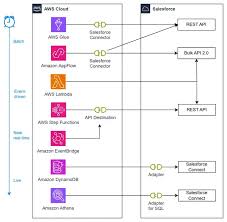
Unlock Real-Time Insights with AWS IoT and Salesforce Industry Clouds This guide explains how to gather, process, and distribute data from connected vehicles and industrial assets—such as manufacturing equipment or utility meters—into Salesforce Industry Cloud solutions using Amazon Web Services (AWS). Key AWS IoT Services for Data Collection By leveraging these services, businesses can integrate telemetry data into: Why This Integration Matters Strong customer relationships rely on real-time insights. Automakers, manufacturers, and utility providers can enhance customer interactions by unifying telemetry data with CRM workflows—enabling smarter marketing, sales, and service decisions. Prerequisites To integrate AWS IoT with Salesforce, you’ll need: AWS Services Salesforce Requirements Use Cases 1. Predictive Maintenance with AWS & Salesforce 2. In-Car Notifications 3. On-Demand Vehicle/Asset Health Insights 4. Data-Driven Customer Engagement Solution Architecture Data Flow Overview Implementation Steps 1. Set Up AWS IoT Rules 2. Configure Salesforce Event Handling 3. Enable Real-Time Analytics Conclusion By integrating AWS IoT with Salesforce Industry Clouds, businesses can:✔ Improve operational efficiency with predictive maintenance.✔ Enhance customer experiences through real-time alerts and diagnostics.✔ Drive data-driven decisions with unified analytics. Next Steps: Empower your teams with real-time IoT insights—start building today! Like Related Posts Who is Salesforce? Who is Salesforce? Here is their story in their own words. From our inception, we’ve proudly embraced the identity of Read more Salesforce Marketing Cloud Transactional Emails Salesforce Marketing Cloud Transactional Emails are immediate, automated, non-promotional messages crucial to business operations and customer satisfaction, such as order Read more Salesforce Unites Einstein Analytics with Financial CRM Salesforce has unveiled a comprehensive analytics solution tailored for wealth managers, home office professionals, and retail bankers, merging its Financial Read more AI-Driven Propensity Scores AI plays a crucial role in propensity score estimation as it can discern underlying patterns between treatments and confounding variables Read more

Read More
gettectonic.com