
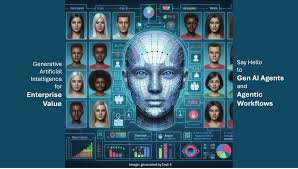
B2B Archives - gettectonic.com - Page 4
Commerce Cloud and Agentic AI

Commerce Cloud and Agentic AI

Recognizing the demand from both B2B and B2C buyers for seamless, consistent commerce experiences across online and offline channels, Salesforce has introduced an AI-powered, unified commerce version of its Commerce Cloud platform. Salesforce, a leader in merging ecommerce and CRM software, has taken a significant step toward unified commerce with this next-generation update to Salesforce Commerce Cloud. This move aligns with the expectations of both B2B buyers and consumers, who increasingly seek integrated and personalized interactions. The company states that Commerce Cloud now “natively connects all aspects of commerce—B2C, direct-to-consumer, and B2B commerce; order management; and payments—with sales, service, and marketing, all on a single platform.” This integration offers businesses a complete view of the customer journey through a shared catalog and user profile. By unifying elements like catalogs, pricing, orders, and marketing segments, companies can deliver personalized interactions, boost customer loyalty, and drive revenue across all touchpoints. Unified Commerce: A $1.5 Trillion Opportunity Salesforce cites research from Adyen, which indicates that adopting unified commerce strategies could present a $1.5 trillion opportunity for retailers globally. In North America, 76 of the top 2000 online retailers use Salesforce’s ecommerce platform. In 2023, these retailers generated over 6 billion in web sales. Salesforce’s B2B clients include major companies such as Siemens, Schneider Electric, GE Renewable Energy, and Chambers Gasket. AI-Powered Commerce Cloud Salesforce emphasizes that AI powers key aspects of its next-generation Commerce Cloud, enabling the platform to autonomously manage tasks like product recommendations and order lookups by leveraging data from digital and in-store interactions, orders, inventory levels, customer reviews, unified profiles, and CRM information. The AI-backed “Agentforce” agents are designed to assist employees in delivering personalized interactions, strengthening customer relationships, and improving profit margins. According to Justin Racine, Principal of Unified Commerce at Perficient, Salesforce’s efforts to unify the commerce experience across its broad range of products align with the needs of both B2B buyers and consumers. He notes that modern buyers expect brands to connect and communicate with them based on their previous behaviors, preferences, and purchases. Unlocking Revenue with Agentforce Michael Affronti, Senior Vice President and General Manager of Commerce Cloud, highlights that this new version embodies unified commerce by providing businesses with a single, integrated platform. The platform consolidates the entire commerce journey, with AI-powered Agentforce agents unlocking new revenue streams and delivering personalized experiences across every channel. Furniture designer and manufacturer MillerKnoll has already benefited from the unified platform. Frank DeMaria, Vice President of Digital Engineering & Platforms, mentions that the integration of sales, service, marketing, and other functions has helped the company offer personalized experiences and improve online sales and customer satisfaction across its portfolio of brands, including HermanMiller. Key Features of the New Commerce Cloud Racine adds that Salesforce’s new release unifies its product suite under a cohesive platform, providing marketers and business users with a comprehensive 360-degree view of the customer. This enables brands to build experiences and ordering workflows that are predictive rather than reactive. The integration of Agentforce represents a breakthrough, blending AI with brand interactions to unlock potential gains for merchandisers and buyers, and Racine is excited to see how these technologies enhance revenue and customer loyalty. Like Related Posts Who is Salesforce? Who is Salesforce? Here is their story in their own words. From our inception, we’ve proudly embraced the identity of Read more Salesforce Marketing Cloud Transactional Emails Salesforce Marketing Cloud Transactional Emails are immediate, automated, non-promotional messages crucial to business operations and customer satisfaction, such as order Read more Salesforce Unites Einstein Analytics with Financial CRM Salesforce has unveiled a comprehensive analytics solution tailored for wealth managers, home office professionals, and retail bankers, merging its Financial Read more AI-Driven Propensity Scores AI plays a crucial role in propensity score estimation as it can discern underlying patterns between treatments and confounding variables Read more
Read More
Salesforce and the AI Revolution

Salesforce and the AI Revolution

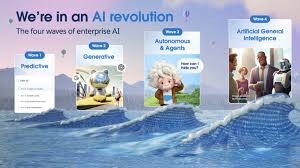
In the early 2000s, Salesforce made waves in the tech world with its bold “No Software” marketing campaign, symbolized by the iconic image of the word “software” crossed out in a red circle. While it was a bit misleading—Salesforce still delivered software, just in the cloud—the campaign invited people to rethink software delivery. This marked the dawn of the cloud era, and businesses were ready for a change. Then, enter Salesforce and the AI Revolution. Today, we’re witnessing a similar shift with AI. The word “SaaS” is the latest to be crossed out in red, as AI-native applications, where AI is the core rather than an add-on, promise to disrupt service delivery at an unprecedented speed—far faster than cloud displaced on-premise software. Even Bessemer Venture Partners (BVP), a leader in identifying emerging AI trends, admits to being caught off guard by the rapid rise of AI. In its State of the Cloud 2024 report, which aptly declares “The Legacy Cloud is dead—long live AI Cloud!”, BVP highlights how even the most optimistic predictions couldn’t fully capture the pace and scale of AI’s impact. The AI Revolution: Opportunities and Disruption The AI market is evolving at breakneck speed, and entrepreneurs are scrambling to stake their claim in this quickly shifting landscape. In the early cloud era, companies like Box, Docusign, HubSpot, and Shopify found success by targeting specific business use cases with subscription-based, cloud-powered solutions. Similarly, today’s AI opportunity lies in industries where manual, repetitive tasks are still prevalent. Major AI players like OpenAI, Anthropic, and Mistral are investing billions in building large-scale language models (LLMs), but there’s a gap in the market for entrepreneurs to focus on verticals where human labor is still largely manual—such as legal, accounting, and outsourcing services. Traditionally, investors have shied away from these industries due to their reliance on manual labor, high costs, and low profit margins. But AI changes the game. Tasks once done manually can now be automated, transforming labor-intensive processes into scalable, high-margin operations. Services businesses that were once unattractive to investors will now attract attention as AI boosts profitability and efficiency. The Shift to AI-Native Applications The impact of AI-native applications will go beyond improving revenue models; they will fundamentally change how we interact with software. In the current SaaS model, users spend hours in applications, manually entering data and querying systems for answers. In contrast, AI-native B2B applications will solve problems end-to-end without requiring human input for every step. Software will work for users in the background, allowing them to focus on building relationships and making strategic decisions. However, humans won’t be removed from the equation. AI trained on real human intelligence in specific verticals will perform better than purely machine-based intelligence. The combination of human expertise and AI-native applications will drive significant, tangible business results. Avoid the “X of AI” Hype With excitement around AI reaching fever pitch, many startups are branding themselves as the “X of AI”—for instance, the “Salesforce of AI.” These claims are often surface-level, wrapping an AI solution around an existing LLM without delivering true innovation. To identify genuine AI-native solutions, look for these key characteristics: Spotting the Next AI Success Stories The AI space is noisy and crowded, and as more AI-native startups emerge, it will become even harder to separate the winners from the hype. The true innovators will be those who bring untapped data into the digital fold and streamline workflows that have historically been manual. To succeed, founders need deep knowledge of their vertical and a clear understanding of how to implement AI for real-world results. Above all, they must have the vision and drive to realize the full potential of AI-native applications, transforming industries and redefining service delivery. Like Related Posts Who is Salesforce? Who is Salesforce? Here is their story in their own words. From our inception, we’ve proudly embraced the identity of Read more Salesforce Marketing Cloud Transactional Emails Salesforce Marketing Cloud Transactional Emails are immediate, automated, non-promotional messages crucial to business operations and customer satisfaction, such as order Read more Salesforce Unites Einstein Analytics with Financial CRM Salesforce has unveiled a comprehensive analytics solution tailored for wealth managers, home office professionals, and retail bankers, merging its Financial Read more AI-Driven Propensity Scores AI plays a crucial role in propensity score estimation as it can discern underlying patterns between treatments and confounding variables Read more

Read More
Oracle Advertising Sundown

Oracle Advertising Sundown

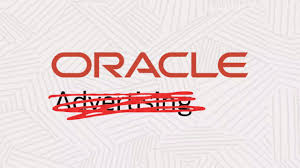
Oracle Shifts Focus to B2B CX, Introduces New Fusion Cloud Features Despite winding down its online advertising products, Oracle is doubling down on its investment in customer experience (CX) technology, particularly in enabling B2B buying and supporting subscription and consumption models. During the Oracle CloudWorld conference on Wednesday, the company unveiled new capabilities for its Fusion Cloud Customer Experience and Unity Customer Data Platform. These enhancements empower Oracle CX users to analyze customer profiles to assemble B2B buying teams, leverage generative AI tools like native analytics, and utilize industry-specific accelerators to speed up the adoption of customer data tools. Key features include the ability to create self-service sites for individual accounts, enabling customers to review and summarize contracts using generative AI, receive quotes, and renew subscriptions. Other features enhance “assisted buying experiences,” blending self-service and human interaction, while tools like account onboarding and AI-powered email drafting simplify full-service sales processes. Subscription models, though still in their early stages for B2B, offer a streamlined alternative to traditional procurement processes. As Liz Miller, an analyst at Constellation Research, noted, subscription-based buying is easier and quicker, avoiding the lengthy procurement cycles many B2B buyers are familiar with. “The pain of traditional B2B buying is still fresh in everyone’s mind,” she said. Oracle Advertising Shuts Down Oracle’s advertising product support will end on September 30, as confirmed by CEO Safra Catz during the company’s June earnings call. The Oracle Advertising Data Management Platform (DMP), built from its BlueKai acquisition, is being retired, following in the footsteps of Salesforce, which discontinued its Audience Studio in 2021. Despite Oracle winding down its ad platform, this move shouldn’t be seen as a shift away from customer experience. Oracle founder Larry Ellison remains deeply involved in shaping the company’s CX strategy, with a focus on marketing tools and Apex low-code platforms, said Rob Pinkerton, Oracle’s senior vice president. Oracle’s modernized CX suite, built on the Fusion Cloud platform, has evolved significantly in recent years, though questions remain about whether it’s too late to regain market share. “Oracle as a CX platform has fallen off the radar for many buyers,” said Miller, adding that customers are no longer debating between Oracle, Microsoft, and Salesforce in the CX space. New Industry-Specific Tools for CX Oracle has also expanded its CX platform with industry-specific tools designed to accelerate the adoption of its customer data platform (CDP) across sectors such as high tech, manufacturing, professional services, telecommunications, utilities, financial services, travel, and retail. According to Rebecca Wettemann, CEO of research firm Valoir, Oracle’s Fusion platform has matured significantly and now supports the complexity of modern customer needs. Wettemann highlighted how common components like customer interaction summaries can be adapted for multiple industries, delivering faster results than traditional applications. Oracle’s Clinical Digital Assistant is one such example of this approach, illustrating the platform’s versatility and AI-driven enhancements. With these developments, Oracle continues to refine its CX offerings to better meet the unique demands of B2B customers, providing tools that streamline operations and enhance customer experiences across various industries. Like Related Posts Who is Salesforce? Who is Salesforce? Here is their story in their own words. From our inception, we’ve proudly embraced the identity of Read more Salesforce Marketing Cloud Transactional Emails Salesforce Marketing Cloud Transactional Emails are immediate, automated, non-promotional messages crucial to business operations and customer satisfaction, such as order Read more Salesforce Unites Einstein Analytics with Financial CRM Salesforce has unveiled a comprehensive analytics solution tailored for wealth managers, home office professionals, and retail bankers, merging its Financial Read more AI-Driven Propensity Scores AI plays a crucial role in propensity score estimation as it can discern underlying patterns between treatments and confounding variables Read more
Read More
Next Gen Commerce Cloud

Next Gen Commerce Cloud

Salesforce has launched the next generation of Commerce Cloud, delivering a unified platform that connects B2C, DTC, and B2B commerce, along with Order Management, Payments, and more, to drive seamless customer experiences and revenue growth. With these innovations, businesses can scale across digital and physical channels while leveraging trusted AI and enterprise-wide data for smarter operations. Next Gen Commerce Cloud. Key features include Autonomous Agentforce Agents, which enhance commerce for merchants, buyers, and shoppers by automating tasks such as product recommendations and order tracking. Companies like MillerKnoll have seen success by using Commerce Cloud’s innovations to scale their workforce and drive revenue across multiple channels. New Agentforce Agents for Commerce — Merchant, Buyer, and Personal Shopper — autonomously manage tasks and improve the customer journey. They handle tasks without human intervention, such as product recommendations or order lookups, drawing insights from rich data sources like customer interactions, inventory, orders, and reviews. By tapping into unified data, these agents augment employees, offering tailored experiences and increasing efficiency, while strictly adhering to privacy and security standards. Salesforce’s Commerce Cloud now natively integrates every part of the commerce journey, helping businesses break down data silos and offer consistent, personalized interactions. As Michael Affronti, SVP and GM of Commerce Cloud, highlights: “Unified commerce is the future, breaking down silos to deliver seamless experiences across all channels.” Key new features and functionalities include: With these advancements, Commerce Cloud empowers businesses to create seamless, AI-powered experiences that drive customer loyalty, operational efficiency, and revenue growth across every touchpoint. Like Related Posts Who is Salesforce? Who is Salesforce? Here is their story in their own words. From our inception, we’ve proudly embraced the identity of Read more Salesforce Marketing Cloud Transactional Emails Salesforce Marketing Cloud Transactional Emails are immediate, automated, non-promotional messages crucial to business operations and customer satisfaction, such as order Read more Salesforce Unites Einstein Analytics with Financial CRM Salesforce has unveiled a comprehensive analytics solution tailored for wealth managers, home office professionals, and retail bankers, merging its Financial Read more AI-Driven Propensity Scores AI plays a crucial role in propensity score estimation as it can discern underlying patterns between treatments and confounding variables Read more
Read More
Data Governance Frameworks

Data Governance Frameworks

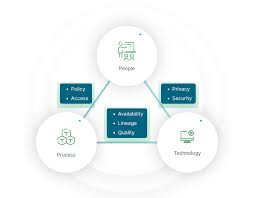
Examples of Data Governance Frameworks Data governance is not a one-size-fits-all approach. Organizations must carefully choose a framework that aligns with their unique goals, structure, and culture. Data is one of an organization’s most valuable assets, and proper governance is key to unlocking its potential. Without a well-designed framework, companies risk poor data quality, privacy breaches, regulatory noncompliance, and missed insights. A data governance framework provides a structured way to manage data throughout its lifecycle, including policies, processes, and standards to ensure data is accurate, accessible, and secure. By putting clear guidelines in place, organizations can increase trust in their data and improve decision-making. Key Pillars of a Data Governance Frameworks A robust data governance framework typically rests on four key pillars: 1. Center-Out Model The center-out model places a centralized team, such as a data governance council, at the core of the governance process. This group establishes policies and oversees data management across the organization, balancing consistency with flexibility for different departments. The Data Governance Institute’s framework is an example of this model. It focuses on creating a Data Governance Office responsible for managing key governance functions such as setting data policies, assigning data stewards, and monitoring compliance. The framework provides a clear structure while allowing business units some leeway in adapting governance practices to their needs. PwC’s model also adopts a center-out approach, with an emphasis on using data governance to monetize data assets. It highlights the importance of maintaining consistency while minimizing the risk of data silos. 2. Top-Down Model In the top-down model, data governance is driven by executive leadership, ensuring alignment with strategic goals. This model provides authority for enforcing governance standards but may face challenges if business units feel disconnected from the central governance team. McKinsey’s framework exemplifies this approach, focusing on integrating data governance with broader business transformation efforts. Executive leadership plays a key role in ensuring that governance initiatives receive the necessary attention and resources. 3. Hybrid Model The hybrid model combines centralized governance with flexibility for individual business units. It establishes an enterprise-wide framework while allowing departments to adapt governance practices to their specific needs. The Eckerson Group’s Modern Data Governance Framework represents a hybrid approach. It emphasizes the importance of people and culture, alongside technology and processes, and encourages organizations to create a roadmap for governance that evolves as needs change. This model provides a balance between centralized control and decentralized flexibility. 4. Bottom-Up Model In the bottom-up model, data governance is driven by subject matter experts and data stakeholders across the organization. This approach promotes collaboration and buy-in from the people closest to the data, ensuring that governance policies are practical and effective. The DAMA-DMBOK framework, developed by the Data Management Association, is a prime example. Although flexible, it often starts as a bottom-up initiative, driven by IT departments and data experts who later gain executive support. 5. Silo-In Model The silo-in model allows individual business units or departments to create their own governance practices. While this approach addresses localized data issues, it often leads to inconsistencies and challenges when the organization needs to integrate data across the enterprise. Though not widely recommended, the silo-in approach may emerge when specific business units take the initiative to establish governance due to regulatory requirements or data management needs within their domains. However, as organizations mature, they often transition to more holistic frameworks to support cross-functional collaboration and data integration. Choosing the Right Framework Selecting the right data governance framework involves evaluating the organization’s needs, structure, and culture. Whether an organization adopts a center-out, top-down, hybrid, bottom-up, or silo-in approach, success depends on involving key stakeholders, securing executive buy-in, and committing to continuous improvement. By treating data as a critical asset and implementing a governance framework that aligns with its business strategy, an organization can ensure that its data management practices support growth, innovation, and regulatory compliance. Like Related Posts Who is Salesforce? Who is Salesforce? Here is their story in their own words. From our inception, we’ve proudly embraced the identity of Read more Salesforce Marketing Cloud Transactional Emails Salesforce Marketing Cloud Transactional Emails are immediate, automated, non-promotional messages crucial to business operations and customer satisfaction, such as order Read more Salesforce Unites Einstein Analytics with Financial CRM Salesforce has unveiled a comprehensive analytics solution tailored for wealth managers, home office professionals, and retail bankers, merging its Financial Read more AI-Driven Propensity Scores AI plays a crucial role in propensity score estimation as it can discern underlying patterns between treatments and confounding variables Read more
Read More
Einstein Features Cheat Sheet

Einstein Features Cheat Sheet

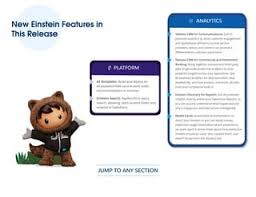
Salesforce has published a great resource for Einstein users. The Einstein Cheat Sheet puts all the Einstein features and resources at your fingertips. Download here. Einstein Discover the power of the #1 AI for CRM with Einstein. Built into the Salesforce Platform, Einstein uses powerful machine learning and large language models to personalize customer interactions and make employees more productive. With Einstein powering the Customer 360, teams can accelerate time to value, predict outcomes, and automatically generate contentwithin the flow of work. Einstein is for everyone, empowering business users, Salesforce Admins and Developers to embed AI into every experience with low code. Like Related Posts Who is Salesforce? Who is Salesforce? Here is their story in their own words. From our inception, we’ve proudly embraced the identity of Read more Salesforce Marketing Cloud Transactional Emails Salesforce Marketing Cloud Transactional Emails are immediate, automated, non-promotional messages crucial to business operations and customer satisfaction, such as order Read more Salesforce Unites Einstein Analytics with Financial CRM Salesforce has unveiled a comprehensive analytics solution tailored for wealth managers, home office professionals, and retail bankers, merging its Financial Read more AI-Driven Propensity Scores AI plays a crucial role in propensity score estimation as it can discern underlying patterns between treatments and confounding variables Read more

Read More
Salesforce to Acquire PredictSpring

Salesforce to Acquire PredictSpring

Salesforce to Acquire PredictSpring, Enhancing Omnichannel Capabilities Last month, Salesforce finalized an agreement to acquire PredictSpring, a leading provider of point-of-sale (POS) software. PredictSpring, known for its omnichannel commerce solutions, offers a suite of mobile POS systems along with clienteling, inventory management, and order management tools tailored for the retail sector. Insights from Industry Analysts In a recent episode of CX Today’s BIG News Update, key analysts shared their perspectives on the acquisition, highlighting three major points. Filling a Critical Gap Rebecca Wetteman, CEO & Principal Analyst at Valoir, noted that while Salesforce has effectively assisted many B2B clients, such as Fiserv and Peloton, in transitioning to B2C strategies, one crucial component was missing: order management. PredictSpring’s solutions address this gap, enhancing Salesforce’s data strategy and providing a more comprehensive customer view. Wetteman stated, “This addition is a significant move for Salesforce, strengthening their position beyond B2B and bridging the B2B to B2C divide.” Advancing Omnichannel Retail Simon Harrison, Founder & CEO at Actionary, emphasized that the acquisition represents a major step forward in delivering effective omnichannel solutions. PredictSpring’s technology promises to solve challenges associated with integrating in-store and digital experiences, enhancing overall customer interactions. Harrison praised the investment, stating, “This is a smart move, addressing real-world issues and increasing value for both staff and customers in today’s dynamic retail environment.” Expanding Market Reach Martin Schnieder, VP and Principal Analyst at Constellation Research, pointed out that acquiring PredictSpring aligns with Salesforce’s strategy to expand its total addressable market (TAM). He highlighted retail as a sector with unique challenges and opportunities, where Salesforce’s Data Cloud and platform can create impactful vertical-specific solutions. Schnieder noted, “Retail offers a different model with constrained margins, and Salesforce can leverage its platform to provide substantial value.” Michael Fauscette, Founder, CEO, and Chief Analyst at Arion Research, observed that Salesforce is strategically acquiring startups to fill gaps in its vertical offerings. He remarked, “Salesforce’s approach involves identifying startups that address specific needs and integrating them into their ecosystem. This strategy has proven effective and allows Salesforce to go to market directly with these partners, a practice not always seen among enterprise vendors.” Conclusion Salesforce’s acquisition of PredictSpring is a strategic move to enhance its omnichannel capabilities and address key gaps in its offerings. By integrating PredictSpring’s advanced POS solutions, Salesforce aims to strengthen its position in the retail sector and continue its growth trajectory in both B2B and B2C markets. Like Related Posts Who is Salesforce? Who is Salesforce? Here is their story in their own words. From our inception, we’ve proudly embraced the identity of Read more Salesforce Marketing Cloud Transactional Emails Salesforce Marketing Cloud Transactional Emails are immediate, automated, non-promotional messages crucial to business operations and customer satisfaction, such as order Read more Salesforce Unites Einstein Analytics with Financial CRM Salesforce has unveiled a comprehensive analytics solution tailored for wealth managers, home office professionals, and retail bankers, merging its Financial Read more AI-Driven Propensity Scores AI plays a crucial role in propensity score estimation as it can discern underlying patterns between treatments and confounding variables Read more
Read More
Everyone Is Implementing AI

Everyone Is Implementing AI

AI is undoubtedly a generational change in software, with its full trajectory still unpredictable. There is a perceived divide between the “Haves” and “Have Nots.” Companies like OpenAI, Microsoft, and Databricks are seen as understanding AI’s potential, with Nvidia providing the necessary hardware support. Many hot start-ups are Gen AI native, continuing to attract unicorn valuations. Meanwhile, several SaaS leaders appear to be lagging behind. We say, Everyone Is Implementing AI. Marc Benioff stated in their latest quarterly call: “Now, we’re working with thousands of customers to power generative AI use cases with our Einstein Copilot, our prompt builder, our Einstein Studio, all of which went live in the first quarter. And we’ve closed hundreds of copilot deals since this incredible technology has gone GA. And in just the last few months, we’re seeing Einstein Copilot develop higher levels of capability. We are absolutely delighted and cannot be more excited about the success that we’re seeing with our customers with this great new capability.” Everyone Is Implementing AI However, it remains unclear whether simply adding AI to classic B2B SaaS products accelerates growth. Despite significant investments in AI, companies like Salesforce, Asana, and ZoomInfo are growing at less than 10% annually. The main point is that while “AI Washing” might impress some investors, AI must significantly accelerate revenue growth to achieve more than market parity. It is essential to see how AI can add real value and integrate it effectively. But AI alone may not be a growth accelerant. Everyone Is Implementing AI Recent data from Emergence Capital shows that 60% of VC-backed SaaS companies have already released GenAI features, with another 24% planning to do so. Achieving “AI Parity” is crucial, but simply adding GenAI features may not be disruptive in the B2B space. Companies must go further to stand out, despite the challenges. Like Related Posts Who is Salesforce? Who is Salesforce? Here is their story in their own words. From our inception, we’ve proudly embraced the identity of Read more Salesforce Marketing Cloud Transactional Emails Salesforce Marketing Cloud Transactional Emails are immediate, automated, non-promotional messages crucial to business operations and customer satisfaction, such as order Read more Salesforce Unites Einstein Analytics with Financial CRM Salesforce has unveiled a comprehensive analytics solution tailored for wealth managers, home office professionals, and retail bankers, merging its Financial Read more AI-Driven Propensity Scores AI plays a crucial role in propensity score estimation as it can discern underlying patterns between treatments and confounding variables Read more

Read More
Autonomous AI Service Agents

Autonomous AI Service Agents

Salesforce Set to Launch Autonomous AI Service Agents. Considering Tectonic only first wrote about Agentic AI in late June, its like Christmas in July! Salesforce is gearing up to introduce a new generation of customer service chatbots that leverage advanced AI tools to autonomously navigate through various actions and workflows. These bots, termed “autonomous AI agents,” are currently in pilot testing and are expected to be released later this year. Autonomous AI Service Agents Named Einstein Service Agent, these autonomous AI bots aim to utilize generative AI to understand customer intent, trigger workflows, and initiate actions within a user’s Salesforce environment, according to Ryan Nichols, Service Cloud’s chief product officer. By integrating natural language processing, predictive analytics, and generative AI, Einstein Service Agents will identify scenarios and resolve customer inquiries more efficiently. Traditional bots require programming with rules-based logic to handle specific customer service tasks, such as processing returns, issuing refunds, changing passwords, and renewing subscriptions. In contrast, the new autonomous bots, enhanced by generative AI, can better comprehend customer issues (e.g., interpreting “send back” as “return”) and summarize the steps to resolve them. Einstein Service Agent will operate across platforms like WhatsApp, Apple Messages for Business, Facebook Messenger, and SMS text, and will also process text, images, video, and audio that customers provide. Despite the promise of these new bots, their effectiveness is crucial, emphasized Liz Miller, an analyst at Constellation Research. If these bots fail to perform as expected, they risk wasting even more customer time than current technologies and damaging customer relationships. Miller also noted that successful implementation of autonomous AI agents requires human oversight for instances when the bots encounter confusion or errors. Customers, whether in B2C or B2B contexts, are often frustrated with the limitations of rules-based bots and prefer direct human interaction. It is annoying enough to be on the telephone repeating “live person” over and over again. It would be trafic to have to do it online, too. “It’s essential that these bots can handle complex questions,” Miller stated. “Advancements like this are critical, as they can prevent the bot from malfunctioning when faced with unprogrammed scenarios. However, with significant technological advancements like GenAI, it’s important to remember that human language and thought processes are intricate and challenging to map.” Nichols highlighted that the forthcoming Einstein Service Agent will be simpler to set up, as it reduces the need to manually program thousands of potential customer requests into a conversational decision tree. This new technology, which can understand multiple word permutations behind a service request, could potentially lower the need for extensive developer and data scientist involvement for Salesforce users. The pricing details for the autonomous Einstein Service Agent will be announced at its release. Like Related Posts Who is Salesforce? Who is Salesforce? Here is their story in their own words. From our inception, we’ve proudly embraced the identity of Read more Salesforce Marketing Cloud Transactional Emails Salesforce Marketing Cloud Transactional Emails are immediate, automated, non-promotional messages crucial to business operations and customer satisfaction, such as order Read more Salesforce Unites Einstein Analytics with Financial CRM Salesforce has unveiled a comprehensive analytics solution tailored for wealth managers, home office professionals, and retail bankers, merging its Financial Read more AI-Driven Propensity Scores AI plays a crucial role in propensity score estimation as it can discern underlying patterns between treatments and confounding variables Read more

Read More
ABM and ABE

Salesforce to ABM’s Rescue

ABM Doesn’t Work Without a Salesforce Engine Built for It In B2B, we obsess over alignment—marketing to sales, sales to CS, GTM to product. But there’s one critical pairing most teams ignore until it’s too late: Account-based marketing and Salesforce architecture. They’re not separate. They’re a single system. And when one fails, the other collapses. ABM Suffocates Without Clean Architecture ABM’s power comes from its full-funnel precision:✔ Smart targeting (who to engage)✔ Personalized motion (how to engage)✔ Closed-loop insights (what’s working) But here’s the reality: None of this works if your Salesforce instance is held together by duct tape. We’ve audited 49 B2B companies’ Salesforce setups. Only a handful were truly functional. The rest? You can’t run data-driven ABM on a broken system. If Salesforce isn’t your single source of truth, your campaigns are just guessing. Why We Built ABM-First Salesforce Architecture At Tectonic, ABM is our core. But we kept hitting the same wall:🚀 Great strategy → 💥 Poor execution (because the tech stack couldn’t support it). So we fixed it. We teamed up with top Salesforce architects to answer:What would a Salesforce foundation look like if it were designed exclusively for ABM? Not a sales-led or marketing-hacked system. Not a Frankenstein monster of legacy customizations. But a clean, scalable architecture that:✔ Unifies data across prospecting → deal velocity → expansion✔ Automates reporting (no more manual spreadsheets)✔ Adapts to GTM shifts (not held hostage by past decisions) This Is the Future of GTM Infrastructure You can’t afford:❌ Systems that break when a key employee leaves❌ “Customizations” that are really technical debt❌ ABM programs that stall because the data is unreliable So here’s the truth: ABM success starts with Salesforce health.You don’t need a better playbook—you need a better system. That’s what we build at Tectonic. No duct tape. No blind spots. Just ABM and Salesforce, engineered as one. Let’s fix the foundation first. Get in touch. Like Related Posts Who is Salesforce? Who is Salesforce? Here is their story in their own words. From our inception, we’ve proudly embraced the identity of Read more Salesforce Marketing Cloud Transactional Emails Salesforce Marketing Cloud Transactional Emails are immediate, automated, non-promotional messages crucial to business operations and customer satisfaction, such as order Read more Salesforce Unites Einstein Analytics with Financial CRM Salesforce has unveiled a comprehensive analytics solution tailored for wealth managers, home office professionals, and retail bankers, merging its Financial Read more AI-Driven Propensity Scores AI plays a crucial role in propensity score estimation as it can discern underlying patterns between treatments and confounding variables Read more

Read More
Einstein Code Generation and Amazon SageMaker

Einstein Code Generation and Amazon SageMaker

Salesforce and the Evolution of AI-Driven CRM Solutions Salesforce, Inc., headquartered in San Francisco, California, is a leading American cloud-based software company specializing in customer relationship management (CRM) software and applications. Their offerings include sales, customer service, marketing automation, e-commerce, analytics, and application development. Salesforce is at the forefront of integrating artificial general intelligence (AGI) into its services, enhancing its flagship SaaS CRM platform with predictive and generative AI capabilities and advanced automation features. Einstein Code Generation and Amazon SageMaker. Salesforce Einstein: Pioneering AI in Business Applications Salesforce Einstein represents a suite of AI technologies embedded within Salesforce’s Customer Success Platform, designed to enhance productivity and client engagement. With over 60 features available across different pricing tiers, Einstein’s capabilities are categorized into machine learning (ML), natural language processing (NLP), computer vision, and automatic speech recognition. These tools empower businesses to deliver personalized and predictive customer experiences across various functions, such as sales and customer service. Key components include out-of-the-box AI features like sales email generation in Sales Cloud and service replies in Service Cloud, along with tools like Copilot, Prompt, and Model Builder within Einstein 1 Studio for custom AI development. The Salesforce Einstein AI Platform Team: Enhancing AI Capabilities The Salesforce Einstein AI Platform team is responsible for the ongoing development and enhancement of Einstein’s AI applications. They focus on advancing large language models (LLMs) to support a wide range of business applications, aiming to provide cutting-edge NLP capabilities. By partnering with leading technology providers and leveraging open-source communities and cloud services like AWS, the team ensures Salesforce customers have access to the latest AI technologies. Optimizing LLM Performance with Amazon SageMaker In early 2023, the Einstein team sought a solution to host CodeGen, Salesforce’s in-house open-source LLM for code understanding and generation. CodeGen enables translation from natural language to programming languages like Python and is particularly tuned for the Apex programming language, integral to Salesforce’s CRM functionality. The team required a hosting solution that could handle a high volume of inference requests and multiple concurrent sessions while meeting strict throughput and latency requirements for their EinsteinGPT for Developers tool, which aids in code generation and review. After evaluating various hosting solutions, the team selected Amazon SageMaker for its robust GPU access, scalability, flexibility, and performance optimization features. SageMaker’s specialized deep learning containers (DLCs), including the Large Model Inference (LMI) containers, provided a comprehensive solution for efficient LLM hosting and deployment. Key features included advanced batching strategies, efficient request routing, and access to high-end GPUs, which significantly enhanced the model’s performance. Key Achievements and Learnings Einstein Code Generation and Amazon SageMaker The integration of SageMaker resulted in a dramatic improvement in the performance of the CodeGen model, boosting throughput by over 6,500% and reducing latency significantly. The use of SageMaker’s tools and resources enabled the team to optimize their models, streamline deployment, and effectively manage resource use, setting a benchmark for future projects. Conclusion and Future Directions Salesforce’s experience with SageMaker highlights the critical importance of leveraging advanced tools and strategies in AI model optimization. The successful collaboration underscores the need for continuous innovation and adaptation in AI technologies, ensuring that Salesforce remains at the cutting edge of CRM solutions. For those interested in deploying their LLMs on SageMaker, Salesforce’s experience serves as a valuable case study, demonstrating the platform’s capabilities in enhancing AI performance and scalability. To begin hosting your own LLMs on SageMaker, consider exploring their detailed guides and resources. Like Related Posts Who is Salesforce? Who is Salesforce? Here is their story in their own words. From our inception, we’ve proudly embraced the identity of Read more Salesforce Marketing Cloud Transactional Emails Salesforce Marketing Cloud Transactional Emails are immediate, automated, non-promotional messages crucial to business operations and customer satisfaction, such as order Read more Salesforce Unites Einstein Analytics with Financial CRM Salesforce has unveiled a comprehensive analytics solution tailored for wealth managers, home office professionals, and retail bankers, merging its Financial Read more AI-Driven Propensity Scores AI plays a crucial role in propensity score estimation as it can discern underlying patterns between treatments and confounding variables Read more
Read More
Required Startup Mentality

Required Startup Mentality

Pivoting an established company’s business model is one of the most daunting challenges a CEO can face. When the new CEO of Zilliant took the company’s helm in 2022, the mandate was to accelerate growth and increase market share. It quickly became evident that success lay not in product updates or tech investments but in rethinking the organizational mindset. Required Startup Mentality. With a master’s degree in organizational behavior studies from the University of Illinois and extensive experience in organizational transformations, the CEO understood the process typically follows one of two paths: changing an existing culture or building one from scratch. High-profile examples provide inspiration for both approaches. Satya Nadella, upon becoming CEO of Microsoft in 2014, transformed the company from a “know-it-all” to a “learn-it-all” culture, fostering a growth mindset. Conversely, Marc Benioff of Salesforce instilled the “ohana” culture of family spirit, trust, and equality from the company’s inception. The CEO, having been immersed in Salesforce culture for over a decade, learned the importance of a robust support system for employees and customers. Upon joining Zilliant, the CEO brought lessons from Salesforce to the new role. Zilliant, a company with 23 years of history and a long-standing CEO, Greg Peters, had thrived in price optimization. However, to evolve further, the company needed to adopt a startup mentality. This approach included scrutinizing every budget line item, incorporating a new marketing playbook, and, crucially, leveraging existing talent in new ways. Identifying influencers within the company and placing them in positions of broader influence proved to be an effective strategy. Required Startup Mentality of leaders. This group of long-time employees, respected and experienced, became the “change champions.” Their elevated profile across the organization facilitated listening and acting on peer feedback, making the traditionally challenging task of cultural transformation more manageable. Initially, there was a struggle to clearly articulate the future vision. The transitional period was marked by confusion rather than resistance. This experience underscored the importance of vision and constant communication during transformation. The CEO discovered that merely communicating new company values wasn’t sufficient. Creating a unified vision with full conviction from the executive team was essential. Significant time was spent defining this vision in granular detail, learning from the successes and failures of other companies. Once the leadership team was aligned, this conviction was cascaded through the ranks. Instead of dictating change, employees were invited into the process through feedback sessions and pilot programs, giving them a stake in redefining cultural norms. Celebrating small wins, even if they’re a “loss,” was emphasized to support learning from missteps. Modeling desired behaviors, systematically updating policies, incentives, and processes reinforced the new mindsets and actions. It was an arduous journey, but staying intentional and bringing people along was crucial for evolving into the envisioned culture. Through the transformation, one principle remained constant: customers must see Zilliant as a partner rather than a vendor. This required individuals in every department—marketing, sales, customer success, product, and engineering—to proactively address and solve customer problems. Transitioning to a new business model and rethinking organizational mindset is a long-term effort requiring vision and commitment from all levels. The payoff, however, can be immense. Already, Zilliant has delivered two consecutive quarters of 60%-plus growth in year-over-year bookings and is positioned for continued record growth through the end of the year. Like Related Posts Who is Salesforce? Who is Salesforce? Here is their story in their own words. From our inception, we’ve proudly embraced the identity of Read more Salesforce Marketing Cloud Transactional Emails Salesforce Marketing Cloud Transactional Emails are immediate, automated, non-promotional messages crucial to business operations and customer satisfaction, such as order Read more Salesforce Unites Einstein Analytics with Financial CRM Salesforce has unveiled a comprehensive analytics solution tailored for wealth managers, home office professionals, and retail bankers, merging its Financial Read more AI-Driven Propensity Scores AI plays a crucial role in propensity score estimation as it can discern underlying patterns between treatments and confounding variables Read more
Read More
gettectonic.com