B2B Archives - gettectonic.com - Page 7
Salesforce for Manufacturing, Automotive, and Energy

Improve Manufacturing Sales by Improving Partner Engagement

Did you know that half of all B2B revenue is generated through channel partner sales? A recent 2022 survey revealed that 80% of B2B executives find their partner programs ineffective, potentially slowing or even blocking product sales. The obstacles to improvements with manufacturing partners include siloed systems and data, fragmented processes, inconsistent programs, and outdated communication channels. You can improve manufacturing partner engagement. Learn more. To overcome these challenges and enhance manufacturing partner relationships. For increased sales, consider focusing on three key areas: By prioritizing transparency, investing in technology, and streamlining processes, manufacturers can strengthen partner relationships, leading to increased sales and improved customer satisfaction. Focus on making it easier for partners to do business with you, build trust, and create a unified, shared view of data to achieve mutually beneficial relationships. Is it time to explore how Tectonic and Salesforce can improve your partner engagement? Contact us today. Like1 Related Posts Who is Salesforce? Who is Salesforce? Here is their story in their own words. From our inception, we’ve proudly embraced the identity of Read more Salesforce Marketing Cloud Transactional Emails Salesforce Marketing Cloud Transactional Emails are immediate, automated, non-promotional messages crucial to business operations and customer satisfaction, such as order Read more Salesforce Unites Einstein Analytics with Financial CRM Salesforce has unveiled a comprehensive analytics solution tailored for wealth managers, home office professionals, and retail bankers, merging its Financial Read more AI-Driven Propensity Scores AI plays a crucial role in propensity score estimation as it can discern underlying patterns between treatments and confounding variables Read more

Read More
Salesforce Loyalty Management

Salesforce Loyalty Program Explained

Loyalty Management enables you to customize programs that precisely align with the unique needs of your business and customer base. Salesforce, equipped with a flexible platform, aids businesses in reimagining their loyalty strategies. The Salesforce Loyalty Cloud empowers businesses across various industries to effortlessly build intelligent loyalty programs without the need for coding. These programs incentivize customers to engage more with the brand, fostering repeat business. Salesforce Loyalty Program Explained. Unleash the full potential of your Customer Loyalty platform through impactful features: The centralized program management feature allows you to configure loyalty programs tailored to your needs, activate segments across channels quickly, and iterate based on results. Improved customer engagement uses behavior analysis to optimize experiences across web and mobile, tailoring them to individual users. Cross-industry partnerships provide customers with more options, and fast time-to-market for referral promotions is facilitated through a guided setup wizard. Identifying brand advocates and implementing AI-powered referral programs with predictive dashboards enhance program impact. Personalizing promotions based on member data and utilizing predictive performance insights maximize engagement and ROI. A single customer view connects loyalty across the customer experience, triggering marketing journeys and providing insights for enhanced interactions. Elevate your loyalty initiatives, engage customers effectively, and drive business growth with the robust capabilities of the Customer Loyalty platform and the expert guidance from Tectonic. Like1 Related Posts Who is Salesforce? Who is Salesforce? Here is their story in their own words. From our inception, we’ve proudly embraced the identity of Read more Salesforce Marketing Cloud Transactional Emails Salesforce Marketing Cloud Transactional Emails are immediate, automated, non-promotional messages crucial to business operations and customer satisfaction, such as order Read more Salesforce Unites Einstein Analytics with Financial CRM Salesforce has unveiled a comprehensive analytics solution tailored for wealth managers, home office professionals, and retail bankers, merging its Financial Read more AI-Driven Propensity Scores AI plays a crucial role in propensity score estimation as it can discern underlying patterns between treatments and confounding variables Read more

Read More

Can Marketing Cloud Be Used For B2B?

Elevate Your B2B Marketing with Salesforce Marketing CloudB2B marketing is a dynamic and intricate field, but with the right tools and strategies, your efforts can yield exceptional results. Salesforce Marketing Cloud stands out as one of the most powerful solutions for B2B marketers. As a trusted Salesforce consulting company and ISV partner, Tectonic empowers businesses to harness the unmatched efficiency and capabilities of this CRM platform to dominate their market. Key Benefits of Salesforce Marketing Cloud for B2B Marketing Salesforce Marketing Cloud offers a wealth of advantages to elevate your B2B marketing efforts: Optimizing Salesforce Marketing Cloud for B2B Success To fully leverage Salesforce Marketing Cloud, consider these strategies: Key Features of Salesforce Marketing Cloud for B2B Marketing Automation Salesforce Marketing Cloud is packed with features designed to streamline and enhance your B2B marketing efforts: Conclusion Salesforce Marketing Cloud is a game-changing tool for B2B marketers, offering a robust suite of automation, personalization, analytics, and collaboration features. By leveraging its capabilities, businesses can streamline their marketing efforts, deliver exceptional customer experiences, and achieve measurable success. With Salesforce Marketing Cloud, you can take your B2B marketing strategies to new heights and drive sustainable growth. Ready to transform your B2B marketing? Partner with Tectonic, a leading Salesforce consulting company, to unlock the full potential of Salesforce Marketing Cloud and elevate your business to the next level. Like Related Posts Who is Salesforce? Who is Salesforce? Here is their story in their own words. From our inception, we’ve proudly embraced the identity of Read more Salesforce Marketing Cloud Transactional Emails Salesforce Marketing Cloud Transactional Emails are immediate, automated, non-promotional messages crucial to business operations and customer satisfaction, such as order Read more Salesforce Unites Einstein Analytics with Financial CRM Salesforce has unveiled a comprehensive analytics solution tailored for wealth managers, home office professionals, and retail bankers, merging its Financial Read more AI-Driven Propensity Scores AI plays a crucial role in propensity score estimation as it can discern underlying patterns between treatments and confounding variables Read more

Read More
Salesforce Data Cloud

Key Components of Salesforce Data Cloud

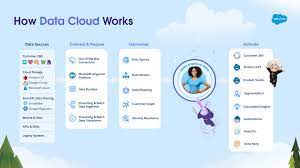
Salesforce Data Cloud organizes and unifies data across Salesforce and other external data sources.  After ingestion, it can drive personalization and engagement. Components of Salesforce Data Cloud to explore. Data Cloud expands Salesforce capabilities by using the best pieces of the developer-friendly Salesforce Platform and adding a highly scalable infrastructure. Data Cloud is an evolution of Customer Data Platform—which was originally designed for marketers but now caters to broader use cases beyond marketing.  The magic of Data Cloud is in creating experiences that wow customers. Key features and components of Salesforce Data Cloud include: Like Related Posts Who is Salesforce? Who is Salesforce? Here is their story in their own words. From our inception, we’ve proudly embraced the identity of Read more Salesforce Marketing Cloud Transactional Emails Salesforce Marketing Cloud Transactional Emails are immediate, automated, non-promotional messages crucial to business operations and customer satisfaction, such as order Read more Salesforce Unites Einstein Analytics with Financial CRM Salesforce has unveiled a comprehensive analytics solution tailored for wealth managers, home office professionals, and retail bankers, merging its Financial Read more AI-Driven Propensity Scores AI plays a crucial role in propensity score estimation as it can discern underlying patterns between treatments and confounding variables Read more

Read More
Improved Quoting Process

Improved Quoting Process

Is Your Quoting Process Suffering from Pricing Errors or Delays? Are pricing errors or inconsistencies slowing down your quoting process and leading to customer dissatisfaction? Is the generation of quotes or proposals hampered by bottlenecks? Are your sales reps finding it challenging to navigate complex pricing structures, discounts, or promotions? Its time for an Improved Quoting Process from Salesforce. For many businesses leveraging Salesforce for sales automation, CPQ (Configure, Price, Quote) software provides solutions to these challenging issues, helping companies scale their pricing and selling strategies more effectively. If your current Salesforce quoting process is fraught with inefficiencies and errors, it may be time to explore Salesforce CPQ software options. Let’s examine the challenges you might be facing and the signs that indicate it’s time to adopt a CPQ solution. What Problem Does Improved Quoting Process Solve? As market demands shift toward self-service, omnichannel support, industry-specific solutions, and intelligent, user-friendly interfaces, businesses need to adapt to stay competitive. This is particularly important in industries such as manufacturing, telecommunications, and software as a service (SaaS). Common hurdles businesses face before implementing Salesforce quoting software include: Who Benefits from Salesforce Quoting Software? Approximately 83% of sales representatives use configure, price, and quote solutions, underscoring their importance. Among Salesforce users, those who benefit most from CPQ software include: Embracing Salesforce CPQ can help streamline your quoting process, improve accuracy, and boost overall efficiency. If these challenges resonate with your current operations, it might be time to consider the benefits of a CPQ solution from Tectonic. Contact us today. Like Related Posts Who is Salesforce? Who is Salesforce? Here is their story in their own words. From our inception, we’ve proudly embraced the identity of Read more Salesforce Marketing Cloud Transactional Emails Salesforce Marketing Cloud Transactional Emails are immediate, automated, non-promotional messages crucial to business operations and customer satisfaction, such as order Read more Salesforce Unites Einstein Analytics with Financial CRM Salesforce has unveiled a comprehensive analytics solution tailored for wealth managers, home office professionals, and retail bankers, merging its Financial Read more AI-Driven Propensity Scores AI plays a crucial role in propensity score estimation as it can discern underlying patterns between treatments and confounding variables Read more

Read More
Revenue Cloud

Revenue Cloud

Salesforce Revenue Cloud serves as an all-encompassing platform meticulously crafted to enhance and simplify the entire revenue management process for businesses. This cloud-based solution provides a centralized system, facilitating effective management of pricing, quoting, and billing operations. The platform, introduced as part of the Salesforce Customer 360 Platform, integrates Configure, Price and Quote (CPQ), Billing, Partner Relationship Management, and B2B Commerce functionalities. Contrary to an out-of-the-box solution, Salesforce Revenue Cloud does not replace enterprise resource planning (ERP) systems but strives to bridge the gap between critical functional departments like sales, partners, operations, and finance. Its introduction at the end of 2020 aimed to assist businesses in better managing revenue streams, enhancing forecasting capabilities, improving efficiencies, and accelerating growth across all sales channels. Salesforce Revenue Cloud, often referred to as CPQ, enables organizations to unify direct sales, partner sales, and eCommerce, package product bundles, handle complex order configurations, produce invoices across multiple channels, collect payments, and manage dunning. The platform’s benefits include streamlined revenue management, improved business agility, real-time access to mobile inventory and data, and the generation of new revenue streams. In addition to these advantages, Salesforce Revenue Cloud offers better insight into customers, maximizes revenue efficiency, builds a superior buyer experience, and reduces missed opportunities by delivering the right product at the right time to the right place. The platform eliminates manual operations, integrates with existing systems and new applications, and expedites the quote-to-cash process. However, it’s essential to consider certain aspects when opting for Salesforce Revenue Cloud, such as its limitations in handling complex billing needs. While Salesforce provides substantial capabilities for recurring revenue and subscription models, it may face challenges with more intricate pricing models, such as dynamic pricing for one-time charges, usage, tiered, subscription, overages, minimum commitments, or others. In conclusion, the collaboration between CRM and marketing departments, fueled by Salesforce Revenue Cloud, propels an increase in sales and enables a comprehensive view of the customer. As businesses demand a 360-degree perspective, the product-specific gap is expected to narrow further, emphasizing the importance of a unified approach across all company departments. Like Related Posts Who is Salesforce? Who is Salesforce? Here is their story in their own words. From our inception, we’ve proudly embraced the identity of Read more Salesforce Marketing Cloud Transactional Emails Salesforce Marketing Cloud Transactional Emails are immediate, automated, non-promotional messages crucial to business operations and customer satisfaction, such as order Read more Salesforce Unites Einstein Analytics with Financial CRM Salesforce has unveiled a comprehensive analytics solution tailored for wealth managers, home office professionals, and retail bankers, merging its Financial Read more AI-Driven Propensity Scores AI plays a crucial role in propensity score estimation as it can discern underlying patterns between treatments and confounding variables Read more
Read More
Salesforce Service Cloud

Salesforce Service Cloud Explained

Service Cloud by Salesforce serves as a customer relationship management (CRM) tool designed to support a business’s customer service team. It facilitates customer-company communication through channels such as email support, live chat, or phone, assisting customer agents in locating and resolving customer issues. Salesforce Service Cloud Details Consider your recent interactions with a business using live chat or creating a support ticket – chances are, they were utilizing a system like Service Cloud. Service Cloud is a powerful customer service platform designed to streamline and enhance customer support processes. Customer service holds the key to uplifting brand value in today’s fast-paced business world. Supplementary Products: Digital Engagement, Service Cloud Einstein, Service Cloud Voice, Customer Lifecycle Analytics, Salesforce Surveys Response Pack. SFDC Service Cloud is built to make the delivery of service easier for your agents. It is one of the most popular customer service solutions devised by Salesforce. The tools of the Service Cloud offer businesses a 360-degree view of their customers and allow them to deliver faster, smarter, and more customized experiences. They can build a connected knowledge base and manage case interactions. And enable live agent chat- all from the comfort of one platform. Depending on the previous activity data of the customers, you can have personalized interactions with them. And also upsell your services or products. Salesforce Clouds Salesforce provides six major types of clouds: Sales Cloud, Marketing Cloud, Commerce Cloud, Service, Experience Cloud, and Analytics Cloud. There are nine other types of clouds in Salesforce for specific applications and industries, including a new Vaccine Cloud for managing COVID tests and vaccines. The ever-evolving Salesforce ecosystem is growing to meet all your business needs. Tectonic is please to announce Salesforce Service Cloud Implementation Solutions. Like1 Related Posts Who is Salesforce? Who is Salesforce? Here is their story in their own words. From our inception, we’ve proudly embraced the identity of Read more Salesforce Marketing Cloud Transactional Emails Salesforce Marketing Cloud Transactional Emails are immediate, automated, non-promotional messages crucial to business operations and customer satisfaction, such as order Read more Salesforce Unites Einstein Analytics with Financial CRM Salesforce has unveiled a comprehensive analytics solution tailored for wealth managers, home office professionals, and retail bankers, merging its Financial Read more AI-Driven Propensity Scores AI plays a crucial role in propensity score estimation as it can discern underlying patterns between treatments and confounding variables Read more
Read More
Order Management Enhancements Commerce Cloud

Order Management Enhancements Commerce Cloud

Salesforce Order Management Enhancements stands out for its scalability, catering to both small startups and large enterprises by offering customization to meet specific needs. Its adaptability facilitates seamless integration with other systems, presenting a comprehensive solution for e-commerce requirements. Explore the latest features in Salesforce Order Management and Lightning B2B Commerce, including process exception management, return merchandise authorizations, and various enhancements. Salesforce Order Management now provides tools to identify and address process exceptions during order processing interruptions. The addition of a new return order data model aids in managing return merchandise authorizations. Further updates include improved order summary flows, customization of payment methods, and the creation of order summaries with custom numbers and statuses. Enhancements to Lightning B2B Commerce introduce new components for deliveries and order summaries, improved searchability, an integration dashboard, and the Price Book Workspace. The integration dashboard consolidates management of integrations, providing a centralized overview. Order Management serves as the central hub for handling the entire order lifecycle, covering order capture, fulfillment, shipping, payment processing, and service. Customers can submit orders through any commerce channel, and merchants can efficiently manage fulfillment, shipping, invoicing, and service using integrated and customizable workflows. Salesforce Mobile App allows easy access to data on the go, although certain console features are not available. Order Management offers various resources, including preconfigured permission sets, Salesforce Payments integration for seamless payment processing, and extensive documentation for setup, administration, and extension. Salesforce Order Management utilizes Einstein Generative AI to enhance the overall experience, providing smarter service to customers. High-scale orders are supported on Hyperforce, offering increased capacity for order processing. For post-implementation monitoring and optimization, tracking key performance indicators (KPIs) such as order processing time, customer satisfaction, and inventory levels is crucial. Salesforce analytics aid in making data-driven improvements, and troubleshooting tools are available for resolving common issues like order discrepancies and payment failures. The Salesforce Order Management Implementation Guide outlines steps from initial setup and data migration to workflow customization, payment, and shipping integrations. Real-world case studies demonstrate successful implementations, showcasing the platform’s benefits, scalability, and advanced features. The retirement of Commerce Cloud Order Management is announced, with Salesforce Order Management positioned as the new product built within the Salesforce core platform. For further details or assistance, users are advised to contact their account manager or refer to Salesforce Order Management Help documentation. Like Related Posts Who is Salesforce? Who is Salesforce? Here is their story in their own words. From our inception, we’ve proudly embraced the identity of Read more Salesforce Marketing Cloud Transactional Emails Salesforce Marketing Cloud Transactional Emails are immediate, automated, non-promotional messages crucial to business operations and customer satisfaction, such as order Read more Salesforce Unites Einstein Analytics with Financial CRM Salesforce has unveiled a comprehensive analytics solution tailored for wealth managers, home office professionals, and retail bankers, merging its Financial Read more AI-Driven Propensity Scores AI plays a crucial role in propensity score estimation as it can discern underlying patterns between treatments and confounding variables Read more

Read More
Forecasting With Foundation Models

Forecasting Tools

Leveraging Technology and AI for Accurate Sales Forecasting Sales forecasting is essential for business success, helping organizations allocate resources, set goals, and anticipate challenges. However, forecasting is inherently complex, involving uncertainty, variability, and vast datasets. By leveraging modern tools and AI-powered technologies, businesses can streamline this process, improve forecast accuracy, and drive better decision-making. This section explores the benefits of using technology for sales forecasting, highlights key tools available in the market, and discusses how AI enhances forecasting and analytics for B2B sales. Benefits of Technology in Sales Forecasting Tools for Enhanced Sales Forecasting AI’s Role in Revolutionizing Sales Forecasting AI-driven tools enable businesses to overcome traditional forecasting limitations, offering several advantages: AI Tools for Sales Forecasting Conclusion Harnessing technology and AI for sales forecasting transforms the process from a time-consuming challenge to a strategic advantage. By adopting visualization tools, automation, and AI-powered insights, businesses can generate reliable projections, optimize decision-making, and position themselves for success in dynamic markets. Content updated November 2024. Like Related Posts Who is Salesforce? Who is Salesforce? Here is their story in their own words. From our inception, we’ve proudly embraced the identity of Read more Salesforce Marketing Cloud Transactional Emails Salesforce Marketing Cloud Transactional Emails are immediate, automated, non-promotional messages crucial to business operations and customer satisfaction, such as order Read more Salesforce Unites Einstein Analytics with Financial CRM Salesforce has unveiled a comprehensive analytics solution tailored for wealth managers, home office professionals, and retail bankers, merging its Financial Read more AI-Driven Propensity Scores AI plays a crucial role in propensity score estimation as it can discern underlying patterns between treatments and confounding variables Read more
Read More
Why BANT Isn’t Always Enough

BANT

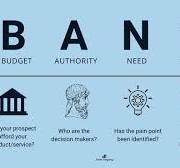
Why BANT Isn’t Always Enough: Rethinking Lead Qualification for Modern Sales In the world of sales, the BANT framework (Budget, Authority, Need, Timing) has long been a go-to method for qualifying leads. For companies selling familiar or low-complexity products where price is the primary differentiator, BANT can be an effective tool for identifying prospects ready for aggressive sales pursuit. However, in today’s rapidly evolving business landscape—particularly for B2B tech companies offering innovative or paradigm-shifting solutions—relying solely on BANT can actually do more harm than good. In this article, we’ll explore the limitations of the BANT framework, why it falls short in certain scenarios, and how you can adapt your lead qualification process to better align with modern sales challenges. What is BANT, and Why is it Popular? BANT, a framework popularized by companies like IBM, is designed to help sales teams quickly assess whether a prospect is worth pursuing. The acronym stands for: For straightforward sales scenarios, BANT works well. It helps sales teams prioritize leads that are most likely to convert, saving time and resources. However, as sales environments become more complex—especially in B2B tech—the limitations of BANT become increasingly apparent. The Limitations of BANT in Modern Sales While BANT is a useful starting point, it has several inherent limitations that can hinder your sales efforts, particularly when selling innovative or high-complexity solutions. Here’s why: When BANT Falls Short: Real-World Scenarios Let’s look at a few scenarios where BANT might not be the best fit: How to Overcome BANT’s Limitations The good news is that you don’t have to abandon BANT entirely. Instead, you can augment it with additional strategies to create a more holistic lead qualification process. Here’s how: Conclusion: Evolving Beyond BANT While BANT remains a useful tool for certain sales scenarios, it’s not a one-size-fits-all solution. For B2B tech companies selling innovative or high-complexity offerings, a more nuanced approach to lead qualification is essential. By addressing the limitations of BANT and incorporating strategies like value-based selling, stakeholder mapping, and relationship building, you can better align your sales process with the realities of modern B2B buying. In a world where customer needs and decision-making processes are constantly evolving, the ability to adapt and think beyond traditional frameworks like BANT will set you apart from the competition. So, the next time you’re qualifying leads, ask yourself: Is BANT enough, or is it time to rethink your approach? Like Related Posts Who is Salesforce? Who is Salesforce? Here is their story in their own words. From our inception, we’ve proudly embraced the identity of Read more Salesforce Unites Einstein Analytics with Financial CRM Salesforce has unveiled a comprehensive analytics solution tailored for wealth managers, home office professionals, and retail bankers, merging its Financial Read more AI-Driven Propensity Scores AI plays a crucial role in propensity score estimation as it can discern underlying patterns between treatments and confounding variables Read more Tectonic’s Successful Salesforce Track Record Salesforce Technology Services Integrator – Tectonic has successfully delivered Salesforce in a variety of industries including Public Sector, Hospitality, Manufacturing, Read more

Read More
gettectonic.com