Business Archives - gettectonic.com - Page 3
Tools to Liberate Salesforce Data

How To Unlock the Superpowers of a CRM

Want to learn how Salesforce CRM can help you create more efficient processes, reduce costs, and raise customer satisfaction? Download your free copy of our e-book to learn more. Like Related Posts Who is Salesforce? Who is Salesforce? Here is their story in their own words. From our inception, we’ve proudly embraced the identity of Read more Salesforce Marketing Cloud Transactional Emails Salesforce Marketing Cloud Transactional Emails are immediate, automated, non-promotional messages crucial to business operations and customer satisfaction, such as order Read more Salesforce Unites Einstein Analytics with Financial CRM Salesforce has unveiled a comprehensive analytics solution tailored for wealth managers, home office professionals, and retail bankers, merging its Financial Read more AI-Driven Propensity Scores AI plays a crucial role in propensity score estimation as it can discern underlying patterns between treatments and confounding variables Read more

Read More
agent2agent protocol explained

Google’s Agent2Agent Protocol Explained

Google’s Agent2Agent Protocol (A2A): The Open Standard for AI Agent Collaboration A New Era of AI Interoperability On April 9, 2025, Google introduced the Agent2Agent Protocol (A2A), a standardized framework enabling AI agents to discover, communicate, and collaborate across different platforms securely. Just months later, on June 23, 2025, Google donated A2A—including its specifications, SDKs, and developer tools—to the Linux Foundation, ensuring neutral, open governance for the protocol’s future. “By contributing A2A, Google is ensuring neutral governance for the project for the remainder of its existence.”— Mike Dolan, SVP, Legal & Strategic Programs, Linux Foundation This move prevents any single company from controlling A2A, fostering an open ecosystem where AI agents from different vendors can seamlessly interact. How A2A Works: Secure, Scalable AI Collaboration A2A defines two types of agents: Key Features 🔹 Agent Cards – Each agent advertises its capabilities (name, functions, authentication methods) without exposing proprietary logic or internal data.🔹 HTTPS-Based Messaging – Secure, real-time communication between agents.🔹 Task Delegation & Progress Tracking – Agents exchange structured messages to update on task status or request additional input.🔹 Enterprise-Grade Security – No exposure of internal states, ensuring data privacy and IP protection. Why A2A Matters Without a universal protocol, AI agent integration is manual, brittle, and hard to scale. A2A solves this by:✅ Eliminating point-to-point custom integrations✅ Enabling dynamic task routing & resource allocation✅ Reducing human intervention in automated workflows Early Adoption & Industry Support Over 100 companies—including AWS, Cisco, Microsoft, Salesforce, SAP, and ServiceNow—have endorsed A2A. A Technical Steering Committee (with members from these firms) now governs the protocol’s evolution. “PayPal, ServiceNow, and Salesforce already support A2A and are integrating it into their platforms.”— Rao Surapaneni, VP & GM, Google Cloud The Future of AI Agent Ecosystems While A2A has strong momentum, alternative protocols like: more are also emerging. However, A2A’s open governance, enterprise security, and broad industry backing position it as a leading candidate for universal AI agent interoperability. What’s Next? As businesses deploy more AI agents, A2A could become the TCP/IP of AI collaboration—a foundational layer enabling autonomous, cross-platform workflows. Sourced from Matt Vartabedian’s article in NoJitter. Like Related Posts Who is Salesforce? Who is Salesforce? Here is their story in their own words. From our inception, we’ve proudly embraced the identity of Read more Salesforce Marketing Cloud Transactional Emails Salesforce Marketing Cloud Transactional Emails are immediate, automated, non-promotional messages crucial to business operations and customer satisfaction, such as order Read more Salesforce Unites Einstein Analytics with Financial CRM Salesforce has unveiled a comprehensive analytics solution tailored for wealth managers, home office professionals, and retail bankers, merging its Financial Read more AI-Driven Propensity Scores AI plays a crucial role in propensity score estimation as it can discern underlying patterns between treatments and confounding variables Read more

Read More
They're Here - Agentic AI Agents

They’re Here – Agentic AI Agents

AI Isn’t Coming—It’s Already Here. Is Your Business Keeping Up? The race to harness artificial intelligence isn’t some distant future challenge—it’s happening right now. Companies leveraging AI are pulling ahead, automating decisions, personalizing customer experiences, and unlocking efficiencies that competitors can’t match. But before jumping on the bandwagon, leaders need to ask a hard question: Is my organization actually prepared for AI, or are we setting ourselves up for failure? An AI Maturity Assessment isn’t just a buzzword—it’s a reality check. It reveals where you stand, what’s missing, and how to bridge the gap between ambition and real-world results. Why Skipping the Assessment Is a Costly Mistake Too many businesses dive into AI without proper groundwork, leading to: Mature AI adoption isn’t about buying the latest tech—it’s about aligning strategy, data, people, and governance to make AI work for you, not against you. The Five Make-or-Break Factors of AI Success Where Do You Stand? AI maturity isn’t about being perfect—it’s about being honest. Most companies fall into one of four stages: The goal? Move forward with clarity—not guesswork. How We Help You Win with AI At Tectonic, we cut through the noise. Our approach isn’t about selling tools—it’s about making AI work in the real world. We help you: The Bottom Line AI isn’t magic—it’s a tool. And like any tool, it’s only as good as the hands wielding it. Before you invest another dollar in AI, ask yourself: Do we really know what we’re doing? If the answer isn’t a confident “yes,” it’s time for a reality check. Let’s talk. Like Related Posts Who is Salesforce? Who is Salesforce? Here is their story in their own words. From our inception, we’ve proudly embraced the identity of Read more Salesforce Unites Einstein Analytics with Financial CRM Salesforce has unveiled a comprehensive analytics solution tailored for wealth managers, home office professionals, and retail bankers, merging its Financial Read more AI-Driven Propensity Scores AI plays a crucial role in propensity score estimation as it can discern underlying patterns between treatments and confounding variables Read more Tectonic’s Successful Salesforce Track Record Salesforce Technology Services Integrator – Tectonic has successfully delivered Salesforce in a variety of industries including Public Sector, Hospitality, Manufacturing, Read more

Read More
Healthcare Cloud Computing

How Salesforce Health Cloud is Transforming Modern Hospitals

The healthcare industry faces unprecedented challenges: delivering personalized patient care, maintaining strict compliance, and optimizing operational efficiency—all while managing complex data ecosystems. Salesforce Health Cloud has won as a leading solution, empowering hospitals to meet these demands through intelligent, integrated technology. Here’s why forward-thinking healthcare organizations are adopting Health Cloud—and how it’s reshaping hospital operations. 1. Personalized Patient Engagement Today’s patients expect seamless, consumer-grade experiences from their healthcare providers. Salesforce Health Cloud enables hospitals to:✔ Deliver mobile-responsive patient portals for easy access to records and appointments.✔ Automate personalized follow-ups (e.g., medication reminders, post-visit surveys).✔ Tailor communication based on patient history and preferences. Why it matters: Engaged patients adhere better to treatment plans and report higher satisfaction—key drivers of improved outcomes. 2. Seamless Care Team Coordination Fragmented care—where specialists, nurses, and administrators work in silos—leads to inefficiencies and errors. Health Cloud connects all stakeholders on a unified platform, enabling:✔ Real-time collaboration across departments.✔ Centralized patient histories (no more chasing down records).✔ Automated task assignments and progress tracking. Why it matters: Coordinated care reduces redundancies, improves accuracy, and elevates patient trust. 3. AI-Powered Decision-Making Health Cloud goes beyond data storage—it turns information into actionable intelligence with:✔ Real-time analytics on treatment outcomes, readmission risks, and patient satisfaction.✔ Predictive tools to identify high-risk patients before complications arise.✔ Custom dashboards for performance tracking at every level. Why it matters: Data-driven decisions lead to better resource allocation, fewer errors, and higher-quality care. 4. Unified Patient Data Management Hospitals juggle EHRs, lab systems, billing software, and more—often with no integration. Health Cloud consolidates all data into a single source of truth, offering:✔ A 360-degree patient view (medical history, appointments, insurance, social determinants of health).✔ Secure, instant access for authorized providers.✔ Reduced manual entry and duplicate records. Why it matters: Disjointed data causes delays and mistakes. Centralization improves efficiency and patient safety. 5. Built-In HIPAA Compliance & Security Healthcare data breaches cost millions and erode trust. Health Cloud provides:✔ Enterprise-grade encryption and access controls.✔ Audit trails for all data interactions.✔ Pre-configured HIPAA-compliant workflows. Why it matters: Compliance isn’t optional. Health Cloud protects sensitive data without sacrificing usability. 6. Scalability for Future Growth Whether expanding services, adding telehealth, or integrating new EHRs, Health Cloud adapts effortlessly thanks to:✔ Open APIs for seamless interoperability.✔ Modular design to add features as needs evolve.✔ Cloud-based flexibility to scale across locations. Why it matters: Healthcare never stands still. A future-proof system ensures long-term success. 7. Operational Efficiency & Cost Savings Administrative waste drains hospital resources. Health Cloud automates routine tasks, including:✔ Appointment scheduling and reminders.✔ Referral management and prior authorizations.✔ Case management workflows. Why it matters: Streamlined operations cut costs, reduce staff burnout, and improve patient throughput. The Bottom Line Salesforce Health Cloud isn’t just another IT tool—it’s a strategic asset that bridges the gap between patient care and operational excellence. Hospitals leveraging its full potential see:✅ Higher patient satisfaction (through personalized engagement).✅ Stronger care team alignment (breaking down silos).✅ Smarter decision-making (powered by AI and analytics).✅ Lower compliance risks (with built-in security). As healthcare evolves, the hospitals that thrive will be those that embrace connected, intelligent platforms like Health Cloud. The question isn’t if to adopt it—but how soon your organization can start reaping the benefits. Ready to transform your hospital’s operations? Salesforce Health Cloud is the proven solution for healthcare’s toughest challenges. Contact Tectonic to learn more. Like Related Posts Who is Salesforce? Who is Salesforce? Here is their story in their own words. From our inception, we’ve proudly embraced the identity of Read more Salesforce Marketing Cloud Transactional Emails Salesforce Marketing Cloud Transactional Emails are immediate, automated, non-promotional messages crucial to business operations and customer satisfaction, such as order Read more Salesforce Unites Einstein Analytics with Financial CRM Salesforce has unveiled a comprehensive analytics solution tailored for wealth managers, home office professionals, and retail bankers, merging its Financial Read more AI-Driven Propensity Scores AI plays a crucial role in propensity score estimation as it can discern underlying patterns between treatments and confounding variables Read more
Read More
Preparing for Salesforce's Permission Set Revolution

Preparing for Salesforce’s Permission Set Revolution

Tectonic Shift: Preparing for Salesforce’s Permission Set Revolution The Future of Salesforce Access Management Salesforce is fundamentally transforming how enterprises manage user permissions. By Spring 2026, the platform will begin phasing out profile-based permissions in favor of a permission set-centric model—a tectonic shift in access governance that demands strategic preparation. This evolution presents both challenges and opportunities: Why Salesforce is Making This Change Legacy profile-based permissions have become unsustainable for modern enterprises, creating: The new permission set model delivers:✔ Modular, role-based access controls✔ Reduced management overhead✔ Enhanced audit capabilities✔ Dynamic alignment with business needs Note: Some profile functionality (login hours, page layouts) will remain, but core object/field permissions will migrate to permission sets. Tectonic’s Proven Transition Framework As a leader in Salesforce transformations, Tectonic has developed a comprehensive approach to permission set migration: 1. Strategic Assessment 2. Intelligent Design 3. Automated Deployment 4. Organizational Enablement Beyond Compliance: Strategic Advantages This transition represents more than a technical requirement—it’s an opportunity to: Building Your Transition Team The permission set revolution will reshape Salesforce talent needs. Tectonic offers dual solutions: 1. Expert Consultants 2. Managed Services Why Partner with Tectonic? Prepare for the Shift The clock is ticking toward Spring 2026. Organizations that start their transition now will: Ready to transform your access management strategy? Tectonic’s Salesforce experts can guide your organization through every phase of this critical transition. Like Related Posts Who is Salesforce? Who is Salesforce? Here is their story in their own words. From our inception, we’ve proudly embraced the identity of Read more Salesforce Marketing Cloud Transactional Emails Salesforce Marketing Cloud Transactional Emails are immediate, automated, non-promotional messages crucial to business operations and customer satisfaction, such as order Read more Salesforce Unites Einstein Analytics with Financial CRM Salesforce has unveiled a comprehensive analytics solution tailored for wealth managers, home office professionals, and retail bankers, merging its Financial Read more AI-Driven Propensity Scores AI plays a crucial role in propensity score estimation as it can discern underlying patterns between treatments and confounding variables Read more

Read More
Revenue Cloud

Salesforce Revenue Cloud Advanced

Salesforce Revenue Cloud Advanced (RCA): The Ultimate Quote-to-Cash Solution Revolutionize Your Revenue Operations Salesforce Revenue Cloud Advanced (RCA) is an end-to-end revenue management platform that transforms complex quote-to-cash processes into automated, compliant, and customer-centric experiences. Designed for mid-market and enterprise organizations, RCA empowers businesses to: ✔ Simplify CPQ, billing, and revenue recognition✔ Ensure compliance with ASC 606/IFRS 15✔ Accelerate deal velocity✔ Manage multi-channel revenue streams Ideal for: SaaS, Manufacturing, High Tech, Healthcare, and other industries with subscription models, usage-based pricing, and dynamic bundling. Key Capabilities of Revenue Cloud Advanced 1. Intelligent CPQ (Configure, Price, Quote) 2. Flexible Billing & Monetization 3. Accurate Revenue Recognition 4. Partner & Channel Management Who Benefits from RCA? Team Key Value Sales Faster quoting, guided selling, deal acceleration Finance Automated revenue compliance, reduced manual errors RevOps End-to-end process automation, scalability IT Pre-built integrations, low technical debt Why Choose Salesforce RCA? Native to the Salesforce Ecosystem Seamlessly integrates with: AI-Powered Insights Enterprise-Grade Scalability Transform Your Revenue Lifecycle ✅ Close deals faster with AI-guided selling✅ Eliminate billing errors with automation✅ Stay audit-ready with compliant revenue reporting✅ Scale effortlessly as your business grows Ready to optimize your quote-to-cash process? Contact Tectonic today. Like Related Posts Who is Salesforce? Who is Salesforce? Here is their story in their own words. From our inception, we’ve proudly embraced the identity of Read more Salesforce Marketing Cloud Transactional Emails Salesforce Marketing Cloud Transactional Emails are immediate, automated, non-promotional messages crucial to business operations and customer satisfaction, such as order Read more Salesforce Unites Einstein Analytics with Financial CRM Salesforce has unveiled a comprehensive analytics solution tailored for wealth managers, home office professionals, and retail bankers, merging its Financial Read more AI-Driven Propensity Scores AI plays a crucial role in propensity score estimation as it can discern underlying patterns between treatments and confounding variables Read more

Read More
Salesforce Einstein and Einstein Automate

Smarter Predictions, Faster Decisions

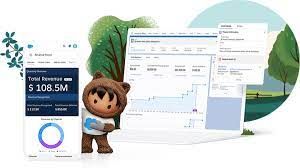
Einstein AI in 2025: Smarter Predictions, Faster Decisions The Evolution of Salesforce Einstein The Summer ’25 release transforms Einstein from a predictive scoring engine into an active decision-making partner. With deeper CRM integration and enhanced explainability, Einstein now delivers: ✅ Context-aware automation through natural language Flow creation✅ Real-time analytics that drive immediate action✅ Transparent model governance for regulated industries Key Innovations in the Summer ’25 Release 1. Einstein for Flow: Intelligent Automation Made Simple What’s New: Impact: 2. Einstein CRM Analytics: Live Decision Intelligence Enhanced Capabilities: Sample Use Case:A sales manager sees: Benefits: 3. Trust Through Transparency New Governance Features: Critical For: Industry-Specific Applications Sector Einstein 2025 Use Cases Sales Real-time deal coaching, automated follow-ups based on engagement signals Service Predictive case routing, customer churn prevention flows Marketing Dynamic journey adjustments based on real-time propensity scores Healthcare Compliance-aware patient outreach automation Implementation Roadmap Why This Matters The Summer ’25 release closes the gap between insight and action by:🔹 Democratizing AI – Business users create sophisticated automations🔹 Accelerating Decisions – Live data eliminates reporting lag🔹 Building Trust – Explainable AI meets compliance requirements “With these updates, Einstein moves from predicting outcomes to driving outcomes,” said Salesforce Chief Product Officer. Like Related Posts Who is Salesforce? Who is Salesforce? Here is their story in their own words. From our inception, we’ve proudly embraced the identity of Read more Salesforce Marketing Cloud Transactional Emails Salesforce Marketing Cloud Transactional Emails are immediate, automated, non-promotional messages crucial to business operations and customer satisfaction, such as order Read more Salesforce Unites Einstein Analytics with Financial CRM Salesforce has unveiled a comprehensive analytics solution tailored for wealth managers, home office professionals, and retail bankers, merging its Financial Read more AI-Driven Propensity Scores AI plays a crucial role in propensity score estimation as it can discern underlying patterns between treatments and confounding variables Read more
Read More
AI Agents and Work

Augmentation, Not Replacement, at Salesforce

Marc Benioff’s AI Vision: Augmentation, Not Replacement, at Salesforce Salesforce CEO Marc Benioff made waves last week by revealing that 30-50% of the company’s work is now AI-driven—a milestone in its push toward “agentic” automation. But rather than framing AI as a job killer, Benioff insists it’s a collaborative force, augmenting human workers rather than replacing them. AgentForce Hits 1 Million Conversations At the UN’s AI for Good Summit in Geneva, Benioff highlighted Salesforce’s AgentForce—an AI-powered platform integrated with Service Cloud—which has now handled over 1 million customer interactions in just nine months. “We have about 9,000 human support agents. AgentForce has delivered a million conversations—the same as our human agents in that period. But it’s not AI replacing people; it’s AI working alongside them.” Key takeaways: The “Digital Labor” Philosophy Benioff’s vision of “Digital Labor“ positions AI as a co-worker, not a usurper: Job Fears vs. Reality: “Radical Augmentation, Not Mass Layoffs” Despite media hype about AI-driven job cuts, Benioff pushes back: “I don’t see AI causing mass white-collar layoffs. It’s about reshaping work—not eliminating it.” Salesforce’s hiring shifts reflect this: The Bottom Line: AI as a Productivity Multiplier Benioff’s mantra? “Be Customer Zero.” Salesforce is stress-testing AI internally before selling it to clients. The goal isn’t to replace humans—but to supercharge their capabilities. “Let’s take a pause, boost productivity with AI, then scale again. That’s the future of work.” Final ThoughtWhile AI anxiety dominates headlines, Benioff’s augmentation-first approach offers a pragmatic middle ground. For Salesforce—and the broader economy—the question isn’t “Will AI take jobs?” but “How can AI make work better?” Like Related Posts Who is Salesforce? Who is Salesforce? Here is their story in their own words. From our inception, we’ve proudly embraced the identity of Read more Salesforce Marketing Cloud Transactional Emails Salesforce Marketing Cloud Transactional Emails are immediate, automated, non-promotional messages crucial to business operations and customer satisfaction, such as order Read more Salesforce Unites Einstein Analytics with Financial CRM Salesforce has unveiled a comprehensive analytics solution tailored for wealth managers, home office professionals, and retail bankers, merging its Financial Read more AI-Driven Propensity Scores AI plays a crucial role in propensity score estimation as it can discern underlying patterns between treatments and confounding variables Read more

Read More
DXP - Digital Experience Platform

DXP – Digital Experience Platform

A Digital Experience Platform (DXP) is a set of integrated technologies that help organizations create, manage, and deliver personalized digital experiences across various touchpoints. DXPs aim to provide a central hub for managing a company’s digital ecosystem, enabling consistent and engaging customer interactions. They often include features like content management, e-commerce, personalization, and experimentation.  Key aspects of a DXP: Benefits of using a DXP: Like Related Posts Who is Salesforce? Who is Salesforce? Here is their story in their own words. From our inception, we’ve proudly embraced the identity of Read more Salesforce Marketing Cloud Transactional Emails Salesforce Marketing Cloud Transactional Emails are immediate, automated, non-promotional messages crucial to business operations and customer satisfaction, such as order Read more Salesforce Unites Einstein Analytics with Financial CRM Salesforce has unveiled a comprehensive analytics solution tailored for wealth managers, home office professionals, and retail bankers, merging its Financial Read more AI-Driven Propensity Scores AI plays a crucial role in propensity score estimation as it can discern underlying patterns between treatments and confounding variables Read more

Read More
ai agent interoperability

Salesforce Unveils Open AI Ecosystem with Agentforce and MCP Integration

Breaking the AI Interoperability Paradox Salesforce is solving the critical challenge facing enterprise AI adoption—how to balance open innovation with enterprise-grade security. With its upcoming Model Context Protocol (MCP) support for Agentforce, Salesforce is creating the first truly open yet governed ecosystem for AI agent collaboration. The $6T Digital Labor Opportunity Current barriers to AI adoption: Salesforce’s solution enables:✔ Native agent interoperability via open standards✔ Enterprise-grade governance baked into every connection✔ 16x faster deployment than DIY approaches AgentExchange: The Trusted Marketplace for AI Agents Key Innovations Partner Ecosystem in Action Partner AI Agent Capabilities Enabled AWS Unstructured data processing across Bedrock, Aurora DBs, and multimedia Box Intelligent contract analysis and automated workflow triggers Google Cloud Location-aware AI combining Maps, generative models, and transactional data PayPal End-to-end agentic commerce from product listing to dispute resolution Stripe Real-time payment operations and subscription management WRITER Compliant content generation within Salesforce workflows The Salesforce Advantage “With MCP, we’re creating a new category of agent-first businesses,” says Brian Landsman, CEO of AppExchange. “Partners build once and connect everywhere—without the security tradeoffs of traditional integrations.” Enterprise Benefits The Future of Digital Labor This announcement marks a pivotal shift in enterprise AI: Available in pilot July 2024, Salesforce’s MCP integration positions Agentforce as the hub for the next generation of enterprise AI—where security and innovation coexist to unlock the full trillion potential of digital labor. Like Related Posts Who is Salesforce? Who is Salesforce? Here is their story in their own words. From our inception, we’ve proudly embraced the identity of Read more Salesforce Marketing Cloud Transactional Emails Salesforce Marketing Cloud Transactional Emails are immediate, automated, non-promotional messages crucial to business operations and customer satisfaction, such as order Read more Salesforce Unites Einstein Analytics with Financial CRM Salesforce has unveiled a comprehensive analytics solution tailored for wealth managers, home office professionals, and retail bankers, merging its Financial Read more AI-Driven Propensity Scores AI plays a crucial role in propensity score estimation as it can discern underlying patterns between treatments and confounding variables Read more

Read More
Salesforce Unveils Agentforce for Net Zero Cloud

Salesforce Unveils Agentforce for Net Zero Cloud

Salesforce Unveils Agentforce for Net Zero Cloud: AI-Powered Sustainability Transformation Revolutionizing Corporate Sustainability Through AI Salesforce has taken a groundbreaking leap in sustainable business operations with the launch of Agentforce for Net Zero Cloud—an AI-driven platform that transforms environmental compliance from a reporting obligation into a strategic advantage. This innovative solution empowers organizations to automate emissions tracking, optimize resource allocation, and drive measurable sustainability impact. Key Features & Capabilities 1. From Spreadsheets to Smart Insights 2. Automated Compliance & Reporting 3. Custom AI Agents for Targeted Impact 4. Sustainable AI Architecture Real-World Impact Prashanthi Sudhakar, Head of Net Zero Cloud at Salesforce:“Agentforce shifts sustainability from reactive reporting to proactive strategy—helping customers identify savings while reducing environmental impact.” Dan Connors, CEO of Green Impact:“Our clients are now making real-time, data-driven decisions that accelerate both cost savings and sustainability goals.” Why This Matters With Agentforce for Net Zero Cloud, Salesforce is redefining corporate sustainability—turning complex environmental data into competitive advantage through AI-powered intelligence. Available now for enterprises committed to transforming their sustainability operations. Like Related Posts Who is Salesforce? Who is Salesforce? Here is their story in their own words. From our inception, we’ve proudly embraced the identity of Read more Salesforce Marketing Cloud Transactional Emails Salesforce Marketing Cloud Transactional Emails are immediate, automated, non-promotional messages crucial to business operations and customer satisfaction, such as order Read more Salesforce Unites Einstein Analytics with Financial CRM Salesforce has unveiled a comprehensive analytics solution tailored for wealth managers, home office professionals, and retail bankers, merging its Financial Read more AI-Driven Propensity Scores AI plays a crucial role in propensity score estimation as it can discern underlying patterns between treatments and confounding variables Read more

Read More
salesforce for manufacturing

Modern Procurement

Modern Procurement: A Strategic Lever for Business Success Procurement has always been complex, but today’s economic pressures—inflation, shifting tariffs, sustainability mandates, and compliance demands—make it more critical than ever. Many organizations still rely on fragmented processes and disconnected systems, leading to uncontrolled spending, compliance risks, and missed savings opportunities. The solution? A strategic, tech-driven approach to procurement. According to The Economist Impact, 38% of procurement leaders rank digital transformation as a top priority today—a figure expected to rise to 54% within five years. Empowering Team Buyers: The First Step to Smarter Procurement Departmental buyers play a crucial role in company spending, yet many lack the tools to make efficient, policy-compliant purchases. Modern e-procurement platforms, like Amazon Business, empower these users with: ✅ Guided buying to steer purchases toward preferred vendors✅ Built-in policy controls to enforce compliance✅ Streamlined workflows to reduce off-contract spending When equipped with the right tools, team buyers become agents of change—driving adoption, uncovering savings, and helping procurement operate more strategically. Fabiola Duenas, CEO of Forza Real Estate Group–Keller Williams Houston, shares how Amazon Business transformed her team’s purchasing: “Our agents now spend far less time sourcing items and managing expenses. Amazon Business provides a seamless, centralized platform—freeing up time to focus on clients rather than procurement headaches.” Three Strategies for Modernizing Procurement 1. Centralize Procurement for Greater Control Decentralized spending leads to maverick buying, inflated costs, and compliance gaps. By consolidating procurement on a single platform, businesses can: ✔ Standardize processes across departments✔ Enforce policy compliance with automated guardrails✔ Reduce tail spend by consolidating vendors Joseph Strumolo, Head of Global Source-to-Pay at Vacasa, explains how centralization drove savings: “By channeling all spend through Amazon Business and eliminating personal credit card use, we reduced costs by 7.7% while improving visibility and rebate eligibility.” 2. Automate to Free Up Strategic Focus Manual procurement processes—approval chasing, reorder tracking, invoice matching—waste time and introduce errors. Automation shifts the focus from tactical tasks to strategic decision-making. Heidi Banks, Senior Director at Jabil, highlights the impact of integrating Amazon Business with Coupa: “95% of our POs now route automatically, eliminating manual intervention. This efficiency gain allows procurement teams to focus on strategic sourcing rather than administrative work.” 3. Leverage Real-Time Analytics for Smarter Decisions Visibility into spending patterns, supplier performance, and compliance gaps is essential for data-driven procurement. Modern platforms provide: 📊 Real-time dashboards to track spending trends🔍 Anomaly detection to flag policy violations📈 Performance analytics to optimize supplier relationships Jabil saw immediate results: “After implementing Amazon Business’ Guided Buying, we saw a 4% increase in preferred vendor spending—and later drove 40% more spend to strategic suppliers.” Procurement: No Longer a Back-Office Function, but a Strategic Driver The role of procurement is evolving—from a cost center to a growth enabler. By embracing centralization, automation, and data-driven insights, businesses can: 🔹 Reduce risk with stronger compliance🔹 Cut costs through smarter spending🔹 Enhance agility in volatile markets The future of procurement is connected, intelligent, and strategic—and the time to modernize is now. Is your procurement function ready to drive business success? Like Related Posts Who is Salesforce? Who is Salesforce? Here is their story in their own words. From our inception, we’ve proudly embraced the identity of Read more Salesforce Unites Einstein Analytics with Financial CRM Salesforce has unveiled a comprehensive analytics solution tailored for wealth managers, home office professionals, and retail bankers, merging its Financial Read more AI-Driven Propensity Scores AI plays a crucial role in propensity score estimation as it can discern underlying patterns between treatments and confounding variables Read more Tectonic’s Successful Salesforce Track Record Salesforce Technology Services Integrator – Tectonic has successfully delivered Salesforce in a variety of industries including Public Sector, Hospitality, Manufacturing, Read more

Read More
phishing scams

Phishing Attacks

Phishing Attacks: How to Spot, Stop, and Prevent Cyber Scams Cybercriminals are constantly casting their nets, hoping to reel in unsuspecting victims with deceptive phishing scams. Despite widespread awareness, phishing remains one of the most successful attack vectors—leading to data breaches, financial losses, and reputational damage. What Is Phishing? Phishing is a social engineering attack where cybercriminals impersonate trusted entities to trick users into: A single successful phishing attack can lead to identity theft, regulatory fines, business disruption, and further cyber intrusions. How to Spot a Phishing Scam Modern phishing attacks are far more sophisticated than the infamous “Nigerian prince” scams. Here’s how to detect them: 1. Inspect the Email Closely 2. Watch for Urgency & Fear Tactics 3. Hover Over Links (But Don’t Click!) 4. Check for HTTPS & Security Indicators 5. Beware of Impersonation & Deepfakes What to Do If You Suspect Phishing For Individuals: ✔ Don’t click links or download attachments – Even “harmless” PDFs can contain malware.✔ Report the email – Forward it to your IT team or report to the Anti-Phishing Working Group (APWG).✔ Change compromised passwords – Enable multi-factor authentication (MFA) immediately. For Organizations: ✔ Train employees – Regular phishing simulations improve awareness.✔ Deploy email filters – Block malicious senders before they reach inboxes.✔ Use DMARC, DKIM & SPF – Prevent email spoofing.✔ Enforce MFA & least-privilege access – Reduce damage from stolen credentials. Types of Phishing Attacks Attack Type Description Email Phishing Mass-sent fraudulent emails (most common). Spear Phishing Personalized attacks targeting specific individuals. Whaling Targets executives (CEO fraud, fake invoices). Smishing (SMS Phishing) Scams via text messages (fake bank alerts). Vishing (Voice Phishing) Fraudulent calls pretending to be tech support. Quishing (QR Phishing) Malicious QR codes leading to fake login pages. Business Email Compromise (BEC) Impersonates executives to trick employees into wire transfers. Prevention: A Multi-Layered Defense 1. Security Awareness Training 2. Strong Credential Policies 3. Advanced Security Tools 4. Proactive Monitoring & Response Final Takeaway: Don’t Take the Bait Phishing attacks are evolving, but vigilance and the right defenses can stop them. By combining employee training, strong authentication, and advanced security tools, businesses can reduce risk and protect sensitive data. Stay alert—cybercriminals are always fishing for their next victim. Like Related Posts Who is Salesforce? Who is Salesforce? Here is their story in their own words. From our inception, we’ve proudly embraced the identity of Read more Salesforce Marketing Cloud Transactional Emails Salesforce Marketing Cloud Transactional Emails are immediate, automated, non-promotional messages crucial to business operations and customer satisfaction, such as order Read more Salesforce Unites Einstein Analytics with Financial CRM Salesforce has unveiled a comprehensive analytics solution tailored for wealth managers, home office professionals, and retail bankers, merging its Financial Read more AI-Driven Propensity Scores AI plays a crucial role in propensity score estimation as it can discern underlying patterns between treatments and confounding variables Read more

Read More
Why AI Won't Kill SaaS

Essential Framework for Enterprise AI Development

LangChain: The Essential Framework for Enterprise AI Development The Challenge: Bridging LLMs with Enterprise Systems Large language models (LLMs) hold immense potential, but their real-world impact is limited without seamless integration into existing software stacks. Developers face three key hurdles: 🔹 Data Access – LLMs struggle to query databases, APIs, and real-time streams.🔹 Workflow Orchestration – Complex AI apps require multi-step reasoning.🔹 Accuracy & Hallucinations – Models need grounding in trusted data sources. Enter LangChain – the open-source framework that standardizes LLM integration, making AI applications scalable, reliable, and production-ready. LangChain Core: Prompts, Tools & Chains 1. Prompts – The Starting Point 2. Tools – Modular Building Blocks LangChain provides pre-built integrations for:✔ Data Search (Tavily, SerpAPI)✔ Code Execution (Python REPL)✔ Math & Logic (Wolfram Alpha)✔ Custom APIs (Connect to internal systems) 3. Chains – Multi-Step Workflows Chain Type Use Case Generic Basic prompt → LLM → output Utility Combine tools (e.g., search → analyze → summarize) Async Parallelize tasks for speed Example: python Copy Download chain = ( fetch_financial_data_from_API → analyze_with_LLM → generate_report → email_results ) Supercharging LangChain with Big Data Apache Spark: High-Scale Data Processing Apache Kafka: Event-Driven AI Enterprise Architecture: text Copy Download Kafka (Real-Time Events) → Spark (Batch Processing) → LangChain (LLM Orchestration) → Business Apps 3 Best Practices for Production 1. Deploy with LangServe 2. Debug with LangSmith 3. Automate Feedback Loops When to Use LangChain vs. Raw Python Scenario LangChain Pure Python Quick Prototyping ✅ Low-code templates ❌ Manual wiring Complex Workflows ✅ Built-in chains ❌ Reinvent the wheel Enterprise Scaling ✅ Spark/Kafka integration ❌ Custom glue code Criticism Addressed: The Future: LangChain as the AI Orchestration Standard With retrieval-augmented generation (RAG) and multi-agent systems gaining traction, LangChain’s role is expanding: 🔮 Autonomous Agents – Chains that self-prompt for complex tasks.🔮 Semantic Caching – Reduce LLM costs by reusing past responses.🔮 No-Code Builders – Business users composing AI workflows visually. Bottom Line: LangChain isn’t just for researchers—it’s the missing middleware for enterprise AI. “LangChain does for LLMs what Kubernetes did for containers—it turns prototypes into production.” Like Related Posts Who is Salesforce? Who is Salesforce? Here is their story in their own words. From our inception, we’ve proudly embraced the identity of Read more Salesforce Unites Einstein Analytics with Financial CRM Salesforce has unveiled a comprehensive analytics solution tailored for wealth managers, home office professionals, and retail bankers, merging its Financial Read more AI-Driven Propensity Scores AI plays a crucial role in propensity score estimation as it can discern underlying patterns between treatments and confounding variables Read more Tectonic’s Successful Salesforce Track Record Salesforce Technology Services Integrator – Tectonic has successfully delivered Salesforce in a variety of industries including Public Sector, Hospitality, Manufacturing, Read more

Read More
gettectonic.com