LangChain: The Essential Framework for Enterprise AI Development
The Challenge: Bridging LLMs with Enterprise Systems
Large language models (LLMs) hold immense potential, but their real-world impact is limited without seamless integration into existing software stacks. Developers face three key hurdles:
🔹 Data Access – LLMs struggle to query databases, APIs, and real-time streams.
🔹 Workflow Orchestration – Complex AI apps require multi-step reasoning.
🔹 Accuracy & Hallucinations – Models need grounding in trusted data sources.
Enter LangChain – the open-source framework that standardizes LLM integration, making AI applications scalable, reliable, and production-ready.
LangChain Core: Prompts, Tools & Chains
1. Prompts – The Starting Point
- Dynamic Templates – Reusable structures with variable inputs (e.g., “Summarize this customer email: {text}”).
- Memory & Context – Retain conversation history for coherent multi-turn interactions.
2. Tools – Modular Building Blocks
LangChain provides pre-built integrations for:
✔ Data Search (Tavily, SerpAPI)
✔ Code Execution (Python REPL)
✔ Math & Logic (Wolfram Alpha)
✔ Custom APIs (Connect to internal systems)
3. Chains – Multi-Step Workflows
| Chain Type | Use Case |
|---|---|
| Generic | Basic prompt → LLM → output |
| Utility | Combine tools (e.g., search → analyze → summarize) |
| Async | Parallelize tasks for speed |
Example:
python
Copy
Download
chain = (
    fetch_financial_data_from_API
    → analyze_with_LLM
    → generate_report
    → email_results
)
Supercharging LangChain with Big Data
Apache Spark: High-Scale Data Processing
- Why? Preprocess terabytes of logs, transactions, or IoT data before LLM analysis.
- Use Cases:
- Real-time fraud detection
- Predictive maintenance alerts
- Customer sentiment at scale
Apache Kafka: Event-Driven AI
- Why? Stream live data (e.g., stock prices, sensor feeds) into LangChain workflows.
- Pro Tip: Use managed Kafka (Confluent, AWS MSK) to avoid operational headaches.
Enterprise Architecture:
text
Copy
Download
Kafka (Real-Time Events) → Spark (Batch Processing) → LangChain (LLM Orchestration) → Business Apps
3 Best Practices for Production
1. Deploy with LangServe
- Turn chains into REST APIs for easy integration.
- Enables batch processing and CI/CD pipelines.
2. Debug with LangSmith
- Monitor inputs/outputs.
- Track performance metrics (latency, accuracy).
3. Automate Feedback Loops
- Log user interactions to retrain/fine-tune models.
- Combat hallucinations with retrieval-augmented generation (RAG).
When to Use LangChain vs. Raw Python
| Scenario | LangChain | Pure Python |
|---|---|---|
| Quick Prototyping | ✅ Low-code templates | ❌ Manual wiring |
| Complex Workflows | ✅ Built-in chains | ❌ Reinvent the wheel |
| Enterprise Scaling | ✅ Spark/Kafka integration | ❌ Custom glue code |
Criticism Addressed:
- “Too abstract!” → Use LCEL (LangChain Expression Language) for granular control.
- “Docs are sparse!” → Leverage LangSmith’s tracing for debugging.
The Future: LangChain as the AI Orchestration Standard
With retrieval-augmented generation (RAG) and multi-agent systems gaining traction, LangChain’s role is expanding:
🔮 Autonomous Agents – Chains that self-prompt for complex tasks.
🔮 Semantic Caching – Reduce LLM costs by reusing past responses.
🔮 No-Code Builders – Business users composing AI workflows visually.
Bottom Line: LangChain isn’t just for researchers—it’s the missing middleware for enterprise AI.
“LangChain does for LLMs what Kubernetes did for containers—it turns prototypes into production.”


Who is Salesforce? Here is their story in their own words. From our inception, we've proudly embraced the identity of Read more

Salesforce has unveiled a comprehensive analytics solution tailored for wealth managers, home office professionals, and retail bankers, merging its Financial Read more
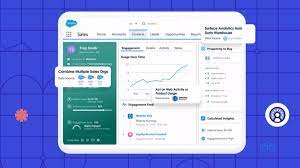
AI plays a crucial role in propensity score estimation as it can discern underlying patterns between treatments and confounding variables Read more

Salesforce Technology Services Integrator - Tectonic has successfully delivered Salesforce in a variety of industries including Public Sector, Hospitality, Manufacturing, Read more