Commerce Archives - gettectonic.com - Page 9
E-Commerce Platform Improvement

E-Commerce Platform Improvement

Section I: Problem Statement CVS Health is continuously exploring ways to improve its e-commerce platform, cvs.com. One potential enhancement is the implementation of a complementary product bundle recommendation feature on its product description pages (PDPs). For instance, when a customer browses for a toothbrush, they could also see recommendations for related products like toothpaste, dental floss, mouthwash, or teeth whitening kits. A basic version of this is already available on the site through the “Frequently Bought Together” (FBT) section. Traditionally, techniques such as association rule mining or market basket analysis have been used to identify frequently purchased products. While effective, CVS aims to go further by leveraging advanced recommendation system techniques, including Graph Neural Networks (GNN) and generative AI, to create more meaningful and synergistic product bundles. This exploration focuses on expanding the existing FBT feature into FBT Bundles. Unlike the regular FBT, FBT Bundles would offer smaller, highly complementary recommendations (a bundle includes the source product plus two other items). This system would algorithmically create high-quality bundles, such as: This strategy has the potential to enhance both sales and customer satisfaction, fostering greater loyalty. While CVS does not yet have the FBT Bundles feature in production, it is developing a Minimum Viable Product (MVP) to explore this concept. Section II: High-Level Approach The core of this solution is a Graph Neural Network (GNN) architecture. Based on the work of Yan et al. (2022), CVS adapted this GNN framework to its specific needs, incorporating several modifications. The implementation consists of three main components: Section III: In-Depth Methodology Part 1: Product Embeddings Module A: Discovering Product Segment Complementarity Relations Using GPT-4 Embedding plays a critical role in this approach, converting text (like product names) into numerical vectors to help machine learning models understand relationships. CVS uses a GNN to generate embeddings for each product, ensuring that relevant and complementary products are grouped closely in the embedding space. To train this GNN, a product-relation graph is needed. While some methods rely on user interaction data, CVS found that transaction data alone was not sufficient, as customers often purchase unrelated products in the same session. For example: Instead, CVS utilized GPT-4 to identify complementary products at a higher level in the product hierarchy, specifically at the segment level. With approximately 600 distinct product segments, GPT-4 was used to identify the top 10 most complementary segments, streamlining the process. Module B: Evaluating GPT-4 Output To ensure accuracy, CVS implemented a rigorous evaluation process: These results confirmed strong performance in identifying complementary relationships. Module C: Learning Product Embeddings With complementary relationships identified at the segment level, a product-relation graph was built at the SKU level. The GNN was trained to prioritize pairs of products with high co-purchase counts, sales volume, and low price, producing an embedding space where relevant products are closer together. This allowed for initial, non-personalized product recommendations. Part 2: User Embeddings To personalize recommendations, CVS developed user embeddings. The process involves: This framework is currently based on recent purchases, but future enhancements will include demographic and other factors. Part 3: Re-Ranking Scheme To personalize recommendations, CVS introduced a re-ranking step: Section IV: Evaluation of Recommender Output Given that CVS trained the model using unlabeled data, traditional metrics like accuracy were not feasible. Instead, GPT-4 was used to evaluate recommendation bundles, scoring them on: The results showed that the model effectively generated high-quality, complementary product bundles. Section V: Use Cases Section VI: Future Work Future plans include: Like Related Posts Who is Salesforce? Who is Salesforce? Here is their story in their own words. From our inception, we’ve proudly embraced the identity of Read more Salesforce Marketing Cloud Transactional Emails Salesforce Marketing Cloud Transactional Emails are immediate, automated, non-promotional messages crucial to business operations and customer satisfaction, such as order Read more Salesforce Unites Einstein Analytics with Financial CRM Salesforce has unveiled a comprehensive analytics solution tailored for wealth managers, home office professionals, and retail bankers, merging its Financial Read more AI-Driven Propensity Scores AI plays a crucial role in propensity score estimation as it can discern underlying patterns between treatments and confounding variables Read more


Read More
Salesforce and Tenyx

Salesforce and Tenyx

Salesforce has announced its acquisition of AI voice agent firm Tenyx, with the deal expected to close in the third quarter. While the financial terms have not been disclosed, Tenyx’s co-founders, CEO Itamar Arel and CTO Adam Earle, along with their team, will join Salesforce as part of the acquisition. This move comes after Salesforce, under pressure from activist investors, previously shifted away from acquisitions and increased its share buybacks following the dissolution of its mergers and acquisitions committee. However, the company is now pursuing strategic acquisitions to boost revenue growth. Conversational AI forthe Enterprise Tenyx Voice is an Interactive Virtual Agent (IVA) built from the ground up leveraging today’s modern AI stack. Built by a team with a proven track record in voice AI, and leveraging a unique core AI and voice platform, Tenyx promises to redefine customer interactions for the enterprise. Tenyx Voice is an Interactive Virtual Agent (IVA) built from the ground up leveraging today’s modern AI stack. Built by a team with a proven track record in voice AI, and leveraging a unique core AI and voice platform, Tenyx promises to redefine customer interactions for the enterprise. Industries and Use Cases If 2023 was the year of large language models (LLMs), 2024 is shaping up to be the year of voice agents. When ChatGPT made waves globally, startups, tech firms, and entrepreneurs rushed to discover business use cases for the new technology. The ideal applications targeted tasks that are costly, time-consuming, and hard to scale. Voice agents and automated customer service systems quickly emerged as one of the most promising solutions. However, many companies deploying these systems aren’t fully considering their impact on customers. That’s why Tenyx is launching its inaugural Voice AI Consumer Report. We surveyed hundreds of Americans across different age groups, races, geographies, and genders to better understand their preferences and experiences with AI-powered voice agents. Here are the key findings: What this means: Frustrating Calls Hurt Your Brand Imagine calling customer service for a quick solution, only to be met by an automated voice agent that can’t understand your request or handle complex issues. It’s a common and frustrating experience. Our data shows that nearly 7 in 10 people express frustration or annoyance with today’s automated voice agents—sentiments that can severely damage customer loyalty and business outcomes. “Our report highlights a major disconnect between consumer expectations and the performance of current automated voice agents,” says Itamar Arel, CEO of Tenyx. “While these systems promise efficiency and cost savings, they often fall short when it comes to addressing consumers’ nuanced needs.” Incomplete AI Systems Drive Customer Churn Subpar AI systems are driving customers away. Two-thirds of respondents said they wouldn’t return to a company after a negative experience with its AI voice agent. In fact, 67% still prefer interacting with human agents over automated ones. Why? Current AI voice agents struggle with complex issues and fail to provide the empathy and problem-solving skills that human agents, or more advanced AI systems, offer. Selective Deployment and Industry-Specific Agents Matter Our data shows that consumers are more accepting of voice agents in certain industries than others. Sectors like healthcare, restaurants, and telecoms saw the highest satisfaction with AI voice agents, while airlines, banking, and hotels ranked the lowest. This highlights the importance of selective deployment and tailoring voice agents for specific industries to better meet customer needs. Looking Ahead: The Promise of Perfect Automation Despite the skepticism, there’s hope. Two-thirds of respondents indicated they’d embrace automated voice agents if these systems could match the performance of human agents. This is exactly what we’re working on at Tenyx—building scalable, reliable AI agents that serve businesses and customers globally. “As leaders in voice AI technology, Tenyx is dedicated to closing the gap between consumer expectations and technological capabilities,” Arel says. “Our mission is to equip businesses with AI solutions that not only streamline operations but also boost customer satisfaction.” Like1 Related Posts Who is Salesforce? Who is Salesforce? Here is their story in their own words. From our inception, we’ve proudly embraced the identity of Read more Salesforce Marketing Cloud Transactional Emails Salesforce Marketing Cloud Transactional Emails are immediate, automated, non-promotional messages crucial to business operations and customer satisfaction, such as order Read more Salesforce Unites Einstein Analytics with Financial CRM Salesforce has unveiled a comprehensive analytics solution tailored for wealth managers, home office professionals, and retail bankers, merging its Financial Read more AI-Driven Propensity Scores AI plays a crucial role in propensity score estimation as it can discern underlying patterns between treatments and confounding variables Read more

Read More
Army of AI Bots

Army of AI Bots

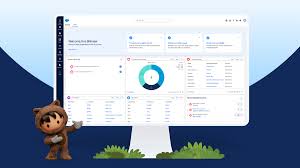
Salesforce Inc. has announced a significant upgrade with the launch of Industries AI, a new automation platform designed to handle a wide range of time-consuming tasks, enhancing productivity across various sectors. We are NOT advocating that the next war will be fought with AI Bots. We aren’t even suggesting there is anything negative about these bots. However, if the next war were to be information and data based, who knows. Industries AI will be integrated into all 15 of Salesforce’s cloud platforms, including Sales Cloud, Data Cloud, Service Cloud, Commerce Cloud, and Marketing Cloud. This expansive solution is capable of managing over 100 common tasks, from matching patients with clinical trials and providing maintenance alerts for vehicles and machinery, to streamlining recruitment processes and enhancing government services. The launch of Industries AI responds to findings from Salesforce’s Trends in AI for CRM Report, which indicated that over 75% of business leaders are concerned about missing out on AI advancements if they do not adopt the technology soon. With a 700% increase in urgency to implement AI over the past six months, many organizations struggle with the resources and expertise needed to develop and train AI models. Salesforce aims to address this by offering a ready-made framework for creating AI agents tailored to industry-specific needs, utilizing each customer’s proprietary data within the Salesforce platform. Industries AI will provide a foundation for quickly deploying autonomous agents, with setup times estimated at just a few minutes. To assist customers in leveraging AI automation, Salesforce has created use case libraries for each of its cloud platforms, featuring over 100 capabilities at launch. These capabilities span multiple industries: Salesforce will begin rolling out Industries AI capabilities in October 2024, with some features available by February 2025. The company plans to regularly update Industries AI with new capabilities as part of its annual Salesforce releases. Jeff Amann, executive vice president and general manager of Salesforce Industries, emphasized that this innovation aims to make powerful AI accessible to all enterprises, regardless of size or budget. “Organizations can now easily start with AI solutions tailored to their specific challenges, enhancing efficiency and productivity across various functions,” he said. Like Related Posts Who is Salesforce? Who is Salesforce? Here is their story in their own words. From our inception, we’ve proudly embraced the identity of Read more Salesforce Marketing Cloud Transactional Emails Salesforce Marketing Cloud Transactional Emails are immediate, automated, non-promotional messages crucial to business operations and customer satisfaction, such as order Read more Salesforce Unites Einstein Analytics with Financial CRM Salesforce has unveiled a comprehensive analytics solution tailored for wealth managers, home office professionals, and retail bankers, merging its Financial Read more AI-Driven Propensity Scores AI plays a crucial role in propensity score estimation as it can discern underlying patterns between treatments and confounding variables Read more
Read More
Salesforce AI Agents Explained

Salesforce AI Agents Explained

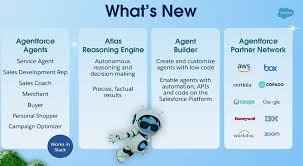
Salesforce’s AI Agents: Revolutionizing Enterprise Sales and Service for the Future In the rapidly evolving landscape of artificial intelligence (AI), Salesforce continues to lead the charge, transforming enterprise operations with cutting-edge AI agents. With the introduction of Agentforce, Salesforce is not just enhancing sales and service departments but reshaping business processes across sectors. This comprehensive exploration highlights how Salesforce’s AI agents are changing the game, offering enterprise-level executives insights into their revolutionary potential. Salesforce AI Agents Explained. AI Agents: Beyond Autonomous Vehicles A fitting analogy to grasp the progression of AI agents is the evolution of autonomous vehicles. Just as self-driving cars advance from basic driver assistance to full autonomy, AI agents evolve from simple automation to more complex decision-making. Salesforce’s Chief Product Officer, David Schmaier, draws this comparison: “In the autonomous driving world, we have levels of autonomy, from level zero to level five. AI agents for enterprises follow a similar path.” At the core of this evolution is what Salesforce defines as the “agentic” phase of AI. Unlike generative AI that follows instructions to create content, agentic AI autonomously determines and takes actions based on broader goals. Schmaier notes, “We’re at the point where AI not only creates content but takes strategic actions. It’s like having an infinite pool of interns handling mundane tasks so human employees can focus on higher-value activities.” Agentforce: Salesforce’s Next-Generation AI Platform Agentforce is the latest addition to Salesforce’s AI arsenal, unveiled during their Q2 ’25 earnings call and now positioned as a significant milestone in AI development. With Agentforce, organizations can build and manage autonomous agents for tasks across various business functions—not just customer service. This versatility is highlighted by Marc Benioff, Salesforce’s CEO, who described the energy around Agentforce during a recent briefing as “palpable.” Agentforce builds on Salesforce’s data management, security, and customization expertise, uniting these capabilities into an AI framework. Schmaier explains, “It’s about creating trusted, enterprise-ready agents, not just deploying a large language model. We’ve developed over 100 out-of-the-box use cases, from sales account summaries to service reply recommendations, all customizable and easy to deploy.” Agentforce “In Every App” A key announcement is the integration of Agentforce in every app across Salesforce’s product suite, including Sales, Service, Marketing, and Commerce Agents. The Atlas reasoning engine, Agent Builder, and a partner network were also introduced to further enhance its capabilities. The Atlas Reasoning Engine acts as the “brain” behind Agentforce, autonomously generating plans and refining them based on actions it needs to perform, such as running business processes or engaging customers through preferred channels. What Makes an AI Agent? Salesforce AI Agents Explained Building an AI agent with Agentforce requires five key elements: These components leverage existing Salesforce infrastructure, making it easier for businesses to deploy agents through Agent Builder, which is part of the new Agentforce Studio. Agents vs. Chatbots Unlike traditional chatbots, which provide pre-programmed responses, Salesforce’s AI agents use large language models (LLMs) and generative AI to interpret and autonomously execute customer requests based on CRM data. This distinction allows AI agents to perform tasks that go beyond simple queries, driving efficiency in customer service, sales, and other business areas. Practical Applications: Sales, Service, and Marketing Salesforce’s AI agents offer tangible business benefits. For instance, Sales Agent, available as both a Sales Development Representative (SDR) and Sales Coach, automates lead nurturing and inquiry management. It utilizes CRM data to deliver personalized pitches, handle objections, and even suggest meeting times—freeing sales teams to focus on more strategic tasks. In customer service, AI agents manage routine inquiries, allowing human representatives to address more complex customer needs. In marketing, AI agents generate data-driven insights to personalize campaigns, improving customer engagement and conversion rates. The Security and Trust Foundation Security and trust remain core to Salesforce’s approach to AI. The Einstein Trust Layer ensures that data protection, privacy, and ethical guidelines are maintained throughout AI interactions. Schmaier emphasizes, “Our platform defines what data agents can access and how they use it, adhering to strict data integrity standards.” The Trust Layer also prevents AI from training on customer data without consent, ensuring transparency and security. A Partnership Between Humans and AI-Salesforce AI Agents Explained Salesforce’s vision emphasizes the synergy between human employees and AI agents. As Schmaier points out, “AI agents handle routine tasks and deliver insights, allowing employees to focus on more creative and strategic work.” This human-AI partnership boosts productivity and innovation, ultimately improving business outcomes. The Future of AI in Business As AI technology advances, Salesforce is already working on next-generation capabilities for Agentforce, including predictive analytics and more sophisticated autonomous agents. Schmaier forecasts, “These agents will handle a wider range of tasks and provide deeper insights and recommendations.” With Agentforce launching in October 2024, businesses can expect significant returns on investment, thanks to its cost-efficient model starting at $2 per conversation. In summary, Salesforce’s Agentforce is a game-changing innovation, blending AI and human intelligence to transform sales, service, and marketing. As more details unfold, it’s clear that Agentforce will redefine the future of business operations—driving efficiency, personalization, and strategic success. Like1 Related Posts Who is Salesforce? Who is Salesforce? Here is their story in their own words. From our inception, we’ve proudly embraced the identity of Read more Salesforce Marketing Cloud Transactional Emails Salesforce Marketing Cloud Transactional Emails are immediate, automated, non-promotional messages crucial to business operations and customer satisfaction, such as order Read more Salesforce Unites Einstein Analytics with Financial CRM Salesforce has unveiled a comprehensive analytics solution tailored for wealth managers, home office professionals, and retail bankers, merging its Financial Read more AI-Driven Propensity Scores AI plays a crucial role in propensity score estimation as it can discern underlying patterns between treatments and confounding variables Read more
Read More
US Comprehensive AI Legislation

US Comprehensive AI Legislation

U.S. policymakers have yet to pass comprehensive AI legislation through Congress, but several AI-related bills are now making their way to the Senate floor, presenting new opportunities for regulation. In late July, the U.S. Senate Committee on Commerce, Science, and Transportation advanced eight AI-focused bills aimed at enhancing the transparency and safety of AI systems. These bills also target AI-generated deepfakes—false images, audio, and videos. Since the launch of OpenAI’s ChatGPT in late 2022, regulating AI has become a key issue at both federal and state levels. This week, California lawmakers advanced SB 1047, a bill requiring safety testing for AI models, which is awaiting Governor Gavin Newsom’s signature. Most of the bills before the Senate center on innovation, research, and safety, with only one— the Artificial Intelligence Research, Innovation, and Accountability Act—introducing penalties for non-compliance. “Voluntary guidance and standards can help companies develop safer, more responsible AI, but without binding requirements, the real impact is unlikely,” said Enza Iannopollo, an analyst at Forrester Research. However, Hodan Omaar, a senior policy manager at the Center for Data Innovation, praised the Senate’s emphasis on AI research and innovation, expressing optimism about the progress being made. Here’s a look at the key AI bills up for consideration after Congress returns from summer recess: Like Related Posts Who is Salesforce? Who is Salesforce? Here is their story in their own words. From our inception, we’ve proudly embraced the identity of Read more Salesforce Marketing Cloud Transactional Emails Salesforce Marketing Cloud Transactional Emails are immediate, automated, non-promotional messages crucial to business operations and customer satisfaction, such as order Read more Salesforce Unites Einstein Analytics with Financial CRM Salesforce has unveiled a comprehensive analytics solution tailored for wealth managers, home office professionals, and retail bankers, merging its Financial Read more AI-Driven Propensity Scores AI plays a crucial role in propensity score estimation as it can discern underlying patterns between treatments and confounding variables Read more

Read More
Salesforce to Enhance AI-Powered Tools With Tenyx

Salesforce to Enhance AI-Powered Tools With Tenyx

Salesforce to Acquire Tenyx, Enhancing AI-Powered Solutions Salesforce has announced its decision to acquire Tenyx, a California-based startup specializing in AI-driven voice agents. This acquisition aims to bolster Salesforce’s AI capabilities and further its commitment to enhancing customer service through innovative technology. The deal, set to close in the third quarter of 2024, will integrate Tenyx’s advanced voice AI solutions with Salesforce’s existing services. About Tenyx Founded in 2022, Tenyx has quickly established itself in various industries including e-commerce, healthcare, hospitality, and travel. The startup, led by CEO Itamar Arel and CTO Adam Earle, is renowned for developing AI voice agents that create natural and engaging conversational experiences. Salesforce’s Strategic Move This acquisition is part of Salesforce’s broader strategy to reinvigorate its growth and strengthen its AI capabilities. Following a year of focus on share buybacks and a reduction in acquisitions under pressure from activist investors, Salesforce is now pivoting to integrate cutting-edge technology. This move reflects a renewed emphasis on acquiring top-tier AI talent to drive innovation and maintain a competitive edge. Industry Context The acquisition aligns Salesforce with a growing trend in the tech industry, where major players like Microsoft and Amazon are also investing heavily in AI. Microsoft recently acquired talent from AI startup Inflection for $650 million, while Amazon brought in co-founders and employees from Adept. These strategic acquisitions highlight the escalating competition for AI expertise and tools. What This Means for Salesforce With Tenyx’s technology, Salesforce will enhance its AI-powered solutions, particularly within its Agentforce Service Agent platform. This integration aims to deliver more intuitive and seamless customer interactions, setting new standards in customer experience. Conclusion Salesforce’s acquisition of Tenyx is a strategic move to advance its AI-driven solutions and maintain its leadership in customer service technology. By integrating Tenyx’s innovative voice AI, Salesforce is positioned to redefine customer engagement and service standards. The deal is expected to close by the end of the third quarter of Salesforce’s fiscal year 2025, concluding on October 31, 2024, pending customary closing conditions. Like Related Posts Who is Salesforce? Who is Salesforce? Here is their story in their own words. From our inception, we’ve proudly embraced the identity of Read more Salesforce Marketing Cloud Transactional Emails Salesforce Marketing Cloud Transactional Emails are immediate, automated, non-promotional messages crucial to business operations and customer satisfaction, such as order Read more Salesforce Unites Einstein Analytics with Financial CRM Salesforce has unveiled a comprehensive analytics solution tailored for wealth managers, home office professionals, and retail bankers, merging its Financial Read more AI-Driven Propensity Scores AI plays a crucial role in propensity score estimation as it can discern underlying patterns between treatments and confounding variables Read more
Read More
Salesforce and Ortoo Integration

Salesforce and Ortoo Integration

Ortoo Launches Smart Actions: A Revolutionary Salesforce-Native App for AI Automation Ortoo, a leading provider of Salesforce productivity solutions, has unveiled its latest innovation, Smart Actions, now available on the Salesforce AppExchange. This groundbreaking Salesforce-native app allows businesses to seamlessly integrate AI automation into their Salesforce workflows, dramatically boosting efficiency and simplifying complex processes with a single click. Salesforce and Ortoo integration for Smart Actions. How do I sync Ortto activities to Salesforce? In your Ortto account, navigate to Data sources > Salesforce > Sync Ortto activities to Salesforce. Choose up to 5 activities. At Sync settings, select whether you wish to sync these Ortto activities as activities and/or as tasks. If you are syncing the Salesforce Task object to Ortto (selected at Salesforce fields): Smart Actions empowers companies to deploy AI and GPT-powered automations across sales, service, and support functions within Salesforce, eliminating the traditionally high costs associated with advanced AI tools. By integrating smoothly into the Salesforce ecosystem, Smart Actions enables businesses to automate manual tasks, personalize communications, and optimize workflows with unparalleled ease. Track and manage email conversations within Salesforce. AI-powered actions to streamline sales workflows. SEAMLESS SALESFORCE INTEGRATION “With Smart Actions, we’re making AI automation accessible to businesses of all sizes,” said Amy Grenham, Head of Marketing at Ortoo. “If you’ve ever built a custom GPT using OpenAI, creating a Smart Action will feel very familiar. Ortoo’s prompt builder allows you to set the context, specify the Salesforce fields to analyze, and determine where the output should go. This simplicity makes it incredibly easy to deploy AI-driven processes and transform operations within Salesforce.” Key Features and Practical Applications Real-World Applications of Smart Actions Get Started with Smart Actions Today Smart Actions is now available on the Salesforce AppExchange. Businesses can start using the app for free, with additional features available through a premium version. SmartActions is a 5 star product on the Salesforce AppExchange. Like Related Posts Who is Salesforce? Who is Salesforce? Here is their story in their own words. From our inception, we’ve proudly embraced the identity of Read more Salesforce Marketing Cloud Transactional Emails Salesforce Marketing Cloud Transactional Emails are immediate, automated, non-promotional messages crucial to business operations and customer satisfaction, such as order Read more Salesforce Unites Einstein Analytics with Financial CRM Salesforce has unveiled a comprehensive analytics solution tailored for wealth managers, home office professionals, and retail bankers, merging its Financial Read more AI-Driven Propensity Scores AI plays a crucial role in propensity score estimation as it can discern underlying patterns between treatments and confounding variables Read more

Read More
Salesforce to Acquire PredictSpring

Salesforce to Acquire PredictSpring

Salesforce to Acquire PredictSpring, Enhancing Omnichannel Capabilities Last month, Salesforce finalized an agreement to acquire PredictSpring, a leading provider of point-of-sale (POS) software. PredictSpring, known for its omnichannel commerce solutions, offers a suite of mobile POS systems along with clienteling, inventory management, and order management tools tailored for the retail sector. Insights from Industry Analysts In a recent episode of CX Today’s BIG News Update, key analysts shared their perspectives on the acquisition, highlighting three major points. Filling a Critical Gap Rebecca Wetteman, CEO & Principal Analyst at Valoir, noted that while Salesforce has effectively assisted many B2B clients, such as Fiserv and Peloton, in transitioning to B2C strategies, one crucial component was missing: order management. PredictSpring’s solutions address this gap, enhancing Salesforce’s data strategy and providing a more comprehensive customer view. Wetteman stated, “This addition is a significant move for Salesforce, strengthening their position beyond B2B and bridging the B2B to B2C divide.” Advancing Omnichannel Retail Simon Harrison, Founder & CEO at Actionary, emphasized that the acquisition represents a major step forward in delivering effective omnichannel solutions. PredictSpring’s technology promises to solve challenges associated with integrating in-store and digital experiences, enhancing overall customer interactions. Harrison praised the investment, stating, “This is a smart move, addressing real-world issues and increasing value for both staff and customers in today’s dynamic retail environment.” Expanding Market Reach Martin Schnieder, VP and Principal Analyst at Constellation Research, pointed out that acquiring PredictSpring aligns with Salesforce’s strategy to expand its total addressable market (TAM). He highlighted retail as a sector with unique challenges and opportunities, where Salesforce’s Data Cloud and platform can create impactful vertical-specific solutions. Schnieder noted, “Retail offers a different model with constrained margins, and Salesforce can leverage its platform to provide substantial value.” Michael Fauscette, Founder, CEO, and Chief Analyst at Arion Research, observed that Salesforce is strategically acquiring startups to fill gaps in its vertical offerings. He remarked, “Salesforce’s approach involves identifying startups that address specific needs and integrating them into their ecosystem. This strategy has proven effective and allows Salesforce to go to market directly with these partners, a practice not always seen among enterprise vendors.” Conclusion Salesforce’s acquisition of PredictSpring is a strategic move to enhance its omnichannel capabilities and address key gaps in its offerings. By integrating PredictSpring’s advanced POS solutions, Salesforce aims to strengthen its position in the retail sector and continue its growth trajectory in both B2B and B2C markets. Like Related Posts Who is Salesforce? Who is Salesforce? Here is their story in their own words. From our inception, we’ve proudly embraced the identity of Read more Salesforce Marketing Cloud Transactional Emails Salesforce Marketing Cloud Transactional Emails are immediate, automated, non-promotional messages crucial to business operations and customer satisfaction, such as order Read more Salesforce Unites Einstein Analytics with Financial CRM Salesforce has unveiled a comprehensive analytics solution tailored for wealth managers, home office professionals, and retail bankers, merging its Financial Read more AI-Driven Propensity Scores AI plays a crucial role in propensity score estimation as it can discern underlying patterns between treatments and confounding variables Read more
Read More
Connected Vehicles

Connected Vehicles

Revolutionizing the Automotive Industry: Salesforce’s Connected Car App The automotive industry has always been a beacon of innovation, consistently pushing the boundaries to enhance the driving experience. From the iconic Model T and the assembly line to today’s electric and autonomous vehicles, the evolution of automobiles has been driven by an unyielding pursuit of progress. I actually purchased a new-to-me car today, and with the connected vehicle on the horizon I’m kind of glad I’ll be able to upgrade in a couple years. Bluetooth and back up cameras are great. But a car that can tell the dealership to get me on the horn before some automotive calamity occurs? The future is here, my friends. Connected Vehicles for Better Experiences Now, as digital transformation reshapes industries, a new chapter is emerging in automotive innovation: the connected car. Leading this charge is Salesforce, a global powerhouse in customer relationship management (CRM), with the introduction of its groundbreaking Connected Car App, poised to redefine in-car experiences for both drivers and passengers. From my personal buying experience today, the car business could use some customer relationship management! The Future of In-Car Connectivity Salesforce’s Connected Car App is more than just a technological enhancement; it represents a fundamental shift in how we interact with our vehicles. By leveraging Salesforce’s Customer 360 platform, this app creates personalized, engaging experiences that go far beyond traditional automotive features. The Connected Car App is designed to make every journey more intuitive and efficient, offering real-time insights and services tailored to the unique needs of each driver. Whether it’s maintenance alerts, optimized route suggestions based on traffic, or personalized entertainment options, the app transforms the car into a truly smart companion on the road. A GPS feature? I guess I can plan on deleting Waze off my phone in the near future! Powered by Salesforce Customer 360 At the heart of the Connected Car App is Salesforce’s Customer 360 platform, which delivers a comprehensive, 360-degree view of each customer. This integration ensures that the app provides tailored experiences based on a deep understanding of the driver’s preferences, habits, and history. It isn’t going to just know you by a vehicle loan number, a VIN number, or even just an email address. For instance, a driver who frequently takes long road trips might receive customized recommendations for rest stops, dining options, and attractions along their route. Meanwhile, commuters could benefit from real-time updates on traffic, weather, and parking availability. The app’s ability to anticipate and respond to the driver’s needs in real time distinguishes it from traditional in-car systems. I can just hear my car now, advising me it has been one hour since I stopped for coffee, and she’s worried about my sanity. Enhancing Customer Loyalty and Satisfaction with Connected Vehicles The Connected Car App offers significant potential to boost customer loyalty and satisfaction. By delivering a personalized driving experience, automakers can strengthen relationships with customers, transforming each driving journey into an opportunity to build brand loyalty. If Toyota is suddenly going to treat me like Shannan Hearne instead of customer # xxxxx would be ecstatic. Additionally, the app’s capability to collect and analyze data in real time opens new avenues for automakers to engage with their customers. Predictive maintenance reminders, targeted promotions, and special offers are just a few examples of how the app fosters a deeper connection between the brand and the driver. Oh, yeah. My connected vehicle app is DEFINITELY going to be talking to me about changing my oil (I’m not exactly diligent), how great the latest model of Toyota is (I drove a Corolla for 18 years and have also owned a Tacoma, a Tundra, and a Prius), and if it would add coffee coupons I would be golden. A New Era of Automotive Innovation Salesforce’s Connected Car App marks a pivotal moment in the automotive industry’s digital transformation. As vehicles become increasingly connected, the opportunities for innovation are boundless. Salesforce is at the forefront with a solution that not only enhances the driving experience but also empowers automakers to build stronger, more meaningful relationships with their customers. In a world where customer expectations are constantly growing, the Connected Car App is a game-changer. Customers, even car owners, expect their brands to know them and recognize them. By integrating Salesforce’s CRM capabilities directly into vehicles, the app creates a seamless, personalized experience that stands out. As we look ahead, it’s clear that the Connected Car App is just the beginning of an exciting new era of automotive innovation. As a marketer at heart and a technologist by trade, I’m really excited about the potential here. Connected Vehicle: A Unified Digital Foundation Salesforce’s Connected Vehicle platform provides automakers with a unified, intelligent digital foundation, enabling them to reduce development time and roll out features and updates faster than ever before. This platform allows seamless integration of vehicle, Internet of Things (IoT), driver, and retail data from various sources, including AWS IoT FleetWise and Snapdragon® Car-to-Cloud Connected Services Platform, to enhance driver experiences and ensure smooth vehicle operation. Can you imagine a smart app like the Connected Vehicle talking to your loyalty apps for gas stations, convenience stores, and grocery stores? I would be driving down the interstate and the app will tell me there is a Starbucks ahead AND I have a 10% off coupon. Automakers and mobility leaders like Sony Honda Mobility are already exploring the use of Connected Vehicle to deliver better experiences for their customers. The platform’s ability to access and integrate data from any source in near real time allows automakers to personalize driver experiences, in-car offers, and safety upgrades. Why It Matters By 2030, every new vehicle sold will be connected, and the advanced, tech-driven features they provide will be increasingly important to consumers. A recent Salesforce survey revealed that drivers already consider connected features to be nearly as important as a car’s brand. Connected Vehicle accelerates this evolution, enabling automakers to immediately deliver branded, customized experiences tailored to

Read More
Salesforce Holiday Forecast

Salesforce Holiday Forecast

Value-conscious consumers are increasingly opting for lower-cost options, waiting strategically for discounts, and turning to budget-friendly Chinese shopping apps, leading to a projected 2% year-over-year (YoY) growth in holiday sales both in the U.S. and globally, according to the Salesforce Shopping Index. This index analyzes data from over 1.5 billion global consumers on retail sites. The Salesforce Holiday Forecast isn’t necessarily bleak, but it will leave some merchants feeling glum. In 2023, holiday sales grew by 3% YoY, reaching .17 trillion. However, Salesforce forecasts that global sales for November through December 2024 will only reach .19 trillion, with the U.S. contributing $277 billion. This modest projection aligns with Salesforce consumer surveys, which indicate that while 47% of shoppers plan to spend the same amount as in 2023, 40% intend to spend less this year. “The global economy remains fraught with risks, despite inflation stabilizing,” said Rob Garf, VP and General Manager of Consumer Goods at Salesforce, during a recent briefing. “Interest rates are still high, global conflicts are disrupting supply chains, and we see consumers transferring inflationary costs to debt.” Indeed, a Salesforce survey conducted earlier this month revealed that 37% of consumers are using credit cards more frequently than last year, 32% are turning to buy now, pay later (BNPL) services, and 43% are carrying more monthly debt. Rising Popularity of Chinese Shopping Apps Consumers seeking value are gravitating towards deep-discount Chinese shopping apps like Temu, Shein, and increasingly, TikTok. According to Salesforce’s August 2024 survey, 63% of consumers have made a purchase through these apps in the past six months, and 50% plan to use them during the holiday season. These figures are even higher among Gen Z and millennial consumers, with 80% having purchased from these apps in the past six months and nearly 70% planning to do so during the holidays. Overall, Salesforce predicts that Chinese shopping apps will account for just over 21% of holiday purchases! “Temu and Shein lead the pack, but TikTok is gaining traction, up 24% since April, making it the third most popular app,” said Caila Schwartz, Director of Consumer Insights and Strategy at Salesforce. Consumers cite value as the primary reason for using these apps (58%), far ahead of fast shipping (28%). Consumers Plan to Wait for Cyber Week Deals Many shoppers intend to stretch their budgets by holding off on purchases until Cyber Week, the period around Thanksgiving that includes Black Friday and Cyber Monday. “In 2023, price-conscious consumers waited for Cyber Week to make purchases, and we expect this trend to be even stronger this year,” Schwartz noted. Salesforce data shows that 67% of shoppers are delaying “splurge” purchases until Cyber Week. Salesforce forecasts that global discount rates will briefly rise in October, likely coinciding with the fall edition of Amazon Prime Day, when many retailers run promotions to capture the holiday season’s momentum. Discount rates are expected to peak at an average of 28% globally during Cyber Week, with U.S. discounts forecasted to reach 30%. Shorter Season Highlights BOPIS Importance With only 27 days between Thanksgiving (Nov. 28) and Christmas this year, retailers with strong buy online, pick up in-store (BOPIS) offerings will have a significant advantage. Salesforce predicts that BOPIS will account for one-third (33%) of global online orders during the week before Christmas and Boxing Week. The compressed season will increase the pressure on retailers to execute BOPIS effectively, as failing to meet customer expectations could have serious reputational costs. “Retailers can extend the digital shopping season with BOPIS, but the real winners will be those who can deliver on it,” Garf emphasized. “Store associates are already feeling the strain, especially during the holidays, and some retailers have scaled back their BOPIS offerings, citing increased anxiety among both staff and customers.” Holiday Strategy: Prioritize Customer Acquisition To capture a share of what may be a smaller holiday “pie,” retailers should focus on customer acquisition—and the sooner, the better. With the 2024 elections in the U.S. and many other countries, advertising costs and space availability will be at a premium, making it harder for brands to reach consumers. “Online traffic is cheaper now than it will be in a few months, when political ad spending ramps up,” said David Oksman, VP of Marketing and DTC at Samsonite, who joined Garf and Schwartz at the briefing. “Acquisition costs will rise even more than we’ve seen before.” One additional challenge of holiday sales in an election year. Oksman recommends tried-and-true tactics for driving acquisition and gathering customer data: “Fall is a great time for sweepstakes and giveaways. The old playbooks still work, and customer acquisition is gold.” A sweepstakes prize like a shopping spree or offering exclusive early access to products or deals can incentivize consumers to share their email addresses with a brand. “Loyalty programs are another strong value proposition in the consumer’s mind,” Schwartz added. “Even if you’re not offering points, benefits like free returns or shipping can encourage shoppers to sign up.” Right now is the best time to engage in reactivation campaigns to old customers and prospects. Like Related Posts Who is Salesforce? Who is Salesforce? Here is their story in their own words. From our inception, we’ve proudly embraced the identity of Read more Salesforce Marketing Cloud Transactional Emails Salesforce Marketing Cloud Transactional Emails are immediate, automated, non-promotional messages crucial to business operations and customer satisfaction, such as order Read more Salesforce Unites Einstein Analytics with Financial CRM Salesforce has unveiled a comprehensive analytics solution tailored for wealth managers, home office professionals, and retail bankers, merging its Financial Read more AI-Driven Propensity Scores AI plays a crucial role in propensity score estimation as it can discern underlying patterns between treatments and confounding variables Read more
Read More
ai analytics

AI Analytics Explained

While both AI analytics and predictive AI leverage data analysis, AI analytics is a broader field encompassing various AI techniques for data processing and analysis, while predictive AI specifically focuses on forecasting future outcomes based on historical data patterns. Here’s a more detailed breakdown: AI Analytics (Broad) Predictive AI (Specific) What is AI Analytics? AI analytics leverages machine learning (ML) and artificial intelligence (AI) to automate the analysis of vast amounts of data, uncovering insights faster and more accurately than traditional methods. By continuously monitoring data streams, AI analytics identifies patterns, anomalies, and trends—tasks that would typically require extensive manual effort from data analysts. Business Analytics in the AI Era AI is transforming industries, and business analytics is no exception. While traditional analytics relies on statistical models developed over centuries, AI-powered analytics introduces unprecedented speed, scalability, and precision, enabling businesses to make real-time, data-driven decisions. This article explores: What is Analytics? Analytics is the process of extracting meaningful insights from raw data to answer business questions, predict trends, and guide decision-making. It involves various techniques, including: The Four Stages of Analytics (Gartner’s Analytic Ascendancy Model) AI, Machine Learning, and AI Analytics Artificial Intelligence (AI) AI refers to machines performing tasks that typically require human intelligence, such as: Machine Learning (ML) A subset of AI, ML uses algorithms trained on data to make predictions without explicit programming. Key approaches include: AI Analytics AI analytics automates data analysis by: Unlike traditional analytics, which relies on manual hypothesis testing, AI analytics continuously scans data, delivering faster, more objective insights. AI Analytics vs. Traditional Analytics Feature Traditional Analytics AI Analytics Speed Slow (weeks to months) Real-time processing Scale Limited by human capacity Handles billions of data points Granularity Broad trends Micro-level insights (e.g., per-user) Bias Human assumptions influence results Data-driven, unbiased analysis Automation Manual hypothesis testing Self-learning algorithms Advantages of AI Analytics ✅ Faster detection – Identifies issues in hours, not weeks.✅ Higher accuracy – Reduces errors by 30-50% (McKinsey).✅ Unbiased insights – Tests millions of hypotheses objectively. Real-World Applications of AI Analytics 1. Demand Forecasting (Predictive Analytics) 2. Predictive Maintenance 3. Business Monitoring (Diagnostic Analytics) 4. Cloud Cost Optimization Conclusion: AI Analytics is the Future AI analytics supercharges business intelligence by:🚀 Automating tedious analysis – Freeing analysts for strategic work.🔍 Uncovering hidden insights – Detecting patterns humans miss.⏱ Delivering real-time decisions – Keeping businesses agile. As AI continues to evolve, companies that adopt AI-powered analytics will gain a competitive edge—transforming raw data into actionable intelligence at unprecedented speed. Ready to integrate AI analytics into your business? Explore how AI can revolutionize your data strategy today. Contact Tectonic. Like Related Posts Who is Salesforce? Who is Salesforce? Here is their story in their own words. From our inception, we’ve proudly embraced the identity of Read more Salesforce Marketing Cloud Transactional Emails Salesforce Marketing Cloud Transactional Emails are immediate, automated, non-promotional messages crucial to business operations and customer satisfaction, such as order Read more Salesforce Unites Einstein Analytics with Financial CRM Salesforce has unveiled a comprehensive analytics solution tailored for wealth managers, home office professionals, and retail bankers, merging its Financial Read more AI-Driven Propensity Scores AI plays a crucial role in propensity score estimation as it can discern underlying patterns between treatments and confounding variables Read more
Read More
Salesforce Data Snowflake and You

Salesforce Data Snowflake and You

Unlock the Full Potential of Your Salesforce Data with Snowflake At Tectonic, we’ve dedicated years to helping businesses maximize their Salesforce investment, driving growth and enhancing customer experiences. Now, we’re expanding those capabilities by integrating with Snowflake.Imagine the power of merging Salesforce data with other sources, gaining deeper insights, and making smarter decisions—without the hassle of complex infrastructure. Snowflake brings this to life with a flexible, scalable solution for unifying your data ecosystem.In this insight, we’ll cover why Snowflake is essential for Salesforce users, how seamlessly it integrates, and why Tectonic is the ideal partner to help you leverage its full potential. Why Snowflake Matters for Salesforce Users Salesforce excels at managing customer relationships, but businesses today need data from multiple sources—e-commerce, marketing platforms, ERP systems, and more. That’s where Snowflake shines. With Snowflake, you can unify these data sources, enrich your Salesforce data, and turn it into actionable insights. Say goodbye to silos and blind spots. Snowflake is easy to set up, scales effortlessly, and integrates seamlessly with Salesforce, making it ideal for enhancing CRM data across various business functions.The Power of Snowflake for Salesforce Users Enterprise-Grade Security & GovernanceSnowflake ensures that your data is secure and compliant. With top-tier security and data governance tools, your customer data remains protected and meets regulatory requirements across platforms, seamlessly integrating with Salesforce. Cross-Cloud Data SharingSnowflake’s Snowgrid feature makes it easy for Salesforce users to share and collaborate on data across clouds. Teams across marketing, sales, and operations can access the same up-to-date information, leading to better collaboration and faster, more informed decisions. Real-Time Data ActivationCombine Snowflake’s data platform with Salesforce Data Cloud to activate insights in real-time, enabling enriched customer experiences through dynamic insights from web interactions, purchase history, and service touchpoints. Tectonic + Snowflake: Elevating Your Salesforce Experience Snowflake offers powerful data capabilities, but effective integration is key to realizing its full potential—and that’s where Tectonic excels. Our expertise in Salesforce, now combined with Snowflake, ensures that businesses can maximize their data strategies. How Tectonic Helps: Strategic Integration Planning: We assess your current data ecosystem and design a seamless integration between Salesforce and Snowflake to unify data without disrupting operations. Custom Data Solutions: From real-time dashboards to data enrichment workflows, we create solutions tailored to your business needs. Ongoing Support and Optimization: Tectonic provides continuous support, adapting your Snowflake integration to meet evolving data needs and business strategies. Real-World Applications Retail: Integrate in-store and e-commerce sales data with Salesforce for real-time customer insights. Healthcare: Unify patient data from wearables, EMRs, and support interactions for a holistic customer care experience. Financial Services: Enhance Salesforce data with third-party risk assessments, enabling quicker, more accurate underwriting. Looking Ahead: The Tectonic Advantage Snowflake opens up new possibilities for Salesforce-powered businesses. Effective integration, however, requires strategic planning and hands-on expertise. Tectonic has a long-standing track record of helping clients get the most out of Salesforce, and now, Snowflake adds an extra dimension to our toolkit. Whether you want to better manage data, unlock insights, or enhance AI initiatives, Tectonic’s combined Salesforce and Snowflake expertise ensures you’ll harness the best of both worlds. Stay tuned as we dive deeper into Snowflake’s features, such as Interoperable Storage, Elastic Compute, and Cortex AI with Arctic, and explore how Tectonic is helping businesses unlock the future of data and AI. Ready to talk about how Snowflake and Salesforce can transform your business? Contact Tectonic today! Like Related Posts Who is Salesforce? Who is Salesforce? Here is their story in their own words. From our inception, we’ve proudly embraced the identity of Read more Salesforce Marketing Cloud Transactional Emails Salesforce Marketing Cloud Transactional Emails are immediate, automated, non-promotional messages crucial to business operations and customer satisfaction, such as order Read more Salesforce Unites Einstein Analytics with Financial CRM Salesforce has unveiled a comprehensive analytics solution tailored for wealth managers, home office professionals, and retail bankers, merging its Financial Read more AI-Driven Propensity Scores AI plays a crucial role in propensity score estimation as it can discern underlying patterns between treatments and confounding variables Read more
Read More
gettectonic.com