Data Activation Archives - gettectonic.com
Salesforce AI Agents and New Data Cloud Features

Salesforce CDP and Data Cloud

What is the difference between Salesforce CDP and data Cloud? AI Overview Salesforce Data Cloud and Salesforce CDP (Customer Data Platform) are closely related, but Data Cloud is a broader, more comprehensive platform. Data Cloud extends the core CDP functionality to encompass all business data, not just customer data, and integrates it with the broader Salesforce ecosystem according to saasguru.  Here’s a breakdown of the key differences: Salesforce CDP (Now part of Data Cloud): Salesforce Data Cloud: Key Differences Summarized: In essence, Data Cloud is a more mature and broader evolution of the original CDP functionality, extending its benefits to a wider range of business data and applications within the Salesforce ecosystem according to Salesforce Ben.  Like Related Posts Who is Salesforce? Who is Salesforce? Here is their story in their own words. From our inception, we’ve proudly embraced the identity of Read more Salesforce Marketing Cloud Transactional Emails Salesforce Marketing Cloud Transactional Emails are immediate, automated, non-promotional messages crucial to business operations and customer satisfaction, such as order Read more Salesforce Unites Einstein Analytics with Financial CRM Salesforce has unveiled a comprehensive analytics solution tailored for wealth managers, home office professionals, and retail bankers, merging its Financial Read more AI-Driven Propensity Scores AI plays a crucial role in propensity score estimation as it can discern underlying patterns between treatments and confounding variables Read more

Read More
Salesforce Data Cloud Hits $900M in Revenue

Salesforce Data Cloud Hits $900M in Revenue

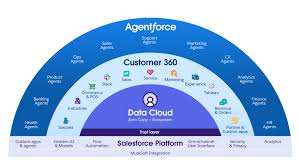
Salesforce Data Cloud Hits $900M in Revenue, Powering the Future of AI-Driven Business As AI evolves toward autonomous agents, unified data has become the backbone of enterprise intelligence—ensuring accuracy, compliance, and actionable insights. Without it, AI outputs grow unreliable, and compliance risks surge. Salesforce Data Cloud is addressing this challenge by unifying fragmented data sources, enabling smarter AI-powered experiences. The platform just hit a major milestone in FY25, reaching 0M in annual recurring revenue (ARR)—a testament to its rapid adoption. Why Data Cloud Stands Out Unlike traditional data solutions that require costly overhauls, Data Cloud enables real-time data activation with:✔ Zero-copy architecture (no data duplication)✔ 270+ pre-built connectors (Zendesk, Shopify, Snowflake, and more)✔ Unified structured & unstructured data processing Rahul Auradkar, EVP & GM of Unified Data Services and Einstein at Salesforce, explains: “Data Cloud is the leading data activation layer because it harmonizes data from any source—powering every AI action, automation, and insight. Our hyperscale capabilities, governance, and open ecosystem help enterprises break down silos, creating the foundation for trusted AI.” The Strategic Power of Unified Data Data Cloud acts as an intelligent activation layer, pulling data from warehouses, lakes, CRMs, and external systems to create a single customer view. This fuels: Insulet, a medical device company, leveraged Data Cloud to enhance customer experiences. Amit Guliani, acting CTO, says: “Unified data helps us move from insights to action—delivering personalized solutions that simplify life for people with diabetes.” Industry Recognition & Real-World Impact Salesforce Data Cloud has been named a Leader in the 2025 Gartner Magic Quadrant for Customer Data Platforms and praised by IDC, Forrester, and Constellation Research. Wyndham Hotels & Resorts uses it to transform guest experiences. Scott Strickland, Chief Commercial Officer, shares: “Data Cloud gives our agents a unified view of reservations, loyalty, and CRM data—letting us anticipate needs and personalize stays across thousands of properties.” The Future: Agentic AI Powered by Real-Time Data Data Cloud is the foundation for autonomous AI agents, enabling:🔹 Proactive workflows (agents triggered by customer behavior)🔹 Self-optimizing operations (automated risk detection, dynamic responses)🔹 Trusted governance (GDPR compliance, access controls, security) Adam Berlew, CMO at Equinix, notes: “Data Cloud is shifting our marketing strategy, enabling AI-powered personalization and automation at scale—key to our competitive edge.” Conclusion: AI Runs on Unified Data As businesses transition to AI-first models, Salesforce Data Cloud ensures:✅ Agents act autonomously with real-time, trusted data✅ Humans focus on strategy while AI handles routine tasks✅ Every interaction is hyper-personalized With $900M in ARR and rapid enterprise adoption, Data Cloud is proving to be the essential engine for the next wave of AI-driven business. Key Takeaways: Salesforce Data Cloud isn’t just unifying data—it’s powering the future of intelligent business. Like Related Posts Who is Salesforce? Who is Salesforce? Here is their story in their own words. From our inception, we’ve proudly embraced the identity of Read more Salesforce Marketing Cloud Transactional Emails Salesforce Marketing Cloud Transactional Emails are immediate, automated, non-promotional messages crucial to business operations and customer satisfaction, such as order Read more Salesforce Unites Einstein Analytics with Financial CRM Salesforce has unveiled a comprehensive analytics solution tailored for wealth managers, home office professionals, and retail bankers, merging its Financial Read more AI-Driven Propensity Scores AI plays a crucial role in propensity score estimation as it can discern underlying patterns between treatments and confounding variables Read more

Read More
Unlocking Sales Potential with Data Activation

Unlocking Sales Potential with Data Activation

Selling has never been easy — and it’s not getting any simpler. Sales representatives are under constant pressure to research markets, navigate gatekeepers, and craft compelling pitches to win over decision-makers. But in today’s market, that’s not enough. Nearly 90% of business buyers expect personalized, insightful interactions — and delivering on that expectation requires more than persuasive messaging. It demands access to accurate, real-time data. The challenge? Sales reps often struggle to find the information they need. Instead of focusing on closing deals, they waste time chasing down customer data, piecing together fragmented insights, or working off outdated information. In fact: The root cause? Data silos. Data Silos are Crippling Sales Efficiency In most companies, critical customer data is scattered across: This fragmented data structure creates massive blind spots for sales teams. Consider this: The impact is costly — missed opportunities, slower deal cycles, and lost revenue. Without a unified approach to data management, sales teams remain limited by incomplete information, preventing them from delivering personalized, high-impact customer experiences. The Answer: Data Activation The solution isn’t just unifying your data — it’s activating it. Data activation means making your customer data accessible, actionable, and visible within your CRM so your sales team can use it in real-time. It eliminates the need to toggle between systems, request data from other teams, or work from static spreadsheets. Instead, activated data flows directly into the workflows and tools that your sales reps use every day — giving them everything they need to engage, sell, and close deals faster. Here’s what data activation looks like in practice: Data activation ensures that every team member works from the same, real-time, unified view of the customer — eliminating data silos and transforming sales productivity. Why Data Activation is a Game-Changer for Sales By bringing your unified data directly into your CRM, your sales team gains immediate access to valuable insights that drive better outcomes. Here are some powerful data types that become actionable through data activation: 1. Web Engagement Data Understand customer behavior based on their interactions with your website. Track which products or services they’ve browsed, downloaded, or engaged with — allowing your sales team to tailor conversations and offers accordingly. Use case: 2. Marketing Campaign Data Eliminate disjointed outreach by giving your sales team visibility into marketing campaigns. Sales reps can instantly see which emails, ads, or events a prospect engaged with — ensuring their outreach feels relevant, not redundant. Use case: 3. Consumption Data Track product usage, subscriptions, and consumption patterns from your ERP or product database. This data empowers sales reps to identify upsell and cross-sell opportunities or proactively prevent churn. Use case: 4. Unstructured Data (Emails, Call Logs, Chat Transcripts) Unlock insights from past customer interactions by analyzing emails, call center transcripts, chat logs, and even social media comments. Sales teams can use this data to understand sentiment, previous objections, and overall engagement history. Use case: 5. Billing and Subscription Data Integrate billing, purchase, and subscription information directly into your CRM. This allows sales reps to track contract renewals, upcoming billing cycles, or outstanding invoices — enabling more proactive and strategic outreach. Use case: 6. Third-Party Data for Enhanced Lead Scoring Enhance your lead scoring models with third-party data, such as firmographic information, buying intent signals, or demographic insights. This helps your team prioritize high-quality leads and drive faster conversions. Use case: Why Third-Party Data Tools Fall Short Many organizations attempt to solve their data challenges by investing in third-party data platforms like Snowflake, Databricks, or Redshift. While these tools excel at aggregating data, they introduce a new problem — they still create a data silo. The data sits outside of your CRM, meaning: This is why true data activation matters. It doesn’t just unify your data — it embeds it directly into your sales reps’ day-to-day tools, making insights instantly actionable. The Competitive Advantage of Data Activation By embracing data activation, your organization gains three major competitive advantages: ✅ 1. Increased Sales Productivity Sales reps no longer waste time tracking down information or switching between systems. With all customer data at their fingertips, they can spend more time building relationships and closing deals. ✅ 2. Enhanced Personalization at Scale With access to web behavior, campaign engagement, and product usage data, your team can personalize every interaction — at scale. This drives higher conversion rates and better customer experiences. ✅ 3. Smarter Forecasting and Planning By integrating billing, subscription, and past purchase data, sales managers gain accurate revenue forecasting and better visibility into growth opportunities. Activate Your Data. Unlock Your Revenue. The future of sales is not about more tools — it’s about better data accessibility. Data activation eliminates silos, unlocks powerful insights, and delivers real-time, actionable data directly into your CRM. This empowers your sales team to: The result? Faster sales, higher revenue, and exceptional customer experiences. Ready to activate your data and supercharge your sales performance? Start by bringing all your data — web, marketing, subscription, and service — directly into your CRM. Your sales team will thank you — and your revenue will show it. Like1 Related Posts Who is Salesforce? Who is Salesforce? Here is their story in their own words. From our inception, we’ve proudly embraced the identity of Read more Salesforce Marketing Cloud Transactional Emails Salesforce Marketing Cloud Transactional Emails are immediate, automated, non-promotional messages crucial to business operations and customer satisfaction, such as order Read more Salesforce Unites Einstein Analytics with Financial CRM Salesforce has unveiled a comprehensive analytics solution tailored for wealth managers, home office professionals, and retail bankers, merging its Financial Read more AI-Driven Propensity Scores AI plays a crucial role in propensity score estimation as it can discern underlying patterns between treatments and confounding variables Read more

Read More
Data Labeling

Data Activation Explained

Data activation is the process of transforming raw data into actionable insights, making it accessible and usable for decision-making across various business functions and channels. It involves moving data from silos to operational tools, enabling real-time decision-making and personalized experiences.  Explanation: What it is: Why it’s important: How it works: Like Related Posts Who is Salesforce? Who is Salesforce? Here is their story in their own words. From our inception, we’ve proudly embraced the identity of Read more Salesforce Marketing Cloud Transactional Emails Salesforce Marketing Cloud Transactional Emails are immediate, automated, non-promotional messages crucial to business operations and customer satisfaction, such as order Read more Salesforce Unites Einstein Analytics with Financial CRM Salesforce has unveiled a comprehensive analytics solution tailored for wealth managers, home office professionals, and retail bankers, merging its Financial Read more AI-Driven Propensity Scores AI plays a crucial role in propensity score estimation as it can discern underlying patterns between treatments and confounding variables Read more

Read More
gettectonic.com