Data Analytics Archives - gettectonic.com - Page 3
AI in Drug Research

AI in Drug Research

Insights on Leveraging AI in Biopharmaceutical R&D: A Discussion with Kailash Swarna Last month, Accenture released a report titled “Reinventing R&D in the Age of AI,” which explores how biopharmaceutical companies can harness artificial intelligence (AI) and other advanced technologies to enhance drug and therapeutic research and development. AI in Drug Research. Kailash Swarna, managing director and Accenture Life Sciences Global Research and Clinical lead, spoke with PharmaNewsIntelligence about the report’s findings and how AI can address ongoing challenges in research and development (R&D), while offering a return on technological investments. “Data and analytics are crucial in advancing drug development, from early research to late-stage clinical trials,” said Swarna. “The industry still faces significant challenges, including the time and cost required to bring a medicine to market. As a leading technology firm, it’s our role to leverage the best in data analytics and technology for drug discovery and development.” AI in Drug Research Accenture conducted detailed interviews with leaders from biopharma companies to explore AI’s role in drug development and discovery. These interviews were part of a CEO forum held just before the JP Morgan conference, where technology emerged as a major area of opportunity and concern. Key Challenges in R&D Understanding the challenges in the drug R&D landscape is crucial for identifying how AI can be effectively utilized. Swarna highlighted several significant challenges: 1. Scientific Growth “The rapid advances in biology and disease understanding present both opportunities and challenges,” Swarna noted. “While our knowledge of human disease has greatly improved, keeping pace with scientific progress in terms of executing and reducing the time and cost of bringing new therapeutics to market remains a major challenge.” He described the clinical trial process as “fraught with complexities,” including data management issues. Despite industry efforts to accelerate drug development, it often still takes over a decade and billions of dollars. 2. Macroeconomic Factors Drug R&D companies also face challenges from macroeconomic conditions, such as reimbursement issues and the Inflation Reduction Act in the US. “These factors are reshaping how companies approach their portfolios and the disease areas they target,” Swarna explained. “The industry is undergoing a retooling to address these economic impacts.” 3. Technology Optimization Many companies have made substantial technology investments, but integrating and systematically utilizing these technologies across the entire R&D process remains a challenge. “While individual technology investments have been valuable, there is a significant opportunity to unify these efforts and streamline data usage from early research through late-stage development,” Swarna said. Reinventing R&D with AI The report emphasizes that technological advancements, particularly generative AI and analytics, can revolutionize the R&D pipeline. “This isn’t about a single technology but about a comprehensive rethinking of processes, data flows, and technology investments across the entire R&D spectrum,” Swarna stated. He stressed that the reinvention of R&D processes requires an enterprise-wide strategy and implementation. Responsible AI Swarna also highlighted the importance of addressing potential challenges associated with AI. “At Accenture, we have a robust responsible AI framework,” he said. Responsible AI encompasses managing issues like bias and security. Accenture’s framework considers factors such as choosing appropriate patient populations and understanding how bias might impact research data. It also addresses security concerns, including intellectual property protection and patient privacy. “Protecting patient privacy and complying with global regulations is crucial when utilizing AI technology,” Swarna emphasized. “Without proper safeguards, we risk data loss or breaches.” Measuring ROI of AI in Drug Research To ensure that AI technologies positively impact the R&D lifecycle, Swarna described a framework for measuring return on investment (ROI). “Given the long cycle of our industry, we’ve developed objective measures to evaluate the impact of these technologies on cost and time,” he explained. Companies can use quantitative measures to track interim milestones, such as recruitment costs and speeds. “These metrics allow us to observe progress in smaller increments rather than waiting for end-to-end results,” Swarna said. “The approach varies by company and their stage in implementing these technologies.” Benefits of AI in Clinical Trials Incorporating AI into clinical trials has the potential to reduce research times and costs. While Swarna and Accenture cannot predict policy impacts on drug pricing, he offered a theoretical benefit: optimizing technology could lower development costs, potentially making medicines more affordable and accessible. Swarna noted that reducing R&D spending could lead to more effective drugs being available to larger populations without placing an excessive burden on the healthcare system. For further details, the original report and discussion were published by Accenture and can be accessed on their official site. AI in Drug Research. Like Related Posts Who is Salesforce? Who is Salesforce? Here is their story in their own words. From our inception, we’ve proudly embraced the identity of Read more Salesforce Unites Einstein Analytics with Financial CRM Salesforce has unveiled a comprehensive analytics solution tailored for wealth managers, home office professionals, and retail bankers, merging its Financial Read more AI-Driven Propensity Scores AI plays a crucial role in propensity score estimation as it can discern underlying patterns between treatments and confounding variables Read more Tectonic’s Successful Salesforce Track Record Salesforce Technology Services Integrator – Tectonic has successfully delivered Salesforce in a variety of industries including Public Sector, Hospitality, Manufacturing, Read more

Read More
Boost Payer Patient Education

Boost Payer Patient Education

As a pediatrician with 15 years of experience in the pediatric emergency department, Cathy Moffitt, MD, understands the critical role of patient education. Now, as Senior Vice President and Aetna Chief Medical Officer at CVS Health, she applies that knowledge to the payer space. “Education is empowerment. It’s engagement. It’s crucial for equipping patients to navigate their healthcare journey. Now, overseeing a large payer like Aetna, I still firmly believe in the power of health education,” Moffitt shared on an episode of Healthcare Strategies. At a payer organization like Aetna, patient education begins with data analytics to better understand the member population. According to Moffitt, key insights from data can help payers determine the optimal time to share educational materials with members. “People are most receptive to education when they need help in the moment,” she explained. If educational opportunities are presented when members aren’t focused on their health needs, the information is less likely to resonate. Aetna’s Next Best Action initiative, launched in 2018, embodies this timing-driven approach. In this program, Aetna employees proactively reach out to members with specific conditions to provide personalized guidance on managing their health. This often includes educational resources delivered at the right moment when members are most open to learning. Data also enables payers to tailor educational efforts to a member’s demographics, including race, sexual orientation, gender identity, ethnicity, and location. By factoring in these elements, payers can ensure their communications are relevant and easy to understand. To enhance this personalized approach, Aetna offers translation services and provides customer service training focused on sensitivity to sexual orientation and gender identity. In addition, updating the provider directory to reflect a diverse network helps members feel more comfortable with their care providers, making them more likely to engage with educational resources. “Understanding our members’ backgrounds and needs, whether it’s acute or chronic illness, allows us to engage them more effectively,” Moffitt said. “This is the foundation of our approach to leveraging data for meaningful patient education.” With over two decades in both provider and payer roles, Moffitt has observed key trends in patient education, particularly its success in mental health and preventive care. She highlighted the role of technology in these areas. Efforts to educate patients about mental health have reduced stigma and increased awareness of mental wellness. Telemedicine has significantly improved access to mental healthcare, according to Moffitt. In preventive care, more people are aware of the importance of cancer screenings, vaccines, wellness visits, and other preventive measures. Moffitt pointed to the rising use of home health visits and retail clinics as contributing factors for Aetna members. Looking ahead, Moffitt sees personalized engagement as the future of patient education. Members increasingly want information tailored to their preferences, delivered through their preferred channels—whether by email, text, phone, or other methods. Omnichannel solutions will be essential to meeting this demand, and while healthcare has already made progress, Moffitt expects even more innovation in the years to come. “I can’t predict exactly where we’ll be in 10 years, just as I couldn’t have predicted where we are now a decade ago,” Moffitt said. “But we will continue to evolve and meet the needs of our members with the technological advancements we’re committed to.” Contact Us To discover how Salesforce can advance your patient payer education, contact Tectonic today. Like Related Posts Who is Salesforce? Who is Salesforce? Here is their story in their own words. From our inception, we’ve proudly embraced the identity of Read more Salesforce Marketing Cloud Transactional Emails Salesforce Marketing Cloud Transactional Emails are immediate, automated, non-promotional messages crucial to business operations and customer satisfaction, such as order Read more Salesforce Unites Einstein Analytics with Financial CRM Salesforce has unveiled a comprehensive analytics solution tailored for wealth managers, home office professionals, and retail bankers, merging its Financial Read more AI-Driven Propensity Scores AI plays a crucial role in propensity score estimation as it can discern underlying patterns between treatments and confounding variables Read more

Read More
Lead Generation 101

Lead Generation 101

Lead Generation 101 In today’s world, where people are bombarded with countless messages and offers daily, marketers need to find effective ways to capture attention and generate genuine interest in their products and services. According to the State of the Connected Customer report, customer preferences and expectations are the top influences on digital strategy for Chief Marketing Officers (CMOs). The ultimate goal of lead generation is to build interest over time that leads to successful sales. Here’s a comprehensive guide to understanding lead generation, the role of artificial intelligence (AI), and the steps you need to take to effectively find and nurture leads. What is Lead Generation? Lead generation is the process of creating interest in a product or service and converting that interest into a sale. By focusing on the most promising prospects, lead generation enhances the efficiency of the sales cycle, leading to better customer acquisition and higher conversion rates. Leads are typically categorized into three types: The lead generation process starts with creating awareness and interest. This can be achieved by publishing educational blog posts, engaging users on social media, and capturing leads through sign-ups for email newsletters or “gated” content such as webinars, virtual events, live chats, whitepapers, or ebooks. Once you have leads, you can use their contact information to engage them with personalized communication and targeted promotions. Effective Lead Generation Strategies To successfully move prospects from interest to buyers, focus on the following strategies: How Lead Qualification and Nurturing Work To effectively evaluate and nurture leads, consider the following: Methods for Nurturing Leads Once you’ve established your lead scoring and grading, consider these nurturing methods: Current Trends in Lead Generation AI is increasingly influencing lead generation by offering advanced tools and strategies: Measuring Success in Lead Generation To evaluate the effectiveness of your lead generation efforts, track the following key metrics: Best Practices for Lead Generation To optimize lead generation efforts and build strong customer relationships, follow these best practices: Effective lead generation is essential for building trust and fostering meaningful customer relationships. By implementing these strategies and best practices, you can enhance your lead generation efforts and drive better business results. Like Related Posts Who is Salesforce? Who is Salesforce? Here is their story in their own words. From our inception, we’ve proudly embraced the identity of Read more Salesforce Marketing Cloud Transactional Emails Salesforce Marketing Cloud Transactional Emails are immediate, automated, non-promotional messages crucial to business operations and customer satisfaction, such as order Read more Salesforce Unites Einstein Analytics with Financial CRM Salesforce has unveiled a comprehensive analytics solution tailored for wealth managers, home office professionals, and retail bankers, merging its Financial Read more AI-Driven Propensity Scores AI plays a crucial role in propensity score estimation as it can discern underlying patterns between treatments and confounding variables Read more

Read More
Sales CRM - Do You Need It

Sales CRM – Do You Need It

Every sale is a story of connecting needs with solutions and questions with answers. A sales customer relationship management (CRM) system is essential for facilitating these connections. It helps track customer interactions and creates meaningful engagements that drive business forward. However, many sales organizations are not fully utilizing this powerful, game changing tool. According to the latest State of Sales report, two-thirds of sales professionals feel overwhelmed by too many sales applications, and only 37% believe their organizations fully leverage their CRM systems. Let’s explore how a sales CRM can improve productivity and streamline operations to enhance every customer interaction. What is a Sales CRM? A sales CRM is software designed to help sales teams manage their interactions with customers and streamline pipeline management. It securely stores customer data, leverages the power of artificial intelligence (AI) to automate key tasks and generate content, and optimizes sales processes to increase efficiency and revenue. Why is a Sales CRM Important? The State of Sales report indicates that 69% of sales professionals need efficient tools to manage job complexity. A sales CRM helps teams stay organized by storing customer details in one place, making it easier to track past interactions, follow up on leads, and close deals. This reduces time spent on administrative tasks, allowing salespeople to focus more on connecting with customers and closing sales. Today’s CRMs are more than just databases. With AI capabilities, sales teams can access and analyze customer information and automate tasks such as drafting sales emails and prioritizing tasks, transforming them into a highly efficient revenue-generating unit. How Does a CRM Help Increase Sales? A CRM assists sales representatives in suggesting products or services that meet customer needs, following up on leads, and reconnecting at the right time. For example, if a customer has expressed interest in a product, the CRM records this interaction. When that product becomes available at a discount, the salesperson can reach out with a personalized offer. CRMs can also automate follow-up reminders, encouraging customers toward a purchase. Here’s how a CRM can be applied at each stage of the sales cycle: 5 CRM Best Practices A CRM system is most effective when it supports a well-defined sales strategy. Here are some tips to enhance CRM use: Does Your Company Need a Sales CRM? To determine the need for a sales CRM, evaluate current sales processes and future goals. A CRM is particularly beneficial for business if: Tips for Choosing the Best CRM Selecting the right CRM involves considering your unique business needs. What will you gain? What will it cost? How will you implement it? How will you train sales teams to use it? Key factors include: Use Your CRM to Tell More Sales Success Stories A sales CRM serves as a comprehensive record with 360 degree views of customer interactions, helping improve productivity, foster meaningful customer engagement, and craft better success stories for your business. Like Related Posts Who is Salesforce? Who is Salesforce? Here is their story in their own words. From our inception, we’ve proudly embraced the identity of Read more Salesforce Marketing Cloud Transactional Emails Salesforce Marketing Cloud Transactional Emails are immediate, automated, non-promotional messages crucial to business operations and customer satisfaction, such as order Read more Salesforce Unites Einstein Analytics with Financial CRM Salesforce has unveiled a comprehensive analytics solution tailored for wealth managers, home office professionals, and retail bankers, merging its Financial Read more AI-Driven Propensity Scores AI plays a crucial role in propensity score estimation as it can discern underlying patterns between treatments and confounding variables Read more

Read More
what is a data lake

What is a Data Lake?

A data lake is a centralized repository that stores vast amounts of data, both structured and unstructured, in its native format, enabling organizations to store and analyze diverse data sources for various applications, including analytics, machine learning, and business intelligence.  Here’s a more detailed explanation: Like Related Posts Who is Salesforce? Who is Salesforce? Here is their story in their own words. From our inception, we’ve proudly embraced the identity of Read more Salesforce Unites Einstein Analytics with Financial CRM Salesforce has unveiled a comprehensive analytics solution tailored for wealth managers, home office professionals, and retail bankers, merging its Financial Read more AI-Driven Propensity Scores AI plays a crucial role in propensity score estimation as it can discern underlying patterns between treatments and confounding variables Read more Tectonic’s Successful Salesforce Track Record Salesforce Technology Services Integrator – Tectonic has successfully delivered Salesforce in a variety of industries including Public Sector, Hospitality, Manufacturing, Read more
Read More
Life Sciences Cloud Organizing Clinical Trials and Outreach

Life Sciences Cloud Organizing Clinical Trials and Outreach

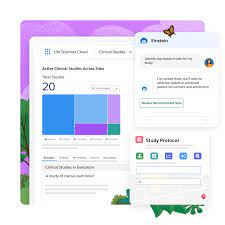
Salesforce CRM announced today its expansion into the life sciences sector with the launch of a new cloud platform designed to enhance engagement between medical technology providers, pharmaceutical companies, patients, and healthcare professionals. The Salesforce Life Sciences Cloud platform, now available, integrates advanced artificial intelligence capabilities from the Einstein 1 Platform. These AI capabilities aim to streamline clinical operations and processes by harnessing insights from all aspects of organizational data. Life Sciences Cloud Organizing Clinical Trials and Outreach. One of the primary benefits of the Life Sciences Cloud platform is its ability to optimize clinical trials, particularly in streamlining the recruitment and enrollment of participants. By leveraging AI, the platform can identify and match qualified candidates for clinical trials based on specific prescreening and eligibility criteria, significantly reducing the time traditionally spent on these processes. The platform facilitates the creation of personalized online portals for each clinical trial, making it easier for eligible patients to discover and enroll in trials relevant to them. It also simplifies the enrollment process through customizable e-consent forms. Using Einstein Copilot, an AI assistant, organizations can automate the identification of potential trial participants based on criteria such as proximity to trial sites, drawing data from sources like spreadsheets and electronic health records. This capability enhances efficiency by proactively reaching out to suitable candidates. Life Sciences Cloud Organizing Clinical Trials and Outreach Salesforce emphasizes the platform’s potential to alleviate common challenges in clinical trials, where recruitment delays and participant retention issues often hinder progress. By addressing these inefficiencies, Life Sciences Cloud aims to improve the operational timelines and success rates of clinical trials. Beyond clinical trials, the platform features a pilot patient benefits verification tool that helps organizations swiftly assess pharmaceutical costs and eligibility for financial assistance. Integrated with Einstein Copilot, this tool supports bulk re-verifications, ensuring continuous access to treatments for patients requiring periodic authorizations. Additionally, the platform includes a pilot patient program outcome management module, which automates the evaluation of educational and support programs’ impact on patients. This module aids in enhancing patient engagement and adherence to treatment plans by sending automated reminders and analyzing the effectiveness of engagement strategies. Salesforce’s Life Sciences Cloud also offers robust data analytics capabilities, leveraging Salesforce Data Cloud and MuleSoft for Life Sciences to unify structured and unstructured data sources. This unified data model provides comprehensive profiles for each patient and healthcare provider, enabling personalized interactions and informed decision-making. Frank Defesche, Senior Vice President and General Manager of Life Sciences at Salesforce, highlighted the platform’s role in enabling life sciences organizations to navigate challenges such as rising drug costs and regulatory complexities. He emphasized AI’s transformative potential in optimizing operational processes and prioritizing patient-centric approaches across the industry. Overall, Salesforce’s Life Sciences Cloud represents a significant advancement in leveraging AI-driven technologies to enhance efficiency, engagement, and outcomes within the life sciences sector. Like Related Posts Who is Salesforce? Who is Salesforce? Here is their story in their own words. From our inception, we’ve proudly embraced the identity of Read more Salesforce Marketing Cloud Transactional Emails Salesforce Marketing Cloud Transactional Emails are immediate, automated, non-promotional messages crucial to business operations and customer satisfaction, such as order Read more Salesforce Unites Einstein Analytics with Financial CRM Salesforce has unveiled a comprehensive analytics solution tailored for wealth managers, home office professionals, and retail bankers, merging its Financial Read more AI-Driven Propensity Scores AI plays a crucial role in propensity score estimation as it can discern underlying patterns between treatments and confounding variables Read more

Read More
Salesforce Driving Change

Salesforce Driving Change

Sony Honda Mobility Leverages Salesforce Technology to Enhance Customer Relationships Sony Honda Mobility, a mobility tech startup, is utilizing Salesforce solutions—including Automotive Cloud, Data Cloud, Tableau, and MuleSoft—to deepen its customer relationships through enhanced data and insights. Sony Honda Mobility Inc. is a Japanese joint venture automotive company established by Sony Group Corporation and Honda Motor Company in 2022 to produce battery electric vehicles. The company will market its vehicles under the Afeela brand. Why It Matters: A significant 81% of business leaders report challenges with data fragmentation and silos. This disconnected, disjointed information often leads to immaterial and generic customer interactions, which is problematic as 80% of customers expect superior experiences given the extensive data companies collect. Key Developments: Sony Honda Mobility plans to launch its first electric vehicle in the United States in 2025, followed by Japan in 2026. To scale globally and stand out in the market, the company is empowering its service team with real-time data and insights on customer interactions with its products and services. How Is Salesforce Driving Change Data Cloud: A unified data platform that consolidates application, workflow, and data lake records, making it easier to train AI models, gain business insights, and improve customer relationships. Sony Honda Mobility is leveraging Data Cloud to integrate disparate data seamlessly across applications. MuleSoft API Integration: This integration connects data from Sony Honda Mobility’s vehicle and customer platform to Salesforce, ensuring a cohesive data flow. Automotive Cloud: Inside Automotive Cloud, Sony Honda Mobility now maintains a comprehensive profile of each customer and their vehicle, based on data from Data Cloud. This integration allows for personalized service and experiences at every touchpoint. The platform also streamlines contact center management, query handling, internal FAQ creation, web actions, and ongoing service support for incident and customer information management. Tableau: With Tableau’s visualizations of vehicle operation conditions and service usage status, Sony Honda Mobility can make quicker, more informed decisions about each customer’s needs. Customer Perspective “We aim to elevate our customer service and experiences to new heights. We are confident we can achieve this with Salesforce’s global expertise and proven track record in CRM, trusted AI, and data analytics,” said Yasuhide Mizuno, Chairman and CEO of Sony Honda Mobility. Salesforce Perspective “We are thrilled that Sony Honda Mobility has chosen the scalability, reliability, and expertise of Salesforce technology. By integrating their customer data on a single and trusted platform, we are excited to support Sony Honda Mobility as they scale excellent service to customers worldwide,” said Shinichi Koide, Chairman, President, and Chief Executive Officer of Salesforce Japan. The Result By harnessing Salesforce’s advanced technology, Sony Honda Mobility is poised to revolutionize its customer service and experience, ensuring a more connected, efficient, and personalized interaction for its customers globally. Like Related Posts Who is Salesforce? Who is Salesforce? Here is their story in their own words. From our inception, we’ve proudly embraced the identity of Read more Salesforce Marketing Cloud Transactional Emails Salesforce Marketing Cloud Transactional Emails are immediate, automated, non-promotional messages crucial to business operations and customer satisfaction, such as order Read more Salesforce Unites Einstein Analytics with Financial CRM Salesforce has unveiled a comprehensive analytics solution tailored for wealth managers, home office professionals, and retail bankers, merging its Financial Read more AI-Driven Propensity Scores AI plays a crucial role in propensity score estimation as it can discern underlying patterns between treatments and confounding variables Read more

Read More
Democratize Data with Einstein Copilot for Tableau

Democratize Data with Einstein Copilot for Tableau

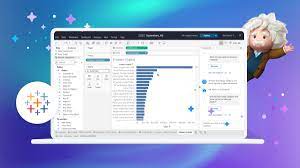
Most workers today recognize the importance of rich data analytics in their jobs. However, 33% struggle to understand and generate insights from data. To address this, Salesforce has introduced Einstein Copilot for Tableau, which allows users of all skill levels to create complex data visualizations without extensive learning or coding. Democratize Data with Einstein Copilot for Tableau. Launched in April 2024, the beta version of this AI assistant features a user-friendly interface that simplifies the process with questions or simple commands. This facilitates the quick creation of comprehensive data presentations, including reports, dashboards, and various charts. Democratize Data with Einstein Copilot for Tableau Einstein Copilot for Tableau leverages a combination of AI technologies—natural language processing (NLP), machine learning (ML), and generative AI—to provide actionable insights. NLP enables conversational and intuitive interactions, while ML models process user queries and analyze data. Generative AI drives cognitive reasoning, planning, and creates insights, recommendations, and diagrams based on user inputs. By integrating with Tableau Cloud, Einstein Copilot accesses historical proprietary data, enables advanced data analysis, and translates user intent into actionable insights. It relies on Tableau’s analytics infrastructure to execute code and displays results through user-friendly visualizations and dashboards. Additionally, the Einstein Trust Layer secures and protects private data in Einstein Copilot. It authorizes inbound requests, ensuring users have necessary permissions to access specific data and safeguards model outputs to prevent the disclosure of confidential information. How Einstein Copilot for Tableau Transforms Requests into Insights To understand how Einstein Copilot for Tableau turns requests into actionable insights, let’s walk through each step of the interaction process: Einstein Copilot for Tableau democratizes access to data analytics, enabling all users to harness the power of data without needing extensive technical knowledge. Like1 Related Posts Who is Salesforce? Who is Salesforce? Here is their story in their own words. From our inception, we’ve proudly embraced the identity of Read more Salesforce Marketing Cloud Transactional Emails Salesforce Marketing Cloud Transactional Emails are immediate, automated, non-promotional messages crucial to business operations and customer satisfaction, such as order Read more Salesforce Unites Einstein Analytics with Financial CRM Salesforce has unveiled a comprehensive analytics solution tailored for wealth managers, home office professionals, and retail bankers, merging its Financial Read more AI-Driven Propensity Scores AI plays a crucial role in propensity score estimation as it can discern underlying patterns between treatments and confounding variables Read more

Read More
Trust Einstein Copilot for Tableau

Trust Einstein Copilot for Tableau

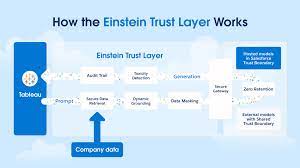
Are you prepared to utilize the capabilities of Einstein Copilot to expand your organization’s analytical advantages? This robust tool facilitates data exploration, insights generation, and visualization development at an unprecedented pace. However, before immersing yourself in its capabilities, it’s crucial to grasp how Einstein Copilot upholds Tableau and Salesforce’s core value: Trust. Let’s discover how the Einstein Trust Layer safeguards your data, ensures result accuracy, and facilitates auditing, addressing common questions and concerns raised by our customers.Trust Einstein Copilot for Tableau. What is Einstein Copilot for Tableau? Using generative AI and statistical analysis, Einstein Copilot for Tableau is able to understand the context of your data to create and suggest relevant business questions to help kickstart your analysis. A smart, conversational assistant for Tableau users, Einstein Copilot for Tableau automates data curation—the organization and integration of data collected from various sources—by generating calculations and metadata descriptions. Einstein Copilot for Tableau can fill data gaps and enhance analysis by creating synthetic datasets where real data is limited. Einstein Copilot helps you anticipate outcomes with predictive analytics that simulate diverse scenarios and uncover hidden correlations. Additionally, generative models can increase data privacy by producing non-traceable data for analysis.  Fulfilling the promise of generative AI, Einstein Copilot for Tableau presents an efficient, insightful, and ethical approach to data analytics. Think of it as an intelligent assistant integrated into the Tableau suite of products to make everyone successful in their analysis workflow—whether they’re an experienced data analyst or a data explorer. As your intelligent analytics AI assistant, Einstein Copilot for Tableau guides you through the process of creating data visualizations in Tableau by assisting you with recommended questions, conversational data exploration, guided calculation creation, and more. Understanding the Einstein Trust Layer The Einstein Trust Layer constitutes a secure AI architecture embedded within the Salesforce platform. Comprising agreements, security technology, and data privacy controls, it ensures the safety of your data while exploring generative AI solutions. Built upon the Einstein Trust Layer, Einstein Copilot for Tableau and other Tableau AI features inherit its security, governance, and Trust capabilities. The Einstein Trust Layer is a secure AI architecture, built into the Salesforce platform. It is a set of agreements, security technology, and data and privacy controls used to keep your company safe while you explore generative AI solutions. Tableau has been on the journey to help people see and understand their data for over two decades. Thanks to data analysts, this mission has been a success and will continue to be a success. Data analysts are the backbone of organizations that champion data culture, capture business requirements, prep data, and create data content for end users. Data Access and Privacy Who Accesses Your Data? A primary concern among our customers revolves around data access. Rest assured, the Einstein Trust Layer enforces strict policies to safeguard your organization’s data. Third-party LLM providers, including Open AI and Azure Open AI, adhere to a zero data retention policy. This means that data sent to LLMs isn’t stored; once processed, both the prompt and response are promptly forgotten. Additionally, each Einstein Copilot for Tableau customer receives their own Data Cloud instance, securely storing prompts and responses for auditing purposes. Data Residency and Access Control Einstein Copilot for Tableau respects permissions, row-level security, and data policies within Tableau Cloud, ensuring that only authorized personnel within your organization access specific data. Whether using Einstein Copilot or not, data access is restricted based on organizational roles and permissions. Data Handling and Processing Data Sent Outside of Tableau Cloud Site Einstein Copilot for Tableau operates within the confines of your Tableau site, scanning connected data sources to create a summary context. This summarized data is sent to third-party LLM providers for vectorization, enabling accurate interpretation of user queries. Importantly, the zero data retention policy ensures that summarized data is forgotten post-vectorization. Personally Identifiable Information (PII) Data To enhance data privacy, Einstein Copilot for Tableau employs data masking for PII data. This technique replaces sensitive information with placeholder text, ensuring privacy without sacrificing context. While our detection models strive for accuracy, continuous evaluation and refinement are paramount to maintain trust. Result Trustworthiness Ensuring Safe and Accurate Results Einstein Copilot for Tableau employs Toxicity Confidence Scoring to identify harmful inputs and responses. By combining rule-based filters and AI models, potentially harmful content is filtered and flagged for review. Furthermore, accuracy benchmarks ensure that generated results align closely with human-authored ones, bolstering trust in the platform. Future Trust Enhancements Trust remains an ongoing focus for our teams. Initiatives such as a BYO LLM solution and improved disambiguation capabilities are underway to further enhance trustworthiness. Continuous feedback, testing, and iteration drive our efforts to maintain your trust in Einstein Copilot for Tableau and the Einstein Trust Layer. Data analysis and data-driven decision-making have been part of the vocabulary in organizations over the years. And, while data analysis is one of the most in-demand tech skills sought by employers today, not everyone in an organization has “analyst” in their job title—myself included. Yet, so many of us use data daily to make informed decisions. The rise of generative AI presents a significant opportunity for us to bring transformative benefits to analytics. Businesses are eager to embrace generative AI because it can help save time, provide faster insights, and empower analysts to be even more productive with an AI assistant—freeing analysts to focus on delivering high-quality, data-driven insights. Is Tableau replacing Einstein analytics? Einstein Analytics has a new name. Say hello to Tableau CRM. Everything about how it works stays the same, just with that snazzy new name. When Tableau joined the Salesforce family, we brought together analytics capabilities of incredible depth and power. What is the difference between Einstein analytics and Tableau? If you’re only planning on analyzing Salesforce data, Einstein Analytics would probably make the most sense for you. However, if you need to analyze information that is coming from all over the place, Tableau will give your users more options. Tableau GPT infuses automation in every part of analytics – from preparation to communicating

Read More
Salesforce Unlimited+ Edition Explained

Salesforce Unlimited+ Edition Explained

Salesforce Unlimited Plus (UE+) is designed as an advanced offering that incorporates several specialized features tailored for different industries, making it particularly suitable for larger organizations and enterprises that require robust, integrated solutions for complex business processes and customer relationship management. Salesforce Unlimited+ Edition Explained. Target Audience UE+ is targeted toward large enterprises that need extensive CRM functionalities combined with AI and data analytics capabilities. This solution is ideal for organizations that: • Manage complex customer relationships across multiple channels. • Require deep integration of data and processes across departments. • Are looking to leverage advanced AI capabilities for predictive insights and automation. • Need industry-specific solutions that can be customized for unique business requirements. The integration of various Salesforce clouds (e.g., Sales Cloud, Service Cloud, Data Cloud) with enhanced features like AI and specific industry capabilities makes UE+ a comprehensive solution for organizations aiming to streamline their operations and gain a competitive edge through advanced technology adoption. Here are the five Salesforce editions for every purpose: ·Starter/Essentials: Ideal for small businesses, offering basic contact, lead, and opportunity management. ·Professional: Tailored for mid-sized companies with enhanced sales forecasting and automation capabilities. ·Enterprise: Geared towards larger organizations, providing advanced customization, reporting, and integration options. ·Unlimited: Offers comprehensive functionality, customizability, 24/7 support, and access to premium features like generative AI. ·Unlimited Plus: Most robust solution for businesses of all sizes, featuring additional functionalities and enhanced capabilities. Key Considerations: ·Business Size: Consider the number of users and overall business scale when choosing an edition. ·Features Needed: Identify the specific features crucial for your sales, service, or marketing processes. ·Scalability: Choose an edition that accommodates your projected growth and future needs. ·Budget: Evaluate the cost of each edition against its offered features and value proposition. Sales Cloud Unlimited Edition+ Features: Account and Contact Management: Complete visibility of customer profiles including activity history and communications. Opportunity Management: Tracking and details of every sales deal at each stage. Pipeline Inspection: A comprehensive tool that allows sales managers to monitor pipeline changes, offering AI-driven insights and recommendations to optimize sales strategies. Einstein AI Capabilities: Includes tools like Einstein Conversation Insights which transcribe and analyze sales calls, highlighting key parts for review and deeper analysis. Customizable Reports and Dashboards: Enhanced capabilities for building real-time reports and visualizations to track sales metrics and forecasts. Advanced Integration Features: Integration with external data and systems through various APIs including REST and SOAP. Automation and Customization: Extensive options for workflow automation and personalization of user interfaces and customer interactions using the Flow Builder and Lightning App Builder. Developer Tools: Access to tools like Developer Sandbox for safe testing and app development environments. Service Cloud Unlimited+ Features: Einstein Bots: AI-powered chatbots to handle customer inquiries automatically, available 24/7 across various communication channels. Enhanced Messaging: Integration with popular messaging platforms like WhatsApp, SMS, and Apple Messages to facilitate seamless customer interactions. Feedback Management: Tools to gather and analyze customer feedback directly within the CRM. Self-Service Capabilities: Including customizable help centers and service catalogs that allow customers to find information and resolve issues independently. Field Service Tools: Comprehensive management of field operations including work order and asset management. Real-Time Analytics: Advanced reporting features for creating in-depth analytics to monitor and improve customer service processes. Additional features include Data Cloud, Generative AI, Service Cloud Voice, Digital Engagement, Feedback Management, Self-Service, and Slack. Salesforce Unlimited+ for Industries UE+ for Industries: UE+ for Industries includes Unlimited+ for Sales and Service together with industry-specific data models and capabilities to help customers drive faster time to value within their sectors: •Financial Services Cloud UE+ for Sales and Financial Services Cloud UE+ for Service helps banks, asset management, and insurance agencies connect all of their customer data on one platform and embed AI to deliver personalized financial engagement, at scale. •An insurance carrier can use Financial Services Cloud UE+ to connect engagement data like emails, webinars, and educational content with third-party conference attendance, social media follows, and business performance data to understand what is motivating agents, helping drive more personalized relationships and grow revenue with Data Cloud and Einstein AI. •Health Cloud UE+ for Service helps healthcare, pharmaceutical, and other medical organizations improve response times at their contact centers and offer digital healthcare services with built-in intelligence, real-time collaboration, and a 360-degree view of every patient, provider, and partner. •A hospital can use the bundle to quickly create a personalized, AI-powered support center to triage and speed up time to care with self-service tools like scheduling and connecting patients and members with care teams on their preferred channels. •Manufacturing Cloud UE+ for Sales brings together tools for manufacturing organizations to build their data foundation, embed AI capabilities across the sales cycle, and maximize productivity, empowering them to scale their commercial operations and grow revenues. •A manufacturer can now look across the entire book of business to see how companies are performing against negotiated sales agreements and then use AI-generated summaries to determine where to prioritize their time and resources. By Tectonic’s AArchitecture Team Like Related Posts Who is Salesforce? Who is Salesforce? Here is their story in their own words. From our inception, we’ve proudly embraced the identity of Read more Salesforce Marketing Cloud Transactional Emails Salesforce Marketing Cloud Transactional Emails are immediate, automated, non-promotional messages crucial to business operations and customer satisfaction, such as order Read more Salesforce Unites Einstein Analytics with Financial CRM Salesforce has unveiled a comprehensive analytics solution tailored for wealth managers, home office professionals, and retail bankers, merging its Financial Read more AI-Driven Propensity Scores AI plays a crucial role in propensity score estimation as it can discern underlying patterns between treatments and confounding variables Read more

Read More
Salesforce Data Cloud

Tracking Money Flows with Data Cloud

In the digital era, banks face a significant challenge: obtaining a clear, reliable, and accurate understanding of their customers amidst a vast amount of fragmented data spread across different systems. Tracking Money Flows with Data Cloud. Despite the abundance of data, it often fails to provide a complete or accurate narrative. Simple questions like “Did a customer’s funds remain within the bank or exit entirely?” can be surprisingly challenging to answer due to this fragmented data. This disjointed view of customer behavior obstructs banks from leveraging valuable data to make informed decisions and enhance client engagement. Data Cloud and Data Strategy The solution lies not just in the data itself but in developing a robust strategy to consolidate customer data and make it actionable. By breaking down data silos and constructing comprehensive customer profiles, banks can unlock the true potential of their information. This leads to a deeper comprehension of their clients, enabling them to make intelligent decisions that drive engagement, predict customer needs, and manage attrition risks effectively. In today’s intricate economic landscape, this data-driven approach isn’t merely advantageous—it’s essential for banks to stay competitive and achieve sustained success. Tracking Money and Money Flows with Data Cloud Consider the case of William to illustrate the impact of data analytics. William, a sophisticated investor, continuously shifted his funds seeking the best returns. This presented a challenge for his bank, whose legacy systems were ill-equipped to track his dynamic financial activities effectively. The bank’s inability to follow William’s money hindered marketing and attrition management efforts. They needed to understand if funds were truly leaving the institution or just relocating within its ecosystem. The introduction of Data Cloud transformed the bank’s capabilities. By consolidating disparate data sources, they gained real-time insights into William’s financial activities, allowing them to understand his relationship with the bank better and make more reliable attrition predictions. Armed with this knowledge, the bank personalized their approach to William, showcasing tailored offerings aligned with his financial objectives. This personalized engagement transformed their relationship from transactional to collaborative, reducing attrition risk and maximizing mutual benefit. William’s case became a model for the bank, demonstrating the power of unifying data silos to understand customers’ financial behavior comprehensively. In today’s financial environment, overcoming fragmented data is paramount. Data Cloud offers a winning solution: Harnessing the abundance of data is crucial. By leveraging tools like Data Cloud, banks can unravel the mysteries of customer behavior and optimize their operations effectively. Like Related Posts Who is Salesforce? Who is Salesforce? Here is their story in their own words. From our inception, we’ve proudly embraced the identity of Read more Salesforce Marketing Cloud Transactional Emails Salesforce Marketing Cloud Transactional Emails are immediate, automated, non-promotional messages crucial to business operations and customer satisfaction, such as order Read more Salesforce Unites Einstein Analytics with Financial CRM Salesforce has unveiled a comprehensive analytics solution tailored for wealth managers, home office professionals, and retail bankers, merging its Financial Read more AI-Driven Propensity Scores AI plays a crucial role in propensity score estimation as it can discern underlying patterns between treatments and confounding variables Read more

Read More
Who Calls AI Ethical

Who Calls AI Ethical

Background – Who Calls AI Ethical On March 13, 2024, the European Union (EU) enacted the EU AI Act, a move that some argue has hindered its position in the global AI race. This legislation aims to ‘unify’ the development and implementation of AI within the EU, but it is seen as more restrictive than progressive. Rather than fostering innovation, the act focuses on governance, which may not be sufficient for maintaining a competitive edge. The EU AI Act embodies the EU’s stance on Ethical AI, a concept that has been met with skepticism. Critics argue that Ethical AI is often misinterpreted and, at worst, a monetizable construct. In contrast, Responsible AI, which emphasizes ensuring products perform as intended without causing harm, is seen as a more practical approach. This involves methodologies such as red-teaming and penetration testing to stress-test products. This critique of Ethical AI forms the basis of this insight,and Eric Sandosham article here. The EU AI Act To understand the implications of the EU AI Act, it is essential to summarize its key components and address the broader issues with the concept of Ethical AI. The EU defines AI as “a machine-based system designed to operate with varying levels of autonomy and that may exhibit adaptiveness after deployment. It infers from the input it receives to generate outputs such as predictions, content, recommendations, or decisions that can influence physical or virtual environments.” Based on this definition, the EU AI Act can be summarized into several key points: Fear of AI The EU AI Act appears to be driven by concerns about AI being weaponized or becoming uncontrollable. Questions arise about whether the act aims to prevent job disruptions or protect against potential risks. However, AI is essentially automating and enhancing tasks that humans already perform, such as social scoring, predictive policing, and background checks. AI’s implementation is more consistent, reliable, and faster than human efforts. Existing regulations already cover vehicular safety, healthcare safety, and infrastructure safety, raising the question of why AI-specific regulations are necessary. AI solutions automate decision-making, but the parameters and outcomes are still human-designed. The fear of AI becoming uncontrollable lacks evidence, and the path to artificial general intelligence (AGI) remains distant. Ethical AI as a Red Herring In AI research and development, the terms Ethical AI and Responsible AI are often used interchangeably, but they are distinct. Ethics involve systematized rules of right and wrong, often with legal implications. Morality is informed by cultural and religious beliefs, while responsibility is about accountability and obligation. These constructs are continuously evolving, and so must the ethics and rights related to technology and AI. Promoting AI development and broad adoption can naturally improve governance through market forces, transparency, and competition. Profit-driven organizations are incentivized to enhance AI’s positive utility. The focus should be on defining responsible use of AI, especially for non-profit and government agencies. Towards Responsible AI Responsible AI emphasizes accountability and obligation. It involves defining safeguards against misuse rather than prohibiting use cases out of fear. This aligns with responsible product development, where existing legal frameworks ensure products work as intended and minimize misuse risks. AI can improve processes such as recruitment by reducing errors compared to human solutions. AI’s role is to make distinctions based on data attributes, striving for accuracy. The concern is erroneous discrimination, which can be mitigated through rigorous testing for bias as part of product quality assurance. Conclusion The EU AI Act is unlikely to become a global standard. It may slow AI research, development, and implementation within the EU, hindering AI adoption in the region and causing long-term harm. Humanity has an obligation to push the boundaries of AI innovation. As a species facing eventual extinction from various potential threats, AI could represent a means of survival and advancement beyond our biological limitations. Like Related Posts Who is Salesforce? Who is Salesforce? Here is their story in their own words. From our inception, we’ve proudly embraced the identity of Read more Salesforce Marketing Cloud Transactional Emails Salesforce Marketing Cloud Transactional Emails are immediate, automated, non-promotional messages crucial to business operations and customer satisfaction, such as order Read more Salesforce Unites Einstein Analytics with Financial CRM Salesforce has unveiled a comprehensive analytics solution tailored for wealth managers, home office professionals, and retail bankers, merging its Financial Read more AI-Driven Propensity Scores AI plays a crucial role in propensity score estimation as it can discern underlying patterns between treatments and confounding variables Read more

Read More
Salesforce in a Mega-Data Deal with Informatica

Salesforce in a Mega-Data Deal with Informatica

Since Salesforce announced its acquisition of Slack for $27.7B in late 2020, the cloud software mega-giant has paused its acquisition strategy due to factors like rising interest rates, declining revenues, and a laser focus on profitability. However, recent leaks from The Wall Street Journal and other news publications suggest that Salesforce in a Mega-Data Deal with Informatica, is in advanced talks to acquire Informatica in a deal worth over $11B. Informatica is a significant player in enterprise data management, boasting revenues of over $1.51B and a workforce of over 5,000 employees. They specialize in AI-powered cloud data management, assisting companies in processing and managing large volumes of data from various sources to derive actionable and real-time insights. Salesforce in a Mega-Data Deal with Informatica The synergies between Informatica and Salesforce are many, with both companies focusing on consolidating data from multiple sources to provide comprehensive business insights. This aligns well with Salesforce’s strategic shift towards AI-driven data processing and analysis, aiming to enhance generative and predictive capabilities. While Salesforce’s previous acquisition of MuleSoft in 2018 for $6.5B has proven successful in facilitating API connectivity for real-time integrations, Informatica brings expertise in ETL (Extract-Transform-Load), data quality, and data movement to and from platforms like Snowflake and Databricks. This potential mega-data deal underscores the growing importance of data in the tech industry, especially with the emergence of generative AI and large language models (LLMs) that enable deeper analysis of vast datasets. Salesforce’s recent rebranding of its platform to “Einstein 1” underscores the convergence of AI and data within its product suite. The company’s emphasis on “AI + Data + CRM” reflects its commitment to leveraging data analytics for CRM enhancement, exemplified by the growth of its Data Cloud product. Partnering with industry leaders like Snowflake, Databricks, AWS, and Google, Salesforce aims to offer comprehensive data solutions that integrate seamlessly with existing systems. Informatica’s capabilities in ETL and Master Data Management (MDM) align with this vision, particularly in streamlining data integration and ensuring data quality across disparate systems. In final thoughts, while the Informatica acquisition is still pending finalization, it represents a strategic move by Salesforce to strengthen its position in the AI and data-driven CRM market. As Salesforce continues to evolve its product ecosystem, this acquisition signals its commitment to innovation and leadership in the era of AI-powered data analytics. Like Related Posts Who is Salesforce? Who is Salesforce? Here is their story in their own words. From our inception, we’ve proudly embraced the identity of Read more Salesforce Marketing Cloud Transactional Emails Salesforce Marketing Cloud Transactional Emails are immediate, automated, non-promotional messages crucial to business operations and customer satisfaction, such as order Read more Salesforce Unites Einstein Analytics with Financial CRM Salesforce has unveiled a comprehensive analytics solution tailored for wealth managers, home office professionals, and retail bankers, merging its Financial Read more AI-Driven Propensity Scores AI plays a crucial role in propensity score estimation as it can discern underlying patterns between treatments and confounding variables Read more

Read More
Data Cloud and Snowflake Bidrectional Data Sharing

Data Cloud and Snowflake Bidrectional Data Sharing

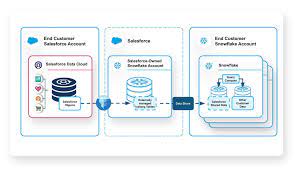
Salesforce Data Cloud and Snowflake are excited to announce that bidirectional data sharing between Snowflake, the Data Cloud company, and Salesforce Data Cloud is now generally available. In September, we introduced the ability for organizations to leverage Salesforce data directly in Snowflake via zero-ETL data sharing, enabling unified customer and business data, accelerating decision-making, and streamlining business processes. Today, we’re thrilled to share that customers can now also share Snowflake data into the Salesforce Data Cloud, using the same zero-ETL innovation to reduce friction and quickly surface powerful insights across sales, service, marketing, and commerce applications. Data Cloud and Snowflake Bidrectional Data Sharing. Data Cloud and Snowflake Bidrectional Data Sharing Enterprises generate valuable customer data within Salesforce applications, while increasingly relying on Snowflake as their preferred data platform for storing, modeling, and analyzing their full data estate. This integration between Salesforce and Snowflake minimizes friction, data latency, scale limitations, and data engineering costs associated with using these two leading platforms. The Snowflake Marketplace also offers customers the opportunity to acquire new data sets to enhance or fill gaps in their existing business data, driving innovation. By combining enterprise data and third-party data from Snowflake Marketplace with valuable customer data from Salesforce applications, organizations can unify their data and build powerful AI solutions to surface rich insights, driving superior and differentiated customer experiences. “Zero-ETL data sharing between Salesforce Data Cloud and Snowflake is game-changing. It has opened up new frontiers of data collaboration. We’re excited to see how customers are powering their customer data analytics and developing innovative AI solutions with near real-time data from Salesforce and Snowflake, generating incredible business value. Now that this integration is generally available, this kind of innovation will be broadly accessible,” says Christian Kleinerman, SVP of Product, Snowflake. Power Personalized Experiences with Salesforce and Snowflake Data sharing between Salesforce Data Cloud and Snowflake brings together holistic insights, empowering multiple customer-facing departments within any organization to create a truly robust customer 360. As Snowflake’s Chief Marketing Officer, Denise Persson, often states, a true, enterprise-wide customer 360 is the beating heart of a modern, customer-facing organization. The applicability of this integration spans various industries and unlocks new growth opportunities. For example: The bidirectional integration enables data sharing across business systems, Salesforce clouds, and operational systems, facilitating data set analysis and future action planning. This brings actionable insights and drives actions, unleashing a new level of customer experience and business productivity. Like Related Posts Who is Salesforce? Who is Salesforce? Here is their story in their own words. From our inception, we’ve proudly embraced the identity of Read more Salesforce Marketing Cloud Transactional Emails Salesforce Marketing Cloud Transactional Emails are immediate, automated, non-promotional messages crucial to business operations and customer satisfaction, such as order Read more Salesforce Unites Einstein Analytics with Financial CRM Salesforce has unveiled a comprehensive analytics solution tailored for wealth managers, home office professionals, and retail bankers, merging its Financial Read more AI-Driven Propensity Scores AI plays a crucial role in propensity score estimation as it can discern underlying patterns between treatments and confounding variables Read more

Read More
AI and the Role of Healthcare CIOs

AI and the Role of Healthcare CIOs

Healthcare leaders see significant potential in data analytics and AI technology to transform the industry over the next five years, according to a new market research report from Arcadia and The Harris Poll. AI and the Role of Healthcare CIOs The report, titled “The Healthcare CIO’s Role in the Age of AI,” examines AI’s impact on the healthcare sector and how decision-makers are preparing to leverage the technology. Notably, 96% of healthcare leaders surveyed believe that adopting AI effectively will provide a competitive edge both now and in the future. While only a third see AI as essential today, 73% expect it to become critical within five years. How Health Systems Are Using AI Around 63% of respondents revealed that their organizations use AI to analyze large patient data sets to identify trends and guide population health management efforts. Another 58% are using AI to analyze individual patient data to identify opportunities for improving health outcomes. Close to half of the leaders indicated that AI is being used to optimize electronic health records (EHR) management and analysis. These trends align with the findings of the recent “Top of Mind for Top Health Systems” survey, conducted by the University of Pittsburgh Medical Center’s Center for Connected Medicine (CCM) in collaboration with KLAS, which identified AI as the most exciting emerging technology in healthcare with transformative potential for both administration and care delivery. The excitement surrounding healthcare AI largely stems from its ability to break down data silos and tap into the wealth of clinical data that healthcare organizations already collect. “Healthcare leaders are thoughtfully preparing to harness the full value of AI in care delivery reform,” said Aneesh Chopra, Arcadia’s chief strategy officer. “As safe, secure data sharing scales, technology leaders prioritize data platforms that organize fragmented patient records into clinically relevant insights at every stage of the patient journey.” A quest for a 360 degree patient view abounds. Using AI to Support Strategic Priorities The Arcadia survey emphasized the importance of using analytics to improve patient care, with 83% of leaders believing that harnessing data will help healthcare organizations remain competitive and resilient while overcoming digital transformation and financial challenges. Eighty-four percent of respondents cited technology as a current priority, with 44% focusing on an enterprise-wide approach to data analytics, 41% prioritizing AI-driven decision-making, and 32% working to simplify technical ecosystems. These efforts are viewed as crucial to advancing other strategic goals, with 40% of leaders prioritizing the patient experience, 35% aiming to improve outcomes, and 29% focusing on patient engagement. Although healthcare leaders view AI adoption positively for strategic advancements, hurdles remain. While 96% of respondents are confident in adopting AI, many feel pressured to move quickly. When asked about the sources of this pressure, 82% cited data and analytics teams, 78% pointed to IT and tech teams, and 73% mentioned executives. However, successfully implementing AI requires talent and resources that some organizations lack. About 40% of leaders identified a lack of talent as a significant barrier to AI adoption, signaling the need for IT and analytics teams to acquire new skill sets. Seventy-one percent of IT leaders reported a growing demand for data-driven decision-making skills, while two-thirds pointed to a rising need for expertise in data analysis, machine learning, and systems integration. Additionally, nearly 60% mentioned the need for roles that focus on training and support for healthcare staff. The Evolving Role of CIOs CIOs and other healthcare leaders are seeing their roles evolve as AI and data become more integrated into healthcare operations. Eighty-seven percent of respondents see themselves as strategy influencers, actively involved in setting and executing AI strategies, while only 13% view themselves as purely focused on implementation. Despite these evolving roles, many CIOs feel constrained by daily operations. Fifty-eight percent reported being primarily focused on tactical execution rather than developing long-term AI strategies, although they believe they should spend 75% of their time on strategic planning to be most effective. Part of these strategies will likely focus on improving communication and workforce readiness. Three out of four leaders cited a lack of effective communication between IT teams and clinical staff as a barrier to leveraging new technologies, and two out of five noted that clinical staff are not fully equipped to make the best use of data analytics. “CIOs and their teams are setting the stage for an AI-powered revolution in patient care and healthcare operations,” said Michael Meucci, Arcadia’s president and CEO. “Our findings highlight a strong consensus that a solid data foundation is necessary to realize the future of AI in healthcare. At the same time, the human workforce, with evolving talent and skills, will shape the real-world impact of AI in healthcare.“ Content updated August 2024. Like Related Posts Who is Salesforce? Who is Salesforce? Here is their story in their own words. From our inception, we’ve proudly embraced the identity of Read more Salesforce Unites Einstein Analytics with Financial CRM Salesforce has unveiled a comprehensive analytics solution tailored for wealth managers, home office professionals, and retail bankers, merging its Financial Read more AI-Driven Propensity Scores AI plays a crucial role in propensity score estimation as it can discern underlying patterns between treatments and confounding variables Read more Tectonic’s Successful Salesforce Track Record Salesforce Technology Services Integrator – Tectonic has successfully delivered Salesforce in a variety of industries including Public Sector, Hospitality, Manufacturing, Read more

Read More
gettectonic.com