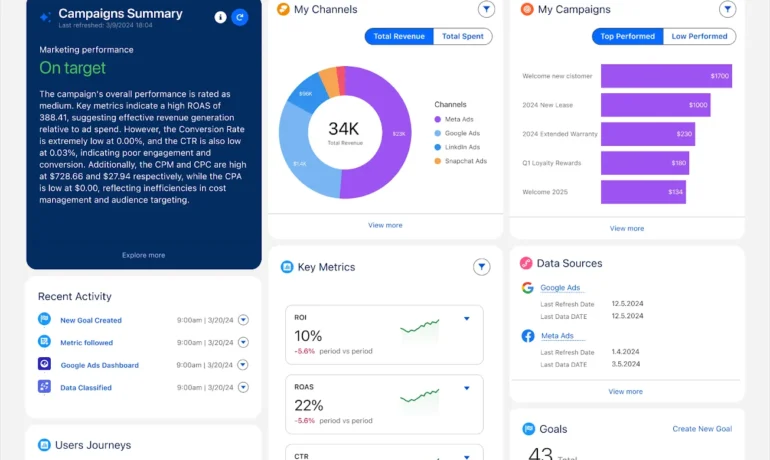
Data-Driven Archives - gettectonic.com - Page 3
Analytics tools like Einstein Analytics can identify patterns and trends in patient data, helping healthcare providers optimize workflows and improve the effectiveness of care delivery.

Healthcare Payers Turn to Data Analytics for Cost Savings and Improved Outcomes

Facing persistent financial and staffing pressures, healthcare payers are increasingly adopting data analytics platforms to streamline operations, reduce costs, and enhance member outcomes. A new April 2025 report from KLAS Research offers its first evaluation of payer experiences with these solutions, highlighting key vendors and emerging trends. The Growing Role of Data Analytics in Payer Operations With healthcare organizations under constant pressure to improve efficiency and decision-making, data analytics tools provide critical visibility into claims data, utilization patterns, and financial performance. These platforms enable payers to: While KLAS’ research in this space is still evolving, the initial report assesses three leading vendors, with plans to expand coverage as more data becomes available. Key Vendor Performances 1. MedInsight – Best in KLAS 2025 (Score: 85.8) 2. MedeAnalytics (Score: 87.1) 3. Clarify Health Solutions 4. Salesforce Health Cloud Looking Ahead: Expanding the Vendor Landscape Additional players like CareJourney (acquired by Arcadia in 2024), Cedar Gate Technologies, and Cognizant are expected to be evaluated in future KLAS reports as more performance data emerges. The Bottom Line As payers seek greater efficiency and data-driven decision-making, analytics platforms are becoming indispensable. While MedInsight and MedeAnalytics lead in early adoption, the competitive landscape is still evolving—making future KLAS insights critical for payer organizations evaluating their options. Next Steps: With the right analytics partner, payers can unlock cost savings, operational efficiencies, and better member outcomes—key priorities in today’s challenging healthcare environment. Like Related Posts Who is Salesforce? Who is Salesforce? Here is their story in their own words. From our inception, we’ve proudly embraced the identity of Read more Salesforce Marketing Cloud Transactional Emails Salesforce Marketing Cloud Transactional Emails are immediate, automated, non-promotional messages crucial to business operations and customer satisfaction, such as order Read more Salesforce Unites Einstein Analytics with Financial CRM Salesforce has unveiled a comprehensive analytics solution tailored for wealth managers, home office professionals, and retail bankers, merging its Financial Read more AI-Driven Propensity Scores AI plays a crucial role in propensity score estimation as it can discern underlying patterns between treatments and confounding variables Read more

Read More
Time Series AI

Time Series AI

Key Aspects of Time Series AI 1. Time Series Data Time series data consists of sequential data points recorded at regular intervals, enabling the analysis of trends, seasonality, and patterns over time. This structured format is essential for forecasting, anomaly detection, and other AI-driven analyses. 2. AI Techniques for Time Series Analysis Multiple AI and machine learning techniques are applied to time series data, including: These techniques help in forecasting future values, detecting anomalies, classifying sequences, and imputing missing data. 3. Applications of Time Series AI Time series AI is widely used across industries for: 4. Real-World Examples 5. Benefits of Time Series AI By leveraging AI for time series analysis, businesses and organizations gain a competitive edge through smarter forecasting and automation. Like Related Posts Who is Salesforce? Who is Salesforce? Here is their story in their own words. From our inception, we’ve proudly embraced the identity of Read more Salesforce Unites Einstein Analytics with Financial CRM Salesforce has unveiled a comprehensive analytics solution tailored for wealth managers, home office professionals, and retail bankers, merging its Financial Read more AI-Driven Propensity Scores AI plays a crucial role in propensity score estimation as it can discern underlying patterns between treatments and confounding variables Read more Tectonic’s Successful Salesforce Track Record Salesforce Technology Services Integrator – Tectonic has successfully delivered Salesforce in a variety of industries including Public Sector, Hospitality, Manufacturing, Read more


Read More
What is Up with Salesforce Analytics?

What is Up with Salesforce Analytics?

Tableau/CRM Analytics, Tableau Next, and Marketing Intelligence represent different facets of a unified analytics platform built on the Salesforce ecosystem. They offer various levels of integration and AI-driven capabilities for data analysis and insights, catering to diverse user needs within organizations.  Let’s break it down: Tableau/CRM Analytics (formerly Einstein Analytics): Tableau Next: Marketing Intelligence: Relationship and Integration: In essence, Tableau/CRM Analytics provides a foundational layer for CRM-specific analytics, while Tableau Next and Marketing Intelligence build upon that foundation to offer more advanced and AI-driven insights across the entire organization, according to Salesforce.  Like Related Posts Who is Salesforce? Who is Salesforce? Here is their story in their own words. From our inception, we’ve proudly embraced the identity of Read more Salesforce Marketing Cloud Transactional Emails Salesforce Marketing Cloud Transactional Emails are immediate, automated, non-promotional messages crucial to business operations and customer satisfaction, such as order Read more Salesforce Unites Einstein Analytics with Financial CRM Salesforce has unveiled a comprehensive analytics solution tailored for wealth managers, home office professionals, and retail bankers, merging its Financial Read more AI-Driven Propensity Scores AI plays a crucial role in propensity score estimation as it can discern underlying patterns between treatments and confounding variables Read more

Read More
Salesforce Advanced Routing

Salesforce Advanced Routing

Salesforce Advanced Routing is a feature within the Salesforce Service Cloud that helps organizations efficiently route cases, leads, and other work items to the most appropriate agents or teams. This ensures that customer inquiries and issues are handled by the right person at the right time, improving response times, customer satisfaction, and overall operational efficiency. Key Features of Salesforce Advanced Routing: Benefits of Salesforce Advanced Routing: Use Cases: Implementation Considerations: In summary, Salesforce Advanced Routing is a powerful tool that helps organizations efficiently manage and route work items to the most appropriate agents or teams. By leveraging features like omni-channel routing, skill-based routing, and real-time routing, businesses can improve customer experience, increase agent efficiency, and optimize their overall operations. Like Related Posts Who is Salesforce? Who is Salesforce? Here is their story in their own words. From our inception, we’ve proudly embraced the identity of Read more Salesforce Marketing Cloud Transactional Emails Salesforce Marketing Cloud Transactional Emails are immediate, automated, non-promotional messages crucial to business operations and customer satisfaction, such as order Read more Salesforce Unites Einstein Analytics with Financial CRM Salesforce has unveiled a comprehensive analytics solution tailored for wealth managers, home office professionals, and retail bankers, merging its Financial Read more AI-Driven Propensity Scores AI plays a crucial role in propensity score estimation as it can discern underlying patterns between treatments and confounding variables Read more

Read More
Salesforce and Sprout Social

Transform Social Customer Care

How ScottsMiracle-Gro Transformed Social Customer Care with Sprout Social and Salesforce Service Cloud For over a century, ScottsMiracle-Gro has been a trusted name in lawn and garden care, known for its high-quality products and expert guidance. Its portfolio of brands—including Scotts, Miracle-Gro, Ortho, Tomcat, and AeroGarden—has set industry standards. But even the most established brands must evolve to meet modern customer expectations. ScottsMiracle-Gro faced two key challenges:✅ Connecting with younger demographics✅ Delivering timely customer support, especially during peak gardening seasons when social media inquiries surge To tackle this, the company turned to Sprout Social’s social media management platform, seamlessly integrated with Salesforce Service Cloud, to cultivate stronger customer relationships. Cultivating a More Responsive Social Care Strategy Today’s consumers expect rapid responses—nearly 75% anticipate a reply within 24 hours, according to The Sprout Social Index™. However, ScottsMiracle-Gro’s response times often stretched to days or even a week, creating dissatisfaction and impacting brand perception. Their previous system—a patchwork of 8 to 10 different platforms—was inefficient and frustrating for agents. “It was insane. They were juggling multiple systems daily, making their job far more complicated than necessary.”– Sara Smith, Manager of Consumer Services, ScottsMiracle-Gro When Smith joined the team, she prioritized streamlining operations. Social media was one of the first integrations after adopting Salesforce Service Cloud. Unlocking Social Care Potential with Sprout Social ScottsMiracle-Gro explored various solutions but ultimately chose Sprout Social for its seamless integration with Salesforce. This decision transformed their approach to social customer care. ✅ Faster Onboarding: Training that previously took a full day was now completed in just one hour✅ Streamlined Workflows: Agents no longer had to switch between multiple platforms✅ Unified Reporting & Analytics: Social data flowed directly into Salesforce, enabling data-driven decisions “It was a game changer. The system is so user-intuitive—that’s one of our favorite things about it.”– Sara Smith, Manager of Consumer Services, ScottsMiracle-Gro With all customer interactions centralized, agents could view and respond to messages from multiple social platforms within a single system—boosting efficiency and responsiveness. The Impact: Faster, Smarter, and More Engaged Customer Care The results were immediate: 📉 50% reduction in time to resolve cases📈 381% increase in agent action rate⏳ 91% decrease in average time to action “Our agents do almost everything in Salesforce now, including social, thanks to the integration with Sprout.”– Sara Smith, Manager of Consumer Services, ScottsMiracle-Gro Beyond operational efficiencies, agent satisfaction soared. Previously, agents dreaded handling social media tickets. Now, they actively request them due to the simplified workflow. “Before, agents begged to avoid social tickets. Now, they ask to work on them. It’s improved retention and job satisfaction across the board.”– Sara Smith, Manager of Consumer Services, ScottsMiracle-Gro Social Insights for Sustainable Growth ScottsMiracle-Gro’s transformation highlights the power of Sprout Social and Salesforce Service Cloud in delivering exceptional social customer care. By combining an intuitive platform with seamless service management, they have: ✅ Improved customer experience✅ Boosted team efficiency and morale✅ Enhanced agility in managing viral social moments With a stronger, data-driven approach, ScottsMiracle-Gro is well-positioned to nurture customer relationships and drive long-term success. Like Related Posts Who is Salesforce? Who is Salesforce? Here is their story in their own words. From our inception, we’ve proudly embraced the identity of Read more Salesforce Marketing Cloud Transactional Emails Salesforce Marketing Cloud Transactional Emails are immediate, automated, non-promotional messages crucial to business operations and customer satisfaction, such as order Read more Salesforce Unites Einstein Analytics with Financial CRM Salesforce has unveiled a comprehensive analytics solution tailored for wealth managers, home office professionals, and retail bankers, merging its Financial Read more AI-Driven Propensity Scores AI plays a crucial role in propensity score estimation as it can discern underlying patterns between treatments and confounding variables Read more

Read More
Salesforce Instance Refresh Maintenance

Why Salesforce is the Key to Cloud Transformation

Cloud transformation is essential for businesses aiming to scale, boost efficiency, and enhance customer experiences. As a leading cloud platform, Salesforce plays a pivotal role in this transition—connecting cloud ecosystems, optimizing operations, and ensuring seamless customer interactions. But to unlock its full potential, organizations need the right Salesforce experts to drive the transformation successfully. The Role of Salesforce in Cloud Transformation As a cloud-native platform, Salesforce provides automation, AI-driven insights, and deep integration across business functions. It acts as the central hub, linking sales, marketing, customer service, and back-end operations. During cloud migration, Salesforce ensures:✅ Customer data remains accessible and secure✅ Workflows stay optimized for efficiency✅ AI-powered insights drive smarter decision-making Without experienced Salesforce professionals, businesses risk data silos, inefficient processes, and failed integrations—leading to costly delays and operational setbacks. Challenges in Hiring Salesforce Experts 1. Talent Shortages & High Demand The growing reliance on Salesforce has created a ultra-competitive hiring landscape. Roles like Salesforce Developers, Architects, and Administrators are in high demand, making it challenging for companies to attract and retain top talent. 2. The Need for More Than Just Technical Skills Many organizations focus solely on coding expertise, but cloud transformation demands professionals who understand business processes, data architecture, and integration strategies. A developer who codes without considering business goals may create solutions that don’t align with the organization’s needs. 3. Integration Complexities Salesforce rarely operates in isolation—it must integrate with ERP systems, marketing automation tools, and other cloud platforms. Poorly planned integrations can lead to inefficiencies and disrupt transformation efforts, underscoring the need for specialists who can manage system connectivity effectively. Strategies for Hiring the Right Salesforce Experts 1. Clearly Define Roles & Responsibilities Before hiring, identify the specific expertise required. For example: 2. Prioritize Certifications & Hands-On Experience Look for candidates with certifications like: Additionally, hands-on experience with cloud integrations, API development, and data migration is crucial for success. 3. Assess Problem-Solving Abilities Cloud transformation is complex, often presenting unexpected challenges. A structured hiring process should include scenario-based questions and technical assessments to evaluate candidates’ ability to handle real-world Salesforce challenges. 4. Explore Contract & Full-Time Hiring Models Given the talent shortage, companies may need a mix of contract and full-time hires: 5. Align Hiring with Cloud Strategy Salesforce experts must collaborate with cloud engineers and IT teams to ensure seamless integration. When hiring, prioritize candidates who understand system architecture and can align Salesforce capabilities with long-term business goals. Building a Strong Salesforce Team for Cloud Transformation Hiring the right Salesforce experts is critical for a smooth and effective cloud transformation. By defining roles, prioritizing experience, and assessing real-world skills, businesses can build teams that drive long-term success. Salesforce managed services is an alternative to the talent shortage. If your organization is looking to strengthen its Salesforce talent strategy, partnering with experts like Tectonic can bridge hiring gaps. Tectonic delivers top-tier Salesforce talent to power your digital transformation. With a vast network of vetted professionals and data-driven recruitment strategies, we help companies secure skilled experts—fast without increasing headcount. Let’s build your Salesforce dream team. Like Related Posts Who is Salesforce? Who is Salesforce? Here is their story in their own words. From our inception, we’ve proudly embraced the identity of Read more Salesforce Marketing Cloud Transactional Emails Salesforce Marketing Cloud Transactional Emails are immediate, automated, non-promotional messages crucial to business operations and customer satisfaction, such as order Read more Salesforce Unites Einstein Analytics with Financial CRM Salesforce has unveiled a comprehensive analytics solution tailored for wealth managers, home office professionals, and retail bankers, merging its Financial Read more AI-Driven Propensity Scores AI plays a crucial role in propensity score estimation as it can discern underlying patterns between treatments and confounding variables Read more

Read More
Salesforce Platform

How Agentic Automation Builds Lasting Customer Relationships

Why Agentic Automation?Customers now engage with brands across 8+ channels, demanding consistency and personalization at every touchpoint. Yet: 73% of customers expect better personalization as tech evolves (Salesforce “State of the AI Connected Customer”) 1 .Only 31% of marketers feel confident unifying customer data (Salesforce “State of Marketing”) 43% still use fragmented personalization, mixing mass messaging with targeted efforts Traditional automation falls short—but AI-powered agents bridge the gap, acting as intelligent assistants that autonomously execute tasks, personalize interactions, and optimize campaigns in real time. What is Agentic Automation?Agents are AI systems that understand, decide, and act—handling everything from customer service queries to full campaign orchestration. Unlike rule-based automation, they:✅ Learn & adapt based on real-time data✅ Multitask (e.g., draft emails, adjust ad spend, qualify leads simultaneously)✅ Work across silos, unifying data for seamless customer journeys The 5 Key Attributes of an AgentRole – What it’s designed to do (e.g., optimize social campaigns, nurture leads) Trusted Data – Access to CRM, engagement history, brand guidelines 2 .Actions – Skills like content generation, A/B testing, performance tracking Channels – Where it operates (email, social, chat, ads) Guardrails – Ethical limits, compliance rules, brand voice guidelines Example: A social media agent can: Analyze past performance & trends Generate post ideas aligned with brand voice Schedule content & adjust targeting in real time Escalate sensitive issues to humans How Agents Transform the Customer Lifecycle1. Awareness: Smarter Campaign CreationAutonomously generates audience segments, ad copy, and campaign briefs Optimizes spend by pausing low-performing ads & reallocating budgets Personalizes content based on real-time engagement data 2. Conversion: Automated Lead NurturingEngages website visitors with dynamic recommendations Scores & routes leads to sales teams based on intent signals Orchestrates follow-ups via email, SMS, or chat 3. Engagement: Hyper-Personalized ExperiencesRecommends products/content based on browsing history A/B tests messaging across channels Adjusts journeys in real time (e.g., swaps promo offers if a customer hesitates) 4. Retention & Loyalty: Proactive Relationship-BuildingIdentifies at-risk customers & triggers re-engagement offers Handles service inquiries (returns, tech support) via chat/SMS Escalates complex issues to human agents seamlessly The Marketer’s Advantage: From Tactical to StrategicAgents don’t replace marketers—they amplify their impact:🔹 Eliminate grunt work (e.g., manual reporting, repetitive follow-ups)🔹 Break down data silos, unifying CRM, ads, and service history🔹 Make real-time decisions (e.g., pausing ads, adjusting discounts)🔹 Scale 1:1 personalization without added headcount Example: An agent can: Draft a win-back email for a lapsing customer Sync it with their past purchases & service tickets Send it via their preferred channel (email/SMS) Track opens/clicks & trigger a follow-up if ignored Getting Started: Building Your Agent FoundationUnify Your Data – Integrate CRM, marketing tools, and service platforms. Define Key Roles – Start with one high-impact use case (e.g., lead nurturing). Set Guardrails – Ensure brand compliance, privacy, and ethical AI use. Test & Refine – Use feedback loops to improve accuracy and relevance. “Agents are like a tireless, data-driven marketing assistant—freeing you to focus on strategy while they handle execution.” The Future: AI + Human CollaborationThe next era of marketing isn’t about choosing between automation and human touch—it’s about combining them. Agents will: Handle routine interactions, letting teams focus on high-value creativity Predict customer needs before they arise Drive unprecedented efficiency (e.g., 275K+ hours saved annually at Salesforce) Ready to transform your marketing? Start small, scale fast, and let agents turn data into lasting relationships. Key Takeaway: Agentic automation isn’t just efficiency—it’s smarter, faster, and more personal customer engagement at scale. Like Related Posts Who is Salesforce? Who is Salesforce? Here is their story in their own words. From our inception, we’ve proudly embraced the identity of Read more Salesforce Marketing Cloud Transactional Emails Salesforce Marketing Cloud Transactional Emails are immediate, automated, non-promotional messages crucial to business operations and customer satisfaction, such as order Read more Salesforce Unites Einstein Analytics with Financial CRM Salesforce has unveiled a comprehensive analytics solution tailored for wealth managers, home office professionals, and retail bankers, merging its Financial Read more AI-Driven Propensity Scores AI plays a crucial role in propensity score estimation as it can discern underlying patterns between treatments and confounding variables Read more

Read More
AI-Driven Healthcare

AI is Revolutionizing Clinical Trials and Drug Development

Clinical trials are a cornerstone of drug development, yet they are often plagued by inefficiencies, long timelines, high costs, and challenges in patient recruitment and data analysis. Artificial intelligence (AI) is transforming this landscape by streamlining trial design, optimizing patient selection, and accelerating data analysis, ultimately enabling faster and more cost-effective treatment development. Optimizing Clinical Trials A study by the Tufts Center for the Study of Drug Development estimates that bringing a new drug to market costs an average of $2.6 billion, with clinical trials comprising a significant portion of that expense. “The time-consuming process of recruiting the right patients, collecting data, and manually analyzing it are major bottlenecks,” said Mohan Uttawar, co-founder and CEO of OneCell. AI is addressing these challenges by improving site selection, patient recruitment, and data analysis. Leveraging historical data, AI identifies optimal sites and patients with greater efficiency, significantly reducing costs and timelines. “AI offers several key advantages, from site selection to delivering results,” Uttawar explained. “By utilizing past data, AI can pinpoint the best trial sites and patients while eliminating unsuitable candidates, ensuring a more streamlined process.” One compelling example of AI’s impact is Exscientia, which designed a cancer immunotherapy molecule in under 12 months—a process that traditionally takes four to five years. This rapid development highlights AI’s potential to accelerate promising therapies from concept to patient testing. Enhancing Drug Development Beyond clinical trials, AI is revolutionizing the broader drug development process, particularly in refining trial protocols and optimizing site selection. “A major paradigm shift has emerged with AI, as these tools optimize trial design and execution by leveraging vast datasets and streamlining patient recruitment,” Uttawar noted. Machine learning plays a crucial role in biomarker discovery and patient stratification, essential for developing targeted therapies. By analyzing large datasets, AI uncovers patterns and insights that would be nearly impossible to detect manually. “The availability of large datasets through machine learning enables the development of powerful algorithms that provide key insights into patient stratification and targeted therapies,” Uttawar explained. The cost savings of AI-driven drug development are substantial. Traditional computational models can take five to six years to complete. In contrast, AI-powered approaches can shorten this timeline to just five to six months, significantly reducing costs. Regulatory and Ethical Considerations Despite its advantages, AI in clinical trials presents regulatory and ethical challenges. One primary concern is ensuring the robustness and validation of AI-generated data. “The regulatory challenges for AI-driven clinical trials revolve around the robustness of data used for algorithm development and its validation against existing methods,” Uttawar highlighted. To address these concerns, agencies like the FDA are working on frameworks to validate AI-driven insights and algorithms. “In the future, the FDA is likely to create an AI-based validation framework with guidelines for algorithm development and regulatory compliance,” Uttawar suggested. Data privacy and security are also crucial considerations, given the vast datasets needed to train AI models. Compliance with regulations such as HIPAA, ISO 13485, GDPR, and 21CFR Part 820 ensures data protection and security. “Regulatory frameworks are essential in defining security, compliance, and data privacy, making it mandatory for AI models to adhere to established guidelines,” Uttawar noted. AI also has the potential to enhance diversity in clinical trials by reducing biases in patient selection. By objectively analyzing data, AI can efficiently recruit diverse patient populations. “AI facilitates unbiased data analysis, ensuring diverse patient recruitment in a time-sensitive manner,” Uttawar added. “It reviews selection criteria and, based on vast datasets, provides data-driven insights to optimize patient composition.” Trends and Predictions The adoption of AI in clinical trials and drug development is expected to rise dramatically in the coming years. “In the next five years, 80-90% of all clinical trials will likely incorporate AI in trial design, data analysis, and regulatory submissions,” Uttawar predicted. Emerging applications, such as OneCell’s AI-based toolkit for predicting genomic signatures from high-resolution H&E Whole Slide Images, are particularly promising. This technology allows hospitals and research facilities to analyze medical images and identify potential cancer patients for targeted treatments. “This toolkit captures high-resolution images at 40X resolution and analyzes them using AI-driven algorithms to detect morphological changes,” Uttawar explained. “It enables accessible image analysis, helping physicians make more informed treatment decisions.” To fully realize AI’s potential in drug development, stronger collaboration between AI-focused companies and the pharmaceutical industry is essential. Additionally, regulatory frameworks must evolve to support AI validation and standardization. “Greater collaboration between AI startups and pharmaceutical companies is needed,” Uttawar emphasized. “From a regulatory standpoint, the FDA must establish frameworks to validate AI-driven data and algorithms, ensuring consistency with existing standards.” AI is already transforming drug development and clinical trials, enhancing efficiencies in site selection, patient recruitment, and data analysis. By accelerating timelines and cutting costs, AI is not only making drug development more sustainable but also increasing access to life-saving treatments. However, maximizing AI’s impact will require continued collaboration among technology innovators, pharmaceutical firms, and the regulatory bodies. As frameworks evolve to ensure data integrity, security, and compliance, AI-driven advancements will further shape the future of precision medicine—ultimately improving patient outcomes and redefining healthcare. Like Related Posts Who is Salesforce? Who is Salesforce? Here is their story in their own words. From our inception, we’ve proudly embraced the identity of Read more Salesforce Unites Einstein Analytics with Financial CRM Salesforce has unveiled a comprehensive analytics solution tailored for wealth managers, home office professionals, and retail bankers, merging its Financial Read more AI-Driven Propensity Scores AI plays a crucial role in propensity score estimation as it can discern underlying patterns between treatments and confounding variables Read more Tectonic’s Successful Salesforce Track Record Salesforce Technology Services Integrator – Tectonic has successfully delivered Salesforce in a variety of industries including Public Sector, Hospitality, Manufacturing, Read more

Read More
Tableau

Tableau’s New AI Agents

Tax day for some, Tableau Agents for others. The new Tableau AI agents will bridge a data confidence gap. Tableau’s New AI Agents Tackle the Growing Data Confidence Crisis A new Salesforce survey reveals a striking paradox in today’s data-driven business landscape: While 85% of U.S. leaders face mounting pressure to support decisions with data, their trust in that data has plummeted by 27% since 2023. To address this crisis, Salesforce is positioning its newly unveiled Tableau Next—an “agentic analytics” platform—as the solution. Formerly known as Tableau Einstein, the AI-powered system introduces three specialized assistants designed to restore confidence in data analysis: The survey of 500+ leaders highlights the urgency: Over half doubt their ability to analyze data independently, yet 85% require insights within 30 minutes for critical decisions. “The demand for real-time data is part of why confidence is eroding,” said Tableau CPO Southard Jones. Meanwhile, 77% say AI’s rise makes data-driven strategies even more essential. Integrated with Salesforce’s Agentforce AI platform, Tableau Next aims to transform analytics from static reports to AI-driven collaboration. “We’re moving beyond dashboards to AI as a decision-making partner,” said CEO Ryan Aytay. “By merging trusted data with intuitive tools, we’re automating the path from insight to action.” The launch marks Tableau’s latest evolution under Salesforce, which acquired the Seattle firm for $15.7 billion in 2019. Despite slowing growth (3% YoY in Q1 vs. 20% in 2023), the push into AI analytics aligns with Salesforce’s broader 9% annual revenue growth. Like Related Posts Who is Salesforce? Who is Salesforce? Here is their story in their own words. From our inception, we’ve proudly embraced the identity of Read more Salesforce Marketing Cloud Transactional Emails Salesforce Marketing Cloud Transactional Emails are immediate, automated, non-promotional messages crucial to business operations and customer satisfaction, such as order Read more Salesforce Unites Einstein Analytics with Financial CRM Salesforce has unveiled a comprehensive analytics solution tailored for wealth managers, home office professionals, and retail bankers, merging its Financial Read more AI-Driven Propensity Scores AI plays a crucial role in propensity score estimation as it can discern underlying patterns between treatments and confounding variables Read more

Read More

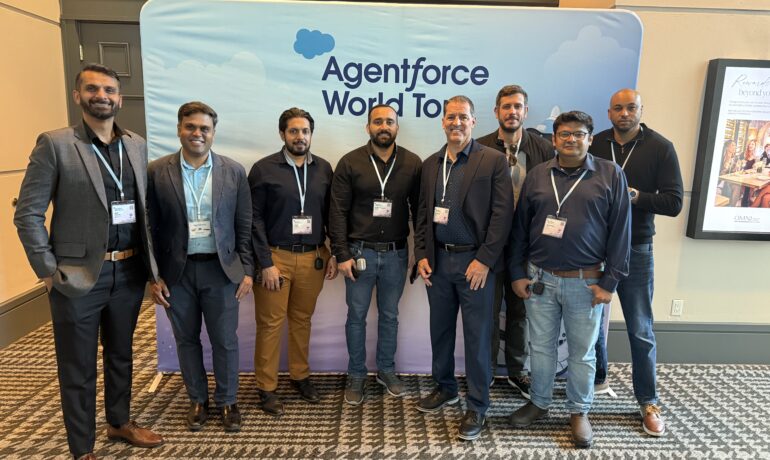
Tectonic Shook Things Up at AgentForce World Tour in Denver

The Tectonic team attended Salesforce’s Denver AgentForce World Tour this week. It was a great experience to develop our AgentBlazer team and a true seismic time was had by all! AI Agents were the topic of conversation and kept things lively! One almost expected to meet an Agentic Robot around every corner. We were all excited to network with Salesforce, customers, and partners alike. Key Takeaways Autonomous AI agents can understand and interpret customers’ questions using natural language, with minimal human intervention. Here’s what you need to know. The AI Assistant Revolution: Empowering Every Employee Imagine if every person in your company—from the CEO to frontline employees—had a dedicated assistant at their fingertips. An assistant who:✔ Knows your customers inside out✔ Delivers instant, data-driven insights✔ Helps prioritize next best actions Thanks to AI agents, this future is already here—and it’s transforming how businesses operate. How AI Agents Are Supercharging Teams 1. Instant Insights, No Manual Work 🔹 Generative AI agents analyze your trusted customer data in seconds—eliminating hours of manual research.🔹 Sales, service, and marketing teams get real-time recommendations, allowing them to focus on high-impact work. 2. Scaling Teams Without Adding Headcount 🔹 AI agents handle routine tasks—customer inquiries, data entry, meeting prep—freeing employees for strategic work.🔹 Quickly ramp up productivity during peak demand without overburdening staff. 3. Proactive Problem-Solving 🔹 AI doesn’t just react—it predicts.🔹 Identifies risks, suggests optimizations, and prevents small issues from becoming big ones. 4. Personalized Support for Every Role 🔹 Sales: AI suggests the best leads, crafts follow-ups, and forecasts deals.🔹 Service: Resolves common cases instantly, escalating only when needed.🔹 Leadership: Delivers real-time business insights for faster decisions. The Future of Work Is AI-Augmented AI agents aren’t replacing humans—they’re empowering them. By automating the mundane and enhancing decision-making, they help teams:✅ Work smarter, not harder✅ Deliver better customer experiences✅ Stay ahead of the competition The question isn’t if your company should adopt AI agents—it’s how soon you can start leveraging them. Tectonic, a trusted Salesforce partner, is here to help. Ready to explore AI-powered productivity? Let’s talk about the right AI strategy for your business. AI Agents: Your Intelligent Digital Workforce What Is an AI Agent? An AI agent is an autonomous artificial intelligence system that understands, processes, and responds to customer inquiries—without human intervention. Built using platforms like Agentforce, these agents leverage machine learning (ML) and natural language processing (NLP) to handle tasks ranging from simple FAQs to complex problem-solving. Unlike traditional AI, which requires manual programming for each task, AI agents continuously learn and improve from interactions, becoming smarter over time. How Do AI Agents Work? AI agents operate through a seamless four-step process: 💡 Result? Faster resolutions, happier customers, and more efficient teams. 6 Game-Changing Benefits of AI Agents Feature Impact 1. 24/7 Availability Instant support across time zones. 2. Hyper-Efficiency Handle thousands of queries simultaneously—no wait times. 3. Smarter Escalations Auto-route complex cases to the best-suited human agent. 4. Personalized Experiences Tailor responses using real-time customer data. 5. Scalability Grow support capacity without hiring more staff. 6. Data-Backed Insights Uncover trends to optimize operations & CX. “72% of companies already deploy AI—with generative AI adoption accelerating.” – McKinsey AI Agents in Action: Industry Use Cases 🏦 Finance ✔ Personalized wealth advice based on spending habits✔ Auto-summarize client cases for faster resolutions 🏭 Manufacturing ✔ Predict equipment failures before they happen✔ Optimize supply chain decisions with real-time data 🛒 Retail & Consumer Goods ✔ Smart inventory tracking (e.g., flagging stock discrepancies)✔ AI-generated promo content for targeted campaigns 🚗 Automotive ✔ Proactive vehicle maintenance alerts via telematics✔ Dynamic dealership promotions to boost sales 🏥 Healthcare ✔ Automated patient scheduling with the right specialist✔ Clinical trial matching using AI-driven eligibility checks Join the AI Revolution with Agentforce AI agents aren’t just tools—they’re productivity multipliers that help teams:✅ Work faster with automated workflows✅ Serve customers better with personalized AI assistance✅ Stay ahead with predictive insights 📈 Ready to transform your business? Connect with Tectonic today, or check out our Agentforce Quickstart offering. Connect with the Tectonic Agentforce team and launch your Agentic Revolution. AI Agents: The Ultimate Productivity Multiplier for Every Team AI agents aren’t just transforming customer service—they’re revolutionizing how every department operates. From 24/7 customer support to hyper-personalized marketing campaigns, AI agents help teams work smarter, move faster, and deliver exceptional experiences. Here’s how AI agents supercharge key business functions: 🤝 AI Agents for Service Teams Never miss a customer inquiry—even at 2 AM.✔ Instant, 24/7 support across email, chat, and social media✔ Smart escalation—AI routes complex cases to human agents with full context✔ Brand-consistent responses powered by your CRM data 🔹 With Agentforce for Service, deploy AI agents in minutes using prebuilt templates—or customize them for your unique needs. 💰 AI Agents for Sales Teams Turn every lead into a conversation—automatically.✔ Autonomous lead engagement—AI answers product questions & books meetings✔ Always-on SDRs—Agentforce Sales Development Reps qualify leads 24/7✔ Controlled escalation—Set rules for when & how AI hands off to your team 🔹 No more missed opportunities—AI keeps your pipeline full while your reps focus on closing. 🛍️ AI Agents for Commerce Teams Personal shopping assistants—powered by AI.✔ Smart product recommendations based on browsing & purchase history✔ Guided shopping experiences—AI helps customers find what they need faster✔ Omnichannel support—Engage shoppers on your site, WhatsApp, and more 🔹 Boost conversions with AI that acts like your best sales associate—for every customer. 📢 AI Agents for Marketing Teams Campaigns that write, optimize, and improve themselves.✔ AI-generated campaign briefs—audience targeting, messaging & KPIs✔ Automated content creation—draft ads, emails & social posts in your brand voice✔ Performance optimization—AI analyzes results & suggests improvements 🔹 With Agentforce Campaigns, launch better campaigns in hours—not weeks. Why AI Agents? The Bottom Line ✅ Scale operations without scaling headcount✅ Deliver instant, personalized experiences 24/7✅ Free your team to focus on high-value work “Companies using AI agents see 40% faster response times and 30% higher customer satisfaction.” Ready to deploy your AI workforce? See how Agentforce can transform your business #FutureOfWork

Read More
What is a CRM

Customer Relationship Management

Salesforce has transformed the way businesses manage customer relationships, sales, and marketing. Its capabilities extend into the events industry, enabling seamless integration for event planning, marketing, sales, and attendee engagement. By leveraging Salesforce, event organizers can streamline lead management, automate marketing campaigns, track event performance, and enhance attendee experiences. This guide explores how Salesforce can optimize event success and drive higher ROI. Managing Leads with Salesforce Effective lead management is critical to maximizing event ROI. Salesforce offers powerful tools to streamline lead capture, scoring, nurturing, segmentation, and tracking—helping sales teams convert attendees into customers. Seamless Lead Capture Salesforce integrates with event registration forms, mobile apps, and onsite check-in systems to: A centralized approach provides a 360-degree view of each attendee, empowering sales and marketing teams to act strategically. AI-Powered Lead Scoring Salesforce’s AI-driven lead scoring prioritizes leads by tracking: This data-driven approach helps sales teams focus on the most promising leads for personalized follow-ups. Automated Lead Nurturing Salesforce automation tools keep leads engaged post-event through: Advanced Lead Segmentation Salesforce enables lead categorization for targeted outreach: Tracking Sales Opportunities with Salesforce Beyond lead management, Salesforce empowers event teams with tools to monitor revenue-generating opportunities, such as ticket sales, sponsorship deals, and exhibitor partnerships. Comprehensive Opportunity Management Salesforce enables tracking of every stage of the sales process, including: Real-Time Sales Pipeline Visibility Salesforce’s pipeline management tools allow teams to: Customizable Sales Reporting Salesforce reporting capabilities help event organizers: Automating Event Marketing Tasks with Salesforce Marketing automation is key to scaling outreach, enhancing engagement, and driving conversions. Salesforce provides tools that streamline marketing efforts, personalize communication, and measure campaign success. Email Marketing Automation Salesforce automates email campaigns to ensure timely communication: Social Media Integration & Management Salesforce allows teams to manage and track social media engagement from one platform: Integrating Salesforce with Event Technology Seamless integration between Salesforce and event technology centralizes data, improves efficiency, and enhances engagement. Event Management Platform Integration Salesforce integrates with platforms like Cvent, Bizzabo, and Eventbrite to enable: Mobile Event Apps & On-Site Engagement Tools Syncing Salesforce with mobile event apps provides real-time insights and tracking: Marketing Automation Tool Integrations Salesforce enhances marketing efficiency by integrating with platforms like HubSpot, Marketo, and Pardot: Reporting and Analytics: Unlocking Actionable Insights Salesforce provides robust analytics to help organizers measure performance, optimize strategies, and maximize ROI. Customizable Reports for Event Insights Salesforce enables comprehensive reporting on: ROI Analysis for Strategic Planning Salesforce’s ROI analysis tools help organizers: Best Practices for Using Salesforce for Events To maximize Salesforce’s value in event management, organizations should adopt best practices: 1. Data Hygiene: Keeping Information Accurate 2. Training & Adoption: Empowering Teams 3. Customization: Tailoring Salesforce for Event Needs 4. Integration Strategy: Creating a Unified Event Tech Ecosystem By implementing these best practices, organizations can fully leverage Salesforce to enhance event success, improve attendee engagement, and drive higher ROI. Like Related Posts Who is Salesforce? Who is Salesforce? Here is their story in their own words. From our inception, we’ve proudly embraced the identity of Read more Salesforce Marketing Cloud Transactional Emails Salesforce Marketing Cloud Transactional Emails are immediate, automated, non-promotional messages crucial to business operations and customer satisfaction, such as order Read more Salesforce Unites Einstein Analytics with Financial CRM Salesforce has unveiled a comprehensive analytics solution tailored for wealth managers, home office professionals, and retail bankers, merging its Financial Read more AI-Driven Propensity Scores AI plays a crucial role in propensity score estimation as it can discern underlying patterns between treatments and confounding variables Read more

Read More
Marketing Intelligence Ad Management

Marketing Intelligence Ad Management

Marketing intelligence and ad management involve gathering, analyzing, and interpreting data to understand market trends, competitor activities, and consumer behavior, enabling businesses to make informed decisions and optimize their advertising campaigns.  What is Marketing Intelligence? How Marketing Intelligence Helps with Ad Management Like Related Posts Who is Salesforce? Who is Salesforce? Here is their story in their own words. From our inception, we’ve proudly embraced the identity of Read more Salesforce Marketing Cloud Transactional Emails Salesforce Marketing Cloud Transactional Emails are immediate, automated, non-promotional messages crucial to business operations and customer satisfaction, such as order Read more Salesforce Unites Einstein Analytics with Financial CRM Salesforce has unveiled a comprehensive analytics solution tailored for wealth managers, home office professionals, and retail bankers, merging its Financial Read more AI-Driven Propensity Scores AI plays a crucial role in propensity score estimation as it can discern underlying patterns between treatments and confounding variables Read more

Read More
Unlocking Efficiency with Salesforce Marketing Cloud Automation

Unlocking Efficiency with Salesforce Marketing Cloud Automation

Revolutionizing Marketing with Automation Salesforce Marketing Cloud automation is like having a personal assistant dedicated to your campaigns. It handles repetitive tasks, freeing you to focus on strategy and big-picture goals. Imagine designing a seamless customer journey without manually sending emails or determining the perfect timing—this is the power of advanced workflows in marketing. These tools streamline processes, enhance efficiency, and improve engagement. The Game-Changing Impact of Automation When I first started using Salesforce Marketing Cloud, it was a revelation. The automation tools allowed me to set up campaigns that practically ran themselves—like having an extra set of hands. For example, I created email sequences that responded to customer actions automatically. This meant engaging with customers at the right moments without lifting a finger. One standout experience was setting up a journey for free trial sign-ups. The system sent a welcome email, followed by usage-based tips. If a customer didn’t engage, an alternative path triggered a different message. This intelligent automation boosted engagement and conversions—marketing at its smartest. Transforming Marketing Operations: Doing More with Less Marketing Operations (Marketing Ops) is about maximizing impact with minimal effort. Advanced workflows reallocate resources effectively, shifting focus from task management to strategic growth. It’s like upgrading from a bicycle to a car—suddenly, you’re covering more ground, faster. Marketing Ops teams juggle campaign tracking, performance analysis, and strategy refinement. Automating these processes with Salesforce Marketing Cloud reduces mundane tasks, fostering innovation and continuous campaign optimization. For more insights on streamlining workflows, explore our guide on optimizing marketing automation. Beyond Emails: Personalization at Scale Automation isn’t just about sending emails—it’s about crafting personalized customer experiences. By intelligently segmenting your audience, you can ensure the right message reaches the right person at the right time, significantly increasing engagement. Of course, automation isn’t foolproof. Data accuracy is crucial. I once encountered a typo in a data field that misspelled a customer’s name—an embarrassing but valuable lesson in the importance of clean data. Always double-check your sources! Real-World Applications of Marketing Cloud Automation Automation enhances marketing efficiency across various scenarios: For more segmentation tips to improve email ROI, explore our in-depth guide. Getting Started: Small Steps, Big Impact If you’re wondering where to begin, the good news is that Salesforce Marketing Cloud scales with your needs. Start with a single campaign and gradually expand. As you become more comfortable, you’ll discover new ways to optimize automation. Leverage online resources—there are countless tutorials and guides available. And don’t hesitate to experiment—some of the best strategies emerge from trial and error. I remember my first attempt at automation. It wasn’t perfect, but the lessons I learned about timing and engagement refined future campaigns. It’s like learning to ride a bike—wobbly at first, but soon you’re cruising. Leveraging Analytics for Smarter Marketing Salesforce Marketing Cloud Engagement provides deep insights into customer engagement. Tracking these metrics enables data-driven decisions, optimizing experiences and increasing conversion rates. This is where the magic happens—understanding your audience to craft campaigns that truly resonate. And here’s a little secret: competition is fierce. Every company is competing for your customer’s attention. By optimizing Marketing Ops and leveraging advanced workflows, you gain a strategic edge. It’s like being the first to know about a secret sale. Conclusion: Embracing the Future of Marketing Automation Salesforce Marketing Cloud automation opens the door to endless possibilities. By implementing these workflows, marketing becomes more efficient, impactful, and personalized. Remember, you’re not just sending messages—you’re crafting experiences. That’s where true marketing magic lies. Ready to elevate your marketing game? Let’s talk. Like1 Related Posts Who is Salesforce? Who is Salesforce? Here is their story in their own words. From our inception, we’ve proudly embraced the identity of Read more Salesforce Marketing Cloud Transactional Emails Salesforce Marketing Cloud Transactional Emails are immediate, automated, non-promotional messages crucial to business operations and customer satisfaction, such as order Read more Salesforce Unites Einstein Analytics with Financial CRM Salesforce has unveiled a comprehensive analytics solution tailored for wealth managers, home office professionals, and retail bankers, merging its Financial Read more AI-Driven Propensity Scores AI plays a crucial role in propensity score estimation as it can discern underlying patterns between treatments and confounding variables Read more

Read More
GoMeddo

Tectonic Announces Partnership with GoMeddo

Revolutionizing Hospitality with Smart Guest Experiences The Future of Hospitality is Here – Powered by Salesforce, GoMeddo, and Tectonic Tectonic is thrilled to announce our partnership with GoMeddo to revolutionize hospitality with smart guest experiences! Today’s guests demand more than just great service—they expect personalized, seamless, and effortless experiences. That’s why Tectonic, a top-tier Salesforce implementation partner, and GoMeddo, the leading scheduling and booking platform, are teaming up to transform hospitality and restaurant operations with cutting-edge technology. There’s no time like the present to create the best possible guest experiences and no one better equipped to get you there than GoMeddo and Tectonic. 🚀 Key Benefits for Your Business:✔ Frictionless Bookings – Let guests reserve tables, rooms, or activities 24/7 from any device.  Regardless the use case (golf, batting cages, party rooms, ski lessons, events, meetings or more) our frictionless booking tool delights your guests.✔ Hyper-Personalized Journeys – Leverage real-time data to anticipate needs and amaze every guest.✔ Smarter Operations – Automate scheduling, optimize staff efficiency, and reduce overhead. This powerful partnership is set to elevate guest satisfaction, boost revenue, and streamline operations—ensuring your business stays ahead in a competitive market. Why Guest Experience is the New Battleground The hospitality industry is evolving fast. Guests no longer just compare you to competitors—they compare you to Amazon, Uber, and Netflix. They want:🔹 Instant, digital-first service (no phone calls or waiting)🔹 Tailored recommendations (like Spotify’s “Made for You” playlists)🔹 Seamless omnichannel interactions (book online, modify via app, check in via kiosk) 80% of guests are more likely to return to brands that offer personalized experiences. Are you meeting these expectations? How GoMeddo + Tectonic Deliver Next-Level Hospitality 1️⃣ For Guests: Effortless, Personalized Experiences 2️⃣ For Staff: Smarter Operations 3️⃣ For Management: Data-Driven Growth Real Results: What This Partnership Unlocks 📈 20-30% higher table turnover with automated reservations💳 15% increase in upsells via personalized promotions⭐ Improved guest reviews from streamlined experiences “Technology should enhance human connection, not replace it. With GoMeddo and Salesforce, we’re giving staff superpowers to focus on what matters—creating unforgettable moments.”– Krystal Hicks, Sales Director at Tectonic The Bottom Line The hospitality brands winning today aren’t just competing on service—they’re competing on convenience, personalization, and tech-powered magic. With GoMeddo’s scheduling expertise and Tectonic’s Salesforce mastery, your business can:✅ Turn first-time guests into loyal regulars✅ Free staff from admin headaches✅ Future-proof your operations Ready to redefine guest experience? [Discover how our solutions work] or [Book a consultation]. #HospitalityInnovation #SmartRestaurants #GuestExperience #Salesforce #GoMeddo #Tectonic #CustomerExperience #CustomerEngagement #SalesforcePartner Like Related Posts Who is Salesforce? Who is Salesforce? Here is their story in their own words. From our inception, we’ve proudly embraced the identity of Read more Salesforce Marketing Cloud Transactional Emails Salesforce Marketing Cloud Transactional Emails are immediate, automated, non-promotional messages crucial to business operations and customer satisfaction, such as order Read more Salesforce Unites Einstein Analytics with Financial CRM Salesforce has unveiled a comprehensive analytics solution tailored for wealth managers, home office professionals, and retail bankers, merging its Financial Read more AI-Driven Propensity Scores AI plays a crucial role in propensity score estimation as it can discern underlying patterns between treatments and confounding variables Read more

Read More
gettectonic.com