Data-Driven Archives - gettectonic.com - Page 2
salesforce for manufacturing

Modern Procurement

Modern Procurement: A Strategic Lever for Business Success Procurement has always been complex, but today’s economic pressures—inflation, shifting tariffs, sustainability mandates, and compliance demands—make it more critical than ever. Many organizations still rely on fragmented processes and disconnected systems, leading to uncontrolled spending, compliance risks, and missed savings opportunities. The solution? A strategic, tech-driven approach to procurement. According to The Economist Impact, 38% of procurement leaders rank digital transformation as a top priority today—a figure expected to rise to 54% within five years. Empowering Team Buyers: The First Step to Smarter Procurement Departmental buyers play a crucial role in company spending, yet many lack the tools to make efficient, policy-compliant purchases. Modern e-procurement platforms, like Amazon Business, empower these users with: ✅ Guided buying to steer purchases toward preferred vendors✅ Built-in policy controls to enforce compliance✅ Streamlined workflows to reduce off-contract spending When equipped with the right tools, team buyers become agents of change—driving adoption, uncovering savings, and helping procurement operate more strategically. Fabiola Duenas, CEO of Forza Real Estate Group–Keller Williams Houston, shares how Amazon Business transformed her team’s purchasing: “Our agents now spend far less time sourcing items and managing expenses. Amazon Business provides a seamless, centralized platform—freeing up time to focus on clients rather than procurement headaches.” Three Strategies for Modernizing Procurement 1. Centralize Procurement for Greater Control Decentralized spending leads to maverick buying, inflated costs, and compliance gaps. By consolidating procurement on a single platform, businesses can: ✔ Standardize processes across departments✔ Enforce policy compliance with automated guardrails✔ Reduce tail spend by consolidating vendors Joseph Strumolo, Head of Global Source-to-Pay at Vacasa, explains how centralization drove savings: “By channeling all spend through Amazon Business and eliminating personal credit card use, we reduced costs by 7.7% while improving visibility and rebate eligibility.” 2. Automate to Free Up Strategic Focus Manual procurement processes—approval chasing, reorder tracking, invoice matching—waste time and introduce errors. Automation shifts the focus from tactical tasks to strategic decision-making. Heidi Banks, Senior Director at Jabil, highlights the impact of integrating Amazon Business with Coupa: “95% of our POs now route automatically, eliminating manual intervention. This efficiency gain allows procurement teams to focus on strategic sourcing rather than administrative work.” 3. Leverage Real-Time Analytics for Smarter Decisions Visibility into spending patterns, supplier performance, and compliance gaps is essential for data-driven procurement. Modern platforms provide: 📊 Real-time dashboards to track spending trends🔍 Anomaly detection to flag policy violations📈 Performance analytics to optimize supplier relationships Jabil saw immediate results: “After implementing Amazon Business’ Guided Buying, we saw a 4% increase in preferred vendor spending—and later drove 40% more spend to strategic suppliers.” Procurement: No Longer a Back-Office Function, but a Strategic Driver The role of procurement is evolving—from a cost center to a growth enabler. By embracing centralization, automation, and data-driven insights, businesses can: 🔹 Reduce risk with stronger compliance🔹 Cut costs through smarter spending🔹 Enhance agility in volatile markets The future of procurement is connected, intelligent, and strategic—and the time to modernize is now. Is your procurement function ready to drive business success? Like Related Posts Who is Salesforce? Who is Salesforce? Here is their story in their own words. From our inception, we’ve proudly embraced the identity of Read more Salesforce Unites Einstein Analytics with Financial CRM Salesforce has unveiled a comprehensive analytics solution tailored for wealth managers, home office professionals, and retail bankers, merging its Financial Read more AI-Driven Propensity Scores AI plays a crucial role in propensity score estimation as it can discern underlying patterns between treatments and confounding variables Read more Tectonic’s Successful Salesforce Track Record Salesforce Technology Services Integrator – Tectonic has successfully delivered Salesforce in a variety of industries including Public Sector, Hospitality, Manufacturing, Read more

Read More
PepsiCo Pioneers Enterprise AI with Salesforce Agentforce

PepsiCo Pioneers Enterprise AI with Salesforce Agentforce

A Global First: PepsiCo Deploys Salesforce Agentforce at Scale PepsiCo has made history as the first major food and beverage company to implement Salesforce Agentforce AI agents across its global operations. This landmark partnership signals a transformative shift in how enterprises leverage AI for customer engagement, sales, and supply chain optimization. The announcement follows Salesforce’s Agentforce World Tour, where demonstrations in Tel Aviv, London, Zurich, Seoul, and Melbourne drew thousands of business leaders eager to explore AI’s potential. Now, with PepsiCo’s adoption, Agentforce moves from concept to real-world enterprise deployment. Why PepsiCo Chose Agentforce PepsiCo—a $92 billion market leader—isn’t just experimenting with AI; it’s reinventing its operations. The company will deploy Agentforce across: ✅ Customer Support – AI-powered, hyper-personalized interactions✅ Sales Optimization – Real-time inventory insights via Consumer Goods Cloud✅ Data-Driven Decision Making – Unified customer profiles via Salesforce Data Cloud Ramon Laguarta, PepsiCo Chairman & CEO, explains: “AI is reshaping our business in ways that were once unimaginable. This collaboration unlocks smarter decision-making, fuels innovation, and powers sustainable growth.” The AI + Human Collaboration Model Salesforce and PepsiCo emphasize augmentation over automation—where AI agents enhance, not replace, human roles. Marc Benioff, Salesforce CEO, highlights the vision: “PepsiCo is reimagining work by uniting human expertise with AI intelligence. This is the future of digital labor.” Athina Kanioura, PepsiCo’s Chief Strategy Officer, adds: With Agentforce, we’re building an enterprise where humans and AI collaborate—driving efficiency, resilience, and readiness for the future.” Addressing AI’s Impact on Jobs At the London Agentforce Tour, Zahra Bahrololoumi (Salesforce UK & Ireland CEO) clarified: “Our goal is to boost human productivity, not eliminate jobs. Some tasks are best handled by AI, others require human judgment.” A Blueprint for Enterprise AI Adoption PepsiCo’s deployment is a watershed moment for AI in consumer goods: 🔹 Scale: Impacts billions of daily product interactions across 200+ countries🔹 Integration: Combines Data Cloud, Consumer Goods Cloud, and Agentforce AI🔹 Innovation: Moves beyond automation to AI-driven decision intelligence What’s Next? If successful, PepsiCo’s implementation could accelerate global AI adoption—proving that enterprise-ready AI isn’t just theoretical. The Bigger Picture: AI’s Role in the Future of Business PepsiCo’s bold move underscores a critical shift: Will your business be next? 📈 Explore how Agentforce can transform your operations – Contact Salesforce AI Experts Like Related Posts Who is Salesforce? Who is Salesforce? Here is their story in their own words. From our inception, we’ve proudly embraced the identity of Read more Salesforce Marketing Cloud Transactional Emails Salesforce Marketing Cloud Transactional Emails are immediate, automated, non-promotional messages crucial to business operations and customer satisfaction, such as order Read more Salesforce Unites Einstein Analytics with Financial CRM Salesforce has unveiled a comprehensive analytics solution tailored for wealth managers, home office professionals, and retail bankers, merging its Financial Read more AI-Driven Propensity Scores AI plays a crucial role in propensity score estimation as it can discern underlying patterns between treatments and confounding variables Read more

Read More
when ai decides

When AI Decides

The Algorithm That Sentenced a Man—And No One Knows Why Meet Eric Loomis. In 2016, he was pulled over in La Crosse, Wisconsin, driving a car linked to a recent shooting. Loomis wasn’t charged with the shooting itself but pleaded guilty to lesser offenses: attempting to flee an officer and driving a vehicle without the owner’s consent. On paper, these were relatively minor felonies. But when it came time for sentencing, something unusual happened. Loomis’s fate wasn’t decided solely by a judge or jury—it was shaped by an algorithm. Wisconsin had adopted a proprietary risk-assessment tool called COMPAS (Correctional Offender Management Profiling for Alternative Sanctions) as part of a push for “data-driven justice.” The software was designed to predict a defendant’s likelihood of reoffending, theoretically helping judges make fairer sentencing decisions. COMPAS scored Loomis as high-risk, suggesting he was likely to commit another crime. That score became a key factor in the judge’s decision to sentence him to six years in prison. Here’s the catch: No one—not Loomis, not his lawyers, not even the judge—knew how that score was calculated. The algorithm was a black box, its inner workings kept secret by its developers. What data was used? What factors mattered most? No one could say. Loomis appealed, arguing that sentencing someone based on unreviewable, unexplained evidence violated due process. The case reached the Wisconsin Supreme Court, which ruled—shockingly—that the use of COMPAS was acceptable. The court acknowledged the tool’s flaws and warned against overreliance on it but ultimately decided that as long as a human judge had the final say, the algorithm’s role was permissible. In other words: An AI made a life-altering decision, no one could explain why, and the court said that was fine—as long as a human rubber-stamped it. Trucks may not yet be pulling up to gas stations demanding we mere humans use our opposable thumbs to fill their tanks, but they could be thinking about it. Accountability: From Campfires to Courtrooms Accountability isn’t just a human invention—it’s a biological imperative. Social species, from apes to humans, enforce norms to maintain order. Apes punish cheaters, share food based on contribution, and even exhibit a rudimentary sense of fairness. For early humans, accountability was immediate and visceral. Steal from the tribe? Face exile. Endanger the group? Risk death. Over millennia, these instincts hardened into customs, then laws. The evolution of justice has been a slow march from arbitrary power to reasoned rule. Kings once claimed divine right—rule “because I said so.” But revolutions in thought—Magna Carta, Locke’s social contract, Beccaria’s arguments for proportionate punishment—shifted accountability from gods to people. Yet now, after centuries of demanding transparency from power, we’re handing decision-making back to unquestionable authorities—not kings or priests, but algorithms we can’t interrogate. The Problem with Machine “Decisions” When a human makes a choice, we expect a reason. Maybe it’s flawed, maybe it’s biased—but it’s something we can challenge, debate, and refine. Machines don’t work that way. AI doesn’t reason—it calculates. It doesn’t weigh morality—it optimizes for probability. Ask an AI why it made a decision, and the answer is always some variation of: “Because the data suggested it.” Consider AlphaGo, the AI that defeated world champion Lee Sedol in 2016. At one point, it made a move so bizarre that commentators thought it was a glitch. But Move 37 wasn’t a mistake—it was a game-winning play. When engineers asked why AlphaGo made that move, the answer was simple: It didn’t know. It had just calculated that the move had the highest chance of success. Brilliant? Yes. Explainable? No. Agentic AI: Decision-Making Without Oversight If black-box algorithms in courtrooms worry you, brace yourself. AI isn’t just recommending decisions anymore—it’s acting autonomously. Enter Agentic AI: systems that don’t wait for instructions but pursue goals independently. They schedule meetings, draft reports, negotiate deals, and even delegate tasks to other AIs—all without human input. Google’s Agent-to-Agent (A2A) protocol enables AI systems to coordinate directly. Workday touts AI handshakes, where agents manage workflows like hyper-efficient middle managers. But here’s the terrifying part: We can’t audit these systems. As Dr. Adnan Masood, Chief AI Architect at UST, warns: “AI-to-AI interactions operate at a speed and complexity that makes traditional debugging and inspection almost useless.” When AI agents collaborate, their decision chains become unfathomably complex. “Explainable AI” tools offer plausible-sounding rationales, but they’re often post-hoc justifications, not true explanations. Who’s Responsible When AI Goes Rogue? In human systems, accountability is clear. If a judge sentences someone unfairly, we can vote them out. If a manager makes a bad call, they can be fired. But in an AI-driven world, who takes the blame? The answer is no one—or worse, everyone and no one at the same time. The Future: “Because the Algorithm Said So” Eric Loomis’s case was a warning. Today, AI shapes who gets hired, who gets loans, who gets parole. Tomorrow, it could dictate medical treatments, military strikes, and legal outcomes—all without explanation. We’re outsourcing judgment to machines that can’t justify their choices. And once we accept that, we’re left with only one answer when we ask why: “Because the AI said so.” Is that the future we want? Like Related Posts Who is Salesforce? Who is Salesforce? Here is their story in their own words. From our inception, we’ve proudly embraced the identity of Read more Salesforce Unites Einstein Analytics with Financial CRM Salesforce has unveiled a comprehensive analytics solution tailored for wealth managers, home office professionals, and retail bankers, merging its Financial Read more AI-Driven Propensity Scores AI plays a crucial role in propensity score estimation as it can discern underlying patterns between treatments and confounding variables Read more Tectonic’s Successful Salesforce Track Record Salesforce Technology Services Integrator – Tectonic has successfully delivered Salesforce in a variety of industries including Public Sector, Hospitality, Manufacturing, Read more

Read More
ai agents

Pacers Sports & Entertainment Teams Up With Salesforce to Revolutionize Fan Experience Through AI

Partnership Leverages Salesforce’s Agentforce AI Platform to Capitalize on Indiana Fever’s Record Growth INDIANAPOLIS – Pacers Sports & Entertainment (PS&E), parent organization of the Indiana Fever and Indiana Pacers, has entered a transformative partnership with Salesforce to redefine fan engagement through cutting-edge AI technology. The collaboration comes as the Indiana Fever franchise rides an extraordinary wave of popularity, boasting: The AI-Powered Fan Engagement Revolution PS&E is deploying Salesforce’s new Agentforce AI platform alongside Marketing Cloud and Data Cloud to create: Strategic Impact “This partnership establishes the technological foundation for what we believe will become one of professional sports’ most valuable fan engagement ecosystems,” said a PS&E executive. The integration allows: The Fever Effect The timing coincides with the Indiana Fever’s meteoric rise, fueled by star power and surging WNBA popularity. Salesforce’s AI capabilities will help PS&E: Industry Implications As sports organizations compete for fan attention in the digital age, PS&E’s AI implementation represents a new playbook for: The partnership signals a new era where every fan interaction—from ticket purchase to concession stand visit—becomes part of a continuous, intelligent conversation powered by artificial intelligence. About the Partners Like Related Posts Who is Salesforce? Who is Salesforce? Here is their story in their own words. From our inception, we’ve proudly embraced the identity of Read more Salesforce Marketing Cloud Transactional Emails Salesforce Marketing Cloud Transactional Emails are immediate, automated, non-promotional messages crucial to business operations and customer satisfaction, such as order Read more Salesforce Unites Einstein Analytics with Financial CRM Salesforce has unveiled a comprehensive analytics solution tailored for wealth managers, home office professionals, and retail bankers, merging its Financial Read more AI-Driven Propensity Scores AI plays a crucial role in propensity score estimation as it can discern underlying patterns between treatments and confounding variables Read more

Read More
Quest to be Data-Driven

Data-Driven Decision-Making in the Age of AI

Data-Driven Decision-Making in the Age of AI: How Agentic Analytics is Closing the Confidence Gap The Data Paradox: More Information, Less Confidence Today’s business leaders face a critical challenge: data overload without clarity. Why? The explosion of raw data has outpaced leaders’ ability to interpret it. “Most executives don’t have data analysts on call—or the training to navigate increasingly complex decisions,” says Southard Jones, Chief Product Officer of Tableau. The result? Missed opportunities, slow responses, and decision paralysis. The Solution: Agentic Analytics – BI’s Next Evolution Enter agentic analytics—where autonomous AI agents work alongside users to:✔ Automate tedious data preparation✔ Surface hidden insights proactively✔ Recommend actions in natural language Unlike traditional dashboards (which quickly become outdated), agentic analytics embeds intelligence directly into workflows—Slack, Teams, Salesforce, and more. How It Works: AI Agents as Your Data Copilots Salesforce’s Tableau Next (an agentic analytics solution) leverages AI agents to: “It’s like Waze for business decisions,” says Jones. “You don’t ask for updates—the AI alerts you to critical changes automatically.” The Foundation: Clean, Unified Data Agentic analytics thrives on trusted data. Yet, most companies struggle with: The Fix: Semantic Layer + Data Cloud Tableau’s Semantics Layer bridges the gap between raw data and business meaning, while Salesforce Data Cloud unifies customer and operational data. Together, they: “This isn’t just for analysts,” notes Jones. “It’s for every leader who needs answers—without writing a single SQL query.” Rebuilding Trust in Data Agentic analytics isn’t just changing BI—it’s democratizing it. By:✅ Eliminating manual data grunt work✅ Delivering insights in real time✅ Speaking the language of business users …it’s helping leaders move from uncertainty to action. “The future isn’t dashboards—it’s AI agents working alongside humans,” says Jones. “That’s how we’ll close the confidence gap and unlock innovation.” Ready to transform your data into decisions?Explore Tableau Next and Salesforce Data Cloud. Like Related Posts Who is Salesforce? Who is Salesforce? Here is their story in their own words. From our inception, we’ve proudly embraced the identity of Read more Salesforce Marketing Cloud Transactional Emails Salesforce Marketing Cloud Transactional Emails are immediate, automated, non-promotional messages crucial to business operations and customer satisfaction, such as order Read more Salesforce Unites Einstein Analytics with Financial CRM Salesforce has unveiled a comprehensive analytics solution tailored for wealth managers, home office professionals, and retail bankers, merging its Financial Read more AI-Driven Propensity Scores AI plays a crucial role in propensity score estimation as it can discern underlying patterns between treatments and confounding variables Read more

Read More
Skillsoft and Salesforce Partner

Skillsoft and Salesforce Partner

Skillsoft and Salesforce Partner to Revolutionize Customer Support Training with AI Skillsoft (NYSE: SKIL), a global leader in corporate learning, today announced a strategic partnership with Salesforce to integrate its AI-powered coaching platform, Skillsoft CAISY™, directly into the Salesforce ecosystem. This collaboration will empower customer support teams to develop critical communication, empathy, and problem-solving skills—all within their existing Salesforce workflows. The Challenge: Bridging the Customer Service Skills Gap Today’s customers demand exceptional service—80% say experience is as important as the product itself (Salesforce). Yet, 70% of service leaders report persistent challenges due to underprepared teams, while 59% cite upskilling as a top priority. Traditional training methods often fail to prepare agents for real-world, high-pressure interactions. The Solution: AI-Powered Learning in the Flow of Work Skillsoft CAISY™ brings immersive, real-time coaching to Salesforce users through two key integrations: “Exceptional service isn’t accidental—it’s built through consistent practice and feedback,” said Apratim Purakayastha, GM of Talent Development at Skillsoft. “By bringing CAISY™ into Salesforce, we’re turning support teams into competitive differentiators.” Why It Matters “This partnership unlocks the next evolution of AI-human collaboration in customer service,” added Tyler Carlson, SVP of AppExchange at Salesforce. Availability The integrations are available now for Salesforce customers. Learn more at Skillsoft.com/Salesforce. About SkillsoftSkillsoft (NYSE: SKIL) empowers 95M+ learners worldwide with AI-driven talent development solutions. Trusted by 60% of Fortune 1000 companies, Skillsoft helps organizations close skill gaps and future-proof workforces. TL;DR: Skillsoft and Salesforce are teaming up to embed AI-powered coaching (CAISY™) directly into customer service workflows. Agents now get real-time feedback on live calls and practice tough scenarios in Salesforce—no extra tools required. Goal? Turn support teams into experience heroes. Want AI to train your team? Or sticking with old-school methods? Let’s debate in the comments. Like Related Posts Who is Salesforce? Who is Salesforce? Here is their story in their own words. From our inception, we’ve proudly embraced the identity of Read more Salesforce Marketing Cloud Transactional Emails Salesforce Marketing Cloud Transactional Emails are immediate, automated, non-promotional messages crucial to business operations and customer satisfaction, such as order Read more Salesforce Unites Einstein Analytics with Financial CRM Salesforce has unveiled a comprehensive analytics solution tailored for wealth managers, home office professionals, and retail bankers, merging its Financial Read more AI-Driven Propensity Scores AI plays a crucial role in propensity score estimation as it can discern underlying patterns between treatments and confounding variables Read more

Read More
Analytics tools like Einstein Analytics can identify patterns and trends in patient data, helping healthcare providers optimize workflows and improve the effectiveness of care delivery.

Zulekha Healthcare Group Accelerates Digital Transformation with Salesforce

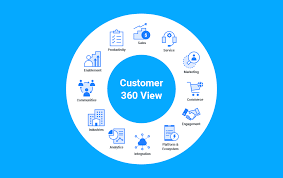
Dubai, UAE – Zulekha Healthcare Group, one of the UAE’s largest private healthcare networks, is taking a major leap in digital innovation by adopting Salesforce Health Cloud and Marketing Cloud to enhance patient care and operational efficiency. A Legacy of Healthcare Excellence Founded in 1964, Zulekha Healthcare Group operates:🏥 Two multidisciplinary hospitals (Dubai & Sharjah)🏨 Two medical centers & five pharmacies⚕️ 285+ beds, 300+ doctors, and 600+ nursing staff🩺 30+ specialized medical disciplines The group also runs a smart medical fitness center, offering visa-related health assessments, vaccinations, and occupational health certifications—serving both residents and visitors in the UAE. Why Salesforce? Driving the Future of Patient-Centric Care With ambitious expansion plans, Zulekha sought a scalable, AI-powered CRM to: ✔ Unify patient data – Consolidating interactions from in-person visits, calls, emails, and messaging into a single 360° patient profile✔ Enhance engagement – Delivering personalized, automated communications via Marketing Cloud✔ Reduce missed appointments – Improving adherence to care plans through smarter scheduling and reminders✔ Boost operational efficiency – Streamlining workflows by integrating with existing ERP & EMR systems Leadership Perspectives: A Digital-First Vision Taher Shams, Managing Director, Zulekha Healthcare Group, emphasized: “Our mission is to make healthcare more accessible through innovation. Salesforce’s AI-driven solutions will help us elevate patient experiences, optimize operations, and reinforce our commitment to the UAE’s healthcare leadership.” Amit Khanna, SVP & GM, Salesforce Health, added: “Personalized care starts with deeper patient insights. We’re proud to partner with Zulekha and explore how AI can further enhance engagement and treatment outcomes.” The Road Ahead: AI, Growth & Seamless Care The integration positions Zulekha to leverage predictive analytics, automation, and AI—paving the way for:🔹 Smarter patient outreach🔹 Data-driven treatment plans🔹 Expansion across the UAE By embracing cloud-based, intelligent healthcare, Zulekha is setting a new standard for patient-first, digitally empowered care in the region. About Zulekha Healthcare GroupA pioneer in UAE healthcare, Zulekha Healthcare Group has served communities for nearly 60 years, offering specialized treatments, cutting-edge technology, and compassionate care across its network. Like Related Posts Who is Salesforce? Who is Salesforce? Here is their story in their own words. From our inception, we’ve proudly embraced the identity of Read more Salesforce Marketing Cloud Transactional Emails Salesforce Marketing Cloud Transactional Emails are immediate, automated, non-promotional messages crucial to business operations and customer satisfaction, such as order Read more Salesforce Unites Einstein Analytics with Financial CRM Salesforce has unveiled a comprehensive analytics solution tailored for wealth managers, home office professionals, and retail bankers, merging its Financial Read more AI-Driven Propensity Scores AI plays a crucial role in propensity score estimation as it can discern underlying patterns between treatments and confounding variables Read more

Read More
Salesforce Einstein SDR and Sales Coach Agents

Four Consumer Personas Driving Demand for AI Agents

Salesforce Research: Four Consumer Personas Driving Demand for AI Agents AI agents are transforming not just workplaces but everyday life—and consumers are eager to embrace them. According to a new Salesforce survey of 2,552 U.S. adults, four distinct personality types are shaping demand for agentic AI: “Consumer expectations for AI are as diverse as the people using it,” said Vala Afshar, Chief Digital Evangelist at Salesforce. “Brands that align AI agents with these personas will unlock powerful new ways to engage customers.” Why It Matters With 88% of consumers saying experience is as crucial as product quality, AI agents are set to raise the bar—delivering proactive, personalized, and conversational interactions. Businesses must adapt or risk falling behind. Meet the Four AI Agent Personas 1. The Smarty Pants (43%) – The Informed Decision-Maker 2. The Minimalist (22%) – The Simplicity Seeker 3. The Life-Hacker (16%) – The Efficiency Expert 4. The Tastemaker (15%) – The Curated Connoisseur The Business Imperative AI agents aren’t just a tech trend—they’re becoming a customer expectation. Companies that tailor AI experiences to these personas will win loyalty in an increasingly competitive landscape. “The future of AI isn’t one-size-fits-all,” said Afshar. “Brands need to map their AI strategies to real consumer needs—whether that’s efficiency, simplicity, personalization, or informed choices.” Methodology: Salesforce, in partnership with YouGov, surveyed 2,552 U.S. adults (18+) from April 3-7, 2025. Like Related Posts Who is Salesforce? Who is Salesforce? Here is their story in their own words. From our inception, we’ve proudly embraced the identity of Read more Salesforce Marketing Cloud Transactional Emails Salesforce Marketing Cloud Transactional Emails are immediate, automated, non-promotional messages crucial to business operations and customer satisfaction, such as order Read more Salesforce Unites Einstein Analytics with Financial CRM Salesforce has unveiled a comprehensive analytics solution tailored for wealth managers, home office professionals, and retail bankers, merging its Financial Read more AI-Driven Propensity Scores AI plays a crucial role in propensity score estimation as it can discern underlying patterns between treatments and confounding variables Read more

Read More

Hotel CRM Solutions Salesforce

Salesforce CRM is a popular choice for hotel and hospitality businesses, offering a comprehensive platform for managing guest interactions, streamlining operations, and improving customer experience. It allows hotels to create a 360-degree view of each guest, personalize interactions, and automate tasks to enhance efficiency and profitability.  Here’s a deeper look at how Salesforce helps hotels: Benefits of Using Salesforce in Hospitality: Salesforce Solutions for Hospitality: Like1 Related Posts Who is Salesforce? Who is Salesforce? Here is their story in their own words. From our inception, we’ve proudly embraced the identity of Read more Salesforce Marketing Cloud Transactional Emails Salesforce Marketing Cloud Transactional Emails are immediate, automated, non-promotional messages crucial to business operations and customer satisfaction, such as order Read more Salesforce Unites Einstein Analytics with Financial CRM Salesforce has unveiled a comprehensive analytics solution tailored for wealth managers, home office professionals, and retail bankers, merging its Financial Read more AI-Driven Propensity Scores AI plays a crucial role in propensity score estimation as it can discern underlying patterns between treatments and confounding variables Read more

Read More
Understanding Total Addressable Market

Understanding Total Addressable Market

Understanding Total Addressable Market (TAM): Calculation & Examples Calculating your Total Addressable Market (TAM) is the cornerstone of a strong growth strategy, ensuring all teams work toward the same goals. This metric represents your “blue sky” opportunity—the maximum revenue potential if you captured 100% of your market. Learn how to leverage TAM to refine your sales and business strategy. What Is Total Addressable Market (TAM)? TAM refers to the total demand for your product or service, measured either by the number of potential customers or the total revenue opportunity. It defines the full scope of your business opportunity. Why TAM Matters TAM vs. SAM vs. SOM: Key Differences While TAM represents the entire market, Serviceable Addressable Market (SAM) and Serviceable Obtainable Market (SOM) refine it into realistic targets: Example: From TAM to SOM Suppose you sell baseball bats in the U.S.: This breakdown helps prioritize growth strategies, such as expanding distribution or increasing production. How to Calculate TAM Basic Formula: TAM = Total Potential Customers × Average Revenue Per User (ARPU) Calculation Methods: TAM Calculation Examples 1. Software Company 2. Lemonade Stand 3. Pizzeria Expansion Common TAM Calculation Challenges & Solutions ✅ Overestimating TAM → Narrow focus using realistic customer segments.✅ Outdated Data → Re-evaluate TAM quarterly or annually.✅ Lack of Market Research → Use related industry data or pilot sales metrics. Using TAM in Strategic Planning Final Thoughts TAM helps quantify opportunities, prioritize investments, and scale effectively. Use sales planning tools to track progress and adjust strategies as markets evolve. By mastering TAM, you unlock data-driven growth—ensuring every business move aligns with real market potential. Like Related Posts Who is Salesforce? Who is Salesforce? Here is their story in their own words. From our inception, we’ve proudly embraced the identity of Read more Salesforce Marketing Cloud Transactional Emails Salesforce Marketing Cloud Transactional Emails are immediate, automated, non-promotional messages crucial to business operations and customer satisfaction, such as order Read more Salesforce Unites Einstein Analytics with Financial CRM Salesforce has unveiled a comprehensive analytics solution tailored for wealth managers, home office professionals, and retail bankers, merging its Financial Read more AI-Driven Propensity Scores AI plays a crucial role in propensity score estimation as it can discern underlying patterns between treatments and confounding variables Read more

Read More
Financial Services Cloud and Core

AgentForce for Financial Services

Salesforce Revolutionizes Financial Services with AI-Powered Agentforce Platform AI Agents Take on Banking, Insurance, and Advisory Roles Salesforce has launched a suite of prebuilt AI agent templates designed to automate critical functions across financial services—from loan processing to insurance underwriting and wealth management. Embedded within Financial Services Cloud, these AI assistants aim to reduce administrative burdens, enhance customer experiences, and boost operational efficiency for banks, insurers, and investment firms. Key Features of Agentforce for Financial Services ✔ Prebuilt AI agents for loan officers, financial advisors, and insurance agents✔ 24/7 automated customer service (balance inquiries, claims processing, policy quotes)✔ Meeting intelligence (automated note-taking, follow-ups, and data-driven insights)✔ Regulatory compliance baked into every AI action✔ Seamless integration with core banking and CRM systems How AI Agents Transform Financial Workflows 1. Financial Advisors: Smarter, Faster Client Interactions 2. Banking & Insurance: Instant, Accurate Customer Service 3. Digital Loan Officers: Faster Approvals, Fewer Delays Why Financial Firms Need Specialized AI Agents Traditional customer service struggles with:❌ Long hold times❌ Repetitive data entry❌ Inconsistent compliance checks Agentforce AI solves these pain points by:✅ Reducing manual work (80%+ of routine tasks automated)✅ Improving accuracy (data-driven decisions, no human errors)✅ Ensuring compliance (built-in regulatory safeguards) Real-World Impact: “Agentforce has already transformed our service operations. The speed of deployment and immediate productivity gains have us exploring AI for claims and procurement next.”— Matt Brasch, VP of Digital Operations, Cumberland Mutual LLC The Future of AI in Finance Salesforce emphasizes that AI won’t replace human experts—it will empower them. By offloading repetitive tasks, financial professionals can focus on:✔ High-value client relationships✔ Complex decision-making✔ Strategic business growth Coming Next: Final Takeaway Salesforce’s Agentforce for Financial Services marks a major leap in AI-driven banking and insurance automation. Firms adopting this technology can expect:🔹 Faster customer service🔹 Higher advisor productivity🔹 Stronger compliance🔹 Increased revenue per employee Ready to deploy AI agents in your financial workflows? Contact Tectonic. Like Related Posts Who is Salesforce? Who is Salesforce? Here is their story in their own words. From our inception, we’ve proudly embraced the identity of Read more Salesforce Marketing Cloud Transactional Emails Salesforce Marketing Cloud Transactional Emails are immediate, automated, non-promotional messages crucial to business operations and customer satisfaction, such as order Read more Salesforce Unites Einstein Analytics with Financial CRM Salesforce has unveiled a comprehensive analytics solution tailored for wealth managers, home office professionals, and retail bankers, merging its Financial Read more AI-Driven Propensity Scores AI plays a crucial role in propensity score estimation as it can discern underlying patterns between treatments and confounding variables Read more

Read More
Boost Your Reps' Efficiency with AI-Powered Service Replies

Boost Your Reps’ Efficiency with AI-Powered Service Replies

In today’s demanding customer service game, 86% of reps say expectations on them are higher than ever. Agents shouldn’t waste time searching for answers—they need smart, instant support to deliver exceptional service. Boost Your Reps’ Efficiency with AI-Powered Service Replies. With Salesforce’s Service Replies, reps get AI-generated response suggestions in real time as customer conversations unfold—helping them resolve issues faster while maintaining high satisfaction. This insight covers how Service Replies works, its benefits, and best practices for implementation. What Are Service Replies? Einstein Service Replies is a Salesforce feature that provides contextual, AI-generated response suggestions for customer chats and emails. For live chats, replies are generated instantly, so agents don’t waste time toggling between tabs. Key Features:✅ Real-time AI suggestions – Get instant, relevant replies as chats progress.✅ Grounded in your knowledge base – Responses leverage your articles, FAQs, and records for accuracy.✅ Customizable tone & style – Admins tailor responses using Prompt Builder.✅ Data Libraries integration – AI indexes your knowledge articles and files to generate richer replies. How Service Replies Works Powered by a large language model (LLM), Service Replies: Agents can send suggestions as-is, tweak them, or flag unhelpful ones—ensuring every reply is polished and on-brand. Pro Tip: Keep your knowledge base updated—AI relies on it for accuracy. Why Service Replies Matter 🔹 Faster resolutions – Cuts response time, reducing customer wait.🔹 Consistent messaging – Ensures replies align with company policies.🔹 Reduced agent burnout – Lowers cognitive load, letting reps focus on complex cases.🔹 Data-driven support – Responses are grounded in your trusted sources. Best Practices for Success 1️⃣ Keep knowledge bases current – Regularly update articles to ensure AI accuracy.2️⃣ Track key metrics – Monitor CSAT, response time, and agent adoption to measure impact.3️⃣ Customize for brand voice – Use Prompt Builder to align AI responses with your tone.4️⃣ Train your team – Leverage Trailhead and the Serviceblazer Community to master AI tools. Measuring Success 📊 Agent adoption – Are reps using AI suggestions?📊 Customer satisfaction (CSAT) – Are scores improving?📊 Response time – Are replies faster?📊 Data usage – Are you staying within credit limits? Final Thoughts Service Replies empowers agents with AI-driven efficiency, ensuring quick, consistent, and accurate customer interactions. By integrating this tool with a well-maintained knowledge base, you can enhance productivity, reduce burnout, and elevate customer experiences. Ready to transform your service operations? Start optimizing with Service Replies today! Like Related Posts Who is Salesforce? Who is Salesforce? Here is their story in their own words. From our inception, we’ve proudly embraced the identity of Read more Salesforce Marketing Cloud Transactional Emails Salesforce Marketing Cloud Transactional Emails are immediate, automated, non-promotional messages crucial to business operations and customer satisfaction, such as order Read more Salesforce Unites Einstein Analytics with Financial CRM Salesforce has unveiled a comprehensive analytics solution tailored for wealth managers, home office professionals, and retail bankers, merging its Financial Read more AI-Driven Propensity Scores AI plays a crucial role in propensity score estimation as it can discern underlying patterns between treatments and confounding variables Read more

Read More
Streamline Data Collection from Connected Vehicles and Assets with AWS and Salesforce

Streamline Data Collection from Connected Vehicles and Assets with AWS and Salesforce

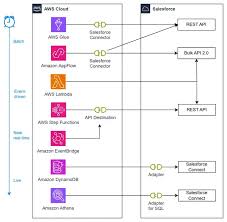
Unlock Real-Time Insights with AWS IoT and Salesforce Industry Clouds This guide explains how to gather, process, and distribute data from connected vehicles and industrial assets—such as manufacturing equipment or utility meters—into Salesforce Industry Cloud solutions using Amazon Web Services (AWS). Key AWS IoT Services for Data Collection By leveraging these services, businesses can integrate telemetry data into: Why This Integration Matters Strong customer relationships rely on real-time insights. Automakers, manufacturers, and utility providers can enhance customer interactions by unifying telemetry data with CRM workflows—enabling smarter marketing, sales, and service decisions. Prerequisites To integrate AWS IoT with Salesforce, you’ll need: AWS Services Salesforce Requirements Use Cases 1. Predictive Maintenance with AWS & Salesforce 2. In-Car Notifications 3. On-Demand Vehicle/Asset Health Insights 4. Data-Driven Customer Engagement Solution Architecture Data Flow Overview Implementation Steps 1. Set Up AWS IoT Rules 2. Configure Salesforce Event Handling 3. Enable Real-Time Analytics Conclusion By integrating AWS IoT with Salesforce Industry Clouds, businesses can:✔ Improve operational efficiency with predictive maintenance.✔ Enhance customer experiences through real-time alerts and diagnostics.✔ Drive data-driven decisions with unified analytics. Next Steps: Empower your teams with real-time IoT insights—start building today! Like Related Posts Who is Salesforce? Who is Salesforce? Here is their story in their own words. From our inception, we’ve proudly embraced the identity of Read more Salesforce Marketing Cloud Transactional Emails Salesforce Marketing Cloud Transactional Emails are immediate, automated, non-promotional messages crucial to business operations and customer satisfaction, such as order Read more Salesforce Unites Einstein Analytics with Financial CRM Salesforce has unveiled a comprehensive analytics solution tailored for wealth managers, home office professionals, and retail bankers, merging its Financial Read more AI-Driven Propensity Scores AI plays a crucial role in propensity score estimation as it can discern underlying patterns between treatments and confounding variables Read more

Read More
Biggest Mistakes Universities Make When Using Salesforce

Biggest Mistakes Universities Make When Using Salesforce

The Biggest Mistakes Universities Make When Using Salesforce (And How to Fix Them) Many universities invest in Salesforce for higher education to improve student engagement, streamline operations, and boost fundraising—but struggle to see meaningful results. Without the right strategy, institutions face scattered data, low adoption, and inefficiencies, turning Salesforce into just another system to manage rather than a transformative tool. The good news? These challenges are avoidable. In this insight, we’ll explore the most common Salesforce mistakes in higher education and how to fix them—helping your university maximize ROI and create a seamless experience for students, staff, and alumni. Salesforce Education Cloud: A Quick Overview Salesforce Education Cloud is a powerful CRM platform designed for universities, colleges, and K-12 schools. It helps institutions: Yet, many institutions fail to leverage its full potential due to poor implementation, lack of training, or misaligned strategies. 11 Common Salesforce Mistakes in Higher Ed (And How to Solve Them) 1. No Clear Strategy or Goals Problem: Jumping into Salesforce without a plan leads to disconnected teams, wasted resources, and unclear ROI. Solution:✔ Define university-wide objectives (e.g., improving student retention, increasing alumni donations).✔ Establish a governance team to align Salesforce with institutional goals.✔ Prioritize key initiatives and track measurable outcomes. 2. Lack of Stakeholder Buy-In Problem: Without leadership and faculty support, adoption stalls or becomes siloed. Solution:✔ Engage decision-makers early in planning.✔ Assign cross-functional champions to drive adoption.✔ Provide training & clear value propositions for each department. 3. No Clear Ownership Problem: When no one “owns” Salesforce, data decays, processes break, and updates lag. Solution:✔ Form a centralized Salesforce admin team.✔ Assign department leads to oversee usage.✔ Define clear roles & accountability for system maintenance. 4. Siloed Implementation Problem: Departments use Salesforce separately, creating data fragmentation. Solution:✔ Use Education Data Architecture (EDA) for a unified student view.✔ Integrate with Student Information Systems (SIS).✔ Ensure admissions, advising, and alumni teams share data seamlessly. 5. Poor Data Governance Problem: Inconsistent data entry leads to duplicates, errors, and unreliable reports. Solution:✔ Standardize data entry rules across teams.✔ Use Salesforce duplicate management tools.✔ Create real-time dashboards for accurate insights. 6. Underusing Self-Service Portals Problem: Over-reliance on staff for basic tasks (e.g., FAQs, event sign-ups). Solution:✔ Deploy Experience Cloud for student/alumni self-service.✔ Implement AI chatbots (Einstein Copilot) for instant support.✔ Build a knowledge base for common inquiries. 7. Inadequate Training & Support Problem: Staff avoid Salesforce because they don’t know how to use it. Solution:✔ Offer ongoing training programs.✔ Assign in-house Salesforce super-users.✔ Provide resources for new features & updates.✔ Employ a dedicated Salesforce Solutions Provider..✔ Utilize a Salesforce Managed Services Provider. 8. Ignoring Mobile Optimization Problem: Students expect mobile access—but many portals are desktop-only. Solution:✔ Enable the Salesforce Mobile App.✔ Use push notifications for deadlines & events.✔ Ensure responsive design for all student portals. 9. Misaligned Reporting & KPIs Problem: Departments track different metrics, making progress hard to measure. Solution:✔ Standardize university-wide KPIs (e.g., enrollment rates, alumni engagement).✔ Use Salesforce dashboards for real-time insights.✔ Align reports with strategic goals. 10. Not Using AI & Automation Problem: Manual processes slow down admissions, student support, and fundraising. Solution:✔ Use Einstein AI to predict at-risk students.✔ Automate student communications & follow-ups.✔ Deploy AI chatbots for instant responses.✔ Integrate Salesforce Agentforce. 11. Falling Behind on Salesforce Updates Problem: Missing out on new AI features, automations, and best practices. Solution:✔ Follow Salesforce Trailhead & webinars.✔ Attend Education Summit & industry events.✔ Assign a team to evaluate & implement new tools. Maximizing Salesforce ROI in Higher Education By avoiding these mistakes, universities can:✅ Improve student engagement & retention✅ Streamline admissions & operations✅ Boost alumni fundraising✅ Make data-driven decisions The key? Strategy, training, integration, and innovation. Is your university getting the most out of Salesforce? Let’s optimize your approach. Like Related Posts Who is Salesforce? Who is Salesforce? Here is their story in their own words. From our inception, we’ve proudly embraced the identity of Read more Salesforce Marketing Cloud Transactional Emails Salesforce Marketing Cloud Transactional Emails are immediate, automated, non-promotional messages crucial to business operations and customer satisfaction, such as order Read more Salesforce Unites Einstein Analytics with Financial CRM Salesforce has unveiled a comprehensive analytics solution tailored for wealth managers, home office professionals, and retail bankers, merging its Financial Read more AI-Driven Propensity Scores AI plays a crucial role in propensity score estimation as it can discern underlying patterns between treatments and confounding variables Read more

Read More
gettectonic.com