DMS Archives - gettectonic.com
Slack Operating System

Agentforce in Slack

Agentforce in Slack: Elevating Engineering Productivity at Salesforce At Salesforce, we’ve proven that engineers do scale—when you remove the bottlenecks. The real challenge isn’t engineering talent; it’s the endless hunt for context. As teams expand, so does the time wasted searching for knowledge, switching between tools, and answering repetitive questions. Enter the Engineering Agent—a game-changing digital teammate built on Agentforce and deployed directly in Slack, where our engineers already collaborate. Integrated with Data Cloud, MuleSoft, and Heroku, this AI-powered assistant delivers instant, reliable support—whether answering technical questions, automating tests, or streamlining onboarding. The result? Engineers spend less time chasing information and more time building what matters. The Impact: Support Where Engineers Need It Most Senior engineers once spent 10+ minutes per support request—time better spent on high-value work. Now, the Engineering Agent in Slack serves as the first point of contact, providing instant answers in channels or DMs, 24/7. But it doesn’t stop there. Our agent acts as an “agent of agents”—intelligently routing questions to specialized sub-agents for precise, domain-specific responses. Each answer includes cited sources and relevant links, making knowledge access seamless without disrupting teammates. To ensure accuracy, the Engineering Agent continuously ingests structured and unstructured data from Slack, Confluence, GitHub, Google Docs, and more, with daily refreshes keeping responses up to date. Beyond Answers: Automating Workflows The Engineering Agent doesn’t just talk—it takes action. By orchestrating tasks via MuleSoft, it automates processes like: This reduces friction, accelerates workflows, and keeps engineers focused. The Future: Scaling Impact Today, the Engineering Agent supports 3,500+ users across 700+ Slack channels. As we expand from 18 to 30–40 specialized agents, we project: For Salesforce, Agentforce isn’t just a tool—it’s an always-on teammate. By embedding AI directly in Slack, we’ve transformed support, optimized workflows, and unlocked engineering potential. The Takeaway:For enterprises looking to boost productivity, modernize support, and empower engineers, deploying AI agents in Slack isn’t just smart—it’s essential. Like Related Posts Who is Salesforce? Who is Salesforce? Here is their story in their own words. From our inception, we’ve proudly embraced the identity of Read more Salesforce Marketing Cloud Transactional Emails Salesforce Marketing Cloud Transactional Emails are immediate, automated, non-promotional messages crucial to business operations and customer satisfaction, such as order Read more Salesforce Unites Einstein Analytics with Financial CRM Salesforce has unveiled a comprehensive analytics solution tailored for wealth managers, home office professionals, and retail bankers, merging its Financial Read more AI-Driven Propensity Scores AI plays a crucial role in propensity score estimation as it can discern underlying patterns between treatments and confounding variables Read more


Read More
Outsourcing Salesforce Admin for Small Businesses: Why It’s Smart and Cost-Effective Time is one of the most valuable assets for small businesses. Between juggling projects and tight deadlines, it’s easy for essential but complex systems like Salesforce to become overwhelming. Often, a single employee—a manager, receptionist, or clerk—takes on the role of the unofficial Salesforce Admin, handling technical issues alongside their primary duties. While this may work in the short term, it can quickly lead to inefficiencies, stress, and burnout. Outsourcing Salesforce administration is a strategic solution that brings expert help to the table. What Does It Mean to Outsource Salesforce Admin Work? Outsourcing involves hiring external specialists to manage specific functions, allowing your team to focus on core business activities. For small businesses using Salesforce, this can mean partnering with experienced Solution Implementation partners to set up a solid CRM foundation, followed by outsourcing ongoing management and support. When technical issues occur—such as login problems or a process breakdown—an external support team can be transformative. Instead of burdening your internal team with troubleshooting, outsourcing enables immediate, expert support, resulting in smoother, more efficient operations. Firms like StarrData can help with both initial setup and ongoing admin support, so your team can focus on growth. The Benefits of Outsourcing Your Salesforce Admin Expert Support: Outsourcing gives you access to certified Salesforce Admins with specialized knowledge and skills. These experts stay updated on Salesforce’s latest releases and best practices, enabling them to handle everything from routine tasks, like user management and field modifications, to complex projects like data migrations and custom code troubleshooting. This level of expertise alleviates the burden on your team while enhancing your Salesforce system’s effectiveness. Cost-Effectiveness: Hiring a full-time Salesforce Admin can be costly, especially in regions where salaries may exceed $100,000 annually. In addition to salary, you’ll need to consider benefits, onboarding, and training costs. For many small businesses, these expenses outweigh their Salesforce needs. Outsourcing offers a cost-effective alternative, providing expert support at a fraction of the cost of a full-time hire, allowing you to pay only for the services you need. Flexibility: Outsourcing provides flexibility, allowing you to tailor support to your unique needs, whether you need occasional help or a dedicated team. You can scale services up or down based on business demands, such as needing extra help for user management and report generation during busy seasons. Scalability: As your business grows, so do your Salesforce needs. An outsourced team can adapt to your evolving requirements, providing additional resources and expertise without the time and expense of hiring new staff. This scalability is essential for small businesses aiming to remain agile and competitive. Enhanced Focus for Internal Admins: If your organization already has a Salesforce Admin, outsourcing can complement their work. By delegating routine issues to an external team, your internal Admin can focus on high-impact tasks like system optimization, customizations, and critical troubleshooting—boosting productivity and job satisfaction. Continuity and Reliability: Outsourcing offers continuity, ensuring uninterrupted service during high-demand periods or when your internal Admin is unavailable. With a dedicated team ready to handle urgent issues, you can maintain operational efficiency and customer satisfaction without downtime. Getting Started with Outsourcing Salesforce Admin Work If you’re considering outsourcing your Salesforce admin, start by researching potential partners specializing in Salesforce support. Companies like StarrData offer STaaS (StarrData Team as a Service) and Admin contracts tailored to small business needs. Set up consultations with potential partners to discuss your specific requirements and determine how their services can fit into your workflows. Clear communication during this phase is crucial to ensure alignment with your business objectives. Conclusion Outsourcing Salesforce admin work is a smart move for small businesses looking to increase productivity and streamline operations. By leveraging external expertise, you can focus on growth while ensuring your Salesforce system remains a reliable, efficient tool for your business. This strategic choice reduces the burden on your team and provides access to specialized skills that can drive your business forward.

Salesforce and Ather Energy Partner

Salesforce and Ather Energy Partner to Revolutionize EV Dealership Operations Salesforce has joined forces with IPO-bound electric two-wheeler manufacturer Ather Energy to introduce a cutting-edge automotive dealer management system aimed at enhancing dealership operations and customer experiences across India. As part of the collaboration, Ather Energy—operating over 350 dealerships—has developed “Ather Dealer Central,” a next-generation dealer management system (DMS) built on the Salesforce platform. This AI-powered solution seamlessly integrates lead management, customer relationship management (CRM), and dealership functions into a unified mobile app, enabling real-time decision-making and improved customer satisfaction. “Our collaboration with Salesforce and the launch of ‘Ather Dealer Central’ redefines how EV dealerships operate. This intelligent platform connects every aspect of the dealer ecosystem, offering unprecedented insights, mobility, and efficiency to enhance customer service,” said Ravneet S. Phokela, Chief Business Officer, Ather Energy. The partnership leverages Salesforce’s advanced AI capabilities to streamline sales, support services, and dealership operations, providing a smarter and more connected retail experience. “As India’s EV market continues to evolve, customer experience will be a key driver of growth. Consumers are looking for seamless, personalized interactions when making eco-conscious choices. Our collaboration with Ather Energy demonstrates how technology can transform mobility, helping businesses deliver smarter, more connected experiences,” said Mankiran Chowhan, Vice President – Financial Services and Consumer Industries, Salesforce India. This announcement comes as Ather Energy prepares to file an updated draft red herring prospectus (DRHP) this week, ahead of its anticipated IPO in April—potentially at a revised valuation. Salesforce continues to expand its AI-driven offerings, recently launching Agentforce to help businesses build and manage autonomous AI agents for sales, customer service, and marketing. Additionally, last week, Salesforce announced a partnership with Pothys Swarna Mahal, the jewellery division of Chennai-based Pothys Group, to integrate AI-powered solutions for enhanced customer engagement and personalized shopping experiences. Like1 Related Posts Who is Salesforce? Who is Salesforce? Here is their story in their own words. From our inception, we’ve proudly embraced the identity of Read more Salesforce Marketing Cloud Transactional Emails Salesforce Marketing Cloud Transactional Emails are immediate, automated, non-promotional messages crucial to business operations and customer satisfaction, such as order Read more Salesforce Unites Einstein Analytics with Financial CRM Salesforce has unveiled a comprehensive analytics solution tailored for wealth managers, home office professionals, and retail bankers, merging its Financial Read more AI-Driven Propensity Scores AI plays a crucial role in propensity score estimation as it can discern underlying patterns between treatments and confounding variables Read more

Read More
Salesforce Maps Winter 25

Salesforce Maps Winter 25

The Salesforce Maps Winter 25 release will be available in production environments between October 29 – 31. Auto-Enablement of the new Maps experience in October To enhance your experience in Salesforce Maps on desktop, the new features currently available in all environments will be auto-enabled in the Winter ’25 release. The Enhanced User Experience setting in the admin configuration settings will remain and can be manually disabled until the Spring ‘25 release. Get Release Ready-Salesforce Maps Winter 25 To ensure a smooth transition, please take the following actions prior to the production release. What This Change Brings See Spring ’25 Updates Like Related Posts Who is Salesforce? Who is Salesforce? Here is their story in their own words. From our inception, we’ve proudly embraced the identity of Read more Salesforce Marketing Cloud Transactional Emails Salesforce Marketing Cloud Transactional Emails are immediate, automated, non-promotional messages crucial to business operations and customer satisfaction, such as order Read more Salesforce Unites Einstein Analytics with Financial CRM Salesforce has unveiled a comprehensive analytics solution tailored for wealth managers, home office professionals, and retail bankers, merging its Financial Read more AI-Driven Propensity Scores AI plays a crucial role in propensity score estimation as it can discern underlying patterns between treatments and confounding variables Read more

Read More
Salesforce Automotive Cloud

Salesforce Automotive Cloud

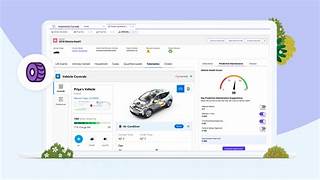
What is Salesforce Automotive Cloud? In September 2022, Salesforce introduced Automotive Cloud, a robust all-in-one platform tailored for the automotive industry. At first glance, it appears to be an ideal solution for businesses in this sector, but how well does it serve car dealerships? Drawing on experience both as a former auto dealership employee and in building Salesforce Dealership Management Systems (DMS), an in-depth exploration was undertaken to determine if this platform genuinely meets the needs of dealerships. What is a Dealership Management System (DMS)? A Dealership Management System (DMS) is a comprehensive software suite designed to manage the daily operations of a car dealership. It includes modules for sales, service, inventory management, vehicle lifecycle management, customer relationship management (CRM), and more. Essentially, it acts as the dealership’s corporate operating system, housing and processing customer data to generate valuable insights. What Does This Mean for Salesforce Consultants? Salesforce consultants with specialized expertise often find it easier to secure jobs and command higher rates compared to their generalist peers. This is especially true in niche areas like Automotive Cloud, where demand for specialized knowledge is high, and businesses are willing to invest in quality resources. In today’s uncertain economic climate, job security is a priority. Developing expertise in niche areas like Automotive Cloud can be a strategic move. As more car dealerships adopt this new technology, consultants with relevant experience will find ample opportunities to leverage their skills and meet the growing demand for DMS solutions. First Impressions of Automotive Cloud At first glance, Automotive Cloud offers a promising set of tools for managing various aspects of dealership operations, from sales and service to inventory management and CRM. However, initial impressions were mixed. Some features, like Vehicle Definitions, were initially overwhelming and unclear in their application. For example, while Automotive Cloud aggregates information about a specific vehicle model and its components (like engine, transmission, etc.), it lacks a CPQ (Configure Price Quote) feature. This omission is disappointing, as CPQ is crucial for configuring vehicles within the Salesforce interface. However, fear not, as third party CPQ tools are available. On the flip side, Automotive Cloud’s vehicle lifecycle management features are impressive. It allows for comprehensive tracking of a vehicle’s lifecycle, including purchase, maintenance, and decommissioning cycles. This is especially beneficial for dealerships, as much of their profit comes from post-sale services like warranty maintenance. What Salesforce Products Does It Use? A closer examination of the components within Automotive Cloud reveals that it is a mix of several Salesforce products, including: Additionally, Automotive Cloud includes customizations specifically designed for the automotive industry. For those interested in a more in-depth understanding, the Automotive Cloud documentation provides detailed explanations of the platform’s use cases. Automotive Cloud Data Model One of the first steps in exploring a new product is examining its data model, which provides insights into the product’s design and intended use. In Automotive Cloud, Salesforce focuses on several key dimensions: A Quick Overview of Capabilities Based on a thorough understanding of dealership operations, Automotive Cloud’s features most relevant to car dealers were evaluated: Is Salesforce Automotive Cloud Worth Learning for Car Dealers? The verdict is mixed. Automotive Cloud is not a perfect DMS for dealerships; it includes excessive features that may go unused while missing some critical functionalities. However, it is a great fit for auto manufacturers or distributors due to its built-in functionality for managing dealerships and manufacturing-related tasks. Is it worth learning? Absolutely. Automotive Cloud is a new offering from Salesforce, and currently, there isn’t an “Accredited Professional” badge available for it. By diving into Automotive Cloud early, Salesforce consultants can gain an edge over their peers and attract more employers. Moreover, Automotive Cloud combines multiple Salesforce Clouds, making it an excellent opportunity to learn Salesforce and familiarize oneself with complex data models. With its limited number of Flows and code, the learning curve is manageable, offering consultants a chance to build custom solutions that could become a selling point in their careers. Like1 Related Posts Who is Salesforce? Who is Salesforce? Here is their story in their own words. From our inception, we’ve proudly embraced the identity of Read more Salesforce Marketing Cloud Transactional Emails Salesforce Marketing Cloud Transactional Emails are immediate, automated, non-promotional messages crucial to business operations and customer satisfaction, such as order Read more Salesforce Unites Einstein Analytics with Financial CRM Salesforce has unveiled a comprehensive analytics solution tailored for wealth managers, home office professionals, and retail bankers, merging its Financial Read more AI-Driven Propensity Scores AI plays a crucial role in propensity score estimation as it can discern underlying patterns between treatments and confounding variables Read more
Read More
Conversational Commerce Explained

Conversational Commerce Explained

Conversational Commerce is a modern approach to customer engagement and sales that leverages chat-based interfaces (like messaging apps, chatbots, and voice assistants) to facilitate seamless, personalized, and real-time interactions between businesses and customers. It combines the power of conversational AI with e-commerce to create a more natural and interactive shopping experience. 1. What is Conversational Commerce? Conversational commerce allows customers to interact with brands through text or voice conversations instead of traditional methods like browsing websites or using apps. It enables businesses to engage with customers in a more personalized, immediate, and convenient way, often using tools like: 2. How Does Conversational Commerce Work? Conversational commerce uses Artificial Intelligence (AI), Natural Language Processing (NLP), and machine learning to understand and respond to customer queries. Here’s how it typically works: 3. Key Features of Conversational Commerce a) Personalization b) Real-Time Interaction c) Omnichannel Support d) Automation e) Seamless Transactions 4. Benefits of Conversational Commerce a) Improved Customer Experience b) Higher Engagement c) Increased Sales d) Cost Efficiency e) 24/7 Availability 5. Examples of Conversational Commerce a) Chatbots b) Voice Assistants c) Social Media Messaging d) In-App Messaging 6. Technologies Powering Conversational Commerce a) Artificial Intelligence (AI) b) Natural Language Processing (NLP) c) Machine Learning d) APIs and Integrations 7. The Future of Conversational Commerce 8. Challenges of Conversational Commerce In summary, conversational commerce is transforming the way businesses interact with customers by making shopping more conversational, personalized, and convenient. It’s a key trend in the future of e-commerce and customer engagement! Content updated February 2025. Like Related Posts Who is Salesforce? Who is Salesforce? Here is their story in their own words. From our inception, we’ve proudly embraced the identity of Read more Salesforce Marketing Cloud Transactional Emails Salesforce Marketing Cloud Transactional Emails are immediate, automated, non-promotional messages crucial to business operations and customer satisfaction, such as order Read more Salesforce Unites Einstein Analytics with Financial CRM Salesforce has unveiled a comprehensive analytics solution tailored for wealth managers, home office professionals, and retail bankers, merging its Financial Read more AI-Driven Propensity Scores AI plays a crucial role in propensity score estimation as it can discern underlying patterns between treatments and confounding variables Read more

Read More
Salesforce Slack Integration

Workflows for Salesforce Slack

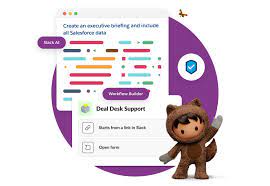
We all rely on processes to keep our teams organized and propel work forward. However, manual processes can be cumbersome, with work often getting lost in the chaos of Slack DMs or crowded team channels. Imagine if there were a way to structure processes into forms within Slack, allowing people to fill them out and automatically route requests to the appropriate individuals for follow-up. This is where Slack workflows come into play. What are Workflows for Salesforce Slack? A workflow is a multi-step process within your company, representing the sequence of tasks undertaken to achieve a business objective. Examples of Workflows for Salesforce Slack include: Workflows have a sequence of steps: Each workflow consists of multiple stages that typically occur in a specific order. Workflow Automation: Workflow automation is the use of software to streamline multi-step, multi-team workflows, ensuring the correct steps are followed, and tasks are completed efficiently. Types of Workflow Automation: Benefits of Workflow Automation in Slack: By incorporating workflow automation into Slack, teams can enhance efficiency, maintain structure, and reduce the risk of tasks getting lost or delayed. Contact Tectonic to learn more about Slack integration. Like1 Related Posts Who is Salesforce? Who is Salesforce? Here is their story in their own words. From our inception, we’ve proudly embraced the identity of Read more Salesforce Marketing Cloud Transactional Emails Salesforce Marketing Cloud Transactional Emails are immediate, automated, non-promotional messages crucial to business operations and customer satisfaction, such as order Read more Salesforce Unites Einstein Analytics with Financial CRM Salesforce has unveiled a comprehensive analytics solution tailored for wealth managers, home office professionals, and retail bankers, merging its Financial Read more AI-Driven Propensity Scores AI plays a crucial role in propensity score estimation as it can discern underlying patterns between treatments and confounding variables Read more
Read More
Salesforce Slack

What is Slack?

Chances are a co-worker has at least once offered to “Slack” you something—whether it’s a file, a work order, or a phone number. The first time I heard this phrase, I was concerned about potential physical harm, only to learn that “Slack” refers to a messaging application for businesses and much more.  This insight takes a deep dive into Salesforce’s collaborative tool. Slack is a messaging app for businesses that connects people to the information they need.  Many companies utilize Slack from Salesforce as a centralized hub for various purposes. From project collaboration to casual “water cooler” conversations. This is especially vital for remote teams spread across different locations and time zones. At Tectonic, we’ve integrated Slack channels for accounts and Salesforce tools. For projects, events, webinars, and training, fostering seamless communication. Slack is becoming increasingly popular for its compatibility with Salesforce and numerous applications, across diverse workplaces. As opposed to text messaging or emails, Slack is an efficient messaging app making it easier to communicate and organize conversations. To understand Slack, it’s helpful to distinguish between its two primary communication forms. Channels and direct messages (DMs). Slack channels are tailored by users to bring the right people together. By facilitating the sharing of information, files, thoughts, and project details. In contrast, direct messages are private, one-off conversations ideal for topics outside specific channels. Conversations within the channels are transparent and accessible to everyone, except for private channels, marked with a lock symbol. Direct messages, on the other hand, are suited for smaller, individual conversations. Starting a new conversation in the platform is as simple as clicking the compose button and drafting a message. It can be for a specific channel or individual. Mentioning a team member using @team-members-name ensures that they see your message and are notified when it is posted. Emojis Slack’s wide variety of emoji reactions add a fun element, with commonly used emojis like eyes or check marks indicating engagement or task completion. Custom emojis can be created for personalized use or to trigger automated workflows within your Salesforce project.  The eyes emoji, for example, typically means the message reader is taking at a look at whatever was referenced in the post.   Slack customization is a key aspect of its effectiveness. Updating your profile, integrating with your calendar for availability status, and setting relevant notifications. Utilizing shortcuts, apps, and integrations can enhance collaboration efficiency. Tectonic conducts a comprehensive discovery of your organization’s processes to recommend tailored ways this tool can boost your overall efficiency. Sharing files is easy, with seamless integration with popular file storage tools like Dropbox and Google Drive. Slack’s scheduling feature allows you to compose messages and schedule delivery at more appropriate times, making it a valuable organizational time management tool. Users can set their in and out of office times. Thus silencing notifications outside working hours. Slack also has a mobile app so users can stay connected from anywhere. Chat-based Collaboration Comparisons This chat-based collaboration tool that emphasizes communication. Whereas Microsoft Teams is a comprehensive collaboration suite that offers chat, video conference, and integrated document management.  Teams is a part of the Microsoft ecosystem, while Slack is a standalone tool from Salesforce with robust third party integrations. The primary difference between Google Chat and Slack includes search and customization options and the amount of storage offered. Slack offers more customization options, Google Chat offers unlimited storage in Business and Enterprise plans. Slack differs from Skype in that it takes communication to the level of collaboration by bringing together teams, tools, and workflows in a single platform. The sweet spot for Slack seems to be in companies with 20-50 employees. Many businesses are moving away from email and into channels, Away from legacy suites and onto customizable platforms that can connect more easily.  In 2019 the platform broke the 12 million user daily activity level and continues to grow by about 37% every year. Cross-channel Integrations Slack offers thousands of cross-channel integrations with other apps, not just email and Salesforce. This collaborative tool was developed by Slack Technologies, owned by Salesforce. It offers freemium and paid subscription services, and offers text messaging, file and media sharing, voice and video calls, and group chat for team collaboration. Slack has the capacity to support an unlimited number of users per organization, channels per workspace, and over 100,000 users on a channel. All content in the channels is searchable. Thereby making it an easy repository for conversations which ultimately contain a lot of information users want to reference back to.  Slack also offers bookmarking of content, pinning of content and other assorted features for information organization. Default Slack settings encrypt data at rest and data in transit. Data is further protected with tools like Slack Enterprise Key Management, audit logs, and integrations with top data loss prevention providers. Slack received its official name in 2012 from Stewart Butterfield. He replaced the product codename of linefeed with the communication tool which he said was derived from Searchable Log of All Conversation and Knowledge. If you’re curious about how Slack can enhance your Salesforce experience, reach out to Tectonic for a free quote or demo today. Like Related Posts Who is Salesforce? Who is Salesforce? Here is their story in their own words. From our inception, we’ve proudly embraced the identity of Read more Salesforce Marketing Cloud Transactional Emails Salesforce Marketing Cloud Transactional Emails are immediate, automated, non-promotional messages crucial to business operations and customer satisfaction, such as order Read more Salesforce Unites Einstein Analytics with Financial CRM Salesforce has unveiled a comprehensive analytics solution tailored for wealth managers, home office professionals, and retail bankers, merging its Financial Read more AI-Driven Propensity Scores AI plays a crucial role in propensity score estimation as it can discern underlying patterns between treatments and confounding variables Read more
Read More
gettectonic.com