EHR Archives - gettectonic.com - Page 4
Generative AI Glossary

Key Questions to Ask About Generative AI Before Diving into the Gene Pool

As generative AI plays an increasingly significant role in shaping business decisions and reshaping customer relationships, leaders must grasp the potential.  This means use cases, and risks associated with AI. The good, the bad, and the ugly.  Questions to Ask About Generative AI gene pool. The journey begins with asking pertinent questions. Are you feeling overwhelmed by generative AI yet? The multitude of questions that businesses need to address regarding AI—covering technology, skills, privacy, data, and organizational requirements, among others—can be seemingly endless. Knowing where to start and identifying the most crucial AI-related questions before jumping into implementation can be challenging.  But it is totally worth the time. “Many organizations are venturing into AI for the first time. They are transitioning from predictive AI, machine learning, or deep learning to explore the next generation of AI for elevating productivity.” Marc Benioff, CEO of Salesforce While the demand and potential of AI are substantial, so are the associated risks. To assist in navigating this landscape, here’s a snapshot: Employee View: Exec Summary: Your Next Move: By Tectonic’s Marketing Consultant, Shannan Hearne Like Related Posts Who is Salesforce? Who is Salesforce? Here is their story in their own words. From our inception, we’ve proudly embraced the identity of Read more Salesforce Marketing Cloud Transactional Emails Salesforce Marketing Cloud Transactional Emails are immediate, automated, non-promotional messages crucial to business operations and customer satisfaction, such as order Read more Salesforce Unites Einstein Analytics with Financial CRM Salesforce has unveiled a comprehensive analytics solution tailored for wealth managers, home office professionals, and retail bankers, merging its Financial Read more AI-Driven Propensity Scores AI plays a crucial role in propensity score estimation as it can discern underlying patterns between treatments and confounding variables Read more

Read More
Salesforce Certified Healthcare Technology

Salesforce Certified Healthcare Technology

As a Salesforce Certified healthcare technology consultant, Tectonic brings extensive experience across both large and small healthcare settings, witnessing firsthand the transformative impact of Salesforce Health Cloud. Having contributed to the development of an EHR and RCM application on Salesforce, Tectonic understands the substantial benefits this platform offers when integrated with existing technologies such as Electronic Health Records (EHR), claims data sources, and Patient Population Health Management systems. Enhanced Patient Population Health Management: Salesforce Health Cloud equips healthcare providers with tools to effectively manage Patient Population Health by gathering, analyzing, and acting on health data. Providers can leverage these insights to identify at-risk populations, design targeted interventions, and improve patient outcomes. Optimized Provider Referral Patterning: By integrating Salesforce Health Cloud with claims data, Tectonic enables providers to analyze referral patterns. This helps healthcare organizations collaborate more effectively with physicians based on their specialties, insurance networks, and common CPT codes, ultimately enhancing patient care and strengthening provider networks. AI-Enabled Contact Service Centers for Better Patient Care: Integrating Generative AI with Salesforce Health Cloud allows healthcare providers to deliver personalized, responsive services. By connecting Billing, EHR, and Patient Population Health Management platforms, Tectonic reduces administrative burdens, streamlines communication, and improves patient satisfaction in contact service centers. Business Development Liaison Route Planning: Using Salesforce Maps combined with 1st and 3rd party claims data, Tectonic enables business development teams to generate optimized, daily route plans within seconds. These plans allow healthcare representatives to visit the right providers based on location, specialty, referral volumes, and other key preferences. Strategic Territory Expansion and Planning: Salesforce Health Cloud empowers healthcare organizations to strategically plan for territory expansion. Through analyzing geographic claims data and patient demographics, Tectonic helps organizations make data-driven decisions on resource allocation and service growth. Extending Functionality with Salesforce AppExchange and Salesforce Health Cloud: The Salesforce AppExchange offers a wide array of applications that expand Health Cloud’s core capabilities. These apps can boost patient engagement, care coordination, and advanced analytics. In addition, Tectonic leverages multiple health and life sciences process, which integrates Revenue Cycle Management (RCM) and EHR functionalities, enabling providers to manage billing, claims, and clinical data seamlessly within one platform, among many other features. Conclusion: Salesforce Health Cloud, when combined with Tectonic‘s expertise and solutions like payer and provider processes, becomes a powerful asset for healthcare providers. By integrating Health Cloud into existing technology stacks and utilizing AppExchange apps, healthcare organizations can improve patient care, streamline operations, and strategically plan for growth in the ever-evolving healthcare landscape. Content updated September 2024. Like Related Posts Who is Salesforce? Who is Salesforce? Here is their story in their own words. From our inception, we’ve proudly embraced the identity of Read more Salesforce Marketing Cloud Transactional Emails Salesforce Marketing Cloud Transactional Emails are immediate, automated, non-promotional messages crucial to business operations and customer satisfaction, such as order Read more Salesforce Unites Einstein Analytics with Financial CRM Salesforce has unveiled a comprehensive analytics solution tailored for wealth managers, home office professionals, and retail bankers, merging its Financial Read more AI-Driven Propensity Scores AI plays a crucial role in propensity score estimation as it can discern underlying patterns between treatments and confounding variables Read more

Read More
AI Potential to Improve Prior Authorizations

AI Potential to Improve Prior Authorizations

AI’s Potential to Reduce Provider Burdens in the Prior Authorization Process Artificial intelligence (AI) has the potential to significantly ease the documentation and substantiation burdens providers face during the prior authorization process. Prior authorization, a critical step where health plans approve or deny coverage for services or prescriptions before they’re administered, is a key cost-control mechanism in the U.S. healthcare system. While it helps payers avoid unnecessary spending, the process poses significant challenges, especially for healthcare providers tasked with gathering and submitting documentation. AI Potential to Improve Prior Authorizations examined. Historically, prior authorization has been a major regulatory challenge for providers, surpassing other issues such as electronic health record (EHR) interoperability and compliance with the No Surprises Act. Despite its cumbersome nature, prior authorization isn’t likely to be eliminated, as it plays a crucial role in balancing healthcare affordability and access to quality care. AI Potential to Improve Prior Authorizations The transactional nature of many prior authorization tasks makes them ripe for automation. Increasingly, stakeholders are turning to AI and other technology-driven solutions to streamline the process, making it less burdensome for providers. How AI Can Streamline Prior Authorization AI has already been applied to various aspects of healthcare, from automating hospital discharges to alleviating the administrative burdens of nurses. When applied to prior authorization, AI can speed up the approval process for both providers and payers, reducing delays in patient care and lowering administrative costs. Health insurance companies are already beginning to leverage AI to expedite prior authorization and claims decisions. However, concerns are growing over whether the use of AI in these areas complies with state and federal regulations. For example, a 2023 AMA Annual Meeting resolution cited an investigation revealing that Cigna doctors denied over 300,000 claims in two months, spending an average of just 1.2 seconds per case using AI. UnitedHealthcare has also employed AI to make “fast, efficient, and streamlined coverage decisions,” raising questions about whether these decisions adhere to regulatory standards for fairness and accuracy. AMA’s Call for Oversight on AI in Prior Authorization Recognizing the risks, the American Medical Association (AMA) has called for increased regulatory oversight of AI in prior authorization. Specifically, the AMA advocates for: AI could potentially reduce the time-consuming, manual tasks associated with prior authorization. However, as AMA Trustee Dr. Marilyn Heine cautioned, “AI is not a silver bullet.” The increasing reliance on AI for prior authorization must not add to the already overwhelming volume of requirements that burden physicians and hinder patient care. Nor can it increase the threat of cyberattacks. Fixing Prior Authorization: AMA’s Role Addressing the challenges of prior authorization is a key part of the AMA’s Recovery Plan for America’s Physicians. The organization is committed to reducing the overuse of prior authorization and improving the fairness of existing processes, ensuring that the use of AI in healthcare supports—not hinders—patient care. To that end, the AMA continues to research the costs and impacts of prior authorization on healthcare providers and patients. To learn more about the proper use of AI in medicine and the AMA’s efforts to reform prior authorization, visit the AMA’s resources on healthcare AI. Content updated September 2024. Like Related Posts Who is Salesforce? Who is Salesforce? Here is their story in their own words. From our inception, we’ve proudly embraced the identity of Read more Salesforce Unites Einstein Analytics with Financial CRM Salesforce has unveiled a comprehensive analytics solution tailored for wealth managers, home office professionals, and retail bankers, merging its Financial Read more AI-Driven Propensity Scores AI plays a crucial role in propensity score estimation as it can discern underlying patterns between treatments and confounding variables Read more Tectonic’s Successful Salesforce Track Record Salesforce Technology Services Integrator – Tectonic has successfully delivered Salesforce in a variety of industries including Public Sector, Hospitality, Manufacturing, Read more

Read More
What is Health Cloud

What is Health Cloud?

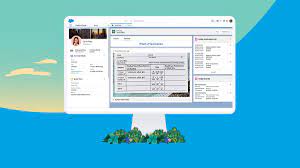
Salesforce Health Cloud, a specialized platform designed for healthcare organizations, aims to streamline operations and provide personalized care. By leveraging cloud technology, mobile capabilities, and social integration, Health Care Cloud enhances productivity, reduces costs, and offers a comprehensive view of patient data. Salesforce keeps electronic personal health information (ephi) safe and secure. Since its inception, Salesforce Health Cloud has evolved significantly to meet the unique and challenging needs of the healthcare sector. The introduction of Customer 360 for Health marks a milestone in fostering empathetic care and promoting collaboration among healthcare teams. What is Salesforce Health Cloud? At its core, Health Cloud facilitates seamless collaboration among healthcare teams to ensure optimal patient care. With robust security measures in place, patient data remains secure and accessible only to authorized personnel. Salesforce Health provides care teams with convenient access to both clinical and non-clinical patient information, including health conditions, medications, appointment history, communication preferences, and data from Electronic Health Records (EHRs). Categorized under Salesforce Industry Clouds, Health Cloud combines CRM capabilities with specialized features tailored for healthcare providers, payers, medical device companies, and pharmaceutical manufacturers. Its goal is to deliver personalized, connected care across the entire, sometimes disjointed healthcare ecosystem. Why Use Salesforce Health Cloud? Salesforce Health offers benefits to various stakeholders within the healthcare industry, including providers, payers, manufacturers, and research organizations. In a challenging healthcare landscape, Health Cloud addresses concerns such as managing complex patient data and enhancing patient experiences effectively. Success stories from organizations like New England Biolabs and John Muir Health highlight the impact of Health Salesforce in streamlining operations, improving customer satisfaction, and enhancing care coordination. Despite its transformative potential, widespread adoption and success require rebuilding patient trust, delivering empathetic care, and prioritizing data security. Tools like Health Cloud play a crucial role in achieving these goals. The Health Cloud Data Model Central to Salesforce Health is the flexible Health Cloud Data Model, built atop the Salesforce Platform. This model organizes diverse healthcare data sources, leveraging standard objects like Accounts and Contacts alongside custom objects tailored for healthcare applications. The data model revolves around organizing data around the patient, providing care teams with a holistic view for informed decision-making and personalized care. It supports interoperability and adheres to healthcare data standards like HL7 and FHIR, enabling seamless integration with EHRs and other healthcare applications. Key Features of Salesforce Health Salesforce Health Cloud offers a suite of robust features, including: Patient 360: Provides a unified view of the patient, consolidating demographics, clinical data, and interactions for informed decision-making and personalized care. Care Plans: Enables care teams to create, track, and manage personalized care plans, incorporating goals, tasks, and milestones to monitor patient progress. Care Coordination: Facilitates collaboration among care teams, supporting secure messaging and information sharing across providers. Health Timeline: Offers an interactive visualization of a patient’s medical history, including encounters, lab results, and medications, aiding in understanding and decision-making. Einstein Analytics for Healthcare: Utilizes AI to deliver advanced insights and predictions, empowering organizations to enhance patient outcomes and operational efficiency. Patient 360 for Health In addition to existing features, Salesforce introduces new innovations under Patient 360 for Health, powered by AI. These updates include: Advanced Therapy Management: Streamlines treatment processes for pharmaceutical companies, offering full visibility into patient treatment. Salesforce Genie for Healthcare: Integrates real-time clinical and non-clinical data to create comprehensive patient profiles. AI-Supported Health Timeline: Enhances navigation and accessibility of patient records and journeys through AI. Home Health: Automates intake and scheduling for in-home treatment, optimizing patient preferences. Data Cloud for Healthcare: Connects clinical and non-clinical patient data from multiple sources into a real-time patient profile. MuleSoft Direct for Health Cloud: Provides out-of-the-box connectors to access EHR data, facilitating smoother integration. Tableau Accelerators for Health Cloud: Offers ready-to-use dashboards for various use cases, empowering teams with data-driven insights. Integration With MuleSoft Salesforce Health seamlessly integrates with MuleSoft, enabling organizations to connect with existing EHRs, billing systems, and healthcare applications. MuleSoft’s Anypoint Platform provides pre-built connectors and APIs to simplify integration and unlock the full potential of healthcare data. Salesforce Health Cloud is not only a powerful platform for healthcare organizations but also a catalyst for positive change in patient care and operational efficiency. By leveraging HC’s capabilities, healthcare organizations can deliver exceptional patient experiences, streamline processes, and ensure data security and compliance. With continuous integration and innovation within the Salesforce ecosystem, Health Cloud remains positioned to drive transformative change in the healthcare industry, addressing challenges and paving the way for a brighter future in healthcare. Considering Salesforce Health Cloud for your practice? Contact Tectonic today. Like1 Related Posts Who is Salesforce? Who is Salesforce? Here is their story in their own words. From our inception, we’ve proudly embraced the identity of Read more Salesforce Marketing Cloud Transactional Emails Salesforce Marketing Cloud Transactional Emails are immediate, automated, non-promotional messages crucial to business operations and customer satisfaction, such as order Read more Salesforce Unites Einstein Analytics with Financial CRM Salesforce has unveiled a comprehensive analytics solution tailored for wealth managers, home office professionals, and retail bankers, merging its Financial Read more AI-Driven Propensity Scores AI plays a crucial role in propensity score estimation as it can discern underlying patterns between treatments and confounding variables Read more

Read More
Salesforce Data Cloud

Salesforce Data Cloud – The Ultimate Guide to Unified Customer Intelligence

Why Salesforce Data Cloud is Transforming Business Operations In today’s digital-first economy, customer data is your most valuable asset—if you can harness it effectively. Salesforce Data Cloud revolutionizes how enterprises unify, analyze, and activate customer data across every touchpoint. 5 Key Business Transformations The Data Cloud Advantage: Beyond Traditional CDPs Unlike legacy customer data platforms, Salesforce Data Cloud delivers: Feature Traditional Solutions Salesforce Data Cloud Data Integration Manual ETL processes Real-time harmonization AI Capabilities Basic segmentation Predictive insights & recommendations Activation Limited channel support Native Salesforce app integration Scalability Fixed data models Elastic cloud infrastructure Total Cost Hidden implementation fees Transparent consumption model Proven Results Across Industries Financial Services Healthcare Retail Implementation Roadmap Phase 1: Foundation (Weeks 1-4) Phase 2: Activation (Weeks 5-8) Phase 3: Scaling (Ongoing) Overcoming Common Challenges “Our data is too messy”→ Automated data quality tools clean and standardize information during ingestion “We can’t afford another platform”→ Consumption-based pricing starts at $25K/year with proven 3-5X ROI “Our team isn’t technical enough”→ No-code tools like Flow Builder enable business user configuration The Future of Data-Driven Business As AI reshapes customer expectations, Salesforce Data Cloud provides the essential infrastructure to: Leading organizations are already achieving: Next Steps for Your Data Transformation “Companies using Data Cloud see 47% faster decision-making and 32% higher customer satisfaction scores within 6 months.” – Forrester Consulting Study Unlock your data’s full potential. Contact our specialists today to begin your assessment. Like Related Posts Who is Salesforce? Who is Salesforce? Here is their story in their own words. From our inception, we’ve proudly embraced the identity of Read more Salesforce Marketing Cloud Transactional Emails Salesforce Marketing Cloud Transactional Emails are immediate, automated, non-promotional messages crucial to business operations and customer satisfaction, such as order Read more Salesforce Unites Einstein Analytics with Financial CRM Salesforce has unveiled a comprehensive analytics solution tailored for wealth managers, home office professionals, and retail bankers, merging its Financial Read more AI-Driven Propensity Scores AI plays a crucial role in propensity score estimation as it can discern underlying patterns between treatments and confounding variables Read more

Read More
Digital Transformation for Life Sciences

Digital Transformation for Life Sciences

In hindsight, one remarkable aspect of the COVID crisis was the speed with which vaccines passed through regulatory approval processes to address the pandemic emergency. Approvals that would typically take years were expedited to mere months, a pace not usually seen in the life sciences industry. It was an extraordinary situation, as Paul Shawah, Senior Vice President of Commercial Strategy at Veeva Systems, notes: “There were things that were unnaturally fast during COVID. There was a shifting of priorities, a shifting of focus. In some cases, you had the emergency approvals or the expedited approvals of the vaccines that you saw in the early days, so there was faster growth. Everything was kind of different in the COVID environment.” Today, the industry is not operating at that same rapid pace, but the impact of this acceleration remains significant: “What it did do is it challenged companies to think about why can’t we operate faster at a steady state? There was an old steady state, then there was COVID speed. The industry is trying to get to a new steady state. It won’t be as fast as during COVID because of unique circumstances, but expectations are now much higher. This drives a need to modernize systems, embrace the cloud, become more digital, and improve efficiency.” Companies like Veeva, alongside enterprise giants such as Salesforce, SAP, and Oracle, specialize in this market and play crucial roles in life sciences digitization. According to a McKinsey study, about 45% of tech spending in life sciences goes to three key technologies: applied Artificial Intelligence, industrialized Machine Learning, and Cloud Computing. Over 80% of the top 20 global pharma and medtech companies are operating in the cloud to some extent. However, a study by Accenture found that life sciences firms are among the lowest in achieving benefits from cloud investments, with only 43% satisfied with their results and less than a quarter confident that cloud migration initiatives will deliver the promised value within expected time frames. This presents both a challenge and an opportunity. Frank Defesche, SVP & GM of Life Sciences at Salesforce, sees it as the latter, stating: “The life sciences industry faces increased competition, evolving patient expectations, and ongoing pressure to bring devices and drugs to market faster. With rising drug costs, frustrated doctors, and varying regulatory scrutiny, life sciences organizations must find ways to do more with less.” The industry also contends with an unprecedented influx of data and disparate systems, making it difficult to move quickly. Addressing changes one by one is too slow and costly. Defesche believes that a systemic solution, fueled by connected data and Artificial Intelligence (AI), is key to overcoming these challenges. Paul Shawah of Veeva emphasizes the unique challenges of the life sciences sector: “Life sciences firms primarily do two things: discover and develop medicines, and commercialize them by educating doctors and getting the right drugs to patients. The drug development cycle includes clinical trials, managing everything related to drug safety, the manufacturing process, and ensuring quality. They also manage regulatory registrations. On the commercial side, it’s about reaching out to doctors and healthcare professionals.” Veeva’s Vault platform is designed for life sciences, with customers like Merck, Eli Lilly, and Boehringer Ingelheim. Shawah acknowledges it’s “still relatively early days” for cloud computing adoption but notes successes in areas like CRM, where Veeva achieved over 80% market share by standardizing processes and reducing technical debt. Other areas, like parts of the clinical trials process, remain largely untapped by cloud computing. Shawah sees opportunities to improve patient experiences and make the process more efficient. AI represents a significant area of opportunity. Shawah explains Veeva’s approach: “I’ll break AI into two categories: traditional AI, Machine Learning, and data science, which we’ve been doing for a long time, and generative AI, which is new. We’re focusing on finding use cases that create sustainable, repeatable value. We’re building capabilities into our Vault platform to support AI.” Joe Ferraro, VP of Product, Life Sciences at Salesforce, emphasizes AI’s critical role: “We are born out of the data and AI era, and we’re taking that philosophy into everything we do from a product standpoint. We aim to move from creating a system of record to a system of insight, using data and AI to transform how users interact with software.” Ferraro highlights the need for change: “Organizations told us, ‘Please don’t build the same thing we have now. We are mired in fragmented experiences. Our sales and marketing teams aren’t talking, and our medical and commercial teams don’t understand each other.’ Life Sciences Cloud aims to move the industry from these fragmented experiences to an end-to-end, AI-powered experience engine.” The COVID crisis highlighted the critical role of the life sciences industry. There’s a massive opportunity for digital transformation, whether through specialists like Veeva or enterprise players like Salesforce, Oracle, and SAP. Data must be the foundation of any solution, especially amidst the current AI hype cycle. Ensuring this data is well-managed is a crucial starting point for industry-wide change. Like Related Posts Who is Salesforce? Who is Salesforce? Here is their story in their own words. From our inception, we’ve proudly embraced the identity of Read more Salesforce Marketing Cloud Transactional Emails Salesforce Marketing Cloud Transactional Emails are immediate, automated, non-promotional messages crucial to business operations and customer satisfaction, such as order Read more Salesforce Unites Einstein Analytics with Financial CRM Salesforce has unveiled a comprehensive analytics solution tailored for wealth managers, home office professionals, and retail bankers, merging its Financial Read more AI-Driven Propensity Scores AI plays a crucial role in propensity score estimation as it can discern underlying patterns between treatments and confounding variables Read more

Read More
Salesforce and Healthcare

Healthcare CRM to Enable Consumers and Build Trust

To transform the healthcare industry and enhance the experiences of all stakeholders requires the right tools. Making a paramount focus on building trust through personalization is imperative. Patients no longer desire to be perceived merely as a number or a chart. They seek a personalized treatment approach. Using the right healthcare CRM to enable trust with consumers makes good sense. The Goal of a Healthcare CRM This goal can be accomplished by seamlessly integrating electronic health records (EHRs) and claims data, establishing a 360-degree view of each healthcare consumer. A unique view of each consumer. Leveraging the capabilities of application programming interfaces (APIs), organizations can access comprehensive consumer information in real-time. By facilitating effective collaboration, informed care decisions, and the prevention of care gaps. The incorporation of state-of-the-art healthcare customer relationship management (CRM) platforms, equipped with AI and advanced analytics, can yield actionable insights. Insights that enhance interactions with patients and members. For instance, Community Health Choice (CHC) in Texas has embraced Salesforce’s Health Cloud, fully integrating clinical and claims data to create a holistic view of each patient, enabling the delivery of comprehensive care. What is a CRM system in healthcare? A healthcare CRM is a customer relationship management system designed specifically for use in the healthcare industry. Salesforce Health Cloud is a top choice to enable trust. CRM in healthcare not only stores patients’ contact information, it also gives a comprehensive overview of their medical history, appointments, and prescriptions. With a healthcare CRM system, you can customize your patient management plans so that each patient gets precisely the amount of care they need. A Healthcare CRM to Build Trust Connected experiences contribute to strengthening trust, increasing retention, and ultimately fostering improved health outcomes and business results for healthcare organizations. Implementing these strategies allows healthcare organizations to enhance the overall quality of care, providing a more positive experience for patients, providers, and other stakeholders. Salesforce is the right healthcare CRM to enable trust with your patients and community. Like1 Related Posts Who is Salesforce? Who is Salesforce? Here is their story in their own words. From our inception, we’ve proudly embraced the identity of Read more Salesforce Marketing Cloud Transactional Emails Salesforce Marketing Cloud Transactional Emails are immediate, automated, non-promotional messages crucial to business operations and customer satisfaction, such as order Read more Salesforce Unites Einstein Analytics with Financial CRM Salesforce has unveiled a comprehensive analytics solution tailored for wealth managers, home office professionals, and retail bankers, merging its Financial Read more AI-Driven Propensity Scores AI plays a crucial role in propensity score estimation as it can discern underlying patterns between treatments and confounding variables Read more

Read More
Salesforce Health Cloud

12 Transformative Benefits of Salesforce Health Cloud for Healthcare Organizations

Why Health Cloud Leads the Healthcare CRM Market Recognized as the #1 healthcare CRM by KLAS and Forrester, Salesforce Health Cloud is revolutionizing how providers, payers, biotech/pharma, and medical device companies deliver care and manage operations. This powerful platform unifies patient data, streamlines workflows, and enables personalized engagement at scale. Key Advantages by Healthcare Sector For Healthcare Providers For Health Plans & Payers For Biotech & Pharmaceutical Companies For Medical Device Companies Implementation Success Factors Critical Capabilities ROI Drivers ✅ 30% faster care coordination✅ 25% improvement in patient adherence✅ 40% reduction in manual data entry Why Partner with Tectonic? As a certified Salesforce partner with deep healthcare expertise, Tectonic helps organizations: “Health Cloud users report 125% ROI through reduced administrative costs and improved patient outcomes.” – Forrester TEI Study Ready to transform your healthcare operations?Contact us today! Elevate patient care, streamline operations, and drive growth with the healthcare CRM leader—powered by Tectonic’s implementation excellence. Like Related Posts Who is Salesforce? Who is Salesforce? Here is their story in their own words. From our inception, we’ve proudly embraced the identity of Read more Salesforce Marketing Cloud Transactional Emails Salesforce Marketing Cloud Transactional Emails are immediate, automated, non-promotional messages crucial to business operations and customer satisfaction, such as order Read more Salesforce Unites Einstein Analytics with Financial CRM Salesforce has unveiled a comprehensive analytics solution tailored for wealth managers, home office professionals, and retail bankers, merging its Financial Read more AI-Driven Propensity Scores AI plays a crucial role in propensity score estimation as it can discern underlying patterns between treatments and confounding variables Read more

Read More

Event Consumers: The Responsive Core of Event-Driven Architecture Fundamentals of Event Consumers Event consumers are the reactive components in event-driven architecture (EDA) that subscribe to event channels and execute actions when state changes occur. These can be: They monitor for business-critical occurrences like: How Event-Driven Architecture Works Core EDA Characteristics ![EDA Architecture Diagram showing event flow from producers through routers to consumers] The Event Consumer Ecosystem Component Role Examples Event Producers Generate state change notifications POS systems, IoT sensors, API gateways Event Routers Channel events to appropriate consumers Kafka, AWS EventBridge, Azure Service Bus Event Consumers Execute business logic in response CRM systems, fraud detection services Event Processors Transform and analyze event streams AWS Lambda, Azure Functions Key Benefits of Event Consumers Event Delivery Models Publish-Subscribe (Pub/Sub) Event Streaming Industry-Specific Implementations E-Commerce Financial Services Healthcare Manufacturing Implementation Best Practices Future Evolution Emerging patterns in event consumption: “Event consumers are becoming the central nervous system of digital business,” says Gartner VP Analyst Mark Beyer. “Organizations that master event-driven patterns achieve 3-5x faster response to market changes compared to traditional architectures.” Like Related Posts Who is Salesforce? Who is Salesforce? Here is their story in their own words. From our inception, we’ve proudly embraced the identity of Read more Salesforce Unites Einstein Analytics with Financial CRM Salesforce has unveiled a comprehensive analytics solution tailored for wealth managers, home office professionals, and retail bankers, merging its Financial Read more AI-Driven Propensity Scores AI plays a crucial role in propensity score estimation as it can discern underlying patterns between treatments and confounding variables Read more Tectonic’s Successful Salesforce Track Record Salesforce Technology Services Integrator – Tectonic has successfully delivered Salesforce in a variety of industries including Public Sector, Hospitality, Manufacturing, Read more

Read More
Quest to be Data-Driven

Quest to be Data-Driven

“Data-driven” is a business term that refers to the utilization of data to inform or enhance processes, decision making, and even the revenue model. The quest to be data-driven is afoot. In recent years, a data-driven business approach has gained a great deal of traction. It is true that every business deals with data — however, data-driven businesses systematically and methodically use data to power business decisions. Incorporating the notion of being a data-driven enterprise enriches the understanding of how data can profoundly impact business operations. Leveraging data not only offers valuable insights but also enhances adaptability, thereby sharpening the competitive edge of an organization. These insights serve as a foundation for making market predictions and adapting business strategies accordingly, often leading to revenue growth. While data may not provide solutions to all organizational challenges, embracing a data-driven approach lays a solid groundwork for achieving organizational goals. Data-driven contrasts with decision making that may be driven by emotions, external pressure, or instinct. So, what exactly constitutes a data-driven enterprise? It transcends mere number-crunching; it involves creating sustainable value for customers and innovating efficiently in the digital economy. Encouraging a data-driven approach across all facets of the business is paramount to success. Gaining data insights from data is invaluable. It allows organizations to reshape customer interactions, provided the data is accurate, accessible, and integrated into existing processes. However, many struggle to extract value from their data due to the complexity of transforming raw data into actionable insights. Understanding the hierarchy of data, information, and insights is crucial, as actionable insights drive data-driven success. Furthermore, adaptability emerges as a crucial factor in today’s rapidly evolving landscape. The ability to swiftly respond to changes and leverage data for informed decision-making is paramount. Data-driven insights serve as powerful tools for facilitating change and fostering agility, ensuring organizations remain competitive. Moreover, data serves as a catalyst for revenue generation through various business models such as Data as a Service (DaaS), Information as a Service (IaaS), and Answer as a Service (AaaS). By putting customer satisfaction at the forefront and leveraging data-driven insights, organizations can evolve their products proactively and drive growth. Building a data-driven enterprise involves a strategic approach encompassing nine key steps, including defining end goals, setting tangible KPIs, and fostering a data-driven culture across the organization. However, challenges such as deciding what to track, lack of tools or time for data collation, and turning data into meaningful insights may arise. Overcoming these challenges requires a cultural shift towards data-driven decision-making and the adoption of modern data architectures. Walking (or perhaps running) the data-driven journey with Tectonic involves connecting and integrating various data sources to ensure seamless data flow. By embracing a data-driven approach, organizations can unlock the full potential of their data, driving innovation, enhancing customer experiences, and achieving long-term success in today’s dynamic, rapidly evolving business landscape. Expanding upon this foundation, let’s go deeper into the transformative power of data-driven enterprises across various industry sectors. Consider, for instance, the retail industry, where data-driven insights revolutionize customer experiences and optimize operational efficiency. In the retail sector, understanding consumer behavior and preferences iscrucial to daily, quarterly, and annual success. By harnessing data analytics, retailers can analyze purchasing patterns, demographic information, and social media interactions to tailor marketing strategies and product offerings. For example, through personalized recommendations based on past purchases and browsing history, retailers can enhance customer engagement and drive sales. Moreover, data-driven insights enable retailers to optimize inventory management and supply chain operations. By analyzing historical sales data and demand forecasts, retailers can anticipate fluctuations in demand, minimize stockouts, and reduce excess inventory. This not only improves operational efficiency but also enhances customer satisfaction by ensuring products are readily available when needed. Furthermore, in the healthcare industry, data-driven approaches revolutionize patient care and treatment outcomes. Electronic health records (EHRs) and medical imaging technologies generate vast amounts of data, providing healthcare professionals with valuable insights into patient health and treatment efficacy. By leveraging predictive analytics and machine learning algorithms, healthcare providers can identify patients at risk of developing chronic conditions, enabling early intervention and preventive care. Additionally, data-driven approaches facilitate personalized treatment plans tailored to each patient’s unique medical history, genetic makeup, and lifestyle factors, improving treatment outcomes and patient satisfaction. In the manufacturing sector, data-driven strategies optimize production processes, enhance product quality, and reduce operational costs. By implementing Internet of Things (IoT) sensors and connected devices on the factory floor, manufacturers can collect real-time data on equipment performance, energy consumption, and production efficiency. Analyzing this data enables manufacturers to identify inefficiencies, minimize downtime, and proactively schedule maintenance to prevent costly equipment failures. Moreover, data-driven insights inform process improvements and product innovations, enabling manufacturers to stay competitive in an increasingly globalized market. The ultimately transformative impact of data-driven enterprises extends across various industry sectors, revolutionizing business operations, enhancing customer experiences, and driving innovation. By embracing a data-driven approach and leveraging advanced analytics technologies, organizations can unlock new opportunities for growth, efficiency, and competitive advantage in today’s data-loaded digital economy. Becoming data-driven requires harnessing the full potential of your data, transforming it into actionable insights, and iteratively refining your processes. Remember, data itself is not the ultimate goal but rather a powerful tool to drive informed decision-making and organizational growth. To establish a truly data-driven organization, consider the following nine steps: By following these steps, your organization can effectively harness the power of data to drive innovation, improve decision-making, and achieve sustainable growth in today’s data-driven landscape. Tectonic recognizes the challenges in the quest to be data-driven. We’ve launched a Data Cloud Salesforce Implementation Solution to help you. Content updated May 2024. Like Related Posts Who is Salesforce? Who is Salesforce? Here is their story in their own words. From our inception, we’ve proudly embraced the identity of Read more Salesforce Marketing Cloud Transactional Emails Salesforce Marketing Cloud Transactional Emails are immediate, automated, non-promotional messages crucial to business operations and customer satisfaction, such as order Read more Salesforce Unites Einstein Analytics with Financial CRM

Read More
Salesforce CPQ

Salesforce for Government and Public Sector Solutions

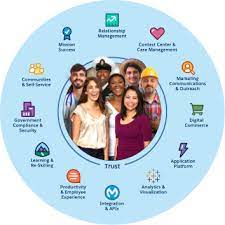
Transform your system of record into a system of engagement to manage mission-critical programs effectively. Achieve superior long-term outcomes by incorporating apps that seamlessly connect EHR data, treatment plans, and patient preferences. Utilize top-tier commercial CRM capabilities while adhering to compliance standards such as FedRAMP, DoD IL2/4, SOC, and more. Ensure stakeholders have secure access to critical information on any device, allowing IT to focus on innovation and employees to engage with collaborative tools.

Read More
gettectonic.com