
Einstein Scoring Archives - gettectonic.com
Maximizing Your Salesforce Einstein Investment

Maximizing Your Salesforce Einstein Investment

Maximizing Your Salesforce Einstein Investment: The Post-Implementation Playbook Beyond Implementation: The AI Optimization Journey Implementing Einstein predictive analytics is just the beginning. To sustain value and drive continuous improvement, organizations must adopt an ongoing optimization strategy. Here’s your roadmap for long-term AI success: 1. Performance Monitoring Framework Critical Activities: Tools to Use:✔ Einstein Model Metrics dashboard✔ Salesforce Optimizer for AI systems✔ Custom Apex monitoring scripts 2. User Feedback Integration Best Practices: Example Workflow: 3. Continuous Learning System Three-Pronged Approach: Focus Area Activities Frequency System Learning Model retraining with fresh data Bi-weekly User Training Micro-learnings on new features Monthly Process Evolution Workflow optimization sprints Quarterly Pro Tip: Create an “AI Center of Excellence” with cross-functional team members to drive adoption. Key Metrics to Track Common Pitfalls to Avoid ⚠ Data Decay: Customer behavior patterns change – refresh training data at least quarterly⚠ Over-Automation: Keep humans in the loop for high-stakes decisions⚠ Compliance Blindspots: Regularly review AI governance against evolving regulations The Evolution Roadmap Year 1: Stabilize core predictive modelsYear 2: Expand to adjacent use cases (e.g., from lead scoring to renewal risk)Year 3: Achieve predictive-prescriptive AI maturity with automated actions Getting Started with Optimization “Organizations that actively manage their AI systems see 3x greater ROI than those with passive approaches.” – Forrester Research Like Related Posts Who is Salesforce? Who is Salesforce? Here is their story in their own words. From our inception, we’ve proudly embraced the identity of Read more Salesforce Marketing Cloud Transactional Emails Salesforce Marketing Cloud Transactional Emails are immediate, automated, non-promotional messages crucial to business operations and customer satisfaction, such as order Read more Salesforce Unites Einstein Analytics with Financial CRM Salesforce has unveiled a comprehensive analytics solution tailored for wealth managers, home office professionals, and retail bankers, merging its Financial Read more AI-Driven Propensity Scores AI plays a crucial role in propensity score estimation as it can discern underlying patterns between treatments and confounding variables Read more

Read More
What is Salesforce Einstein 1

The Real Impact of Salesforce Einstein

The Real Impact of Salesforce Einstein: Beyond the Checkbox Implementation When AI Moves From Feature to Force Multiplier We’ve implemented Einstein across dozens of organizations, witnessing a clear pattern: the difference between superficial adoption and transformational results comes down to one factor – how deeply predictive intelligence is woven into operational workflows. When done right, the impact manifests in tangible, measurable ways. 1. Precision Focus: Working Smarter, Not Harder The first visible sign of successful Einstein adoption is the elimination of wasted effort. Teams stop operating on guesswork and start acting on intelligence: *”Our SDR team regained 15 hours per week by focusing only on Einstein-scored hot leads.”*– VP of Sales, SaaS Company 2. Real-Time Leadership: From Rearview Mirror to Windshield Einstein transforms management from historical reporting to predictive guidance: Traditional Approach Einstein-Enabled Leadership Monthly pipeline reviews Daily deal health pulse checks Gut-based forecasting AI-weighted revenue projections Post-mortem analysis Preemptive risk intervention Example: A manufacturing firm reduced forecast variance from ±15% to ±3% using Einstein Predictive Forecasting. 3. Your Data Finally Works For You Einstein unlocks trapped value in existing CRM data: “We discovered our highest-value customers shared three unexpected behavioral patterns we’d never tracked before.”– Director of Customer Success, FinTech 4. The Silent Efficiency Revolution AI-driven automation eliminates repetitive work: Process Before → Process AfterManual lead scoring → AI-prioritized inbound leadsFirst-in case assignment → Urgency-based routingBatch-and-blast emails → Behavior-timed campaigns 5. The Trust Transformation When teams see consistent accuracy, behavior changes fundamentally: Implementation Essentials for Real Impact Data Foundation Change Management Playbook Adoption Metrics to Track The Road Ahead Organizations that fully integrate Einstein see compound benefits: Year 1: Process efficienciesYear 2: Predictive operationsYear 3: Prescriptive automation “What began as lead scoring evolved into our competitive advantage in customer retention.”– CRO, Healthcare Technology Ready to move beyond checkbox AI?Contact us today! Transform your Einstein implementation from shelfware to strategic advantage with operationalized AI. Like Related Posts Who is Salesforce? Who is Salesforce? Here is their story in their own words. From our inception, we’ve proudly embraced the identity of Read more Salesforce Marketing Cloud Transactional Emails Salesforce Marketing Cloud Transactional Emails are immediate, automated, non-promotional messages crucial to business operations and customer satisfaction, such as order Read more Salesforce Unites Einstein Analytics with Financial CRM Salesforce has unveiled a comprehensive analytics solution tailored for wealth managers, home office professionals, and retail bankers, merging its Financial Read more AI-Driven Propensity Scores AI plays a crucial role in propensity score estimation as it can discern underlying patterns between treatments and confounding variables Read more

Read More
What is Einstein Used for in Salesforce?

Unlocking the Full Potential of Salesforce Einstein

Unlocking the Full Potential of Salesforce Einstein: A Strategic Guide Moving Beyond Basic AI Features While standard Einstein features provide value, the true competitive advantage comes from custom AI solutions tailored to your unique business processes. Here’s how leading organizations are pushing Einstein’s capabilities further: Custom AI Model Development Real-World Custom Implementations: Cross-Functional AI Strategy Department-Specific AI Roadmaps Team Key Use Cases Success Metrics Sales Deal stagnation alertsOptimal contact timing 20% reduction in stalled deals Service Case severity predictionAuto-routing 15% faster resolution Marketing Content engagement scoringChurn risk segmentation 30% higher campaign ROI Operations Inventory demand forecastingResource allocation 25% waste reduction Implementation Tip: Start with one high-impact department before enterprise rollout. Technical Implementation Framework Data Preparation Checklist Model Selection Guide Pro Tip: Use Einstein’s AutoML to test multiple approaches before custom development. Overcoming Adoption Challenges Trust-Building Playbook Skills Development Plan Advanced Integration Patterns Combine Einstein With: Example Architecture: Measuring AI Success Key Performance Indicators: Continuous Improvement Cycle: Getting Started with Advanced Einstein *”Companies that customize AI solutions see 3-5x greater ROI than those using only out-of-the-box features.”* – Forrester Research Transform your Einstein implementation from basic scoring to strategic advantage with tailored AI solutions. Like Related Posts Who is Salesforce? Who is Salesforce? Here is their story in their own words. From our inception, we’ve proudly embraced the identity of Read more Salesforce Marketing Cloud Transactional Emails Salesforce Marketing Cloud Transactional Emails are immediate, automated, non-promotional messages crucial to business operations and customer satisfaction, such as order Read more Salesforce Unites Einstein Analytics with Financial CRM Salesforce has unveiled a comprehensive analytics solution tailored for wealth managers, home office professionals, and retail bankers, merging its Financial Read more AI-Driven Propensity Scores AI plays a crucial role in propensity score estimation as it can discern underlying patterns between treatments and confounding variables Read more
Read More
Salesforce Sales Cloud Einstein

Salesforce Sales Cloud Einstein

Transforming Sales with Salesforce Sales Cloud Einstein In today’s data-driven business world, artificial intelligence (AI) is revolutionizing sales and customer relationship strategies. As the leading customer relationship management (CRM) platform, Salesforce introduces Sales Cloud Einstein, an AI-powered solution embedded within its Sales Cloud platform. This tool empowers businesses to streamline workflows, predict sales outcomes, and optimize customer engagement. This comprehensive insight explores the features, benefits, and costs of Sales Cloud Einstein, helping you determine how it can elevate your company’s sales performance. Key Features of Salesforce Sales Cloud Einstein Sales Cloud Einstein is packed with powerful AI-driven features, enabling sales teams to work smarter and close deals faster. Here are the key features: 1. Einstein Lead Scoring Automatically scores leads based on their likelihood to convert, using historical CRM data and patterns detected by AI. Key Metrics Impact Engagement history Prioritizes leads with recent activity Lead source Scores leads based on successful origins Demographics Highlights high-performing attributes like industry 2. Einstein Opportunity Scoring Assigns scores to opportunities in the pipeline, predicting their likelihood to close. Factor Impact on Scoring Stage progression Higher scores for quickly advancing deals Deal size Larger deals with strong progression rank higher Customer engagement Consistent interactions improve scores 3. Einstein Forecasting Delivers accurate sales forecasts by analyzing historical data, pipeline trends, and anomalies. Metric Value Added Pipeline health Predicts future revenue Win rate analysis Estimates likelihood of success Historical trends Enhances accuracy over time 4. Einstein Activity Capture Automatically logs customer interactions—emails, meetings, and calls—into Salesforce, reducing manual data entry. 5. Einstein Insights Provides actionable recommendations for the next best actions to close deals, using engagement history and deal data. 6. Einstein Email Insights Highlights key action items from emails using natural language processing (NLP). 7. Einstein Automated Contacts Detects and adds new contacts to Salesforce from emails and interactions, keeping records up to date. Benefits of Salesforce Sales Cloud Einstein Sales Cloud Einstein delivers a wide range of benefits: Costs of Salesforce Sales Cloud Einstein Sales Cloud Einstein is available as an add-on for Sales Cloud Enterprise or included in the Unlimited edition. Edition Cost (per user/month) Einstein Features Sales Cloud Enterprise $150 – $175 Lead Scoring, Opportunity Scoring, Activity Capture Sales Cloud Unlimited $300+ Full Einstein capabilities Add-On Pricing for Enterprise Edition: Feature Estimated Cost (per user/month) Einstein Forecasting $50 – $100 Einstein Activity Capture Available as an add-on Custom solutions (e.g., Einstein Discovery) may involve additional costs depending on the project scope and licensing requirements. Is Sales Cloud Einstein Right for Your Business? Sales Cloud Einstein is ideal if you: Final Thoughts Salesforce Sales Cloud Einstein is a game-changing tool that leverages AI to transform sales processes. With its powerful features and benefits, Einstein empowers businesses to boost productivity, enhance customer engagement, and drive revenue growth. Ready to integrate Einstein into your operations? Contact us for a personalized consultation and see how AI can elevate your sales performance. Like Related Posts Who is Salesforce? Who is Salesforce? Here is their story in their own words. From our inception, we’ve proudly embraced the identity of Read more Salesforce Marketing Cloud Transactional Emails Salesforce Marketing Cloud Transactional Emails are immediate, automated, non-promotional messages crucial to business operations and customer satisfaction, such as order Read more Salesforce Unites Einstein Analytics with Financial CRM Salesforce has unveiled a comprehensive analytics solution tailored for wealth managers, home office professionals, and retail bankers, merging its Financial Read more AI-Driven Propensity Scores AI plays a crucial role in propensity score estimation as it can discern underlying patterns between treatments and confounding variables Read more

Read More
Salesforce Einstein

Einstein Opportunity Scoring Explained

Utilize Artificial Intelligence to Optimize Opportunity Management: Einstein Opportunity Scoring Explained Let artificial intelligence (AI) empower you and your team to focus on the most promising opportunities and maximize deal closure rates. Each opportunity is assigned a score ranging from 1 to 99, providing valuable insights into its potential outcome. These scores are readily available on opportunity records and list views, ensuring easy access to critical information. Moreover, if you utilize Collaborative Forecasts, opportunity scores are also integrated into the forecasts page, enhancing visibility and forecasting accuracy. Einstein Opportunity Scoring is a versatile tool accessible to users with or without a Sales Cloud Einstein license. It provides a predictive assessment of the likelihood that an opportunity will result in a successful deal. For each opportunity score generated by Einstein, users gain visibility into the key factors influencing the score, both positively and negatively. In the Lightning Experience interface, opportunity scores are conveniently displayed on the compact layout of opportunity records or on the Details tab. Hovering over the score reveals a breakdown of the contributing factors, allowing users to understand why a particular score was assigned. For instance, a high score may indicate that the opportunity is progressing rapidly through the sales stages compared to others. For users navigating Salesforce Classic, the opportunity score is presented on the record detail of opportunity records, accompanied by the contributing factors. Customizing Opportunity Management with Opportunity Scores: Admins have the flexibility to incorporate the Opportunity Score field into various opportunity list views, empowering users to prioritize and manage opportunities effectively. In Lightning Experience, hovering over the score in list views provides insights into the factors influencing the score. However, in Salesforce Classic, users need to navigate to the opportunity record detail page to access this information. Furthermore, for organizations leveraging Collaborative Forecasts, admins can seamlessly integrate opportunity scores into the opportunity list on the forecasts page, enhancing forecasting accuracy and sales planning. Understanding Opportunity Score Criteria: The opportunity score is derived from a comprehensive analysis of various factors, including market demand, competitive landscape, potential return on investment, and resource requirements. By considering these criteria, Einstein Opportunity Scoring provides actionable insights to guide decision-making and resource allocation. Exploring Einstein Lead Scoring Criteria: In addition to opportunity scoring, Einstein offers lead scoring functionality to identify high-quality leads. By analyzing past leads, Einstein determines which current leads share similarities with those that have previously converted. Admins can customize lead scoring criteria by including or excluding specific lead fields based on their relevance to lead quality. Sales Cloud Einstein Scoring Hierarchy: Einstein Opportunity Scoring is part of Sales Cloud Einstein Scoring, which encompasses both opportunity and lead scoring capabilities. In this hierarchy, Einstein Lead Scoring falls under the broader umbrella of Salesforce’s Sales Cloud Einstein model. Together, these scoring mechanisms empower sales teams with predictive insights to optimize their sales processes and drive success. Einstein Opportunity Scoring equips sales professionals with predictive analytics to assess opportunity viability accurately. By leveraging AI-driven scoring, organizations can streamline opportunity management, prioritize resources effectively, and ultimately, enhance sales performance and revenue growth. Like1 Related Posts Salesforce Unites Einstein Analytics with Financial CRM Salesforce has unveiled a comprehensive analytics solution tailored for wealth managers, home office professionals, and retail bankers, merging its Financial Read more AI-Driven Propensity Scores AI plays a crucial role in propensity score estimation as it can discern underlying patterns between treatments and confounding variables Read more Salesforce AI Einstein Next Best Action Salesforce AI Einstein Next Best Action is a feature designed to identify the most effective actions available to agents and Read more Einstein Relationship Insights ERI, serves as an AI-powered research assistant, enhancing sales processes. ERI operates as a desktop plugin with a browser extension, Read more

Read More
Sales Cloud Einstein

How Einstein Lead Scoring Works on Your Prospect Datanaiv

How Einstein Lead Scoring Works on Your Prospect Data By Shannan Hearne, Tectonic Marketing Consultant The love hate relationship between sales and marketing is based on lead quality.  Each party is tempted to blame the other for deals that fail to close.  Either marketing thinks the sales team dropped the ball following up with the prospect. Or the sales team thinks marketing failed to properly qualify the lead.  With Einstein Lead Scoring, the relationship between sales and marketing can improve. Not every lead holds the same significance, and relying on arbitrary details for accurate scoring is ineffective. Clicks, opens, and form fills vary in value for each lead, and visiting the Careers page does not necessarily diminish a lead’s potential.  Humans from both sales and marketing have to work together to craft scoring criteria that reflects behavior that great customers took before becoming customers.  The development of the scoring model is key to making Einstein Lead Scoring Works on Your Prospect Data. Einstein Lead Scoring, integrated with Sales Cloud Einstein, leverages artificial intelligence to enhance sales conversion efficiency. By automatically analyzing historical sales data and identifying key factors influencing lead conversion, sales reps can effectively segment and prioritize leads. With data supplied by Einstein running lead scoring in the background.  While the human factor is important, the speed of artificial intelligence to analyze data cannot be beaten. Tailored to individual business needs, Einstein Lead Scoring models analyze both standard and custom fields associated with the Lead object. By using predictive models like Logistic Regression, Random Forests, and Naive Bayes (definitions below). The system autonomously selects the best model based on a sample dataset, eliminating the need for statistical or mathematical expertise.  No more pouring through hours of spreadsheets sorting and creating pivot tables. Model Updates Regular model updates ensure accuracy. With leads being scored every hour using the latest model. This allows quick response to changes, ensuring that the prioritization of leads remains effective. The scoring factors are prominently displayed on the lead record page. Thus enabling sales reps to prepare for calls or emails efficiently with accurate engagement data. The true strength of Einstein Lead Scoring lies in its machine learning capabilities. Einstein is continuously refining predictions based on the latest Salesforce data. If new patterns emerge, such as VP titles in a specific industry showing interest in demos, Einstein automatically rescores leads meeting this criteria. Key benefits of Einstein Lead Scoring include increased connection and conversion rates, accelerated engagement with top leads, and a clear understanding of lead scoring factors. Important features encompass zero setup requirements, custom lead score-driven workflows for task assignments, and smart lead lists that prioritize the best leads for reps. Einstein Lead Scoring Works on Your Prospect Data For businesses utilizing or considering Salesforce Sales Cloud, consulting with Tectonic about integrating Einstein Lead Scoring can lead to faster implementation and deal closures. As your Salesforce implementation partner, Tectonic ensures a tailored Salesforce solution. Remaining aligned with your business needs, incorporating the powerful capabilities of Einstein tools within your Salesforce ecosystem.  Contact Tectonic today. Logistic regression estimates the probability of an event occurring, such as voted or didn’t vote, based on a given dataset of independent variables. Random forest is a commonly-used machine learning algorithm trademarked by Leo Breiman and Adele Cutler. It combines the output of multiple decision trees to reach a single result. Its ease of use and flexibility have fueled its adoption, as it handles both classification and regression problems. The Naïve Bayes classifier is a supervised machine learning algorithm, which is used for classification tasks, like text classification. It is also part of a family of generative learning algorithms, meaning that it seeks to model the distribution of inputs of a given class or category. Like1 Related Posts Who is Salesforce? Who is Salesforce? Here is their story in their own words. From our inception, we’ve proudly embraced the identity of Read more Salesforce Marketing Cloud Transactional Emails Salesforce Marketing Cloud Transactional Emails are immediate, automated, non-promotional messages crucial to business operations and customer satisfaction, such as order Read more Salesforce Unites Einstein Analytics with Financial CRM Salesforce has unveiled a comprehensive analytics solution tailored for wealth managers, home office professionals, and retail bankers, merging its Financial Read more AI-Driven Propensity Scores AI plays a crucial role in propensity score estimation as it can discern underlying patterns between treatments and confounding variables Read more
Read More
Salesforce Einstein and Einstein Automate

Einstein Lead Scoring is Based on:

Understanding What Lead scoring looks at explains how Einstein gives each lead a score based on how well the lead matches the company’s conversion patterns. Einstein Scoring Model considers: Einstein Lead Scoring uses data science and machine learning to discover the patterns in your business’ lead conversion history, and to predict which current leads to prioritize. By using machine learning, Einstein Lead Scoring provides a simpler, faster, and more accurate solution than traditional rules-based lead scoring approaches. The Scoring Model Einstein analyzes your past converted leads, including custom fields and activity data, to determine your conversion patterns. It then identifies which of your current leads have the most in common with your prior converted leads. Based on this analysis, Einstein builds one or more scoring models for your organization. During setup, Salesforce admins can choose to score all of your leads together, or group leads into segments based on field criteria. Einstein builds a separate scoring model for each lead segment. For each lead segment, admins can also choose to omit certain lead fields. When Einstein builds your scoring model, the omitted fields are ignored. When you score all leads together without creating segments, and you don’t have enough lead conversion data to build your own predictive model, Einstein uses a global model. The global model uses anonymous data from many Salesforce customers. When you accumulate enough lead data, Einstein builds a scoring model with your data and uses the model with the better results. Einstein models are refreshed every 10 days, or whenever the admin updates how Lead Scoring is configured. Lead scores are updated at least every six hours as needed. Factors That Contribute to Scores With each lead score, Einstein displays the lead’s field values that have the most significant positive and negative effects on its score. These fields are the lead’s top positives and top negatives. Sometimes, a lead’s score is due to a combination of several fields with only slight positive or negative effects, rather than a few very positive or very negative fields. In this case, Einstein doesn’t display top positives or top negatives for the lead. Like Related Posts Salesforce Unites Einstein Analytics with Financial CRM Salesforce has unveiled a comprehensive analytics solution tailored for wealth managers, home office professionals, and retail bankers, merging its Financial Read more Salesforce AI Einstein Next Best Action Salesforce AI Einstein Next Best Action is a feature designed to identify the most effective actions available to agents and Read more Einstein Relationship Insights ERI, serves as an AI-powered research assistant, enhancing sales processes. ERI operates as a desktop plugin with a browser extension, Read more AI in Sales Enablement automation, and personalization to enhance sales processes, increase customer engagement, and drive revenue growth. Companies are working with AI to Read more

Read More
Einstein Opportunity Scoring Boosts Sales

Einstein Opportunity Scoring Boosts Sales

Your business thrives on seizing the right opportunities to drive more deals. Identifying these pivotal sales chances is crucial for prioritizing and capitalizing on prospects to secure successful outcomes. Enter Einstein Opportunity Scoring Boosts Sales. Enter Salesforce’s Einstein Opportunity Scoring system, designed to gauge the likelihood of an opportunity’s success, ranging from scores of 1 to 99, powered by artificial intelligence analysis. These scores offer a clear indication of each opportunity’s potential, empowering you to prioritize effectively and maximize your business’s deal closure rates. So, how does this innovative system function? In today’s digital age, Salesforce’s Einstein Opportunity Scoring leverages AI to analyze past opportunities, scrutinizing both closed-won and closed-lost instances to identify key factors influencing scores. These factors encompass various opportunity details, historical data, and product information, culminating in accurate scoring models refreshed every few hours to ensure precision. Moreover, you have the flexibility to customize your scoring model to align with specific business needs, modifying criteria by adding or removing records or custom fields. This adaptability extends further with regular scoring model updates every 10 days, reflecting the dynamic nature of the business landscape. Accessing this feature is simple—users with a Sales Cloud Einstein license can leverage Einstein Opportunity Scoring. And even if you lack this specific license or the Sales Cloud Einstein product suite, fret not, as this feature gradually rolls out to all customers, irrespective of license status. What advantages does Opportunity Scoring offer your business? Firstly, the opportunity scorecard presents a comprehensive overview of each deal, highlighting positive and negative influencing factors, aiding in focused deal analysis. Additionally, the system offers actionable suggestions for score improvement, ensuring optimal deal management. Furthermore, Opportunity Scoring aids in opportunity tracking, preventing deal slippage, and facilitating informed decision-making. Sales representatives can leverage low opportunity scores to seek guidance from sales managers, ultimately boosting deal conversion rates. To maximize the effectiveness of Einstein Opportunity Scoring, continuous improvement is key. Ensure proper opportunity segregation, timely entry of opportunities, and accurate data updates to enhance scoring accuracy and increase deal success rates. In instances where scores may not appear, reasons could range from initial feature setup time to opportunity closure or admin exclusion. Meeting specific data requirements, including closed-won and closed-lost opportunities, and regular updates, ensures robust scoring outcomes. In conclusion, harness the power of Salesforce’s Einstein Opportunity Scoring to unlock valuable insights and predictive capabilities, driving sales success and propelling your business forward. For further insights into Einstein Opportunity Scoring, explore our blogs section for comprehensive information. Like Related Posts Who is Salesforce? Who is Salesforce? Here is their story in their own words. From our inception, we’ve proudly embraced the identity of Read more Salesforce Marketing Cloud Transactional Emails Salesforce Marketing Cloud Transactional Emails are immediate, automated, non-promotional messages crucial to business operations and customer satisfaction, such as order Read more Salesforce Unites Einstein Analytics with Financial CRM Salesforce has unveiled a comprehensive analytics solution tailored for wealth managers, home office professionals, and retail bankers, merging its Financial Read more AI-Driven Propensity Scores AI plays a crucial role in propensity score estimation as it can discern underlying patterns between treatments and confounding variables Read more

Read More
Salesforce AI

Einstein Opportunity Scoring

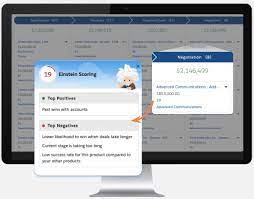
Let Salesforce’s artificial intelligence help you and your team focus on the right opportunities so you can close more deals with Einstein Opportunity Scoring. Each opportunity in Salesforce is given a score, from 1 to 99, which is available on opportunity records and list views. Sales reps use these opportunity scores to identify top opportunities. If you use Collaborative Forecasts, opportunity scores are also available on the forecasts page. Plus, use scores with reports, Process Builder, and workflows. Einstein Opportunity Scoring is available to users with or without a Sales Cloud Einstein license. Opportunity scores tell you the likelihood that an opportunity will be closed won. For each opportunity score, Einstein shows the factors that have contributed the most to the score, both positively and negatively. Einstein uses your team’s past closed opportunities, won and lost, to create a predictive scoring model.  This model helps identify which opportunities are most likely to result in a win. Einstein Opportunity Scoring in Lightning In Lightning Experience, the score is shown on the compact layout of opportunity records or on the Details tab. Hover over the score to see a list of factors that contribute to the score. For example, a score could be relatively high because the opportunity is moving quickly through the stages compared to other opportunities. In Salesforce Classic, the score is shown on the record detail of opportunity records. The contributing factors are shown. You can add the Opportunity Score field to any of your opportunity list views. If you don’t see the score on public list views, ask your Salesforce admin to add it. In Lightning Experience, hover over the score in the list view to see the factors that contribute to the score. In Salesforce Classic, the contributing factors aren’t available from the list views. Instead, navigate to the opportunity record detail page. The opportunity score can be calculated using a variety of factors, such as market demand, competitive landscape, the potential ROI, and the resources required to pursue the opportunity. Einstein Opportunity Scoring provides an unbiased, objective prediction on the likelihood of a deal closing, based on data patterns from previously closed deals. Then, take the guesswork out of forecasting. Einstein Forecasting uses AI technology to bring more certainty and visibility to your forecasts. Improve forecasting accuracy, get forecast predictions, and track how sales teams are doing. What is the difference between Einstein Lead Scoring and opportunity scoring? Einstein Opportunity Scoring is part of Sales Cloud Einstein Scoring, which also includes Einstein Lead Scoring. In the hierarchy, Einstein Lead Scoring comes under Salesforce’s Sales Cloud Einstein model. Opportunity scores tell the salesperson the likelihood of an opportunity to be won. Like1 Related Posts Salesforce Marketing Cloud Transactional Emails Salesforce Marketing Cloud Transactional Emails are immediate, automated, non-promotional messages crucial to business operations and customer satisfaction, such as order Read more Salesforce Unites Einstein Analytics with Financial CRM Salesforce has unveiled a comprehensive analytics solution tailored for wealth managers, home office professionals, and retail bankers, merging its Financial Read more AI-Driven Propensity Scores AI plays a crucial role in propensity score estimation as it can discern underlying patterns between treatments and confounding variables Read more Asset Management Salesforce Can Salesforce do asset management? You can manage assets in Consumer Goods (desktop) and in the Consumer Goods offline mobile Read more

Read More
gettectonic.com