Facebook Archives - gettectonic.com - Page 2
Vonage Premier for Salesforce Service Cloud Voice

Vonage Premier for Salesforce Service Cloud Voice

HOLMDEL, N.J., Sept. 18, 2024 /PRNewswire/ — Vonage, a global leader in cloud communications helping businesses accelerate their digital transformation and a part of Ericsson (NASDAQ: ERIC), is one of the first contact center providers to join Salesforce’s Bring Your Own Channel for Contact Center as a Service (BYOC for CCaaS) pilot program. With BYOC for CCaaS, Vonage Premier for Salesforce Service Cloud Voice customers will have the ability to integrate Vonage omnichannel and AI-powered capabilities into their existing contact center solutions, including voice, SMS, chat, social messaging apps like WhatsApp, and more – delivering faster resolution times and creating a more native, personalized and meaningful experience for customers by connecting with them on their channel of choice. “We are very excited to have Vonage, a leading Salesforce Service Cloud Voice partner, take this very important step to expand its deep Salesforce integration through BYOC for CCaaS, delivering the omnichannel capabilities – and the APIs to enable them – that create the kind of customer experiences that drive meaningful engagement,” said Tony Flores, Senior Director of Product Management for Salesforce. With BYOC for CCaaS, Vonage Premier for Service Cloud Voice customers will now be able to connect with customers across various communications channels, as well as access data insights and AI-based agent productivity tools, to create a better overall customer journey and a more productive and efficient agent experience. The solution’s single routing and agent capacity model also increases contact center capacity, leading to more customer interactions being resolved better and faster. Workforce Engagement Management (WEM) is also provided through Vonage’s seamless integrations with leading WEM solutions Verint, Calabrio Teleopti, Playvox and injixo, ensuring optimum planning, scheduling, tracking, and management of the contact center workforce. “Today’s contact center agents play a vital role in support of the businesses they represent and in meeting the increasing demands of tech-savvy customers who want to connect from anywhere, on their preferred communications channels,” said Reggie Scales, Acting Head of Applications for Vonage. “These agents are also frequently working from anywhere and need the tools to access critical information to troubleshoot common customer issues and provide real-time customer support. Having all of these capabilities in a single user interface – omnichannel modes of communication coupled with a 360 view of customer information and key knowledge bases – this is the contact center of the future.” A key differentiator for Vonage as a pilot partner in this program is its ability to source a single AI-based Virtual Agent solution for self-service automations across voice and digital channels using Vonage AI studio – while also leveraging Salesforce for all Live Agent Assist and Analytics needs. Vonage can also integrate its own Vonage Communications APIs to power pre-built programmable capabilities for voice, SMS, social and chat, directly into the contact center – all on one combined Salesforce and Vonage platform. This singular view also enhances efficiency by keeping agents and supervisors in a single Salesforce desktop to eliminate application switching and the need to toggle between screens. “Modern contact centers are experiencing increasing pressure and demand to deliver better, more personalized, omnichannel interactions, as well as quicker and more accurate responses to customer issues,” said Jim Lundy, CEO, Founder & Lead Analyst, Aragon Research. “With BYOC for CCaaS, Vonage aims to address the increasing demand for a unified and customizable customer experience across all communication channels, leveraging existing Salesforce platforms and AI-powered insights and automation.” Vonage Premier for Service Cloud Voice is currently available on the Salesforce AppExchange with Salesforce BYOC for CCaaS integrated capabilities now available for customers to pilot. To find out more about Vonage Premier for Service Cloud Voice, visit www.vonage.com. Salesforce, AppExchange, Service Cloud Voice, Einstein and others are among the trademarks of Salesforce, inc. About Vonage Vonage, a global cloud communications leader, helps businesses accelerate their digital transformation. Vonage’s Communications Platform is fully programmable and allows for the integration of Video, Voice, Chat, Messaging, AI and Verification into existing products, workflows and systems. The Vonage conversational commerce application enables businesses to create AI-powered omnichannel experiences that boost sales and increase customer satisfaction. Vonage’s fully programmable unified communications, contact center and conversational commerce applications are built from the Vonage platform and enable companies to transform how they communicate and operate from the office or remotely – providing the flexibility required to create meaningful engagements. Vonage is headquartered in New Jersey, with offices throughout the United States, Europe, Israel and Asia and is a wholly-owned subsidiary of Ericsson (NASDAQ: ERIC), and a business area within the Ericsson Group called Business Area Global Communications Platform. To follow Vonage on X (formerly known as Twitter), please visit twitter.com/vonage. To follow on LinkedIn, visit linkedin.com/company/Vonage/. To become a fan on Facebook, go to facebook.com/vonage. To subscribe on YouTube, visit youtube.com/vonage. SOURCE Vonage Like Related Posts Who is Salesforce? Who is Salesforce? Here is their story in their own words. From our inception, we’ve proudly embraced the identity of Read more Salesforce Marketing Cloud Transactional Emails Salesforce Marketing Cloud Transactional Emails are immediate, automated, non-promotional messages crucial to business operations and customer satisfaction, such as order Read more Salesforce Unites Einstein Analytics with Financial CRM Salesforce has unveiled a comprehensive analytics solution tailored for wealth managers, home office professionals, and retail bankers, merging its Financial Read more AI-Driven Propensity Scores AI plays a crucial role in propensity score estimation as it can discern underlying patterns between treatments and confounding variables Read more


Read More
Autonomous AI Service Agents

Autonomous AI Service Agents

Salesforce Set to Launch Autonomous AI Service Agents. Considering Tectonic only first wrote about Agentic AI in late June, its like Christmas in July! Salesforce is gearing up to introduce a new generation of customer service chatbots that leverage advanced AI tools to autonomously navigate through various actions and workflows. These bots, termed “autonomous AI agents,” are currently in pilot testing and are expected to be released later this year. Autonomous AI Service Agents Named Einstein Service Agent, these autonomous AI bots aim to utilize generative AI to understand customer intent, trigger workflows, and initiate actions within a user’s Salesforce environment, according to Ryan Nichols, Service Cloud’s chief product officer. By integrating natural language processing, predictive analytics, and generative AI, Einstein Service Agents will identify scenarios and resolve customer inquiries more efficiently. Traditional bots require programming with rules-based logic to handle specific customer service tasks, such as processing returns, issuing refunds, changing passwords, and renewing subscriptions. In contrast, the new autonomous bots, enhanced by generative AI, can better comprehend customer issues (e.g., interpreting “send back” as “return”) and summarize the steps to resolve them. Einstein Service Agent will operate across platforms like WhatsApp, Apple Messages for Business, Facebook Messenger, and SMS text, and will also process text, images, video, and audio that customers provide. Despite the promise of these new bots, their effectiveness is crucial, emphasized Liz Miller, an analyst at Constellation Research. If these bots fail to perform as expected, they risk wasting even more customer time than current technologies and damaging customer relationships. Miller also noted that successful implementation of autonomous AI agents requires human oversight for instances when the bots encounter confusion or errors. Customers, whether in B2C or B2B contexts, are often frustrated with the limitations of rules-based bots and prefer direct human interaction. It is annoying enough to be on the telephone repeating “live person” over and over again. It would be trafic to have to do it online, too. “It’s essential that these bots can handle complex questions,” Miller stated. “Advancements like this are critical, as they can prevent the bot from malfunctioning when faced with unprogrammed scenarios. However, with significant technological advancements like GenAI, it’s important to remember that human language and thought processes are intricate and challenging to map.” Nichols highlighted that the forthcoming Einstein Service Agent will be simpler to set up, as it reduces the need to manually program thousands of potential customer requests into a conversational decision tree. This new technology, which can understand multiple word permutations behind a service request, could potentially lower the need for extensive developer and data scientist involvement for Salesforce users. The pricing details for the autonomous Einstein Service Agent will be announced at its release. Like Related Posts Who is Salesforce? Who is Salesforce? Here is their story in their own words. From our inception, we’ve proudly embraced the identity of Read more Salesforce Marketing Cloud Transactional Emails Salesforce Marketing Cloud Transactional Emails are immediate, automated, non-promotional messages crucial to business operations and customer satisfaction, such as order Read more Salesforce Unites Einstein Analytics with Financial CRM Salesforce has unveiled a comprehensive analytics solution tailored for wealth managers, home office professionals, and retail bankers, merging its Financial Read more AI-Driven Propensity Scores AI plays a crucial role in propensity score estimation as it can discern underlying patterns between treatments and confounding variables Read more

Read More
AI in scams

AIs Role in Scams

How Generative AI is Supporting the Creation of Lures & Scams A Guide for Value Added Resellers Copyright © 2024 Gen Digital Inc. All rights reserved. Avast is part of Gen™. A long, long time ago, I worked for an antivirus company who has since been acquired by Avast.  Knowing many of the people involved in this area of artificial intelligence, I pay attention when they publish a white paper. AI in scams is something we all should be concerned about. I am excited to share it in our Tectonic Insights. Executive Summary The capabilities and global usage of both large language models (LLMs) and generative AI are rapidly increasing. While these tools offer significant benefits to the general public and businesses, they also pose potential risks for misuse by malicious actors, including the misuse of tools like OpenAI’s ChatGPT and other GPTs. This document explores how the ChatGPT brand is exploited for lures, scams, and other social engineering threats. Generative AI is expected to play a crucial role in the cyber threat world challenges, particularly in creating highly believable, multilingual texts for phishing and scams. These advancements provide more opportunities for sophisticated social engineering by even less sophisticated scammers than ever before. Conversely, we believe generative AI will not drastically change the landscape of malware generation in the near term. Despite numerous proofs of concept, the complexity of generative AI methods still makes traditional, simpler methods more practical for malware creation. In short, the good may not outweigh the bad – just yet. Recognizing the value of generative AI for legitimate purposes is important. AI-based security and assistant tools with various levels of maturity and specialization are already emerging in the market. As these tools evolve and become more widely available, substantial improvements in their capabilities are anticipated. AI-Generated Lures and Scams AI-generated lures and scams are increasingly prevalent. Cybercriminals use AI to create lures and conduct phishing attempts and scams through various texts—emails, social media content, e-shop reviews, SMS scams, and more. AI improves the credibility of social scams by producing trustworthy, authentic texts, eliminating traditional phishing red flags like broken language and awkward addressing. These advanced threats have exploited societal issues and initiatives, including cryptocurrencies, Covid-19, and the war in Ukraine. The popularity of ChatGPT among hackers stems more from its widespread recognition than its AI capabilities, making it a prime target for investigation by attackers. How is Generative AI Supporting the Creation of Lures and Scams? Generative AI, particularly ChatGPT, enhances the language used in scams, enabling cybercriminals to create more advanced texts than they could otherwise. AI can correct grammatical errors, provide multilingual content, and generate multiple text variations to improve believability. For sophisticated phishing attacks, attackers must integrate the AI-generated text into credible templates. They can purchase functional, well-designed phishing kits or use web archiving tools to replicate legitimate websites, altering URLs to phish victims. Currently, attackers need to manually build some aspects of their attempts. ChatGPT is not yet an “out-of-the-box” solution for advanced malware creation. However, the emergence of multi-type models, combining outputs like images, audio, and video, will enhance the capabilities of generative AI for creating believable phishing and scam campaigns. Malvertising Malvertising, or “malicious advertising,” involves disseminating malware through online ads. Cybercriminals exploit the widespread reach and interactive nature of digital ads to distribute harmful content. Instances have been observed where ChatGPT’s name is used in malicious vectors on platforms like Facebook, leading users to fraudulent investment portals. Users who provide personal information become vulnerable to identity theft, financial fraud, account takeovers, and further scams. The collected data is often sold on the dark web, contributing to the broader cybercrime ecosystem. Recognizing and mitigating these deceptive tactics is crucial. YouTube Scams YouTube, one of the world’s most popular platforms, is not immune to cybercrime. Fake videos featuring prominent figures are used to trick users into harmful actions. This strategy, known as the “Appeal to Authority,” exploits trust and credibility to phish personal details or coerce victims into sending money. For example, videos featuring Elon Musk discussing OpenAI have been modified to scam victims. A QR code displayed in the video redirects users to a scam page, often a cryptocurrency scam or phishing attempt. As AI models like Midjourney and DALL-E mature, the use of fake images, videos, and audio is expected to increase, enhancing the credibility of these scams. Typosquatting Typosquatting involves minor changes in URLs to redirect users to different websites, potentially leading to phishing attacks or the installation of malicious applications. An example is an Android app named “Open Chat GBT: AI Chat Bot,” where a subtle URL alteration can deceive users into downloading harmful software. Browser Extensions The popularity of ChatGPT has led to the emergence of numerous browser extensions. While many are legitimate, others are malicious, designed to lure victims. Attackers create extensions with names resembling ChatGPT to deceive users into downloading harmful software, such as adware or spyware. These extensions can also subscribe users to services that periodically charge fees, known as fleeceware. For instance, a malicious extension mimicking “ChatGPT for Google” was reported by Guardio. This extension stole Facebook sessions and cookies but was removed from the Chrome Web Store after being reported. Installers and Cracks Malicious installers often mimic legitimate tools, tricking users into installing malware. These installers promise to install ChatGPT but instead deploy malware like NodeStealer, which steals passwords and browser cookies. Cracked or unofficial software versions pose similar risks, hiding malware that can steal personal information or take control of computers. This particular method of installing malware has been around for decades. However the usage of ChatGPT and other free to download tools has given it a resurrection. Fake Updates Fake updates are a common tactic where users are prompted to update their browser to access content. Campaigns like SocGholish use ChatGPT-related articles to lure users into downloading remote access trojans (RATs), giving attackers control over infected devices. These pages are often hosted on vulnerable WordPress sites or sites with

Read More
Conversational Commerce Explained

Conversational Commerce Explained

Conversational Commerce is a modern approach to customer engagement and sales that leverages chat-based interfaces (like messaging apps, chatbots, and voice assistants) to facilitate seamless, personalized, and real-time interactions between businesses and customers. It combines the power of conversational AI with e-commerce to create a more natural and interactive shopping experience. 1. What is Conversational Commerce? Conversational commerce allows customers to interact with brands through text or voice conversations instead of traditional methods like browsing websites or using apps. It enables businesses to engage with customers in a more personalized, immediate, and convenient way, often using tools like: 2. How Does Conversational Commerce Work? Conversational commerce uses Artificial Intelligence (AI), Natural Language Processing (NLP), and machine learning to understand and respond to customer queries. Here’s how it typically works: 3. Key Features of Conversational Commerce a) Personalization b) Real-Time Interaction c) Omnichannel Support d) Automation e) Seamless Transactions 4. Benefits of Conversational Commerce a) Improved Customer Experience b) Higher Engagement c) Increased Sales d) Cost Efficiency e) 24/7 Availability 5. Examples of Conversational Commerce a) Chatbots b) Voice Assistants c) Social Media Messaging d) In-App Messaging 6. Technologies Powering Conversational Commerce a) Artificial Intelligence (AI) b) Natural Language Processing (NLP) c) Machine Learning d) APIs and Integrations 7. The Future of Conversational Commerce 8. Challenges of Conversational Commerce In summary, conversational commerce is transforming the way businesses interact with customers by making shopping more conversational, personalized, and convenient. It’s a key trend in the future of e-commerce and customer engagement! Content updated February 2025. Like Related Posts Who is Salesforce? Who is Salesforce? Here is their story in their own words. From our inception, we’ve proudly embraced the identity of Read more Salesforce Marketing Cloud Transactional Emails Salesforce Marketing Cloud Transactional Emails are immediate, automated, non-promotional messages crucial to business operations and customer satisfaction, such as order Read more Salesforce Unites Einstein Analytics with Financial CRM Salesforce has unveiled a comprehensive analytics solution tailored for wealth managers, home office professionals, and retail bankers, merging its Financial Read more AI-Driven Propensity Scores AI plays a crucial role in propensity score estimation as it can discern underlying patterns between treatments and confounding variables Read more

Read More
UncannyAutomator Salesforce Integration

UncannyAutomator Salesforce Integration

Integrating WordPress with Salesforce With the Uncanny Automator Elite Integrations addon, connecting your WordPress site to Salesforce is a breeze. Steps to Connect Uncanny Automator to Your Salesforce Account 1. Install the Elite Integrations Addon First, ensure you have the Elite Integrations addon for Uncanny Automator installed on your WordPress site. 2. Connect Uncanny Automator to Salesforce To establish the connection, follow these steps: You will be prompted to log into Salesforce. After logging in, you will need to allow Uncanny Automator to manage your Salesforce data by clicking Allow. You will then return to the app connection screen on your WordPress site. Using Salesforce Actions in Recipes Once connected to Salesforce, you can use Uncanny Automator to create and update contacts and leads based on user actions on your WordPress site. Here’s how: Final Steps That’s it! Your recipe will now automatically run whenever users complete the selected trigger(s), sending the desired updates directly to your Salesforce account. Installing Uncanny Automator Install the free version The free version of Uncanny Automator is hosted in the WordPress.org repository, so installing it on your WordPress site couldn’t be easier. Sign into your website as an administrator, and in /wp-admin/, navigate to Plugins > Add New. In the search field, enter “Uncanny Automator”. See the image below for more context. In the Search Results, click the Install Now button for Automator. Once it finishes installing, click Activate. That’s it! Uncanny Automator is installed and ready for use. Please note that you must have the free version installed first to use Uncanny Automator Pro. The setup wizard After activation, you will be redirected to the Uncanny Automator dashboard. From here, you can connect an account, watch tutorials or read articles in our Knowledge Base. Connecting a free account is an optional step allows you to try out some of the App non-WordPress Automator integrations (like Slack, Google Sheets and Facebook) but it is not required to use anything else in the free version. Install Uncanny Automator Pro Uncanny Automator Pro is a separate plugin from our free version, and to use Pro features, you must have both Uncanny Automator AND Uncanny Automator Pro installed and active. If you don’t yet have a copy of Automator Pro, you can purchase one from https://automatorplugin.com/pricing/. Once purchased, you can download the latest version of Uncanny Automator Pro inside your account on our website at https://automatorplugin.com/my-account/downloads/. To install the Pro version after downloading the zip file, navigate to Plugins > Add New in /wp-admin/. At the top of the page, click the Upload Plugin button. Click Choose File to select the Pro zip file, the Install Now and Activate the plugin. Once activated, be sure to visit Automator > Settings in /wp-admin/ to enter your license key. This unlocks access to automatic updates and unlimited use of non-WordPress integrations in your recipes. UncannyAutomator special triggers can be found here. Like Related Posts Who is Salesforce? Who is Salesforce? Here is their story in their own words. From our inception, we’ve proudly embraced the identity of Read more Salesforce Marketing Cloud Transactional Emails Salesforce Marketing Cloud Transactional Emails are immediate, automated, non-promotional messages crucial to business operations and customer satisfaction, such as order Read more Salesforce Unites Einstein Analytics with Financial CRM Salesforce has unveiled a comprehensive analytics solution tailored for wealth managers, home office professionals, and retail bankers, merging its Financial Read more AI-Driven Propensity Scores AI plays a crucial role in propensity score estimation as it can discern underlying patterns between treatments and confounding variables Read more
Read More
Einstein Service Agent

Einstein Service Agent

Introducing Agentforce Service Agent: Salesforce’s Autonomous AI to Transform Chatbot Experiences Accelerate case resolutions with an intelligent, conversational interface that uses natural language and is grounded in trusted customer and business data. Deploy in minutes with ready-made templates, Salesforce components, and a large language model (LLM) to autonomously engage customers across any channel, 24/7. Establish clear privacy and security guardrails to ensure trusted responses, and escalate complex cases to human agents as needed. Editor’s Note: Einstein Service Agent is now known as Agentforce Service Agent. Salesforce has launched Agentforce Service Agent, the company’s first fully autonomous AI agent, set to redefine customer service. Unlike traditional chatbots that rely on preprogrammed responses and lack contextual understanding, Agentforce Service Agent is dynamic, capable of independently addressing a wide range of service issues, which enhances customer service efficiency. Built on the Einstein 1 Platform, Agentforce Service Agent interacts with large language models (LLMs) to analyze the context of customer messages and autonomously determine the appropriate actions. Using generative AI, it creates conversational responses based on trusted company data, such as Salesforce CRM, and aligns them with the brand’s voice and tone. This reduces the burden of routine queries, allowing human agents to focus on more complex, high-value tasks. Customers, in turn, receive faster, more accurate responses without waiting for human intervention. Available 24/7, Agentforce Service Agent communicates naturally across self-service portals and messaging channels, performing tasks proactively while adhering to the company’s defined guardrails. When an issue requires human escalation, the transition is seamless, ensuring a smooth handoff. Ease of Setup and Pilot Launch Currently in pilot, Agentforce Service Agent will be generally available later this year. It can be deployed in minutes using pre-built templates, low-code workflows, and user-friendly interfaces. “Salesforce is shaping the future where human and digital agents collaborate to elevate the customer experience,” said Kishan Chetan, General Manager of Service Cloud. “Agentforce Service Agent, our first fully autonomous AI agent, will revolutionize service teams by not only completing tasks autonomously but also augmenting human productivity. We are reimagining customer service for the AI era.” Why It Matters While most companies use chatbots today, 81% of customers would still prefer to speak to a live agent due to unsatisfactory chatbot experiences. However, 61% of customers express a preference for using self-service options for simpler issues, indicating a need for more intelligent, autonomous agents like Agentforce Service Agent that are powered by generative AI. The Future of AI-Driven Customer Service Agentforce Service Agent has the ability to hold fluid, intelligent conversations with customers by analyzing the full context of inquiries. For instance, a customer reaching out to an online retailer for a return can have their issue fully processed by Agentforce, which autonomously handles tasks such as accessing purchase history, checking inventory, and sending follow-up satisfaction surveys. With trusted business data from Salesforce’s Data Cloud, Agentforce generates accurate and personalized responses. For example, a telecommunications customer looking for a new phone will receive tailored recommendations based on data such as purchase history and service interactions. Advanced Guardrails and Quick Setup Agentforce Service Agent leverages the Einstein Trust Layer to ensure data privacy and security, including the masking of personally identifiable information (PII). It can be quickly activated with out-of-the-box templates and pre-existing Salesforce components, allowing companies to equip it with customized skills faster using natural language instructions. Multimodal Innovation Across Channels Agentforce Service Agent supports cross-channel communication, including messaging apps like WhatsApp, Facebook Messenger, and SMS, as well as self-service portals. It even understands and responds to images, video, and audio. For example, if a customer sends a photo of an issue, Agentforce can analyze it to provide troubleshooting steps or even recommend replacement products. Seamless Handoffs to Human Agents If a customer’s inquiry requires human attention, Agentforce seamlessly transfers the conversation to a human agent who will have full context, avoiding the need for the customer to repeat information. For example, a life insurance company might program Agentforce to escalate conversations if a customer mentions sensitive topics like loss or death. Similarly, if a customer requests a return outside of the company’s policy window, Agentforce can recommend that a human agent make an exception. Customer Perspective “Agentforce Service Agent’s speed and accuracy in handling inquiries is promising. It responds like a human, adhering to our diverse, country-specific guidelines. I see it becoming a key part of our service team, freeing human agents to handle higher-value issues.” — George Pokorny, SVP of Global Customer Success, OpenTable. Content updated October 2024. Like Related Posts Who is Salesforce? Who is Salesforce? Here is their story in their own words. From our inception, we’ve proudly embraced the identity of Read more Salesforce Marketing Cloud Transactional Emails Salesforce Marketing Cloud Transactional Emails are immediate, automated, non-promotional messages crucial to business operations and customer satisfaction, such as order Read more Salesforce Unites Einstein Analytics with Financial CRM Salesforce has unveiled a comprehensive analytics solution tailored for wealth managers, home office professionals, and retail bankers, merging its Financial Read more AI-Driven Propensity Scores AI plays a crucial role in propensity score estimation as it can discern underlying patterns between treatments and confounding variables Read more

Read More
Slack Integrating AI Into Platform

Slack Integrating AI Into Platform

Slack’s CEO Denise Dresser announced that AI will soon be integrated into every aspect of the platform, enabling users to manage tasks and launch new projects without leaving the application. This announcement highlights a significant shift towards enhancing productivity and collaboration within Slack using advanced AI capabilities. Slack Integrating AI Into Platform. During a media session following her keynote at Salesforce’s World Tour event in Boston, Dresser outlined her vision for AI in Slack. Having taken on her role six months ago after years with Salesforce, she emphasized the integration of Slack with Salesforce’s Einstein Copilot. Acquired by Salesforce in late 2020, Slack aims to provide a unified experience for users by leveraging AI to manage both structured and unstructured data. The goal is to help users quickly find key conversations and turn them into actionable tasks and projects. Dresser noted the challenges in navigating chat histories and identifying important moments, which AI integration aims to address. Slack Integrating AI Into Platform “AI can significantly drive productivity,” Dresser said. “With Slack AI Search, Slack becomes your organization’s long-term memory. It allows users to easily find what they need through generative summaries, which was a major breakthrough for us.” Dresser highlighted the rapid adoption of AI and its integration into Slack’s functionality, leading to an evolution in skills such as prompt engineering and natural language processing. These advancements enable tasks like software creation without traditional coding methods. She pointed out the rapid growth in AI adoption, comparing it to the adoption rates of ChatGPT, mobile phones, and Facebook. Dresser believes this trend will continue as people experience productivity improvements with AI. AI will be embedded in various Slack features, including Canvas, Workflow, and Huddle, providing seamless assistance within the application. Users may not even realize they are interacting with AI, as it will naturally enhance Slack’s functionality. For instance, instead of manually searching through messages, AI will highlight the most important summaries. Dresser also mentioned the newly launched Slack Lists feature, which automatically captures and surfaces key parts of channel conversations. She stressed the importance of reducing the need to switch between different applications, which can drain time and productivity. “We have millions of people working in Slack; why leave Slack?” she said. “We wanted to integrate capabilities for tasks, lists, and projects directly into Slack, starting right within conversations.” In the future, Slack will also suggest relevant chat channels for project purposes, providing users with powerful insights and capabilities. Dresser noted that while only about a third of employees currently use AI-powered platforms, those who do report an average 81% increase in productivity by eliminating mundane tasks. As AI continues to be embedded into Slack and Salesforce tools, Dresser acknowledged the challenge of maintaining the platform’s beloved feel and integrity. “We’ve already integrated Slack, Sales Elevate, and Salesforce. Copilot’s integration will be excellent,” she said. “We have focused on preserving the unique Slack experience, even while enhancing it with new architectural integrations. Our goal is to ensure that Slack remains efficient and productive while staying true to its core identity.” Like Related Posts Who is Salesforce? Who is Salesforce? Here is their story in their own words. From our inception, we’ve proudly embraced the identity of Read more Salesforce Marketing Cloud Transactional Emails Salesforce Marketing Cloud Transactional Emails are immediate, automated, non-promotional messages crucial to business operations and customer satisfaction, such as order Read more Salesforce Unites Einstein Analytics with Financial CRM Salesforce has unveiled a comprehensive analytics solution tailored for wealth managers, home office professionals, and retail bankers, merging its Financial Read more AI-Driven Propensity Scores AI plays a crucial role in propensity score estimation as it can discern underlying patterns between treatments and confounding variables Read more
Read More
AI Impact on Workforce

AI Impact on Workforce

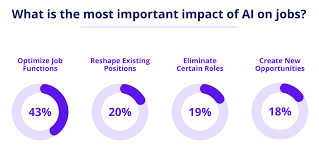
About a month ago, Jon Stewart did a segment on AI causing people to lose their jobs. He spoke against it. Well, his words were against it, but deep down, he’s for it—and so are you, whether you realize it or not. AI Impact on Workforce is real, but is it good or bad? The fact that Jon Stewart can go on TV to discuss cutting-edge technology like large language models in AI is because previous technology displaced jobs. Lots of jobs. What probably felt like most jobs. Remember, for most of human history, 80–90% of people were farmers. The few who weren’t had professions like blacksmithing, tailoring, or other essential trades. They didn’t have TV personalities, TV executives, or even TVs. Had you been born hundreds of years ago, chances are you would have been a farmer, too. You might have died from an infection. But as scientific and technological progress reduced the need for farmers, it also gave us doctors and scientists who discovered, manufactured, and distributed cures for diseases like the plague. Innovation begets innovation. Generative AI is just the current state of the art, leading the next cycle of change. The Core Issue This doesn’t mean everything will go smoothly. While many tech CEOs tout the positive impacts of AI, these benefits will take time. Consider the automobile: Carl Benz patented the motorized vehicle in 1886. Fifteen years later, there were only 8,000 cars in the US. By 1910, there were 500,000 cars. That’s 25 years, and even then, only about 0.5% of people in the US had a car. The first stop sign wasn’t used until 1915, giving society time to establish formal regulations and norms as the technology spread. Lessons from History Social media, however, saw negligible usage until 2008, when Facebook began to grow rapidly. In just four years, users soared from a few million to a billion. Social media has been linked to cyberbullying, self-esteem issues, depression, and misinformation. The risks became apparent only after widespread adoption, unlike with cars, where risks were identified early and mitigated with regulations like stop signs and driver’s licenses. Nuclear weapons, developed in 1945, also illustrate this point. Initially, only a few countries possessed them, understanding the catastrophic risks and exercising restraint. However, if a terrorist cell obtained such weapons, the consequences could be dire. Similarly, if AI tools are misused, the outcomes could be harmful. Just this morning a news channel was covering an AI bot that was doing robo-calling. Can you imagine the increase in telemarketing calls that could create? How about this being an election cycle year? AI and Its Rapid Adoption AI isn’t a nuclear weapon, but it is a powerful tool that can do harm. Unlike past technologies that took years or decades to adopt, AI adoption is happening much faster. We lack comprehensive safety warnings for AI because we don’t fully understand it yet. If in 1900, 50% of Americans had suddenly gained access to cars without regulations, the result would have been chaos. Similarly, rapid AI adoption without understanding its risks can lead to unintended consequences. The adoption rate, impact radius (the scope of influence), and learning curve (how quickly we understand its effects) are crucial. If the adoption rate surpasses our ability to understand and manage its impact, we face excessive risk. Proceeding with Caution Innovation should not be stifled, but it must be approached with caution. Consider historical examples like x-rays, which were once used in shoe stores without understanding their harmful effects, or the industrial revolution, which caused significant environmental degradation. Early regulation could have mitigated many negative impacts. AI is transformative, but until we fully understand its risks, we must proceed cautiously. The potential for harm isn’t a reason to avoid it altogether. Like cars, which we accept despite their risks because we understand and manage them, we need to learn about AI’s risks. However, we don’t need to rush into widespread adoption without safeguards. It’s easier to loosen restrictions later than to impose them after damage has been done. Let’s innovate, but with foresight. Regulation doesn’t kill innovation; it can inspire it. We should learn from the past and ensure AI development is responsible and measured. We study history to avoid repeating mistakes—let’s apply that wisdom to AI. Content updated July 2024. Like Related Posts Who is Salesforce? Who is Salesforce? Here is their story in their own words. From our inception, we’ve proudly embraced the identity of Read more AI-Driven Propensity Scores AI plays a crucial role in propensity score estimation as it can discern underlying patterns between treatments and confounding variables Read more Tectonic’s Successful Salesforce Track Record Salesforce Technology Services Integrator – Tectonic has successfully delivered Salesforce in a variety of industries including Public Sector, Hospitality, Manufacturing, Read more Asset Management Salesforce Can Salesforce do asset management? You can manage assets in Consumer Goods (desktop) and in the Consumer Goods offline mobile Read more
Read More
Changes in Advertising Changing CRMs

Changes in Advertising Changing CRMs

Oracle announced last week that it is exiting the advertising business and will sunset its adtech by September 30. While the announcement is not surprising given the massive layoffs in 2022 affecting Oracle Advertising teams, the rapidity of Oracle Advertising’s decline is a clear indicator of how swiftly the digital advertising landscape can evolve. This move is likely just the first of many significant Changes in Advertising Changing CRMs. What happened? Oracle Advertising faced challenges beginning in 2018 and never managed to recover. Several forces related to data deprecation adversely impacted the business: Changes in Advertising Changing CRMs Retooling its acquisitions to function in a consent-driven and regulated environment would have required significant investment from Oracle. Given its track record with privacy law compliance, this would have been a daunting task, necessitating both rapid innovation and market trust in its solutions. What does this mean for the advertising ecosystem? Oracle’s exit from adtech marks a significant shift in the advertising ecosystem. The sharp decline in advertising revenue from $2 billion in 2022 to $300 million in 2024 suggests a major miscalculation by Oracle. Without demand- or supply-side platforms (unlike Google, Microsoft, and Amazon) and lacking a large audience base (unlike Meta, Disney, and Netflix), Oracle’s benefits as an adtech partner or acquirer were unclear. The key question now is whether Oracle’s intellectual property will find new ownership and continue in some form. What does this mean for the marketing ecosystem? The broader marketing ecosystem is likely to see more shifts as major players adapt to the new landscape. Leading martech vendors like Adobe and Salesforce have already transitioned from DMPs to CDPs. Adobe Real-Time CDP and Salesforce Data Cloud for Marketing are gaining market share, while Oracle has struggled in the B2C martech space. Oracle’s decision to cut investments in martech and adtech has significantly impaired its B2C market efforts, with products like Responsys failing to gain the traction that Eloqua has in the B2B space. Oracle also announced it will sunset related B2C marketing products like Oracle Maxymiser in the coming months. These changes are just the beginning of a broader transformation in digital advertising, driven by evolving privacy standards, consumer expectations, and technological advancements. This marks the dawn of a new era in which agility and compliance will be key to success in the digital advertising and marketing landscapes. Like Related Posts Who is Salesforce? Who is Salesforce? Here is their story in their own words. From our inception, we’ve proudly embraced the identity of Read more Salesforce Marketing Cloud Transactional Emails Salesforce Marketing Cloud Transactional Emails are immediate, automated, non-promotional messages crucial to business operations and customer satisfaction, such as order Read more Salesforce Unites Einstein Analytics with Financial CRM Salesforce has unveiled a comprehensive analytics solution tailored for wealth managers, home office professionals, and retail bankers, merging its Financial Read more AI-Driven Propensity Scores AI plays a crucial role in propensity score estimation as it can discern underlying patterns between treatments and confounding variables Read more
Read More
Improve Patient Care and Trust

Improve Patient Care and Trust

A recent survey conducted by Kyruus Health and shared with HealthPayerIntelligence reveals that consumers are demanding more accurate online provider data from payers to enhance access to care. Healthcare solutions from Tectonic and Salesforce improve patient care and trust by improving data accuracy. The survey, fielded by Wakefield Research in April 2024, involved 1,000 healthcare consumers. Nearly three-quarters of respondents (72%) had private health insurance, with Medicare being the second most common form of coverage (18%). The participants represented an even distribution across U.S. regions and age groups, with 57% identifying as women. Payers have historically struggled to maintain up-to-date provider directories, and this survey highlights the significant impact of these challenges. About 30% of consumers reported skipping care due to inaccurate provider information, with 70% of them seeking this data online. Consumers primarily rely on health plan websites or apps for provider information, with 32% naming these platforms as their first resource. Medicaid enrollees were particularly dependent on their plan’s digital resources, with 64% turning to these tools first. Besides health plan websites and apps, consumers also used general internet searches, provider or clinic websites, and healthcare information sites like WebMD. Social media platforms were also popular for care searches, with 77% of users turning to Facebook and 61% to YouTube. The survey also revealed that payers often fail to provide accurate cost predictions. Only 32% of respondents said their health plans offered accurate cost information. Price transparency tools are particularly important to younger generations, with 76% of Millennials and 80% of Gen Z respondents using these tools. However, 40% of Baby Boomers were unsure if their plans even offered such tools. Among those who did use them, 34% found that the tools presented incorrect provider data, with 45% of Gen Z reporting this issue. Inaccurate provider information can lead to significant negative consequences for consumers, including delays in accessing care, difficulties contacting preferred providers, and higher costs. Some consumers even reported accidentally receiving out-of-network care or forgoing care altogether due to these inaccuracies. These experiences not only hinder access to care but also damage consumer trust in their healthcare providers and payers. Overall, 80% of respondents said that inaccurate provider data affected their trust, with 27% losing trust in their health plans and 22% losing trust in their providers. The survey results underscore a clear call to action. Over 60% of consumers, and nearly 75% of Gen Z specifically, want their health plans to provide more accurate data. Tectonic has decades of experience applying Salesforce solutions to health care providers and payers. To address these concerns, the report recommends that health plans take three key steps: First, engage with members through appropriate channels, including social media. Second, unify and validate their provider data to ensure accuracy. Third, introduce self-service capabilities within their digital platforms to empower consumers. Reach out to Tectonic today if your organization needs help applying these three steps. Like Related Posts Who is Salesforce? Who is Salesforce? Here is their story in their own words. From our inception, we’ve proudly embraced the identity of Read more Salesforce Marketing Cloud Transactional Emails Salesforce Marketing Cloud Transactional Emails are immediate, automated, non-promotional messages crucial to business operations and customer satisfaction, such as order Read more Salesforce Unites Einstein Analytics with Financial CRM Salesforce has unveiled a comprehensive analytics solution tailored for wealth managers, home office professionals, and retail bankers, merging its Financial Read more AI-Driven Propensity Scores AI plays a crucial role in propensity score estimation as it can discern underlying patterns between treatments and confounding variables Read more

Read More

How to Sync Salesforce Lead Data with Meta & Google Ads for Better Conversions

Imagine running an online coaching business with hundreds of potential leads in Salesforce—people who showed interest but never signed up. Instead of letting these leads go cold, you can sync them with Meta and Google Ads to retarget them with personalized offers. Picture a life coach who boosted sign-ups by X% using this exact strategy. By integrating Salesforce with these ad platforms, brands can:✅ Improve targeting – Reach the right people with precision.✅ Personalize ads – Deliver tailored messaging based on lead behavior.✅ Increase conversions – Turn warm leads into paying customers. In this insight, we’ll explore why syncing Salesforce with Meta and Google Ads is a game-changer for marketers. You’ll learn how to leverage your existing lead data for smarter ad campaigns that drive real results. Why Integrate Salesforce with Meta & Google Ads? Most businesses waste ad spend targeting cold audiences while their warm leads sit untouched in Salesforce. By syncing your CRM data with ad platforms, you can: ✔ Retarget high-intent leads – Bring back lost opportunities.✔ Build lookalike audiences – Find new customers similar to your best leads.✔ Track offline conversions – Measure real-world sales driven by ads.✔ Automate lead nurturing – Keep prospects engaged until they convert. Let’s dive into the key benefits and how to set it up. Key Benefits of Syncing Salesforce Lead Data 1. Enhanced Audience Targeting Instead of broad targeting, use your first-party Salesforce data to reach the most relevant prospects. 🔹 Meta Lookalike Audiences 🔹 Google Ads Customer Match 🔹 Retargeting for Higher Conversions 2. Improved Ad Personalization Generic ads get ignored. Personalized ads convert. 🔹 Dynamic Ads Based on CRM Data 🔹 Tailor Messaging to the Lead’s Stage 3. Higher Conversion Rates 🔹 Focus on Warm Leads, Not Cold Traffic 🔹 Leverage First-Party Data 4. Automated Lead Nurturing & Sales Alignment 🔹 Sync High-Intent Leads for Immediate Action 🔹 Close the Loop Between Marketing & Sales How to Sync Salesforce with Meta & Google Ads Option 1: Native Integrations (Best for Automation) 🔹 Salesforce to Meta (Facebook & Instagram Ads) 1. Meta Conversions API (CAPI) 2. Offline Conversions 🔹 Salesforce to Google Ads 1. Customer Match 2. Offline Conversion Tracking Option 2: Manual CSV Uploads (For Small Businesses) Option 3: Third-Party Tools For automated, real-time syncing, tools like EasyInsights make it easy:✔ Auto-sync Salesforce leads to Meta & Google Ads.✔ No manual exports—always up-to-date audiences.✔ Track conversions across the funnel. Conclusion: Turn Salesforce Leads into Paying Customers Syncing Salesforce with Meta and Google Ads ensures:🎯 Better targeting – Reach the right people.💡 Smarter ads – Personalize messaging for higher engagement.📈 More conversions – Retarget warm leads for lower acquisition costs. Next Steps: By leveraging your existing Salesforce data, you can maximize ad ROI and turn more leads into customers—without wasted spend. Contact Tectonic for assistance. Like Related Posts Who is Salesforce? Who is Salesforce? Here is their story in their own words. From our inception, we’ve proudly embraced the identity of Read more Salesforce Marketing Cloud Transactional Emails Salesforce Marketing Cloud Transactional Emails are immediate, automated, non-promotional messages crucial to business operations and customer satisfaction, such as order Read more Salesforce Unites Einstein Analytics with Financial CRM Salesforce has unveiled a comprehensive analytics solution tailored for wealth managers, home office professionals, and retail bankers, merging its Financial Read more AI-Driven Propensity Scores AI plays a crucial role in propensity score estimation as it can discern underlying patterns between treatments and confounding variables Read more

Read More
Enhanced WhatsApp Channel In Salesforce Service Cloud

Enhanced WhatsApp Channel In Salesforce Service Cloud

Setting up an enhanced WhatsApp channel in Salesforce Service Cloud allows your support team to assist customers over WhatsApp with advanced features like messaging session transfers, collaboration with supervisors, and interactive content sharing. This insight provides a guide on how to create an enhanced WhatsApp channel, including upgrading from a standard channel or migrating a number from an external business service provider. Required Salesforce Editions and User Permissions To configure WhatsApp channels, you need the following user permissions: Note: Standard WhatsApp channels will be retired in mid-2025. Upgrade to enhanced channels before July 30, 2025, to avoid interruptions. Step 1: Prepare to Create Your Channel Step 2: Create Your Channel in Setup Step 3: Activate Your Channel If activation is not completed within 14 days, reverify your WhatsApp number through Meta Business Manager or repeat the setup flow in Messaging Settings. Enhanced WhatsApp Channel In Salesforce Service Cloud Like Related Posts Who is Salesforce? Who is Salesforce? Here is their story in their own words. From our inception, we’ve proudly embraced the identity of Read more Salesforce Marketing Cloud Transactional Emails Salesforce Marketing Cloud Transactional Emails are immediate, automated, non-promotional messages crucial to business operations and customer satisfaction, such as order Read more Salesforce Unites Einstein Analytics with Financial CRM Salesforce has unveiled a comprehensive analytics solution tailored for wealth managers, home office professionals, and retail bankers, merging its Financial Read more AI-Driven Propensity Scores AI plays a crucial role in propensity score estimation as it can discern underlying patterns between treatments and confounding variables Read more

Read More
Where Will AI Take Us?

Where Will AI Take Us?

Author Jeremy Wagstaff wrote a very thought provoking article on the future of AI, and how much of it we could predict based on the past. This insight expands on that article. Artificial Intelligence (AI) refers to the simulation of human intelligence in machines that are programmed to think and learn. These machines can perform tasks that typically require human intelligence, such as visual perception, speech recognition, decision-making, and language translation. Many people think of artificial intelligence in the vein of how they personally use it. Some people don’t even realize when they are using it. Artificial intelligence has long been a concept in human mythology and literature. Our imaginations have been grabbed by the thought of sentient machines constructed by humans, from Talos, the enormous bronze automaton (self-operating machine) that safeguarded the island of Crete in Greek mythology, to the spacecraft-controlling HAL in 2001: A Space Odyssey. Artificial Intelligence comes in a variety of flavors, if you will. Artificial intelligence can be categorized in several ways, including by capability and functionality: You likely weren’t even aware of all of the above categorizations of artificial intelligence. Most of us still would sub set into generative ai, a subset of narrow AI, predictive ai, and reactive ai. Reflect on the AI journey through the Three C’s – Computation, Cognition, and Communication – as the guiding pillars for understanding the transformative potential of AI. Gain insights into how these concepts converge to shape the future of technology. Beyond a definition, what really is artificial intelligence, who makes it, who uses it, what does it do and how. Artificial Intelligence Companies – A Sampling AI and Its Challenges Artificial intelligence (AI) presents a novel and significant challenge to the fundamental ideas underpinning the modern state, affecting governance, social and mental health, the balance between capitalism and individual protection, and international cooperation and commerce. Addressing this amorphous technology, which lacks a clear definition yet pervades increasing facets of life, is complex and daunting. It is essential to recognize what should not be done, drawing lessons from past mistakes that may not be reversible this time. In the 1920s, the concept of a street was fluid. People viewed city streets as public spaces open to anyone not endangering or obstructing others. However, conflicts between ‘joy riders’ and ‘jay walkers’ began to emerge, with judges often siding with pedestrians in lawsuits. Motorist associations and the car industry lobbied to prioritize vehicles, leading to the construction of vehicle-only thoroughfares. The dominance of cars prevailed for a century, but recent efforts have sought to reverse this trend with ‘complete streets,’ bicycle and pedestrian infrastructure, and traffic calming measures. Technology, such as electric micro-mobility and improved VR/AR for street design, plays a role in this transformation. The guy digging out a road bed for chariots and Roman armies likely considered none of this. Addressing new technology is not easy to do, and it’s taken changes to our planet’s climate, a pandemic, and the deaths of tens of millions of people in traffic accidents (3.6 million in the U.S. since 1899). If we had better understood the implications of the first automobile technology, perhaps we could have made better decisions. Similarly, society should avoid repeating past mistakes with AI. The market has driven AI’s development, often prioritizing those who stand to profit over consumers. You know, capitalism. The rapid adoption and expansion of AI, driven by commercial and nationalist competition, have created significant distortions. Companies like Nvidia have soared in value due to AI chip sales, and governments are heavily investing in AI technology to gain competitive advantages. Listening to AI experts highlights the enormity of the commitment being made and reveals that these experts, despite their knowledge, may not be the best sources for AI guidance. The size and impact of AI are already redirecting massive resources and creating new challenges. For example, AI’s demand for energy, chips, memory, and talent is immense, and the future of AI-driven applications depends on the availability of computing resources. The rise in demand for AI has already led to significant industry changes. Data centers are transforming into ‘AI data centers,’ and the demand for specialized AI chips and memory is skyrocketing. The U.S. government is investing billions to boost its position in AI, and countries like China are rapidly advancing in AI expertise. China may be behind in physical assets, but it is moving fast on expertise, generating almost half of the world’s top AI researchers (Source: New York Times). The U.S. has just announced it will provide chip maker Intel with $20 billion in grants and loans to boost the country’s position in AI. Nvidia is now the third largest company in the world, entirely because its specialized chips account for more than 70 percent of AI chip sales. Memory-maker Micro has mostly run out of high-bandwidth memory (HBM) stocks because of the chips’ usage in AI—one customer paid $600 million up-front to lock in supply, according to a story by Stack. Back in January, the International Energy Agency forecast that data centers may more than double their electrical consumption by 2026 (Source: Sandra MacGregor, Data Center Knowledge). AI is sucking up all the payroll: Those tech workers who don’t have AI skills are finding fewer roles and lower salaries—or their jobs disappearing entirely to automation and AI (Source: Belle Lin at WSJ). Sam Altman of OpenAI sees a future where demand for AI-driven apps is limited only by the amount of computing available at a price the consumer is willing o pay. “Compute is going to be the currency of the future. I think it will be maybe the most precious commodity in the world, and I think we should be investing heavily to make a lot more compute.” Sam Altman, OpenAI CEO This AI buildup is reminiscent of past technological transformations, where powerful interests shaped outcomes, often at the expense of broader societal considerations. Consider early car manufacturers. They focused on a need for factories, components, and roads.

Read More
Conversational Commerce

Conversational Commerce

“Hey Siri, find the top-rated red saddle pads.” This simple command exemplifies how conversational commerce is revolutionizing the digital shopping experience. While Siri and Alexa are training us to talk to our technology, traditional chatbots teach us to ask our technology in natural language to do something. Now, customers can utilize chatbots, messaging apps, and voice assistants to explore products and complete purchases online. This experiential shopping shift enables businesses to engage with consumers in a natural manner, seamlessly integrating into their everyday routines. With conversational AI, shopping feels akin to conversing with a friend. Thanks to advancements in generative AI, the process is becoming increasingly personalized, intuitive, and hassle-free. Here’s an overview of conversational commerce: What is conversational commerce? Conversational shopping tools involve enhancing sales through direct communication with customers. It encompasses automated conversation flows as well as interactions between sales and service representatives and customers via text or social media messaging. Ultimately, conversational commerce aims to establish meaningful, personalized connections with customers, combining the convenience of digital communication with the warmth of human language to drive sales and foster loyalty. Different Types of Conversational Commerce: The Role of AI in Conversational Commerce: AI plays a primary role in evolving conversational commerce by understanding consumer intent and guiding them through the purchasing process. Natural language processing (NLP) enables chatbots to comprehend inquiries and provide relevant responses, while machine learning analyzes customer data to offer personalized recommendations and streamline the purchase journey. Conversational Commerce and Social Commerce: Conversational commerce intersects with social commerce, capitalizing on platforms like Instagram and TikTok to build authentic connections with customers and facilitate seamless transactions embedded in their social interactions. Benefits of Conversational Commerce: Common Pitfalls and Solutions: By leveraging conversational commerce effectively, businesses can create seamless, personalized interactions that drive sales and foster long-term customer relationships. Like Related Posts Who is Salesforce? Who is Salesforce? Here is their story in their own words. From our inception, we’ve proudly embraced the identity of Read more Salesforce Marketing Cloud Transactional Emails Salesforce Marketing Cloud Transactional Emails are immediate, automated, non-promotional messages crucial to business operations and customer satisfaction, such as order Read more Salesforce Unites Einstein Analytics with Financial CRM Salesforce has unveiled a comprehensive analytics solution tailored for wealth managers, home office professionals, and retail bankers, merging its Financial Read more AI-Driven Propensity Scores AI plays a crucial role in propensity score estimation as it can discern underlying patterns between treatments and confounding variables Read more
Read More
gettectonic.com