Fuzzy Logic Archives - gettectonic.com
Salesforce Data Cloud

Salesforce Data Cloud: The Ultimate Guide for Businesses

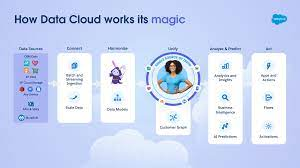
What Is Salesforce Data Cloud? In today’s digital-first world, delivering personalized customer experiences requires trusted, unified, and actionable data. But how can businesses ensure their teams have a single source of truth for customer insights? Enter Salesforce Data Cloud—a next-generation Customer Data Platform (CDP) built natively within the Salesforce ecosystem. Unlike traditional CDPs, Data Cloud unifies real-time customer data across multiple sources, enabling AI-driven automation, analytics, and personalized engagement at scale. If you’re evaluating enterprise CDPs, this guide will help you understand:✔ How Salesforce Data Cloud works✔ Key capabilities & benefits✔ How it differs from traditional CDPs✔ Pricing & whether it’s right for your business Salesforce Data Cloud: A Next-Gen CDP for AI & Automation Formerly known as Salesforce CDP, Data Cloud is a real-time, AI-powered platform that consolidates structured and unstructured data from: It transforms raw data into standardized models, creating a single customer view that fuels AI, segmentation, and automation. How Does Salesforce Data Cloud Work? Unlike legacy CDPs, Data Cloud supports zero-copy data access, meaning you can query external data without moving it, reducing costs and latency. Key Capabilities of Salesforce Data Cloud 1. Real-Time Data Ingestion & Processing 2. AI-Powered Identity Resolution 3. Unified Data Models 4. Dynamic Customer Segmentation 5. Native Integration with Salesforce & Beyond Salesforce Data Cloud vs. Traditional CDPs Feature Salesforce Data Cloud Traditional CDP Integration Native to Salesforce ecosystem Often requires connectors AI & Automation Built-in AI (Einstein) Limited AI capabilities Real-Time Processing Yes Often batch-based Zero-Copy Data Access Yes Rarely supported Pricing Consumption-based (credits) Fixed licensing Top Use Cases for Salesforce Data Cloud ✅ AI-Powered Customer Service ✅ Privacy-First Data Governance ✅ Smarter Sales & Marketing Targeting ✅ Unified Analytics with Tableau Salesforce Data Cloud Pricing Data Cloud uses a consumption-based model: Should You Buy Salesforce Data Cloud? ✔ Yes, if you… ✖ Consider alternatives if… Final Verdict: A Game-Changer for Salesforce Users Salesforce Data Cloud is evolving rapidly, especially with Salesforce’s new partnership with Informatica (enhancing data quality & metadata management). For Salesforce-powered businesses, it’s a must-have to unlock AI, automation, and hyper-personalization. Ready to explore Data Cloud? Contact Tectonic! Like Related Posts Who is Salesforce? Who is Salesforce? Here is their story in their own words. From our inception, we’ve proudly embraced the identity of Read more Salesforce Marketing Cloud Transactional Emails Salesforce Marketing Cloud Transactional Emails are immediate, automated, non-promotional messages crucial to business operations and customer satisfaction, such as order Read more Salesforce Unites Einstein Analytics with Financial CRM Salesforce has unveiled a comprehensive analytics solution tailored for wealth managers, home office professionals, and retail bankers, merging its Financial Read more AI-Driven Propensity Scores AI plays a crucial role in propensity score estimation as it can discern underlying patterns between treatments and confounding variables Read more

Read More
Neuro-symbolic AI

Neuro-symbolic AI

Neuro-Symbolic AI: Bridging Neural Networks and Symbolic Processing for Smarter AI Systems Neuro-symbolic AI integrates neural networks with rules-based symbolic processing to enhance artificial intelligence systems’ accuracy, explainability, and precision. Neural networks leverage statistical deep learning to identify patterns in large datasets, while symbolic AI applies logic and rules-based reasoning common in mathematics, programming languages, and expert systems. The Balance Between Neural and Symbolic AIThe fusion of neural and symbolic methods has revived debates in the AI community regarding their relative strengths. Neural AI excels in deep learning, including generative AI, by distilling patterns from data through distributed statistical processing across interconnected neurons. However, this approach often requires significant computational resources and may struggle with explainability. Conversely, symbolic AI, which relies on predefined rules and logic, has historically powered applications like fraud detection, expert systems, and argument mining. While symbolic systems are faster and more interpretable, their reliance on manual rule creation has been a limitation. Innovations in training generative AI models now allow more efficient automation of these processes, though challenges like hallucinations and poor mathematical reasoning persist. Complementary Thinking ModelsPsychologist Daniel Kahneman’s analogy of System 1 and System 2 thinking aptly describes the interplay between neural and symbolic AI. Neural AI, akin to System 1, is intuitive and fast—ideal for tasks like image recognition. Symbolic AI mirrors System 2, engaging in slower, deliberate reasoning, such as understanding the context and relationships in a scene. Core Concepts of Neural NetworksArtificial neural networks (ANNs) mimic the statistical connections between biological neurons. By modeling patterns in data, ANNs enable learning and feature extraction at different abstraction levels, such as edges, shapes, and objects in images. Key ANN architectures include: Despite their strengths, neural networks are prone to hallucinations, particularly when overconfident in their predictions, making human oversight crucial. The Role of Symbolic ReasoningSymbolic reasoning underpins modern programming languages, where logical constructs (e.g., “if-then” statements) drive decision-making. Symbolic AI excels in structured applications like solving math problems, representing knowledge, and decision-making. Algorithms like expert systems, Bayesian networks, and fuzzy logic offer precision and efficiency in well-defined workflows but struggle with ambiguity and edge cases. Although symbolic systems like IBM Watson demonstrated success in trivia and reasoning, scaling them to broader, dynamic applications has proven challenging due to their dependency on manual configuration. Neuro-Symbolic IntegrationThe integration of neural and symbolic AI spans a spectrum of techniques, from loosely coupled processes to tightly integrated systems. Examples of integration include: History of Neuro-Symbolic AIBoth neural and symbolic AI trace their roots to the 1950s, with symbolic methods dominating early AI due to their logical approach. Neural networks fell out of favor until the 1980s when innovations like backpropagation revived interest. The 2010s saw a breakthrough with GPUs enabling scalable neural network training, ushering in today’s deep learning era. Applications and Future DirectionsApplications of neuro-symbolic AI include: The next wave of innovation aims to merge these approaches more deeply. For instance, combining granular structural information from neural networks with symbolic abstraction can improve explainability and efficiency in AI systems like intelligent document processing or IoT data interpretation. Neuro-symbolic AI offers the potential to create smarter, more explainable systems by blending the pattern-recognition capabilities of neural networks with the precision of symbolic reasoning. As research advances, this synergy may unlock new horizons in AI capabilities. Like Related Posts Who is Salesforce? Who is Salesforce? Here is their story in their own words. From our inception, we’ve proudly embraced the identity of Read more Salesforce Unites Einstein Analytics with Financial CRM Salesforce has unveiled a comprehensive analytics solution tailored for wealth managers, home office professionals, and retail bankers, merging its Financial Read more AI-Driven Propensity Scores AI plays a crucial role in propensity score estimation as it can discern underlying patterns between treatments and confounding variables Read more Tectonic’s Successful Salesforce Track Record Salesforce Technology Services Integrator – Tectonic has successfully delivered Salesforce in a variety of industries including Public Sector, Hospitality, Manufacturing, Read more

Read More

Einstein Copilot Tableau

Tableau has dedicated over two decades to empowering individuals to visualize and comprehend their data. This mission, driven by data analysts, continues to thrive. Data analysts serve as the cornerstone of organizations fostering a data-centric culture. They capture business needs, prepare data, and craft data content for end-users. Einstein Discovery insights seamlessly integrate into the Tableau workflow, ensuring uninterrupted analysis. The benefits of leveraging Einstein Discovery are manifold: Tableau Einstein represents a groundbreaking advancement in AI-driven data analytics. Einstein Copilot for Tableau, currently in beta for Tableau customers, democratizes AI in data analytics. It collaborates with analysts throughout the analytical process, from data preparation to visualization, reducing entry barriers and enhancing user experience. Einstein Copilot integrates seamlessly into the Tableau environment, serving as an intelligent assistant. It guides users through the creation process, ensuring accuracy and adherence to best practices. With Einstein Copilot, users confidently explore data, identify trends, and communicate findings effectively. The features of Einstein Copilot enhance the data analytics experience and empower users to unleash the full potential of their data. These features include faster insights through recommended questions, streamlined data exploration, improved visualization quality, and guided calculation creation. Einstein Copilot’s development involved overcoming several challenges. These challenges included accurately interpreting user questions, enhancing data intelligence, and automating visualization generation. The team addressed these challenges through continuous refinement of analytical data generation algorithms, leveraging Tableau Public’s vast dataset, and balancing accuracy, speed, and creativity in AI responses. Continuous improvement remains a key focus for the Einstein Copilot team. Through platforms like Zeus, the team systematically enhances engineering, intent detection, and knowledge generation. This iterative process ensures ongoing enhancements to Einstein Copilot’s capabilities, providing users with an increasingly seamless and insightful analytical experience. Einstein Discovery insights are integrated into your Tableau workflow, so you never need to disrupt your analysis. Some of the benefits of using Einstein Discovery include: Data analysis and data-driven decision-making have been part of the vocabulary in organizations over the years. And, while data analysis is one of the most in-demand tech skills sought by employers today, not everyone in an organization has “analyst” in their job title—myself included. Yet, so many of us use data daily to make informed decisions. The rise of generative AI presents a significant opportunity for us to bring transformative benefits to analytics. Businesses are eager to embrace generative AI because it can help save time, provide faster insights, and empower analysts to be even more productive with an AI assistant—freeing analysts to focus on delivering high-quality, data-driven insights. But before any of this can happen, a lot goes on behind the scenes. That’s where Einstein Copilot for Tableau comes in. Einstein Copilot for Tableau, now available for Tableau customers to try in beta, brings the power of AI to data analytics, reducing the barrier to entry and working alongside the analyst—from data preparation to visualization. Whether you’re an experienced data analyst or just starting your journey in data exploration, Einstein Copilot for Tableau becomes your trusted companion, empowering you to unlock insights and make informed decisions with confidence. Einstein Copilot for Tableau offers a range of features that enhance the data analytics experience and empower anyone to unlock the full potential of their data. Look for these features in the coming release, and even more as we continue to build. Faster insights with recommended questions When you are getting started in analytics—whether for work, learning, or just for fun—a blank canvas can be intimidating. Where do you even begin? Using Einstein to suggest questions you can ask of a specific datasource lightens that lift so you can quickly move from connecting to data to finding insights. Einstein Copilot for Tableau does a quick index across your connected datasource to create a summary context of the datasource. This summary is used to generate a few questions the dataset can answer. For example, using a dataset like Tableau’s Superstore practice dataset, Einstein Copilot for Tableau suggests “Are there any patterns over time for sales across product categories?” In one click a line chart is created. Since this is all happening in the authoring experience, users familiar with Tableau’s drag-and-drop interface can adjust anything displayed before saving and moving on to the next question. Combining analyzing data with learning by doing. With recommended questions, anyone can quickly uplevel their analytics skills. What is Einstein Copilot for Tableau? Using generative AI and statistical analysis, Einstein Copilot for Tableau is able to understand the context of your data to create and suggest relevant business questions to help kickstart your analysis. A smart, conversational assistant for Tableau users, Einstein Copilot for Tableau automates data curation—the organization and integration of data collected from various sources—by generating calculations and metadata descriptions. Einstein Copilot for Tableau can fill data gaps and enhance analysis by creating synthetic datasets where real data is limited. Einstein Copilot helps you anticipate outcomes with predictive analytics that simulate diverse scenarios and uncover hidden correlations. Additionally, generative models can bolster data privacy by producing non-traceable data for analysis. Accelerate insights from data with ease Tableau has thousands of features—and with Einstein Copilot’s in-product assistance, you ask questions using natural language, and from data prep and writing calculations to formatting worksheets and dashboards using your company brand guidelines, Einstein Copilot automates many time-consuming, repetitive tasks—increasing analyst productivity and speeding time-to-insights. Jumpstart data exploration Einstein Copilot for Tableau is a great tool for both data-savvy end users and data professionals. With the help of Einstein Copilot, you can ask more in-depth questions about the data insights without having to know all of the technical aspects of Tableau. In the worksheet, a set of recommended questions based on the data source’s metadata makes it easy for users to start analyzing their data. Einstein Copilot’s step-by-step guidance also helps new data professionals learn how to use Tableau effectively—with an opportunity for both novice and experienced users to increase their learn by doing. Improve viz and dashboard quality through prescriptive guidance With Einstein Copilot in Tableau, you

Read More
gettectonic.com