

Hubspot Archives - gettectonic.com
The Power of Sales Automation

The Power of Sales Automation

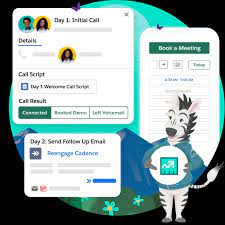
The Power of Sales Automation: Key Benefits & Tools Sales automation streamlines repetitive tasks, allowing sales teams to focus on high-impact activities while improving accuracy, scalability, and customer engagement. Here’s how automation transforms sales operations: Key Benefits of Sales Automation ✅ Increased EfficiencyAutomation eliminates manual tasks, enabling sales teams to work smarter—not harder—and prioritize strategic efforts like closing deals. ✅ Boosted ProductivityBy handling routine processes, automation frees up time for sales reps to engage in relationship-building and revenue-driving activities. ✅ Enhanced Customer ExperienceAutomated follow-ups, personalized messaging, and timely responses create a seamless and positive buyer journey. ✅ Reduced ErrorsMinimizes human mistakes in data entry, follow-ups, and reporting, ensuring more reliable sales operations. ✅ Accurate ForecastingReal-time data and AI-driven insights improve sales predictions, helping teams make smarter decisions. ✅ Effortless ScalabilityGrow your sales operations without proportionally increasing overhead, making expansion more cost-effective. Common Sales Automation Tasks 🔹 Lead GenerationAutomated tools identify and qualify leads through social media, web forms, and AI-driven prospecting. 🔹 Email MarketingPersonalized drip campaigns nurture leads and keep prospects engaged at every stage. 🔹 Sales Call SchedulingAI-powered schedulers book meetings and send reminders, reducing back-and-forth emails. 🔹 Data ManagementCRM automation ensures customer records stay updated, improving sales team efficiency. 🔹 Quote GenerationInstant, customized quotes speed up the sales cycle and reduce manual work. 🔹 Sales ForecastingAI analyzes trends and historical data to predict future performance with greater accuracy. Top Sales Automation Tools 📌 CRM SystemsThe backbone of sales automation, centralizing customer data and streamlining workflows (e.g., Salesforce, HubSpot). 📌 Sales Engagement PlatformsAutomate outreach with sequenced emails, calls, and follow-ups (e.g., Outreach, SalesLoft). 📌 Lead Generation ToolsAI-powered solutions to find and qualify prospects (e.g., LinkedIn Sales Navigator, ZoomInfo). 📌 Email Marketing SoftwareDesign and deploy automated campaigns (e.g., Mailchimp, ActiveCampaign). 📌 AI-Powered Sales AssistantsAdvanced tools that predict customer needs, personalize interactions, and automate complex tasks (e.g., Conversica, Gong). The Future of Sales: Smarter, Faster, More Efficient Sales automation isn’t just about cutting costs—it’s about empowering teams to sell more effectively. By leveraging AI and automation, businesses can enhance productivity, improve customer relationships, and scale operations seamlessly. Is your sales team ready to automate? Like Related Posts Who is Salesforce? Who is Salesforce? Here is their story in their own words. From our inception, we’ve proudly embraced the identity of Read more Salesforce Marketing Cloud Transactional Emails Salesforce Marketing Cloud Transactional Emails are immediate, automated, non-promotional messages crucial to business operations and customer satisfaction, such as order Read more Salesforce Unites Einstein Analytics with Financial CRM Salesforce has unveiled a comprehensive analytics solution tailored for wealth managers, home office professionals, and retail bankers, merging its Financial Read more AI-Driven Propensity Scores AI plays a crucial role in propensity score estimation as it can discern underlying patterns between treatments and confounding variables Read more

Read More
Agentic AI Race

The Evolution Beyond AI Agents

The Evolution Beyond AI Agents: What Comes Next? The Rapid Progression of AI Terminology The landscape of artificial intelligence has undergone a remarkable transformation in just three years. What began with ChatGPT and generative AI as the dominant buzzwords quickly evolved into discussions about copilots, and most recently, agentic AI emerged as 2024‘s defining concept. This accelerated terminology cycle mirrors fashion industry trends more than traditional technology adoption curves. Major players including Adobe, Qualtrics, Oracle, OpenAI, and Deloitte have recently launched agentic AI platforms, joining earlier entrants like Microsoft, AWS, and Salesforce. This rapid market saturation suggests the industry may already be approaching the next conceptual shift before many organizations have fully implemented their current AI strategies. Examining the Staying Power of Agentic AI Industry analysts present diverging views on the longevity of the agentic AI concept. Brandon Purcell, a Forrester Research analyst, acknowledges the pattern of fleeting AI trends while recognizing agentic AI’s potential for greater staying power. He cites three key factors that may extend its relevance: Klaasjan Tukker, Adobe’s Senior Director of Product Marketing, draws parallels to mature technologies that have become invisible infrastructure. He predicts agentic AI will follow a similar trajectory, becoming so seamlessly integrated that users will interact with it as unconsciously as they use navigation apps or operate modern vehicles. The Automotive Sector as an AI Innovation Catalyst The automotive industry provides compelling examples of advanced AI applications that transcend current “agentic” capabilities. Modern autonomous vehicles demonstrate sophisticated AI behaviors including: These implementations suggest that what the tech industry currently labels as “agentic” may represent only an intermediate step toward more autonomous, context-aware systems. The Definitional Challenges of Agentic AI The technology sector faces significant challenges in establishing common definitions for emerging AI concepts. Adobe’s framework describes agents as systems possessing three core attributes: However, as Scott Brinker of HubSpot notes, the term “agentic” risks becoming overused and diluted as vendors apply it inconsistently across various applications and functionalities. Interoperability as the Critical Success Factor For agentic AI systems to deliver lasting value, industry observers emphasize the necessity of cross-platform compatibility. Phil Regnault of PwC highlights the reality that enterprise environments typically combine solutions from multiple vendors, creating integration challenges for AI implementations. Three critical layers require standardization: Without such standards, organizations risk creating new AI silos that mirror the limitations of legacy systems. The Future Beyond Agentic AI While agentic AI continues its maturation process, the technology sector’s relentless innovation cycle suggests the next conceptual breakthrough may emerge sooner than expected. Historical naming patterns for AI advancements indicate several possibilities: As these technologies evolve, they may shed specialized branding in favor of more utilitarian terminology, much as “software bots” became normalized after their initial hype cycle. The automotive parallel suggests that truly transformative AI implementations may become so seamlessly integrated that their underlying technology becomes invisible to end users—the ultimate measure of technological maturity. Until that point, the industry will likely continue its rapid cycle of innovation and rebranding, searching for the next paradigm that captures the imagination as powerfully as “agentic AI” has in 2024. Like Related Posts Who is Salesforce? Who is Salesforce? Here is their story in their own words. From our inception, we’ve proudly embraced the identity of Read more Salesforce Marketing Cloud Transactional Emails Salesforce Marketing Cloud Transactional Emails are immediate, automated, non-promotional messages crucial to business operations and customer satisfaction, such as order Read more Salesforce Unites Einstein Analytics with Financial CRM Salesforce has unveiled a comprehensive analytics solution tailored for wealth managers, home office professionals, and retail bankers, merging its Financial Read more AI-Driven Propensity Scores AI plays a crucial role in propensity score estimation as it can discern underlying patterns between treatments and confounding variables Read more
Read More
Sales Enablement

Salesforce’s Top Sales Enablement Tools

The 9 Best Sales Enablement Tools for 2025 Based on original research by Erin Hueffner, Writer at Salesforce Sales enablement software has become a must-have for high-performing sales teams. According to the Salesforce State of Sales report, adoption surged 48% in 2024, with 75% of reps crediting these tools for helping them meet quotas. But with so many options, how do you choose the right one? Below, we break down the top 9 sales enablement platforms—ranked by features, user ratings, and real-world impact. What Is Sales Enablement Software? Sales enablement tools help teams:✅ Train & onboard reps faster✅ Organize sales content (playbooks, case studies, scripts)✅ Track performance with CRM-linked analytics✅ Coach sellers with AI-driven insights The best platforms combine learning (LMS), content management (CMS), and CRM integration to drive measurable ROI. Who Uses Sales Enablement Tools? Key Benefits of Sales Enablement Software 🔹 Faster onboarding – Reduce ramp time for new hires.🔹 Higher win rates – AI recommends best-performing content.🔹 Larger deal sizes – Data reveals upselling opportunities.🔹 Shorter sales cycles – Right content at the right time. The 9 Best Sales Enablement Tools for 2025 (Ranked by G2 & Capterra ratings, features, and real-world impact) 1. Salesforce Sales Cloud Best for: End-to-end CRM-powered enablement⭐ Rating: 4.4/5 (G2) | ✅ Top Feature: AI-powered coaching (Agentforce) 2. Seismic Best for: Enterprise content & training unification⭐ Rating: 4.5/5 (G2) | ✅ Top Feature: AI-generated learning paths 3. Highspot Best for: AI-driven content recommendations⭐ Rating: 4.6/5 (Capterra) | ✅ Top Feature: Highspot Copilot (AI coaching) 4. Mindtickle Best for: Data-backed sales coaching⭐ Rating: 4.7/5 (G2) | ✅ Top Feature: AI role-play simulations 5. HubSpot Sales Hub Best for: SMBs needing CRM + enablement⭐ Rating: 4.3/5 (G2) | ✅ Top Feature: Conversation intelligence 6. Showpad Best for: Visual, interactive sales content⭐ Rating: 4.5/5 (G2) | ✅ Top Feature: AI-powered pitch coaching 7. Demodesk Best for: Virtual sales teams⭐ Rating: 4.6/5 (Capterra) | ✅ Top Feature: AI meeting summaries 8. ClientPoint Best for: Proposal & contract automation⭐ Rating: 4.4/5 (Capterra) | ✅ Top Feature: AI assistant (Meg) 9. Lessonly by Seismic Best for: Rapid sales training⭐ Rating: 4.5/5 (G2) | ✅ Top Feature: Microlearning modules Key Features to Look For 🔎 AI-powered coaching (e.g., call analysis, role-play feedback)📂 Smart content management (searchable, version-controlled libraries)📊 CRM integration (tie training to deal outcomes)📈 Predictive analytics (flag at-risk deals & skill gaps) How to Choose the Right Tool Final Verdict Sales enablement tools are no longer optional—they’re competitive necessities. The right platform can:✔ Cut ramp time by 50%+✔ Boost win rates by 20%✔ Reduce content search time by 80% Top Pick for 2025? Need AI coaching? Mindtickle & Demodesk lead the pack. Ready to enable your team? The right tool could be the difference between missing quota and smashing targets. Like Related Posts Who is Salesforce? Who is Salesforce? Here is their story in their own words. From our inception, we’ve proudly embraced the identity of Read more Salesforce Marketing Cloud Transactional Emails Salesforce Marketing Cloud Transactional Emails are immediate, automated, non-promotional messages crucial to business operations and customer satisfaction, such as order Read more Salesforce Unites Einstein Analytics with Financial CRM Salesforce has unveiled a comprehensive analytics solution tailored for wealth managers, home office professionals, and retail bankers, merging its Financial Read more AI-Driven Propensity Scores AI plays a crucial role in propensity score estimation as it can discern underlying patterns between treatments and confounding variables Read more

Read More
ai

Fireflies.ai Launches Domain-Specific Mini Apps to Automate Meeting Insights

Khosla Ventures-backed Fireflies.ai, an AI-powered note-taking platform, unveiled a suite of domain-specific “mini apps” on Wednesday, designed to automatically extract actionable insights from meeting transcripts. With the rise of automatic speech recognition (ASR) and generative AI, meeting intelligence startups—such as Otter, Read AI, Circleback, Krisp, and Granola—have seen rapid growth. Fireflies.ai is no exception, with co-founder and CEO Krish Ramineni reporting an 8x increase in users and achieving profitability. To accelerate its expansion, the startup is rolling out over 200 mini apps tailored to various roles and use cases, including: While competitors like Circleback require manual prompting to generate insights from transcripts, Fireflies.ai’s mini apps eliminate the need for user input, streamlining the process. “The time it takes to derive insights post-meeting is significant,” Ramineni told TechCrunch. “These apps close that gap by automating actions immediately after meetings, boosting productivity.” Users can also integrate outputs with platforms like Salesforce, HubSpot, Asana, Jira, Slack, and Microsoft Teams. For instance, a meeting summary can be automatically shared with a manager via Slack once the discussion concludes. Fireflies.ai allows users to deploy mini apps per meeting and even build custom apps for specialized needs. The company plans to introduce team-sharing capabilities in the future. Beyond mini apps, Fireflies.ai is enhancing meeting intelligence with pre-meeting briefs on participants and organizations. The startup is also testing “digital twins”—AI avatars that can attend meetings and respond to basic queries, similar to experiments by Zoom and others. This expansion underscores Fireflies.ai’s push to automate workflows and maximize efficiency in professional collaboration. Like Related Posts Who is Salesforce? Who is Salesforce? Here is their story in their own words. From our inception, we’ve proudly embraced the identity of Read more Salesforce Marketing Cloud Transactional Emails Salesforce Marketing Cloud Transactional Emails are immediate, automated, non-promotional messages crucial to business operations and customer satisfaction, such as order Read more Salesforce Unites Einstein Analytics with Financial CRM Salesforce has unveiled a comprehensive analytics solution tailored for wealth managers, home office professionals, and retail bankers, merging its Financial Read more AI-Driven Propensity Scores AI plays a crucial role in propensity score estimation as it can discern underlying patterns between treatments and confounding variables Read more
Read More
What is a CRM

Customer Relationship Management

Salesforce has transformed the way businesses manage customer relationships, sales, and marketing. Its capabilities extend into the events industry, enabling seamless integration for event planning, marketing, sales, and attendee engagement. By leveraging Salesforce, event organizers can streamline lead management, automate marketing campaigns, track event performance, and enhance attendee experiences. This guide explores how Salesforce can optimize event success and drive higher ROI. Managing Leads with Salesforce Effective lead management is critical to maximizing event ROI. Salesforce offers powerful tools to streamline lead capture, scoring, nurturing, segmentation, and tracking—helping sales teams convert attendees into customers. Seamless Lead Capture Salesforce integrates with event registration forms, mobile apps, and onsite check-in systems to: A centralized approach provides a 360-degree view of each attendee, empowering sales and marketing teams to act strategically. AI-Powered Lead Scoring Salesforce’s AI-driven lead scoring prioritizes leads by tracking: This data-driven approach helps sales teams focus on the most promising leads for personalized follow-ups. Automated Lead Nurturing Salesforce automation tools keep leads engaged post-event through: Advanced Lead Segmentation Salesforce enables lead categorization for targeted outreach: Tracking Sales Opportunities with Salesforce Beyond lead management, Salesforce empowers event teams with tools to monitor revenue-generating opportunities, such as ticket sales, sponsorship deals, and exhibitor partnerships. Comprehensive Opportunity Management Salesforce enables tracking of every stage of the sales process, including: Real-Time Sales Pipeline Visibility Salesforce’s pipeline management tools allow teams to: Customizable Sales Reporting Salesforce reporting capabilities help event organizers: Automating Event Marketing Tasks with Salesforce Marketing automation is key to scaling outreach, enhancing engagement, and driving conversions. Salesforce provides tools that streamline marketing efforts, personalize communication, and measure campaign success. Email Marketing Automation Salesforce automates email campaigns to ensure timely communication: Social Media Integration & Management Salesforce allows teams to manage and track social media engagement from one platform: Integrating Salesforce with Event Technology Seamless integration between Salesforce and event technology centralizes data, improves efficiency, and enhances engagement. Event Management Platform Integration Salesforce integrates with platforms like Cvent, Bizzabo, and Eventbrite to enable: Mobile Event Apps & On-Site Engagement Tools Syncing Salesforce with mobile event apps provides real-time insights and tracking: Marketing Automation Tool Integrations Salesforce enhances marketing efficiency by integrating with platforms like HubSpot, Marketo, and Pardot: Reporting and Analytics: Unlocking Actionable Insights Salesforce provides robust analytics to help organizers measure performance, optimize strategies, and maximize ROI. Customizable Reports for Event Insights Salesforce enables comprehensive reporting on: ROI Analysis for Strategic Planning Salesforce’s ROI analysis tools help organizers: Best Practices for Using Salesforce for Events To maximize Salesforce’s value in event management, organizations should adopt best practices: 1. Data Hygiene: Keeping Information Accurate 2. Training & Adoption: Empowering Teams 3. Customization: Tailoring Salesforce for Event Needs 4. Integration Strategy: Creating a Unified Event Tech Ecosystem By implementing these best practices, organizations can fully leverage Salesforce to enhance event success, improve attendee engagement, and drive higher ROI. Like Related Posts Who is Salesforce? Who is Salesforce? Here is their story in their own words. From our inception, we’ve proudly embraced the identity of Read more Salesforce Marketing Cloud Transactional Emails Salesforce Marketing Cloud Transactional Emails are immediate, automated, non-promotional messages crucial to business operations and customer satisfaction, such as order Read more Salesforce Unites Einstein Analytics with Financial CRM Salesforce has unveiled a comprehensive analytics solution tailored for wealth managers, home office professionals, and retail bankers, merging its Financial Read more AI-Driven Propensity Scores AI plays a crucial role in propensity score estimation as it can discern underlying patterns between treatments and confounding variables Read more
Read More
MuleSoft B2B and B2C With AI

AI in B2B Marketing

AI in B2B Marketing: The Game-Changer You Can’t Afford to Ignore The B2B marketing landscape is undergoing an AI revolution. While some businesses are already leveraging artificial intelligence to drive unprecedented growth, others risk falling behind. Here’s why AI isn’t just the future—it’s the present competitive edge in B2B marketing. The AI Imperative in B2B Marketing AI is no longer optional—it’s the key to smarter targeting, hyper-efficient campaigns, and data-driven decision-making. 6 Ways AI is Transforming B2B Marketing 1. Hyper-Personalization at Scale AI analyzes behavioral data, past interactions, and firmographics to deliver bespoke content for each prospect.✅ Example: HubSpot’s AI recommends next-best content based on engagement history, boosting conversions by 30%+. 2. Predictive Lead Scoring & Analytics AI identifies high-intent leads and predicts churn risks before they happen.📊 Impact: Companies using AI lead scoring see 50%+ higher win rates (Gartner).✅ Example: Marketo’s AI prioritizes leads with the highest conversion potential, optimizing sales efforts. 3. AI-Powered Content Creation From SEO-optimized blogs to personalized email sequences, AI generates high-quality content in minutes.🛠 Tools: Jasper, ContentBot, and ChatGPT streamline B2B content production. 4. Conversational AI & Chatbots AI chatbots handle lead qualification, FAQs, and meeting scheduling—24/7.💡 Stat: AI chatbots will drive B+ in B2B sales by 2024 (Juniper Research).✅ Example: Drift’s AI engages visitors in real-time, cutting response times by 90%. 5. Automated Social Media Optimization AI determines the best posting times, hashtags, and content types for maximum engagement.📱 Tools: Hootsuite AI and Sprout Social analyze trends to boost engagement by 40%. 6. Smarter Ad Targeting & Budget Optimization AI adjusts bidding strategies, audience segments, and creatives in real-time.📈 Result: Businesses using AI-driven ads see 20-30% lower CAC. The Future: AI as Your Marketing Co-Pilot The Bottom Line B2B marketers who ignore AI will lose to competitors who embrace it. The question isn’t if you should adopt AI—it’s how fast you can integrate it into your strategy. 🚀 Next Steps: AI isn’t replacing marketers—it’s empowering them to work smarter, faster, and more effectively. Ready to transform your B2B marketing with AI? Like Related Posts Who is Salesforce? Who is Salesforce? Here is their story in their own words. From our inception, we’ve proudly embraced the identity of Read more Salesforce Marketing Cloud Transactional Emails Salesforce Marketing Cloud Transactional Emails are immediate, automated, non-promotional messages crucial to business operations and customer satisfaction, such as order Read more Salesforce Unites Einstein Analytics with Financial CRM Salesforce has unveiled a comprehensive analytics solution tailored for wealth managers, home office professionals, and retail bankers, merging its Financial Read more AI-Driven Propensity Scores AI plays a crucial role in propensity score estimation as it can discern underlying patterns between treatments and confounding variables Read more

Read More
PandaDoc Unveils CPQ for Salesforce

PandaDoc Unveils CPQ for Salesforce

PandaDoc Unveils CPQ for Salesforce to Streamline Sales and Revenue Operations PandaDoc, a leader in document management solutions, has announced a major expansion of its CPQ (Configure, Price, Quote) suite with the launch of PandaDoc CPQ for Salesforce. Built natively within Salesforce, the world’s most widely used CRM, this solution empowers revenue teams to generate accurate quotes, reduce inefficiencies, and execute contracts—all without leaving Salesforce. Expanding on its embedded CPQ solution for HubSpot, PandaDoc plans to bring CPQ functionality to additional CRMs in 2025. Optimized for Revenue Operations Available as a paid add-on for PandaDoc Enterprise and App Volume customers, PandaDoc CPQ for Salesforce is designed to help revenue operations leaders overcome the common inefficiencies of traditional CPQ systems. Account Executives (AEs), Account Managers (AMs), and Customer Success Managers (CSMs) can now manage the entire deal cycle—from quote generation to contract execution—entirely within Salesforce. This integration accelerates approvals, reduces errors, and increases efficiency, giving sales teams the tools they need to close deals faster. A Game-Changer for Sales Teams “PandaDoc CPQ for Salesforce is a game-changer for revenue organization leaders who want to streamline their quoting process and accelerate deal closures,” said Keith Rabkin, President at PandaDoc. “By keeping sales teams entirely within Salesforce, we simplify workflows with guided selling and dynamic pricing tools, making every stage of the sales cycle faster and more efficient.” Early adopters are already reaping significant benefits: “Upgrading our subscription to take advantage of PandaDoc CPQ has been well worth it. I had tried other CPQ options, and they were all subpar,” said Emerson McCuin, Director of Revenue Operations at HAAS Alert. “I’m super happy with our choice and can’t stress enough how much we needed this solution.” Key Features & Benefits of PandaDoc CPQ for Salesforce ✅ Native Salesforce Integration – Built entirely within Salesforce for a seamless experience and intuitive UI. ✅ Guided Selling – Pre-configured workflows guide reps through quote creation, reducing errors and ensuring compliance. ✅ Flexible Pricing Rules – Support for dynamic pricing, volume discounts, bundled pricing, and complex product catalogs. ✅ Rapid Implementation – No costly third-party consultants required, enabling a quick and easy setup. ✅ Two-Way Data Sync – Real-time synchronization between PandaDoc and Salesforce ensures data accuracy across systems. “These features are a direct response to what we’ve heard from our sales and RevOps customers,” added Rabkin. “They needed a solution that is easy to implement and prevents reps from getting bogged down in complex quoting, so they can focus on selling.” Simplifying Sales & Revenue Growth By combining robust CPQ functionality with deep Salesforce integration, PandaDoc CPQ for Salesforce simplifies the sales process for RevOps and sales teams. Its intuitive design, powerful automation tools, and no-code implementation allow businesses to close deals faster and drive revenue growth—all within the systems they already use. To learn more about PandaDoc CPQ for Salesforce, visit their website or contact one of their authorized partners. About PandaDoc Founded in 2013, PandaDoc is a leading document management platform that enables businesses to simplify and automate the creation, management, and signing of proposals, quotes, contracts, and other critical business documents. By combining intelligent e-signature technology, powerful analytics, and seamless collaboration tools, PandaDoc helps businesses:✅ Increase efficiency✅ Close deals faster✅ Deliver exceptional customer experiences A remote-first company with 650+ employees serving 56,000+ customers worldwide, PandaDoc is backed by OMERS Growth Equity, Microsoft’s M12, HubSpot, and Altos Ventures. With a commitment to bold, transparent, and practical solutions, PandaDoc continues to redefine how businesses operate and win. Like1 Related Posts Who is Salesforce? Who is Salesforce? Here is their story in their own words. From our inception, we’ve proudly embraced the identity of Read more Salesforce Marketing Cloud Transactional Emails Salesforce Marketing Cloud Transactional Emails are immediate, automated, non-promotional messages crucial to business operations and customer satisfaction, such as order Read more Salesforce Unites Einstein Analytics with Financial CRM Salesforce has unveiled a comprehensive analytics solution tailored for wealth managers, home office professionals, and retail bankers, merging its Financial Read more AI-Driven Propensity Scores AI plays a crucial role in propensity score estimation as it can discern underlying patterns between treatments and confounding variables Read more
Read More
Marketing Cloud Growth Edition

HubSpot vs. Salesforce Marketing Cloud Growth

HubSpot vs. Salesforce Marketing Cloud Growth: Which Marketing Automation Platform is Right For You? EDITOR’S NOTE: Due to Marketing Cloud Growth being a new release, some of the SFMC data reflects Marketing Cloud Engagement as well. Salesforce and HubSpot are both powerful customer relationship management (CRM) platforms, but they cater to different needs and business sizes. Salesforce, with its extensive customization and robust integrations, is better suited for growing enterprises, while HubSpot is better suited for small to medium-sized businesses that don’t require modular, ease of growth solutions.  Salesforce is a leading CRM platform, largely preferred for its extensive suite of features and functionalities. It offers high-level customization tools and advanced predictive analytics. Therefore, Salesforce is ideal for growing businesses, complex sales organizations, and large enterprises with deeper needs for configurability and scalability.  HubSpot vs. Salesforce: A High-Level Comparison Beyond Features When organizations evaluate Customer Relationship Management (CRM) solutions, Salesforce and HubSpot frequently appear on their shortlists. While many online resources focus on feature-by-feature comparisons, this post takes a different approach—highlighting the key strategic differences between the two platforms. Why a Features-First Approach Isn’t Enough Editorial Note: We do not earn commissions from vendors covered on this site. Vendor Overviews Both Salesforce (founded 1999) and HubSpot (founded 2006) are leading CRM providers with strong market presence. Products & Evolution Marketing & Sales Dominance Key Differences to Consider 1. Scope & Complexity “HubSpot has a higher floor; Salesforce has a significantly higher ceiling.” — Reddit User 2. Native vs. Integrated Marketing 3. Consultant & App Ecosystems 4. Pricing Models 5. AI & Automation 6. Business Process Automation 7. User Experience (UX) Final Considerations Which is right for you? Before making a decision, evaluate your unique business needs—not just the platform differences. Investing in flexible CRM software improves efficiency through task automation and creates an invaluable information resource for your employees. Key Differences at a Glance Feature HubSpot Salesforce Marketing Cloud Growth Ideal Use Case Inbound marketing Omnichannel customer journeys and outbound sales and marketing communications, and inbound marketing Best for Small Business X Best for Mid-Market X Best for Enterprise X Software Categories Ranked #1 in 69 164 5 Star Customer Reviews 8260 15055 Positive Reviews of Ease of Use 1095 4674 All Salesforce plans let you send 5,000 email marketing campaign messages daily — a generous allowance we haven’t seen from any other provider. Here are some of the core capabilities of Salesforce Marketing Cloud: Salesforce has powerful APIs and a vast array of third-party integrations that can efficiently handle diverse business processes and requirements. Additionally, the CRM offers various tools and options for ease of use and rapid scaling. It is a reliable cloud solution that can help businesses dive deeper into data-driven decision-making to optimize sales and operations. Key Features in HubSpot Marketing Hub From automation features for attracting, nurturing, and converting leads to blogging, SEO, and ad management, HubSpot has some value to offer marketers while lacking the robust features of Marketing Cloud. Here are some of the core features of this solution: Customization and Flexibility HubSpot Salesforce Customization Custom objects, display information, basic API support, UI extensions, but with limitations Customizable sales view, standard tabs, record types, page layouts, cust fields, help, content, and business processes with in-depth customization for your business App integrations HubSpot App Marketplace for app integrations Extensive AppExchange library with more than 7000 apps Although HubSpot offers customization for display, layouts, and data models, there are limited options. The HubSpot App Marketplace also helps with swift app integrations. However, it can’t beat Salesforce in customization and flexibility.  With Salesforce, you get high-level customization features, allowing you to set up your data, websites, layouts, configurations, records, fields, interfaces, and several other options the way you want. The AppExchange platform offers ready-to-install third-party applications, building blocks, pre-built templates, scalable data solutions, guides, and other relevant resources for CRM processes.  Best for Pricing Salesforce wins because its entry-level plan is more feature-packed than HubSpot’s and providees 5,000 free daily emails. Additionally, if you desire more features, the price jump from Starter to Pro isn’t as jarring as HubSpot’s jump from Starter to Professional. Detailed Platform Comparison 1. Target Audience HubSpot excels for: Salesforce Marketing Cloud Growth is built for: 2. Core Capabilities HubSpot Strengths: SFMC Growth Advantages: This platform offers many marketing tools in one centralized place. They’re all part of two unique modules: Builders and Studios. Salesforce comes out ahead in the category of reporting and anlytics thanks to its comprehensive toolset and visually appealing dashboards. The AI-powered Einstein tool and its predictive anlaytics and decision-making support add real value. 3. Implementation Factor HubSpot SFMC Growth Setup Time 36 days 17 days Training Needed 10-20 hours 15-20 hours HubSpot can build customized onboarding plans that are aligned with specific business goals. It extends technical and strategic guidance to help users at every step. Moreover, the HubSpot academy further helps with implementation strategies and continuous support through unlimited access to onboarding content, playlists, boot camps, and communities. For smoother onboarding, Salesforce offers detailed product documentation, demos, and learning resources. Its extensive self-help portal and user community make it even easier to onboard new customers. The Trailhead training system is a go-to resource for exploring Salesforce and caters to learners at all levels and roles. Key Takeaway: HubSpot offers a better user experience and ensures smoother onboarding. However, businesses willing to invest time and resources in understanding functionalities and enhancing their workforce skills with proper training can go with Salesforce. 4. AI & Automation HubSpot AI: Salesforce Einstein: User Experience Reviews Cons of HubSpot Decision Guide Choose HubSpot if you: Choose SFMC Growth if you: The Bottom Line Long-term scalability: Which platform better supports growth and complexity HubSpot allows businesses to expand their operations with increasing users, marketing intact tiers, unlimited workflow automation, and other add-ons. These options are best for startups and small-scale businesses. However, it lacks the advanced customization, analytics, and reporting features required for complex business needs. Salesforce is a top-tier CRM tool that

Read More
Agentic AI is Here

The Catalytic Potential of Agentic AI in Cloud Computing

Artificial intelligence continues to drive a technological flywheel where each breakthrough enables more sophisticated systems. While generative AI has dominated discourse since ChatGPT’s 2022 debut, 2025 appears poised to become the year of agentic AI – marking a paradigm shift from passive information processing toward proactive, autonomous systems capable of executing complex workflows. The Rise of Autonomous AI Agents Unlike conventional chatbots that facilitate human-led interactions, agentic AI systems operate independently to complete multi-step processes. These autonomous agents demonstrate capabilities ranging from specialized functions like sales outreach and travel booking to broader applications in cybersecurity and human resources. Industry analysts anticipate these systems will follow an adoption curve reminiscent of early internet technologies, potentially creating multi-billion dollar markets as they become embedded in daily operations. Cloud infrastructure providers stand to benefit significantly from this evolution. The computational demands of autonomous agents – including increased data generation, processing requirements, and storage needs – may accelerate cloud adoption across industries. This trend presents opportunities throughout the technology value chain, from foundational infrastructure to specialized software solutions. Market Dynamics and Growth Projections Recent industry surveys indicate strong momentum for agentic AI adoption: Current projections estimate the agentic AI market reaching 47 billion by 2030 Infrastructure Implications and Emerging Opportunities The rise of autonomous AI systems is driving several structural changes in technology markets: Industry Adoption and Commercialization Leading technology providers have moved aggressively to capitalize on this trend: These developments suggest agentic AI is already reshaping enterprise software economics while demonstrating strong market acceptance despite premium pricing. Strategic Implications Agentic AI represents more than technological evolution – it signals a fundamental shift in how enterprises leverage artificial intelligence. By automating complex workflows and decision-making processes, these systems offer: As the technology matures, agentic AI appears poised to catalyze the next phase of cloud computing growth while creating new opportunities across the technology ecosystem. For enterprises and investors alike, understanding and positioning for this transition may prove critical in the coming years. Like Related Posts Who is Salesforce? Who is Salesforce? Here is their story in their own words. From our inception, we’ve proudly embraced the identity of Read more Salesforce Marketing Cloud Transactional Emails Salesforce Marketing Cloud Transactional Emails are immediate, automated, non-promotional messages crucial to business operations and customer satisfaction, such as order Read more Salesforce Unites Einstein Analytics with Financial CRM Salesforce has unveiled a comprehensive analytics solution tailored for wealth managers, home office professionals, and retail bankers, merging its Financial Read more AI-Driven Propensity Scores AI plays a crucial role in propensity score estimation as it can discern underlying patterns between treatments and confounding variables Read more

Read More

The Top Sales Software Tools to Power Your Team in 2025

For seasoned sales professionals, hitting ambitious targets is just part of the job. But in today’s hyper-competitive market, raw skill alone isn’t enough—you need the right sales software to maximize productivity, streamline lead management, and strengthen customer relationships. The difference between a good sales year and a record-breaking one often comes down to the tools your team uses. In this guide, we’ll break down the best sales software of 2025, highlighting key features that can transform your daily workflow. What Is Sales Software? Sales software automates and optimizes the sales process, helping businesses reduce costs, accelerate deals, and improve customer outcomes. From CRMs to AI-powered analytics, these tools empower sales leaders to:✔ Track rep performance & identify training gaps✔ Forecast revenue with greater accuracy✔ Manage leads efficiently across the pipeline✔ Automate repetitive tasks so teams focus on selling Core Functions of Sales Software Beyond CRMs, sales software includes conversation intelligence, incentive compensation management, and pipeline optimization platforms—each playing a critical role in a high-performing sales stack. Key Features to Look for in Sales Software Before choosing a solution, assess your team’s needs and budget. Here’s what to prioritize: ✅ Seamless Integrations – Must work with your existing CRM, HR, payroll, and ERP systems.✅ Advanced Analytics – Real-time dashboards and AI-driven insights for smarter decisions.✅ User-Friendly Design – If it’s hard to use, reps won’t adopt it.✅ Workflow Automation – AI-powered tools that cut manual tasks, giving reps 30%+ more selling time.✅ Robust Security – Protects sensitive customer and company data in a remote-work era.✅ Lead Tracking & Scoring – Identifies high-intent prospects to boost conversions. The 9 Best Sales Software Tools in 2025 Based on G2 & Capterra ratings (4+ stars), these platforms lead the pack: 1. Salesforce Sales Cloud Best for: AI-driven sales management✔ Lead prioritization with smart scoring✔ Autonomous AI agents for follow-ups✔ Real-time dashboards for performance tracking 2. Pipedrive Best for: Small businesses scaling fast✔ AI-generated email prompts✔ Pipeline visualization for deal tracking✔ Sales forecasting tools 3. Outreach Best for: Sales execution & engagement✔ AI-powered prospecting workflows✔ Win-loss analytics✔ Multi-channel sync (Email, LinkedIn, CRM) 4. HubSpot Sales Hub Best for: All-in-one CRM & automation✔ Customizable workflows✔ Built-in email tracking✔ User-friendly interface 5. SAP Sales Cloud Best for: Enterprise sales teams✔ Generative AI for forecasting✔ Mobile-friendly for field reps✔ Embedded analytics 6. Monday CRM Best for: Customizable workflows✔ AI auto-categorizes leads✔ Collaboration with marketing teams✔ Visual sales pipeline 7. Freshsales Best for: High-volume lead management✔ AI lead scoring✔ Email engagement tracking✔ Highly customizable 8. Apptivo Best for: SMBs needing flexibility✔ No-code automation✔ Duplicate lead prevention✔ Strong customer support 9. Zendesk Best for: Sales + customer service alignment✔ AI-assisted live chat✔ Omnichannel support✔ Seamless Salesforce integration How to Choose the Right Sales Software Before committing, ask:🔹 Does it integrate with our current stack?🔹 Will reps actually use it? (Ease of adoption is critical.)🔹 Can it scale with our growth?🔹 What’s the customer support like? Pro Tip: Get feedback from your sales team—what features would make their jobs easier? Final Thoughts The right sales software doesn’t just manage leads—it accelerates revenue, boosts rep productivity, and turns data into actionable insights. Whether you’re a startup or an enterprise, investing in the best tools ensures your team closes more deals, faster. Ready to upgrade your sales stack? Contact Tectonic today. Like Related Posts Who is Salesforce? Who is Salesforce? Here is their story in their own words. From our inception, we’ve proudly embraced the identity of Read more Salesforce Marketing Cloud Transactional Emails Salesforce Marketing Cloud Transactional Emails are immediate, automated, non-promotional messages crucial to business operations and customer satisfaction, such as order Read more Salesforce Unites Einstein Analytics with Financial CRM Salesforce has unveiled a comprehensive analytics solution tailored for wealth managers, home office professionals, and retail bankers, merging its Financial Read more AI-Driven Propensity Scores AI plays a crucial role in propensity score estimation as it can discern underlying patterns between treatments and confounding variables Read more
Read More
AI Agents Are the Future of Enterprise

AI Agents Are the Future of Enterprise

AI Agents Are the Future of Enterprise—But They Need the Right Architecture AI agents are poised to revolutionize enterprise operations with autonomous problem-solving, adaptive workflows, and scalability. However, the biggest challenge isn’t improving models—it’s building the infrastructure to support them. Agents require seamless access to data, tools, and the ability to share insights across systems—with outputs usable by multiple services, including other agents. This isn’t just an AI challenge; it’s an infrastructure and data interoperability problem. Traditional approaches—like chaining commands—won’t cut it. Instead, enterprises need an event-driven architecture (EDA) powered by real-time data streams. As HubSpot CTO Dharmesh Shah put it, “Agents are the new apps.” To unlock their potential, businesses must invest in the right design patterns from the start. This insight explores why EDA is critical for scaling AI agents and integrating them into modern enterprise systems. The Evolution of AI: From Predictive Models to Autonomous Agents AI has progressed through three key waves, each overcoming—but also introducing—new limitations. 1. The First Wave: Predictive Models Early AI relied on traditional machine learning (ML) for narrow, domain-specific tasks. These models were rigid, requiring extensive retraining for new use cases. Limitations: 2. The Second Wave: Generative AI Generative AI, powered by large language models (LLMs), introduced general-purpose intelligence. Unlike predictive models, LLMs could handle diverse tasks—from text generation to code synthesis. Limitations: For example, asking an LLM to recommend an insurance policy based on a user’s health history fails—unless the model can dynamically retrieve personal data. 3. The Third Wave: Compound AI & Agentic Systems To overcome these gaps, Compound AI systems combine LLMs with: But even RAG has limits—it relies on fixed workflows, making it inflexible for dynamic tasks. Enter AI agents: autonomous systems that reason, plan, and adapt in real time. Why Agents Are the Next Frontier Salesforce CEO Marc Benioff recently noted that LLMs are hitting their limits, and the future lies in autonomous agents. Unlike static models, agents: Key Agent Design Patterns These patterns enable Agentic RAG, where retrieval isn’t fixed but adaptive—agents decide what data to fetch based on context. The Scaling Challenge: It’s an Infrastructure Problem Agents need real-time data access and seamless interoperability—but connecting them via APIs creates tight coupling, leading to: The Solution: Event-Driven Architecture (EDA) EDA decouples agents using asynchronous event streams (e.g., Kafka, Redpanda). Benefits:✅ Loose coupling – Agents communicate without direct dependencies.✅ Real-time reactivity – Instant responses to changing data.✅ Scalability – New agents join without redesigning the system.✅ Resilience – Failures don’t cascade. Example: An agent analyzing customer data publishes an event—other agents, CRMs, or analytics tools consume it without explicit coordination. Why EDA is the Future for AI Agents Just as microservices replaced monoliths, EDA will replace rigid AI pipelines. Early adopters (like Facebook with scalable infrastructure) outcompeted those that couldn’t scale (like Friendster). The same will happen with AI agents. Enterprises that embrace event-driven agents will: The Bottom Line AI agents are the next evolution of enterprise software—but without EDA, they’ll hit a wall. Companies that invest in event-driven infrastructure today will lead the next wave of AI innovation. The rest? They’ll struggle to keep up. Ready to future-proof your AI strategy? AI Agents Are the Future of Enterprise. The time to build for agents is now. Contact Tectonic today. Like Related Posts Who is Salesforce? Who is Salesforce? Here is their story in their own words. From our inception, we’ve proudly embraced the identity of Read more Salesforce Marketing Cloud Transactional Emails Salesforce Marketing Cloud Transactional Emails are immediate, automated, non-promotional messages crucial to business operations and customer satisfaction, such as order Read more Salesforce Unites Einstein Analytics with Financial CRM Salesforce has unveiled a comprehensive analytics solution tailored for wealth managers, home office professionals, and retail bankers, merging its Financial Read more AI-Driven Propensity Scores AI plays a crucial role in propensity score estimation as it can discern underlying patterns between treatments and confounding variables Read more

Read More

Salesforce Custom Development

Salesforce Custom Development: Your Competitive Edge in 2025 The global custom software market is booming—projected to reach $146.18 billion by 2030, growing at 22.5% annually (Grand View Research). If your business is still relying on a generic, “one-size-fits-all” CRM setup, you’re likely missing out on growth, efficiency, and customer satisfaction. The solution? Custom Salesforce development. Beyond simple tweaks like adjusting page layouts or adding fields, true customization transforms Salesforce into a tailored business engine—giving your team superpowers, streamlining operations, and accelerating growth. Let’s explore why Salesforce custom development is a game-changer in 2025. What Is Salesforce Custom Development? Salesforce custom development means building unique features, automations, and integrations that align perfectly with your business needs. Instead of settling for out-of-the-box functionality, you enhance Salesforce to solve your specific challenges, such as: ✔ Developing custom apps on the Salesforce Platform✔ Building advanced workflows for sales, service, or operations✔ Integrating with third-party systems (ERPs, data warehouses, marketing tools)✔ Designing personalized dashboards & reports for real-time insights The result? A CRM that works the way your business does—not the other way around. Top 5 Benefits of Salesforce Custom Development 1. Tailored Workflows That Boost Efficiency Every business has unique processes—whether it’s lead qualification, customer onboarding, or support escalations. Custom workflows eliminate friction, improve adoption, and help teams work faster and smarter. 2. Automation That Saves Time (and Sanity) In 2025, manual work = lost opportunities. Custom development automates repetitive tasks—like follow-ups, data entry, and deal updates—freeing your team to focus on high-value work. 3. Real-Time Insights for Smarter Decisions Generic dashboards often miss the mark. Custom reports and visualizations align with your KPIs, helping leaders spot trends, risks, and opportunities faster. 4. Seamless Integrations for a Unified System Salesforce shouldn’t operate in a silo. Custom integrations with tools like HubSpot, QuickBooks, or SAP create a single source of truth, eliminating data silos and inefficiencies. 5. Hyper-Personalized Customer Experiences Custom development lets you deliver tailored interactions at scale—triggering behavior-based emails, dynamic portal content, or personalized support flows. The result? Happier, more loyal customers. Why Custom Development Matters More Than Ever The business landscape is more competitive than ever. Off-the-shelf CRM setups won’t cut it if you want to: ✔ Move faster than competitors✔ Make data-driven decisions with confidence✔ Deliver standout customer experiences With Salesforce’s evolving platform capabilities, the potential for customization is bigger and more accessible than ever—without blowing budgets or timelines. And the best part? Every team benefits—sales, marketing, service, and operations all work smarter with the right customizations. Is It Time for Custom Development? Ask yourself:🔹 Is your team wasting time on manual work?🔹 Are you fighting Salesforce limitations?🔹 Is reporting unclear or inconsistent?🔹 Do multiple systems fail to communicate?🔹 Is user adoption lagging? If you answered yes, custom development could be your competitive turning point. Avoiding Common Customization Pitfalls Custom development delivers huge rewards—but only if done right. Key tips: ✅ Start small, then scale (avoid over-engineering)✅ Document all customizations for future updates✅ Align changes with business goals✅ Test thoroughly before launch✅ Involve end users early And most importantly: Don’t go it alone. How Tectonic Can Help Custom development unlocks massive potential—but it requires expert execution. At Tectonic, we don’t just write code. We deeply understand your business, then build strategic Salesforce solutions that solve your biggest challenges. Our Salesforce-certified experts specialize in:✔ Complex automations✔ Smarter dashboards & reporting✔ Seamless third-party integrations Ready to transform your Salesforce experience? 📩 Contact Tectonic today. Final Thoughts Salesforce is powerful—but custom development makes it unstoppable. From tailored workflows to real-time insights, the benefits are too significant to ignore in 2025. Whether you’re scaling fast or streamlining operations, customization is your edge. And with the right partner, it’s easier than you think. Why settle for average? Build a CRM that works for you.  Like Related Posts Who is Salesforce? Who is Salesforce? Here is their story in their own words. From our inception, we’ve proudly embraced the identity of Read more Salesforce Marketing Cloud Transactional Emails Salesforce Marketing Cloud Transactional Emails are immediate, automated, non-promotional messages crucial to business operations and customer satisfaction, such as order Read more Salesforce Unites Einstein Analytics with Financial CRM Salesforce has unveiled a comprehensive analytics solution tailored for wealth managers, home office professionals, and retail bankers, merging its Financial Read more AI-Driven Propensity Scores AI plays a crucial role in propensity score estimation as it can discern underlying patterns between treatments and confounding variables Read more

Read More

1 Billion Enterprise AI Agents

Inside Salesforce’s Ambition to Deploy 1 Billion Enterprise AI Agents Salesforce is making a bold play in the enterprise AI space with its recently launched Agentforce platform. Introduced at the annual Dreamforce conference, Agentforce is positioned to revolutionize sales, marketing, commerce, and operations with autonomous AI agents, marking a significant evolution from Salesforce’s previous Einstein AI platform. What Makes Agentforce Different? Agentforce operates as more than just a chatbot platform. It uses real-time data and user-defined business rules to proactively manage tasks, aiming to boost efficiency and enhance customer satisfaction. Built on Salesforce’s Data Cloud, the platform simplifies deployment while maintaining powerful customization capabilities: “Salesforce takes care of 80% of the foundational work, leaving customers to focus on the 20% that truly differentiates their business,” explains Adam Forrest, SVP of Marketing at Salesforce. Forrest highlights how Agentforce enables businesses to build custom agents tailored to specific needs by incorporating their own rules and data sources. This user-centric approach empowers admins, developers, and technology teams to deploy AI without extensive technical resources. Early Adoption Across Industries Major brands have already adopted Agentforce for diverse use cases: These real-world applications illustrate Agentforce’s potential to transform workflows in industries ranging from retail to hospitality and education. AI Agents in Marketing: The New Frontier Salesforce emphasizes that Agentforce isn’t just for operations; it’s poised to redefine marketing. AI agents can automate lead qualification, optimize outreach strategies, and enhance personalization. For example, in account-based marketing, agents can analyze customer data to identify high-value opportunities, craft tailored strategies, and recommend optimal engagement times based on user behavior. “AI agents streamline lead qualification by evaluating intent signals and scoring leads, allowing sales teams to focus on high-priority prospects,” says Jonathan Franchell, CEO of B2B marketing agency Ironpaper. Once campaigns are launched, Agentforce monitors performance in real time, offering suggestions to improve ROI and resource allocation. By integrating seamlessly with CRM platforms, the tool also facilitates better collaboration between marketing and sales teams. Beyond B2C applications, AI agents in B2B contexts can evaluate customer-specific needs and provide tailored product or service recommendations, further enhancing client relationships. Enabling Creativity Through Automation By automating repetitive tasks, Agentforce aims to free marketers to focus on strategy and creativity. Dan Gardner, co-founder of Code and Theory, describes this vision: “Agentic AI eliminates friction and dissolves silos in data, organizational structures, and customer touchpoints. The result? Smarter insights, efficient distribution, and more time for creatives to do what they do best: creating.” Competitive Landscape and Challenges Despite its promise, Salesforce faces stiff competition. Microsoft—backed by its integration with OpenAI’s ChatGPT—has unveiled AI tools like Copilot, and other players such as Google, ServiceNow, and HubSpot are advancing their own AI platforms. Salesforce CEO Marc Benioff has not shied away from the rivalry. On the Masters of Scale podcast, he criticized Microsoft for overpromising on products like Copilot, asserting that Salesforce delivers tangible value: “Our tools show users exactly what is possible, what is real, and how easy it is to derive huge value from AI.” Salesforce must also demonstrate Agentforce’s scalability across diverse industries to capture a significant share of the enterprise AI market. A Transformative Vision for the Future Agentforce represents Salesforce’s commitment to bringing AI-powered automation to the forefront of enterprise operations. With its focus on seamless deployment, powerful customization, and real-time capabilities, the platform aims to reshape how businesses interact with customers and optimize internal processes. By targeting diverse use cases and emphasizing accessibility for both technical and non-technical users, Salesforce is betting on Agentforce to drive adoption at scale—and position itself as a leader in the increasingly competitive AI market. Like Related Posts Who is Salesforce? Who is Salesforce? Here is their story in their own words. From our inception, we’ve proudly embraced the identity of Read more Salesforce Marketing Cloud Transactional Emails Salesforce Marketing Cloud Transactional Emails are immediate, automated, non-promotional messages crucial to business operations and customer satisfaction, such as order Read more Salesforce Unites Einstein Analytics with Financial CRM Salesforce has unveiled a comprehensive analytics solution tailored for wealth managers, home office professionals, and retail bankers, merging its Financial Read more AI-Driven Propensity Scores AI plays a crucial role in propensity score estimation as it can discern underlying patterns between treatments and confounding variables Read more

Read More
What is a CRM

Time to Modernize CRM

Enterprises Must Modernize CRM by 2026 to Unlock AI Potential, Says ISG By 2026, half of all enterprises will need to modernize their Customer Relationship Management (CRM) systems to harness the full power of AI, according to a new report from global technology research and advisory firm Information Services Group (ISG) (Nasdaq: III). The ISG Buyers Guides™ for Customer Relationship Management, produced by ISG Software Research, highlight the evolution of CRM from basic data repositories to sophisticated AI-powered platforms. Modern CRM systems now drive sales performance, improve customer engagement, and provide insights that empower both sales and service teams to meet business objectives. The Need for AI-Driven CRM “CRM systems ensure customer-facing teams have access to up-to-date information, but outdated systems often lead to inefficiencies,” says Stephen Hurrell, Director of Research, Office of Revenue, ISG Software Research. “AI-driven CRM technology is essential for delivering actionable insights, market intelligence, and effective engagement. Enterprises must continuously align their CRM strategies with evolving business needs to remain competitive.” Traditional CRM approaches often rely on fragmented customer interactions, consuming unnecessary resources and limiting growth. While some providers offer add-ons to enhance CRM functionality, their effectiveness depends on the quality of foundational data, such as customer profiles and activity records. Enterprises now face a pivotal decision: reimplement their existing CRM systems or transition to new platforms to unlock the capabilities of AI. For many enterprises migrating to Salesforce’s Agentforce will be the logical answer. Modern CRM Capabilities To address today’s demands, modern CRM systems should: In sales, AI-driven CRM systems offer insights on the best times and strategies for engagement. In service, these systems transform customer interactions into additional revenue streams through more integrated and proactive support. ISG’s Evaluation of CRM Providers The 2024 ISG Buyers Guides for Customer Relationship Management assessed 37 providers across eight CRM-related categories: Suite, Platform, Digital Commerce, Marketing, Partners, Sales, Sales Engagement, and Service. Top Providers by Category (Ranked in Order): Industry Challenges Despite advancements, many enterprises struggle with disconnected and overly customized CRM systems that are difficult to upgrade for AI and automation. “Today’s CRM platforms should be intelligent systems that optimize customer interactions and drive growth,” says Mark Smith, Partner, ISG Software Research. “Unfortunately, many enterprises face inefficiencies due to outdated deployments.” About the ISG Buyers Guides The ISG Buyers Guides are the culmination of over a year of market research and provide insights to help enterprises make informed software investments. These reports are independent of vendor influence and serve as a valuable resource for selecting CRM providers and optimizing business technology strategies. To learn more about the ISG Buyers Guides for Customer Relationship Management and access detailed rankings and insights, visit the ISG Software Research website. About ISG Software Research ISG Software Research, formerly Ventana Research, provides authoritative insights into the business and IT software landscape. It offers consulting, research, and educational services for enterprises and software providers, supporting informed decision-making and software selection through methodologies like the ISG Software Research Value Index. Like Related Posts Who is Salesforce? Who is Salesforce? Here is their story in their own words. From our inception, we’ve proudly embraced the identity of Read more Salesforce Marketing Cloud Transactional Emails Salesforce Marketing Cloud Transactional Emails are immediate, automated, non-promotional messages crucial to business operations and customer satisfaction, such as order Read more Salesforce Unites Einstein Analytics with Financial CRM Salesforce has unveiled a comprehensive analytics solution tailored for wealth managers, home office professionals, and retail bankers, merging its Financial Read more AI-Driven Propensity Scores AI plays a crucial role in propensity score estimation as it can discern underlying patterns between treatments and confounding variables Read more

Read More
gettectonic.com