
Artificial intelligence continues to drive a technological flywheel where each breakthrough enables more sophisticated systems. While generative AI has dominated discourse since ChatGPT’s 2022 debut, 2025 appears poised to become the year of agentic AI – marking a paradigm shift from passive information processing toward proactive, autonomous systems capable of executing complex workflows.
The Rise of Autonomous AI Agents
Unlike conventional chatbots that facilitate human-led interactions, agentic AI systems operate independently to complete multi-step processes. These autonomous agents demonstrate capabilities ranging from specialized functions like sales outreach and travel booking to broader applications in cybersecurity and human resources. Industry analysts anticipate these systems will follow an adoption curve reminiscent of early internet technologies, potentially creating multi-billion dollar markets as they become embedded in daily operations.
Cloud infrastructure providers stand to benefit significantly from this evolution. The computational demands of autonomous agents – including increased data generation, processing requirements, and storage needs – may accelerate cloud adoption across industries. This trend presents opportunities throughout the technology value chain, from foundational infrastructure to specialized software solutions.
Market Dynamics and Growth Projections
Recent industry surveys indicate strong momentum for agentic AI adoption:
- 51% of organizations plan partial or full deployment of AI agents in 2025
- 70% of executives rank agentic systems among their top three AI priorities
- 82% of enterprises anticipate integrating AI agents within three years
Current projections estimate the agentic AI market reaching 47 billion by 2030
Infrastructure Implications and Emerging Opportunities
The rise of autonomous AI systems is driving several structural changes in technology markets:
- Cloud Computing Expansion
- Hyperscaler capital expenditures projected to grow from 230B (2024) to 230B (2024) to 320B (2025)
- Increased demand for data processing, storage, and specialized compute resources
- Pricing Model Evolution
- Shift from per-user licensing to consumption-based models
- Emerging pay-per-task monetization frameworks
- Adjacent Technology Growth
- Accelerated investment in semiconductor and specialized chip development
- Expanded requirements for cybersecurity and IoT infrastructure
Industry Adoption and Commercialization
Leading technology providers have moved aggressively to capitalize on this trend:
- ServiceNow introduced an AI Agent Orchestrator platform, accompanied by a 60% price premium for AI-enabled SKUs
- Salesforce deployed Agentforce 2.0 across its product suite, completing 3,000+ paid deployments
- HubSpot’s agent.ai platform grew from 50,000 to 500,000 users in six months
These developments suggest agentic AI is already reshaping enterprise software economics while demonstrating strong market acceptance despite premium pricing.
Strategic Implications
Agentic AI represents more than technological evolution – it signals a fundamental shift in how enterprises leverage artificial intelligence. By automating complex workflows and decision-making processes, these systems offer:
- Operational Efficiency: Automation of routine tasks and processes
- Economic Transformation: New monetization models and revenue streams
- Strategic Advantage: Enhanced capabilities across business functions
As the technology matures, agentic AI appears poised to catalyze the next phase of cloud computing growth while creating new opportunities across the technology ecosystem. For enterprises and investors alike, understanding and positioning for this transition may prove critical in the coming years.

Who is Salesforce? Here is their story in their own words. From our inception, we've proudly embraced the identity of Read more

Salesforce Marketing Cloud Transactional Emails are immediate, automated, non-promotional messages crucial to business operations and customer satisfaction, such as order Read more

Salesforce has unveiled a comprehensive analytics solution tailored for wealth managers, home office professionals, and retail bankers, merging its Financial Read more
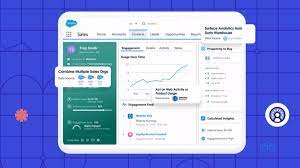
AI plays a crucial role in propensity score estimation as it can discern underlying patterns between treatments and confounding variables Read more