LinkedIn Archives - gettectonic.com - Page 3
Cool AI Tools for Business

Cool AI Tools for Business

This insight is to share the best AI tools to save you time and money. Instead of listing them with zero explanation, we show you how to use these tools and what we’ve created with them. Cool AI Tools for Business. You can then customize it manually or with AI. Although Decktopus is great, it’s not the only AI presentation tool out there. Just submit a video clip of yourself talking in any language. Read the instructions to ensure the AI can learn effectively. If you don’t want to clone yourself, use HeyGen to create presentations by choosing a voice actor and giving it a script. It supports any language, just like your AI clone. One of the coolest things about this tool is a way to create a really nice professional headshot. 4. Murf AI: Text-to-Speech AIMurf AI turns text into realistic voices for ads, voiceovers, translations, and more. Unlike old text-to-speech synthesizers, Murf uses professional voice actors in multiple languages. As a business person, use Murf for voiceovers, sales pitches, and more. You can create similar clips in different languages and voices. ContentShake’s content editor suggests improvements for your posts. This tool can help draft content and draw inspiration. For example, we asked it to create a blogging site about “How to use Artificial Intelligence in business and sales,” and got results in about a minute. You can customize the site by clicking and dragging elements. It’s great for small businesses without professional web designers. 8. Grammarly: AI ProofreaderGrammarly analyzes your text in every window, spotting and highlighting mistakes. We use it every day at Tectonic. Grammarly makes it easy to fix mistakes with suggested corrections. It’s a Chrome extension, so it works in every tab. However, ChatGPT makes silly assumptions and hallucinations. It predicts words but doesn’t know or experience things. As a content writer, you may struggle as you find it can’t write engaging blog posts that attract visitors. Test these Cool AI Tools for Business, as most are free, saving you time and money so you can focus on your business! Like1 Related Posts Who is Salesforce? Who is Salesforce? Here is their story in their own words. From our inception, we’ve proudly embraced the identity of Read more Salesforce Unites Einstein Analytics with Financial CRM Salesforce has unveiled a comprehensive analytics solution tailored for wealth managers, home office professionals, and retail bankers, merging its Financial Read more AI-Driven Propensity Scores AI plays a crucial role in propensity score estimation as it can discern underlying patterns between treatments and confounding variables Read more Tectonic’s Successful Salesforce Track Record Salesforce Technology Services Integrator – Tectonic has successfully delivered Salesforce in a variety of industries including Public Sector, Hospitality, Manufacturing, Read more

Read More
Data Cloud - Facts and Fiction

Data Cloud – Facts and Fiction

Salesforce Data Cloud: Debunking Myths and Unveiling Facts If you’ve been active on LinkedIn, attending recent Salesforce events, or even watching a myriad of sporting events, you’ve likely noticed that Salesforce has evolved beyond just CRM. It’s now CRM + DATA + AI. Although Salesforce has always incorporated these elements, with Einstein AI and data being integral to CRM, the latest innovation lies in the Data Cloud. Data Cloud – Facts and Fiction Data Cloud, formerly known as Salesforce Genie, represents Salesforce’s latest evolution, focusing on enabling organizations to scale and grow in an era where data is the new currency. It is the fastest-growing product in Salesforce’s history, pushing new boundaries of innovation by providing better access to data and actionable insights. As Data Cloud rapidly develops, potential clients often have questions about its function and how it can address their challenges. Here are some common myths about Data Cloud and the facts that debunk them. Myth: Data Cloud Requires MuleSoft Fact: While MuleSoft Anypoint Platform can accelerate connecting commonly used data sources, it is not required for Data Cloud. Data Cloud can ingest data from multiple systems and platforms using several out-of-the-box (OOTB) connectors, including SFTPs, Snowflake, AWS, and more. Salesforce designs its solutions to work seamlessly together, but Data Cloud also offers connector options for non-Salesforce products, ensuring flexibility and integration capabilities beyond the Salesforce ecosystem. Myth: Data Cloud Will De-Duplicate Your Data Fact: Harmonizing data in Data Cloud means standardizing your data model rather than de-duplicating it. Data Cloud maps fields to a common data model and performs “Identity Resolution,” using rules to match individuals based on attributes like email, address, device ID, or phone number. This process creates a Unified Individual ID without automatically de-duplicating Salesforce records. Salesforce intentionally does not function as a Master Data Management (MDM) system. Myth: Data Cloud Will Create a Golden Record Fact: Data Cloud does not create a single, updated record synchronized across all systems (a “golden record”). Instead, it retains original source information, identifies matches across systems, and uses this data to facilitate engagements, known as the Data Cloud Key Ring. For instance, it can recognize an individual across different systems and provide personalized experiences without overwriting original data. Myth: You Can’t Ingest Custom Objects from Salesforce Fact: During the data ingestion process, you can select which objects to ingest from your Salesforce CRM Org, including custom objects. The system identifies the API names of the objects and fields from the data source. Ensuring the Data Cloud integration user has access to the necessary information (similar to assigning Permission Sets) allows you to ingest and map custom objects accordingly. Myth: Data Cloud Requires a Data Scientist and Takes a Long Time to Implement Fact: While implementing Data Cloud involves ingesting, mapping data, running identity resolution, and generating insights, it does not necessarily require a data scientist. Skilled Salesforce Admins can often manage data integration from third-party applications. Effective Data Cloud implementation requires thorough planning and preparation, akin to prepping a room before painting. Identifying use cases and understanding data sources in advance can streamline the implementation process. Myth: Data Cloud is Expensive Fact: Data Cloud operates on a consumption-based pricing model. Engaging in strategic conversations with Salesforce Account Executives can help understand the financial implications. Emphasizing the value of a comprehensive data strategy and considering the five V’s of Big Data—Volume, Variety, Veracity, Value, and Velocity—ensures that your data supports meaningful business outcomes and KPIs. In Summary Salesforce Data Cloud represents a significant evolution in managing and leveraging data within your organization. It helps break down data silos, providing actionable insights to drive organizational goals. Despite initial misconceptions, implementing Data Cloud does not require extensive coding skills or a data scientist. Instead, thorough planning and preparation can streamline the process and maximize efficiency. Understanding the value of a comprehensive data strategy is crucial, as data becomes the new currency. Addressing the five V’s of Big Data ensures that your data supports meaningful business outcomes and KPIs. At Tectonic, our team of certified professionals is ready to assist you on this journey. We offer a Salesforce Implementation Solution package to help you get hands-on with the tool and explore its capabilities. Whether you need help understanding your data sources or defining use cases, our data practice can provide the expertise you need. Talk to Tectonic about Data Cloud and discover how our tailored solutions can help you harness the full potential of your data. Like Related Posts Who is Salesforce? Who is Salesforce? Here is their story in their own words. From our inception, we’ve proudly embraced the identity of Read more Salesforce Marketing Cloud Transactional Emails Salesforce Marketing Cloud Transactional Emails are immediate, automated, non-promotional messages crucial to business operations and customer satisfaction, such as order Read more Salesforce Unites Einstein Analytics with Financial CRM Salesforce has unveiled a comprehensive analytics solution tailored for wealth managers, home office professionals, and retail bankers, merging its Financial Read more AI-Driven Propensity Scores AI plays a crucial role in propensity score estimation as it can discern underlying patterns between treatments and confounding variables Read more

Read More
Automated LinkedIn Prospecting

Automated LinkedIn Prospecting

Salesflow, an award-winning LinkedIn outreach automation platform, announces native integrations with a range of popular CRM systems. London, United Kingdom – June 14, 2024 —Automated LinkedIn Prospecting The automated LinkedIn lead generation tool now offers seamless integration with HubSpot, Zapier, Salesforce, and PipeDrive, with further additions expected in the coming months. The firm states that it now takes less than five minutes for clients to begin using LinkedIn automation through their existing CRM platform, allowing them to continue using familiar tools and workflows. More details can be found at https://salesflow.io/automation-software-improve-pipeline/ Salesflow explains that the new CRM integrations have applications for sales teams, small companies, and LinkedIn-as-as-Service agencies. The firm’s award-winning software is designed to automate multiple stages in the LinkedIn lead generation process, allowing teams to focus their energies on the most attractive prospects. According to LinkedIn’s own statistics, over 80% of B2B marketers say that they achieve the greatest results when social selling through the platform, when compared to other social media networks. However, creating an outreach campaign that retains a personal element can be a time-consuming task, which can limit its usefulness for smaller organizations. Salesflow is designed to create highly automated LinkedIn campaigns, while still offering the ability to include unique keywords that make messages more personal. With the new CRM integrations, the firm has progressed the automation several steps further, with the goal of making the process as fast and efficient as possible. “Salesflow is a cloud-based automation tool using static IPs to ensure a secure prospecting outreach while running on autopilot,” a company representative explained. “You can also now set up integrations to get data from LinkedIn sent directly into your CRM system, and you can begin to see new leads filtering through almost immediately.” About Salesflow Peer-to-peer software review site G2 identified Salesflow as a “High Performer” in the lead generation automation category for the spring and summer of this year, and recently upgraded that rating to “Leader” for both the European and US markets. The system is now used by several major organizations, including HubSpot, Verizon, and Visyond. “Salesflow is awesome and is a must-have for B2B social selling,” one company director recently stated. “This brilliant platform saves us a huge amount of time and money on lead generation, it reduces stress, and gets us connected to relevant prospects across our target industries. Best of all, it does all of that really fast.” Interested parties can find more information by visiting https://salesflow.io/automation-software-improve-pipeline/ Like Related Posts Who is Salesforce? Who is Salesforce? Here is their story in their own words. From our inception, we’ve proudly embraced the identity of Read more Salesforce Marketing Cloud Transactional Emails Salesforce Marketing Cloud Transactional Emails are immediate, automated, non-promotional messages crucial to business operations and customer satisfaction, such as order Read more Salesforce Unites Einstein Analytics with Financial CRM Salesforce has unveiled a comprehensive analytics solution tailored for wealth managers, home office professionals, and retail bankers, merging its Financial Read more AI-Driven Propensity Scores AI plays a crucial role in propensity score estimation as it can discern underlying patterns between treatments and confounding variables Read more

Read More
Otter AI S-Docs and Salesforce

Otter AI S-Docs and Salesforce

Numerous vendors in the enterprise software market are currently emphasizing their AI capabilities, envisioning a future where AI can address a wide array of global challenges, from healthcare to climate change. While the realization of these claims remains uncertain, the practical and impactful applications of AI in everyday scenarios often go unnoticed. There exists ample opportunity for leveraging AI tools that are readily available and require minimal setup to enhance efficiency. Otter AI S-Docs and Salesforce. One such example is S-Docs, a document automation vendor integrated natively on the Salesforce platform, which is harnessing Otter.ai, an AI transcription service, to revolutionize its sales process and product development. S-Docs is seamlessly integrating Otter.ai into its digital collaboration tools, enabling automatic transcription during sales calls. This not only aids sales representatives in navigating diverse dialects but also streamlines post-call administrative tasks, prompting quicker action. Moreover, the product development team at S-Docs is leveraging Otter.ai to analyze the transcribed content from sales calls and incorporate insights into its product feedback loop. This integration was sparked by S-Docs’ CTO, Anand Narasimhan, who discovered Otter.ai through a LinkedIn connection and recognized its potential value for the business. Initially used during team calls and sprint reviews, Otter.ai’s high transcription accuracy and insightful summaries impressed Narasimhan and his colleague, Keith Bossier, VP of Sales at S-Docs. Subsequently, Otter.ai was adopted by the sales and customer success teams, offering benefits that surpassed those of their previous provider, Gong. For the sales team, Otter.ai significantly reduces the administrative burden by providing real-time transcriptions, catch-all summaries, and key takeaways from meetings. This facilitates quicker follow-ups and enhances the overall customer experience. Buoyed by the success in sales, S-Docs is exploring avenues to expand the use of Otter.ai across its business. Bossier envisions leveraging transcripts from sales calls for onboarding new representatives, while Narasimhan explores integrating the captured content into the product development cycle. Additionally, they are collaborating with Otter.ai to introduce automated action items directly into the S-Docs platform, further streamlining operations and enhancing efficiency. As S-Docs continues to innovate and optimize its processes with Otter.ai, it exemplifies the tangible benefits of leveraging AI in practical business scenarios. Like Related Posts Who is Salesforce? Who is Salesforce? Here is their story in their own words. From our inception, we’ve proudly embraced the identity of Read more Salesforce Marketing Cloud Transactional Emails Salesforce Marketing Cloud Transactional Emails are immediate, automated, non-promotional messages crucial to business operations and customer satisfaction, such as order Read more Salesforce Unites Einstein Analytics with Financial CRM Salesforce has unveiled a comprehensive analytics solution tailored for wealth managers, home office professionals, and retail bankers, merging its Financial Read more AI-Driven Propensity Scores AI plays a crucial role in propensity score estimation as it can discern underlying patterns between treatments and confounding variables Read more

Read More
LLMs Beyond Generative AI

LLMs Beyond Generative AI

Beyond Text Generation: The Versatile Capabilities of Large Language Models While large language models (LLMs) and generative AI have dominated the conversation over the past year, the spotlight has largely been on their text generation capabilities. There’s no denying the value of LLMs in generating answers to questions. However, focusing solely on this use case overlooks other valuable applications. This insight will explore several primary uses of LLMs, ensuring you recognize their broader potential beyond just generative purposes. Creation and Generation This is the most publicized use case for LLMs today. Applications like ChatGPT can answer questions with detailed responses, and tools like DALL-E generate images based on user prompts. Similar generators exist for code, video, and 3D virtual worlds. Interestingly, these generators share fundamental algorithmic approaches despite producing different content types—text, images, videos. Since they all process prompts, they require training to understand and decompose these prompts to guide the generation process, necessitating the use of LLMs. However, generating new content is just one aspect of what LLMs can achieve. Summarization LLMs excel at summarizing information. For instance, if you have a list of papers on your to-read list, an LLM can summarize their key themes, common points, and differences. This provides a clear baseline, helping you focus on essential aspects as you read. Summarizing content with AI tends to have a lower error risk compared to generating new content because the LLM works within the boundaries of the provided information. While it might occasionally miss a pattern or emphasize the wrong details, it’s unlikely to produce completely incorrect summaries. Translation Often underrated, translation might be one of the most impactful uses of LLMs. For example, LLMs can translate old code from obsolete languages into modern ones. An LLM generates a draft translation, which, although imperfect, can be refined by a programmer who understands the goal of the code even with limited knowledge of the original language. Human language translation also stands to benefit significantly. Soon, we’ll be able to communicate in our preferred languages, with LLMs instantly translating our words into the listener’s language. This will eliminate the need for a common language and help preserve uncommon languages by removing the communication barriers associated with them. Interpretation and Extraction LLMs are also adept at interpreting statements and triggering subsequent actions. Image generators use this approach, as do tools that handle analytical queries. For instance, asking “Please summarize this year’s sales by region and subtotal by product” allows an LLM to interpret the request, extract key parameters, and pass them to a query generator for the answer. Companies like Quaeris, which I advise, focus on this capability. Additionally, LLMs can handle tasks like sentiment analysis and customer service inquiries. They can ingest inquiries and extract relevant details, such as the product in question, the issue raised, and the requested action, to route the inquiry to the appropriate person more effectively. LLMs Beyond Generative AI The examples discussed are not exhaustive but represent some common and powerful uses of LLMs. They highlight that LLMs offer far more than just text generation. Exploring these other applications can provide significant benefits for you and your organization. Originally posted in the Analytics Matters newsletter on LinkedIn. Like Related Posts Who is Salesforce? Who is Salesforce? Here is their story in their own words. From our inception, we’ve proudly embraced the identity of Read more Salesforce Unites Einstein Analytics with Financial CRM Salesforce has unveiled a comprehensive analytics solution tailored for wealth managers, home office professionals, and retail bankers, merging its Financial Read more AI-Driven Propensity Scores AI plays a crucial role in propensity score estimation as it can discern underlying patterns between treatments and confounding variables Read more Tectonic’s Successful Salesforce Track Record Salesforce Technology Services Integrator – Tectonic has successfully delivered Salesforce in a variety of industries including Public Sector, Hospitality, Manufacturing, Read more

Read More
AI Training Options

AI Training Options

As AI adoption accelerates, AI certifications and courses have proliferated, providing deeper knowledge of this rapidly evolving technology. AI Training Options. Numerous AI certifications cover the basics, so we’ve narrowed the field to 10 of the most diverse and comprehensive programs. AI Training Options Artificial intelligence is poised to become the key technology that drives business transformation and gives companies a competitive edge. According to a recent forecast by the International Data Corporation, global spending on AI—including AI-enabled applications, infrastructure, and related services—will more than double to $632 billion by 2028, growing at a compound annual rate of 29% between 2024 and 2028. AI helps businesses boost productivity by automating processes such as robotics and autonomous vehicles, while also supporting existing workforces with technologies like assisted and augmented intelligence. Companies are integrating AI across various sectors, including finance, healthcare, retail, smart home devices, fraud detection, and security surveillance. Why AI certifications are important: 10 of the best AI certifications and courses: Each certification offers unique benefits, whether you’re a beginner or an experienced professional aiming to stay ahead in AI-driven industries. Content updated September 2024. Like Related Posts Who is Salesforce? Who is Salesforce? Here is their story in their own words. From our inception, we’ve proudly embraced the identity of Read more Salesforce Unites Einstein Analytics with Financial CRM Salesforce has unveiled a comprehensive analytics solution tailored for wealth managers, home office professionals, and retail bankers, merging its Financial Read more AI-Driven Propensity Scores AI plays a crucial role in propensity score estimation as it can discern underlying patterns between treatments and confounding variables Read more Tectonic’s Successful Salesforce Track Record Salesforce Technology Services Integrator – Tectonic has successfully delivered Salesforce in a variety of industries including Public Sector, Hospitality, Manufacturing, Read more

Read More
AI's Impact on the Workforce

AI’s Impact on the Workforce

According to McKinsey, generative AI has the potential to contribute between $2.6 trillion and $4.4 trillion in value to the global economy across various industries, spanning banking, retail, high tech, healthcare, and life sciences. Its impact is expected to reach diverse professions, including customer operations, marketing and sales, software engineering, and research and development. The influence of AI on the workforce is significant. A report by Goldman Sachs suggests that AI could replace the equivalent of 300 million full-time jobs, affecting a quarter of work tasks in the US and Europe. However, it also brings forth new job opportunities and a productivity boom. Despite concerns about job displacement, AI is anticipated to generate numerous new opportunities. Roles like prompt engineer and AI product manager are emerging, with a Salesforce-sponsored IDC white paper predicting a surge in demand for positions such as data architects, AI ethicists, and AI solutions architects over the next 12 months. The report also forecasts the creation of 11.6 million new jobs within the Salesforce ecosystem alone over the next six years. Recent advancements in generative AI, exemplified by products like ChatGPT with 100 million monthly active users in two months, have reignited discussions about automation’s impact on jobs. While the extent of disruption remains unknown, developers, users, and policymakers should consider its effects on workers. To address challenges and opportunities, Majority Leader Chuck Schumer has launched a SAFE Innovation Framework, emphasizing worker security. The Biden administration is developing a National AI Strategy to address economic and job impacts. For individuals in the workforce, there’s an opportunity to cultivate existing skills and acquire new ones through platforms like Salesforce’s Trailhead, Coursera, and LinkedIn. AI’s impact on jobs involves eliminating repetitive tasks, allowing individuals to focus on more strategic and creative aspects of their roles. In fields like sales, customer service, marketing, healthcare, finance, and graphic design, AI will transform roles and create new opportunities. Chris Poole, AI Technical Consulting Lead in Salesforce’s global AI practice, envisions AI becoming ingrained in every aspect of our lives, contributing to fascinating evolution across various fields. The scale of AI adoption’s impact on workers, especially with generative AI tools, remains uncertain. Potential effects include replacing, complementing, or freeing workers for more productive tasks, or creating new jobs. A Goldman Sachs estimate suggests that about two-thirds of current jobs are exposed to some degree of AI automation, with generative AI potentially substituting up to one-fourth of current work. McKinsey Global Institute estimates that 29.5 percent of all hours worked could be automated by 2030. Regarding job impact, professional occupations associated with clerical work in finance, law, and business management are most exposed to AI. However, AI is also concurrently creating many new jobs. Like Related Posts Who is Salesforce? Who is Salesforce? Here is their story in their own words. From our inception, we’ve proudly embraced the identity of Read more Salesforce Marketing Cloud Transactional Emails Salesforce Marketing Cloud Transactional Emails are immediate, automated, non-promotional messages crucial to business operations and customer satisfaction, such as order Read more Salesforce Unites Einstein Analytics with Financial CRM Salesforce has unveiled a comprehensive analytics solution tailored for wealth managers, home office professionals, and retail bankers, merging its Financial Read more AI-Driven Propensity Scores AI plays a crucial role in propensity score estimation as it can discern underlying patterns between treatments and confounding variables Read more

Read More
Salesforce

Salesforce Integrations for Sales Users

Salesforce integration offers compatibility with a wide array of business tools, and this insight article from Tectonic zeroes in on the most advantageous integrations tailored for your sales teams. Salesforce Integrations for Sales Users encompass various areas from contract management tools to lead enrichment and marketing automation platforms, the focus is on enhancing the efficiency of your sales operations. Understanding Salesforce Integrations A Salesforce integration is a mechanism linking the CRM with one or more business tools, facilitating seamless data transfer and automation of repetitive administrative tasks. With over 2,500 integrations, Salesforce is one of the most connected and flexible CRMs on the market. Let’s dive into the top Salesforce integrations for sales teams in 2024. Best Salesforce Integrations for Sales Teams 1. Slack – Streamlined Internal Communication Owned by Salesforce, Slack integration ensures smooth communication by facilitating easy sharing and querying of records between the two platforms. This integration promotes real-time updates, fostering improved collaboration, quicker decision-making, and enhanced productivity. Slack and Salesforce integrations are easy to set up and Tectonic can help. User Reviews: 2. Salesloft – Elevating Sales Engagement Salesloft complements Salesforce by focusing on customer engagement. This integration allows the import of contacts from Salesforce into Salesloft, enabling seamless communication with prospects. Recorded communication details are then synchronized back into Salesforce, offering visibility into deal progression and prospect engagement. User Reviews: 3. Chili Piper – Simplified Scheduling Chili Piper’s integration with Salesforce streamlines appointment scheduling by enabling one-click meeting scheduling within Salesforce. Every booked meeting is automatically logged and tracked as an event in Salesforce, contributing to improved data accuracy and efficient scheduling. All interactions with leads are added to engagement activity in their Salesforce record. User Reviews: 4. Juro – Accelerating Contract Management Juro’s all-in-one contract management platform integrates seamlessly with Salesforce, enabling sales reps to generate sales agreements effortlessly. The integration facilitates real-time syncing of data between the two platforms, allowing for swift contract drafting, negotiation, and management. Key Benefit: 5. LinkedIn Sales Solutions – Incorporate LinkedIn profiles to Salesforce records LinkedIn Sales Solutions embeds LinkedIn profiles with the CRM providing timely insights on buyers and companies. Data Validation flags out-of-date contacts. Key Benefit: 6. Lead Capture in Sales Cloud – Collect leads from Facebook and Google directly into Sales Cloud This application enables marketers to collect lead data from two primary external platform ad forms and share them with sales teams. Key Benefit: Salesforce Integrations for Sales Users These Salesforce integrations are tailored to augment the capabilities of sales teams, ranging from internal communication to contract management, ultimately fostering efficiency and productivity. If you are looking at tools to integrate with Salesforce for your teams, contact Tectonic for Salesforce implementation assistance. Like1 Related Posts Who is Salesforce? Who is Salesforce? Here is their story in their own words. From our inception, we’ve proudly embraced the identity of Read more Salesforce Marketing Cloud Transactional Emails Salesforce Marketing Cloud Transactional Emails are immediate, automated, non-promotional messages crucial to business operations and customer satisfaction, such as order Read more Salesforce Unites Einstein Analytics with Financial CRM Salesforce has unveiled a comprehensive analytics solution tailored for wealth managers, home office professionals, and retail bankers, merging its Financial Read more AI-Driven Propensity Scores AI plays a crucial role in propensity score estimation as it can discern underlying patterns between treatments and confounding variables Read more

Read More
Einstein 1 Unveiled

AI-Powered Sales Intelligence

AI-Powered Sales Intelligence: Transforming Customer Conversations into Actionable Insights The Problem: Lost in a Sea of Sales Calls Sales calls contain goldmines of insights—objections, buying signals, competitor mentions—but manually capturing and recalling them is time-consuming and unreliable. 🔹 Reps waste hours relistening to calls for one key detail.🔹 Critical intel gets buried in notes or forgotten entirely.🔹 Deals stall because follow-ups lack context. The Solution: AI That Works Like Your Smartest Sales Assistant Einstein Conversation Insights (ECI): Your AI-Powered Call Co-Pilot Salesforce’s Einstein AI turns unstructured call data into structured, searchable intelligence: ✔ Automated Transcripts – No more frantic note-taking.✔ Smart Summaries – Key takeaways in seconds.✔ Sentiment Analysis – Detect customer enthusiasm or concerns.✔ Next-Step Recommendations – AI suggests how to advance the deal. Real-World Example A rep gets an email months post-call: “Can we revisit the purchase options we discussed?” Instead of guessing: 4 Ways AI Supercharges Your Sales Team 1. Call Summaries & Exploration 🚫 No more digging through messy notes.✅ Get concise summaries, sentiment trends, and deal-blockers—in seconds. 2. Activity Capture (No More Data Entry) 🚫 Stop manually logging emails/meetings.✅ Einstein auto-syncs customer interactions to CRM records. 3. Conversation Mining 🚫 No more guessing why deals stall.✅ Uncover trends like: 4. Relationship Graphs 🚫 Skip LinkedIn stalking to map stakeholders.✅ Einstein reveals: Why This Matters Built for Trust & Scale 🔒 Secure & Native – Einstein runs directly in Salesforce, keeping data in your CRM.🛠 Customizable – Tailor AI to your sales process, products, and KPIs. Bottom Line: AI isn’t replacing sellers—it’s freeing them to sell smarter. 🚀 Ready to stop losing deals to forgotten details? Reach out to Tectonic today! Like Related Posts Who is Salesforce? Who is Salesforce? Here is their story in their own words. From our inception, we’ve proudly embraced the identity of Read more Salesforce Marketing Cloud Transactional Emails Salesforce Marketing Cloud Transactional Emails are immediate, automated, non-promotional messages crucial to business operations and customer satisfaction, such as order Read more Salesforce Unites Einstein Analytics with Financial CRM Salesforce has unveiled a comprehensive analytics solution tailored for wealth managers, home office professionals, and retail bankers, merging its Financial Read more AI-Driven Propensity Scores AI plays a crucial role in propensity score estimation as it can discern underlying patterns between treatments and confounding variables Read more

Read More
multi-channel campaigns

Multi-Channel Campaigns

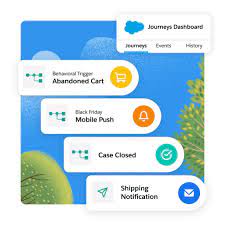
Leveraging Salesforce for Multi-Channel Campaign Management with Tectonic In today’s dynamic marketing landscape, businesses need to connect with their audience across multiple channels—email, social media, web, and beyond. Managing these campaigns effectively can feel like juggling too many balls at once, especially when aiming to maintain consistent messaging, track performance, and maximize ROI. That’s where Salesforce, paired with expertise from Tectonic, makes all the difference. Salesforce simplifies multi-channel campaign management, helping businesses stay organized, boost engagement, and achieve measurable results. Let’s dive into how this powerful platform, supported by Tectonic’s expertise, takes campaign management to the next level. The Challenge Marketing teams often face obstacles like: The Solution: Streamlined Multi-Channel Campaign Management Salesforce, with Tectonic as your trusted partner, transforms the complexity of multi-channel campaigns into a streamlined and effective process. By integrating channels, automating workflows, and delivering real-time insights, businesses can engage their audience and achieve exceptional results. 1. Centralized Campaign Planning Salesforce Marketing Cloud provides a centralized platform for planning and managing campaigns across channels—email, SMS, social media, and paid ads—all from one dashboard. This unified view ensures messaging and branding stay consistent while fostering seamless collaboration across teams. Tectonic enhances this process by ensuring your Salesforce environment is optimized for your specific needs. 2. Personalized Messaging at Scale Salesforce’s AI-powered tools, such as Einstein AI, analyze customer data to craft personalized content for every audience segment. These tools allow businesses to create tailored emails, ads, and social media posts that resonate with specific groups. With Tectonic’s guidance, you can implement personalization strategies that drive engagement and conversions to new heights. 3. Real-Time Performance Tracking Salesforce consolidates campaign performance data into a single platform, providing real-time metrics like open rates, click-through rates, social engagement, and conversions. Customizable dashboards allow your team to monitor results at a glance, enabling quick adjustments for maximum impact. Tectonic can help design these dashboards for clarity and actionable insights. 4. Automation for Efficiency Managing multi-channel campaigns involves countless tasks, but Salesforce automates processes such as scheduling, triggering emails, and personalizing messaging based on user behavior. By streamlining these repetitive tasks, your team can focus on creativity and strategy. Tectonic’s expertise ensures these automations are tailored to fit your business workflows perfectly. 5. Seamless Integration Across Channels Salesforce integrates with platforms like Google Ads, Facebook, LinkedIn, and Instagram, consolidating data into one ecosystem. This eliminates the need for manual data collection, saving time and improving accuracy. Tectonic ensures these integrations are set up seamlessly, so you can focus on running impactful campaigns. Strategies for Success with Salesforce Why Tectonic + Salesforce? Tectonic combines deep Salesforce expertise with a keen understanding of marketing challenges to help you fully unlock the platform’s potential. Together, Salesforce and Tectonic empower businesses to achieve more efficient, impactful, and ROI-driven campaigns. Ready to revolutionize your multi-channel marketing strategy? Let Tectonic guide you to Salesforce success. Content updated December 2024. Like Related Posts Who is Salesforce? Who is Salesforce? Here is their story in their own words. From our inception, we’ve proudly embraced the identity of Read more Salesforce Marketing Cloud Transactional Emails Salesforce Marketing Cloud Transactional Emails are immediate, automated, non-promotional messages crucial to business operations and customer satisfaction, such as order Read more Salesforce Unites Einstein Analytics with Financial CRM Salesforce has unveiled a comprehensive analytics solution tailored for wealth managers, home office professionals, and retail bankers, merging its Financial Read more AI-Driven Propensity Scores AI plays a crucial role in propensity score estimation as it can discern underlying patterns between treatments and confounding variables Read more

Read More
Tableau Pulse and Tableau GPT

Announcing Tableau Pulse and Tableau GPT

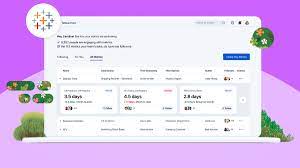
It’s fair to say that many are familiar with ChatGPT, the groundbreaking Large Language Model from OpenAI that has transformed how we work and interact with AI. At TC 2023, Tableau announced a new tool called Tableau GPT. But what exactly is Tableau GPT, and how does it fit into Tableau’s suite of products? Announcing Tableau Pulse and Tableau GPT. Tableau GPT Tableau GPT is an assistant leveraging the advanced capabilities of generative AI to simplify and democratize data analysis. Built from Einstein GPT, a Salesforce product developed in collaboration with OpenAI, Tableau GPT integrates generative AI into Tableau’s user experience. This integration aims to help users work smarter, learn faster, and communicate more effectively. During the Devs on Stage segment of the keynote at TC, Matthew Miller, Senior Director of Product Management, showcased Tableau GPT’s ability to generate calculations. For example, with a prompt like “Extract email addresses from JSON,” Tableau GPT quickly produces a calculation that users can copy into the calculation window. Tableau Pulse Tableau GPT also powers a new tool called Tableau Pulse, designed to generate powerful insights swiftly. Tableau Pulse provides “data digests” on a personalized metrics homepage, offering a curated, ‘newsfeed’-like experience of key KPIs. As users interact with Pulse, it learns to deliver more personalized results based on their interests. For example, Tableau Pulse highlights metrics that require attention, derived from recent data trends identified by Tableau GPT. The tool provides the latest metric values, visual trends, and AI-generated insights for user-selected KPIs. Tableau Pulse also enables users to ask questions about their data in natural language. For instance, when asked, “What is driving change in Appliance Sales?” Tableau Pulse responded with a brief answer and visualization. Further inquiries, such as “What else should I know about air fryers?” revealed that the “inventory fill rate” for air fryers is forecasted to fall below a set threshold, providing actionable insights that users can share across their organization. Future Impact and Availability Tableau GPT and Pulse promise to revolutionize interactions with Tableau products, enabling quicker visualization creation and making data accessible to non-technical users. Salesforce announced that Tableau Pulse and Tableau GPT would enter pilot testing later this year. When they do, we’ll be ready to share new insights. Follow us on LinkedIn to stay updated on all the latest developments and features in Tableau! Like Related Posts Who is Salesforce? Who is Salesforce? Here is their story in their own words. From our inception, we’ve proudly embraced the identity of Read more Salesforce Marketing Cloud Transactional Emails Salesforce Marketing Cloud Transactional Emails are immediate, automated, non-promotional messages crucial to business operations and customer satisfaction, such as order Read more Salesforce Unites Einstein Analytics with Financial CRM Salesforce has unveiled a comprehensive analytics solution tailored for wealth managers, home office professionals, and retail bankers, merging its Financial Read more AI-Driven Propensity Scores AI plays a crucial role in propensity score estimation as it can discern underlying patterns between treatments and confounding variables Read more

Read More
Account Based Marketing

The Ultimate Guide to ABM Email Templates That Convert

Crafting Hyper-Personalized ABM Emails That Get Responses Account-based marketing emails aren’t just messages—they’re strategic business conversations tailored to your most valuable accounts. These templates show you how to break through the noise with highly relevant, value-driven communication. Why ABM Emails Work Differently ✔ 87% higher response rates than generic emails✔ 3x more pipeline value from targeted accounts✔ 56% better conversion rates when properly personalized 1. Subject Lines That Demand Attention Personalized & Benefit-Driven Intriguing & Relevant Referencing Connections Pro Tip: Include the recipient’s name and company in 70% of subject lines for 22% higher open rates. 2. Email Body Structure That Converts The 4-Part ABM Email Framework 1. Personalized Hook (1 sentence)“Congrats on [Recent Achievement] – impressive growth in [Specific Metric]!” 2. Relevant Insight (2-3 sentences)“When we helped [Peer Company] with similar [Challenge], they achieved [Quantifiable Result] by [Unique Approach].” 3. Tailored Value Proposition“For [Account Name], this could mean [Specific Benefit 1] and [Specific Benefit 2] based on your [Unique Factor].” 4. Clear CTA with Social Proof*”When’s a good time for a 15-min chat? P.S. [Industry Leader] saw [Result] in [Timeframe].”* 3. Proven ABM Email Templates Template 1: The Executive Insight Email Subject: “[Industry Trend] impacting [Account Name]’s [Department]” Body:“Hi [First Name], Noticed [Account Name]’s focus on [Strategic Initiative] in your [Source]. With [Industry Trend] accelerating, many [Industry] leaders are seeing [Specific Impact]. We recently helped [Peer Company] navigate this by [Solution], achieving [Metric] in [Timeframe]. Would you have 20 minutes to discuss how this approach could support [Initiative]? Best,[Your Name][Your Position][Your Company]” Template 2: The Peer Comparison Email Subject: “How [Peer Company] achieved [Result] with [Solution]” Body:“Hi [First Name], [Peer Company] faced similar [Challenge] to what [Account Name] is managing around [Specific Issue]. Their solution? [Brief Case Study Summary]. *Three specific outcomes they gained: Would you be open to a quick call to explore if this approach could work for [Account Name]? [Your Name]” 4. Advanced ABM Email Strategies The Multi-Touch Sequence Interactive Elements That Boost Engagement 5. Measuring ABM Email Success Track these key metrics:✅ Open Rate (Target: 40-60%)✅ Response Rate (Target: 15-30%)✅ Meeting Booked Rate (Target: 5-15%)✅ Pipeline Influence (Measure account progression) Optimization Tip: A/B test every 5th email with different: Your ABM Email Checklist 🔹 Before Sending: 🔹 After Sending: “After implementing these ABM email strategies, we saw a 4x increase in meetings with target accounts and 35% faster deal velocity.”— Enterprise ABM Director Transform your ABM outreach from ignored to engaged with science-backed templates. Like Related Posts Who is Salesforce? Who is Salesforce? Here is their story in their own words. From our inception, we’ve proudly embraced the identity of Read more Salesforce Marketing Cloud Transactional Emails Salesforce Marketing Cloud Transactional Emails are immediate, automated, non-promotional messages crucial to business operations and customer satisfaction, such as order Read more Salesforce Unites Einstein Analytics with Financial CRM Salesforce has unveiled a comprehensive analytics solution tailored for wealth managers, home office professionals, and retail bankers, merging its Financial Read more AI-Driven Propensity Scores AI plays a crucial role in propensity score estimation as it can discern underlying patterns between treatments and confounding variables Read more

Read More
gettectonic.com