

Machine Learning Archives - gettectonic.com - Page 3
advanced analytics

Maximizing Sales Performance with Salesforce Sales Analytics

Salesforce, a leading CRM platform, provides powerful sales analytics tools that empower businesses to make data-driven decisions, boost productivity, and drive revenue growth. This guide highlights the importance of Salesforce Sales Analytics, its key features, and how to leverage them to optimize your sales team’s performance. Key Features of Salesforce Sales Analytics 1. Reports and Dashboards Salesforce’s reporting capabilities enable users to create custom dashboards and reports for real-time insights into lead conversion, sales performance, and other critical metrics. These visual tools help businesses track trends and make informed decisions effortlessly. 2. Einstein Analytics Powered by AI and machine learning, Einstein Analytics offers: 3. Sales Cloud Analytics Sales Cloud Analytics helps businesses: 4. Forecasting Tools Salesforce’s AI-powered forecasting tools provide accurate revenue projections by analyzing: How Different Teams Benefit from Sales Analytics ✅ Executives – Gain a high-level view of sales, service, and pipeline performance with real-time dashboards highlighting key business metrics. ✅ Sales Managers – Monitor team performance, track quota attainment, analyze pipeline changes, and optimize sales cycles to accelerate deal closures. ✅ Sales Representatives – Get insights into personal sales performance, pipeline activities, and quota attainment, allowing for quicker decision-making and identification of new business opportunities. ✅ Operations Teams – Analyze sales performance by customer, region, and source to optimize negotiation strategies and business development efforts. Setting Up the Salesforce Sales Analytics App 1. Launch Analytics Studio Navigate to Analytics Studio via the Sales Home page and click on the Apps button. 2. Search for Sales Analytics If the Sales Analytics App does not appear by default, use the search bar to locate it. 3. Access the Default Dashboard The default dashboard provides key metrics, including: 4. Customize Widgets Modify data representation by selecting the Edit button and customizing widgets to align with your business needs. 5. Adjust Goal Widgets Update goal widgets to match your sales targets and business objectives. 6. Explore Additional Dashboards Salesforce offers role-specific dashboards for Sales Managers, Executives, and other stakeholders to gain tailored insights. 7. Utilize the Lens Feature for Visualizations Leverage Lens to create object-specific visualizations, such as opportunities by time, stage, owner, and more. Conclusion Integrating Salesforce Sales Analytics with Tableau CRM creates a comprehensive Business Intelligence (BI) solution. However, businesses looking for a simpler or more cost-effective alternative may consider exporting Salesforce data into third-party analytics platforms for additional flexibility and ease of use. By leveraging Salesforce Sales Analytics, businesses can enhance forecasting, improve decision-making, and drive sales performance with real-time insights. Like1 Related Posts Who is Salesforce? Who is Salesforce? Here is their story in their own words. From our inception, we’ve proudly embraced the identity of Read more Salesforce Marketing Cloud Transactional Emails Salesforce Marketing Cloud Transactional Emails are immediate, automated, non-promotional messages crucial to business operations and customer satisfaction, such as order Read more Salesforce Unites Einstein Analytics with Financial CRM Salesforce has unveiled a comprehensive analytics solution tailored for wealth managers, home office professionals, and retail bankers, merging its Financial Read more AI-Driven Propensity Scores AI plays a crucial role in propensity score estimation as it can discern underlying patterns between treatments and confounding variables Read more


Read More
AI Captivates the World

AI vs Human Intelligence

Artificial Intelligence vs. Human Intelligence: Key Differences Explained Artificial intelligence (AI) often mimics human-like capabilities, but there are fundamental differences between natural human intelligence and artificial systems. While AI has made remarkable strides in replicating certain aspects of human cognition, it operates in ways that are distinct from how humans think, learn, and solve problems. Below, we explore three key areas where AI and human intelligence diverge. Defining Intelligence Human IntelligenceHuman intelligence is often described using terms like smartness, understanding, brainpower, reasoning, sharpness, and wisdom. These concepts reflect the complexity of human cognition, which has been debated for thousands of years. At its core, human intelligence is a biopsychological capacity to acquire, apply, and adapt knowledge and skills. It encompasses not only logical reasoning but also emotional understanding, creativity, and social interaction. Artificial IntelligenceAI refers to machines designed to perform tasks traditionally associated with human intelligence, such as learning, problem-solving, and decision-making. Over the past few decades, AI has advanced rapidly, particularly in areas like machine learning and generative AI. However, AI lacks the depth and breadth of human intelligence, operating instead through algorithms and data processing. Human Intelligence: What Humans Do Better Humans excel in areas that require empathy, judgment, intuition, and creativity. These qualities are deeply rooted in our evolution as social beings. For example: These capabilities make human intelligence uniquely suited for tasks that involve emotional connection, ethical decision-making, and creative thinking. Artificial Intelligence: What AI Does Better AI outperforms humans in several areas, particularly those involving data processing, pattern recognition, and speed: However, AI’s strengths are limited to the data it is trained on and the algorithms it uses, lacking the adaptability and contextual understanding of human intelligence. 3 Key Differences Between AI and Human Intelligence AI and Human Intelligence: Working Together The future lies in human-AI collaboration, where the strengths of both are leveraged to address complex challenges. For example: While some may find the idea of integrating AI into decision-making unsettling, the scale of global challenges—from climate change to healthcare—demands the combined power of human and artificial intelligence. By working together, humans and AI can amplify each other’s strengths while mitigating weaknesses. Conclusion AI and human intelligence are fundamentally different, each excelling in areas where the other falls short. Human intelligence is unparalleled in creativity, empathy, and ethical reasoning, while AI dominates in data processing, pattern recognition, and speed. The key to unlocking the full potential of AI lies in human-AI collaboration, where the unique strengths of both are harnessed to solve the world’s most pressing problems. As we move forward, this partnership will likely become not just beneficial but essential. Like1 Related Posts Who is Salesforce? Who is Salesforce? Here is their story in their own words. From our inception, we’ve proudly embraced the identity of Read more Salesforce Unites Einstein Analytics with Financial CRM Salesforce has unveiled a comprehensive analytics solution tailored for wealth managers, home office professionals, and retail bankers, merging its Financial Read more AI-Driven Propensity Scores AI plays a crucial role in propensity score estimation as it can discern underlying patterns between treatments and confounding variables Read more Tectonic’s Successful Salesforce Track Record Salesforce Technology Services Integrator – Tectonic has successfully delivered Salesforce in a variety of industries including Public Sector, Hospitality, Manufacturing, Read more

Read More
Salesforce Energy and Utilities Cloud Explained

Salesforce Energy and Utilities Cloud Explained

Salesforce Energy and Utilities Cloud is a specialized industry solution built on the Salesforce platform, designed to meet the unique needs of energy and utility companies. It helps these organizations manage customer relationships, streamline operations, and drive digital transformation in an increasingly complex and regulated industry. The cloud solution provides tools for customer engagement, field service management, and regulatory compliance, among other functionalities. Key Features of Salesforce Energy and Utilities Cloud: Benefits of Salesforce Energy and Utilities Cloud: Use Cases: Implementation Considerations: In summary, Salesforce Energy and Utilities Cloud is a comprehensive solution designed to help energy and utility companies enhance customer engagement, streamline operations, and achieve regulatory compliance. By leveraging advanced technologies and industry-specific functionalities, utilities can drive digital transformation and improve overall performance. Like1 Related Posts Who is Salesforce? Who is Salesforce? Here is their story in their own words. From our inception, we’ve proudly embraced the identity of Read more Salesforce Marketing Cloud Transactional Emails Salesforce Marketing Cloud Transactional Emails are immediate, automated, non-promotional messages crucial to business operations and customer satisfaction, such as order Read more Salesforce Unites Einstein Analytics with Financial CRM Salesforce has unveiled a comprehensive analytics solution tailored for wealth managers, home office professionals, and retail bankers, merging its Financial Read more AI-Driven Propensity Scores AI plays a crucial role in propensity score estimation as it can discern underlying patterns between treatments and confounding variables Read more

Read More
AI-Driven Salesforce Explained

AI-Driven Salesforce Explained

AI-driven Salesforce refers to the integration of Artificial Intelligence (AI) into Salesforce’s Customer Relationship Management (CRM) platform to enhance its capabilities, automate processes, and deliver smarter, data-driven insights. Salesforce has embedded AI into its ecosystem through Salesforce Einstein, its proprietary AI technology. Here’s a breakdown of how AI drives Salesforce: 1. What is AI-Driven Salesforce? AI-driven Salesforce leverages machine learning, natural language processing (NLP), predictive analytics, and automation to help businesses make smarter decisions, improve customer experiences, and streamline operations. It transforms raw data into actionable insights and automates repetitive tasks, enabling teams to focus on strategic activities. 2. Key Features of AI-Driven Salesforce a) Salesforce Einstein Einstein is the AI layer built into Salesforce that powers intelligent features across the platform. Key capabilities include: b) AI-Powered Insights c) Personalization d) Automation e) Predictive Intelligence 3. Benefits of AI-Driven Salesforce a) Enhanced Customer Experience b) Increased Efficiency c) Data-Driven Decision Making d) Improved Sales Performance e) Scalability 4. Use Cases of AI-Driven Salesforce a) Sales b) Marketing c) Customer Service d) Commerce 5. The Future of AI in Salesforce In summary, AI-driven Salesforce empowers businesses to work smarter, not harder, by leveraging data and automation to deliver better customer experiences and drive growth. It’s a game-changer for sales, marketing, service, and beyond! Content updated January 2025. Like1 Related Posts Who is Salesforce? Who is Salesforce? Here is their story in their own words. From our inception, we’ve proudly embraced the identity of Read more Salesforce Marketing Cloud Transactional Emails Salesforce Marketing Cloud Transactional Emails are immediate, automated, non-promotional messages crucial to business operations and customer satisfaction, such as order Read more Salesforce Unites Einstein Analytics with Financial CRM Salesforce has unveiled a comprehensive analytics solution tailored for wealth managers, home office professionals, and retail bankers, merging its Financial Read more AI-Driven Propensity Scores AI plays a crucial role in propensity score estimation as it can discern underlying patterns between treatments and confounding variables Read more

Read More
Rise of Agentic Commerce

Rise of Agentic Commerce

The Rise of Agentic Commerce: How AI Agents Are Reshaping Ecommerce As online retailers experiment with agentic AI to enhance ecommerce, shoppers are already engaging with AI-driven experiences through subscriptions. Meanwhile, businesses are deploying AI agents behind the scenes to streamline their digital storefronts. In 2025, ecommerce platforms aren’t just pitching AI-powered recommendation engines—they’re embracing full-fledged agentic AI solutions. These intelligent agents are changing the way both retailers and consumers interact with digital shopping environments. Tech Giants and Startups Lead the Charge Agentic AI is becoming a key component in the ecommerce tech stack, joining machine learning, AI-powered search, and generative AI. Major players like Google and Meta have already integrated these capabilities, while Amazon and OpenAI are leveraging subscription models to attract users. Startups, as well as integrations for platforms like Shopify and Adobe’s Magento, are also fueling this AI-driven shift. Salesforce made a significant push for agentic AI at its 2024 Dreamforce event, showcasing its Agentforce capabilities. Luxury retailer Saks was an early adopter, using Agentforce to enhance personalization. Just months later, OpenAI introduced its Operator agent, with eBay, Etsy, and Instacart among its first users. But what exactly is agentic commerce, and how does it reshape online shopping? What Is Agentic Commerce? Agentic commerce refers to the use of AI agents in ecommerce. These agents, built on large language models (LLMs), go beyond chatbot-style interactions. They make decisions and execute actions autonomously, transforming how both consumers and merchants engage with online retail. For shoppers, this means AI-powered assistance throughout the learning, discovery, and purchasing journey. For retailers, agentic AI helps automate backend operations, streamlining tasks that previously required manual intervention. Consumers have already embraced AI chatbots in shopping experiences. Salesforce reported that AI-driven interactions boosted retail revenue during the 2024 holiday season. Adobe Analytics echoed this trend in a March 2025 survey, revealing that AI-assisted shopping led to higher engagement. “Online shoppers are seeing the benefits of AI-powered chat interfaces, which reduce the time needed to receive personalized information,” said Vivek Pandya, lead analyst at Adobe Digital Insights. “In Adobe’s survey, 92% of shoppers who used AI said it enhanced their experience, and 87% were more likely to use AI for larger or complex purchases.” Retailers are taking note. A February 2025 survey by Digital Commerce 360 found that AI investment is a top priority, with only 11.11% of ecommerce businesses planning to forgo AI implementation this year. AI-Powered Agents in Action Tech companies are responding to this growing demand. Adobe recently introduced its Experience Platform Agent Orchestrator, designed to manage AI agents across Adobe’s ecosystem and third-party platforms. Adobe’s research underscores the increasing role of AI in shaping customer engagement strategies. “This shift is redefining how businesses approach customer interactions,” Pandya noted. “AI agents are taking on more complex tasks and delivering highly personalized recommendations.” Retailers are already putting agentic commerce to the test. OpenAI’s Operator agent, for example, can autonomously navigate a web browser—searching, typing, and clicking to complete purchases. Users can ask Operator to order groceries, select gifts, or book tickets, streamlining transactions through AI-driven automation. Currently, Operator is available only to OpenAI’s ChatGPT Pro subscribers at $200 per month. However, OpenAI plans to expand access as it refines the technology. “We have a lot of work ahead, but we’re eager to put these tools into people’s hands,” said OpenAI CEO Sam Altman during an Operator demo. “More AI agents will be rolling out in the coming weeks and months.” The Subscription Model for AI-Powered Shopping Amazon is also bringing agentic AI to ecommerce with Alexa+. Priced at $19.99 per month—or free for Amazon Prime members—Alexa+ allows users to make purchases through Amazon.com, Whole Foods, Ticketmaster, and other retailers via voice commands. As these AI-powered tools gain traction, the pressure is on developers to deliver value that justifies their price tags. Whether through subscriptions or seamless integrations, the future of ecommerce is rapidly shifting toward intelligent, automated experiences. Like1 Related Posts Who is Salesforce? Who is Salesforce? Here is their story in their own words. From our inception, we’ve proudly embraced the identity of Read more Salesforce Marketing Cloud Transactional Emails Salesforce Marketing Cloud Transactional Emails are immediate, automated, non-promotional messages crucial to business operations and customer satisfaction, such as order Read more Salesforce Unites Einstein Analytics with Financial CRM Salesforce has unveiled a comprehensive analytics solution tailored for wealth managers, home office professionals, and retail bankers, merging its Financial Read more AI-Driven Propensity Scores AI plays a crucial role in propensity score estimation as it can discern underlying patterns between treatments and confounding variables Read more

Read More
Predictive Analytics for Business Potential

Predictive Analytics for Business Potential

Maximizing Business Potential with Predictive Analytics Every business generates vast amounts of data daily, yet not all leverage it effectively. Predictive analytics transforms raw data into actionable insights, enabling companies to forecast demand, reduce operational costs, and enhance customer engagement. Whether through AI-powered models, machine learning algorithms, or cloud-based analytics, predictive analytics is reshaping business strategies. Organizations that integrate predictive analytics into decision-making can anticipate challenges, seize new opportunities, and outperform competitors. This insight explores the significance of predictive analytics and how businesses can harness its power to gain a competitive edge. The Expanding Influence of Predictive Analytics Predictive analytics is revolutionizing industries, driving innovation, and transforming data into strategic advantages. Transforming Industries with Predictive Analytics Predictive analytics is now a cornerstone of modern industries, facilitating smarter decision-making through data-driven insights. By analyzing historical data, businesses can forecast trends, anticipate customer behaviors, and optimize operations. Sectors such as healthcare, retail, and finance are leveraging predictive tools to maintain competitiveness. For example: As industries adopt these solutions, predictive analytics continues to redefine efficiency and innovation. Key Trends in Predictive Analytics Adoption The widespread adoption of predictive analytics is fueled by advancements in AI, big data, and machine learning. Businesses are capitalizing on these trends to sharpen their competitive edge. Notable developments include: As predictive analytics tools become more sophisticated, they are becoming integral to business strategies, helping companies unlock untapped potential. Overcoming Implementation Challenges Despite its benefits, implementing predictive analytics poses challenges, such as data silos, integration complexities, and skill gaps. To address these issues, organizations should: By overcoming these barriers, businesses can fully harness predictive analytics to drive efficiency, innovation, and growth. Predictive Data Modeling for Smarter Decision-Making Predictive data modeling transforms raw data into strategic insights, improving forecasting and operational decision-making. Understanding Predictive Data Modeling Predictive data modeling employs statistical techniques and machine learning algorithms to analyze historical data and predict future trends. Its core components include: By applying these models, businesses can refine their strategies with data-backed insights, improving efficiency and competitiveness. The Role of Data Quality in Predictive Accuracy The effectiveness of predictive models depends on data quality. Inconsistent or outdated data can lead to unreliable predictions, affecting decision-making. Key steps to ensure high data quality include: High-quality data enhances predictive models, enabling businesses to make informed, confident decisions. Enhancing Forecasting with Predictive Data Modeling Predictive data modeling improves forecasting accuracy by analyzing historical trends and projecting future outcomes. Benefits include: Retailers optimize inventory, while manufacturers align production with demand fluctuations, demonstrating the strategic value of predictive modeling. Driving Business Growth with Predictive Analytics Why Businesses Should Adopt Predictive Analytics Now In today’s competitive landscape, predictive analytics is essential for staying ahead. By leveraging data, algorithms, and machine learning, businesses can anticipate risks and opportunities, optimizing strategies while reducing uncertainty. Retailers, for instance, use predictive insights to forecast seasonal demand spikes, ensuring optimal stock levels. As AI advances, predictive analytics is more accessible than ever, making now the ideal time for adoption. Enhancing Decision-Making and Efficiency Predictive analytics eliminates guesswork, empowering leaders with data-backed decisions. Benefits include: These advantages drive sustainable growth and competitive advantage across industries. Seamlessly Integrating Predictive Analytics into Business Workflows To maximize impact, predictive analytics must integrate into existing workflows. Steps for successful adoption include: By embedding predictive analytics into workflows, businesses enhance agility and decision-making capabilities. AI-Powered Predictive Analytics for Competitive Advantage Why AI Predictive Analytics is Transformative AI-powered predictive analytics delivers insights beyond traditional methods, processing vast datasets rapidly to identify complex patterns and trends. Applications include: With AI continuously learning and refining predictions, businesses gain a dynamic advantage. Enhancing Accuracy with AI AI refines predictions by analyzing diverse data sources, including text, images, and videos. Examples include: Advanced AI techniques, such as natural language processing and neural networks, ensure businesses derive actionable insights, driving smarter strategies and better results. Machine Learning’s Role in Predictive Analytics Machine learning (ML) is foundational to predictive analytics, continuously improving model accuracy. Examples include: By leveraging ML, businesses enhance their predictive capabilities, ensuring long-term competitive success. Enhancing Enterprise Solutions with Predictive Analytics Transforming SAP Systems with Predictive Analytics SAP systems integrated with predictive analytics unlock actionable insights from vast datasets. Benefits include: By embedding predictive capabilities, SAP users can optimize operations and drive proactive decision-making. Empowering Salesforce with Predictive Insights Salesforce predictive analytics enhances decision-making across marketing, sales, and customer service. Key capabilities include: With Salesforce Einstein, businesses can streamline operations, boost performance, and foster deeper customer engagement. Predictive analytics is a game-changer, reshaping industries, optimizing operations, and unlocking new growth opportunities. Businesses that embrace predictive analytics today will be well-positioned to navigate future challenges and lead in the data-driven economy. Like Related Posts Who is Salesforce? Who is Salesforce? Here is their story in their own words. From our inception, we’ve proudly embraced the identity of Read more Salesforce Marketing Cloud Transactional Emails Salesforce Marketing Cloud Transactional Emails are immediate, automated, non-promotional messages crucial to business operations and customer satisfaction, such as order Read more Salesforce Unites Einstein Analytics with Financial CRM Salesforce has unveiled a comprehensive analytics solution tailored for wealth managers, home office professionals, and retail bankers, merging its Financial Read more AI-Driven Propensity Scores AI plays a crucial role in propensity score estimation as it can discern underlying patterns between treatments and confounding variables Read more

Read More
AI Agents Are the Future of Enterprise

AI Agents Are the Future of Enterprise

AI Agents Are the Future of Enterprise—But They Need the Right Architecture AI agents are poised to revolutionize enterprise operations with autonomous problem-solving, adaptive workflows, and scalability. However, the biggest challenge isn’t improving models—it’s building the infrastructure to support them. Agents require seamless access to data, tools, and the ability to share insights across systems—with outputs usable by multiple services, including other agents. This isn’t just an AI challenge; it’s an infrastructure and data interoperability problem. Traditional approaches—like chaining commands—won’t cut it. Instead, enterprises need an event-driven architecture (EDA) powered by real-time data streams. As HubSpot CTO Dharmesh Shah put it, “Agents are the new apps.” To unlock their potential, businesses must invest in the right design patterns from the start. This insight explores why EDA is critical for scaling AI agents and integrating them into modern enterprise systems. The Evolution of AI: From Predictive Models to Autonomous Agents AI has progressed through three key waves, each overcoming—but also introducing—new limitations. 1. The First Wave: Predictive Models Early AI relied on traditional machine learning (ML) for narrow, domain-specific tasks. These models were rigid, requiring extensive retraining for new use cases. Limitations: 2. The Second Wave: Generative AI Generative AI, powered by large language models (LLMs), introduced general-purpose intelligence. Unlike predictive models, LLMs could handle diverse tasks—from text generation to code synthesis. Limitations: For example, asking an LLM to recommend an insurance policy based on a user’s health history fails—unless the model can dynamically retrieve personal data. 3. The Third Wave: Compound AI & Agentic Systems To overcome these gaps, Compound AI systems combine LLMs with: But even RAG has limits—it relies on fixed workflows, making it inflexible for dynamic tasks. Enter AI agents: autonomous systems that reason, plan, and adapt in real time. Why Agents Are the Next Frontier Salesforce CEO Marc Benioff recently noted that LLMs are hitting their limits, and the future lies in autonomous agents. Unlike static models, agents: Key Agent Design Patterns These patterns enable Agentic RAG, where retrieval isn’t fixed but adaptive—agents decide what data to fetch based on context. The Scaling Challenge: It’s an Infrastructure Problem Agents need real-time data access and seamless interoperability—but connecting them via APIs creates tight coupling, leading to: The Solution: Event-Driven Architecture (EDA) EDA decouples agents using asynchronous event streams (e.g., Kafka, Redpanda). Benefits:✅ Loose coupling – Agents communicate without direct dependencies.✅ Real-time reactivity – Instant responses to changing data.✅ Scalability – New agents join without redesigning the system.✅ Resilience – Failures don’t cascade. Example: An agent analyzing customer data publishes an event—other agents, CRMs, or analytics tools consume it without explicit coordination. Why EDA is the Future for AI Agents Just as microservices replaced monoliths, EDA will replace rigid AI pipelines. Early adopters (like Facebook with scalable infrastructure) outcompeted those that couldn’t scale (like Friendster). The same will happen with AI agents. Enterprises that embrace event-driven agents will: The Bottom Line AI agents are the next evolution of enterprise software—but without EDA, they’ll hit a wall. Companies that invest in event-driven infrastructure today will lead the next wave of AI innovation. The rest? They’ll struggle to keep up. Ready to future-proof your AI strategy? AI Agents Are the Future of Enterprise. The time to build for agents is now. Contact Tectonic today. Like Related Posts Who is Salesforce? Who is Salesforce? Here is their story in their own words. From our inception, we’ve proudly embraced the identity of Read more Salesforce Marketing Cloud Transactional Emails Salesforce Marketing Cloud Transactional Emails are immediate, automated, non-promotional messages crucial to business operations and customer satisfaction, such as order Read more Salesforce Unites Einstein Analytics with Financial CRM Salesforce has unveiled a comprehensive analytics solution tailored for wealth managers, home office professionals, and retail bankers, merging its Financial Read more AI-Driven Propensity Scores AI plays a crucial role in propensity score estimation as it can discern underlying patterns between treatments and confounding variables Read more

Read More
The Future of AI in Salesforce

The Future of AI in Salesforce

The Future of AI in Salesforce: Smarter, Predictive, and Deeply Integrated Artificial Intelligence (AI) is revolutionizing the Salesforce ecosystem, reshaping customer interactions, automating workflows, and driving revenue growth. As we move into 2025 and beyond, AI within Salesforce will become even more intelligent, predictive, and seamlessly embedded across the platform. Let’s explore the key advancements defining the next era of AI in Salesforce. 1. Next-Gen Einstein AI: A Smarter CRM Assistant Salesforce Einstein continues to evolve, equipping businesses with powerful AI-driven capabilities: 2. AI-Powered Revenue Intelligence & Forecasting AI is transforming revenue intelligence, helping sales teams make data-driven decisions: 3. AI-Driven Sales & Service Automation AI-powered automation will streamline workflows and improve efficiency: 4. Hyper-Personalization with AI & Data Cloud Salesforce Data Cloud and AI will power personalized customer experiences at scale: 5. AI-Optimized Lead Generation & Marketing Automation AI will continue to enhance lead generation and marketing strategies: 6. AI & Low-Code/No-Code Innovation Salesforce is democratizing AI with accessible low-code and no-code tools: 7. Ethical AI & Governance: Building Trust in AI Salesforce remains committed to ethical, transparent, and bias-free AI: Conclusion As AI becomes deeply embedded in every Salesforce cloud, businesses will experience faster automation, smarter decision-making, and hyper-personalized customer engagement. From AI-powered sales forecasting to generative AI-driven content, the future of Salesforce AI is set to redefine CRM strategies in 2025 and beyond. Like Related Posts Who is Salesforce? Who is Salesforce? Here is their story in their own words. From our inception, we’ve proudly embraced the identity of Read more Salesforce Marketing Cloud Transactional Emails Salesforce Marketing Cloud Transactional Emails are immediate, automated, non-promotional messages crucial to business operations and customer satisfaction, such as order Read more Salesforce Unites Einstein Analytics with Financial CRM Salesforce has unveiled a comprehensive analytics solution tailored for wealth managers, home office professionals, and retail bankers, merging its Financial Read more AI-Driven Propensity Scores AI plays a crucial role in propensity score estimation as it can discern underlying patterns between treatments and confounding variables Read more

Read More
The Event-Driven Paradigm for Next-Generation AI Agents

The Event-Driven Paradigm for Next-Generation AI Agents

The Infrastructure Imperative for AI Evolution The enterprise landscape stands at an inflection point where AI agents promise autonomous decision-making and adaptive workflows at scale. However, the critical barrier to realizing this potential isn’t model sophistication—it’s architectural. True agentic systems require: These requirements fundamentally represent an infrastructure challenge that demands event-driven architecture (EDA) as the foundational framework for agent deployment and scaling. The Three Waves of AI Evolution First Wave: Predictive Models Characterized by: These deterministic systems excelled at specialized tasks but proved rigid and unscalable across business functions. Second Wave: Generative Models Marked by breakthroughs in: However, these models remained constrained by: Third Wave: Agentic Systems Emerging capabilities include: This evolution shifts focus from model architecture to system architecture, where EDA becomes the critical enabler. The Compound AI Advantage Modern agent systems combine multiple architectural components: This compound approach overcomes the limitations of standalone models through: Event-Driven Architecture: The Nervous System for Agents Core EDA Principles for AI Systems Implementation Benefits Architectural Patterns for Agentic Systems 1. Reflective Processing <img src=”reflection-pattern.png” width=”400″ alt=”Reflection design pattern diagram”> Agents employ meta-cognition to: 2. Dynamic Tool Orchestration <img src=”tool-use-pattern.png” width=”400″ alt=”Tool use design pattern diagram”> Capabilities include: 3. Hierarchical Planning <img src=”planning-pattern.png” width=”400″ alt=”Planning design pattern diagram”> Features: 4. Collaborative Multi-Agent Systems <img src=”multi-agent-pattern.png” width=”400″ alt=”Multi-agent collaboration diagram”> Enables: The Enterprise Integration Challenge Critical Success Factors Implementation Roadmap Phase 1: Foundation Phase 2: Capability Expansion Phase 3: Optimization The Competitive Imperative Enterprise readiness data reveals: Early adopters of event-driven agent architectures gain: The transition to agentic operations represents not just technological evolution but fundamental business transformation. Organizations that implement EDA foundations today will dominate the AI-powered enterprise landscape of tomorrow. Those failing to adapt risk joining the legacy systems they currently maintain—as historical footnotes in the annals of digital transformation. Like Related Posts Who is Salesforce? Who is Salesforce? Here is their story in their own words. From our inception, we’ve proudly embraced the identity of Read more Salesforce Unites Einstein Analytics with Financial CRM Salesforce has unveiled a comprehensive analytics solution tailored for wealth managers, home office professionals, and retail bankers, merging its Financial Read more AI-Driven Propensity Scores AI plays a crucial role in propensity score estimation as it can discern underlying patterns between treatments and confounding variables Read more Tectonic’s Successful Salesforce Track Record Salesforce Technology Services Integrator – Tectonic has successfully delivered Salesforce in a variety of industries including Public Sector, Hospitality, Manufacturing, Read more

Read More
ai trust layer

Gen AI Trust Layers

Addressing the Generative AI Production Gap with Trust Layers Despite the growing excitement around generative AI, only a small percentage of projects have successfully moved into production. A key barrier is the persistent concern over large language models (LLMs) generating hallucinations—responses that are inconsistent or completely disconnected from reality. To address these issues, organizations are increasingly adopting AI trust layers to enhance reliability and mitigate risk. Understanding the Challenge Generative AI models, like LLMs, are powerful tools trained on vast amounts of unstructured data, enabling them to answer questions and complete tasks based on text, documents, recordings, images, and videos. This capability has revolutionized the creation of chatbots, co-pilots, and even semi-autonomous agents. However, these models are inherently non-deterministic, meaning they don’t always produce consistent outputs. This lack of predictability leads to the infamous phenomenon of hallucination—what the National Institute of Standards and Technology (NIST) terms “confabulation.” While hallucination is a byproduct of how generative models function, its risks in mission-critical applications cannot be ignored. Implementing AI Trust Layers To address these challenges, organizations are turning to AI trust layers—frameworks designed to monitor and control generative AI behavior. These trust layers vary in implementation: Galileo: Building AI Trust from the Ground Up Galileo, founded in 2021 by Yash Sheth, Atindriyo Sanyal, and Vikram Chatterji, has emerged as a leader in developing AI trust solutions. Drawing on his decade of experience at Google building LLMs for speech recognition, Sheth recognized early on that non-deterministic AI systems needed robust trust frameworks to achieve widespread adoption in enterprise settings. The Need for Trust in Mission-Critical AI “Sheth explained: ‘Generative AI doesn’t give you the same answer every time. To mitigate risk in mission-critical tasks, you need a trust framework to ensure these models behave as expected in production.’ Enterprises, which prioritize privacy, security, and reputation, require this level of assurance before deploying LLMs at scale. Galileo’s Approach to Trust Layers Galileo’s AI trust layer is built on its proprietary foundation model, which evaluates the behavior of target LLMs. This approach is bolstered by metrics and real-time guardrails to block undesirable outcomes, such as hallucinations, data leaks, or harmful outputs. Key Products in Galileo’s Suite Sheth described the underlying technology: “Our evaluation foundation models are dependable, reliable, and scalable. They run continuously in production, ensuring bad outcomes are blocked in real time.” By combining these components, Galileo provides enterprises with a trust layer that gives them confidence in their generative AI applications, mirroring the reliability of traditional software systems. From Research to Real-World Impact Unlike vendors who quickly adapted traditional machine learning frameworks for generative AI, Galileo spent two years conducting research and developing its Generative AI Studio, launched in August 2023. This thorough approach has started to pay off: A Crucial Moment for AI Trust Layers As enterprises prepare to move generative AI experiments into production, trust layers are becoming essential. These frameworks address lingering concerns about the unpredictable nature of LLMs, allowing organizations to scale AI while minimizing risk. Sheth emphasized the stakes: “When mission-critical software starts becoming infused with AI, trust layers will define whether we progress or regress to the stone ages of software. That’s what’s holding back proof-of-concepts from reaching production.” With Galileo’s innovative approach, enterprises now have a path to unlock the full potential of generative AI—responsibly, securely, and at scale. Like Related Posts Who is Salesforce? Who is Salesforce? Here is their story in their own words. From our inception, we’ve proudly embraced the identity of Read more Salesforce Marketing Cloud Transactional Emails Salesforce Marketing Cloud Transactional Emails are immediate, automated, non-promotional messages crucial to business operations and customer satisfaction, such as order Read more Salesforce Unites Einstein Analytics with Financial CRM Salesforce has unveiled a comprehensive analytics solution tailored for wealth managers, home office professionals, and retail bankers, merging its Financial Read more AI-Driven Propensity Scores AI plays a crucial role in propensity score estimation as it can discern underlying patterns between treatments and confounding variables Read more

Read More
AI Arms Race

AI-Powered Cancer Immunotherapy

AI-Powered Cancer Immunotherapy: How Predictive Models Are Personalizing Treatment The Challenge of Predicting Immunotherapy Success Immunotherapy—particularly immune checkpoint inhibitors (ICIs)—has revolutionized cancer treatment, offering long-term remission for some patients with lung cancer, melanoma, and kidney cancer. However, only 20-40% of patients respond to ICIs, and clinicians struggle to predict who will benefit. Current biomarkers like tumor mutational burden (TMB) and PD-L1 expression are expensive, inconsistent, and not universally applicable. This leaves doctors relying on trial-and-error approaches, delaying effective treatment and increasing costs. SCORPIO: An AI Tool Using Routine Blood Tests to Predict Treatment Response Researchers from Mount Sinai’s Tisch Cancer Institute and Memorial Sloan Kettering Cancer Center have developed SCORPIO, an AI model that predicts ICI effectiveness using routine blood tests and clinical data—eliminating the need for costly genomic sequencing. How SCORPIO Works Key Advantages Over Traditional Methods ✔ More accurate than PD-L1 & TMB testing in trials✔ Works across 21 cancer types (validated in 10,000+ patients)✔ Low-cost & scalable—uses existing lab tests✔ No specialized equipment needed, ideal for resource-limited settings Why This Matters for Cancer Care Next Steps: From Research to Real-World Use Before widespread adoption, SCORPIO will undergo prospective clinical trials to confirm real-world performance. Challenges include: The Future of AI in Immunotherapy SCORPIO is part of a growing wave of AI tools transforming oncology: As Diego Chowell, PhD (Mount Sinai) notes: “SCORPIO represents a major step toward democratizing precision oncology—making advanced cancer care accessible to all patients, not just those at specialized centers.” The Bottom Line AI is shifting immunotherapy from trial-and-error to predictive, personalized medicine. With tools like SCORPIO, the future of cancer treatment is smarter, faster, and more equitable. Next Frontier? Combining AI with real-time patient monitoring to dynamically adjust therapies—bringing us closer to truly adaptive cancer care. Like Related Posts Who is Salesforce? Who is Salesforce? Here is their story in their own words. From our inception, we’ve proudly embraced the identity of Read more Salesforce Marketing Cloud Transactional Emails Salesforce Marketing Cloud Transactional Emails are immediate, automated, non-promotional messages crucial to business operations and customer satisfaction, such as order Read more Salesforce Unites Einstein Analytics with Financial CRM Salesforce has unveiled a comprehensive analytics solution tailored for wealth managers, home office professionals, and retail bankers, merging its Financial Read more AI-Driven Propensity Scores AI plays a crucial role in propensity score estimation as it can discern underlying patterns between treatments and confounding variables Read more
Read More
B2B Customer Service with Agentforce

B2B Customer Service with Agentforce

Simplify and Transform B2B Customer Service with Agentforce B2B customer service is inherently complex. It involves managing layered relationships, high-value transactions, and specialized support needs—all of which require heightened attention to detail. With fewer but larger customers, the stakes are high. In fact, our research shows that 88% of customers are more likely to remain loyal with exceptional service, underscoring the importance of consistently delivering excellence. Enter Agentforce, an AI-powered solution designed to tackle these challenges. By complementing your service reps, Agentforce handles intricate B2B cases autonomously and within your predefined parameters. This ensures reliable 24/7 support for even the toughest queries, reducing rep burnout and enhancing customer satisfaction. Here’s how Agentforce can redefine B2B customer service and take it to the next level: What You’ll Learn What Is B2B Customer Service? B2B customer service focuses on providing personalized support and expertise to other businesses, addressing their unique needs and challenges. This service model aims to build lasting relationships by boosting loyalty, driving repeat business, and encouraging referrals. What Are AI Agents? AI agents like Agentforce are advanced systems capable of understanding and responding to customer inquiries without human involvement. Unlike basic chatbots, Agentforce uses natural language processing (NLP), machine learning, and contextual understanding to provide intelligent, conversational, and personalized support. At the heart of Agentforce is the Atlas Reasoning Engine, which simplifies complex queries, retrieves precise information from your Data Cloud, and creates accurate, reliable action plans—all within your company’s guardrails. Agentforce’s multi-modal understanding allows it to interpret inputs like text, images, and audio, making it a versatile tool for engaging customers. Crucially, Agentforce continuously learns and adapts, ensuring it evolves with your customers’ needs for more accurate, efficient support. Why AI Agents Are Ideal for B2B Customer Service B2B support often involves managing: Agentforce rises to these challenges by providing scalable, round-the-clock support that accommodates time zone differences, personalizes interactions, and resolves intricate inquiries with ease. Top Benefits of AI Agents in B2B Customer Service Use Cases for Agentforce in B2B Customer Service Challenges of Implementing AI Agents—and How to Solve Them 5 Best Practices for Success Ready to Elevate Your B2B Customer Service? Agentforce empowers your business to deliver consistent, reliable, and scalable support—around the clock. By handling complex interactions and reducing workload on service reps, it builds stronger customer relationships and positions your company for long-term success. Like Related Posts Who is Salesforce? Who is Salesforce? Here is their story in their own words. From our inception, we’ve proudly embraced the identity of Read more Salesforce Marketing Cloud Transactional Emails Salesforce Marketing Cloud Transactional Emails are immediate, automated, non-promotional messages crucial to business operations and customer satisfaction, such as order Read more Salesforce Unites Einstein Analytics with Financial CRM Salesforce has unveiled a comprehensive analytics solution tailored for wealth managers, home office professionals, and retail bankers, merging its Financial Read more AI-Driven Propensity Scores AI plays a crucial role in propensity score estimation as it can discern underlying patterns between treatments and confounding variables Read more
Read More
understand ai chatbots

Understand AI Chatbots

AI chatbots are software programs that use artificial intelligence (AI) and natural language processing (NLP) to simulate human-like conversations with users. They can understand and respond to text or voice input, helping with various tasks like customer service, sales, and information retrieval.  How they work: What they can do: Benefits of using AI chatbots: Like Related Posts Who is Salesforce? Who is Salesforce? Here is their story in their own words. From our inception, we’ve proudly embraced the identity of Read more Salesforce Marketing Cloud Transactional Emails Salesforce Marketing Cloud Transactional Emails are immediate, automated, non-promotional messages crucial to business operations and customer satisfaction, such as order Read more Salesforce Unites Einstein Analytics with Financial CRM Salesforce has unveiled a comprehensive analytics solution tailored for wealth managers, home office professionals, and retail bankers, merging its Financial Read more AI-Driven Propensity Scores AI plays a crucial role in propensity score estimation as it can discern underlying patterns between treatments and confounding variables Read more

Read More
Rule-Based vs. Machine Learning Deduplication Approaches

Rule-Based vs. Machine Learning Deduplication Approaches

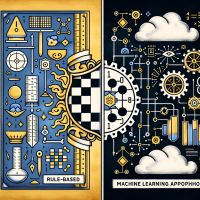
Choosing the Right Tool for Salesforce Deduplication: Rule-Based vs. Machine Learning Approaches When you browse Salesforce AppExchange for a deduplication solution, you’re presented with two primary options: rule-based deduplication tools or machine learning-powered applications. Both have their strengths, but understanding their methods will help you make an informed decision. Below, we’ll explore these approaches and their pros and cons to guide your choice. Why Salesforce’s Built-in Deduplication Falls Short Salesforce, while a powerful CRM, doesn’t excel at large-scale deduplication. Its native tools are limited to basic, rule-based matching, which may struggle with complexities like typos, inconsistent formatting, or unstructured data. Additionally, Salesforce’s deduplication features lack the scalability required for organizations dealing with large datasets or multiple data sources (e.g., third-party integrations, legacy systems). Businesses often need supplemental tools to address overlapping records or inconsistencies effectively. How Rule-Based Deduplication Works Popular rule-based tools on AppExchange, such as Cloudingo, DemandTools, DataGroomr, and Duplicate Check, require users to create filters that define what constitutes a duplicate. For example: Ultimately, the user manually defines the rules, deciding how duplicates are identified and handled. Benefits of Rule-Based Deduplication Drawbacks of Rule-Based Deduplication How Machine Learning-Based Deduplication Works Machine learning (ML)-powered tools rely on algorithms to identify patterns and relationships in data, detecting duplicates that may not be apparent through rigid rules. Key Features of ML Deduplication Techniques Used Benefits of ML-Based Deduplication Drawbacks of ML-Based Deduplication When to Choose Rule-Based vs. Machine Learning Deduplication Choose Rule-Based Deduplication If: Choose Machine Learning-Based Deduplication If: Selecting the Right Deduplication Tool When evaluating tools on AppExchange, consider these factors: Tectonic’s Closing Thoughts Rule-based and machine learning-based deduplication each serve distinct purposes. The right choice depends on your data’s complexity, the resources available, and your organization’s goals. Whether you’re seeking a quick, transparent solution or a powerful, scalable tool, AppExchange offers options to meet your needs and help maintain a clean Salesforce data environment. Like Related Posts Who is Salesforce? Who is Salesforce? Here is their story in their own words. From our inception, we’ve proudly embraced the identity of Read more Salesforce Marketing Cloud Transactional Emails Salesforce Marketing Cloud Transactional Emails are immediate, automated, non-promotional messages crucial to business operations and customer satisfaction, such as order Read more Salesforce Unites Einstein Analytics with Financial CRM Salesforce has unveiled a comprehensive analytics solution tailored for wealth managers, home office professionals, and retail bankers, merging its Financial Read more AI-Driven Propensity Scores AI plays a crucial role in propensity score estimation as it can discern underlying patterns between treatments and confounding variables Read more

Read More

How Advanced Analytics is Reducing Clinical Waste in Healthcare

As U.S. healthcare spending surges—reaching $4.9 trillion in 2023, a 7.5% increase from the previous year—health systems are seeking innovative ways to curb unnecessary costs. One key area of focus? Clinical waste—avoidable medical services that drive up expenses without improving patient outcomes. MultiCare Health System, a 13-hospital network based in Washington, has successfully tackled this challenge using AI-powered clinical decision support (CDS) tools. Partnering with health tech company IllumiCare, MultiCare has reduced unnecessary lab tests and medication orders, saving $2.5 million while maintaining care quality. What is Clinical Waste? Clinical waste refers to unnecessary medical services—such as redundant lab tests, excessive imaging, or inappropriate prescriptions—that inflate costs without benefiting patients. Studies show: Dr. Arun T. Mathews, MultiCare’s Regional Chief Medical Officer, explains: “A patient doesn’t always need a daily blood draw. The extra data may not help—and could even harm them.” How MultiCare is Cutting Waste with AI MultiCare deployed IllumiCare’s Smart Ribbon, an EHR-integrated CDS tool that: Key Features: ✔ Passive vs. Active Alerts – Clinicians receive contextual nudges (e.g., switching from IV to oral meds when appropriate).✔ Automated Order Adjustments – If a doctor accepts a recommendation, the system updates the order automatically, reducing cognitive load.✔ Shared Savings Incentives – Physicians earn performance bonuses for adopting cost-effective practices. Overcoming Adoption Challenges Initially, clinicians ignored alerts, seeing them as extra work. MultiCare’s solution? Result: The Bigger Picture While cost savings matter, patient care remains the priority. As Dr. Mathews notes: “The real win? Fewer unnecessary needle sticks, faster IV-to-oral transitions, and a better patient experience.” What’s Next? MultiCare plans to expand the tool systemwide, proving that smart analytics + clinician engagement can reduce waste without sacrificing care quality. Advanced analytics in healthcare leverages data to identify and address inefficiencies, ultimately reducing clinical waste by optimizing resource allocation, streamlining operations, and improving patient care, leading to cost savings and better outcomes.  Key Takeaway:By combining AI-driven insights with physician incentives, health systems can cut waste, lower costs, and keep patient care at the forefront. Like Related Posts Who is Salesforce? Who is Salesforce? Here is their story in their own words. From our inception, we’ve proudly embraced the identity of Read more Salesforce Marketing Cloud Transactional Emails Salesforce Marketing Cloud Transactional Emails are immediate, automated, non-promotional messages crucial to business operations and customer satisfaction, such as order Read more Salesforce Unites Einstein Analytics with Financial CRM Salesforce has unveiled a comprehensive analytics solution tailored for wealth managers, home office professionals, and retail bankers, merging its Financial Read more AI-Driven Propensity Scores AI plays a crucial role in propensity score estimation as it can discern underlying patterns between treatments and confounding variables Read more

Read More
gettectonic.com