Machine Learning Archives - gettectonic.com - Page 4
AI Agents as Tools of Trust

Reviving Cold Leads with AI Agents

Reviving Cold Leads with AI Agents: Turning Dormant Prospects into Sales Opportunities In sales and marketing, cold or dormant leads often represent untapped potential. AI-powered agents can transform these “dead” leads into engaged prospects by analyzing past interactions, identifying key behavioral patterns, and executing data-driven re-engagement strategies. By leveraging AI, businesses can reignite interest and significantly improve conversion rates, ensuring that no potential customer is left behind. How AI Agents Revive Leads 1. Intelligent Lead Scoring and Prioritization AI can assess historical data, engagement levels, and demographic information to rank leads based on their likelihood to convert. This enables sales teams to focus on high-potential leads while automating engagement with lower-priority ones. 2. Hyper-Personalized Communication AI-driven insights allow businesses to craft highly relevant, tailored messages that align with each lead’s past interactions, preferences, and pain points. 3. Automated Nurture Campaigns AI streamlines lead nurturing through automated workflows that deliver relevant content across multiple channels, ensuring consistent engagement without manual intervention. 4. Predictive Analytics for Lead Conversion By leveraging machine learning models, AI predicts which leads are most likely to convert and recommends the best engagement strategies. 5. Real-Time Dynamic Content Adaptation AI ensures that communication remains relevant by adjusting messaging in real-time based on user behavior and engagement. Key Benefits of Using AI to Revive Leads 1. Increased Conversion Rates AI enhances engagement by delivering highly targeted, relevant messaging, increasing the likelihood of turning cold leads into paying customers. 2. Enhanced Sales Efficiency By automating lead nurturing and prioritization, AI allows sales teams to focus on high-value interactions, reducing manual workload and improving overall efficiency. 3. Cost Reduction and Resource Optimization AI minimizes wasted marketing spend by identifying which leads are worth pursuing, ensuring that budgets are allocated effectively. 4. Scalable and Consistent Engagement AI-powered systems ensure that no lead falls through the cracks, maintaining consistent follow-ups and personalized interactions at scale. 5. Data-Driven Decision Making By continuously analyzing engagement metrics and refining strategies, AI enables sales and marketing teams to make smarter, data-backed decisions. Conclusion AI agents are revolutionizing lead revival by intelligently prioritizing prospects, personalizing communication, and automating engagement strategies. Salesforce Agentforce is leading the charge. By leveraging AI-driven insights and predictive analytics, businesses can transform dormant leads into active opportunities, driving higher conversions and maximizing sales efficiency. As AI technology continues to evolve, its ability to re-engage and convert leads will only become more sophisticated, making it an essential tool for any sales and marketing team. Like Related Posts Who is Salesforce? Who is Salesforce? Here is their story in their own words. From our inception, we’ve proudly embraced the identity of Read more Salesforce Marketing Cloud Transactional Emails Salesforce Marketing Cloud Transactional Emails are immediate, automated, non-promotional messages crucial to business operations and customer satisfaction, such as order Read more Salesforce Unites Einstein Analytics with Financial CRM Salesforce has unveiled a comprehensive analytics solution tailored for wealth managers, home office professionals, and retail bankers, merging its Financial Read more AI-Driven Propensity Scores AI plays a crucial role in propensity score estimation as it can discern underlying patterns between treatments and confounding variables Read more
Read More
ai in marketing

Guide to AI in Marketing

The Ultimate Guide to AI in Marketing AI-powered algorithms and machine learning are revolutionizing the marketing landscape by enabling swift processing and analysis of vast datasets. Unlike traditional methods, AI efficiently organizes large volumes of data in real time, redefining how marketing strategies are created and executed. Marketing success hinges on effective data utilization, precise targeting, engaging content, and seamless workflows. AI simplifies these complexities, making them more accessible, scalable, and impactful. Here’s how AI transforms modern marketing. Unleashing AI’s Potential in Marketing AI has become a cornerstone for enhancing customer experiences and boosting marketing productivity. However, to fully leverage AI, it’s essential to understand its capabilities and implementation strategies. Think of AI as your vehicle for uncovering actionable customer insights, optimizing campaigns, and creating tailored customer experiences. While the pace of AI’s evolution may seem overwhelming, this guide will help you take control and confidently drive your AI-powered marketing efforts. Future Trends in Generative AI and Marketing Generative AI is unlocking new possibilities in customer engagement. This guide explores the challenges, advantages, and emerging trends in AI-driven marketing. From attracting customers to maximizing ROI, you’ll discover best practices and real-world examples of successful AI adoption. How AI Works in Marketing AI uses advanced algorithms and pattern recognition to simulate human intelligence in processing data. Through machine learning and deep learning, it identifies trends, predicts outcomes, and automates tasks typically requiring human intervention. Like humans learning from experience, AI improves with practice. It rapidly identifies consumer preferences, behaviors, and purchasing patterns. Two primary types of AI stand out in marketing: These AI types work together—predictive AI extracts insights from data, while generative AI uses those insights to create personalized content and solutions. This synergy enables marketers to automate tasks, segment audiences, and deliver tailored messaging based on individual preferences. AI in Action: Enhancing Customer Engagement AI enables marketers to engage with customers more effectively by: The Power of AI-Driven Marketing Analytics AI-powered analytics revolutionize decision-making by identifying patterns and offering actionable insights. Marketers can use AI tools to: Maximizing ROI with AI AI enables businesses to expand audience reach, improve conversion rates, and enhance customer relationships through personalized content and product recommendations. Its real-time analytics empower marketers to make informed decisions, while automation frees up time for strategic innovation. Navigating Challenges in AI Marketing AI’s potential comes with challenges, including: By prioritizing ethical practices, transparent data policies, and robust compliance measures, marketers can overcome these obstacles and leverage AI responsibly. Best Practices for AI-Driven Marketing To maximize the benefits of AI, marketers should: The Future: AI Copilots in Marketing AI copilots—conversational AI integrated into platforms—are transforming marketing workflows. These tools draft content, provide recommendations, and offer guidance based on CRM data, significantly enhancing efficiency. Looking Ahead: Emerging Trends in AI Marketing Over the next two years, advancements in AI will continue to reshape marketing. Key trends include: By embracing these advancements, marketers can deliver exceptional customer experiences, drive business growth, and stay competitive in an evolving digital landscape. AI is not just a tool—it’s a transformative force. By integrating AI into your marketing strategy, you can unlock unparalleled opportunities to engage customers, optimize campaigns, and propel your organization into the future. Like Related Posts Who is Salesforce? Who is Salesforce? Here is their story in their own words. From our inception, we’ve proudly embraced the identity of Read more Salesforce Marketing Cloud Transactional Emails Salesforce Marketing Cloud Transactional Emails are immediate, automated, non-promotional messages crucial to business operations and customer satisfaction, such as order Read more Salesforce Unites Einstein Analytics with Financial CRM Salesforce has unveiled a comprehensive analytics solution tailored for wealth managers, home office professionals, and retail bankers, merging its Financial Read more AI-Driven Propensity Scores AI plays a crucial role in propensity score estimation as it can discern underlying patterns between treatments and confounding variables Read more
Read More
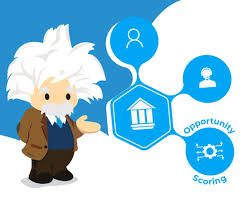
Opportunity Scoring with Einstein

Agentforce Versus Einstein

Salesforce offers a variety of tools and platforms to help businesses manage customer relationships, automate processes, and leverage AI for better decision-making. Two of its prominent offerings in the customer service and AI space are Service Cloud (Agent Console) and Einstein AI. Here’s a comparison of Agent Console (part of Service Cloud) and Einstein: 1. Salesforce Agent Console (Service Cloud) The Agent Console is a core component of Salesforce’s Service Cloud, which is designed to help customer service agents manage cases, interactions, and customer data efficiently. Key Features: Use Case: The Agent Console is ideal for customer service teams that need a centralized platform to manage customer interactions and resolve issues quickly. 2. Salesforce Einstein Einstein is Salesforce’s AI platform that integrates artificial intelligence across Salesforce products, including Service Cloud, Sales Cloud, Marketing Cloud, and more. It provides predictive analytics, automation, and personalized recommendations. Key Features: Use Case: Einstein is ideal for organizations looking to leverage AI to enhance customer service, improve decision-making, and automate routine tasks. Agent Console vs. Einstein: Key Differences Feature/Aspect Agent Console (Service Cloud) Einstein AI Purpose Centralized platform for managing customer service operations. AI-powered insights, automation, and personalization. Core Functionality Case management, omnichannel support, and agent productivity tools. Predictive analytics, chatbots, and AI-driven recommendations. Automation Workflow automation for case management and task routing. AI bots and automated responses for customer inquiries. Insights Basic reporting and analytics for agent performance. Advanced predictive analytics and AI-driven insights. Integration Part of Service Cloud, focused on customer service. Integrated across Salesforce products (Sales, Service, Marketing, etc.). User Interaction Primarily used by customer service agents. Used by agents, managers, and customers (via bots). How They Work Together The Agent Console and Einstein are not mutually exclusive; they complement each other. For example: Which One Should You Use? In many cases, businesses use both together to create a seamless, AI-enhanced customer service experience. Like Related Posts Who is Salesforce? Who is Salesforce? Here is their story in their own words. From our inception, we’ve proudly embraced the identity of Read more Salesforce Marketing Cloud Transactional Emails Salesforce Marketing Cloud Transactional Emails are immediate, automated, non-promotional messages crucial to business operations and customer satisfaction, such as order Read more Salesforce Unites Einstein Analytics with Financial CRM Salesforce has unveiled a comprehensive analytics solution tailored for wealth managers, home office professionals, and retail bankers, merging its Financial Read more AI-Driven Propensity Scores AI plays a crucial role in propensity score estimation as it can discern underlying patterns between treatments and confounding variables Read more

Read More
Generative AI Energy Consumption Rises

Generative AI Tools

Generative AI Tools: A Comprehensive Overview of Emerging Capabilities The widespread adoption of generative AI services like ChatGPT has sparked immense interest in leveraging these tools for practical enterprise applications. Today, nearly every enterprise app integrates generative AI capabilities to enhance functionality and efficiency. A broad range of AI, data science, and machine learning tools now support generative AI use cases. These tools assist in managing the AI lifecycle, governing data, and addressing security and privacy concerns. While such capabilities also aid in traditional AI development, this discussion focuses on tools specifically designed for generative AI. Not all generative AI relies on large language models (LLMs). Emerging techniques generate images, videos, audio, synthetic data, and translations using methods such as generative adversarial networks (GANs), diffusion models, variational autoencoders, and multimodal approaches. Here is an in-depth look at the top categories of generative AI tools, their capabilities, and notable implementations. It’s worth noting that many leading vendors are expanding their offerings to support multiple categories through acquisitions or integrated platforms. Enterprises may want to explore comprehensive platforms when planning their generative AI strategies. 1. Foundation Models and Services Generative AI tools increasingly simplify the development and responsible use of LLMs, initially pioneered through transformer-based approaches by Google researchers in 2017. 2. Cloud Generative AI Platforms Major cloud providers offer generative AI platforms to streamline development and deployment. These include: 3. Use Case Optimization Tools Foundation models often require optimization for specific tasks. Enterprises use tools such as: 4. Quality Assurance and Hallucination Mitigation Hallucination detection tools address the tendency of generative models to produce inaccurate or misleading information. Leading tools include: 5. Prompt Engineering Tools Prompt engineering tools optimize interactions with LLMs and streamline testing for bias, toxicity, and accuracy. Examples include: 6. Data Aggregation Tools Generative AI tools have evolved to handle larger data contexts efficiently: 7. Agentic and Autonomous AI Tools Developers are creating tools to automate interactions across foundation models and services, paving the way for autonomous AI. Notable examples include: 8. Generative AI Cost Optimization Tools These tools aim to balance performance, accuracy, and cost effectively. Martian’s Model Router is an early example, while traditional cloud cost optimization platforms are expected to expand into this area. Generative AI tools are rapidly transforming enterprise applications, with foundational, cloud-based, and domain-specific solutions leading the way. By addressing challenges like accuracy, hallucination, and cost, these tools unlock new potential across industries and use cases, enabling enterprises to stay ahead in the AI-driven landscape. Like Related Posts Who is Salesforce? Who is Salesforce? Here is their story in their own words. From our inception, we’ve proudly embraced the identity of Read more Salesforce Unites Einstein Analytics with Financial CRM Salesforce has unveiled a comprehensive analytics solution tailored for wealth managers, home office professionals, and retail bankers, merging its Financial Read more AI-Driven Propensity Scores AI plays a crucial role in propensity score estimation as it can discern underlying patterns between treatments and confounding variables Read more Tectonic’s Successful Salesforce Track Record Salesforce Technology Services Integrator – Tectonic has successfully delivered Salesforce in a variety of industries including Public Sector, Hospitality, Manufacturing, Read more

Read More
From Chatbots to Agentic AI

From Chatbots to Agentic AI

The transition from LLM-powered chatbots to agentic systems, or agentic AI, can be summed up by the old saying: “Less talk, more action.” Keeping up with advancements in AI can be overwhelming, especially when managing an existing business. The speed and complexity of innovation can make it feel like the first day of school all over again. This insight offers a comprehensive look at AI agents, their components, and key characteristics. The introductory section breaks down the elements that form the term “AI agent,” providing a clear definition. After establishing this foundation, we explore the evolution of LLM applications, particularly the shift from traditional chatbots to agentic systems. The goal is to understand why AI agents are becoming increasingly vital in AI development and how they differ from LLM-powered chatbots. By the end of this guide, you will have a deeper understanding of AI agents, their potential applications, and their impact on organizational workflows. For those of you with a technical background who prefer to get hands-on, click here for the best repository for AI developers and builders. What is an AI Agent? Components of AI Agents To understand the term “AI agent,” we need to examine its two main components. First, let’s consider artificial intelligence, or AI. Artificial Intelligence (AI) refers to non-biological intelligence that mimics human cognition to perform tasks traditionally requiring human intellect. Through machine learning and deep learning techniques, algorithms—especially neural networks—learn patterns from data. AI systems are used for tasks such as detection, classification, and prediction, with content generation becoming a prominent domain due to transformer-based models. These systems can match or exceed human performance in specific scenarios. The second component is “agent,” a term commonly used in both technology and human contexts. In computer science, an agent refers to a software entity with environmental awareness, able to perceive and act within its surroundings. A computational agent typically has the ability to: In human contexts, an agent is someone who acts on behalf of another person or organization, making decisions, gathering information, and facilitating interactions. They often play intermediary roles in transactions and decision-making. To define an AI agent, we combine these two perspectives: it is a computational entity with environmental awareness, capable of perceiving inputs, acting with tools, and processing information using foundation models backed by both long-term and short-term memory. Key Components and Characteristics of AI Agents From LLMs to AI Agents Now, let’s take a step back and understand how we arrived at the concept of AI agents, particularly by looking at how LLM applications have evolved. The shift from traditional chatbots to LLM-powered applications has been rapid and transformative. Form Factor Evolution of LLM Applications Traditional Chatbots to LLM-Powered Chatbots Traditional chatbots, which existed before generative AI, were simpler and relied on heuristic responses: “If this, then that.” They followed predefined rules and decision trees to generate responses. These systems had limited interactivity, with the fallback option of “Speak to a human” for complex scenarios. LLM-Powered Chatbots The release of OpenAI’s ChatGPT on November 30, 2022, marked the introduction of LLM-powered chatbots, fundamentally changing the game. These chatbots, like ChatGPT, were built on GPT-3.5, a large language model trained on massive datasets. Unlike traditional chatbots, LLM-powered systems can generate human-like responses, offering a much more flexible and intelligent interaction. However, challenges remained. LLM-powered chatbots struggled with personalization and consistency, often generating plausible but incorrect information—a phenomenon known as “hallucination.” This led to efforts in grounding LLM responses through techniques like retrieval-augmented generation (RAG). RAG Chatbots RAG is a method that combines data retrieval with LLM generation, allowing systems to access real-time or proprietary data, improving accuracy and relevance. This hybrid approach addresses the hallucination problem, ensuring more reliable outputs. LLM-Powered Chatbots to AI Agents As LLMs expanded, their abilities grew more sophisticated, incorporating advanced reasoning, multi-step planning, and the use of external tools (function calling). Tool use refers to an LLM’s ability to invoke specific functions, enabling it to perform more complex tasks. Tool-Augmented LLMs and AI Agents As LLMs became tool-augmented, the emergence of AI agents followed. These agents integrate reasoning, planning, and tool use into an autonomous, goal-driven system that can operate iteratively within a dynamic environment. Unlike traditional chatbot interfaces, AI agents leverage a broader set of tools to interact with various systems and accomplish tasks. Agentic Systems Agentic systems—computational architectures that include AI agents—embody these advanced capabilities. They can autonomously interact with systems, make decisions, and adapt to feedback, forming the foundation for more complex AI applications. Components of an AI Agent AI agents consist of several key components: Characteristics of AI Agents AI agents are defined by the following traits: Conclusion AI agents represent a significant leap from traditional chatbots, offering greater autonomy, complexity, and interactivity. However, the term “AI agent” remains fluid, with no universal industry standard. Instead, it exists on a continuum, with varying degrees of autonomy, adaptability, and proactive behavior defining agentic systems. Value and Impact of AI Agents The key benefits of AI agents lie in their ability to automate manual processes, reduce decision-making burdens, and enhance workflows in enterprise environments. By “agentifying” repetitive tasks, AI agents offer substantial productivity gains and the potential to transform how businesses operate. As AI agents evolve, their applications will only expand, driving new efficiencies and enabling organizations to leverage AI in increasingly sophisticated ways. Like Related Posts Who is Salesforce? Who is Salesforce? Here is their story in their own words. From our inception, we’ve proudly embraced the identity of Read more Salesforce Unites Einstein Analytics with Financial CRM Salesforce has unveiled a comprehensive analytics solution tailored for wealth managers, home office professionals, and retail bankers, merging its Financial Read more AI-Driven Propensity Scores AI plays a crucial role in propensity score estimation as it can discern underlying patterns between treatments and confounding variables Read more Tectonic’s Successful Salesforce Track Record Salesforce Technology Services Integrator – Tectonic has successfully delivered Salesforce in a variety of industries including Public Sector, Hospitality, Manufacturing, Read more
Read More
Rise of Agentforce

How Agentforce Augments Marketing Cloud

Key Features of Salesforce Agentforce for Marketing and Marketers AI-Powered Assistance: Agentforce leverages AI to automate and optimize marketing tasks, allowing your team to focus on strategic initiatives. From generating campaign plans to analyzing metrics, Agentforce acts as your trusted assistant working around the clock with nary a coffee break. Omnichannel Support: Engage with customers across multiple platforms, including email, social media, and messaging apps like WhatsApp. Agentforce ensures a consistent and personalized experience at every touchpoint. Recognizing your prospect and customer throughout every interaction. Real-Time Analytics and Reporting: Gain in-depth insights into your marketing performance with real-time analytics. Agentforce helps you track key metrics and make data-driven decisions to improve your campaigns. Integration with Salesforce CRM: Seamlessly connect Agentforce with your existing Salesforce CRM to leverage customer data and create more targeted and effective marketing strategies. Proactive Customer Engagement: Agentforce enables personalized, two-way conversations with customers, helping you build deeper relationships and reduce churn through proactive retention strategies. Added Value of Integrating Agentforce with Salesforce Marketing Cloud The integration of Agentforce with the Salesforce Marketing Cloud platform, whether you choose the Growth or Advanced edition, brings several benefits: Enhanced Personalization: With the power of AI and unified customer profiles, you can deliver highly personalized content and offers across every customer interaction. Scalability and Efficiency: The Growth edition supports companies looking to scale their marketing efforts with powerful data tools and content management features. The Advanced edition offers additional tools for deeper insights and more sophisticated customer engagement strategies. Seamless Campaign Management: Both editions provide tools to create, deploy, and adapt campaigns faster, with Agentforce helping to surface insights, define strategy, and generate content. Improved Customer Journeys: Use intelligent reprioritization and real-time interaction management to enhance customer journeys and drive better engagement. Elevating Customer Experience with AI-Powered Marketing Offering a great product or service is important—but have you considered how your customers feel when they engage with your brand? Beyond features and pricing, the real differentiator is the experience you create. How the customer experiences your company can be more impactful than how they experience your product or service. Salesforce research reveals that 80% of customers value their experience with a company as much as the products or services themselves. It’s not just about what you have to offer; it’s about how you make people feel at every interaction. Because in today’s competitive marketplace, customers don’t just buy products—they invest in experiences. In the go-to-market space, Salesforce Agentforce is redefining the Marketing Cloud experience by making customer interactions more intelligent, personalized, and human-like than ever before—all powered by AI. Imagine a marketing strategy where every interaction—every click, every purchase—delivers actionable insights instead of guesswork. This is the future of AI-driven marketing. In fact, recent research found that nearly half (46%) of financial services firms leveraging AI report enhanced customer experiences. With AI-driven automation, conversational intelligence, and predictive analytics, Agentforce helps businesses engage customers at the right time, in the right way, and on the right platform—building deeper, more meaningful relationships. Salesforce’s Ongoing Relationship with Data Since pioneering cloud-based CRM in 1999, Salesforce has been relentless in its pursuit of data-driven experiences. Over time, its capabilities have expanded far beyond traditional CRM, culminating in the Salesforce Data Cloud—a unified data platform that consolidates insights across Sales, Service, Commerce, and Marketing. Data, especially the data we use for ongoing marketing, lives in various platforms like email, advertising tools, social media, analytics, CRMs, and perhaps even spreadsheets. And it is completely unstructured. What began as a Data Management Platform has evolved into a real-time decision-making engine. By integrating Agentforce AI, Data Cloud moves beyond just storing information—it enables businesses to act on real-time insights with automation and intelligence that move deals closer to the goalpost. Meet Agentforce: Humanizing AI in Marketing Cloud At the heart of AI-driven marketing transformation is quality data—which is why Einstein AI is built on Salesforce Data Cloud. “AI is only as good as the data that powers it, and Salesforce is where thousands of companies across industries manage their sales, service, marketing, commerce, and IT data,” says Jayesh Govindarajan, Salesforce SVP of AI & Machine Learning. “That’s an advantage for Salesforce customers because they can use their existing data to create and deliver AI-generated content at scale, seamlessly within their current workflows.” With Agentforce, businesses go beyond access to data—they gain an AI partner that understands how to foster authentic customer connections. How AI is Humanizing the Marketing Experience Instead of generic messaging, Agentforce crafts and delivers hyper-personalized content, offers, and recommendations—at scale. The Future of AI-Driven Marketing is Here With Agentforce, Salesforce Data Cloud, and Einstein GPT, businesses can move beyond static campaigns and embrace dynamic, AI-driven experiences that feel authentic, intuitive, and deeply personal. The next era of marketing isn’t just about automation—it’s about delivering humanized AI experiences that drive lasting customer relationships. The evolution of Einstein, GPT, AI, and Data on top of a powerful marketing platform is the future of AI-driven marketing. Like Related Posts Who is Salesforce? Who is Salesforce? Here is their story in their own words. From our inception, we’ve proudly embraced the identity of Read more Salesforce Marketing Cloud Transactional Emails Salesforce Marketing Cloud Transactional Emails are immediate, automated, non-promotional messages crucial to business operations and customer satisfaction, such as order Read more Salesforce Unites Einstein Analytics with Financial CRM Salesforce has unveiled a comprehensive analytics solution tailored for wealth managers, home office professionals, and retail bankers, merging its Financial Read more AI-Driven Propensity Scores AI plays a crucial role in propensity score estimation as it can discern underlying patterns between treatments and confounding variables Read more

Read More
AI Captivates the World

AI Captivates the World

In the late 1990s, a transformative moment unfolded that expanded the world to enquiring minds—the screeching of a dial-up modem, followed by a pixelated “Welcome” screen that connected users to a vast, invisible network spanning the globe. The internet revolution redefined how people interacted with information and one another, permanently reshaping digital communication. Fast forward to 2024, and a similar wave of innovation is underway. Artificial intelligence is captivating the world with its ability to understand, create, and process information. Massive datasets can now be uploaded to AI tools, which instantly distill complex insights—tasks that once took teams of analysts weeks to complete are now executed in seconds. Just as the internet linked people and information, AI is deepening connectivity across all aspects of life, from healthcare and finance to workplaces and homes. In this evolving digital divide, designers hold a critical role—not only in making AI usable but in ensuring it remains understandable, trustworthy, and human-centered. As Fei-Fei Li, Co-Director of Stanford’s Human-Centered AI Institute, states, “If we want machines to think, we need to teach them to see.” The traditional linear process of problem ideation, design, prototyping, and delivery is no longer sufficient for AI design. Instead, designers find themselves on an “AI design rollercoaster”—a dynamic cycle of constant iteration. One day, a seemingly impossible feature is prototyped, and the next, the entire approach pivots due to breakthroughs in large language model (LLM) capabilities. Many teams develop working prototypes before even defining their target audience. It is akin to painting a landscape from a moving train—compelling, challenging, and occasionally bewildering. However, this state of flux is where innovation thrives. Strategies for Designers: Understanding AI’s Capabilities and Limitations Designing for AI requires an understanding of its strengths and weaknesses. While designers do not need to become machine learning engineers, they must grasp AI fundamentals to communicate effectively with technical teams. For example, neural networks excel at recognizing patterns in unstructured data but often struggle with logical reasoning. Recognizing these limitations prevents the development of features that sound promising in theory but fail in practice. Strategies for Designers: Designing for Data Scalability Data is the lifeblood of AI systems, yet its quality and availability fluctuate over time. Designers must create interfaces that can adapt to changing data landscapes. For instance, an AI-powered personal finance app may initially rely on basic transaction data but later incorporate richer datasets for advanced investment recommendations. Interfaces should be modular and scalable, capable of accommodating evolving AI functionalities. Strategies for Designers: The Role of Prototyping in AI Design Static wireframes and basic mockups are insufficient for AI-driven products. AI prototypes must capture the responsive, dynamic nature of intelligent systems. Interactive prototypes offer stakeholders a tangible preview of AI’s potential, highlighting both opportunities and challenges early in the design process. Strategies for Designers: Developing AI Design Intuition To navigate AI design effectively, professionals must cultivate an “AI design sixth sense”—an intuitive understanding of what works well in AI-driven interactions. Immersing in AI experiences, exploring different tools, and analyzing emerging design patterns help build this expertise. Strategies for Designers: Pushing Boundaries in AI Design There are no established rulebooks for AI design—only a vast frontier waiting to be explored. The absence of rigid norms offers designers the freedom to experiment and push boundaries. Some of the most groundbreaking innovations stem from unconventional ideas once deemed impractical. Strategies for Designers: Strengthening Collaboration Between Design and Engineering In AI product design, the traditional “design then handoff” model is giving way to a more integrated approach. Designers and engineers increasingly work in tandem, refining AI experiences through continuous iteration. Some of the most effective design solutions emerge from close collaboration with technical teams. Strategies for Designers: The Next Frontier of Design As AI design continues to evolve, the parallels to the early days of the internet are striking. The excitement, potential, and magnitude of change are reminiscent of Web 1.0, yet amplified in scope. Looking ahead, the field must address profound questions: Will AI become indistinguishable from human intelligence? Will designers craft interfaces for AI-human hybrids yet to be imagined? Designers play an essential role in shaping this future—not as passive observers, but as architects of the next digital revolution. The experiences they create will define humanity’s interactions with artificial intelligence. This responsibility should inspire innovation, challenge conventions, and push the boundaries of what is possible. Call to Action Begin the AI design journey today. Choose an AI tool, explore its interface, and analyze its capabilities. Identify strengths, weaknesses, and opportunities for improvement. Share insights with fellow designers and contribute to the evolving conversation on AI design. The next breakthrough may arise from a single moment of curiosity. Like Related Posts Who is Salesforce? Who is Salesforce? Here is their story in their own words. From our inception, we’ve proudly embraced the identity of Read more Salesforce Unites Einstein Analytics with Financial CRM Salesforce has unveiled a comprehensive analytics solution tailored for wealth managers, home office professionals, and retail bankers, merging its Financial Read more AI-Driven Propensity Scores AI plays a crucial role in propensity score estimation as it can discern underlying patterns between treatments and confounding variables Read more Tectonic’s Successful Salesforce Track Record Salesforce Technology Services Integrator – Tectonic has successfully delivered Salesforce in a variety of industries including Public Sector, Hospitality, Manufacturing, Read more

Read More
AI is revolutionizing BI by transforming it from a retrospective tool into a proactive, real-time decision-making engine.

AI in Business Intelligence

AI in Business Intelligence: Applications, Benefits, and Challenges AI is rapidly transforming business intelligence (BI) by enhancing analytics capabilities and streamlining processes. This shift is reshaping how organizations leverage data for decision-making. Here’s an in-depth look at how AI complements BI, its advantages, and the challenges it introduces. The Evolution of Business Intelligence with AI BI has traditionally focused on aggregating historical and current data to provide insights into business operations—a process known as descriptive analytics. However, many decision-makers seek more: insights into future trends (predictive analytics) and actionable recommendations (prescriptive analytics). AI bridges this gap. With advanced tools like natural language processing (NLP) and machine learning (ML), AI enables businesses to move beyond static dashboards to dynamic, real-time insights. It also simplifies complex analytics, making data more accessible to business users and fostering more informed, proactive decision-making. Key Benefits of AI in Business Intelligence AI brings significant benefits to BI, including: Real-World Applications of AI in BI AI’s integration into BI goes beyond internal efficiency, delivering external value by enhancing customer experiences and driving business growth. Notable applications include: Challenges of AI in Business Intelligence Despite its potential, integrating AI into BI comes with challenges: Best Practices for AI-Driven BI To successfully integrate AI with BI, organizations should: Future Trends in AI and BI AI is expected to augment rather than replace BI, enhancing its capabilities while keeping human expertise central. Emerging trends include: Conclusion AI is revolutionizing BI by transforming it from a retrospective tool into a proactive, real-time decision-making engine. While challenges remain, thoughtful implementation and adherence to best practices can help organizations unlock AI’s full potential in BI. By integrating AI into existing BI workflows, businesses can drive innovation, improve decision-making, and create more agile and data-driven operations. Like Related Posts Who is Salesforce? Who is Salesforce? Here is their story in their own words. From our inception, we’ve proudly embraced the identity of Read more Salesforce Unites Einstein Analytics with Financial CRM Salesforce has unveiled a comprehensive analytics solution tailored for wealth managers, home office professionals, and retail bankers, merging its Financial Read more AI-Driven Propensity Scores AI plays a crucial role in propensity score estimation as it can discern underlying patterns between treatments and confounding variables Read more Tectonic’s Successful Salesforce Track Record Salesforce Technology Services Integrator – Tectonic has successfully delivered Salesforce in a variety of industries including Public Sector, Hospitality, Manufacturing, Read more

Read More
AI Leader Salesforce

Sales Leads and Lead Scoring

Sales teams often face a growing pile of leads, making it overwhelming to determine where to focus their energy. How do you prioritize effectively? Lead scoring is the answer. This methodology helps rank prospects based on their likelihood to convert into customers. By mastering lead scoring, sales teams can win more deals and drive revenue growth. What is Lead Scoring? Lead scoring is a strategy used by sales teams to evaluate and rank potential customers by assigning values based on their behavior, demographics, and interactions with the business. This process identifies high-quality leads and determines their likelihood of conversion. By implementing lead scoring, sales teams can focus their time and resources on the most promising prospects. Why is Lead Scoring Important? According to the Salesforce State of Sales Report, sales reps spend 25% of their workweek researching, prospecting, and prioritizing leads. These activities are essential for moving prospects through the sales funnel, yet balancing them with other responsibilities is a challenge. Lead scoring streamlines this process, enabling teams to be more productive by focusing on high-value leads. This improves conversion rates while helping sales leadership better forecast pipelines and revenue. For example, imagine a sales rep for a medical software company trying to close deals with 100 hospital leads. Pursuing them randomly wastes time. However, with lead scoring, they can identify the top 10 most promising leads based on specific criteria, saving time and increasing success rates. Key Components of an Effective Lead Scoring System 1. Data Categories 2. Implicit vs. Explicit Data 3. Quality Data A reliable lead scoring system depends on accurate and up-to-date data. Keeping CRM records current and synced ensures a dependable scoring process. 4. Rule Definition Define criteria based on your most successful customer profiles. Identify patterns of attributes and behaviors that consistently lead to conversion. Similarly, assess unconverted leads to understand traits that signal low potential. 5. Manual vs. Predictive Scoring Steps to Implement Lead Scoring Common Lead Scoring Mistakes to Avoid Tools and Software for Lead Scoring The right tools can make lead scoring more efficient: If you’re short on data, opt for tools that can leverage anonymized external datasets to build your scoring model, transitioning to your own data over time as you scale. Real-World Examples Lead Scoring: Your Path to Higher Conversions By effectively implementing lead scoring, your sales team can prioritize high-value leads, boost conversion rates, and achieve sustainable revenue growth. Whether you choose manual or predictive methods, the key is to focus on what drives success for your business. Take control of your sales pipeline—lead scoring will show you the way. Like Related Posts Who is Salesforce? Who is Salesforce? Here is their story in their own words. From our inception, we’ve proudly embraced the identity of Read more Salesforce Marketing Cloud Transactional Emails Salesforce Marketing Cloud Transactional Emails are immediate, automated, non-promotional messages crucial to business operations and customer satisfaction, such as order Read more Salesforce Unites Einstein Analytics with Financial CRM Salesforce has unveiled a comprehensive analytics solution tailored for wealth managers, home office professionals, and retail bankers, merging its Financial Read more AI-Driven Propensity Scores AI plays a crucial role in propensity score estimation as it can discern underlying patterns between treatments and confounding variables Read more
Read More
No-Code Generative AI

No-Code Generative AI

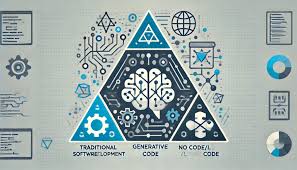
The future of AI belongs to everyone, and no-code platforms are the key to making this vision a reality. By embracing this approach, enterprises can ensure that AI-driven innovation is inclusive, efficient, and transformative.

Read More
Artificial Intelligence (AI) is significantly transforming threat detection by enabling faster, more accurate identification of potential security breaches through its ability to analyze vast amounts of data in real-time, detect anomalies and patterns that might indicate a threat, even when those threats are new or previously unknown, thus providing a proactive approach to cybersecurity compared to traditional rule-based systems.

AI is Transforming Threat Detection

Artificial Intelligence (AI) is significantly transforming threat detection by enabling faster, more accurate identification of potential security breaches through its ability to analyze vast amounts of data in real-time, detect anomalies and patterns that might indicate a threat, even when those threats are new or previously unknown, thus providing a proactive approach to cybersecurity compared to traditional rule-based systems.

Read More
AI and UX Design

AI and UX Design

This insight comprehensively covers how AI is transforming UX design, presenting both opportunities and challenges while emphasizing the importance of maintaining a human-centric approach. Here’s a polished and slightly condensed version, retaining the core points for better clarity and engagement: AI in UX Design: Transforming Experiences in 2024 and Beyond In 2024, artificial intelligence (AI) is redefining user experience (UX) design and research. From streamlining processes to elevating personalization, UX professionals are integrating AI into their workflows to create experiences that are more intuitive and efficient. This insight explores how AI is reshaping UX and how designers can leverage it while preserving the human touch. How AI is Revolutionizing UX Design 1. Advanced AI Technologies in UXAI technologies like machine learning (ML), natural language processing (NLP), and computer vision are empowering designers with tools to understand user behavior better, build conversational interfaces, and create accessible, adaptable designs. These innovations provide deeper insights into user preferences and help refine interfaces to align with evolving needs. 2. Automating Routine Design TasksAI is taking over repetitive tasks such as rapid prototyping, A/B testing, and user data analysis, allowing designers to focus on creative, strategic challenges. For example: 3. Enhanced PersonalizationAI-driven systems offer dynamic content delivery, adaptive interfaces, and predictive behavior modeling to craft uniquely tailored experiences. These enhancements not only engage users but also foster loyalty by addressing individual preferences in real time. Balancing AI and Human-Centric Design While AI accelerates UX processes, maintaining a human-centered approach is essential. Successful integration requires: Best Practices for AI-Driven UX Design Ethical Considerations in AI-Enhanced UX Ethics remain at the forefront of AI in UX. Key concerns include: Learning from Case Studies These examples highlight how thoughtful AI integration can transform UX into a seamless, user-friendly journey. Preparing for Future Trends Looking ahead to 2025 and beyond, AI will continue to introduce innovations like emotional recognition and generative design, enabling even more intuitive user experiences. However, challenges such as data privacy concerns and high implementation costs will persist. UX professionals must adapt by blending AI-driven insights with human creativity, ensuring that designs remain empathetic and accessible. Conclusion AI is revolutionizing UX design, offering tools to enhance efficiency, personalization, and user engagement. The key to success lies in using AI as a complement to creativity rather than a replacement. By balancing automation with human-centered principles and committing to ethical practices, businesses can harness AI to create transformative, user-focused designs that truly resonate. Like Related Posts Who is Salesforce? Who is Salesforce? Here is their story in their own words. From our inception, we’ve proudly embraced the identity of Read more Salesforce Unites Einstein Analytics with Financial CRM Salesforce has unveiled a comprehensive analytics solution tailored for wealth managers, home office professionals, and retail bankers, merging its Financial Read more AI-Driven Propensity Scores AI plays a crucial role in propensity score estimation as it can discern underlying patterns between treatments and confounding variables Read more Tectonic’s Successful Salesforce Track Record Salesforce Technology Services Integrator – Tectonic has successfully delivered Salesforce in a variety of industries including Public Sector, Hospitality, Manufacturing, Read more

Read More
MOIRAI-MoE

MOIRAI-MoE

MOIRAI-MoE represents a groundbreaking advancement in time series forecasting by introducing a flexible, data-driven approach that addresses the limitations of traditional models. Its sparse mixture of experts architecture achieves token-level specialization, offering significant performance improvements and computational efficiency. By dynamically adapting to the unique characteristics of time series data, MOIRAI-MoE sets a new standard for foundation models, paving the way for future innovations and expanding the potential of zero-shot forecasting across diverse industries.

Read More
Transforming the Role of Data Science Teams

Transforming the Role of Data Science Teams

GenAI: Transforming the Role of Data Science Teams Challenges, Opportunities, and the Evolving Responsibilities of Data Scientists Generative AI (GenAI) is revolutionizing the AI landscape, offering faster development cycles, reduced technical overhead, and enabling groundbreaking use cases that once seemed unattainable. However, it also introduces new challenges, including the risks of hallucinations and reliance on third-party APIs. For Data Scientists and Machine Learning (ML) teams, this shift directly impacts their roles. GenAI-driven projects, often powered by external providers like OpenAI, Anthropic, or Meta, blur traditional lines. AI solutions are increasingly accessible to non-technical teams, but this accessibility raises fundamental questions about the role and responsibilities of data science teams in ensuring effective, ethical, and future-proof AI systems. Let’s explore how this evolution is reshaping the field. Expanding Possibilities Without Losing Focus While GenAI unlocks opportunities to solve a broader range of challenges, not every problem warrants an AI solution. Data Scientists remain vital in assessing when and where AI is appropriate, selecting the right approaches—whether GenAI, traditional ML, or hybrid solutions—and designing reliable systems. Although GenAI broadens the toolkit, two factors shape its application: For example, incorporating features that enable user oversight of AI outputs may prove more strategic than attempting full automation with extensive fine-tuning. Differentiation will not come from simply using LLMs, which are widely accessible, but from the unique value and functionality they enable. Traditional ML Is Far from Dead—It’s Evolving with GenAI While GenAI is transformative, traditional ML continues to play a critical role. Many use cases, especially those unrelated to text or images, are best addressed with ML. GenAI often complements traditional ML, enabling faster prototyping, enhanced experimentation, and hybrid systems that blend the strengths of both approaches. For instance, traditional ML workflows—requiring extensive data preparation, training, and maintenance—contrast with GenAI’s simplified process: prompt engineering, offline evaluation, and API integration. This allows rapid proof of concept for new ideas. Once proven, teams can refine solutions using traditional ML to optimize costs or latency, or transition to Small Language Models (SMLs) for greater control and performance. Hybrid systems are increasingly common. For example, DoorDash combines LLMs with ML models for product classification. LLMs handle cases the ML model cannot classify confidently, retraining the ML system with new insights—a powerful feedback loop. GenAI Solves New Problems—But Still Needs Expertise The AI landscape is shifting from bespoke in-house models to fewer, large multi-task models provided by external vendors. While this simplifies some aspects of AI implementation, it requires teams to remain vigilant about GenAI’s probabilistic nature and inherent risks. Key challenges unique to GenAI include: Data Scientists must ensure robust evaluations, including statistical and model-based metrics, before deployment. Monitoring tools like Datadog now offer LLM-specific observability, enabling teams to track system performance in real-world environments. Teams must also address ethical concerns, applying frameworks like ComplAI to benchmark models and incorporating guardrails to align outputs with organizational and societal values. Building AI Literacy Across Organizations AI literacy is becoming a critical competency for organizations. Beyond technical implementation, competitive advantage now depends on how effectively the entire workforce understands and leverages AI. Data Scientists are uniquely positioned to champion this literacy by leading initiatives such as internal training, workshops, and hackathons. These efforts can: The New Role of Data Scientists: A Strategic Pivot The role of Data Scientists is not diminishing but evolving. Their expertise remains essential to ensure AI solutions are reliable, ethical, and impactful. Key responsibilities now include: By adapting to this new landscape, Data Scientists will continue to play a pivotal role in guiding organizations to harness AI effectively and responsibly. GenAI is not replacing them; it’s expanding their impact. Like Related Posts Who is Salesforce? Who is Salesforce? Here is their story in their own words. From our inception, we’ve proudly embraced the identity of Read more Salesforce Unites Einstein Analytics with Financial CRM Salesforce has unveiled a comprehensive analytics solution tailored for wealth managers, home office professionals, and retail bankers, merging its Financial Read more AI-Driven Propensity Scores AI plays a crucial role in propensity score estimation as it can discern underlying patterns between treatments and confounding variables Read more Tectonic’s Successful Salesforce Track Record Salesforce Technology Services Integrator – Tectonic has successfully delivered Salesforce in a variety of industries including Public Sector, Hospitality, Manufacturing, Read more
Read More
gettectonic.com