
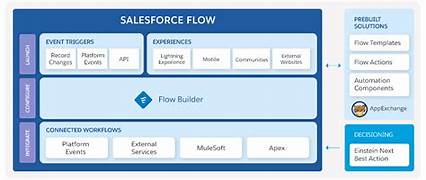
Salesforce Flow
Salesforce Flow is a tool designed to automate complex business processes by collecting and manipulating data. Flow Builder, the declarative interface for creating flows, allows users to construct logic similar to coding without requiring programming expertise. When customers engage with a company—whether purchasing tickets, managing bills, or arranging reservations—they anticipate a seamless, personalized experience. Flow Builder empowers users to automate processes across Salesforce applications, experiences, and portals with intuitive, point-and-click functionality. Types of Flows in Salesforce include: Advantages of Salesforce Flow: Difference between Flow and Workflow in Salesforce: Flow offers more versatility than workflow rules and process builders. While workflows operate in the background, flows can guide users through processes with interactive screens and are not limited to specific objects. Flows have the capability to create, update, and delete records across multiple objects. Here’s a structured approach to effectively leverage Flow Builder: Flow Builder equips users with robust tools for automating Salesforce processes while adhering to best practices. By following these guidelines, users can develop efficient, tailored flows that align with specific business requirements. Like Related Posts Who is Salesforce? Who is Salesforce? Here is their story in their own words. From our inception, we’ve proudly embraced the identity of Read more Salesforce Marketing Cloud Transactional Emails Salesforce Marketing Cloud Transactional Emails are immediate, automated, non-promotional messages crucial to business operations and customer satisfaction, such as order Read more Salesforce Unites Einstein Analytics with Financial CRM Salesforce has unveiled a comprehensive analytics solution tailored for wealth managers, home office professionals, and retail bankers, merging its Financial Read more AI-Driven Propensity Scores AI plays a crucial role in propensity score estimation as it can discern underlying patterns between treatments and confounding variables Read more


