Marc Benioff Archives - gettectonic.com - Page 6
Generative AI Glossary

Key Questions to Ask About Generative AI Before Diving into the Gene Pool

As generative AI plays an increasingly significant role in shaping business decisions and reshaping customer relationships, leaders must grasp the potential.  This means use cases, and risks associated with AI. The good, the bad, and the ugly.  Questions to Ask About Generative AI gene pool. The journey begins with asking pertinent questions. Are you feeling overwhelmed by generative AI yet? The multitude of questions that businesses need to address regarding AI—covering technology, skills, privacy, data, and organizational requirements, among others—can be seemingly endless. Knowing where to start and identifying the most crucial AI-related questions before jumping into implementation can be challenging.  But it is totally worth the time. “Many organizations are venturing into AI for the first time. They are transitioning from predictive AI, machine learning, or deep learning to explore the next generation of AI for elevating productivity.” Marc Benioff, CEO of Salesforce While the demand and potential of AI are substantial, so are the associated risks. To assist in navigating this landscape, here’s a snapshot: Employee View: Exec Summary: Your Next Move: By Tectonic’s Marketing Consultant, Shannan Hearne Like Related Posts Who is Salesforce? Who is Salesforce? Here is their story in their own words. From our inception, we’ve proudly embraced the identity of Read more Salesforce Marketing Cloud Transactional Emails Salesforce Marketing Cloud Transactional Emails are immediate, automated, non-promotional messages crucial to business operations and customer satisfaction, such as order Read more Salesforce Unites Einstein Analytics with Financial CRM Salesforce has unveiled a comprehensive analytics solution tailored for wealth managers, home office professionals, and retail bankers, merging its Financial Read more AI-Driven Propensity Scores AI plays a crucial role in propensity score estimation as it can discern underlying patterns between treatments and confounding variables Read more

Read More
Salesforce is Hiring

Salesforce is Hiring

Salesforce is hiring approximately 3,000 new employees, CEO Marc Benioff announced in an interview with Bloomberg this week. This hiring initiative comes after the company laid off 10% of its workforce earlier this year as part of a significant cost-cutting effort. Salesforce is hiring. Yahoo story here. In January, Salesforce announced the layoffs of 8,000 employees, reducing its workforce from around 79,390. The job cuts were met with internal backlash, with employees criticizing the handling of the layoffs. According to Insider’s Ashley Stewart, staff were left in the dark, having to use Slack to check who among their colleagues had been let go, likening the experience to checking a missing persons bulletin board after a disaster. Despite the recent layoffs, Benioff is now focused on growth and expansion. He emphasized the need for new hires in a Bloomberg interview during Salesforce’s annual conference in San Francisco. “Our job is to grow the company and to continue to achieve great margins,” Benioff stated. “We know we have to hire thousands of people.” The new employees will be distributed across various departments, including sales, engineering, and the data cloud product teams. These roles are crucial as Salesforce aims to bolster its artificial intelligence business and attract further investments. Chief Operating Officer Brian Millham also spoke to Bloomberg, highlighting the company’s successful business segments and the need for a surge in those areas. Millham explained, “We have some very successful parts of our business right now, and we want a surge in those areas.” This strategic hiring push aims to capitalize on these thriving sectors, driving Salesforce’s continued growth and innovation. In an effort to bring back former employees, Benioff is particularly interested in attracting “boomerangs”—those who left Salesforce for other opportunities. He shared with Bloomberg that he recently held an “alumni event” to encourage these former employees to return, reassuring them that it is “OK” to come back to the company. This move signifies a shift in Salesforce’s strategy, from drastic cost-cutting measures to a renewed focus on expansion and talent acquisition. By rehiring experienced former employees and bringing in new talent, Salesforce aims to strengthen its workforce and position itself for future success. Like Related Posts Who is Salesforce? Who is Salesforce? Here is their story in their own words. From our inception, we’ve proudly embraced the identity of Read more Salesforce Marketing Cloud Transactional Emails Salesforce Marketing Cloud Transactional Emails are immediate, automated, non-promotional messages crucial to business operations and customer satisfaction, such as order Read more Salesforce Unites Einstein Analytics with Financial CRM Salesforce has unveiled a comprehensive analytics solution tailored for wealth managers, home office professionals, and retail bankers, merging its Financial Read more AI-Driven Propensity Scores AI plays a crucial role in propensity score estimation as it can discern underlying patterns between treatments and confounding variables Read more

Read More
Benioff Dreams of AI Making Messaging Intelligent

Benioff Dreams of AI Making Messaging Intelligent

During the company’s recent earnings call, Salesforce CEO Marc Benioff spoke about the “revolutionary” impacts of generative AI, emphasizing the immense potential it holds for the tech industry. Benioff Dreams of AI Making Messaging Intelligent. Benioff highlighted Salesforce’s integration of OpenAI’s ChatGPT platform into Slack, the workplace messaging app owned by Salesforce. This integration aims to enhance Slack’s capabilities by enabling features such as conversation summarization, research assistance, and message drafting directly within the platform. Benioff expressed his vision for Slack to become intelligent itself, leveraging the wealth of data stored within the platform. He emphasized the transformative potential of generative AI in providing intelligent support to users, potentially revolutionizing customer service interactions and business operations. Salesforce’s clients, including Gucci, are already leveraging AI to enhance customer service experiences, reflecting the growing adoption of AI-driven solutions across various industries. Generative AI offers benefits such as time-saving automation of routine tasks, efficient research gathering, and concise information delivery, benefiting individuals in personal, professional, and academic contexts. However, concerns regarding the ethical implications of generative AI have also surfaced, including issues related to deepfake images, bias, and potential job displacement. Some advocate for stricter regulation and careful assessment of AI’s risks before further development. Benioff Dreams of AI Making Messaging Intelligent Despite these concerns, Benioff remains optimistic about the transformative potential of generative AI, describing it as a revolution that will reshape the world in unprecedented ways. He believes that we are only at the beginning of this AI revolution, with much more innovation and transformation yet to come. Like Related Posts Who is Salesforce? Who is Salesforce? Here is their story in their own words. From our inception, we’ve proudly embraced the identity of Read more Salesforce Marketing Cloud Transactional Emails Salesforce Marketing Cloud Transactional Emails are immediate, automated, non-promotional messages crucial to business operations and customer satisfaction, such as order Read more Salesforce Unites Einstein Analytics with Financial CRM Salesforce has unveiled a comprehensive analytics solution tailored for wealth managers, home office professionals, and retail bankers, merging its Financial Read more AI-Driven Propensity Scores AI plays a crucial role in propensity score estimation as it can discern underlying patterns between treatments and confounding variables Read more

Read More
New Nonprofit Cloud

The New Nonprofit Cloud

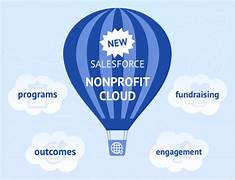
Salesforce.org recently announced the “New Nonprofit Cloud,” and Lori Freeman shared this update in the Trailblazer Community. Here’s a summary of the key points: Salesforce.org is rolling out an entirely new suite of technology solutions for nonprofits over the next few years, collectively named “Nonprofit Cloud.” These solutions will not be based on, nor compatible with, current offerings like NPSP. For now, there is no immediate need to focus on “Nonprofit Cloud.” Importantly, Nonprofit Pricing remains unchanged, with ten free licenses still available. However, licenses for the 11th and subsequent users under Nonprofit Cloud will be more expensive than standard licenses. There’s much more to this announcement, some of which wasn’t included in the official communication. It’s worth discussing these aspects in detail. Pricing Salesforce’s value for nonprofits lies in the Power of Us program, which donates the first ten licenses free of charge, and in the discounts applied to other Salesforce products. This remains unchanged. Before TrailblazerDX, assurances were given that this would not change. A question was raised during True To The Core, seeking a public commitment from Salesforce. Parker Harris’ response, along with Lori’s post and other communications, provide confidence in Salesforce’s ongoing support for nonprofits, though one should always remain cautious when relying on corporate commitments. However, pricing beyond the free licenses is not straightforward, likely due to Salesforce.org’s integration with Industries. Even Salesforce.org staff might not fully grasp the intricacies of licensing and pricing yet. What’s understood is that Nonprofit Cloud will be its own SKU, essentially bundling a Sales Cloud license, a Service Cloud license, and access to Industries-based functionality. All ten licenses granted to new organizations on the Nonprofit Cloud will include this entire bundle. This means that the P10 License Grant has expanded, as this bundle is more expensive and comes with additional technology. For the 11th license and beyond, organizations can choose: This pricing reflects no change from current rates. The uncertainty lies in what functionality will be unavailable to users with only a Lightning Enterprise Edition license compared to those on a Nonprofit Cloud license, and even more so for users on Platform licenses. The extent of “Industries” functions these users will lose, and what parts of the yet-to-be-seen Nonprofit Cloud application will be inaccessible, remain unknown. The Technology The newly announced Nonprofit Cloud is not yet ready for immediate use. Migration to this new platform should not be rushed, as it will be a significant undertaking with no immediate benefits. It’s expected that most organizations will delay this transition for several years, possibly more. If your current system is functioning well, there’s no need to fix it. If you are ready to make the jump, Tectonic is here to assist. For organizations starting fresh, the decision is challenging: This is not an easy choice, and one might be torn between the first and third options. To the extent that “it” can be purchased, few have seen what “it” truly is. When released, it will be a “minimum viable product,” with some cynics possibly viewing it as a “paid beta.” While one might hope for a “minimum lovable product,” it’s best not to hold your breath. Initial rollouts will include program management, followed by impact measurement, with fundraising features not expected until fall. It’s likely none of these will have full feature parity with their current equivalents, although they should offer some new, appealing features. Salesforce has also stated there are no plans for a new payment processing platform akin to Elevate. There’s still much uncertainty about what the actual Nonprofit Cloud product will offer. It’s barely available for anyone to test. Although there’s some way for partners to access a learning environment, it’s clear that what’s coming in the next few releases will be minimum viable, so there’s no urgency to adopt it. The only certainty is that Nonprofit Cloud will use Person Accounts, marking a significant data model shift. While this may require some adjustment, it’s not likely to be a major issue for most organizations due to storage increases in recent years. The plan is to ignore Nonprofit Cloud for at least a year, possibly two or three. Eventually, it might mature enough to consider adoption. Timing of Announcements It’s important to note that many did not learn of this on 3/14. Salesforce.org had embargoed meetings with Salesforce MVPs, partners, and possibly larger nonprofit customers starting in late fall 2022. Salesforce.org made some communication missteps that caused significant concern. There were initial fears about whether the Power of Us donation would disappear or if certain offerings would become more expensive. Then there were technical concerns about compatibility and the costs associated with migrating to the new platform, compounded by uncertainty over whether organizations would be forced to migrate. The layoffs at Salesforce, which seemed to disproportionately impact Salesforce.org, added to the anxiety. The absorption of Salesforce.org, the integration of the Power of Us Hub into the broader Trailblazer Community, the shift to Industries core architecture, and the layoffs all raised questions about whether nonprofits are now viewed as “just another industry vertical” by Salesforce. However, it’s clear from the above discussion that those fears and questions have been addressed. This detachment didn’t come immediately, so it’s understandable if others need time to reach this level of perspective. Holding this information under NDA was challenging, as it was more of a discussion opener than a concrete announcement. It’s a relief to finally discuss this openly. What Does this Announcement Signal About Salesforce.org? Salesforce—or even Salesforce.org—has never been an altruistic entity. Marc Benioff, in his books and keynotes, positions himself as a capitalist, believing that “business is the greatest force for good.” Salesforce is a capitalist enterprise, a multi-billion dollar corporation that exists to make money. It’s essential to recognize this reality. The 1-1-1 model and Salesforce’s support for nonprofits are commendable, but it’s crucial to see these actions for what they are—noblesse oblige. Salesforce.org was once a “social enterprise,” but perhaps its evolution has made this term

Read More
AI Drives Insights

AI Drives Insights

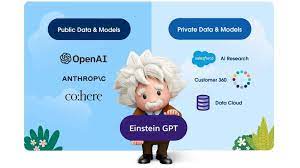
Innovations from Salesforce, HubSpot, and One AI are driving deeper insights and streamlining processes. Key Takeaways: AI is transforming the way businesses operate, and customer relationship management (CRM) is no exception. AI has been influencing the CRM space for years, but its impact is now reaching new heights. By harnessing AI algorithms, modern CRM systems offer predictive analytics and deeper insights, enabling brands to understand their customers on an unprecedented level. Advanced AI-enabled CRMs even incorporate sentiment analysis to gauge customer perceptions and provide automation tools to free marketers from mundane tasks. The global AI market, currently valued at 2.3 billion, continues to expand rapidly. From 2020 to 2022, annual corporate investments in AI startups increased by $5 billion, reflecting the growing demand for AI-driven innovations. As CRM vendors introduce more AI capabilities, it’s important to understand the unique approaches each one takes to differentiate themselves and deliver specific benefits. Salesforce and Einstein GPT: A New Era with OpenAI’s ChatGPT On March 7, 2023, Salesforce introduced Einstein GPT, a generative AI technology integrated into its CRM platform. Combining real-time data from Salesforce’s Data Cloud with OpenAI’s ChatGPT, Einstein GPT allows users to input natural-language prompts to streamline tasks and decision-making. Salesforce has long invested in AI. In 2017, it launched its Einstein AI as part of Service Cloud. By 2019, Salesforce had partnered with OpenAI to explore AI research and integrate advanced models into its ecosystem. The acquisition of Slack in 2020 further strengthened its AI capabilities by incorporating advanced messaging and communication tools into the CRM environment. Marc Benioff, CEO of Salesforce, highlighted the significance of AI’s growth: “The world is experiencing one of the most profound technological shifts with real-time technologies and generative AI. This comes at a pivotal moment as every company is focused on connecting with their customers in more intelligent, automated, and personalized ways.” Einstein GPT is set to transform customer engagement, with applications across Salesforce’s various platforms, including Tableau, MuleSoft, and Slack. HubSpot CRM: AI-Powered Content Assistant A day before Salesforce’s AI announcement, HubSpot revealed its own AI-powered features: the Content Assistant and ChatSpot.ai. These tools aim to enhance CRM users’ productivity while creating stronger connections with customers. HubSpot’s Content Assistant helps marketing and sales teams ideate, create, and share content through generative AI capabilities. It can suggest blog titles, create content outlines, and assist with crafting content for blogs, emails, landing pages, and websites. ChatSpot.ai, on the other hand, offers a natural-language chat experience to simplify CRM tasks for HubSpot users. HubSpot has also invested in AI for other functions, including conversation intelligence, data enrichment, predictive analytics, and content optimization, solidifying its position in the AI-driven CRM landscape. With AI advancements from companies like Salesforce, HubSpot, and One AI, the future of CRM is poised for enhanced efficiency, automation, and personalized customer interactions. Like Related Posts Who is Salesforce? Who is Salesforce? Here is their story in their own words. From our inception, we’ve proudly embraced the identity of Read more Salesforce Marketing Cloud Transactional Emails Salesforce Marketing Cloud Transactional Emails are immediate, automated, non-promotional messages crucial to business operations and customer satisfaction, such as order Read more Salesforce Unites Einstein Analytics with Financial CRM Salesforce has unveiled a comprehensive analytics solution tailored for wealth managers, home office professionals, and retail bankers, merging its Financial Read more AI-Driven Propensity Scores AI plays a crucial role in propensity score estimation as it can discern underlying patterns between treatments and confounding variables Read more

Read More
Salesforce Vlocity Acquisition

Salesforce Vlocity Acquisition

Salesforce’s Acquisition of Vlocity: A Game-Changer for the CRM Ecosystem The news of Salesforce acquiring Vlocity, though somewhat overshadowed by the end of Keith Block’s tenure as co-CEO, marks a significant milestone for the CRM giant and carries substantial implications for its ecosystem partners. Vlocity, one of the largest and fastest-growing Salesforce-native ISVs, did not initially foresee being acquired by its platform partner when it launched less than six years ago. Even after subtracting the undisclosed value of Salesforce’s own investment from Vlocity’s 3 million in venture funding, the .3 billion Salesforce plans to pay the remaining shareholders is a substantial return for a company projected to generate -80 million in revenue this year. This is based on Salesforce’s expectation of a million revenue contribution once the deal closes in the second quarter. Vlocity’s Ambitious Vision Vlocity’s founders had envisioned a much more ambitious trajectory, inspired by Veeva, the first Salesforce-native ISV to secure a stock market listing with its 2013 IPO, achieving a near billion valuation. Today, Veeva’s market cap is $22.3 billion. Vlocity aimed to replicate Veeva’s success on a larger scale, targeting multiple industries instead of just pharmaceuticals and life sciences. Founded in January 2014 by CEO David Schmaier and others with industry solutions backgrounds at CRM pioneer Siebel, Vlocity quickly developed solutions for four industries, including communications, media, insurance, and the public sector. These sectors presented an addressable market ten times larger than Veeva’s. Early customers like Telus and Sky Italia demonstrated an appetite for large-scale replacements of legacy systems. Vlocity’s portfolio now spans six industries: communications, media and entertainment, energy and utilities, insurance, healthcare, and government. Why Didn’t Vlocity Surpass Veeva? One crucial difference in Vlocity’s strategy compared to Veeva’s was its deliberate decision to keep its technology closely aligned with Salesforce’s platform. Vlocity adopted a sophisticated approach by building a packaged native application that remains continuously upgradeable with Salesforce’s platform. This extreme alignment ensured fully native compatibility for Vlocity’s customers throughout the product lifecycle but restricted its freedom compared to Veeva, which developed significant content management and regulatory workflow functionality outside Salesforce’s platform. Competition and the Misnomer of Industry Cloud Vlocity faced more intense competition than Veeva did when it started. By 2015, Salesforce was already promoting its own industry clouds, beginning with Financial Services Cloud, followed by Health Cloud, Manufacturing Cloud, and Consumer Products Cloud. Industry penetration was a key part of Keith Block’s mission after he joined Salesforce in 2013. While Vlocity was seen as an ally, Salesforce had to balance this with its growth prospects. Salesforce Vlocity Acquisition In hindsight, “industry cloud” might be a misnomer. Vlocity aimed to be unique, but other ecosystem partners were also targeting industry clouds. For example, Accenture developed a Salesforce-native vertical cloud solution for trade promotions in consumer goods and partnered with Vlocity for telecoms and media offerings. The retail banking edition of Salesforce Financial Services Cloud relies heavily on nCino’s industry solution. The middle office segment, which includes processes between CRM (front office) and ERP (back office), also plays a role in the industry cloud. Middle office processes vary by industry, with companies like Apttus, Rootstock, and FinancialForce targeting specific verticals. Salesforce’s acquisitions in CPQ, ecommerce, and B2B commerce have supported its enterprise deals across various industries. The Future for Salesforce ISVs The acquisition of Vlocity expands Salesforce’s industry cloud offerings and fuels its growth. As part of Salesforce, Vlocity has greater potential to grow than if it remained independent. This deal also includes an acquihire element, with Marc Benioff expressing excitement about David Schmaier joining Salesforce. Factors like the close relationship between Vlocity and Salesforce played a role in the acquisition, as Marc Benioff suggested during the earnings call. Analyst Ray Wang speculated that the move prevents competitors, like Google, from acquiring Vlocity. If Vlocity’s IPO dream has ended this way, it suggests that other Salesforce-native ISVs may also struggle to achieve independence. ServiceMax, for instance, was acquired by GE in 2016, only to be spun out to private equity buyer Silver Lake two years later. Salesforce recently became an investor in ServiceMax again, making its eventual acquisition seem almost inevitable. For Salesforce-native ISVs, this acquisition underscores the reality that, much like the a one way train, however much you may want to get off, you can not. Like Related Posts Who is Salesforce? Who is Salesforce? Here is their story in their own words. From our inception, we’ve proudly embraced the identity of Read more Salesforce Marketing Cloud Transactional Emails Salesforce Marketing Cloud Transactional Emails are immediate, automated, non-promotional messages crucial to business operations and customer satisfaction, such as order Read more Salesforce Unites Einstein Analytics with Financial CRM Salesforce has unveiled a comprehensive analytics solution tailored for wealth managers, home office professionals, and retail bankers, merging its Financial Read more AI-Driven Propensity Scores AI plays a crucial role in propensity score estimation as it can discern underlying patterns between treatments and confounding variables Read more

Read More
gettectonic.com