

06Aug
The Evolving Arms Race of Cyber Threats
The cybersecurity arms race shows no signs of slowing, demanding constant vigilance and adaptation from security teams worldwide.
The cybersecurity arms race shows no signs of slowing, demanding constant vigilance and adaptation from security teams worldwide.

The Data Tightrope: How Graph Databases and AI Agents Are Redefining Modern Data Strategy The Data Leader’s Dilemma: Speed vs. Legacy Today’s data leaders face an impossible balancing act: The gap between expectation and reality is widening. Businesses demand faster insights, deeper connections, and decisions that can’t wait—yet traditional databases weren’t built for this dynamic world. The Problem with Traditional Databases Relational databases force data into predefined tables, stripping away context and relationships. Need to analyze new connections? Prepare for:✔ Schema redesigns✔ Costly ETL pipelines✔ Slow, complex joins Result: Data becomes siloed, insights are delayed, and innovation stalls. Graph Databases: The Flexible Future of Data What Makes Graphs Different? Unlike rigid tables, graph databases store data as: Example: An e-commerce graph instantly reveals: No joins. No schema redesigns. Just direct, real-time traversal. Why Graphs Are Winning Now The Next Leap: AI-Powered, Self-Evolving Graphs Static graphs are powerful—but AI agents make them intelligent. How AI Agents Supercharge Graphs From Static Data to Living Knowledge Traditional graphs:❌ Manually updated❌ Fixed structure❌ Limited to known queries AI-augmented graphs:✅ Self-learning (adds/removes connections dynamically)✅ Adapts to new questions✅ Gets smarter with every query The Business Impact: Smarter, Faster, Cheaper 1. Break Down Silos Without Rebuilding Pipelines 2. Autonomous Decision-Making 3. Democratized Intelligence The Future: Graphs as Invisible Infrastructure In 2–3 years, AI-powered graphs will be as essential as cloud storage—ubiquitous, self-maintaining, and silently powering:✔ Hyper-personalized customer experiences✔ Real-time risk mitigation✔ Cross-functional insights How to Start Today The Bottom Line Static data is dead. The future belongs to dynamic, self-learning graphs powered by AI. The question isn’t if you’ll adopt this approach—it’s how fast you can start. → Innovators will leverage graphs as competitive moats.→ Laggards will drown in unconnected data. Like Related Posts Who is Salesforce? Who is Salesforce? Here is their story in their own words. From our inception, we’ve proudly embraced the identity of Read more Salesforce Unites Einstein Analytics with Financial CRM Salesforce has unveiled a comprehensive analytics solution tailored for wealth managers, home office professionals, and retail bankers, merging its Financial Read more AI-Driven Propensity Scores AI plays a crucial role in propensity score estimation as it can discern underlying patterns between treatments and confounding variables Read more Tectonic’s Successful Salesforce Track Record Salesforce Technology Services Integrator – Tectonic has successfully delivered Salesforce in a variety of industries including Public Sector, Hospitality, Manufacturing, Read more
Einstein AI in 2025: Smarter Predictions, Faster Decisions The Evolution of Salesforce Einstein The Summer ’25 release transforms Einstein from a predictive scoring engine into an active decision-making partner. With deeper CRM integration and enhanced explainability, Einstein now delivers: ✅ Context-aware automation through natural language Flow creation✅ Real-time analytics that drive immediate action✅ Transparent model governance for regulated industries Key Innovations in the Summer ’25 Release 1. Einstein for Flow: Intelligent Automation Made Simple What’s New: Impact: 2. Einstein CRM Analytics: Live Decision Intelligence Enhanced Capabilities: Sample Use Case:A sales manager sees: Benefits: 3. Trust Through Transparency New Governance Features: Critical For: Industry-Specific Applications Sector Einstein 2025 Use Cases Sales Real-time deal coaching, automated follow-ups based on engagement signals Service Predictive case routing, customer churn prevention flows Marketing Dynamic journey adjustments based on real-time propensity scores Healthcare Compliance-aware patient outreach automation Implementation Roadmap Why This Matters The Summer ’25 release closes the gap between insight and action by:🔹 Democratizing AI – Business users create sophisticated automations🔹 Accelerating Decisions – Live data eliminates reporting lag🔹 Building Trust – Explainable AI meets compliance requirements “With these updates, Einstein moves from predicting outcomes to driving outcomes,” said Salesforce Chief Product Officer. Like Related Posts Who is Salesforce? Who is Salesforce? Here is their story in their own words. From our inception, we’ve proudly embraced the identity of Read more Salesforce Marketing Cloud Transactional Emails Salesforce Marketing Cloud Transactional Emails are immediate, automated, non-promotional messages crucial to business operations and customer satisfaction, such as order Read more Salesforce Unites Einstein Analytics with Financial CRM Salesforce has unveiled a comprehensive analytics solution tailored for wealth managers, home office professionals, and retail bankers, merging its Financial Read more AI-Driven Propensity Scores AI plays a crucial role in propensity score estimation as it can discern underlying patterns between treatments and confounding variables Read more
Data-Driven Decision-Making in the Age of AI: How Agentic Analytics is Closing the Confidence Gap The Data Paradox: More Information, Less Confidence Today’s business leaders face a critical challenge: data overload without clarity. Why? The explosion of raw data has outpaced leaders’ ability to interpret it. “Most executives don’t have data analysts on call—or the training to navigate increasingly complex decisions,” says Southard Jones, Chief Product Officer of Tableau. The result? Missed opportunities, slow responses, and decision paralysis. The Solution: Agentic Analytics – BI’s Next Evolution Enter agentic analytics—where autonomous AI agents work alongside users to:✔ Automate tedious data preparation✔ Surface hidden insights proactively✔ Recommend actions in natural language Unlike traditional dashboards (which quickly become outdated), agentic analytics embeds intelligence directly into workflows—Slack, Teams, Salesforce, and more. How It Works: AI Agents as Your Data Copilots Salesforce’s Tableau Next (an agentic analytics solution) leverages AI agents to: “It’s like Waze for business decisions,” says Jones. “You don’t ask for updates—the AI alerts you to critical changes automatically.” The Foundation: Clean, Unified Data Agentic analytics thrives on trusted data. Yet, most companies struggle with: The Fix: Semantic Layer + Data Cloud Tableau’s Semantics Layer bridges the gap between raw data and business meaning, while Salesforce Data Cloud unifies customer and operational data. Together, they: “This isn’t just for analysts,” notes Jones. “It’s for every leader who needs answers—without writing a single SQL query.” Rebuilding Trust in Data Agentic analytics isn’t just changing BI—it’s democratizing it. By:✅ Eliminating manual data grunt work✅ Delivering insights in real time✅ Speaking the language of business users …it’s helping leaders move from uncertainty to action. “The future isn’t dashboards—it’s AI agents working alongside humans,” says Jones. “That’s how we’ll close the confidence gap and unlock innovation.” Ready to transform your data into decisions?Explore Tableau Next and Salesforce Data Cloud. Like Related Posts Who is Salesforce? Who is Salesforce? Here is their story in their own words. From our inception, we’ve proudly embraced the identity of Read more Salesforce Marketing Cloud Transactional Emails Salesforce Marketing Cloud Transactional Emails are immediate, automated, non-promotional messages crucial to business operations and customer satisfaction, such as order Read more Salesforce Unites Einstein Analytics with Financial CRM Salesforce has unveiled a comprehensive analytics solution tailored for wealth managers, home office professionals, and retail bankers, merging its Financial Read more AI-Driven Propensity Scores AI plays a crucial role in propensity score estimation as it can discern underlying patterns between treatments and confounding variables Read more

Salesforce Tightens Slack’s API Rules, Restricting AI Data Access Salesforce, the parent company of workplace messaging platform Slack, has quietly updated its API terms to block third-party software firms from indexing or storing Slack messages—a move that could significantly impact enterprise AI tools. According to a report from The Information, the changes prevent apps like Glean (a workplace AI search provider) from accessing Slack data for long-term storage or analysis. In a statement to Reuters, Salesforce framed the shift as a data security measure, saying: “As AI raises critical considerations around how customer data is handled, we’re reinforcing safeguards around how data accessed via Slack APIs can be stored, used, and shared.” What Does This Actually Mean? APIs (Application Programming Interfaces) allow different software systems to communicate. Until now, companies could use Slack’s API to: Now, those capabilities are restricted. Third-party apps can still access Slack data in real time, but they can’t retain it—meaning AI models can’t learn from past conversations. Glean reportedly warned customers that the change “hampers your ability to use your data with your chosen enterprise AI platform.” Why Is Salesforce Doing This? Officially, the company says it’s about security and responsible AI. But critics argue it’s a strategic lock-in play: Industry Backlash: “This Is Anti-Innovation” The move has sparked frustration across the tech sector, with critics accusing Salesforce of building a walled garden: The Bigger Picture: AI’s Data Wars This isn’t just about Slack—it’s part of a broader battle over AI training data: Salesforce’s move suggests that enterprise AI will increasingly run on proprietary data silos—meaning companies that control the data control the AI. What Happens Next? One thing’s clear: The age of open data for AI is ending—and the age of data feudalism is here. Like Related Posts Who is Salesforce? Who is Salesforce? Here is their story in their own words. From our inception, we’ve proudly embraced the identity of Read more Salesforce Marketing Cloud Transactional Emails Salesforce Marketing Cloud Transactional Emails are immediate, automated, non-promotional messages crucial to business operations and customer satisfaction, such as order Read more Salesforce Unites Einstein Analytics with Financial CRM Salesforce has unveiled a comprehensive analytics solution tailored for wealth managers, home office professionals, and retail bankers, merging its Financial Read more AI-Driven Propensity Scores AI plays a crucial role in propensity score estimation as it can discern underlying patterns between treatments and confounding variables Read more

The Great Cognitive Shift: How Generative AI is Rewiring Human Thought The Paradox of Thinking in the Age of AI A lion hunts on instinct—pure, unfiltered action. Humans? We deliberate, create, doubt. This tension between intuition and reason has defined our species. But as generative AI becomes the default “first thought” for everything from writing emails to crafting art, we must ask: Are we outsourcing cognition itself? The Rise of the AI-Augmented Mind This shift isn’t just about efficiency—it’s altering:🔹 How we structure ideas (bullet points over prose)🔹 What we consider “good” writing (polished but generic)🔹 Our tolerance for imperfection (why struggle when AI gives “perfect” drafts?) A 2024 University of London study revealed:✔ 90% of writers given AI suggestions incorporated them✔ Outputs became 25% more similar in style and structure✔ “Originality atrophy”—highly creative thinkers showed diminished unique output The Mediocrity Flywheel: When AI Elevates the Average Case Study: The Homogenized SOP Thousands of students now use AI for university applications. The result? Admissions officers report: AI’s training data mirrors dominant cultural narratives—note how “Dear Men” prompts yield starkly different tones. The Unseen Cognitive Tax What We Lose When We Stop Thinking First Psychological Repercussions: Preserving Humanity in the AI Age The Antidote: Intentional AI Use Pitfall Solution Blind AI adoption “AI last” rule—think first, refine with AI Style homogenization Curate personal writing vaults for unique voice Cognitive laziness Deliberate practice of unaided problem-solving For Organizations: The Road Ahead: Coexistence or Colonization? Generative AI is the most potent cognitive tool ever created—but like any tool, it shapes its user. The next decade will reveal whether we: A) Merge with AI into a hybrid consciousnessB) Retain human primacy by setting strict cognitive boundaries “The real threat isn’t that AI will think like humans, but that humans will stop thinking without AI.” The choice is ours—for now. Key Takeaways:⚠️ AI standardization threatens intellectual diversity🧠 “Thinking muscles” atrophy without conscious exercise🌍 Cultural biases amplify through AI adoption🛡️ Defend cognitive sovereignty with usage guardrails⚖️ Balance efficiency with authentic creation Are we elevating thought—or erasing it? The answer lies in our daily AI habits. Like Related Posts Who is Salesforce? Who is Salesforce? Here is their story in their own words. From our inception, we’ve proudly embraced the identity of Read more Salesforce Unites Einstein Analytics with Financial CRM Salesforce has unveiled a comprehensive analytics solution tailored for wealth managers, home office professionals, and retail bankers, merging its Financial Read more AI-Driven Propensity Scores AI plays a crucial role in propensity score estimation as it can discern underlying patterns between treatments and confounding variables Read more Tectonic’s Successful Salesforce Track Record Salesforce Technology Services Integrator – Tectonic has successfully delivered Salesforce in a variety of industries including Public Sector, Hospitality, Manufacturing, Read more

AI Now Writes 20% of Salesforce’s Code—Here’s Why Developers Are Embracing the Shift When Anthropic CEO Dario Amodei predicted that AI would generate 90% of code within six months, many braced for upheaval. But at Salesforce, the future is already unfolding—differently than expected. “In the past 30 days, 20% of all APEX code deployed in production came from Agentforce,” revealed Jayesh Govindarajan, SVP of Salesforce AI, in a recent interview. The numbers underscore a rapid transformation: 35,000 monthly active users, 10 million lines of AI-generated code accepted, and internal tools saving 30,000 developer hours each month. Yet Salesforce’s engineers aren’t being replaced—they’re leveling up. From Writing Code to Directing It: The Rise of the Developer-Pilot AI is automating the tedious, freeing developers to focus on the creative. “The first draft of code will increasingly come from AI,” Govindarajan said. “But what developers do with that draft has fundamentally changed.” This mirrors past tech disruptions. Calculators didn’t erase mathematicians—they enabled deeper exploration. Digital cameras didn’t kill photography; they democratized it. Similarly, AI isn’t eliminating coding—it’s redefining the role. “Instead of spending weeks on a prototype, developers now build one in hours,” Govindarajan explained. “You don’t just describe an idea—you hand customers working software and iterate in real time.” ‘Vibe Coding’: The New Art of AI Collaboration Developers are adopting “vibe coding”—a term popularized by OpenAI’s Andrej Karpathy—where they give AI high-level direction, then refine its output. “You let the AI generate a first draft, then tweak it: ‘This part works—expand it. These elements are unnecessary—remove them,’” Govindarajan said. He likens the process to a musical duet: “The AI sets the rhythm; the developer fine-tunes the melody.” While AI excels at business logic (e.g., CRUD apps), complex systems like next-gen databases still require human expertise. But for rapid UI and workflow development? AI is a game-changer. The New Testing Imperative: Guardrails for Stochastic Code AI-generated code demands new quality controls. Salesforce built its Agentforce Testing Center after realizing machine-written code behaves differently. “These are stochastic systems—they might fail unpredictably at step 3, step 10, or step 17,” Govindarajan noted. Developers now focus on boundary testing and guardrail design, ensuring reliability even when AI handles the initial build. Beyond Code: AI Compresses the Entire Dev Lifecycle The impact extends far beyond writing code: “The entire process accelerates,” Govindarajan said. “Developers spend less time implementing and more time innovating.” Why Computer Science Still Matters Despite AI’s rise, Govindarajan is adamant: “Algorithmic thinking is more vital than ever.” “You need taste—the ability to look at AI-generated code and say, ‘This works, but this doesn’t,’” he emphasized. The Bigger Shift: Developers as Business Strategists As coding becomes more automated, developers are transitioning from builders to orchestrators. “They’re guiding AI agents, not writing every line,” Govindarajan said. “But the buck still stops with them.” Salesforce’s tools—Agentforce for Developers, Agent Builder, and the Testing Center—support this evolution, positioning engineers as business partners rather than just technical executors. The Future: Not Replacement, but Reinvention The narrative isn’t about AI replacing developers—it’s about amplifying their impact. For those willing to adapt, the future isn’t obsolescence—it’s transcendence. As Govindarajan puts it: “The best developers will spend less time typing and more time thinking.” And in that shift, they’ll become more indispensable than ever. Its the same skill set, with a new application. Like Related Posts Who is Salesforce? Who is Salesforce? Here is their story in their own words. From our inception, we’ve proudly embraced the identity of Read more Salesforce Marketing Cloud Transactional Emails Salesforce Marketing Cloud Transactional Emails are immediate, automated, non-promotional messages crucial to business operations and customer satisfaction, such as order Read more Salesforce Unites Einstein Analytics with Financial CRM Salesforce has unveiled a comprehensive analytics solution tailored for wealth managers, home office professionals, and retail bankers, merging its Financial Read more AI-Driven Propensity Scores AI plays a crucial role in propensity score estimation as it can discern underlying patterns between treatments and confounding variables Read more
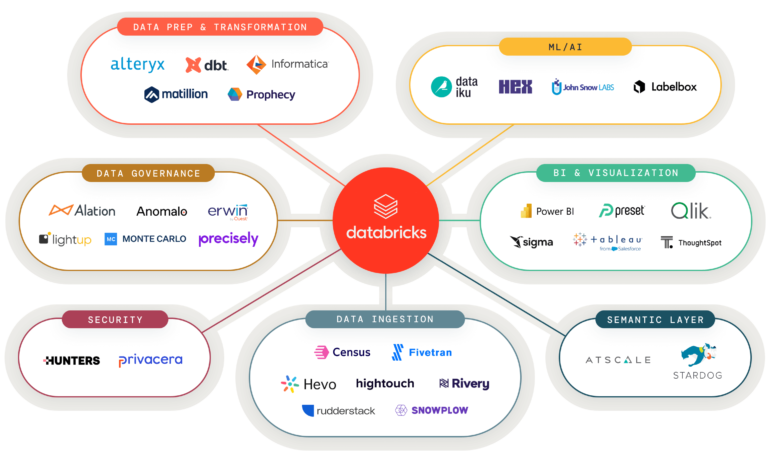
San Francisco, [April 2, 2025] – Databricks has taken a major step toward streamlining enterprise data integration with the general availability of Lakeflow Connect, its new low-code/no-code connector system. The initial release features preconfigured integrations with Salesforce and Workday, with plans to expand support to additional SaaS platforms, databases, and file sources in the coming months. Simplifying the Data Ingestion Challenge Data ingestion—the process of moving data from source systems into analytics environments—has long been a complex, resource-intensive task for enterprises. Traditional approaches require stitching together multiple tools (such as Apache Kafka or CDC solutions) and maintaining custom pipelines, often leading to scalability issues and high operational overhead. Lakeflow Connect aims to eliminate these pain points by providing: “Customers need this data, but before Lakeflow Connect, they were forced to rely on third-party tools that often failed at scale—or build custom solutions,” said Michael Armbrust, Distinguished Software Engineer at Databricks. “Now, ingestion is point-and-click within Databricks.” Why Salesforce and Workday First? The choice of initial connectors reflects the growing demand for real-time, structured data to power AI and generative AI applications. According to Kevin Petrie, Analyst at BARC U.S., more than 90% of AI leaders are experimenting with structured data, and nearly two-thirds use real-time feeds for model training. “Salesforce and Workday provide exactly the type of data needed for real-time ML and GenAI,” Petrie noted. “Databricks is smart to simplify access in this way.” Competitive Differentiation While other vendors offer connector solutions (e.g., Qlik’s Connector Factory), Lakeflow Connect stands out through: “Serverless compute is quietly important,” said Donald Farmer, Principal at TreeHive Strategy. “It’s not just about scalability—rapid startup times are critical for reducing pipeline latency.” The Road Ahead Databricks has already outlined plans to expand Lakeflow Connect with connectors for: Though the company hasn’t committed to a timeline, Armbrust hinted at upcoming announcements at the Data + AI Summit in June. Broader Vision: Democratizing Data Engineering Beyond ingestion, Databricks is focused on unifying the data engineering lifecycle. “Historically, you needed deep Spark or Scala expertise to build production-grade pipelines,” Armbrust said. “Now, we’re enabling SQL users—or even UI-only users—to achieve the same results.” Looking further ahead, Petrie suggested Databricks could enhance cross-team collaboration for agentic AI development, integrating Lakeflow with Mosaic AI and MLflow to bridge data, model, and application lifecycles. The Bottom LineLakeflow Connect marks a strategic move by Databricks to reduce friction in data pipelines—addressing a key bottleneck for enterprises scaling AI initiatives. As the connector ecosystem grows, it could further solidify Databricks’ position as an end-to-end platform for data and AI. For more details, visit Databricks.com. Key Takeaways:✅ Now Available: Salesforce & Workday connectors✅ Serverless, governed, and scalable ingestion✅ Future integrations with Google Analytics, ServiceNow, and more✅ June previews expected at Data + AI Summit Like Related Posts Who is Salesforce? Who is Salesforce? Here is their story in their own words. From our inception, we’ve proudly embraced the identity of Read more Salesforce Marketing Cloud Transactional Emails Salesforce Marketing Cloud Transactional Emails are immediate, automated, non-promotional messages crucial to business operations and customer satisfaction, such as order Read more Salesforce Unites Einstein Analytics with Financial CRM Salesforce has unveiled a comprehensive analytics solution tailored for wealth managers, home office professionals, and retail bankers, merging its Financial Read more AI-Driven Propensity Scores AI plays a crucial role in propensity score estimation as it can discern underlying patterns between treatments and confounding variables Read more

The Power of Data-Driven Decision Making Success in business hinges on the ability to make informed decisions. Every operational aspect, from minor choices like office furniture selection to critical investments such as multi-million-dollar marketing campaigns, is shaped by a series of interrelated decisions. While instinct and intuition may play a role, most business choices rely on relevant data—covering aspects such as objectives, pricing, technology, and potential risks. However, excess irrelevant data can be just as detrimental as insufficient accurate data. Why Its Good to be Data-Driven organization… The Evolution of Data-Driven Decision Making Organizations that prioritize data-driven strategies rely on accurate, relevant, complete, and timely data. Simply amassing large volumes of information does not equate to better decision-making; companies must democratize data access, ensuring it is available to all employees rather than limited to data analysts. The practice of using data to inform business decisions gained traction in the mid-20th century when researchers identified decision-making as dynamic, complex, and often ambiguous. Early techniques like decision trees and prospect theory emerged in the 1970s alongside computer-aided decision-making models. The 1980s saw the rise of commercial decision support systems, and by the early 21st century, data warehousing and data mining revolutionized analytics. However, without clear governance and organizational policies, these vast data stores often fell short of their potential. Today, the goal of data-driven decision-making is to combine automated decision models with human expertise, creativity, and critical thinking. This approach requires integrating data science with business operations, equipping managers and employees with powerful decision-support tools. Characteristics of a Data-Driven Organization A truly data-driven organization understands the value of its data and maximizes its potential through structured alignment with business objectives. To safeguard and leverage data assets effectively, businesses must implement governance frameworks ensuring compliance with privacy, security, and integrity standards. Key challenges in establishing a data-driven infrastructure include: The Benefits of a Data-Driven Approach Businesses recognize that becoming data-driven requires more than just investing in technology; success depends on strategy and execution. According to KPMG, four critical factors contribute to the success of data-driven initiatives: A data-driven corporate culture accelerates decision-making, enhances employee engagement, and increases overall business value. Integrating ethical considerations into data usage is crucial for mitigating biases and maintaining data integrity. Transitioning to a Data-Driven Business With the rapid advancement of generative AI, data-driven organizations are poised to unlock trillions of dollars in economic value. McKinsey estimates that AI-driven decision-making could add between .6 trillion and .4 trillion annually across key sectors, including customer operations, marketing, software engineering, and R&D. To successfully transition into a data-driven organization, companies must: By embracing a data-driven model, organizations enhance their ability to make automated yet strategically sound decisions. With seamless data integration across CRM, ERP, and business applications, companies empower human decision-makers to apply their expertise to high-quality, actionable insights—driving innovation and competitive advantage in a rapidly evolving marketplace. Like Related Posts Who is Salesforce? Who is Salesforce? Here is their story in their own words. From our inception, we’ve proudly embraced the identity of Read more Salesforce Marketing Cloud Transactional Emails Salesforce Marketing Cloud Transactional Emails are immediate, automated, non-promotional messages crucial to business operations and customer satisfaction, such as order Read more Salesforce Unites Einstein Analytics with Financial CRM Salesforce has unveiled a comprehensive analytics solution tailored for wealth managers, home office professionals, and retail bankers, merging its Financial Read more AI-Driven Propensity Scores AI plays a crucial role in propensity score estimation as it can discern underlying patterns between treatments and confounding variables Read more

The Rise of Citizen Development: How Low-Code is Democratizing App Creation From IT-Exclusive to Democratized Development Gone are the days when software development was the sole domain of IT specialists. Today, the demand for rapid, agile application development has broken down traditional barriers, empowering non-technical employees to build powerful business apps—without writing a single line of code. This shift is fueled by citizen development, a movement where business users collaborate with IT to create applications using low-code and no-code platforms. With intuitive drag-and-drop interfaces, pre-built templates, and AI-assisted automation, these tools enable employees across departments—from marketing to HR to operations—to turn ideas into functional apps in record time. The Citizen Developer Boom: By the Numbers Why Businesses Are Embracing Citizen Development 1. Relieving IT Bottlenecks IT teams are overwhelmed with app requests while managing infrastructure, security, and maintenance. Citizen development:✔ Reduces IT backlog by letting business users build their own solutions.✔ Frees IT to focus on high-value, complex projects. 2. Faster, More Relevant App Delivery Business users understand their needs best. When they lead app development:✔ Development cycles shrink—no more waiting for IT prioritization.✔ Solutions better fit real-world use cases, improving adoption and ROI. 3. Bridging the Digital Skills Gap Low-code platforms eliminate the need for deep coding expertise, allowing:✔ Employees at all skill levels to contribute to digital transformation.✔ Faster innovation without costly developer hiring or training. Choosing the Right Low-Code Platform Not all low-code solutions are equal. The best platforms offer: ✅ Cloud-native architecture – Enables real-time collaboration and remote access.✅ Seamless data integration – Connects to live databases for accurate, dynamic apps.✅ Cross-platform compatibility – Build once, deploy everywhere (web, mobile, desktop).✅ Intuitive UX – Drag-and-drop builders, templates, and guided workflows.✅ Built-in governance – Ensures security and compliance without stifling creativity. Salesforce Lightning Platform: The Ultimate Citizen Development Engine Built on the world’s #1 CRM, Salesforce Lightning Platform empowers businesses to: The Future is Low-Code With 76% of companies actively exploring minimal-code development, the line between IT and business is blurring. Citizen development isn’t just a trend—it’s the future of agile innovation. Like Related Posts Who is Salesforce? Who is Salesforce? Here is their story in their own words. From our inception, we’ve proudly embraced the identity of Read more Salesforce Marketing Cloud Transactional Emails Salesforce Marketing Cloud Transactional Emails are immediate, automated, non-promotional messages crucial to business operations and customer satisfaction, such as order Read more Salesforce Unites Einstein Analytics with Financial CRM Salesforce has unveiled a comprehensive analytics solution tailored for wealth managers, home office professionals, and retail bankers, merging its Financial Read more AI-Driven Propensity Scores AI plays a crucial role in propensity score estimation as it can discern underlying patterns between treatments and confounding variables Read more

The Future of AI in Salesforce: Smarter, Predictive, and Deeply Integrated Artificial Intelligence (AI) is revolutionizing the Salesforce ecosystem, reshaping customer interactions, automating workflows, and driving revenue growth. As we move into 2025 and beyond, AI within Salesforce will become even more intelligent, predictive, and seamlessly embedded across the platform. Let’s explore the key advancements defining the next era of AI in Salesforce. 1. Next-Gen Einstein AI: A Smarter CRM Assistant Salesforce Einstein continues to evolve, equipping businesses with powerful AI-driven capabilities: 2. AI-Powered Revenue Intelligence & Forecasting AI is transforming revenue intelligence, helping sales teams make data-driven decisions: 3. AI-Driven Sales & Service Automation AI-powered automation will streamline workflows and improve efficiency: 4. Hyper-Personalization with AI & Data Cloud Salesforce Data Cloud and AI will power personalized customer experiences at scale: 5. AI-Optimized Lead Generation & Marketing Automation AI will continue to enhance lead generation and marketing strategies: 6. AI & Low-Code/No-Code Innovation Salesforce is democratizing AI with accessible low-code and no-code tools: 7. Ethical AI & Governance: Building Trust in AI Salesforce remains committed to ethical, transparent, and bias-free AI: Conclusion As AI becomes deeply embedded in every Salesforce cloud, businesses will experience faster automation, smarter decision-making, and hyper-personalized customer engagement. From AI-powered sales forecasting to generative AI-driven content, the future of Salesforce AI is set to redefine CRM strategies in 2025 and beyond. Like Related Posts Who is Salesforce? Who is Salesforce? Here is their story in their own words. From our inception, we’ve proudly embraced the identity of Read more Salesforce Marketing Cloud Transactional Emails Salesforce Marketing Cloud Transactional Emails are immediate, automated, non-promotional messages crucial to business operations and customer satisfaction, such as order Read more Salesforce Unites Einstein Analytics with Financial CRM Salesforce has unveiled a comprehensive analytics solution tailored for wealth managers, home office professionals, and retail bankers, merging its Financial Read more AI-Driven Propensity Scores AI plays a crucial role in propensity score estimation as it can discern underlying patterns between treatments and confounding variables Read more
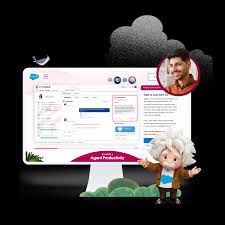
Salesforce Service Assistant is an AI-powered tool that helps service representatives resolve cases faster. It’s available on Service Cloud and is designed to save time for agents. How it works Benefits Helps agents resolve cases faster, Saves time for service representatives, Grounded in the organization’s knowledge base and data, and Adheres to company policies. Additional information Alongside agent guidance, the Service Assistant provides two other notable features. The first enables agents to create conversation summaries with “just a click” after using the solution to complete a case. The second allows agents to request that the assistant auto-crafts a new knowledge article when its guidance proved insufficient, based on how they resolved the query. Thanks to this second feature, the Service Assistant may get better with time, aiding agent proficiency, customer satisfaction, and – ultimately – average handling time (AHT). However, despite this capability, Salesforce has pledged to advance the solution further. Indeed, during a recent webinar, Kevin Qi, Associate Product Manager at Salesforce, teased what will come in June. Pointing to Service Cloud’s Summer ‘25 release wave, Qi said: The next phase of Service Assistant involves actionable plans. So, not only will it help guide the service rep, but it’ll also take actions to automate various steps, so it can look up orders, check eligibilities, and more to help speed up the efficiency of tackling that case. Beyond the summer, Salesforce plans to have the Assistant blend modalities, guiding customer conversations across channels to further streamline the interaction. “The Service Assistant will become even more adaptive, support more channels, including messaging and voice, being able to adapt to changes in case context,” concluded Qi. The Latest AI Solutions on Service Cloud Alongside the Service Assistant, Salesforce has released several other AI and Agentforce capabilities, embedded across Service Cloud. Qi picked out the “Freeform Instructions in Service Email Assistant” feature for special reference. “If the agent doesn’t have a template already made for a particular instance, they can type – in natural language – the sort of email they’d want to generate and have Agentforce create that email in the flow of work,” he said. That capability may prove highly beneficial in helping agents piece their thoughts together when resolving a tricky case. After all, they can note some key points – in natural language – and the feature will create a coherent customer response. Alongside this comes a solution to quickly summarize case activity for wrap-up in beta. Yet, most new features focus on improving the knowledge that feeds into AI solutions, like the Service Assistant. For starters, there’s a flow orchestrator in beta that helps contact center leaders build a process for approving new knowledge articles and updates. Additionally, there’s an “Update Knowledge Content with AI” feature. This ingests prompts and – as it says on the tin – updates the tone, style, and length of particular knowledge articles. Last comes the “Knowledge Sync to Data Cloud” tool that pulls contact center knowledge into the Salesforce customer data platform (CDP). Not only does this democratize service insights, but it also supports contact centers in grounding the Service Assistant and other AI agents. Both of these final knowledge capabilities are now generally available. Like Related Posts Who is Salesforce? Who is Salesforce? Here is their story in their own words. From our inception, we’ve proudly embraced the identity of Read more Salesforce Marketing Cloud Transactional Emails Salesforce Marketing Cloud Transactional Emails are immediate, automated, non-promotional messages crucial to business operations and customer satisfaction, such as order Read more Salesforce Unites Einstein Analytics with Financial CRM Salesforce has unveiled a comprehensive analytics solution tailored for wealth managers, home office professionals, and retail bankers, merging its Financial Read more AI-Driven Propensity Scores AI plays a crucial role in propensity score estimation as it can discern underlying patterns between treatments and confounding variables Read more

Advancing Multi-Modal AI with TACO: A Breakthrough in Reasoning and Tool Integration Developing effective multi-modal AI systems for real-world applications demands mastering diverse tasks, including fine-grained recognition, visual grounding, reasoning, and multi-step problem-solving. However, current open-source multi-modal models fall short in these areas, especially when tasks require external tools like OCR or mathematical calculations. These limitations largely stem from the reliance on single-step datasets that fail to provide a coherent framework for multi-step reasoning and logical action chains. Addressing these shortcomings is crucial for unlocking multi-modal AI’s full potential in tackling complex challenges. Challenges in Existing Multi-Modal Models Most existing multi-modal models rely on instruction tuning with direct-answer datasets or few-shot prompting approaches. Proprietary systems like GPT-4 have demonstrated the ability to effectively navigate CoTA (Chains of Thought and Actions) reasoning, but open-source models struggle due to limited datasets and tool integration. Earlier efforts, such as LLaVa-Plus and Visual Program Distillation, faced barriers like small dataset sizes, poor-quality training data, and a narrow focus on simple question-answering tasks. These limitations hinder their ability to address complex, multi-modal challenges requiring advanced reasoning and tool application. Introducing TACO: A Multi-Modal Action Framework Researchers from the University of Washington and Salesforce Research have introduced TACO (Training Action Chains Optimally), an innovative framework that redefines multi-modal learning by addressing these challenges. TACO introduces several advancements that establish a new benchmark for multi-modal AI performance: Training and Architecture TACO’s training process utilized a carefully curated CoTA dataset of 293K instances from 31 sources, including Visual Genome, offering a diverse range of tasks such as mathematical reasoning, OCR, and visual understanding. The system employs: Benchmark Performance TACO demonstrated significant performance improvements across eight benchmarks, achieving an average accuracy increase of 3.6% over instruction-tuned baselines and gains as high as 15% on MMVet tasks involving OCR and mathematical reasoning. Key findings include: Transforming Multi-Modal AI Applications TACO represents a transformative step in multi-modal action modeling by addressing critical deficiencies in reasoning and tool-based actions. Its innovative approach leverages high-quality synthetic datasets and advanced training methodologies to unlock the potential of multi-modal AI in real-world applications, from visual question answering to complex multi-step reasoning tasks. By bridging the gap between reasoning and action integration, TACO paves the way for AI systems capable of tackling intricate scenarios with unprecedented accuracy and efficiency. Like Related Posts Who is Salesforce? Who is Salesforce? Here is their story in their own words. From our inception, we’ve proudly embraced the identity of Read more Salesforce Marketing Cloud Transactional Emails Salesforce Marketing Cloud Transactional Emails are immediate, automated, non-promotional messages crucial to business operations and customer satisfaction, such as order Read more Salesforce Unites Einstein Analytics with Financial CRM Salesforce has unveiled a comprehensive analytics solution tailored for wealth managers, home office professionals, and retail bankers, merging its Financial Read more AI-Driven Propensity Scores AI plays a crucial role in propensity score estimation as it can discern underlying patterns between treatments and confounding variables Read more

Neuro-Symbolic AI: Bridging Neural Networks and Symbolic Processing for Smarter AI Systems Neuro-symbolic AI integrates neural networks with rules-based symbolic processing to enhance artificial intelligence systems’ accuracy, explainability, and precision. Neural networks leverage statistical deep learning to identify patterns in large datasets, while symbolic AI applies logic and rules-based reasoning common in mathematics, programming languages, and expert systems. The Balance Between Neural and Symbolic AIThe fusion of neural and symbolic methods has revived debates in the AI community regarding their relative strengths. Neural AI excels in deep learning, including generative AI, by distilling patterns from data through distributed statistical processing across interconnected neurons. However, this approach often requires significant computational resources and may struggle with explainability. Conversely, symbolic AI, which relies on predefined rules and logic, has historically powered applications like fraud detection, expert systems, and argument mining. While symbolic systems are faster and more interpretable, their reliance on manual rule creation has been a limitation. Innovations in training generative AI models now allow more efficient automation of these processes, though challenges like hallucinations and poor mathematical reasoning persist. Complementary Thinking ModelsPsychologist Daniel Kahneman’s analogy of System 1 and System 2 thinking aptly describes the interplay between neural and symbolic AI. Neural AI, akin to System 1, is intuitive and fast—ideal for tasks like image recognition. Symbolic AI mirrors System 2, engaging in slower, deliberate reasoning, such as understanding the context and relationships in a scene. Core Concepts of Neural NetworksArtificial neural networks (ANNs) mimic the statistical connections between biological neurons. By modeling patterns in data, ANNs enable learning and feature extraction at different abstraction levels, such as edges, shapes, and objects in images. Key ANN architectures include: Despite their strengths, neural networks are prone to hallucinations, particularly when overconfident in their predictions, making human oversight crucial. The Role of Symbolic ReasoningSymbolic reasoning underpins modern programming languages, where logical constructs (e.g., “if-then” statements) drive decision-making. Symbolic AI excels in structured applications like solving math problems, representing knowledge, and decision-making. Algorithms like expert systems, Bayesian networks, and fuzzy logic offer precision and efficiency in well-defined workflows but struggle with ambiguity and edge cases. Although symbolic systems like IBM Watson demonstrated success in trivia and reasoning, scaling them to broader, dynamic applications has proven challenging due to their dependency on manual configuration. Neuro-Symbolic IntegrationThe integration of neural and symbolic AI spans a spectrum of techniques, from loosely coupled processes to tightly integrated systems. Examples of integration include: History of Neuro-Symbolic AIBoth neural and symbolic AI trace their roots to the 1950s, with symbolic methods dominating early AI due to their logical approach. Neural networks fell out of favor until the 1980s when innovations like backpropagation revived interest. The 2010s saw a breakthrough with GPUs enabling scalable neural network training, ushering in today’s deep learning era. Applications and Future DirectionsApplications of neuro-symbolic AI include: The next wave of innovation aims to merge these approaches more deeply. For instance, combining granular structural information from neural networks with symbolic abstraction can improve explainability and efficiency in AI systems like intelligent document processing or IoT data interpretation. Neuro-symbolic AI offers the potential to create smarter, more explainable systems by blending the pattern-recognition capabilities of neural networks with the precision of symbolic reasoning. As research advances, this synergy may unlock new horizons in AI capabilities. Like Related Posts Who is Salesforce? Who is Salesforce? Here is their story in their own words. From our inception, we’ve proudly embraced the identity of Read more Salesforce Unites Einstein Analytics with Financial CRM Salesforce has unveiled a comprehensive analytics solution tailored for wealth managers, home office professionals, and retail bankers, merging its Financial Read more AI-Driven Propensity Scores AI plays a crucial role in propensity score estimation as it can discern underlying patterns between treatments and confounding variables Read more Tectonic’s Successful Salesforce Track Record Salesforce Technology Services Integrator – Tectonic has successfully delivered Salesforce in a variety of industries including Public Sector, Hospitality, Manufacturing, Read more

AI-Powered Cancer Immunotherapy: How Predictive Models Are Personalizing Treatment The Challenge of Predicting Immunotherapy Success Immunotherapy—particularly immune checkpoint inhibitors (ICIs)—has revolutionized cancer treatment, offering long-term remission for some patients with lung cancer, melanoma, and kidney cancer. However, only 20-40% of patients respond to ICIs, and clinicians struggle to predict who will benefit. Current biomarkers like tumor mutational burden (TMB) and PD-L1 expression are expensive, inconsistent, and not universally applicable. This leaves doctors relying on trial-and-error approaches, delaying effective treatment and increasing costs. SCORPIO: An AI Tool Using Routine Blood Tests to Predict Treatment Response Researchers from Mount Sinai’s Tisch Cancer Institute and Memorial Sloan Kettering Cancer Center have developed SCORPIO, an AI model that predicts ICI effectiveness using routine blood tests and clinical data—eliminating the need for costly genomic sequencing. How SCORPIO Works Key Advantages Over Traditional Methods ✔ More accurate than PD-L1 & TMB testing in trials✔ Works across 21 cancer types (validated in 10,000+ patients)✔ Low-cost & scalable—uses existing lab tests✔ No specialized equipment needed, ideal for resource-limited settings Why This Matters for Cancer Care Next Steps: From Research to Real-World Use Before widespread adoption, SCORPIO will undergo prospective clinical trials to confirm real-world performance. Challenges include: The Future of AI in Immunotherapy SCORPIO is part of a growing wave of AI tools transforming oncology: As Diego Chowell, PhD (Mount Sinai) notes: “SCORPIO represents a major step toward democratizing precision oncology—making advanced cancer care accessible to all patients, not just those at specialized centers.” The Bottom Line AI is shifting immunotherapy from trial-and-error to predictive, personalized medicine. With tools like SCORPIO, the future of cancer treatment is smarter, faster, and more equitable. Next Frontier? Combining AI with real-time patient monitoring to dynamically adjust therapies—bringing us closer to truly adaptive cancer care. Like Related Posts Who is Salesforce? Who is Salesforce? Here is their story in their own words. From our inception, we’ve proudly embraced the identity of Read more Salesforce Marketing Cloud Transactional Emails Salesforce Marketing Cloud Transactional Emails are immediate, automated, non-promotional messages crucial to business operations and customer satisfaction, such as order Read more Salesforce Unites Einstein Analytics with Financial CRM Salesforce has unveiled a comprehensive analytics solution tailored for wealth managers, home office professionals, and retail bankers, merging its Financial Read more AI-Driven Propensity Scores AI plays a crucial role in propensity score estimation as it can discern underlying patterns between treatments and confounding variables Read more


