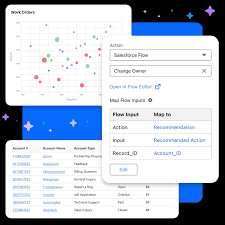
Data-Driven Decision-Making in the Age of AI: How Agentic Analytics is Closing the Confidence Gap
The Data Paradox: More Information, Less Confidence
Today’s business leaders face a critical challenge: data overload without clarity.
- 76% of executives feel intense pressure to justify decisions with data (Salesforce survey).
- Yet, confidence in data-driven decision-making has plummeted by 18% since 2023, with fewer than half of leaders trusting their data.
Why? The explosion of raw data has outpaced leaders’ ability to interpret it.
“Most executives don’t have data analysts on call—or the training to navigate increasingly complex decisions,” says Southard Jones, Chief Product Officer of Tableau.
The result? Missed opportunities, slow responses, and decision paralysis.
The Solution: Agentic Analytics – BI’s Next Evolution
Enter agentic analytics—where autonomous AI agents work alongside users to:
✔ Automate tedious data preparation
✔ Surface hidden insights proactively
✔ Recommend actions in natural language
Unlike traditional dashboards (which quickly become outdated), agentic analytics embeds intelligence directly into workflows—Slack, Teams, Salesforce, and more.
How It Works: AI Agents as Your Data Copilots
Salesforce’s Tableau Next (an agentic analytics solution) leverages AI agents to:
- Monitor Continuously
- The Agentforce Inspector tracks trends, predicts risks, and flags anomalies (e.g., “Bugs in new product up 30%—recommend QA review”).
- Answer Dynamically
- Ask questions in plain language (“Why did Q2 sales drop?”) and get instant insights + interactive visualizations via Agentforce Concierge.
- Act Proactively
- Instead of static dashboards, AI agents push real-time recommendations (e.g., “Launch retention campaign for at-risk customers”).
“It’s like Waze for business decisions,” says Jones. “You don’t ask for updates—the AI alerts you to critical changes automatically.”
The Foundation: Clean, Unified Data
Agentic analytics thrives on trusted data. Yet, most companies struggle with:
- Silos (disconnected datasets)
- Dirty data (duplicates, errors)
- Missing context (no “single source of truth”)
The Fix: Semantic Layer + Data Cloud
Tableau’s Semantics Layer bridges the gap between raw data and business meaning, while Salesforce Data Cloud unifies customer and operational data. Together, they:
- Auto-clean data (e.g., Tableau Next Data Pro suggests fixes)
- Standardize definitions (e.g., “Revenue” means the same across teams)
- Enrich with AI (connecting insights to CRM context)
“This isn’t just for analysts,” notes Jones. “It’s for every leader who needs answers—without writing a single SQL query.”
Rebuilding Trust in Data
Agentic analytics isn’t just changing BI—it’s democratizing it. By:
✅ Eliminating manual data grunt work
✅ Delivering insights in real time
✅ Speaking the language of business users
…it’s helping leaders move from uncertainty to action.
“The future isn’t dashboards—it’s AI agents working alongside humans,” says Jones. “That’s how we’ll close the confidence gap and unlock innovation.”
Ready to transform your data into decisions?
Explore Tableau Next and Salesforce Data Cloud.
🔔🔔 Follow us on LinkedIn 🔔🔔
Who is Salesforce? Here is their story in their own words. From our inception, we've proudly embraced the identity of Read more
Salesforce Marketing Cloud Transactional Emails are immediate, automated, non-promotional messages crucial to business operations and customer satisfaction, such as order Read more

Salesforce has unveiled a comprehensive analytics solution tailored for wealth managers, home office professionals, and retail bankers, merging its Financial Read more
AI plays a crucial role in propensity score estimation as it can discern underlying patterns between treatments and confounding variables Read more