

Operational Efficiency Archives - gettectonic.com

Taiba Investments Partners with Salesforce to Revolutionize Saudi Hospitality with AI-Driven Customer Experience

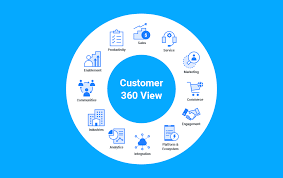
Saudi Hospitality Leader Embarks on Digital Transformation Journey Riyadh, Saudi Arabia – Taiba Investments, a premier hospitality and real estate company in the Kingdom, has announced a strategic partnership with Salesforce, the global leader in AI-powered customer relationship management (CRM) solutions. The collaboration will implement Salesforce Customer 360 across Taiba’s extensive portfolio, elevating guest experiences and operational efficiency through cutting-edge digital transformation. Redefining Hospitality Through Technology As part of this landmark agreement, Taiba Investments will work with Horizontal Digital, a top-tier Salesforce Summit Partner, to deploy an integrated CRM platform that will: Leadership Perspectives: A New Era for Saudi Hospitality Hassan Ahdab, Chief Hospitality Operations Officer at Taiba Investments, stated:“Our partnership with Salesforce reflects Taiba’s commitment to operational excellence and guest-centric innovation. By leveraging world-class CRM solutions, we’re poised to deliver unmatched, personalized hospitality experiences across Saudi Arabia.” Mohammed Al Khotani, SVP & Managing Director at Salesforce Middle East, added:*”We’re proud to support Taiba Investments in setting new industry benchmarks. Salesforce Customer 360 will empower them to blend Saudi hospitality traditions with AI-driven innovation, redefining guest experiences in the region.”* Strategic Growth & Industry Leadership The Road Ahead: AI, Personalization & Seamless Guest Experiences This digital transformation positions Taiba Investments to:✔ Anticipate guest needs with predictive analytics✔ Streamline operations through automation✔ Deliver hyper-personalized stays via AI-powered engagement By integrating Salesforce Customer 360, Taiba is not just modernizing its operations—it’s shaping the future of Saudi hospitality. About Taiba InvestmentsA pioneer in Saudi Arabia’s hospitality and real estate sectors, Taiba Investments combines local expertise with global partnerships to deliver exceptional guest experiences across its diverse portfolio. Like Related Posts Who is Salesforce? Who is Salesforce? Here is their story in their own words. From our inception, we’ve proudly embraced the identity of Read more Salesforce Marketing Cloud Transactional Emails Salesforce Marketing Cloud Transactional Emails are immediate, automated, non-promotional messages crucial to business operations and customer satisfaction, such as order Read more Salesforce Unites Einstein Analytics with Financial CRM Salesforce has unveiled a comprehensive analytics solution tailored for wealth managers, home office professionals, and retail bankers, merging its Financial Read more AI-Driven Propensity Scores AI plays a crucial role in propensity score estimation as it can discern underlying patterns between treatments and confounding variables Read more


Read More
Healthcare Cloud Computing

How Salesforce Health Cloud is Transforming Modern Hospitals

The healthcare industry faces unprecedented challenges: delivering personalized patient care, maintaining strict compliance, and optimizing operational efficiency—all while managing complex data ecosystems. Salesforce Health Cloud has won as a leading solution, empowering hospitals to meet these demands through intelligent, integrated technology. Here’s why forward-thinking healthcare organizations are adopting Health Cloud—and how it’s reshaping hospital operations. 1. Personalized Patient Engagement Today’s patients expect seamless, consumer-grade experiences from their healthcare providers. Salesforce Health Cloud enables hospitals to:✔ Deliver mobile-responsive patient portals for easy access to records and appointments.✔ Automate personalized follow-ups (e.g., medication reminders, post-visit surveys).✔ Tailor communication based on patient history and preferences. Why it matters: Engaged patients adhere better to treatment plans and report higher satisfaction—key drivers of improved outcomes. 2. Seamless Care Team Coordination Fragmented care—where specialists, nurses, and administrators work in silos—leads to inefficiencies and errors. Health Cloud connects all stakeholders on a unified platform, enabling:✔ Real-time collaboration across departments.✔ Centralized patient histories (no more chasing down records).✔ Automated task assignments and progress tracking. Why it matters: Coordinated care reduces redundancies, improves accuracy, and elevates patient trust. 3. AI-Powered Decision-Making Health Cloud goes beyond data storage—it turns information into actionable intelligence with:✔ Real-time analytics on treatment outcomes, readmission risks, and patient satisfaction.✔ Predictive tools to identify high-risk patients before complications arise.✔ Custom dashboards for performance tracking at every level. Why it matters: Data-driven decisions lead to better resource allocation, fewer errors, and higher-quality care. 4. Unified Patient Data Management Hospitals juggle EHRs, lab systems, billing software, and more—often with no integration. Health Cloud consolidates all data into a single source of truth, offering:✔ A 360-degree patient view (medical history, appointments, insurance, social determinants of health).✔ Secure, instant access for authorized providers.✔ Reduced manual entry and duplicate records. Why it matters: Disjointed data causes delays and mistakes. Centralization improves efficiency and patient safety. 5. Built-In HIPAA Compliance & Security Healthcare data breaches cost millions and erode trust. Health Cloud provides:✔ Enterprise-grade encryption and access controls.✔ Audit trails for all data interactions.✔ Pre-configured HIPAA-compliant workflows. Why it matters: Compliance isn’t optional. Health Cloud protects sensitive data without sacrificing usability. 6. Scalability for Future Growth Whether expanding services, adding telehealth, or integrating new EHRs, Health Cloud adapts effortlessly thanks to:✔ Open APIs for seamless interoperability.✔ Modular design to add features as needs evolve.✔ Cloud-based flexibility to scale across locations. Why it matters: Healthcare never stands still. A future-proof system ensures long-term success. 7. Operational Efficiency & Cost Savings Administrative waste drains hospital resources. Health Cloud automates routine tasks, including:✔ Appointment scheduling and reminders.✔ Referral management and prior authorizations.✔ Case management workflows. Why it matters: Streamlined operations cut costs, reduce staff burnout, and improve patient throughput. The Bottom Line Salesforce Health Cloud isn’t just another IT tool—it’s a strategic asset that bridges the gap between patient care and operational excellence. Hospitals leveraging its full potential see:✅ Higher patient satisfaction (through personalized engagement).✅ Stronger care team alignment (breaking down silos).✅ Smarter decision-making (powered by AI and analytics).✅ Lower compliance risks (with built-in security). As healthcare evolves, the hospitals that thrive will be those that embrace connected, intelligent platforms like Health Cloud. The question isn’t if to adopt it—but how soon your organization can start reaping the benefits. Ready to transform your hospital’s operations? Salesforce Health Cloud is the proven solution for healthcare’s toughest challenges. Contact Tectonic to learn more. Like Related Posts Who is Salesforce? Who is Salesforce? Here is their story in their own words. From our inception, we’ve proudly embraced the identity of Read more Salesforce Marketing Cloud Transactional Emails Salesforce Marketing Cloud Transactional Emails are immediate, automated, non-promotional messages crucial to business operations and customer satisfaction, such as order Read more Salesforce Unites Einstein Analytics with Financial CRM Salesforce has unveiled a comprehensive analytics solution tailored for wealth managers, home office professionals, and retail bankers, merging its Financial Read more AI-Driven Propensity Scores AI plays a crucial role in propensity score estimation as it can discern underlying patterns between treatments and confounding variables Read more

Read More
The AI Adoption Paradox

Dining and Virtual AI

Restaurants are increasingly adopting AI virtual assistants and bots to manage routine tasks like menu inquiries, loyalty program questions, and order tracking, allowing human staff to focus on complex service needs. Platforms like Salesforce Agentforce and Microsoft Copilot are integrated into customer-facing chat systems, apps, and call centers, handling common queries, updating loyalty credits, tracking deliveries, and escalating issues or creating internal tickets without human intervention. Some operators report a 50% reduction in simple inquiries, with guest satisfaction improving due to faster, consistent responses. Salesforce Agentforce, built on Service Cloud and Data Cloud, delivers a conversational concierge experience by analyzing customer history—past orders, loyalty status, and open cases—to provide instant answers or flag issues. For example, ezCater uses Agentforce for natural language order creation, while OpenTable scales global customer support, reducing reliance on human agents for basic tasks. Beyond chatbots, AI-powered operational tools are transforming restaurant efficiency. Computer vision systems, powered by platforms like NVIDIA NIM, Ultralytics, and Viso Suite, monitor dining areas, kitchens, and back-of-house spaces in real time. These systems actively analyze footage, detecting uncleared tables, long lines, or understaffed zones, and alerting staff to act—speeding up table turns and reducing wait times. In fast-casual settings, vision tools manage order queues and crowded pickup areas. In back-of-house, AI vision ensures food safety and equipment compliance, flagging open cooler doors or blocked pathways with automated alerts to managers or centralized teams. These systems reduce reliance on manual checks with real-time anomaly detection, integrating with facility management and workforce platforms for a cohesive response. Future applications could include predictive maintenance, labor forecasting based on traffic patterns, and training gap identification. As edge AI and APIs evolve, smart vision systems are becoming critical restaurant infrastructure. Smartbridge reports a global restaurant group processed over 6 million guest surveys using an Azure-based generative AI tool, automating sentiment analysis, ticket organization, and feedback summaries at scale. This helps chains quickly identify complaints and menu improvement opportunities. Behind the scenes, integrations rely on edge/cloud orchestration and API frameworks. Customer queries route through secure chat interfaces to Agentforce, pulling from CRM or ticket logs, while camera and sensor data feed into AI pipelines on AWS, Azure, or NVIDIA Jetson devices, triggering alerts in Slack, Jira, or ServiceNow. This enables instant responses to issues like spills, tech glitches, or guest requests without human triage. These virtual assistants form an invisible team, handling thousands of queries, freeing staff for hospitality, and moving restaurants toward “agentic AI” that proactively flags issues, prepares for busy periods, and manages inventory shortages. Virtual assistants are no longer just chatbots—they’re essential team members, enhancing operational efficiency, service consistency, and satisfaction for both customers and staff. Like Related Posts Who is Salesforce? Who is Salesforce? Here is their story in their own words. From our inception, we’ve proudly embraced the identity of Read more Salesforce Marketing Cloud Transactional Emails Salesforce Marketing Cloud Transactional Emails are immediate, automated, non-promotional messages crucial to business operations and customer satisfaction, such as order Read more Salesforce Unites Einstein Analytics with Financial CRM Salesforce has unveiled a comprehensive analytics solution tailored for wealth managers, home office professionals, and retail bankers, merging its Financial Read more AI-Driven Propensity Scores AI plays a crucial role in propensity score estimation as it can discern underlying patterns between treatments and confounding variables Read more
Read More
Tools to Liberate Salesforce Data

Absa Bank Makes History as Africa’s First Financial Institution to Deploy Agentic AI for Customers

A Watershed Moment for African Banking Innovation Absa Bank has achieved a groundbreaking milestone by becoming: The announcement was made at Salesforce’s Agentforce World Tour in Johannesburg, showcasing Africa’s growing leadership in financial technology innovation. Meet Abby: The AI Banker Redefining Customer Service Powered by Salesforce’s Agentforce platform, Absa’s AI agent Abby represents a quantum leap beyond traditional chatbots: ✔ Contextual Intelligence – Understands complex banking needs about loans, investments, and cross-border payments✔ Autonomous Decision-Making – Takes actions within predefined safety parameters✔ Multi-System Integration – Accesses banking systems and web resources in real-time✔ Human-Like Engagement – Provides personalized recommendations like a skilled banker “Abby isn’t just another chatbot following scripts,” explained Lindelani Ramukumba, Absa’s Head of Relationship Banking Technology. “This is AI that comprehends customer needs and responds with banking expertise – a first for African financial services.” Rapid Deployment with Rigorous Safeguards The implementation demonstrates the agility of modern AI platforms: “Absa’s achievement proves that African banks can lead in AI innovation,” noted Linda Saunders, Salesforce South Africa Country Manager. “This isn’t just automation – it’s intelligent banking assistance at scale.” The Future of African Banking Absa’s deployment signals a transformative shift in financial services: With Abby, Absa isn’t just adopting AI – they’re redefining what’s possible in African banking. “The future of banking isn’t just digital – it’s intelligently autonomous. Africa is now leading that charge.” Like Related Posts Who is Salesforce? Who is Salesforce? Here is their story in their own words. From our inception, we’ve proudly embraced the identity of Read more Salesforce Marketing Cloud Transactional Emails Salesforce Marketing Cloud Transactional Emails are immediate, automated, non-promotional messages crucial to business operations and customer satisfaction, such as order Read more Salesforce Unites Einstein Analytics with Financial CRM Salesforce has unveiled a comprehensive analytics solution tailored for wealth managers, home office professionals, and retail bankers, merging its Financial Read more AI-Driven Propensity Scores AI plays a crucial role in propensity score estimation as it can discern underlying patterns between treatments and confounding variables Read more

Read More
Analytics tools like Einstein Analytics can identify patterns and trends in patient data, helping healthcare providers optimize workflows and improve the effectiveness of care delivery.

Zulekha Healthcare Group Accelerates Digital Transformation with Salesforce

Dubai, UAE – Zulekha Healthcare Group, one of the UAE’s largest private healthcare networks, is taking a major leap in digital innovation by adopting Salesforce Health Cloud and Marketing Cloud to enhance patient care and operational efficiency. A Legacy of Healthcare Excellence Founded in 1964, Zulekha Healthcare Group operates:🏥 Two multidisciplinary hospitals (Dubai & Sharjah)🏨 Two medical centers & five pharmacies⚕️ 285+ beds, 300+ doctors, and 600+ nursing staff🩺 30+ specialized medical disciplines The group also runs a smart medical fitness center, offering visa-related health assessments, vaccinations, and occupational health certifications—serving both residents and visitors in the UAE. Why Salesforce? Driving the Future of Patient-Centric Care With ambitious expansion plans, Zulekha sought a scalable, AI-powered CRM to: ✔ Unify patient data – Consolidating interactions from in-person visits, calls, emails, and messaging into a single 360° patient profile✔ Enhance engagement – Delivering personalized, automated communications via Marketing Cloud✔ Reduce missed appointments – Improving adherence to care plans through smarter scheduling and reminders✔ Boost operational efficiency – Streamlining workflows by integrating with existing ERP & EMR systems Leadership Perspectives: A Digital-First Vision Taher Shams, Managing Director, Zulekha Healthcare Group, emphasized: “Our mission is to make healthcare more accessible through innovation. Salesforce’s AI-driven solutions will help us elevate patient experiences, optimize operations, and reinforce our commitment to the UAE’s healthcare leadership.” Amit Khanna, SVP & GM, Salesforce Health, added: “Personalized care starts with deeper patient insights. We’re proud to partner with Zulekha and explore how AI can further enhance engagement and treatment outcomes.” The Road Ahead: AI, Growth & Seamless Care The integration positions Zulekha to leverage predictive analytics, automation, and AI—paving the way for:🔹 Smarter patient outreach🔹 Data-driven treatment plans🔹 Expansion across the UAE By embracing cloud-based, intelligent healthcare, Zulekha is setting a new standard for patient-first, digitally empowered care in the region. About Zulekha Healthcare GroupA pioneer in UAE healthcare, Zulekha Healthcare Group has served communities for nearly 60 years, offering specialized treatments, cutting-edge technology, and compassionate care across its network. Like Related Posts Who is Salesforce? Who is Salesforce? Here is their story in their own words. From our inception, we’ve proudly embraced the identity of Read more Salesforce Marketing Cloud Transactional Emails Salesforce Marketing Cloud Transactional Emails are immediate, automated, non-promotional messages crucial to business operations and customer satisfaction, such as order Read more Salesforce Unites Einstein Analytics with Financial CRM Salesforce has unveiled a comprehensive analytics solution tailored for wealth managers, home office professionals, and retail bankers, merging its Financial Read more AI-Driven Propensity Scores AI plays a crucial role in propensity score estimation as it can discern underlying patterns between treatments and confounding variables Read more
Read More
salesforce agentforce rapid deployment

Tectonic and Agentforce

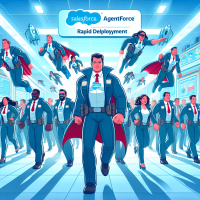
Salesforce Agentforce is revolutionizing how businesses deliver personalized and always-available support through powerful, autonomous AI agents. To fully capitalize on this innovative tool, understanding both your business needs and the Salesforce ecosystem is essential. With extensive experience in Salesforce and developing customized AI solutions, Tectonic is well-positioned to help businesses and government agencies visualize a working proof of concept for adopting Agentforce. Together, Tectonic will help companies develop AI agents tailored to their industry, providing 24/7 support for both employees and customers, regardless of location. At Dreamforce 2024, Salesforce unveiled Agentforce, one of the most anticipated AI releases of the year. Built on Salesforce’s advanced AI technology, Agentforce is poised to transform business operations. While Salesforce is known for its exciting announcements, it’s often challenging to discern how these new products apply to your business. So, let’s get past the hype. What does Agentforce really offer, and how can Tectonic help your company take advantage of it today? Key Use Cases for Agentforce CX Agent (Internal Usage) The Customer Experience (CX) Agent is an AI-powered solution designed to enhance customer interactions across various channels. Tectonic’s implementation focuses on providing human agents the information they need from numerous data sources to respond to customer inquiries, resolving issues, and guiding users through processes. By ensuring seamless communication and support, businesses can elevate the overall customer experience and foster loyalty. Customer Service (External Customer Usage) Agentforce transforms customer service operations by deploying AI agents that handle common inquiries, troubleshoot issues, and provide information 24/7. Tectonic’s implementation allows organizations to reduce wait times and enhance service quality, freeing human agents to tackle more complex problems. This shift not only improves operational efficiency but also leads to higher customer satisfaction levels. How Your Business Can Leverage Agentforce Agentforce isn’t just about adding AI—it’s about improving efficiency and reducing the burden on employees. The challenge lies in integrating these AI agents effectively into existing processes. That’s where Tectonic steps in. With a focus on helping businesses quickly realize the value of Agentforce, Tectonic can help you implement a Proof of Concept (POC) to demonstrate how AI could impact operations, whether it’s improving customer service or enhancing sales. Why Start Now? Agentforce’s release has captured the attention of businesses eager to adopt cutting-edge AI technology. However, turning Agentforce into a game-changer requires a practical approach: Availability for these POCs is limited, so now is the time to act if you’re interested in testing Agentforce. This opportunity allows businesses to see firsthand how AI agents can improve efficiency, productivity, and customer experience. How to Get Started Tectonic’s team can walk you through potential use cases and demonstrate how autonomous agents can boost customer service, empower sales teams, optimize marketing, and more. If you’re ready to take the next step, reach out to one of Tectonic’s experts to see how Agentforce can transform your business. Like Related Posts Who is Salesforce? Who is Salesforce? Here is their story in their own words. From our inception, we’ve proudly embraced the identity of Read more Salesforce Marketing Cloud Transactional Emails Salesforce Marketing Cloud Transactional Emails are immediate, automated, non-promotional messages crucial to business operations and customer satisfaction, such as order Read more Salesforce Unites Einstein Analytics with Financial CRM Salesforce has unveiled a comprehensive analytics solution tailored for wealth managers, home office professionals, and retail bankers, merging its Financial Read more AI-Driven Propensity Scores AI plays a crucial role in propensity score estimation as it can discern underlying patterns between treatments and confounding variables Read more
Read More
Financial Services Cloud and Core

AgentForce for Financial Services

Salesforce Revolutionizes Financial Services with AI-Powered Agentforce Platform AI Agents Take on Banking, Insurance, and Advisory Roles Salesforce has launched a suite of prebuilt AI agent templates designed to automate critical functions across financial services—from loan processing to insurance underwriting and wealth management. Embedded within Financial Services Cloud, these AI assistants aim to reduce administrative burdens, enhance customer experiences, and boost operational efficiency for banks, insurers, and investment firms. Key Features of Agentforce for Financial Services ✔ Prebuilt AI agents for loan officers, financial advisors, and insurance agents✔ 24/7 automated customer service (balance inquiries, claims processing, policy quotes)✔ Meeting intelligence (automated note-taking, follow-ups, and data-driven insights)✔ Regulatory compliance baked into every AI action✔ Seamless integration with core banking and CRM systems How AI Agents Transform Financial Workflows 1. Financial Advisors: Smarter, Faster Client Interactions 2. Banking & Insurance: Instant, Accurate Customer Service 3. Digital Loan Officers: Faster Approvals, Fewer Delays Why Financial Firms Need Specialized AI Agents Traditional customer service struggles with:❌ Long hold times❌ Repetitive data entry❌ Inconsistent compliance checks Agentforce AI solves these pain points by:✅ Reducing manual work (80%+ of routine tasks automated)✅ Improving accuracy (data-driven decisions, no human errors)✅ Ensuring compliance (built-in regulatory safeguards) Real-World Impact: “Agentforce has already transformed our service operations. The speed of deployment and immediate productivity gains have us exploring AI for claims and procurement next.”— Matt Brasch, VP of Digital Operations, Cumberland Mutual LLC The Future of AI in Finance Salesforce emphasizes that AI won’t replace human experts—it will empower them. By offloading repetitive tasks, financial professionals can focus on:✔ High-value client relationships✔ Complex decision-making✔ Strategic business growth Coming Next: Final Takeaway Salesforce’s Agentforce for Financial Services marks a major leap in AI-driven banking and insurance automation. Firms adopting this technology can expect:🔹 Faster customer service🔹 Higher advisor productivity🔹 Stronger compliance🔹 Increased revenue per employee Ready to deploy AI agents in your financial workflows? Contact Tectonic. Like Related Posts Who is Salesforce? Who is Salesforce? Here is their story in their own words. From our inception, we’ve proudly embraced the identity of Read more Salesforce Marketing Cloud Transactional Emails Salesforce Marketing Cloud Transactional Emails are immediate, automated, non-promotional messages crucial to business operations and customer satisfaction, such as order Read more Salesforce Unites Einstein Analytics with Financial CRM Salesforce has unveiled a comprehensive analytics solution tailored for wealth managers, home office professionals, and retail bankers, merging its Financial Read more AI-Driven Propensity Scores AI plays a crucial role in propensity score estimation as it can discern underlying patterns between treatments and confounding variables Read more

Read More
AI Agent Revolution

The Salesforce AI Agent Maturity Model

The Salesforce AI Agent Maturity Model: A Roadmap for Scaling Intelligent Automation With 84% of CIOs believing AI will be as transformative as the internet, strategic adoption is no longer optional—it’s a competitive imperative. Yet many organizations struggle with where to begin, how to scale AI agents, and how to measure success. To help enterprises navigate this challenge, Salesforce has introduced the Agentic Maturity Model, a four-stage framework that guides businesses from basic automation to advanced, multi-agent ecosystems. “While agents can be deployed quickly, scaling them effectively requires a thoughtful, phased approach,” said Shibani Ahuja, SVP of Enterprise IT Strategy at Salesforce. “This model provides a clear roadmap to help organizations progress toward higher levels of AI maturity.” How Leading Companies Are Using the Framework Wiley: Building a Future-Ready AI Foundation “Visionary leadership is essential in today’s rapidly evolving AI landscape,” said Kevin Quigley, Director of Process Improvement at Wiley. “Salesforce’s framework ensures the building blocks we create today will support our long-term AI strategy.” Alpine Intel: Accelerating Efficiency in Insurance “Every minute saved counts in our high-volume claims business,” said Kelly Bentubo, Director of Architecture at Alpine Intel. “This model brings clarity to scaling AI—helping us move from time-saving automations to advanced multi-agent applications.” The Four Levels of Agentic Maturity Level 0: Fixed Rules & Repetitive Tasks (Chatbots & Co-pilots) What it is: Basic automation with no reasoning—think FAQ bots or scripted workflows.Example: A chatbot handling password resets via predefined decision trees. How to Advance to Level 1:✔ Identify rigid processes ripe for AI reasoning.✔ Measure time/cost savings from automation.✔ Start with low-risk, employee-facing agents. Level 1: Information Retrieval Agents What it is: AI that fetches data and suggests actions (but doesn’t act alone).Example: A support agent recommending troubleshooting steps from a knowledge base. How to Advance to Level 2:✔ Shift from recommendations to autonomous actions.✔ Improve data quality and governance.✔ Track metrics like case deflection and CSAT. Level 2: Simple Orchestration (Single Domain) What it is: Agents automating multi-step tasks within one system.Example: Scheduling meetings + sending follow-ups using calendar/email data. How to Advance to Level 3:✔ Choose between specialized agents or a “mega-agent.”✔ Extend capabilities with API integrations.✔ Design scalable architecture for future growth. Level 3: Complex Orchestration (Cross-Domain) What it is: AI coordinating workflows across departments (e.g., sales + service).Example: An agent analyzing CRM, support tickets, and financial data to optimize deals. How to Advance to Level 4:✔ Build a universal communication layer for agents.✔ Implement dynamic agent discovery & governance.✔ Measure ROI via cost savings and revenue impact. Level 4: Multi-Agent Ecosystems What it is: AI teams collaborating across systems with human oversight.Example: Agents processing orders, managing inventory, and routing feedback in real time. Maximizing Value:✔ Strengthen security for ecosystem-wide AI.✔ Develop new business models powered by agent collaboration.✔ Track revenue growth, retention, and operational efficiency. Beyond Technology: Key Implementation Factors “AI success hinges on more than just tech,” notes Ahuja. Organizations must: By addressing these pillars, businesses can accelerate AI adoption—turning experimentation into scalable, measurable value. Contact Tectonic today to harness the power of AI and move along the AI Agent maturity continuum. Like Related Posts Who is Salesforce? Who is Salesforce? Here is their story in their own words. From our inception, we’ve proudly embraced the identity of Read more Salesforce Marketing Cloud Transactional Emails Salesforce Marketing Cloud Transactional Emails are immediate, automated, non-promotional messages crucial to business operations and customer satisfaction, such as order Read more Salesforce Unites Einstein Analytics with Financial CRM Salesforce has unveiled a comprehensive analytics solution tailored for wealth managers, home office professionals, and retail bankers, merging its Financial Read more AI-Driven Propensity Scores AI plays a crucial role in propensity score estimation as it can discern underlying patterns between treatments and confounding variables Read more

Read More

Industry-Specific Innovations: Summer ’25 Release Highlights

Transformative Updates Across 20+ Industries Salesforce Summer ’25 delivers 150+ industry-specific enhancements designed to automate workflows, enhance customer experiences, and drive operational efficiency. Here’s what matters for your sector: 🚗 Automotive Cloud Impact: 40% faster loan approvals at leading auto lenders 🏥 Health & Life Sciences Feature Benefit Therapy Stage Orchestrator Handles 5x larger transaction volumes Clinical Site Selection Console 80% faster trial site activation Waitlist Management 30% fewer no-shows with timezone-aware scheduling New in Pharma: AI-powered participant matching for clinical trials 💰 Financial Services Pro Tip: Use new Loan Origination APIs to cut verification time by half 🛒 Consumer Goods Retailer Impact: 15% higher fulfillment accuracy at major CPG firms ⚡ Energy & Utilities Case Study: Utility reduced field service costs by 18% with new vehicle allocation tools **📚 Education Cloud Student Success Suite Adoption Stats: 92% student satisfaction in pilot programs **🌱 Net Zero Cloud CSRD Compliance Toolkit Sustainability Impact: 60% faster ESG reporting at enterprise level **🤝 Nonprofit Cloud Fundraising Revolution Grantmaking Innovation: Auto-generated progress reports from templates Cross-Industry Game Changers Implementation Toolkit ✅ Industry Playbooks: Step-by-step rollout guides✅ Release Readiness Trails: Hands-on training modules✅ Sandbox Enablement: Test new features today “These industry innovations represent our largest vertical-specific release ever,” says Salesforce EVP of Industries. Download Industry Fact Sheets | Book Technical Office Hours Which industry solution will you deploy first? Like Related Posts Who is Salesforce? Who is Salesforce? Here is their story in their own words. From our inception, we’ve proudly embraced the identity of Read more Salesforce Marketing Cloud Transactional Emails Salesforce Marketing Cloud Transactional Emails are immediate, automated, non-promotional messages crucial to business operations and customer satisfaction, such as order Read more Salesforce Unites Einstein Analytics with Financial CRM Salesforce has unveiled a comprehensive analytics solution tailored for wealth managers, home office professionals, and retail bankers, merging its Financial Read more AI-Driven Propensity Scores AI plays a crucial role in propensity score estimation as it can discern underlying patterns between treatments and confounding variables Read more
Read More
Streamline Data Collection from Connected Vehicles and Assets with AWS and Salesforce

Streamline Data Collection from Connected Vehicles and Assets with AWS and Salesforce

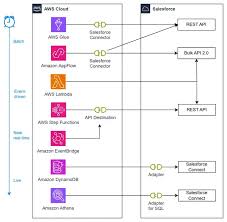
Unlock Real-Time Insights with AWS IoT and Salesforce Industry Clouds This guide explains how to gather, process, and distribute data from connected vehicles and industrial assets—such as manufacturing equipment or utility meters—into Salesforce Industry Cloud solutions using Amazon Web Services (AWS). Key AWS IoT Services for Data Collection By leveraging these services, businesses can integrate telemetry data into: Why This Integration Matters Strong customer relationships rely on real-time insights. Automakers, manufacturers, and utility providers can enhance customer interactions by unifying telemetry data with CRM workflows—enabling smarter marketing, sales, and service decisions. Prerequisites To integrate AWS IoT with Salesforce, you’ll need: AWS Services Salesforce Requirements Use Cases 1. Predictive Maintenance with AWS & Salesforce 2. In-Car Notifications 3. On-Demand Vehicle/Asset Health Insights 4. Data-Driven Customer Engagement Solution Architecture Data Flow Overview Implementation Steps 1. Set Up AWS IoT Rules 2. Configure Salesforce Event Handling 3. Enable Real-Time Analytics Conclusion By integrating AWS IoT with Salesforce Industry Clouds, businesses can:✔ Improve operational efficiency with predictive maintenance.✔ Enhance customer experiences through real-time alerts and diagnostics.✔ Drive data-driven decisions with unified analytics. Next Steps: Empower your teams with real-time IoT insights—start building today! Like Related Posts Who is Salesforce? Who is Salesforce? Here is their story in their own words. From our inception, we’ve proudly embraced the identity of Read more Salesforce Marketing Cloud Transactional Emails Salesforce Marketing Cloud Transactional Emails are immediate, automated, non-promotional messages crucial to business operations and customer satisfaction, such as order Read more Salesforce Unites Einstein Analytics with Financial CRM Salesforce has unveiled a comprehensive analytics solution tailored for wealth managers, home office professionals, and retail bankers, merging its Financial Read more AI-Driven Propensity Scores AI plays a crucial role in propensity score estimation as it can discern underlying patterns between treatments and confounding variables Read more

Read More
Time Series AI

Time Series AI

Key Aspects of Time Series AI 1. Time Series Data Time series data consists of sequential data points recorded at regular intervals, enabling the analysis of trends, seasonality, and patterns over time. This structured format is essential for forecasting, anomaly detection, and other AI-driven analyses. 2. AI Techniques for Time Series Analysis Multiple AI and machine learning techniques are applied to time series data, including: These techniques help in forecasting future values, detecting anomalies, classifying sequences, and imputing missing data. 3. Applications of Time Series AI Time series AI is widely used across industries for: 4. Real-World Examples 5. Benefits of Time Series AI By leveraging AI for time series analysis, businesses and organizations gain a competitive edge through smarter forecasting and automation. Like Related Posts Who is Salesforce? Who is Salesforce? Here is their story in their own words. From our inception, we’ve proudly embraced the identity of Read more Salesforce Unites Einstein Analytics with Financial CRM Salesforce has unveiled a comprehensive analytics solution tailored for wealth managers, home office professionals, and retail bankers, merging its Financial Read more AI-Driven Propensity Scores AI plays a crucial role in propensity score estimation as it can discern underlying patterns between treatments and confounding variables Read more Tectonic’s Successful Salesforce Track Record Salesforce Technology Services Integrator – Tectonic has successfully delivered Salesforce in a variety of industries including Public Sector, Hospitality, Manufacturing, Read more

Read More

AI Agents Explained

AI agents represent a transformative technological advancement that is reshaping business dynamics, going beyond simple automation to address more complex challenges. This insight provides an in-depth exploration of AI agents, covering their functions, operations, and types, such as reflex, goal-based, utility-based, and learning agents. The commercial advantages of AI agents, including cost-effectiveness, scalability, and efficiency, are highlighted, with examples and applications across various industries to demonstrate their impact on business operations and customer experiences. What Are AI Agents? AI agents are sophisticated computer programs designed to autonomously make decisions based on inputs, enabling them to execute tasks independently. These agents are particularly adept at managing operations in uncertain environments, positioning them as critical steps toward artificial general intelligence—where machines can perform any intellectual task comparable to humans. Modern AI agents offer flexible solutions that significantly enhance business efficiency and customer service. How AI Agents Operate AI agents function as more than just tools; they are dynamic participants redefining how organizations interact with both digital and physical environments. Their core functions include learning, reasoning, and planning, which empower them to make informed decisions and take actions in complex scenarios. For companies aiming to fully leverage these capabilities, AI agents are indispensable. Components of AI Agents AI agents consist of several key components that enable them to function effectively in their environments. These components are crucial for developing intelligent agents capable of operating independently across various contexts: Types of AI Agents Understanding the different types of AI agents is crucial for businesses to select the most appropriate agent for their specific needs: Benefits of AI Agents for Businesses Incorporating AI agents into business operations can deliver numerous benefits, significantly impacting the bottom line. AI agents are revolutionizing corporate operations by enhancing customer experiences and operational efficiency, helping businesses thrive and stay competitive in today’s economy. Key benefits include: Applications of AI Agents AI agents are versatile tools with applications across various sectors: Examples of AI Agents AI agents are revolutionizing various industries with specialized applications: Future Trends in AI Agents The evolution of AI agents continues to shape industries, with future trends expected to redefine their capabilities and applications: AI Agents Transforming Customer Experience (CX) AI agents are key drivers in transforming customer experience (CX), offering more personalized, efficient, and seamless interactions. The integration of natural language processing (NLP) in AI agents enhances automation and personalization in customer engagements. Chatbots and voice assistants provide quick, accurate responses, strengthening brand presence and customer loyalty. AI agents also gather and analyze customer data to offer tailored services, predict customer needs, and provide proactive support. Conclusion AI agents are powerful tools for businesses, offering numerous benefits and applications across industries. They enhance customer experiences, streamline operations, and enable intelligent decision-making. Organizations should stay informed about the different types, benefits, applications, and examples of AI agents to fully leverage their potential for growth and innovation. Tectonic, a leading AI development company, provides customized solutions to meet the unique needs of clients across various industries. Their expertise includes integrating AI-powered chatbots, implementing predictive analytics, and exploring generative AI for creative content generation. Businesses can partner with Tectonic to embark on their AI journey and unlock new opportunities for success. Like Related Posts Who is Salesforce? Who is Salesforce? Here is their story in their own words. From our inception, we’ve proudly embraced the identity of Read more Salesforce Unites Einstein Analytics with Financial CRM Salesforce has unveiled a comprehensive analytics solution tailored for wealth managers, home office professionals, and retail bankers, merging its Financial Read more AI-Driven Propensity Scores AI plays a crucial role in propensity score estimation as it can discern underlying patterns between treatments and confounding variables Read more Tectonic’s Successful Salesforce Track Record Salesforce Technology Services Integrator – Tectonic has successfully delivered Salesforce in a variety of industries including Public Sector, Hospitality, Manufacturing, Read more
Read More
Salesforce Health Cloud

How Salesforce Health Cloud’s 360-Degree CRM View Enhances EHR Performance

Salesforce Health Cloud is a powerful Customer Relationship Management (CRM) platform designed for healthcare, offering a comprehensive 360-degree view of patient data. By consolidating medical records, test results, and insurance details from multiple sources, it bridges the gap between clinical and non-clinical information in real time—empowering providers with actionable insights. Recent studies highlight the impact of healthcare CRM solutions: With AI-driven predictive analytics and seamless EHR integration, Salesforce Health Cloud is transforming care coordination. By eliminating data silos, streamlining workflows, and boosting patient engagement, it enhances EHR performance, clinical outcomes, and operational efficiency. In this insight, we explore how Salesforce Health Cloud’s 360-degree CRM view elevates EHR capabilities. Understanding EHRs and Healthcare CRMs What Are EHRs? Electronic Health Records (EHRs) are digital versions of patient charts, providing real-time access to authorized users. Unlike traditional paper records, EHRs enable seamless data sharing across: What Are Healthcare CRMs? Healthcare Customer Relationship Management (CRM) systems focus on patient engagement, care coordination, and experience optimization. Key features include: How a 360-Degree CRM View Boosts EHR Performance 1. Enhanced Data Integration & Visibility A 360-degree CRM view unifies clinical, administrative, financial, and patient interaction data into a single platform. This integration: 2. Optimized Operational Efficiency By integrating CRM data directly into EHRs, healthcare organizations can: 3. Personalized Patient Engagement A holistic CRM view helps providers understand each patient’s: This enables: 4. AI-Powered Actionable Insights Integrating AI and machine learning with a 360-degree CRM view allows: Tectonic’s Salesforce Health Cloud Solution Tectonic delivers customized Salesforce Health Cloud solutions to maximize efficiency, patient outcomes, and workflow optimization. Our expertise includes: ✔ Custom implementation tailored to your organization’s needs✔ Seamless integration with EHRs, billing systems, and patient engagement tools✔ Comprehensive training to empower care teams✔ Ongoing support for updates, performance tuning, and troubleshooting With Tectonic, unlock the full potential of Salesforce Health Cloud—transforming patient care and operational excellence. Ready to enhance your EHR performance? Let’s connect!  Like Related Posts Who is Salesforce? Who is Salesforce? Here is their story in their own words. From our inception, we’ve proudly embraced the identity of Read more Salesforce Marketing Cloud Transactional Emails Salesforce Marketing Cloud Transactional Emails are immediate, automated, non-promotional messages crucial to business operations and customer satisfaction, such as order Read more Salesforce Unites Einstein Analytics with Financial CRM Salesforce has unveiled a comprehensive analytics solution tailored for wealth managers, home office professionals, and retail bankers, merging its Financial Read more AI-Driven Propensity Scores AI plays a crucial role in propensity score estimation as it can discern underlying patterns between treatments and confounding variables Read more

Read More
Return on Sales (ROS)

Return on Sales (ROS)

Return on Sales (ROS): Definition, Calculation & How to Improve It Want to know how efficiently your business converts sales into profit? Who doesn’t? Return on Sales (ROS) measures operational efficiency, helping you maximize earnings and identify wasteful spending. Even profitable businesses can struggle with cash flow if they overspend on marketing, R&D, or other expenses—leaving little profit despite high revenue. ROS answers: “How much profit do we keep from each dollar of sales?” Let’s break down what ROS is, how to calculate it, and strategies to improve it. What Is Return on Sales (ROS)? Return on Sales (ROS) is a profitability ratio that shows how much of your revenue turns into operating profit. Also called operating profit margin, it excludes interest and taxes, focusing purely on operational efficiency. Formula: ROS=(Operating ProfitNet Sales)×100ROS = (Net SalesOperating Profit​)×100 ROS vs. ROI vs. Net Profit Margin Metric What It Measures Key Difference ROS Profit from operations (before interest & taxes) Focuses on operational efficiency ROI (Return on Investment) Profit generated from an investment Measures effectiveness of capital spent (e.g., new equipment, marketing) Net Profit Margin Profit after all expenses (taxes, interest, etc.) Shows final profitability after all costs How to Calculate ROS Step-by-Step Formula Example Calculation Item Amount Revenue $10,000,000 Returns $1,000,000 COGS $2,000,000 Operating Expenses (SG&A) $4,000,000 Operating Profit $3,000,000 Net Sales $9,000,000 ROS = (3,000,0009,000,000)×100=∗∗33.3%∗∗ROS=(9,000,0003,000,000​)×100=∗∗33.3%∗∗ What Is a Good ROS? It depends on your industry. Here are average benchmarks: Industry Average ROS Healthcare 6-30%* Hotels 8-15% Manufacturing 6-8% Restaurants 3-7% Retail 2-5% Tech 10-20%+ *Higher for specialized services (e.g., surgical centers at 30%) Key Insight: If ROS declines as revenue grows, your costs may be rising too fast. 5 Ways to Improve Your ROS 1. Optimize Pricing Strategy 2. Reduce Costs 3. Boost Operational Efficiency 4. Improve Sales Process 5. Lower Customer Acquisition Cost (CAC) Why ROS Matters Pro Tip: Monitor ROS quarterly—if it drops, investigate rising costs or pricing issues. Summary ROS is a powerful metric for assessing how well your business turns sales into profit. By optimizing pricing, cutting costs, and improving efficiency, you can increase profitability and ensure sustainable growth. Like Related Posts Who is Salesforce? Who is Salesforce? Here is their story in their own words. From our inception, we’ve proudly embraced the identity of Read more Salesforce Marketing Cloud Transactional Emails Salesforce Marketing Cloud Transactional Emails are immediate, automated, non-promotional messages crucial to business operations and customer satisfaction, such as order Read more Salesforce Unites Einstein Analytics with Financial CRM Salesforce has unveiled a comprehensive analytics solution tailored for wealth managers, home office professionals, and retail bankers, merging its Financial Read more AI-Driven Propensity Scores AI plays a crucial role in propensity score estimation as it can discern underlying patterns between treatments and confounding variables Read more

Read More
gettectonic.com