
Parameters Archives - gettectonic.com - Page 3
Salesforce AI Research Introduces LaTRO

Salesforce AI Research Introduces LaTRO

Salesforce AI Research Introduces LaTRO: A Breakthrough in Enhancing Reasoning for Large Language Models Large Language Models (LLMs) have revolutionized tasks such as answering questions, generating content, and assisting with workflows. However, they often struggle with advanced reasoning tasks like solving complex math problems, logical deduction, and structured data analysis. Salesforce AI Research has addressed this challenge by introducing LaTent Reasoning Optimization (LaTRO), a groundbreaking framework that enables LLMs to self-improve their reasoning capabilities during training. The Need for Advanced Reasoning in LLMs Reasoning—especially sequential, multi-step reasoning—is essential for tasks that require logical progression and problem-solving. While current models excel at simpler queries, they often fall short in tackling more complex tasks due to a reliance on external feedback mechanisms or runtime optimizations. Enhancing reasoning abilities is therefore critical to unlocking the full potential of LLMs across diverse applications, from advanced mathematics to real-time data analysis. Existing techniques like Chain-of-Thought (CoT) prompting guide models to break problems into smaller steps, while methods such as Tree-of-Thought and Program-of-Thought explore multiple reasoning pathways. Although these techniques improve runtime performance, they don’t fundamentally enhance reasoning during the model’s training phase, limiting the scope of improvement. Salesforce AI Research Introduces LaTRO: A Self-Rewarding Framework LaTRO shifts the paradigm by transforming reasoning into a training-level optimization problem. It introduces a self-rewarding mechanism that allows models to evaluate and refine their reasoning pathways without relying on external feedback or supervised fine-tuning. This intrinsic approach fosters continual improvement and empowers models to solve complex tasks more effectively. How LaTRO Works LaTRO’s methodology centers on sampling reasoning paths from a latent distribution and optimizing these paths using variational techniques. Here’s how it works: This self-rewarding cycle ensures that the model continuously refines its reasoning capabilities during training. Unlike traditional methods, LaTRO’s framework operates autonomously, without the need for external reward models or costly supervised feedback loops. Key Benefits of LaTRO Performance Highlights LaTRO’s effectiveness has been validated across various datasets and models: Applications and Implications LaTRO’s ability to foster logical coherence and structured reasoning has far-reaching applications in fields requiring robust problem-solving: By enabling LLMs to autonomously refine their reasoning processes, LaTRO brings AI closer to achieving human-like cognitive abilities. The Future of AI with LaTRO LaTRO sets a new benchmark in AI research by demonstrating that reasoning can be optimized during training, not just at runtime. This advancement by Salesforce AI Research highlights the potential for self-evolving AI models that can independently improve their problem-solving capabilities. Salesforce AI Research Introduces LaTRO As the field of AI progresses, frameworks like LaTRO pave the way for more autonomous, intelligent systems capable of navigating complex reasoning tasks across industries. LaTRO represents a significant leap forward, moving AI closer to achieving true autonomous reasoning. Like Related Posts Who is Salesforce? Who is Salesforce? Here is their story in their own words. From our inception, we’ve proudly embraced the identity of Read more Salesforce Marketing Cloud Transactional Emails Salesforce Marketing Cloud Transactional Emails are immediate, automated, non-promotional messages crucial to business operations and customer satisfaction, such as order Read more Salesforce Unites Einstein Analytics with Financial CRM Salesforce has unveiled a comprehensive analytics solution tailored for wealth managers, home office professionals, and retail bankers, merging its Financial Read more AI-Driven Propensity Scores AI plays a crucial role in propensity score estimation as it can discern underlying patterns between treatments and confounding variables Read more


Read More
salesforce agentforce ai powered agentic agents

What is an Agentic Sales Agent?

What is a Sales Agent? A sales agent is a key figure in a sales organization, representing the business’s products or services to customers. While the term is often used interchangeably with “sales representative,” it can also refer to independent contractors or reps from partner agencies. In the modern tech landscape, “sales agent” is increasingly used to describe AI-powered, autonomous applications that support sales efforts, such as lead nurturing and sales coaching. Your Limitless Sales Team: From Pipeline to Paycheck Scale effortlessly with Agentforce — your new digital workforce built on the Salesforce Platform. Sales Agents vs. Sales Reps: What’s the Difference? While “sales agents” and “sales reps” are often used interchangeably, some distinctions exist. A “sales agent” may refer to an independent contractor or an employee from a partner agency. However, in today’s technology-driven world, the term often refers to AI-driven sales applications that augment sales teams, reducing manual tasks and enhancing productivity. What Does a Sales Agent Do? A sales agent typically performs tasks traditionally handled by sales representatives or sales development representatives, such as engaging with leads, updating CRM systems, and closing deals. AI sales agents, however, function autonomously, managing tasks like lead nurturing, roleplaying sales conversations, and automating processes such as quoting and billing. These agents rely on self-learning, natural language processing, and deal data to carry out their tasks, allowing human sales teams to focus on building relationships and strategic decision-making. Types of Sales Agents Sales agents come in many forms, both human and AI-powered: Benefits of Human and AI Sales Agents Sales Agent Roles Your Company Should Hire Depending on your needs, there are several roles to consider when building a sales team: Best Practices for Measuring Sales Agent Performance Human and AI sales agents are measured on distinct sets of metrics: How Sales AI and Automation are Impacting the Role of Sales Agents Sales teams face constant challenges in managing leads and closing deals. AI sales agents are transforming this landscape by automating time-consuming tasks, allowing human agents to focus on relationship-building and strategic decision-making. AI tools such as Agentforce can augment human teams by handling administrative tasks, allowing reps to focus on the human-centric aspects of sales. Human and AI Sales Agents Leap into the Future Human agents will always be vital in sales, but AI is rapidly becoming a powerful complement. As AI continues to evolve, human sales teams will work more closely with AI agents to handle more complex workflows, across more channels, in an increasingly seamless manner. The result? Stronger customer relationships, better engagement, improved retention, and increased sales volume. Like Related Posts Who is Salesforce? Who is Salesforce? Here is their story in their own words. From our inception, we’ve proudly embraced the identity of Read more Salesforce Marketing Cloud Transactional Emails Salesforce Marketing Cloud Transactional Emails are immediate, automated, non-promotional messages crucial to business operations and customer satisfaction, such as order Read more Salesforce Unites Einstein Analytics with Financial CRM Salesforce has unveiled a comprehensive analytics solution tailored for wealth managers, home office professionals, and retail bankers, merging its Financial Read more AI-Driven Propensity Scores AI plays a crucial role in propensity score estimation as it can discern underlying patterns between treatments and confounding variables Read more
Read More
Will AI Hinder Digital Transformation in Healthcare?

Poisoning Your Data

Protecting Your IP from AI Training: Poisoning Your Data As more valuable intellectual property (IP) becomes accessible online, concerns over AI vendors scraping content for training models without permission are rising. If you’re worried about AI theft and want to safeguard your assets, it’s time to consider “poisoning” your content—making it difficult or even impossible for AI systems to use it effectively. Key Principle: AI “Sees” Differently Than Humans AI processes data in ways humans don’t. While people view content based on context, AI “sees” data in raw, specific formats that can be manipulated. By subtly altering your content, you can protect it without affecting human users. Image Poisoning: Misleading AI Models For images, you can “poison” them to confuse AI models without impacting human perception. A great example of this is Nightshade, a tool designed to distort images so that they remain recognizable to humans but useless to AI models. This technique ensures your artwork or images can’t be replicated, and applying it across your visual content protects your unique style. For example, if you’re concerned about your images being stolen or reused by generative AI systems, you can embed misleading text into the image itself, which is invisible to human users but interpreted by AI as nonsensical data. This ensures that an AI model trained on your images will be unable to replicate them correctly. Text Poisoning: Adding Complexity for Crawlers Text poisoning requires more finesse, depending on the sophistication of the AI’s web crawler. Simple methods include: Invisible Text One easy method is to hide text within your page using CSS. This invisible content can be placed in sidebars, between paragraphs, or anywhere within your text: cssCopy code.content { color: black; /* Same as the background */ opacity: 0.0; /* Invisible */ display: none; /* Hidden in the DOM */ } By embedding this “poisonous” content directly in the text, AI crawlers might have difficulty distinguishing it from real content. If done correctly, AI models will ingest the irrelevant data as part of your content. JavaScript-Generated Content Another technique is to use JavaScript to dynamically alter the content, making it visible only after the page loads or based on specific conditions. This can frustrate AI crawlers that only read content after the DOM is fully loaded, as they may miss the hidden data. htmlCopy code<script> // Dynamically load content based on URL parameters or other factors </script> This method ensures that AI gets a different version of the page than human users. Honeypots for AI Crawlers Honeypots are pages designed specifically for AI crawlers, containing irrelevant or distorted data. These pages don’t affect human users but can confuse AI models by feeding them inaccurate information. For example, if your website sells cheese, you can create pages that only AI crawlers can access, full of bogus details about your cheese, thus poisoning the AI model with incorrect information. By adding these “honeypot” pages, you can mislead AI models that scrape your data, preventing them from using your IP effectively. Competitive Advantage Through Data Poisoning Data poisoning can also work to your benefit. By feeding AI models biased information about your products or services, you can shape how these models interpret your brand. For example, you could subtly insert favorable competitive comparisons into your content that only AI models can read, helping to position your products in a way that biases future AI-driven decisions. For instance, you might embed positive descriptions of your brand or products in invisible text. AI models would ingest these biases, making it more likely that they favor your brand when generating results. Using Proxies for Data Poisoning Instead of modifying your CMS, consider using a proxy server to inject poisoned data into your content dynamically. This approach allows you to identify and respond to crawlers more easily, adding a layer of protection without needing to overhaul your existing systems. A proxy can insert “poisoned” content based on the type of AI crawler requesting it, ensuring that the AI gets the distorted data without modifying your main website’s user experience. Preparing for AI in a Competitive World With the increasing use of AI for training and decision-making, businesses must think proactively about protecting their IP. In an era where AI vendors may consider all publicly available data fair game, implementing data poisoning should become a standard practice for companies concerned about protecting their content and ensuring it’s represented correctly in AI models. Businesses that take these steps will be better positioned to negotiate with AI vendors if they request data for training and will have a competitive edge if AI systems are used by consumers or businesses to make decisions about their products or services. Like Related Posts Who is Salesforce? Who is Salesforce? Here is their story in their own words. From our inception, we’ve proudly embraced the identity of Read more Salesforce Unites Einstein Analytics with Financial CRM Salesforce has unveiled a comprehensive analytics solution tailored for wealth managers, home office professionals, and retail bankers, merging its Financial Read more AI-Driven Propensity Scores AI plays a crucial role in propensity score estimation as it can discern underlying patterns between treatments and confounding variables Read more Tectonic’s Successful Salesforce Track Record Salesforce Technology Services Integrator – Tectonic has successfully delivered Salesforce in a variety of industries including Public Sector, Hospitality, Manufacturing, Read more

Read More
LLMs and AI

LLMs and AI

Large Language Models (LLMs): Revolutionizing AI and Custom Solutions Large Language Models (LLMs) are transforming artificial intelligence by enabling machines to generate and comprehend human-like text, making them indispensable across numerous industries. The global LLM market is experiencing explosive growth, projected to rise from $1.59 billion in 2023 to $259.8 billion by 2030. This surge is driven by the increasing demand for automated content creation, advances in AI technology, and the need for improved human-machine communication. Several factors are propelling this growth, including advancements in AI and Natural Language Processing (NLP), large datasets, and the rising importance of seamless human-machine interaction. Additionally, private LLMs are gaining traction as businesses seek more control over their data and customization. These private models provide tailored solutions, reduce dependency on third-party providers, and enhance data privacy. This guide will walk you through building your own private LLM, offering valuable insights for both newcomers and seasoned professionals. What are Large Language Models? Large Language Models (LLMs) are advanced AI systems that generate human-like text by processing vast amounts of data using sophisticated neural networks, such as transformers. These models excel in tasks such as content creation, language translation, question answering, and conversation, making them valuable across industries, from customer service to data analysis. LLMs are generally classified into three types: LLMs learn language rules by analyzing vast text datasets, similar to how reading numerous books helps someone understand a language. Once trained, these models can generate content, answer questions, and engage in meaningful conversations. For example, an LLM can write a story about a space mission based on knowledge gained from reading space adventure stories, or it can explain photosynthesis using information drawn from biology texts. Building a Private LLM Data Curation for LLMs Recent LLMs, such as Llama 3 and GPT-4, are trained on massive datasets—Llama 3 on 15 trillion tokens and GPT-4 on 6.5 trillion tokens. These datasets are drawn from diverse sources, including social media (140 trillion tokens), academic texts, and private data, with sizes ranging from hundreds of terabytes to multiple petabytes. This breadth of training enables LLMs to develop a deep understanding of language, covering diverse patterns, vocabularies, and contexts. Common data sources for LLMs include: Data Preprocessing After data collection, the data must be cleaned and structured. Key steps include: LLM Training Loop Key training stages include: Evaluating Your LLM After training, it is crucial to assess the LLM’s performance using industry-standard benchmarks: When fine-tuning LLMs for specific applications, tailor your evaluation metrics to the task. For instance, in healthcare, matching disease descriptions with appropriate codes may be a top priority. Conclusion Building a private LLM provides unmatched customization, enhanced data privacy, and optimized performance. From data curation to model evaluation, this guide has outlined the essential steps to create an LLM tailored to your specific needs. Whether you’re just starting or seeking to refine your skills, building a private LLM can empower your organization with state-of-the-art AI capabilities. For expert guidance or to kickstart your LLM journey, feel free to contact us for a free consultation. Like Related Posts Who is Salesforce? Who is Salesforce? Here is their story in their own words. From our inception, we’ve proudly embraced the identity of Read more Salesforce Marketing Cloud Transactional Emails Salesforce Marketing Cloud Transactional Emails are immediate, automated, non-promotional messages crucial to business operations and customer satisfaction, such as order Read more Salesforce Unites Einstein Analytics with Financial CRM Salesforce has unveiled a comprehensive analytics solution tailored for wealth managers, home office professionals, and retail bankers, merging its Financial Read more AI-Driven Propensity Scores AI plays a crucial role in propensity score estimation as it can discern underlying patterns between treatments and confounding variables Read more

Read More
Recent advancements in AI

Recent advancements in AI

Recent advancements in AI have been propelled by large language models (LLMs) containing billions to trillions of parameters. Parameters—variables used to train and fine-tune machine learning models—have played a key role in the development of generative AI. As the number of parameters grows, models like ChatGPT can generate human-like content that was unimaginable just a few years ago. Parameters are sometimes referred to as “features” or “feature counts.” While it’s tempting to equate the power of AI models with their parameter count, similar to how we think of horsepower in cars, more parameters aren’t always better. An increase in parameters can lead to additional computational overhead and even problems like overfitting. There are various ways to increase the number of parameters in AI models, but not all approaches yield the same improvements. For example, Google’s Switch Transformers scaled to trillions of parameters, but some of their smaller models outperformed them in certain use cases. Thus, other metrics should be considered when evaluating AI models. The exact relationship between parameter count and intelligence is still debated. John Blankenbaker, principal data scientist at SSA & Company, notes that larger models tend to replicate their training data more accurately, but the belief that more parameters inherently lead to greater intelligence is often wishful thinking. He points out that while these models may sound knowledgeable, they don’t actually possess true understanding. One challenge is the misunderstanding of what a parameter is. It’s not a word, feature, or unit of data but rather a component within the model‘s computation. Each parameter adjusts how the model processes inputs, much like turning a knob in a complex machine. In contrast to parameters in simpler models like linear regression, which have a clear interpretation, parameters in LLMs are opaque and offer no insight on their own. Christine Livingston, managing director at Protiviti, explains that parameters act as weights that allow flexibility in the model. However, more parameters can lead to overfitting, where the model performs well on training data but struggles with new information. Adnan Masood, chief AI architect at UST, highlights that parameters influence precision, accuracy, and data management needs. However, due to the size of LLMs, it’s impractical to focus on individual parameters. Instead, developers assess models based on their intended purpose, performance metrics, and ethical considerations. Understanding the data sources and pre-processing steps becomes critical in evaluating the model’s transparency. It’s important to differentiate between parameters, tokens, and words. A parameter is not a word; rather, it’s a value learned during training. Tokens are fragments of words, and LLMs are trained on these tokens, which are transformed into embeddings used by the model. The number of parameters influences a model’s complexity and capacity to learn. More parameters often lead to better performance, but they also increase computational demands. Larger models can be harder to train and operate, leading to slower response times and higher costs. In some cases, smaller models are preferred for domain-specific tasks because they generalize better and are easier to fine-tune. Transformer-based models like GPT-4 dwarf previous generations in parameter count. However, for edge-based applications where resources are limited, smaller models are preferred as they are more adaptable and efficient. Fine-tuning large models for specific domains remains a challenge, often requiring extensive oversight to avoid problems like overfitting. There is also growing recognition that parameter count alone is not the best way to measure a model’s performance. Alternatives like Stanford’s HELM and benchmarks such as GLUE and SuperGLUE assess models across multiple factors, including fairness, efficiency, and bias. Three trends are shaping how we think about parameters. First, AI developers are improving model performance without necessarily increasing parameters. A study of 231 models between 2012 and 2023 found that the computational power required for LLMs has halved every eight months, outpacing Moore’s Law. Second, new neural network approaches like Kolmogorov-Arnold Networks (KANs) show promise, achieving comparable results to traditional models with far fewer parameters. Lastly, agentic AI frameworks like Salesforce’s Agentforce offer a new architecture where domain-specific AI agents can outperform larger general-purpose models. As AI continues to evolve, it’s clear that while parameter count is an important consideration, it’s just one of many factors in evaluating a model’s overall capabilities. To stay on the cutting edge of artificial intelligence, contact Tectonic today. Like Related Posts Who is Salesforce? Who is Salesforce? Here is their story in their own words. From our inception, we’ve proudly embraced the identity of Read more Salesforce Marketing Cloud Transactional Emails Salesforce Marketing Cloud Transactional Emails are immediate, automated, non-promotional messages crucial to business operations and customer satisfaction, such as order Read more Salesforce Unites Einstein Analytics with Financial CRM Salesforce has unveiled a comprehensive analytics solution tailored for wealth managers, home office professionals, and retail bankers, merging its Financial Read more AI-Driven Propensity Scores AI plays a crucial role in propensity score estimation as it can discern underlying patterns between treatments and confounding variables Read more

Read More
Deploying Salesforce Einstein Copilot

Deploying Salesforce Einstein Copilot

Best Practices for Safely Deploying Salesforce Einstein Copilot When deploying Salesforce Einstein Copilot, following best practices ensures a secure, efficient, and effective integration of AI into your workflows. Here are the key steps to safely deploy Einstein Copilot: By adhering to these best practices, you can ensure a smooth, secure, and successful deployment of Salesforce Einstein Copilot, enhancing your team’s productivity while maintaining data integrity and security. Like1 Related Posts Who is Salesforce? Who is Salesforce? Here is their story in their own words. From our inception, we’ve proudly embraced the identity of Read more Salesforce Marketing Cloud Transactional Emails Salesforce Marketing Cloud Transactional Emails are immediate, automated, non-promotional messages crucial to business operations and customer satisfaction, such as order Read more Salesforce Unites Einstein Analytics with Financial CRM Salesforce has unveiled a comprehensive analytics solution tailored for wealth managers, home office professionals, and retail bankers, merging its Financial Read more AI-Driven Propensity Scores AI plays a crucial role in propensity score estimation as it can discern underlying patterns between treatments and confounding variables Read more
Read More
Salesforce AI Introduces SFR-Judge

Salesforce AI Introduces SFR-Judge

Salesforce AI Introduces SFR-Judge: A Family of Three Evaluation Models with 8B, 12B, and 70B Parameters, Powered by Meta Llama 3 and Mistral NeMO The rapid development of large language models (LLMs) has transformed natural language processing, making the need for accurate evaluation of these models more critical than ever. Traditional human evaluations, while effective, are time-consuming and impractical for the fast-paced evolution of AI models. Salesforce AI Introduces SFR-Judge. To address this, Salesforce AI Research has introduced SFR-Judge, a family of LLM-based judge models designed to revolutionize how AI outputs are evaluated. Built using Meta Llama 3 and Mistral NeMO, the SFR-Judge family includes models with 8 billion (8B), 12 billion (12B), and 70 billion (70B) parameters. These models are designed to handle evaluation tasks such as pairwise comparisons, single ratings, and binary classifications, streamlining the evaluation process for AI researchers. Overcoming Limitations in Traditional Judge Models Traditional LLMs used for evaluation often suffer from biases such as position bias (favoring responses based on their order) and length bias (preferring longer responses regardless of their accuracy). SFR-Judge addresses these issues by leveraging Direct Preference Optimization (DPO), a training method that enables the model to learn from both positive and negative examples, reducing bias and ensuring more consistent and accurate evaluations. Performance and Benchmarking SFR-Judge has been rigorously tested across 13 benchmarks covering three key evaluation tasks. It outperformed existing judge models, including proprietary models like GPT-4o, achieving top performance on 10 of the 13 benchmarks. Notably, on the RewardBench leaderboard, SFR-Judge achieved a 92.7% accuracy, marking a new high in LLM-based evaluation and demonstrating its potential not only as an evaluation tool but also as a reward model for reinforcement learning from human feedback (RLHF) scenarios. Innovative Training Approach The SFR-Judge models were trained using three distinct data formats: These diverse data formats allow SFR-Judge to generate well-rounded, accurate evaluations, making it a more reliable and robust tool for model assessment. Bias Mitigation and Robustness SFR-Judge was tested on EvalBiasBench, a benchmark designed to measure six types of bias. The results demonstrated significantly lower bias levels compared to competing models, along with high consistency in pairwise order comparisons. This robustness ensures that SFR-Judge’s evaluations remain stable, even when the order of responses is altered, making it a scalable and reliable alternative to human annotation. Key Takeaways: Conclusion Salesforce AI Research’s introduction of SFR-Judge represents a breakthrough in the automated evaluation of large language models. By incorporating Direct Preference Optimization and a diverse training approach, SFR-Judge sets a new standard for accuracy, bias reduction, and consistency. Its ability to provide detailed feedback and adapt to various evaluation tasks makes it a powerful tool for the AI community, streamlining the process of LLM assessment and setting the stage for future advancements in AI evaluation. Like Related Posts Who is Salesforce? Who is Salesforce? Here is their story in their own words. From our inception, we’ve proudly embraced the identity of Read more Salesforce Marketing Cloud Transactional Emails Salesforce Marketing Cloud Transactional Emails are immediate, automated, non-promotional messages crucial to business operations and customer satisfaction, such as order Read more Salesforce Unites Einstein Analytics with Financial CRM Salesforce has unveiled a comprehensive analytics solution tailored for wealth managers, home office professionals, and retail bankers, merging its Financial Read more AI-Driven Propensity Scores AI plays a crucial role in propensity score estimation as it can discern underlying patterns between treatments and confounding variables Read more

Read More
Salesforce LlamaRank

Salesforce LlamaRank

Document ranking remains a critical challenge in information retrieval and natural language processing. Effective document retrieval and ranking are crucial for enhancing the performance of search engines, question-answering systems, and Retrieval-Augmented Generation (RAG) systems. Traditional ranking models often struggle to balance result precision with computational efficiency, especially when dealing with large datasets and diverse query types. This challenge underscores the growing need for advanced models that can provide accurate, contextually relevant results in real-time from continuous data streams and increasingly complex queries. Salesforce AI Research has introduced a cutting-edge reranker named LlamaRank, designed to significantly enhance document ranking and code search tasks across various datasets. Built on the Llama3-8B-Instruct architecture, LlamaRank integrates advanced linear and calibrated scoring mechanisms, achieving both speed and interpretability. The Salesforce AI Research team developed LlamaRank as a specialized tool for document relevancy ranking. Enhanced by iterative feedback from their dedicated RLHF data annotation team, LlamaRank outperforms many leading APIs in general document ranking and sets a new standard for code search performance. The model’s training data includes high-quality synthesized data from Llama3-70B and Llama3-405B, along with human-labeled annotations, covering a broad range of domains from topic-based search and document QA to code QA. In RAG systems, LlamaRank plays a crucial role. Initially, a query is processed using a less precise but cost-effective method, such as semantic search with embeddings, to generate a list of potential documents. The reranker then refines this list to identify the most relevant documents, ensuring that the language model is fine-tuned with only the most pertinent information, thereby improving accuracy and coherence in the output responses. LlamaRank’s architecture, based on Llama3-8B-Instruct, leverages a diverse training corpus of synthetic and human-labeled data. This extensive dataset enables LlamaRank to excel in various tasks, from general document retrieval to specialized code searches. The model underwent multiple feedback cycles from Salesforce’s data annotation team to achieve optimal accuracy and relevance in its scoring predictions. During inference, LlamaRank predicts token probabilities and calculates a numeric relevance score, facilitating efficient reranking. Demonstrated on several public datasets, LlamaRank has shown impressive performance. For instance, on the SQuAD dataset for question answering, LlamaRank achieved a hit rate of 99.3%. It posted a hit rate of 92.0% on the TriviaQA dataset. In code search benchmarks, LlamaRank recorded a hit rate of 81.8% on the Neural Code Search dataset and 98.6% on the TrailheadQA dataset. These results highlight LlamaRank’s versatility and efficiency across various document types and query scenarios. LlamaRank’s technical specifications further emphasize its advantages. Supporting up to 8,000 tokens per document, it significantly outperforms competitors like Cohere’s reranker. It delivers low-latency performance, ranking 64 documents in under 200 ms with a single H100 GPU, compared to approximately 3.13 seconds on Cohere’s serverless API. Additionally, LlamaRank features linear scoring calibration, offering clear and interpretable relevance scores. While LlamaRank’s size of 8 billion parameters contributes to its high performance, it is approaching the upper limits of reranking model size. Future research may focus on optimizing model size to balance quality and efficiency. Overall, LlamaRank from Salesforce AI Research marks a significant advancement in reranking technology, promising to greatly enhance RAG systems’ effectiveness across a wide range of applications. With its powerful performance, efficiency, and clear scoring, LlamaRank represents a major step forward in document retrieval and search accuracy. The community eagerly anticipates its broader adoption and further development. Like Related Posts Who is Salesforce? Who is Salesforce? Here is their story in their own words. From our inception, we’ve proudly embraced the identity of Read more Salesforce Marketing Cloud Transactional Emails Salesforce Marketing Cloud Transactional Emails are immediate, automated, non-promotional messages crucial to business operations and customer satisfaction, such as order Read more Salesforce Unites Einstein Analytics with Financial CRM Salesforce has unveiled a comprehensive analytics solution tailored for wealth managers, home office professionals, and retail bankers, merging its Financial Read more AI-Driven Propensity Scores AI plays a crucial role in propensity score estimation as it can discern underlying patterns between treatments and confounding variables Read more

Read More

Agentforce Autonomous Agents

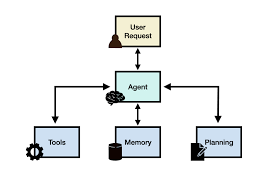
Agentforce: Transforming Business Operations with Autonomous Agents Agentforce empowers organizations to create and manage autonomous agents that streamline tasks across various business departments. These include Sales Agents, Service Agents, Marketing Agents, Commerce Agents, and Platform Agents—truly delivering on the vision of “an Agentforce in every app.” But how does Agentforce work, and what are the building blocks for configuring these agents? Salesforce emphasizes that Agentforce is built with clicks, not code, making it highly accessible to users. This claim was validated by many attendees at the ‘Agentforce Launchpad’ during Dreamforce, who noted that the tool is as declarative and user-friendly as Salesforce promised. The Building Blocks of Agentforce 1. Agent Builder The journey begins with the Agent Builder within Agentforce Studio. This configuration tool allows users to define their agent’s attributes, such as the avatar, name, and description, using natural language inputs—essentially describing the agent in conversational terms. Salesforce describes it as: “If you can dream it, Agentforce can do it.” The Agent Builder interface comprises: Salesforce also provides out-of-the-box agents, such as Sales Agents, which can be enabled via guided setup. 2. Agent Topics Topics are the foundational building blocks that determine an agent’s scope of work. For example, a topic like “Order Management” grants the agent access to data such as order histories and product specifications. In the Dreamforce keynote, Saks’ service agent demonstrated the importance of topics by resolving customer queries tied to its assigned topics. However, queries outside the defined topics were flagged as “guardrails,” ensuring the agent stayed within its designated scope. 3. Topic Actions Actions, tied to topics, define what an agent can do. These actions are often flows, such as querying a CRM database or triggering automated processes. Users can assign existing actions or create new ones by referencing Apex, Flow, prompts, or MuleSoft APIs. For example, integrating external data sources requires defining a new Agentforce action tied to a MuleSoft API. This allows the agent to query data just as human users would. Testing Agents with the Atlas Reasoning Engine Agentforce’s Atlas Reasoning Engine powers agents with advanced capabilities. Users can test agents within the Agent Builder interface, following the reasoning process step-by-step: Once configured, agents are ready to operate across their assigned communication channels (e.g., email, WhatsApp, voice). Omni Supervisor: Real-Time Agent Monitoring Omni Supervisor, originally a Service Cloud feature, now extends to monitoring agents. It provides insights into overall trends, allows real-time oversight of interactions, and even enables listening to recent conversations. The Role of Data Cloud in Agentforce Data powers Agentforce, enabling agents to provide highly contextual responses. The Data Cloud processes both structured data (e.g., Salesforce records) and unstructured data (e.g., emails, voice memos) using its Vector Database for advanced processing. 1. Retrieval Augmented Generation (RAG) Salesforce employs RAG to enhance the accuracy of agent responses. RAG integrates the Atlas Reasoning Engine with Data Cloud, creating a feedback loop. Data Cloud enriches user prompts by retrieving relevant data, making agent responses more contextual and informed. 2. New Data Streams To enhance Agentforce capabilities, data can be ingested into the platform in three ways: For instance, connecting an order management system like Snowflake is streamlined via Salesforce’s prebuilt connectors. 3. Data Graphs Data Graphs visualize relationships between Data Model Objects (DMOs), enabling users to ensure all necessary data is available for optimal agent performance. Real-time Data Graphs enhance identity resolution, segmentation, and action execution for seamless data flow. Inside Prompt Builder Prompt Builder allows users to create or refine prompts that power Agentforce actions. Low-code tools guide users through the process, offering features such as previewing results and assessing feedback toxicity ratings. Search Index in RAG The Search Index is a critical component of RAG. It retrieves relevant data from Data Cloud to enhance agent reasoning. Search parameters can be configured in three ways: Tectonic’s Thoughts Agentforce, powered by Data Cloud and advanced AI tools like the Atlas Reasoning Engine, represents a new era of automation and efficiency for businesses. Whether through Sales, Service, or Marketing Agents, organizations can leverage this technology to streamline operations, personalize customer experiences, and achieve better outcomes. With over 5,200 customers implementing Agentforce in their sandboxes within the first two days of Dreamforce, the platform is already proving its transformative potential. By 2025 over a billion agents had been created! Agentforce isn’t just about improving efficiency; it’s about redefining what’s possible for business operations. Content updated January 2025. Like Related Posts Who is Salesforce? Who is Salesforce? Here is their story in their own words. From our inception, we’ve proudly embraced the identity of Read more Salesforce Marketing Cloud Transactional Emails Salesforce Marketing Cloud Transactional Emails are immediate, automated, non-promotional messages crucial to business operations and customer satisfaction, such as order Read more Salesforce Unites Einstein Analytics with Financial CRM Salesforce has unveiled a comprehensive analytics solution tailored for wealth managers, home office professionals, and retail bankers, merging its Financial Read more AI-Driven Propensity Scores AI plays a crucial role in propensity score estimation as it can discern underlying patterns between treatments and confounding variables Read more
Read More
What Makes a True AI Agent

What Makes a True AI Agent

What Makes a True AI Agent? Rethinking the Pursuit of Autonomy Unpacking the Core Traits of AI Agents — And Why Foundations Matter More Than Buzzwords The tech industry is enamored with AI agents. From sales bots to autonomous systems, companies like Salesforce and HubSpot claim to offer groundbreaking AI agents. Yet, I’ve yet to encounter a truly autonomous, agentic experience built from LLMs. The market is awash with what I call “botshit,” and if the best Salesforce can do is improve slightly over a mediocre chatbot, that’s underwhelming. What Makes a True AI Agent? But here’s the critical question everyone is missing: even if we could build fully autonomous AI agents, how often would they be the best solution for users? To explore this, let’s consider travel planning through the lens of agents and assistants. This use case helps clarify what each trait of agentic behavior brings to the table and offers a framework for evaluating AI products beyond the hype. By the end of this piece, you’ll be able to decide whether AI autonomy is a worthwhile investment or a costly distraction. The Spectrum of Agentic Behavior: A Practical Framework There’s no consensus on what truly defines an AI “agent.” Instead of relying on a binary classification, I suggest adopting a spectrum framework with six key attributes from AI research. This approach is more useful in today’s landscape because: Using the example of a travel “agent,” we’ll explore how different implementations fall on this spectrum. Most real-world applications land somewhere between “basic” and “advanced” tiers across the six traits. This framework will help you make informed decisions about AI integration and communicate more effectively with both technical teams and end users. By the end, you’ll be equipped to: What Makes a True AI Agent The Building Blocks of Agentic Behavior 1. Perception The ability to sense and interpret its environment or relevant data streams. An agent with advanced perception could, for instance, notice your preference for destinations with excellent public transit and factor that into future recommendations. 2. Interactivity The ability to engage with its environment, users, and external systems. LLMs like ChatGPT have set a high bar for interactivity. However, most customer support bots struggle because they need to integrate company-specific data and backend systems, prioritizing accuracy over creativity. 3. Persistence The ability to store, maintain, and update long-term memories about users and interactions. True persistence requires systems that not only store data but also evolve with each interaction, much like how a human travel agent remembers your favorite seat on a plane. 4. Reactivity The ability to respond to changes in its environment in real time. For example, a reactive system could suggest alternative travel dates if hotel prices surge due to a local event. 5. Proactivity The ability to anticipate needs and offer relevant suggestions unprompted. True proactivity requires robust perception, persistence, and reactivity to offer timely, context-aware suggestions. 6. Autonomy The ability to operate independently and make decisions within defined parameters. Autonomy varies by the level of resource control, impact scope, and operational boundaries. For example: The more complex the task and the greater the impact of a mistake, the more safeguards and precision the system needs. Proactive Autonomy: A Future Frontier The next step is proactive autonomy — the ability to modify goals or parameters to achieve overarching objectives. While theoretically possible, this introduces new risks and complexities, bringing us closer to the scenarios seen in sci-fi, where AI systems operate beyond human control. Most companies are nowhere near this level, and prioritizing foundation work like perception and persistence is far more practical for today’s needs. Agents vs. Assistants: A Useful Distinction An AI agent demonstrates at least five of the six attributes and exhibits autonomy within its domain. An AI assistant excels in perception, interactivity, and persistence but lacks autonomy or proactivity. It primarily responds to human requests and relies on human oversight for decisions. While many AI systems today are labeled “agents,” most function more like assistants. A Roomba, for example, is closer to an agent, autonomously navigating and adapting within a predefined space. On the other hand, tools like GitHub Copilot serve as powerful assistants, enhancing user capabilities without making independent decisions. Foundations Before Flash: The Role of Data Despite all the AI buzz, few companies today have the data foundations to support meaningful agentic behavior. For instance, most customer interactions rely on nuanced, unwritten information that is hard to automate. Missing perception foundations and inadequate testing lead to the “botshit” plaguing the industry. The key is to focus on building strong foundations in perception, interactivity, and persistence before tackling full autonomy. Start with the Problem: Why User-Centric AI Wins Before chasing the dream of autonomous agents, companies should start by asking what users actually need. Many organizations would benefit more from developing reliable assistants rather than fully autonomous systems. Real user problems, like those solved by Waymo and Roomba, offer clear paths to valuable AI solutions. The Path Forward: Align Data, Systems, and User Needs When deciding where to invest in AI: By focusing on foundational pillars, companies can build AI systems that solve immediate problems, laying the groundwork for more advanced capabilities in the future. Whether you’re developing agents, assistants, or indispensable tools, aligning solutions with real user needs is the key to meaningful progress. Contact Tectonic for assistance answering the question What Makes a True AI Agent work for my business? Like Related Posts Who is Salesforce? Who is Salesforce? Here is their story in their own words. From our inception, we’ve proudly embraced the identity of Read more Salesforce Marketing Cloud Transactional Emails Salesforce Marketing Cloud Transactional Emails are immediate, automated, non-promotional messages crucial to business operations and customer satisfaction, such as order Read more Salesforce Unites Einstein Analytics with Financial CRM Salesforce has unveiled a comprehensive analytics solution tailored for wealth managers, home office professionals, and retail bankers, merging its Financial Read more AI-Driven Propensity Scores AI plays a crucial role in propensity score

Read More
Cortex Framework Integration with Salesforce (SFDC)

Cortex Framework Integration with Salesforce (SFDC)

Cortex Framework: Integration with Salesforce (SFDC) This insight outlines the process of integrating Salesforce (SFDC) operational workloads into the Cortex Framework Data Foundation. By integrating Salesforce data through Dataflow pipelines into BigQuery, Cloud Composer can schedule and monitor these pipelines, allowing you to gain insights from your Salesforce data. Cortex Framework Integration with Salesforce explained. Prerequisite: Before configuring any workload integration, ensure that the Cortex Framework Data Foundation is deployed. Configuration File The config.json file in the Cortex Framework Data Foundation repository manages settings for transferring data from various sources, including Salesforce. Below is an example of how Salesforce workloads are configured: jsonCopy code”SFDC”: { “deployCDC”: true, “createMappingViews”: true, “createPlaceholders”: true, “datasets”: { “cdc”: “”, “raw”: “”, “reporting”: “REPORTING_SFDC” } } Explanation of Parameters: Parameter Meaning Default Value Description SFDC.deployCDC Deploy CDC true Generates Change Data Capture (CDC) processing scripts to run as DAGs in Cloud Composer. SFDC.createMappingViews Create mapping views true Creates views in the CDC processed dataset to show the “latest version of the truth” from the raw dataset. SFDC.createPlaceholders Create placeholders true Creates empty placeholder tables if they aren’t generated during ingestion, ensuring smooth downstream reporting deployment. SFDC.datasets.raw Raw landing dataset (user-defined) The dataset where replication tools land data from Salesforce. SFDC.datasets.cdc CDC processed dataset (user-defined) Source for reporting views and target for records processed by DAGs. SFDC.datasets.reporting Reporting dataset for SFDC “REPORTING_SFDC” Name of the dataset accessible for end-user reporting, where views and user-facing tables are deployed. Salesforce Data Requirements Table Structure: Loading SFDC Data into BigQuery The Cortex Framework offers several methods for loading Salesforce data into BigQuery: CDC Processing The CDC scripts rely on two key fields: You can adjust the CDC processing to handle different field names or add custom fields to suit your data schema. Configuration of API Integration and CDC To configure Salesforce data integration into BigQuery, Cortex provides the following methods: Example Configuration (settings.yaml): yamlCopy codesalesforce_to_raw_tables: – base_table: accounts raw_table: Accounts api_name: Account load_frequency: “@daily” Data Mapping and Polymorphic Fields Cortex Framework supports mapping data fields to the expected format. For example, a field named unicornId in your source system would be mapped to AccountId in Cortex with the string data type. Polymorphic Fields: Fields whose names vary but have the same structure can be mapped in Cortex using [Field Name]_Type, such as Who_Type for the Who.Type field in the Task object. Modifying DAG Templates You can customize DAG templates as needed for CDC or raw data processing. To disable CDC or raw data processing from API calls, set deployCDC=false in the configuration file. Setting Up the Extraction Module Follow these steps to set up the Salesforce to BigQuery extraction module: Cloud Composer Setup To run Python scripts for replication, install the necessary Python packages depending on your Airflow version. For Airflow 2.x: bashCopy codegcloud composer environments update my-composer-instance –location us-central1 –update-pypi-package apache-airflow-providers-salesforce>=5.2.0 Security and Permissions Ensure Cloud Composer has access to Google Secret Manager for retrieving stored secrets, enhancing the security of sensitive data like passwords and API keys. Conclusion By following these steps, you can successfully integrate Salesforce workloads into Cortex Framework, ensuring a seamless data flow from Salesforce into BigQuery for reporting and analytics. Like Related Posts Who is Salesforce? Who is Salesforce? Here is their story in their own words. From our inception, we’ve proudly embraced the identity of Read more Salesforce Marketing Cloud Transactional Emails Salesforce Marketing Cloud Transactional Emails are immediate, automated, non-promotional messages crucial to business operations and customer satisfaction, such as order Read more Salesforce Unites Einstein Analytics with Financial CRM Salesforce has unveiled a comprehensive analytics solution tailored for wealth managers, home office professionals, and retail bankers, merging its Financial Read more AI-Driven Propensity Scores AI plays a crucial role in propensity score estimation as it can discern underlying patterns between treatments and confounding variables Read more

Read More
AI Agents Connect Tool Calling and Reasoning

AI Agents Connect Tool Calling and Reasoning

AI Agents: Bridging Tool Calling and Reasoning in Generative AI Exploring Problem Solving and Tool-Driven Decision Making in AI Introduction: The Emergence of Agentic AI Recent advancements in libraries and low-code platforms have simplified the creation of AI agents, often referred to as digital workers. Tool calling stands out as a key capability that enhances the “agentic” nature of Generative AI models, enabling them to move beyond mere conversational tasks. By executing tools (functions), these agents can act on your behalf and tackle intricate, multi-step problems requiring sound decision-making and interaction with diverse external data sources. This insight explores the role of reasoning in tool calling, examines the challenges associated with tool usage, discusses common evaluation methods for tool-calling proficiency, and provides examples of how various models and agents engage with tools. Reasoning as a Means of Problem-Solving Successful agents rely on two fundamental expressions of reasoning: reasoning through evaluation and planning, and reasoning through tool use. While both reasoning expressions are vital, they don’t always need to be combined to yield powerful solutions. For instance, OpenAI’s new o1 model excels in reasoning through evaluation and planning, having been trained to utilize chain of thought effectively. This has notably enhanced its ability to address complex challenges, achieving human PhD-level accuracy on benchmarks like GPQA across physics, biology, and chemistry, and ranking in the 86th-93rd percentile on Codeforces contests. However, the o1 model currently lacks explicit tool calling capabilities. Conversely, many models are specifically fine-tuned for reasoning through tool use, allowing them to generate function calls and interact with APIs effectively. These models focus on executing the right tool at the right moment but may not evaluate their results as thoroughly as the o1 model. The Berkeley Function Calling Leaderboard (BFCL) serves as an excellent resource for comparing the performance of various models on tool-calling tasks and provides an evaluation suite for assessing fine-tuned models against challenging scenarios. The recently released BFCL v3 now includes multi-step, multi-turn function calling, raising the standards for tool-based reasoning tasks. Both reasoning types are powerful in their own right, and their combination holds the potential to develop agents that can effectively deconstruct complex tasks and autonomously interact with their environments. For more insights into AI agent architectures for reasoning, planning, and tool calling, check out my team’s survey paper on ArXiv. Challenges in Tool Calling: Navigating Complex Agent Behaviors Creating robust and reliable agents necessitates overcoming various challenges. In tackling complex problems, an agent often must juggle multiple tasks simultaneously, including planning, timely tool interactions, accurate formatting of tool calls, retaining outputs from prior steps, avoiding repetitive loops, and adhering to guidelines to safeguard the system against jailbreaks and prompt injections. Such demands can easily overwhelm a single agent, leading to a trend where what appears to an end user as a single agent is actually a coordinated effort of multiple agents and prompts working in unison to divide and conquer the task. This division enables tasks to be segmented and addressed concurrently by distinct models and agents, each tailored to tackle specific components of the problem. This is where models with exceptional tool-calling capabilities come into play. While tool calling is a potent method for empowering productive agents, it introduces its own set of challenges. Agents must grasp the available tools, choose the appropriate one from a potentially similar set, accurately format the inputs, execute calls in the correct sequence, and potentially integrate feedback or instructions from other agents or humans. Many models are fine-tuned specifically for tool calling, allowing them to specialize in selecting functions accurately at the right time. Key considerations when fine-tuning a model for tool calling include: Common Benchmarks for Evaluating Tool Calling As tool usage in language models becomes increasingly significant, numerous datasets have emerged to facilitate the evaluation and enhancement of model tool-calling capabilities. Two prominent benchmarks include the Berkeley Function Calling Leaderboard and the Nexus Function Calling Benchmark, both utilized by Meta to assess the performance of their Llama 3.1 model series. The recent ToolACE paper illustrates how agents can generate a diverse dataset for fine-tuning and evaluating model tool use. Here’s a closer look at each benchmark: Each of these benchmarks enhances our ability to evaluate model reasoning through tool calling. They reflect a growing trend toward developing specialized models for specific tasks and extending the capabilities of LLMs to interact with the real world. Practical Applications of Tool Calling If you’re interested in observing tool calling in action, here are some examples to consider, categorized by ease of use, from simple built-in tools to utilizing fine-tuned models and agents with tool-calling capabilities. While the built-in web search feature is convenient, most applications require defining custom tools that can be integrated into your model workflows. This leads us to the next complexity level. To observe how models articulate tool calls, you can use the Databricks Playground. For example, select the Llama 3.1 405B model and grant access to sample tools like get_distance_between_locations and get_current_weather. When prompted with, “I am going on a trip from LA to New York. How far are these two cities? And what’s the weather like in New York? I want to be prepared for when I get there,” the model will decide which tools to call and what parameters to provide for an effective response. In this scenario, the model suggests two tool calls. Since the model cannot execute the tools, the user must input a sample result to simulate. Suppose you employ a model fine-tuned on the Berkeley Function Calling Leaderboard dataset. When prompted, “How many times has the word ‘freedom’ appeared in the entire works of Shakespeare?” the model will successfully retrieve and return the answer, executing the required tool calls without the user needing to define any input or manage the output format. Such models handle multi-turn interactions adeptly, processing past user messages, managing context, and generating coherent, task-specific outputs. As AI agents evolve to encompass advanced reasoning and problem-solving capabilities, they will become increasingly adept at managing

Read More
OpenAI’s o1 model

OpenAI’s o1 model

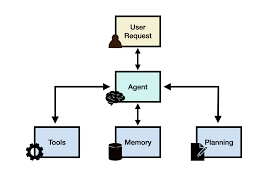
The release of OpenAI’s o1 model has sparked some confusion. Unlike previous models that focused on increasing parameters and capabilities, this one takes a different approach. Let’s explore the technical distinctions first, share a real-world experience, and wrap up with some recommendations on when to use each model. Technical Differences The core difference is that o1 serves as an “agentic wrapper” around GPT-4 (or a similar model). This means it incorporates a layer of metacognition, or “thinking about thinking,” before addressing a query. Instead of immediately answering the question, o1 first evaluates the best strategy for tackling it by breaking it down into subtasks. Once this analysis is complete, o1 begins executing each subtask. Depending on the answers it receives, it may adjust its approach. This method resembles the “tree of thought” strategy, allowing users to see real-time explanations of the subtasks being addressed. For a deeper dive into agentic approaches, I highly recommend Andrew Ng’s insightful letters on the topic. However, this method comes with a cost—it’s about six times more expensive and approximately six times slower than traditional approaches. While this metacognitive process can enhance understanding, it doesn’t guarantee improved answers for straightforward factual queries or tasks like generating trivia questions, where simplicity may yield better results. Real-World Example To illustrate the practical implications, Tectonic began to deepen the understanding of variational autoencoders—a trend in multimodal LLMs. While we had a basic grasp of the concept, we had specific questions about their advantages over traditional autoencoders and the nuances of training them. This information isn’t easily accessible through a simple search; it’s more akin to seeking insight from a domain expert. To enhance our comprehension, we engaged with both GPT-4 and o1. We quickly noticed that o1’s responses were more thoughtful and facilitated a meaningful dialogue. In contrast, GPT-4 tended to recycle the same information, offering limited depth—much like how some people might respond in conversation. A particularly striking example occurred when we attempted to clarify our understanding. The difference was notable. o1 responded like a thoughtful colleague, addressing our specific points, while GPT-4 felt more like a know-it-all friend who rambled on, requiring me to sift through the information for valuable insights. Summary and Recommendations In essence, if we were to personify these models, GPT-4 would be the overzealous friend who dives into a stream of consciousness, while o1 would be the more attentive listener who takes a moment to reflect before delivering precise and relevant insights. Here are some scenarios where o1 may outperform GPT-4, justifying its higher cost: By leveraging these insights, you can better navigate the strengths of each model in your tasks and inquiries. Like Related Posts Who is Salesforce? Who is Salesforce? Here is their story in their own words. From our inception, we’ve proudly embraced the identity of Read more Salesforce Marketing Cloud Transactional Emails Salesforce Marketing Cloud Transactional Emails are immediate, automated, non-promotional messages crucial to business operations and customer satisfaction, such as order Read more Salesforce Unites Einstein Analytics with Financial CRM Salesforce has unveiled a comprehensive analytics solution tailored for wealth managers, home office professionals, and retail bankers, merging its Financial Read more AI-Driven Propensity Scores AI plays a crucial role in propensity score estimation as it can discern underlying patterns between treatments and confounding variables Read more
Read More
Large Action Models and AI Agents

Large Action Models and AI Agents

The introduction of LAMs marks a significant advancement in AI, focusing on actionable intelligence. By enabling robust, dynamic interactions through function calling and structured output generation, LAMs are set to redefine the capabilities of AI agents across industries.

Read More
gettectonic.com