
Performance Metrics Archives - gettectonic.com
Why AI Won't Kill SaaS

Essential Framework for Enterprise AI Development

LangChain: The Essential Framework for Enterprise AI Development The Challenge: Bridging LLMs with Enterprise Systems Large language models (LLMs) hold immense potential, but their real-world impact is limited without seamless integration into existing software stacks. Developers face three key hurdles: 🔹 Data Access – LLMs struggle to query databases, APIs, and real-time streams.🔹 Workflow Orchestration – Complex AI apps require multi-step reasoning.🔹 Accuracy & Hallucinations – Models need grounding in trusted data sources. Enter LangChain – the open-source framework that standardizes LLM integration, making AI applications scalable, reliable, and production-ready. LangChain Core: Prompts, Tools & Chains 1. Prompts – The Starting Point 2. Tools – Modular Building Blocks LangChain provides pre-built integrations for:✔ Data Search (Tavily, SerpAPI)✔ Code Execution (Python REPL)✔ Math & Logic (Wolfram Alpha)✔ Custom APIs (Connect to internal systems) 3. Chains – Multi-Step Workflows Chain Type Use Case Generic Basic prompt → LLM → output Utility Combine tools (e.g., search → analyze → summarize) Async Parallelize tasks for speed Example: python Copy Download chain = ( fetch_financial_data_from_API → analyze_with_LLM → generate_report → email_results ) Supercharging LangChain with Big Data Apache Spark: High-Scale Data Processing Apache Kafka: Event-Driven AI Enterprise Architecture: text Copy Download Kafka (Real-Time Events) → Spark (Batch Processing) → LangChain (LLM Orchestration) → Business Apps 3 Best Practices for Production 1. Deploy with LangServe 2. Debug with LangSmith 3. Automate Feedback Loops When to Use LangChain vs. Raw Python Scenario LangChain Pure Python Quick Prototyping ✅ Low-code templates ❌ Manual wiring Complex Workflows ✅ Built-in chains ❌ Reinvent the wheel Enterprise Scaling ✅ Spark/Kafka integration ❌ Custom glue code Criticism Addressed: The Future: LangChain as the AI Orchestration Standard With retrieval-augmented generation (RAG) and multi-agent systems gaining traction, LangChain’s role is expanding: 🔮 Autonomous Agents – Chains that self-prompt for complex tasks.🔮 Semantic Caching – Reduce LLM costs by reusing past responses.🔮 No-Code Builders – Business users composing AI workflows visually. Bottom Line: LangChain isn’t just for researchers—it’s the missing middleware for enterprise AI. “LangChain does for LLMs what Kubernetes did for containers—it turns prototypes into production.” Like Related Posts Who is Salesforce? Who is Salesforce? Here is their story in their own words. From our inception, we’ve proudly embraced the identity of Read more Salesforce Unites Einstein Analytics with Financial CRM Salesforce has unveiled a comprehensive analytics solution tailored for wealth managers, home office professionals, and retail bankers, merging its Financial Read more AI-Driven Propensity Scores AI plays a crucial role in propensity score estimation as it can discern underlying patterns between treatments and confounding variables Read more Tectonic’s Successful Salesforce Track Record Salesforce Technology Services Integrator – Tectonic has successfully delivered Salesforce in a variety of industries including Public Sector, Hospitality, Manufacturing, Read more
Read More
designing ai agents the right way

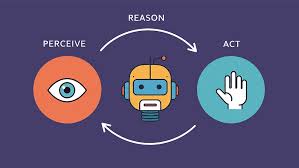
Designing AI Agents the Right Way

Designing AI agents effectively involves a structured approach, starting with defining clear objectives and aligning them with business needs. It also requires careful data collection and preparation, selecting the right machine learning models, and crafting a robust architecture. Finally, building in feedback loops and prioritizing continuous monitoring and improvement are crucial for success.  Here’s a more detailed breakdown: 1. Define Objectives and Purpose: 2. Data Collection and Preparation: 3. Choose the Right Models and Tools: 4. Design the Agent Architecture: 5. Training and Refinement: 6. Testing and Validation: 7. Deployment, Monitoring, and Iteration: 8. Key Considerations: By following these principles, you can design AI agents that are not only effective but also robust, scalable, and aligned with your business objectives. Like Related Posts Who is Salesforce? Who is Salesforce? Here is their story in their own words. From our inception, we’ve proudly embraced the identity of Read more Salesforce Unites Einstein Analytics with Financial CRM Salesforce has unveiled a comprehensive analytics solution tailored for wealth managers, home office professionals, and retail bankers, merging its Financial Read more AI-Driven Propensity Scores AI plays a crucial role in propensity score estimation as it can discern underlying patterns between treatments and confounding variables Read more Tectonic’s Successful Salesforce Track Record Salesforce Technology Services Integrator – Tectonic has successfully delivered Salesforce in a variety of industries including Public Sector, Hospitality, Manufacturing, Read more

Read More
Machine-Augmented World

How Can AI Help Sales Enablement

Artificial intelligence (AI) plays a crucial role in enhancing sales enablement across various dimensions: Content Management: AI-powered sales enablement tools integrate seamlessly with CRM systems and marketing platforms, providing sales reps with instant access to relevant content. AI can assist in creating sales scripts, emails, and summaries, while also enabling efficient content search and retrieval. Coaching and Skill Development: AI analyzes sales activities to pinpoint areas where reps need coaching, offering real-time feedback after sales calls. It enables reps to record practice sessions for AI-driven assessment and scoring, fostering continuous improvement in sales techniques. Impact Analysis of Sales Content: AI evaluates the effectiveness of sales content, assessing its impact on advancing deals. This insight helps sales teams refine their content strategies to better align with customer needs and preferences. Performance Tracking: AI-driven platforms track key performance metrics such as conversion rates, win rates, and sales cycle duration. This data-driven approach enables sales leaders to evaluate the effectiveness of sales strategies and make informed decisions. Enhanced Customer Interactions: AI analyzes customer data to provide predictive insights, optimize lead scoring, and enhance engagement strategies. By identifying high-conversion leads and personalizing interactions, AI empowers sales teams to tailor their approach and improve sales outcomes. Automation of Tasks: Generative AI automates repetitive tasks like lead generation, content creation, and sales forecasting. This automation not only enhances efficiency but also allows sales reps to focus more on strategic initiatives and customer relationship building. While AI significantly enhances sales enablement by automating routine tasks and providing valuable insights, it complements rather than replaces human intuition and expertise in customer interactions and strategic decision-making. Sales organizations leveraging AI are poised to achieve greater efficiency, effectiveness, and profitability in the dynamic business landscape. As AI continues to evolve, its integration into sales processes is expected to grow, driving substantial economic benefits and transforming the way sales teams operate globally. Like Related Posts Who is Salesforce? Who is Salesforce? Here is their story in their own words. From our inception, we’ve proudly embraced the identity of Read more Salesforce Marketing Cloud Transactional Emails Salesforce Marketing Cloud Transactional Emails are immediate, automated, non-promotional messages crucial to business operations and customer satisfaction, such as order Read more Salesforce Unites Einstein Analytics with Financial CRM Salesforce has unveiled a comprehensive analytics solution tailored for wealth managers, home office professionals, and retail bankers, merging its Financial Read more AI-Driven Propensity Scores AI plays a crucial role in propensity score estimation as it can discern underlying patterns between treatments and confounding variables Read more

Read More
Channel Sales Management Salesforce

Channel Sales Management Salesforce

Salesforce provides tools for channel sales management, primarily through its Partner Relationship Management (PRM) solutions, which are integrated within Sales Cloud. This allows companies to manage and optimize their indirect sales channels, including partners, distributors, and resellers. Salesforce PRM offers features like partner portals, dashboards, and automation to streamline communication, collaboration, and deal management.  Key aspects of Salesforce Channel Sales Management: Benefits of Salesforce Channel Management: You could say, Salesforce provides a robust platform for managing and optimizing channel sales, enabling businesses to expand their reach, drive revenue growth, and build stronger relationships with their partners.  Content updated June 2025. Like Related Posts Who is Salesforce? Who is Salesforce? Here is their story in their own words. From our inception, we’ve proudly embraced the identity of Read more Salesforce Marketing Cloud Transactional Emails Salesforce Marketing Cloud Transactional Emails are immediate, automated, non-promotional messages crucial to business operations and customer satisfaction, such as order Read more Salesforce Unites Einstein Analytics with Financial CRM Salesforce has unveiled a comprehensive analytics solution tailored for wealth managers, home office professionals, and retail bankers, merging its Financial Read more AI-Driven Propensity Scores AI plays a crucial role in propensity score estimation as it can discern underlying patterns between treatments and confounding variables Read more

Read More
Salesforce Campaigns

Campaign in Salesforce Marketing Cloud

What is a campaign in Salesforce Marketing Cloud? Campaigns help organize your marketing plan and assets. Plus, when you set up your campaign records effectively, they contain valuable data that you can use to optimize future efforts. What are campaigns in Salesforce Marketing Cloud for? A Salesforce Campaign in Marketing Cloud is a group of Leads and Contacts exposed to specific marketing communication(s). It stores essential performance metrics and means salespeople can quickly see the customers and prospects that received marketing activity. How do I send a Salesforce campaign from Marketing Cloud? In Marketing Cloud > Email Studio > Overview, open the email that you want to send and click ‘Send’ Select a ‘Send Classification’ then click ‘Next’ In the left pane, select ‘Salesforce Campaigns’ and then type the name of the desired campaign in the ‘Search’ field. Create a Marketing Cloud Campaign Why use campaigns in marketing cloud? Marketing Cloud Campaigns provide a way of grouping similar emails together. That way, Campaigns can be used in Datorama Reporting to present data for certain emails. What is campaign object in Salesforce? The Campaign object contains all the settings associated with how campaign records appear, the actions that users can take on campaigns, field access, and more. Create a campaign in the Campaigns app. Use tags in Marketing Cloud Engagement to categorize campaigns by any criteria, such as geography, marketing tactic, and product line. Where are my old Campaigns? I don’t see them on the campaign Overview tab.Campaigns that contain an email that has been sent automatically have their status set to Deployed. By default, the Overview tab only shows Campaigns with a status of In Process. To view older campaigns that have a status of Deployed, simply adjust the filter in the upper left.Setting the campaign status to Deployed now happens automatically when associated emails are sent. This feature was enabled in January 2014. Content updated January 2024. Like3 Related Posts Who is Salesforce? Who is Salesforce? Here is their story in their own words. From our inception, we’ve proudly embraced the identity of Read more Salesforce Marketing Cloud Transactional Emails Salesforce Marketing Cloud Transactional Emails are immediate, automated, non-promotional messages crucial to business operations and customer satisfaction, such as order Read more Salesforce Unites Einstein Analytics with Financial CRM Salesforce has unveiled a comprehensive analytics solution tailored for wealth managers, home office professionals, and retail bankers, merging its Financial Read more AI-Driven Propensity Scores AI plays a crucial role in propensity score estimation as it can discern underlying patterns between treatments and confounding variables Read more

Read More
gettectonic.com