
Population Health Management Archives - gettectonic.com
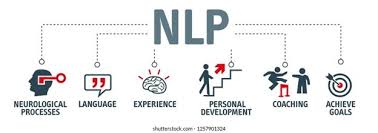
Natural Language Processing Explained

Exploring 3 Types of Natural Language Processing in Healthcare

Healthcare generates vast amounts of unstructured, text-based data—primarily in the form of clinical notes stored in electronic health records (EHRs). While this data holds immense potential for improving patient outcomes, extracting meaningful insights from it remains a challenge. Natural language processing (NLP) offers a solution by enabling healthcare stakeholders to analyze and interpret this data efficiently. NLP technologies can support population health management, clinical decision-making, and medical research by transforming unstructured text into actionable insights. Despite the excitement around NLP in healthcare—particularly amid clinician burnout and EHR inefficiencies—its two core components, natural language understanding (NLU) and natural language generation (NLG), receive less attention. This insight explores NLP, NLU, and NLG, highlighting their differences and healthcare applications. Understanding NLP, NLU, and NLG While related, these three concepts serve distinct purposes: Healthcare Applications NLP technologies offer diverse benefits across clinical, administrative, and research settings: 1. NLP in Clinical and Operational Use Cases Real-World Examples: 2. NLU for Research & Chatbots While less widely adopted than NLP, NLU shows promise in: 3. NLG for Generative AI in Healthcare Challenges & Barriers to Adoption Despite their potential, NLP technologies face several hurdles: 1. Data Quality & Accessibility 2. Bias & Fairness Concerns 3. Regulatory & Privacy Issues 4. Performance & Clinical Relevance The Future of NLP in Healthcare Despite these challenges, NLP, NLU, and NLG hold tremendous potential to revolutionize healthcare by:✔ Enhancing clinical decision-making✔ Streamlining administrative workflows✔ Accelerating medical research As the technology matures, addressing data, bias, and regulatory concerns will be key to unlocking its full impact. Like Related Posts Who is Salesforce? Who is Salesforce? Here is their story in their own words. From our inception, we’ve proudly embraced the identity of Read more Salesforce Marketing Cloud Transactional Emails Salesforce Marketing Cloud Transactional Emails are immediate, automated, non-promotional messages crucial to business operations and customer satisfaction, such as order Read more Salesforce Unites Einstein Analytics with Financial CRM Salesforce has unveiled a comprehensive analytics solution tailored for wealth managers, home office professionals, and retail bankers, merging its Financial Read more AI-Driven Propensity Scores AI plays a crucial role in propensity score estimation as it can discern underlying patterns between treatments and confounding variables Read more

Read More
Analytics tools like Einstein Analytics can identify patterns and trends in patient data, helping healthcare providers optimize workflows and improve the effectiveness of care delivery.

Healthcare Payers Turn to Data Analytics for Cost Savings and Improved Outcomes

Facing persistent financial and staffing pressures, healthcare payers are increasingly adopting data analytics platforms to streamline operations, reduce costs, and enhance member outcomes. A new April 2025 report from KLAS Research offers its first evaluation of payer experiences with these solutions, highlighting key vendors and emerging trends. The Growing Role of Data Analytics in Payer Operations With healthcare organizations under constant pressure to improve efficiency and decision-making, data analytics tools provide critical visibility into claims data, utilization patterns, and financial performance. These platforms enable payers to: While KLAS’ research in this space is still evolving, the initial report assesses three leading vendors, with plans to expand coverage as more data becomes available. Key Vendor Performances 1. MedInsight – Best in KLAS 2025 (Score: 85.8) 2. MedeAnalytics (Score: 87.1) 3. Clarify Health Solutions 4. Salesforce Health Cloud Looking Ahead: Expanding the Vendor Landscape Additional players like CareJourney (acquired by Arcadia in 2024), Cedar Gate Technologies, and Cognizant are expected to be evaluated in future KLAS reports as more performance data emerges. The Bottom Line As payers seek greater efficiency and data-driven decision-making, analytics platforms are becoming indispensable. While MedInsight and MedeAnalytics lead in early adoption, the competitive landscape is still evolving—making future KLAS insights critical for payer organizations evaluating their options. Next Steps: With the right analytics partner, payers can unlock cost savings, operational efficiencies, and better member outcomes—key priorities in today’s challenging healthcare environment. Like Related Posts Who is Salesforce? Who is Salesforce? Here is their story in their own words. From our inception, we’ve proudly embraced the identity of Read more Salesforce Marketing Cloud Transactional Emails Salesforce Marketing Cloud Transactional Emails are immediate, automated, non-promotional messages crucial to business operations and customer satisfaction, such as order Read more Salesforce Unites Einstein Analytics with Financial CRM Salesforce has unveiled a comprehensive analytics solution tailored for wealth managers, home office professionals, and retail bankers, merging its Financial Read more AI-Driven Propensity Scores AI plays a crucial role in propensity score estimation as it can discern underlying patterns between treatments and confounding variables Read more

Read More
gettectonic.com