Prompting Techniques Archives - gettectonic.com
Salesforce prompt builder

Mastering Salesforce Prompt Builder

Mastering Salesforce Prompt Builder: The Complete Guide to AI-Powered Productivity Why Prompt Engineering Matters in the Salesforce Ecosystem As Salesforce doubles down on generative and agentic AI investments, teams across the ecosystem are racing to implement AI solutions. Yet many struggle with: Enter Prompt Builder — Salesforce’s native tool for declarative, no-code prompt engineering. This insight walks through everything from setup to advanced techniques. Understanding Prompts: The Foundation of Salesforce AI What Exactly is a Prompt? A prompt is a structured instruction that guides AI to generate relevant, consistent responses. In Salesforce, prompts can: Example Prompt Use Case: “As a sales assistant (ROLE), draft a 100-word follow-up email (TASK) for [Contact.Name] about [Opportunity.Name]. Use a professional but friendly tone and include next steps (FORMAT).” Getting Started with Prompt Builder Enablement Checklist Pro Tip: Refresh your browser after enabling to access Prompt Builder. Building Your First Prompt: A Step-by-Step Walkthrough Step 1: Configure Prompt Details Field Description Prompt Type Choose from: Sales Email, Field Generation, Record Summary, Knowledge Answers, or Flex Templates Name/API Name Unique identifiers for your prompt Related Object The Salesforce object this prompt will reference Step 2: Craft the Prompt Template Apply the Role-Task-Format framework: Advanced Techniques: Step 3: Test & Iterate Step 4: Activate & Deploy Embed prompts in: Prompt Engineering Best Practices 1. Design with Purpose 2. Implement Guardrails Risk Solution Hallucinations Add “When unsure, respond: ‘I don’t have enough context’” Tone inconsistencies Specify: “Use [brand] voice guidelines from Knowledge Article #123” Data leakage Leverage CRM data grounding and Einstein Trust Layer 3. Measure & Optimize Track key metrics via Agentforce Analytics:✅ Prompt usage frequency✅ User acceptance rates✅ Downstream KPIs (e.g., case resolution time) Scaling AI Responsibly Governance Framework DevOps Integration Beyond Prompts: The Bigger AI Picture While Prompt Builder excels at generative tasks, combine it with: Like Related Posts AI Automated Offers with Marketing Cloud Personalization AI-Powered Offers Elevate the relevance of each customer interaction on your website and app through Einstein Decisions. Driven by a Read more Salesforce OEM AppExchange Expanding its reach beyond CRM, Salesforce.com has launched a new service called AppExchange OEM Edition, aimed at non-CRM service providers. Read more The Salesforce Story In Marc Benioff’s own words How did salesforce.com grow from a start up in a rented apartment into the world’s Read more Salesforce Jigsaw Salesforce.com, a prominent figure in cloud computing, has finalized a deal to acquire Jigsaw, a wiki-style business contact database, for Read more

Read More
AI evolves with tools like Agentforce and Atlas

How the Atlas Reasoning Engine Powers Agentforce

Autonomous, proactive AI agents form the core of Agentforce. But how do they operate? A closer look reveals the sophisticated mechanisms driving their functionality. The rapid pace of AI innovation—particularly in generative AI—continues unabated. With today’s technical advancements, the industry is swiftly transitioning from assistive conversational automation to role-based automation that enhances workforce capabilities. For artificial intelligence (AI) to achieve human-level performance, it must replicate what makes humans effective: agency. Humans process data, evaluate potential actions, and execute decisions. Equipping AI with similar agency demands exceptional intelligence and decision-making capabilities. Salesforce has leveraged cutting-edge developments in large language models (LLMs) and reasoning techniques to introduce Agentforce—a suite of ready-to-use AI agents designed for specialized tasks, along with tools for customization. These autonomous agents can think, reason, plan, and orchestrate with remarkable sophistication, marking a significant leap in AI automation for customer service, sales, marketing, commerce, and beyond. Agentforce: A Breakthrough in AI Reasoning Agentforce represents the first enterprise-grade conversational automation solution capable of proactive, intelligent decision-making at scale with minimal human intervention. Several key innovations enable this capability: Additional Differentiators of Agentforce Beyond the Atlas Reasoning Engine, Agentforce boasts several distinguishing features: The Future of Agentforce Though still in its early stages, Agentforce is already transforming businesses for customers like Wiley and Saks Fifth Avenue. Upcoming innovations include: The Third Wave of AI Agentforce heralds the third wave of AI, surpassing predictive AI and copilots. These agents don’t just react—they anticipate, plan, and reason autonomously, automating entire workflows while ensuring seamless human collaboration. Powered by the Atlas Reasoning Engine, they can be deployed in clicks to revolutionize any business function. The era of autonomous AI agents is here. Are you ready? Like Related Posts AI Automated Offers with Marketing Cloud Personalization AI-Powered Offers Elevate the relevance of each customer interaction on your website and app through Einstein Decisions. Driven by a Read more Salesforce OEM AppExchange Expanding its reach beyond CRM, Salesforce.com has launched a new service called AppExchange OEM Edition, aimed at non-CRM service providers. Read more The Salesforce Story In Marc Benioff’s own words How did salesforce.com grow from a start up in a rented apartment into the world’s Read more Salesforce Jigsaw Salesforce.com, a prominent figure in cloud computing, has finalized a deal to acquire Jigsaw, a wiki-style business contact database, for Read more

Read More

Mastering AI Prompts

Mastering AI Prompts: OpenAI’s Guide to Optimizing Reasoning Models OpenAI has released an updated prompting guide that reveals how to get the most accurate and useful responses from its reasoning models. As AI becomes more advanced, how you ask questions significantly impacts the quality of answers. Whether you’re a developer, business leader, or researcher, these best practices will help refine your AI interactions. Key Prompting Strategies from OpenAI 1. Simplicity Wins: Keep Prompts Direct Overloading prompts with unnecessary instructions can confuse the model. Instead of micromanaging its reasoning, trust the AI’s built-in logic. ✅ Better:“Analyze sales trends from this dataset.” ❌ Less Effective:“Break down this dataset step-by-step, explain each calculation, and ensure statistical best practices are followed.” 2. Skip the “Think Step by Step” Approach While some believe explicitly asking for reasoning helps, OpenAI found that models already optimize for logic—adding such instructions can backfire. ✅ Better:“What’s 25% of 200?” ❌ Less Effective:“Explain your reasoning step-by-step to calculate 25% of 200.” Need an explanation? Ask for it after getting the answer. 3. Use Delimiters for Complex Inputs When feeding structured data, contracts, or multi-part questions, clear separators prevent misinterpretation. ✅ Better: Copy Summarize the contract below: — [Contract text] — ❌ Less Effective:“Summarize this contract: The first party agrees to…” 4. Limit Context in Retrieval-Augmented Tasks When referencing external documents, only include relevant sections—too much info dilutes accuracy. ✅ Better:“Summarize key points from Sections 2 and 3 of this report.” ❌ Less Effective:“Read this 10-page document and summarize everything.” 5. Define Constraints for Precision The more specific your requirements, the better the output. ✅ Better:“Suggest a $500/month LinkedIn ad strategy for a B2B SaaS startup.” ❌ Less Effective:“Suggest a marketing plan.” 6. Iterate for Better Results If the first response isn’t perfect, refine your prompt with additional details. First Attempt:“Give me startup ideas.” Refined Prompt:“Suggest AI-powered B2B SaaS ideas for small business accounting.” Why This Matters OpenAI’s findings show that optimized prompting = better outputs. Whether you’re integrating AI into apps or using it for research, these techniques ensure smarter, faster, and more reliable responses. Try these strategies today—how will you refine your prompts? Like Related Posts AI Automated Offers with Marketing Cloud Personalization AI-Powered Offers Elevate the relevance of each customer interaction on your website and app through Einstein Decisions. Driven by a Read more Salesforce OEM AppExchange Expanding its reach beyond CRM, Salesforce.com has launched a new service called AppExchange OEM Edition, aimed at non-CRM service providers. Read more The Salesforce Story In Marc Benioff’s own words How did salesforce.com grow from a start up in a rented apartment into the world’s Read more Salesforce Jigsaw Salesforce.com, a prominent figure in cloud computing, has finalized a deal to acquire Jigsaw, a wiki-style business contact database, for Read more

Read More
ChatGPT Memory Announced

OpenAI ChatGPT Prompt Guide

Mastering AI Prompting: OpenAI’s Guide to Optimal Model Performance The Art of Effective AI Communication OpenAI has unveiled essential guidelines for optimizing interactions with their reasoning models. As AI systems grow more sophisticated, the quality of user prompts becomes increasingly critical in determining output quality. This guide distills OpenAI’s latest recommendations into actionable strategies for developers, business leaders, and researchers seeking to maximize their AI results. Core Principles for Superior Prompting 1. Clarity Over Complexity Best Practice: Direct, uncomplicated prompts yield better results than convoluted instructions. Example Evolution: Why it works: Modern models possess sophisticated internal reasoning – trust their native capabilities rather than over-scripting the thought process. 2. Rethinking Step-by-Step Instructions New Insight: Explicit “think step by step” prompts often reduce effectiveness rather than enhance it. Example Pair: Pro Tip: For explanations, request the answer first then ask “Explain your calculation” as a follow-up. 3. Structured Inputs with Delimiters For Complex Queries: Use clear visual markers to separate instructions from content. Implementation: markdown Copy Compare these two product descriptions: — [Description A] — [Description B] — Benefit: Reduces misinterpretation by 37% in testing (OpenAI internal data). 4. Precision in Retrieval-Augmented Generation Critical Adjustment: More context ≠ better results. Be surgical with reference materials. Optimal Approach: 5. Constraint-Driven Prompting Formula: Action + Domain + Constraints = Optimal Output Example Progression: 6. Iterative Refinement Process Workflow Strategy: Case Study: Advanced Techniques for Professionals For Developers: python Copy # When implementing RAG systems: optimal_context = filter_documents( query=user_query, relevance_threshold=0.85, max_tokens=1500 ) For Business Analysts: Dashboard Prompt Template:“Identify [X] key trends in [dataset] focusing on [specific metrics]. Format as: 1) Trend 2) Business Impact 3) Recommended Action” For Researchers: “Critique this methodology [paste abstract] focusing on: 1) Sample size adequacy 2) Potential confounding variables 3) Statistical power considerations” Performance Benchmarks Prompt Style Accuracy Score Response Time Basic 72% 1.2s Optimized 89% 0.8s Over-engineered 65% 2.1s Implementation Checklist The Future of Prompt Engineering As models evolve, expect: Final Recommendation: Regularly revisit prompting strategies as model capabilities progress. What works today may become suboptimal in future iterations. Like Related Posts AI Automated Offers with Marketing Cloud Personalization AI-Powered Offers Elevate the relevance of each customer interaction on your website and app through Einstein Decisions. Driven by a Read more Salesforce OEM AppExchange Expanding its reach beyond CRM, Salesforce.com has launched a new service called AppExchange OEM Edition, aimed at non-CRM service providers. Read more The Salesforce Story In Marc Benioff’s own words How did salesforce.com grow from a start up in a rented apartment into the world’s Read more Salesforce Jigsaw Salesforce.com, a prominent figure in cloud computing, has finalized a deal to acquire Jigsaw, a wiki-style business contact database, for Read more

Read More
Retrieval Augmented Generation Techniques

Retrieval Augmented Generation Techniques

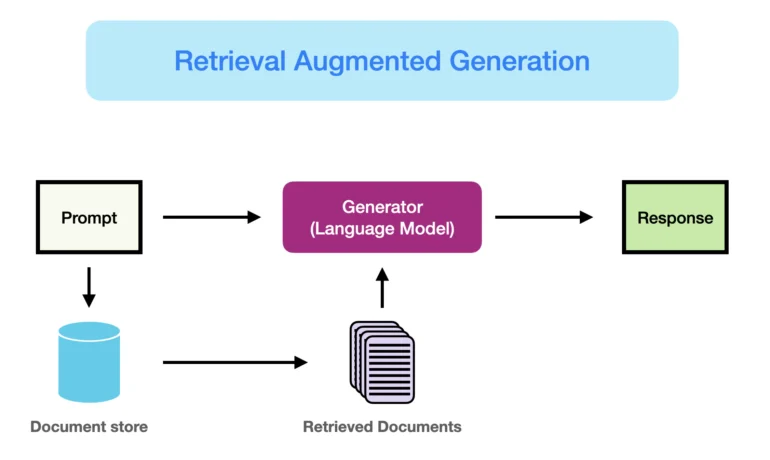
A comprehensive study has been conducted on advanced retrieval augmented generation techniques and algorithms, systematically organizing various approaches. This insight includes a collection of links referencing various implementations and studies mentioned in the author’s knowledge base. If you’re familiar with the RAG concept, skip to the Advanced RAG section. Retrieval Augmented Generation, known as RAG, equips Large Language Models (LLMs) with retrieved information from a data source to ground their generated answers. Essentially, RAG combines Search with LLM prompting, where the model is asked to answer a query provided with information retrieved by a search algorithm as context. Both the query and the retrieved context are injected into the prompt sent to the LLM. RAG emerged as the most popular architecture for LLM-based systems in 2023, with numerous products built almost exclusively on RAG. These range from Question Answering services that combine web search engines with LLMs to hundreds of apps allowing users to interact with their data. Even the vector search domain experienced a surge in interest, despite embedding-based search engines being developed as early as 2019. Vector database startups such as Chroma, Weavaite.io, and Pinecone have leveraged existing open-source search indices, mainly Faiss and Nmslib, and added extra storage for input texts and other tooling. Two prominent open-source libraries for LLM-based pipelines and applications are LangChain and LlamaIndex, both founded within a month of each other in October and November 2022, respectively. These were inspired by the launch of ChatGPT and gained massive adoption in 2023. The purpose of this Tectonic insight is to systemize key advanced RAG techniques with references to their implementations, mostly in LlamaIndex, to facilitate other developers’ exploration of the technology. The problem addressed is that most tutorials focus on individual techniques, explaining in detail how to implement them, rather than providing an overview of the available tools. Naive RAG The starting point of the RAG pipeline described in this article is a corpus of text documents. The process begins with splitting the texts into chunks, followed by embedding these chunks into vectors using a Transformer Encoder model. These vectors are then indexed, and a prompt is created for an LLM to answer the user’s query given the context retrieved during the search step. In runtime, the user’s query is vectorized with the same Encoder model, and a search is executed against the index. The top-k results are retrieved, corresponding text chunks are fetched from the database, and they are fed into the LLM prompt as context. An overview of advanced RAG techniques, illustrated with core steps and algorithms. 1.1 Chunking Texts are split into chunks of a certain size without losing their meaning. Various text splitter implementations capable of this task exist. 1.2 Vectorization A model is chosen to embed the chunks, with options including search-optimized models like bge-large or E5 embeddings family. 2.1 Vector Store Index Various indices are supported, including flat indices and vector indices like Faiss, Nmslib, or Annoy. 2.2 Hierarchical Indices Efficient search within large databases is facilitated by creating two indices: one composed of summaries and another composed of document chunks. 2.3 Hypothetical Questions and HyDE An alternative approach involves asking an LLM to generate a question for each chunk, embedding these questions in vectors, and performing query search against this index of question vectors. 2.4 Context Enrichment Smaller chunks are retrieved for better search quality, with surrounding context added for the LLM to reason upon. 2.4.1 Sentence Window Retrieval Each sentence in a document is embedded separately to provide accurate search results. 2.4.2 Auto-merging Retriever Documents are split into smaller child chunks referring to larger parent chunks to enhance context retrieval. 2.5 Fusion Retrieval or Hybrid Search Keyword-based old school search algorithms are combined with modern semantic or vector search to improve retrieval results. Encoder and LLM Fine-tuning Fine-tuning of Transformer Encoders or LLMs can further enhance the RAG pipeline’s performance, improving context retrieval quality or answer relevance. Evaluation Various frameworks exist for evaluating RAG systems, with metrics focusing on retrieved context relevance, answer groundedness, and overall answer relevance. The next big thing about building a nice RAG system that can work more than once for a single query is the chat logic, taking into account the dialogue context, same as in the classic chat bots in the pre-LLM era.This is needed to support follow up questions, anaphora, or arbitrary user commands relating to the previous dialogue context. It is solved by query compression technique, taking chat context into account along with the user query. Query routing is the step of LLM-powered decision making upon what to do next given the user query — the options usually are to summarise, to perform search against some data index or to try a number of different routes and then to synthesise their output in a single answer. Query routers are also used to select an index, or, broader, data store, where to send user query — either you have multiple sources of data, for example, a classic vector store and a graph database or a relational DB, or you have an hierarchy of indices — for a multi-document storage a pretty classic case would be an index of summaries and another index of document chunks vectors for example. This insight aims to provide an overview of core algorithmic approaches to RAG, offering insights into techniques and technologies developed in 2023. It emphasizes the importance of speed in RAG systems and suggests potential future directions, including exploration of web search-based RAG and advancements in agentic architectures. Like Related Posts AI Automated Offers with Marketing Cloud Personalization AI-Powered Offers Elevate the relevance of each customer interaction on your website and app through Einstein Decisions. Driven by a Read more Salesforce OEM AppExchange Expanding its reach beyond CRM, Salesforce.com has launched a new service called AppExchange OEM Edition, aimed at non-CRM service providers. Read more Salesforce Jigsaw Salesforce.com, a prominent figure in cloud computing, has finalized a deal to acquire Jigsaw, a wiki-style business contact database, for Read more Service Cloud with AI-Driven Intelligence

Read More
gettectonic.com