RAG Archives - gettectonic.com - Page 3
Machine-Augmented World

Machine-Augmented World

A machine-augmented world, in the context of Salesforce, refers to a future where technology, particularly Augmented Reality (AR) and Artificial Intelligence (AI) and Machine Learning (ML), enhances and expands human capabilities and interactions, especially within the Salesforce ecosystem.  Here’s how Salesforce is embracing the “machine-augmented world”: Essentially, Salesforce’s approach to the machine-augmented world is centered on leveraging technology to enhance human capabilities and interactions within the CRM platform, leading to: Like Related Posts Who is Salesforce? Who is Salesforce? Here is their story in their own words. From our inception, we’ve proudly embraced the identity of Read more Salesforce Marketing Cloud Transactional Emails Salesforce Marketing Cloud Transactional Emails are immediate, automated, non-promotional messages crucial to business operations and customer satisfaction, such as order Read more Salesforce Unites Einstein Analytics with Financial CRM Salesforce has unveiled a comprehensive analytics solution tailored for wealth managers, home office professionals, and retail bankers, merging its Financial Read more AI-Driven Propensity Scores AI plays a crucial role in propensity score estimation as it can discern underlying patterns between treatments and confounding variables Read more

Read More

AI-Powered Dynamic Scheduling

Revolutionizing Field Service: How Intelligent Scheduling Solves a $260,000/Hour Problem The High-Stakes World of Field Service Operations In today’s 24/7 service economy, every minute of technician downtime costs enterprises dearly. Aberdeen Group research reveals that unplanned equipment downtime costs manufacturers $260,000 per hour in lost productivity. Yet most field service organizations remain trapped in scheduling chaos: The consequences cascade through operations: missed SLAs, frustrated customers, burned-out technicians, and eroded profit margins. For global manufacturers maintaining critical infrastructure, these inefficiencies aren’t just costly—they threaten business continuity. The Scheduling Bottleneck Breaking Field Service Dispatchers face an impossible juggling act:✔ Matching 100+ technician skills to complex jobs✔ Optimizing routes across continents✔ Accommodating urgent priority tickets✔ Maintaining regulatory compliance Legacy systems—often spreadsheet-based—collapse under this complexity. The result? ✖ Wrong technicians dispatched✖ Critical jobs delayed by days✖ Fuel and overtime costs skyrocketing✖ Compliance risks from inaccurate logs The Solution: AI-Powered Dynamic Scheduling Enter Sandip Patel, a Salesforce Architect whose Custom Slot Scheduler for Field Service Lightning (FSL) is transforming global service operations. Built for manufacturing giant Saint-Gobain, this intelligent system: “Traditional scheduling is chess played with static pieces,” Patel explains. “We built a system where every piece moves dynamically in response to the game.” Measurable Results That Redefine Service Excellence Patel’s solution delivered transformational outcomes for Saint-Gobain: Metric Improvement Scheduling Accuracy ↑ 35% First-Time Fix Rate ↑ 28% Customer Satisfaction ↑ 22 points Technician Productivity ↑ 40% Overtime Costs ↓ 32% The system’s self-learning algorithms continuously improve, analyzing historical data to predict: The Future of Intelligent Field Service As the field service management market grows to 6 billion by 2026 (IDC), Patel’s work establishes a new benchmark. The principles apply across industries: “Where others see complexity, we see patterns,” says Patel, now adapting these concepts for healthcare at United Techno Solutions. “The future belongs to systems that think as fast as the field moves.” For enterprises drowning in scheduling chaos, the message is clear: intelligent automation isn’t optional—it’s the only way to survive in the service economy. The technology exists. The ROI is proven. The question is no longer “if” but “how fast” organizations can implement these solutions. Like Related Posts Who is Salesforce? Who is Salesforce? Here is their story in their own words. From our inception, we’ve proudly embraced the identity of Read more Salesforce Marketing Cloud Transactional Emails Salesforce Marketing Cloud Transactional Emails are immediate, automated, non-promotional messages crucial to business operations and customer satisfaction, such as order Read more Salesforce Unites Einstein Analytics with Financial CRM Salesforce has unveiled a comprehensive analytics solution tailored for wealth managers, home office professionals, and retail bankers, merging its Financial Read more AI-Driven Propensity Scores AI plays a crucial role in propensity score estimation as it can discern underlying patterns between treatments and confounding variables Read more

Read More
Ensuring Trust in AI Agent Deployment

Ensuring Trust in AI Agent Deployment

Ensuring Trust in AI Agent Deployment: A Secure Approach to Business Transformation The Imperative for Trustworthy AI Agents AI agents powered by platforms like Agentforce represent a significant advancement in business automation, offering capabilities ranging from enhanced customer service to intelligent employee assistance. However, organizations face a critical challenge in adopting this technology: establishing sufficient trust to deploy AI agents with sensitive data and core business operations. Recent industry research highlights prevalent concerns: Salesforce has maintained trust as its foundational value throughout its 25-year history, adapting this principle across technological evolutions from cloud computing to generative AI. The company now applies this same rigorous approach to AI agent deployment through a comprehensive trust framework. The Four Essential Components of Trusted AI Implementation 1. Comprehensive Data Governance Framework The reliability of AI agents depends fundamentally on data quality and security. The Salesforce platform addresses this through: Data Protection Systems Advanced Data Management Industry experts emphasize that robust AI systems require equally robust data foundations. 2. Secure Integration Architecture AI agents require safe interaction channels with other systems: 3. Built-in Development Safeguards The platform incorporates multiple layers of protection throughout the AI lifecycle: 4. Proprietary Trust Layer A specialized security interface between users and large language models offers: Case Study: Healthcare Transformation with Precina Precina’s implementation demonstrates the platform’s capabilities in a regulated environment. By unifying patient records through Agentforce while maintaining HIPAA compliance, the organization achieved: Precina’s CTO noted that Salesforce’s cybersecurity standards enabled trust equivalent to their own care standards when handling patient information. Enterprise AI: Balancing Innovation and Responsibility Salesforce leadership emphasizes that the company’s quarter-century of experience in secure solutions uniquely positions it to guide enterprises through AI adoption. The integration of unified data management, intuitive development tools, and embedded governance enables organizations to deploy AI solutions that are both transformative and responsible. The recommended implementation approach includes: In the evolving landscape of enterprise AI, Salesforce positions trust not just as a corporate value but as a critical competitive differentiator for organizations adopting these technologies. Like Related Posts Who is Salesforce? Who is Salesforce? Here is their story in their own words. From our inception, we’ve proudly embraced the identity of Read more Salesforce Marketing Cloud Transactional Emails Salesforce Marketing Cloud Transactional Emails are immediate, automated, non-promotional messages crucial to business operations and customer satisfaction, such as order Read more Salesforce Unites Einstein Analytics with Financial CRM Salesforce has unveiled a comprehensive analytics solution tailored for wealth managers, home office professionals, and retail bankers, merging its Financial Read more AI-Driven Propensity Scores AI plays a crucial role in propensity score estimation as it can discern underlying patterns between treatments and confounding variables Read more

Read More
Autonomous Agents on the Agentforce Platform

InsideTrack Joins Salesforce Accelerator to Develop AI Tools for Student Success

Student success nonprofit InsideTrack has partnered with Salesforce Accelerator – Agents for Impact, an initiative that provides nonprofits with technology, funding, and expertise to build AI-powered solutions. Over the next two years, InsideTrack will receive $333,000 in funding and in-kind technology services to create an AI-driven tool designed to enhance the work of student success coaches. Student success coaches are professionals who provide support and guidance to students, helping them navigate academic and personal challenges to achieve their goals. They offer a more holistic approach than academic advisors, focusing on areas like time management, study skills, and goal setting, while also addressing non-academic barriers to success.  Key Roles and Responsibilities: Distinction from Academic Advisors: While academic advisors focus on course selection and degree requirements, success coaches take a broader view, addressing the multifaceted needs of students. They help students develop the skills and strategies to succeed in all areas of their lives, not just academics. Benefits of Success Coaching: Where to Find Student Success Coaches: This new solution will help coaches analyze unstructured data—such as session notes—to identify trends, generate summaries, and recommend next steps, enabling them to support more students effectively. InsideTrack, which assists over 200,000 learners annually through 2.2 million coaching interactions, aims to use AI to streamline reporting and provide deeper insights while preserving the human connections vital to student success. “AI adoption must support—not erode—the relationships that drive student success,” said Ruth Bauer, President of InsideTrack. “By centering this work on the experiences of students and coaches, we’re developing human-centered tools that expand capacity and help learners achieve their goals.” Ron Smith, Salesforce’s VP of Philanthropy, emphasized that “AI should enhance human connection, not replace it,” ensuring ethical and responsible integration in higher education. Dr. Tim Renick of Georgia State University, an InsideTrack advisor, added: “We need tools that empower frontline staff to act quickly on insights and provide meaningful support—because knowing who needs help is only the first step.” The initiative reflects a growing effort to leverage AI for scalable, equitable student support while maintaining the personal engagement that drives long-term success. Like Related Posts Who is Salesforce? Who is Salesforce? Here is their story in their own words. From our inception, we’ve proudly embraced the identity of Read more Salesforce Marketing Cloud Transactional Emails Salesforce Marketing Cloud Transactional Emails are immediate, automated, non-promotional messages crucial to business operations and customer satisfaction, such as order Read more Salesforce Unites Einstein Analytics with Financial CRM Salesforce has unveiled a comprehensive analytics solution tailored for wealth managers, home office professionals, and retail bankers, merging its Financial Read more AI-Driven Propensity Scores AI plays a crucial role in propensity score estimation as it can discern underlying patterns between treatments and confounding variables Read more

Read More
Agentic AI: The Next Frontier in Intelligent Automation

Agentic AI Revolution in Customer Service

The Agentic AI Revolution in Customer Service: Lessons from Salesforce’s Million-Interaction Milestone From Chatbot Frustration to AI Partnership The agentic AI arms race has exploded onto the customer service scene in less than a year, with Salesforce emerging as a pioneer by deploying its Agentforce solution across its help portal. The results? Over 1 million customer interactions handled – and counting. But as Salesforce’s journey reveals, success with AI agents requires more than just advanced technology—it demands a fundamental shift in customer service philosophy. Breaking the “Deflection” Mindset Bernard Slowey, SVP of Digital Customer Success at Salesforce, calls out the industry’s problematic approach: “That word ‘deflection’ breaks my heart. When companies focus on driving out costs by keeping customers away from humans, they make stupid decisions.” Unlike traditional chatbots designed as “first line of defense,” Agentforce was built to:✔ Accelerate resolutions through intelligent assistance✔ Maintain human availability when needed✔ Enhance rather than replace the service experience Key Lessons from a Million Conversations 1. The Heart Matters as Much as the Brain Early versions focused on factual accuracy but lacked emotional intelligence. Salesforce: Result: Abandonment rates dropped from 26% to 8-9% 2. The Content Imperative Agent performance depends entirely on data quality. Salesforce encountered: 3. Knowing When to Step Aside The system now: The Human-AI Balance Sheet Metric Before Agentforce After Optimization Customer Abandonment 26% 8-9% Human Handoff Rate 1% 5-8% Support Engineer Capacity Static Reallocated to higher-value work The Road Ahead for Agentic AI As Slowey notes: “AI does some things amazingly well; it doesn’t create relationships. We’re entering an era of digital and human collaboration.” For companies ready to move beyond the chatbot dark ages, Salesforce’s million-interaction milestone proves agentic AI can work—when implemented with both technological rigor and human-centric design. Like Related Posts Who is Salesforce? Who is Salesforce? Here is their story in their own words. From our inception, we’ve proudly embraced the identity of Read more Salesforce Marketing Cloud Transactional Emails Salesforce Marketing Cloud Transactional Emails are immediate, automated, non-promotional messages crucial to business operations and customer satisfaction, such as order Read more Salesforce Unites Einstein Analytics with Financial CRM Salesforce has unveiled a comprehensive analytics solution tailored for wealth managers, home office professionals, and retail bankers, merging its Financial Read more AI-Driven Propensity Scores AI plays a crucial role in propensity score estimation as it can discern underlying patterns between treatments and confounding variables Read more

Read More
Salesforce AI Agents and New Data Cloud Features

Salesforce CDP and Data Cloud

What is the difference between Salesforce CDP and data Cloud? AI Overview Salesforce Data Cloud and Salesforce CDP (Customer Data Platform) are closely related, but Data Cloud is a broader, more comprehensive platform. Data Cloud extends the core CDP functionality to encompass all business data, not just customer data, and integrates it with the broader Salesforce ecosystem according to saasguru.  Here’s a breakdown of the key differences: Salesforce CDP (Now part of Data Cloud): Salesforce Data Cloud: Key Differences Summarized: In essence, Data Cloud is a more mature and broader evolution of the original CDP functionality, extending its benefits to a wider range of business data and applications within the Salesforce ecosystem according to Salesforce Ben.  Like Related Posts Who is Salesforce? Who is Salesforce? Here is their story in their own words. From our inception, we’ve proudly embraced the identity of Read more Salesforce Marketing Cloud Transactional Emails Salesforce Marketing Cloud Transactional Emails are immediate, automated, non-promotional messages crucial to business operations and customer satisfaction, such as order Read more Salesforce Unites Einstein Analytics with Financial CRM Salesforce has unveiled a comprehensive analytics solution tailored for wealth managers, home office professionals, and retail bankers, merging its Financial Read more AI-Driven Propensity Scores AI plays a crucial role in propensity score estimation as it can discern underlying patterns between treatments and confounding variables Read more

Read More
Agentforce 3 and AI Agents

Agentforce 3 to Accelerate Agentic AI Adoption

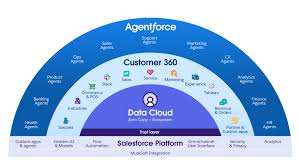
Salesforce Launches Agentforce 3 to Accelerate Agentic AI Adoption A few weeks ago, Salesforce introduced Agentforce 3, designed to deliver rapid time-to-value and address ROI concerns around agentic AI. As the technology rapidly evolves, Salesforce is leading the charge into the agent-first Service era, betting big on Agentforce’s potential to transform customer service by proactively resolving issues and educating users on new features. Salesforce customer 1-800 Accountant is already seeing the benefits, reporting measurable improvements in customer service efficiency. Here’s what both companies had to say. Customer Zero: Salesforce’s Own Agentforce Journey As its own first customer, Salesforce has a vested interest in ensuring Agentforce enhances its customer service operations. Bernard Slowey, SVP of Digital Customer Success, shared insights with analysts, noting that most self-service journeys for Salesforce customers begin on Google before landing on the company’s Help portal, which handles 2 million reactive support cases annually. Slowey posed a key question: “What if your service team had infinite capacity and complete knowledge?” To move toward this vision, Salesforce is deploying AI agents to absorb repetitive tasks, proactively engage customers, and seamlessly hand off complex issues to humans when needed. By July, Agentforce had already facilitated 1 million customer conversations with an 85% resolution rate. Early results show a 2% increase in Help portal traffic alongside a 5% reduction in case volume, signaling strong ROI. Salesforce tracks performance via scorecards comparing AI and human agents, ensuring smooth transitions when escalations are necessary. So far, customers aren’t frustrated when an AI agent can’t resolve an issue—validating the hybrid approach. Andy White, SVP of Business Technology, highlighted lessons from the rollout: Looking ahead, White emphasized Agentforce’s advantage over public LLMs: “We know who the customer is and can engage them proactively—before they even reach the portal.” For businesses starting their agentic AI journey, White advises: “Begin with a small, controlled use case—like a single customer service topic—before scaling.” 1-800 Accountant: Transforming Tax Season with Agentforce Ryan Teeples, CTO of 1-800 Accountant, shared how the firm—the largest U.S. accounting provider for small businesses—deployed Agentforce to handle high-volume, time-sensitive client queries during tax season. With a long-standing focus on automation, 1-800 Accountant saw agentic AI as the next logical step. Teeples explained: “Our accountants often lack time for client nurturing. Agentforce lets us automate communications while freeing them to focus on high-value advisory work.” Key outcomes: Employee reactions were mixed, but leadership emphasized that AI complements accountants by handling soft skills and routine tasks, allowing them to focus on deep expertise. ROI is clear—saved accountant hours translate directly into cost savings. Retention impact will be measured next tax season. Why It Matters:Agentic AI is proving its value in real-world customer service, with Salesforce and 1-800 Accountant demonstrating tangible efficiency gains, cost savings, and improved experiences. The key? Start small, measure rigorously, and keep humans in the loop. Like Related Posts Who is Salesforce? Who is Salesforce? Here is their story in their own words. From our inception, we’ve proudly embraced the identity of Read more Salesforce Marketing Cloud Transactional Emails Salesforce Marketing Cloud Transactional Emails are immediate, automated, non-promotional messages crucial to business operations and customer satisfaction, such as order Read more Salesforce Unites Einstein Analytics with Financial CRM Salesforce has unveiled a comprehensive analytics solution tailored for wealth managers, home office professionals, and retail bankers, merging its Financial Read more AI-Driven Propensity Scores AI plays a crucial role in propensity score estimation as it can discern underlying patterns between treatments and confounding variables Read more
Read More
salesforce tags

Salesforce Topics Explained

Salesforce Topics: The Flexible Tagging System Your Org Needs Why Standard Fields Aren’t Always Enough In Salesforce, not every data relationship fits neatly into picklists or record types. Sometimes you need a flexible, user-friendly way to group records by themes, initiatives, or internal tags—without bloating your data model with endless custom fields. Enter Salesforce Topics—a lightweight yet powerful tagging system that works like hashtags for your CRM. Salesforce Marketing Cloud Account Engagement users will be very familiar. Key Benefits of Topics ✔ Flexible categorization – Tag records across objects with shared themes✔ Enhanced searchability – Quickly find related records without complex filters✔ Chatter integration – Boost collaboration by linking discussions to Topics✔ On-the-fly tagging – Let users add relevant tags in real time (with permissions)✔ No data clutter – Avoid creating unnecessary custom fields How to Enable & Set Up Topics 1. Enable Topics for Objects Topics are enabled by default for many standard objects. To add them to custom objects: 2. Add the Topics Component to Record Pages 5 Practical Use Cases for Topics 1. Track Cross-Object Initiatives Example: Tag all records related to a “2025 Product Launch”—Campaigns, Leads, Opportunities—to see everything in one place. 📌 Why it works: 2. Improve Search & Discovery Instead of guessing keywords, users can: ⚠ Limitation: 3. Internal Tagging for Training & QA 🚀 Bonus: Reduces the “Can we add a field?” requests! 4. Chatter Collaboration 5. Lightweight Reporting (With Some Workarounds) While reporting on Topics isn’t perfect, you can:✔ List all Topics (helpful for cleanup)✔ Track Topic Assignments (which records have which tags) 🔍 Pro Tip: Use SOQL queries (via Dev Console) for more control: sql SELECT Id, TopicId, EntityId FROM TopicAssignment WHERE TopicId = ‘0TOKi000000XamsOAC’ Final Verdict: Should You Use Topics? ✅ Best for: 🚫 Not ideal for: The Bottom Line Topics won’t replace record types or custom fields—but they fill a critical gap by letting users organize data without overengineering your org. 💡 Try it out: Enable Topics today and see how they simplify your workflows! Need help implementing Topics? Contact us for a free consultation. Like Related Posts Who is Salesforce? Who is Salesforce? Here is their story in their own words. From our inception, we’ve proudly embraced the identity of Read more Salesforce Marketing Cloud Transactional Emails Salesforce Marketing Cloud Transactional Emails are immediate, automated, non-promotional messages crucial to business operations and customer satisfaction, such as order Read more Salesforce Unites Einstein Analytics with Financial CRM Salesforce has unveiled a comprehensive analytics solution tailored for wealth managers, home office professionals, and retail bankers, merging its Financial Read more AI-Driven Propensity Scores AI plays a crucial role in propensity score estimation as it can discern underlying patterns between treatments and confounding variables Read more

Read More
Datassential’s AI-Powered Salesforce Plugin is Reshaping Sales

Datassential’s AI-Powered Salesforce Plugin is Reshaping Sales

The Global Foodservice Industry’s Silent Revolution: How Datassential’s AI-Powered Salesforce Plugin is Reshaping Sales The foodservice industry is at an inflection point. In the wake of the pandemic, operators are moving beyond reactive sales tactics, demanding AI tools that proactively anticipate needs, automate workflows, and transform data into strategic insights. Enter Datassential’s Salesforce Plugin—a breakthrough solution that integrates AI-driven market intelligence directly into CRM workflows, effectively becoming the operating system for foodservice sales. Here’s why this innovation matters—and why it deserves investor attention. The Problem: Outdated Systems in a High-Stakes Industry Foodservice sales teams grapple with fragmented data, fierce competition, and staffing shortages, leaving traditional CRMs ill-equipped to deliver actionable insights. Key pain points include: The Solution: Datassential’s AI-Powered Salesforce Plugin Datassential’s plugin tackles these challenges with two game-changing features: The result? A Chicago sales rep can instantly pinpoint Midwest Mexican restaurants expanding their menus, while a Tokyo distributor identifies cafes adopting plant-based offerings—all within a few clicks. Why Investors Should Take Notice Risks to Monitor Yet Datassential’s food-specific data edge and first-mover status in AI-driven CRM tools create a defensible niche. The Investment Thesis: Data as the Ultimate Differentiator Datassential isn’t just selling a plugin—it’s building the data infrastructure layer for foodservice sales. The plugin: For investors, this represents a high-margin, scalable opportunity in a sector ripe for AI disruption. As foodservice embraces data-driven sales, Datassential’s ability to turn raw data into agentic workflows positions it as a critical player in the industry’s tech stack. The Bottom Line The shift to AI-powered sales is inevitable. Datassential’s Salesforce Plugin isn’t just a tool—it’s a strategic imperative for foodservice businesses aiming to thrive in an era of efficiency. Like Related Posts Who is Salesforce? Who is Salesforce? Here is their story in their own words. From our inception, we’ve proudly embraced the identity of Read more Salesforce Marketing Cloud Transactional Emails Salesforce Marketing Cloud Transactional Emails are immediate, automated, non-promotional messages crucial to business operations and customer satisfaction, such as order Read more Salesforce Unites Einstein Analytics with Financial CRM Salesforce has unveiled a comprehensive analytics solution tailored for wealth managers, home office professionals, and retail bankers, merging its Financial Read more AI-Driven Propensity Scores AI plays a crucial role in propensity score estimation as it can discern underlying patterns between treatments and confounding variables Read more

Read More
Role of Trusted Data in AI Success

AI Revolutionizes Telemedicine

AI Revolutionizes Telemedicine: Transforming Virtual Care Delivery The Rapid Adoption of AI in Healthcare The healthcare industry is experiencing an AI transformation, with physician adoption rates skyrocketing from 38% in 2023 to 66% in 2024, according to the American Medical Association. Telemedicine—remote healthcare delivered via telecommunications—has emerged as a prime beneficiary of AI innovation. Market analysts project 26% annual growth in AI telemedicine investments, surpassing $156 billion by 2033. “AI is enabling earlier and more frequent medical interventions, often preventing hospitalizations,” said Dr. Elizabeth Krupinski, Director of the Southwest Telehealth Resource Center and Professor at Emory University. “We’re seeing AI enhance both the quality and accessibility of virtual care.” Key AI Applications Reshaping Telemedicine 1. Virtual Health Assistants & Chatbots 2. Intelligent Triage & Symptom Analysis 3. Medical Imaging & Diagnostics 4. Personalized Treatment Planning 5. Remote Patient Monitoring 6. Mental Health Support Operational & Administrative Benefits Challenges & Considerations While promising, AI adoption presents hurdles: The Future of AI in Telemedicine Industry experts anticipate groundbreaking advancements: “We’re still in the early stages,” notes Krupinski. “The next decade will reveal AI’s full potential to improve outcomes while making healthcare more accessible and efficient.” As adoption grows, maintaining rigorous oversight will be crucial to ensure AI systems remain accurate, equitable, and patient-centered. The transformation of telemedicine through AI represents not just technological progress, but a fundamental shift toward more proactive, personalized, and preventive care. Like Related Posts Who is Salesforce? Who is Salesforce? Here is their story in their own words. From our inception, we’ve proudly embraced the identity of Read more Salesforce Unites Einstein Analytics with Financial CRM Salesforce has unveiled a comprehensive analytics solution tailored for wealth managers, home office professionals, and retail bankers, merging its Financial Read more AI-Driven Propensity Scores AI plays a crucial role in propensity score estimation as it can discern underlying patterns between treatments and confounding variables Read more Tectonic’s Successful Salesforce Track Record Salesforce Technology Services Integrator – Tectonic has successfully delivered Salesforce in a variety of industries including Public Sector, Hospitality, Manufacturing, Read more

Read More
Autonomous GUI Interaction

Autonomous GUI Interaction

GTA1: Salesforce AI’s Breakthrough in Autonomous GUI Interaction Salesforce AI Research has unveiled GTA1, a next-generation graphical user interface (GUI) agent that redefines autonomous human-computer interaction. Unlike traditional agents limited by rigid workflows, GTA1 operates seamlessly in real operating system environments—starting with Linux—achieving a 45.2% task success rate on the OSWorld benchmark. This surpasses OpenAI’s CUA (Computer-Using Agent) and sets a new standard for open-source GUI automation. Why GUI Agents Struggle—And How GTA1 Fixes It Most GUI agents fail at two critical points: Benchmark Dominance GTA1 outperforms both open and proprietary models across key tests: Benchmark GTA1-7B Score Competitor Scores OSWorld (Task Success) 45.2% OpenAI CUA: 42.9% ScreenSpot-Pro (Grounding) 50.1% UGround-72B: 34.5% OSWorld-G (Linux GUI) 67.7% Prior SOTA: 58.1% Notably, smaller GTA1 models (7B params) outperform larger alternatives, proving efficiency isn’t just about scale. Key Innovations The Future of Agentic UI Interaction GTA1 proves that robust GUI automation doesn’t require proprietary models or bloated architectures. By combining:✔ Adaptive planning (test-time scaling)✔ Precision grounding (RL-driven clicks)✔ Clean data pipelines Salesforce AI delivers an open, scalable framework for the next era of digital assistants. What’s next? Expect GTA1 to expand beyond Linux—bringing autonomous, error-resistant UI agents to enterprise workflows. Like Related Posts Who is Salesforce? Who is Salesforce? Here is their story in their own words. From our inception, we’ve proudly embraced the identity of Read more Salesforce Marketing Cloud Transactional Emails Salesforce Marketing Cloud Transactional Emails are immediate, automated, non-promotional messages crucial to business operations and customer satisfaction, such as order Read more Salesforce Unites Einstein Analytics with Financial CRM Salesforce has unveiled a comprehensive analytics solution tailored for wealth managers, home office professionals, and retail bankers, merging its Financial Read more AI-Driven Propensity Scores AI plays a crucial role in propensity score estimation as it can discern underlying patterns between treatments and confounding variables Read more

Read More
AWS Salesforce

AWS Unveils New Agent-Based AI Tools

AWS Unveils New Agent-Based AI Tools, Doubles Down on Developer-Focused Innovation At the AWS Summit New York City 2025, Amazon Web Services (AWS) announced a suite of new agent-based AI tools, reinforcing its commitment to agentic AI—a paradigm shift where AI systems not only generate responses but autonomously take actions. Key Announcements: Why Agentic AI? AWS believes agentic AI is transforming technology by enabling hyper-automation—where AI doesn’t just analyze or summarize but acts on behalf of users. To accelerate adoption, AWS is investing an additional 0M in its Generative AI Innovation Center. “The goal is to help organizations move beyond generative AI to AI that can take action,” said Taimur Rashid, AWS Managing Director of Generative AI Innovation. Industry Reactions: A Developer-First Approach Analysts note AWS is targeting enterprise developers with advanced tooling, differentiating itself from low-code platforms like Salesforce. However, Mark Beccue (Omdia) cautions:“AWS risks missing buyers by focusing too narrowly on developers. They need a clearer end-to-end story.” Partner Perspective: Solving Real-World AI Challenges John Balsavage (A&I Solutions Inc.), an AWS partner, highlights AgentCore Observability as critical for improving AI agent accuracy:“90% accuracy isn’t enough—we need full traceability to reach 100%.” He also praised Kiro, AWS’s new agentic IDE, for simplifying AI prompting:“It generates better requirements, helping developers build more effectively.” AWS Marketplace Expansion & New Integrations AWS also launched: Challenges Ahead While AWS aims to simplify AI development, analysts question: “AWS is trying to be the middle ground between raw AI tools and fully packaged solutions,” said Andersen. “Execution will be key.” The Bottom Line AWS is betting big on agentic AI, arming developers with powerful tools—but success hinges on bridging the gap between technical capability and business impact. Like Related Posts Who is Salesforce? Who is Salesforce? Here is their story in their own words. From our inception, we’ve proudly embraced the identity of Read more Salesforce Marketing Cloud Transactional Emails Salesforce Marketing Cloud Transactional Emails are immediate, automated, non-promotional messages crucial to business operations and customer satisfaction, such as order Read more Salesforce Unites Einstein Analytics with Financial CRM Salesforce has unveiled a comprehensive analytics solution tailored for wealth managers, home office professionals, and retail bankers, merging its Financial Read more AI-Driven Propensity Scores AI plays a crucial role in propensity score estimation as it can discern underlying patterns between treatments and confounding variables Read more

Read More
gettectonic.com