

Recurrent Neural Networks Archives - gettectonic.com
Neuro-symbolic AI

Neuro-symbolic AI

Neuro-Symbolic AI: Bridging Neural Networks and Symbolic Processing for Smarter AI Systems Neuro-symbolic AI integrates neural networks with rules-based symbolic processing to enhance artificial intelligence systems’ accuracy, explainability, and precision. Neural networks leverage statistical deep learning to identify patterns in large datasets, while symbolic AI applies logic and rules-based reasoning common in mathematics, programming languages, and expert systems. The Balance Between Neural and Symbolic AIThe fusion of neural and symbolic methods has revived debates in the AI community regarding their relative strengths. Neural AI excels in deep learning, including generative AI, by distilling patterns from data through distributed statistical processing across interconnected neurons. However, this approach often requires significant computational resources and may struggle with explainability. Conversely, symbolic AI, which relies on predefined rules and logic, has historically powered applications like fraud detection, expert systems, and argument mining. While symbolic systems are faster and more interpretable, their reliance on manual rule creation has been a limitation. Innovations in training generative AI models now allow more efficient automation of these processes, though challenges like hallucinations and poor mathematical reasoning persist. Complementary Thinking ModelsPsychologist Daniel Kahneman’s analogy of System 1 and System 2 thinking aptly describes the interplay between neural and symbolic AI. Neural AI, akin to System 1, is intuitive and fast—ideal for tasks like image recognition. Symbolic AI mirrors System 2, engaging in slower, deliberate reasoning, such as understanding the context and relationships in a scene. Core Concepts of Neural NetworksArtificial neural networks (ANNs) mimic the statistical connections between biological neurons. By modeling patterns in data, ANNs enable learning and feature extraction at different abstraction levels, such as edges, shapes, and objects in images. Key ANN architectures include: Despite their strengths, neural networks are prone to hallucinations, particularly when overconfident in their predictions, making human oversight crucial. The Role of Symbolic ReasoningSymbolic reasoning underpins modern programming languages, where logical constructs (e.g., “if-then” statements) drive decision-making. Symbolic AI excels in structured applications like solving math problems, representing knowledge, and decision-making. Algorithms like expert systems, Bayesian networks, and fuzzy logic offer precision and efficiency in well-defined workflows but struggle with ambiguity and edge cases. Although symbolic systems like IBM Watson demonstrated success in trivia and reasoning, scaling them to broader, dynamic applications has proven challenging due to their dependency on manual configuration. Neuro-Symbolic IntegrationThe integration of neural and symbolic AI spans a spectrum of techniques, from loosely coupled processes to tightly integrated systems. Examples of integration include: History of Neuro-Symbolic AIBoth neural and symbolic AI trace their roots to the 1950s, with symbolic methods dominating early AI due to their logical approach. Neural networks fell out of favor until the 1980s when innovations like backpropagation revived interest. The 2010s saw a breakthrough with GPUs enabling scalable neural network training, ushering in today’s deep learning era. Applications and Future DirectionsApplications of neuro-symbolic AI include: The next wave of innovation aims to merge these approaches more deeply. For instance, combining granular structural information from neural networks with symbolic abstraction can improve explainability and efficiency in AI systems like intelligent document processing or IoT data interpretation. Neuro-symbolic AI offers the potential to create smarter, more explainable systems by blending the pattern-recognition capabilities of neural networks with the precision of symbolic reasoning. As research advances, this synergy may unlock new horizons in AI capabilities. Like Related Posts Who is Salesforce? Who is Salesforce? Here is their story in their own words. From our inception, we’ve proudly embraced the identity of Read more Salesforce Unites Einstein Analytics with Financial CRM Salesforce has unveiled a comprehensive analytics solution tailored for wealth managers, home office professionals, and retail bankers, merging its Financial Read more AI-Driven Propensity Scores AI plays a crucial role in propensity score estimation as it can discern underlying patterns between treatments and confounding variables Read more Tectonic’s Successful Salesforce Track Record Salesforce Technology Services Integrator – Tectonic has successfully delivered Salesforce in a variety of industries including Public Sector, Hospitality, Manufacturing, Read more
Read More
BERT and GPT

BERT and GPT

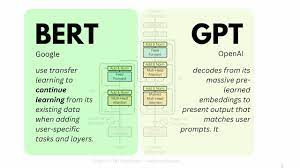
Breakthroughs in Language Models: From Word2Vec to Transformers Language models have rapidly evolved since 2018, driven by advancements in neural network architectures for text representation. This journey began with Word2Vec and N-Grams in 2013, followed by the emergence of Recurrent Neural Networks (RNNs) and Long Short-Term Memory (LSTM) networks in 2014. The pivotal moment came with the introduction of the Attention Mechanism, which paved the way for large pre-trained models and transformers. BERT and GPT. From Word Embedding to Transformers The story of language models begins with word embedding. What is Word Embedding? Word embedding is a technique in natural language processing (NLP) where words are represented as vectors in a continuous vector space. These vectors capture semantic meanings, allowing words with similar meanings to have similar representations. For instance, in a word embedding model, “king” and “queen” would have vectors close to each other, reflecting their related meanings. Similarly, “car” and “truck” would be near each other, as would “cat” and “dog.” However, “car” and “dog” would not have close vectors due to their different meanings. A notable example of word embedding is Word2Vec. Word2Vec: Neural Network Model Using N-Grams Introduced by Mahajan, Patil, and Sankar in 2013, Word2Vec is a neural network model that uses n-grams by training on context windows of words. It has two main approaches: Both methods help capture semantic relationships, providing meaningful word embeddings that facilitate various NLP tasks like sentiment analysis and machine translation. Recurrent Neural Networks (RNNs) RNNs are designed for sequential data, processing inputs sequentially and maintaining a hidden state that captures information about previous inputs. This makes them suitable for tasks like time series prediction and natural language processing. The concept of RNNs can be traced back to 1925 with the Ising model, used to simulate magnetic interactions analogous to RNNs’ state transitions for sequence learning. Long Short-Term Memory (LSTM) Networks LSTMs, introduced by Hochreiter and Schmidhuber in 1997, are a specialized type of RNN designed to overcome the limitations of standard RNNs, particularly the vanishing gradient problem. They use gates (input, output, and forget gates) to regulate information flow, enabling them to maintain long-term dependencies and remember important information over long sequences. Comparing Word2Vec, RNNs, and LSTMs The Attention Mechanism and Its Impact The attention mechanism, introduced in the paper “Attention Is All You Need” by Vaswani et al., is a key component in transformers and large pre-trained language models. It allows models to focus on specific parts of the input sequence when generating output, assigning different weights to different words or tokens, and enabling the model to prioritize important information and handle long-range dependencies effectively. Transformers: Revolutionizing Language Models Transformers use self-attention mechanisms to process input sequences in parallel, capturing contextual relationships between all tokens in a sequence simultaneously. This improves handling of long-term dependencies and reduces training time. The self-attention mechanism identifies the relevance of each token to every other token within the input sequence, enhancing the model’s ability to understand context. Large Pre-Trained Language Models: BERT and GPT Both BERT (Bidirectional Encoder Representations from Transformers) and GPT (Generative Pre-trained Transformer) are based on the transformer architecture. BERT Introduced by Google in 2018, BERT pre-trains deep bidirectional representations from unlabeled text by jointly conditioning on both left and right context in all layers. This enables BERT to create state-of-the-art models for tasks like question answering and language inference without substantial task-specific architecture modifications. GPT Developed by OpenAI, GPT models are known for generating human-like text. They are pre-trained on large corpora of text and fine-tuned for specific tasks. GPT is majorly generative and unidirectional, focusing on creating new text content like poems, code, scripts, and more. Major Differences Between BERT and GPT In conclusion, while both BERT and GPT are based on the transformer architecture and are pre-trained on large corpora of text, they serve different purposes and excel in different tasks. The advancements from Word2Vec to transformers highlight the rapid evolution of language models, enabling increasingly sophisticated NLP applications. Like Related Posts Who is Salesforce? Who is Salesforce? Here is their story in their own words. From our inception, we’ve proudly embraced the identity of Read more Salesforce Unites Einstein Analytics with Financial CRM Salesforce has unveiled a comprehensive analytics solution tailored for wealth managers, home office professionals, and retail bankers, merging its Financial Read more AI-Driven Propensity Scores AI plays a crucial role in propensity score estimation as it can discern underlying patterns between treatments and confounding variables Read more Tectonic’s Successful Salesforce Track Record Salesforce Technology Services Integrator – Tectonic has successfully delivered Salesforce in a variety of industries including Public Sector, Hospitality, Manufacturing, Read more

Read More
gettectonic.com