Relationships Archives - gettectonic.com - Page 6
Salesforce Nonprofit Cloud

Transforming Nonprofit Fundraising with AI-Powered Solutions

The Fundraising Challenge Nonprofits face critical obstacles in achieving their mission-driven goals: 🔴 Limited Data Visibility – Lack of predictive insights to forecast donation trends🔴 Manual Processes – Time-consuming donor management and campaign tracking🔴 Donor Retention Struggles – Difficulty maintaining meaningful, long-term engagement Without data-driven strategies, organizations miss fundraising targets—limiting their ability to create real change. The Tectonic Solution: AI-Driven Fundraising Optimization Tectonic harnesses Salesforce Einstein AI and Agentforce to revolutionize nonprofit fundraising with intelligent automation, predictive analytics, and personalized engagement. Key Features 1. Predictive Donation Analysis 2. Real-Time Campaign Tracking 3. AI-Generated Recommendations 4. Automated Stakeholder Engagement 5. Personalized Donor Communications Industry-Wide Impact Fundraising is the lifeblood of nonprofits—directly affecting their ability to drive change. Tectonic’s AI-powered approach helps organizations: ✅ Boost Donation Predictability – AI forecasts likely contributions, improving goal attainment✅ Enhance Campaign Performance – Real-time tracking optimizes fundraising strategies✅ Deepen Donor Relationships – Personalized engagement increases retention✅ Drive Data-Backed Decisions – Historical insights refine future efforts✅ Amplify Community Impact – More efficient fundraising = greater mission fulfillment Why Tectonic? By integrating AI, automation, and Salesforce’s power, Tectonic enables nonprofits to:✔ Work smarter – Reduce manual effort with intelligent automation✔ Engage better – Strengthen donor loyalty through personalization✔ Raise more – Data-driven strategies maximize fundraising success 🚀 Empower your mission with Tectonic—where AI meets impact. Like Related Posts Who is Salesforce? Who is Salesforce? Here is their story in their own words. From our inception, we’ve proudly embraced the identity of Read more Salesforce Marketing Cloud Transactional Emails Salesforce Marketing Cloud Transactional Emails are immediate, automated, non-promotional messages crucial to business operations and customer satisfaction, such as order Read more Salesforce Unites Einstein Analytics with Financial CRM Salesforce has unveiled a comprehensive analytics solution tailored for wealth managers, home office professionals, and retail bankers, merging its Financial Read more AI-Driven Propensity Scores AI plays a crucial role in propensity score estimation as it can discern underlying patterns between treatments and confounding variables Read more

Read More
B2B Customer Service with Agentforce

B2B Customer Service with Agentforce

Simplify and Transform B2B Customer Service with Agentforce B2B customer service is inherently complex. It involves managing layered relationships, high-value transactions, and specialized support needs—all of which require heightened attention to detail. With fewer but larger customers, the stakes are high. In fact, our research shows that 88% of customers are more likely to remain loyal with exceptional service, underscoring the importance of consistently delivering excellence. Enter Agentforce, an AI-powered solution designed to tackle these challenges. By complementing your service reps, Agentforce handles intricate B2B cases autonomously and within your predefined parameters. This ensures reliable 24/7 support for even the toughest queries, reducing rep burnout and enhancing customer satisfaction. Here’s how Agentforce can redefine B2B customer service and take it to the next level: What You’ll Learn What Is B2B Customer Service? B2B customer service focuses on providing personalized support and expertise to other businesses, addressing their unique needs and challenges. This service model aims to build lasting relationships by boosting loyalty, driving repeat business, and encouraging referrals. What Are AI Agents? AI agents like Agentforce are advanced systems capable of understanding and responding to customer inquiries without human involvement. Unlike basic chatbots, Agentforce uses natural language processing (NLP), machine learning, and contextual understanding to provide intelligent, conversational, and personalized support. At the heart of Agentforce is the Atlas Reasoning Engine, which simplifies complex queries, retrieves precise information from your Data Cloud, and creates accurate, reliable action plans—all within your company’s guardrails. Agentforce’s multi-modal understanding allows it to interpret inputs like text, images, and audio, making it a versatile tool for engaging customers. Crucially, Agentforce continuously learns and adapts, ensuring it evolves with your customers’ needs for more accurate, efficient support. Why AI Agents Are Ideal for B2B Customer Service B2B support often involves managing: Agentforce rises to these challenges by providing scalable, round-the-clock support that accommodates time zone differences, personalizes interactions, and resolves intricate inquiries with ease. Top Benefits of AI Agents in B2B Customer Service Use Cases for Agentforce in B2B Customer Service Challenges of Implementing AI Agents—and How to Solve Them 5 Best Practices for Success Ready to Elevate Your B2B Customer Service? Agentforce empowers your business to deliver consistent, reliable, and scalable support—around the clock. By handling complex interactions and reducing workload on service reps, it builds stronger customer relationships and positions your company for long-term success. Like Related Posts Who is Salesforce? Who is Salesforce? Here is their story in their own words. From our inception, we’ve proudly embraced the identity of Read more Salesforce Marketing Cloud Transactional Emails Salesforce Marketing Cloud Transactional Emails are immediate, automated, non-promotional messages crucial to business operations and customer satisfaction, such as order Read more Salesforce Unites Einstein Analytics with Financial CRM Salesforce has unveiled a comprehensive analytics solution tailored for wealth managers, home office professionals, and retail bankers, merging its Financial Read more AI-Driven Propensity Scores AI plays a crucial role in propensity score estimation as it can discern underlying patterns between treatments and confounding variables Read more

Read More
Potential of GenAI in Healthcare

5 Key Use Cases for Generative AI in Healthcare Documentation

Generative AI (GenAI) holds significant promise for improving healthcare documentation, but clear regulations and standards are needed to maximize benefits while minimizing risks. Healthcare documentation encompasses medical histories, clinical notes, diagnostic results, treatment plans, prescriptions, and billing records. Studies show that clinicians spend more time on documentation than patient care—a major contributor to burnout. GenAI can help by automating electronic health record (EHR) data entry and drafting medical notes for clinician review. According to a February 2025 American Medical Association (AMA) survey, early GenAI adoption in healthcare focuses on administrative tasks that enhance documentation quality and efficiency. For example, Microsoft’s Dax Copilot saves clinicians five minutes per patient encounter, while Oracle Health Clinical AI Agent reduces documentation time by nearly 30%. Here are five key ways GenAI improves healthcare documentation: 1. Streamline Workflows GenAI reduces administrative burdens by automating documentation tasks, allowing clinicians to focus more on patient care. Key applications include: A JAMA Network Open (2024) study found AI-generated draft replies to patient messages reduced provider workload and emotional exhaustion, suggesting strong potential for workflow efficiency. 2. Improve Data Accuracy GenAI enhances documentation precision by identifying missing or inconsistent data. Applications include: By minimizing manual entry, GenAI helps prevent errors that lead to billing delays or compliance issues. 3. Optimize Medical Data Approximately 80% of healthcare data is unstructured (e.g., physician notes, scanned documents). GenAI transforms this into structured, usable formats by: This optimization improves interoperability and speeds up decision-making. 4. Reduce Clinician Burnout Physician burnout is often linked to excessive documentation. GenAI alleviates stress by: A UC San Diego (2024) study found that AI-assisted documentation helps clinicians engage more with patients, improving satisfaction and outcomes. 5. Enhance Patient Engagement GenAI improves patient interactions by: By reducing screen time during visits, GenAI helps clinicians build stronger patient relationships. Best Practices for GenAI in Healthcare Documentation To ensure safe and effective AI adoption:✔ Start with pilot programs – Test AI tools in controlled settings.✔ Train clinicians on AI review – Ensure staff can validate AI-generated content.✔ Notify patients about AI use – Maintain transparency in documentation.✔ Secure patient data – Encrypt and de-identify protected health information (PHI).✔ Maintain audit logs – Track AI-generated documentation for accuracy and compliance. Challenges & Future Outlook GenAI faces hurdles in data privacy, regulatory compliance, and liability. Until formal standards emerge, frameworks like the WHO’s AI Ethics Guidelines and Coalition for Health AI (CHAI) Assurance Standards can help guide responsible use. As multimodal AI models advance, GenAI will better adapt to clinician workflows. However, strong governance is essential to balance innovation with patient safety. Conclusion GenAI is transforming healthcare documentation by reducing burnout, improving accuracy, and enhancing patient engagement. By implementing best practices and robust governance, healthcare organizations can harness AI’s potential while mitigating risks. Content updated April 2025. Like Related Posts Who is Salesforce? Who is Salesforce? Here is their story in their own words. From our inception, we’ve proudly embraced the identity of Read more Salesforce Marketing Cloud Transactional Emails Salesforce Marketing Cloud Transactional Emails are immediate, automated, non-promotional messages crucial to business operations and customer satisfaction, such as order Read more Salesforce Unites Einstein Analytics with Financial CRM Salesforce has unveiled a comprehensive analytics solution tailored for wealth managers, home office professionals, and retail bankers, merging its Financial Read more AI-Driven Propensity Scores AI plays a crucial role in propensity score estimation as it can discern underlying patterns between treatments and confounding variables Read more

Read More
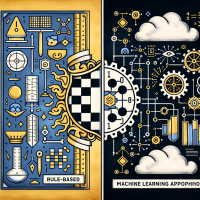
Rule-Based vs. Machine Learning Deduplication Approaches

Rule-Based vs. Machine Learning Deduplication Approaches

Choosing the Right Tool for Salesforce Deduplication: Rule-Based vs. Machine Learning Approaches When you browse Salesforce AppExchange for a deduplication solution, you’re presented with two primary options: rule-based deduplication tools or machine learning-powered applications. Both have their strengths, but understanding their methods will help you make an informed decision. Below, we’ll explore these approaches and their pros and cons to guide your choice. Why Salesforce’s Built-in Deduplication Falls Short Salesforce, while a powerful CRM, doesn’t excel at large-scale deduplication. Its native tools are limited to basic, rule-based matching, which may struggle with complexities like typos, inconsistent formatting, or unstructured data. Additionally, Salesforce’s deduplication features lack the scalability required for organizations dealing with large datasets or multiple data sources (e.g., third-party integrations, legacy systems). Businesses often need supplemental tools to address overlapping records or inconsistencies effectively. How Rule-Based Deduplication Works Popular rule-based tools on AppExchange, such as Cloudingo, DemandTools, DataGroomr, and Duplicate Check, require users to create filters that define what constitutes a duplicate. For example: Ultimately, the user manually defines the rules, deciding how duplicates are identified and handled. Benefits of Rule-Based Deduplication Drawbacks of Rule-Based Deduplication How Machine Learning-Based Deduplication Works Machine learning (ML)-powered tools rely on algorithms to identify patterns and relationships in data, detecting duplicates that may not be apparent through rigid rules. Key Features of ML Deduplication Techniques Used Benefits of ML-Based Deduplication Drawbacks of ML-Based Deduplication When to Choose Rule-Based vs. Machine Learning Deduplication Choose Rule-Based Deduplication If: Choose Machine Learning-Based Deduplication If: Selecting the Right Deduplication Tool When evaluating tools on AppExchange, consider these factors: Tectonic’s Closing Thoughts Rule-based and machine learning-based deduplication each serve distinct purposes. The right choice depends on your data’s complexity, the resources available, and your organization’s goals. Whether you’re seeking a quick, transparent solution or a powerful, scalable tool, AppExchange offers options to meet your needs and help maintain a clean Salesforce data environment. Like Related Posts Who is Salesforce? Who is Salesforce? Here is their story in their own words. From our inception, we’ve proudly embraced the identity of Read more Salesforce Marketing Cloud Transactional Emails Salesforce Marketing Cloud Transactional Emails are immediate, automated, non-promotional messages crucial to business operations and customer satisfaction, such as order Read more Salesforce Unites Einstein Analytics with Financial CRM Salesforce has unveiled a comprehensive analytics solution tailored for wealth managers, home office professionals, and retail bankers, merging its Financial Read more AI-Driven Propensity Scores AI plays a crucial role in propensity score estimation as it can discern underlying patterns between treatments and confounding variables Read more

Read More

Decision Domain Management

Roger’s first week in the office felt like a wilder than 8 second ride on a raging rodeo bull. Armed with top-notch academic achievements, he hoped to breeze through operational routines and impress his new managers. What he didn’t expect was to land in a whirlwind of half-documented processes, half-baked ideas, and near-constant firefighting. While the organization had detailed SOPs for simple, routine tasks—approving invoices, updating customer records, and shipping standard orders—Roger quickly realized that behind the structured facade, there was a deeper level of uncertainty. Every day, he heard colleagues discuss “strategic pivots” or “risky product bets.” There were whispers about AI-based initiatives that promised to automate entire workflows. Yet, when the conversation shifted to major decisions—like selecting the right AI use cases—leaders often seemed to rely more on intuition than any structured methodology. One afternoon, Roger was invited to a cross-functional meeting about the company’s AI roadmap. Expecting an opportunity to showcase his knowledge, he instead found himself in a room filled with brilliant minds pulling in different directions. Some argued that AI should focus on automating repetitive tasks aligned with existing SOPs. Others insisted that AI’s real value lay in predictive modeling—helping forecast new market opportunities. The debate went in circles, with no consensus on where or how to allocate AI resources. After an hour of heated discussion, the group dispersed, each manager still convinced of the merit of their own perspective but no closer to a resolution. That evening, as Roger stood near the coffee machine, he muttered to himself, “We have SOPs for simple tasks, but nothing for big decisions. How do we even begin selecting which AI models or agents to develop first?” His frustration led him to a conversation with a coworker who had been with the company for years. “We’re missing something fundamental here,” Roger said. “We’re rushing to onboard AI agents that can mimic our SOPs—like some large language model trained to follow rote instructions—but that’s not where the real value lies. We don’t even have a framework for weighing one AI initiative against another. Everything feels like guesswork.” His coworker shrugged. “That’s just how it’s always been. The big decisions happen behind closed doors, mostly based on experience and intuition. If you’re waiting for a blueprint, you might be waiting a long time.” That was Roger’s ;ight bulb moment. Despite all his academic training, he realized the organization lacked a structured approach to high-level decision-making. Sure, they had polished SOPs for operational tasks, but when it came to determining which AI initiatives to prioritize, there were no formal criteria, classifications, or scoring mechanisms in place. Frustrated but determined, Roger decided he needed answers. Two days later, he approached a coworker known for their deep understanding of business strategy and technology. After a quick greeting, he outlined his concerns—the disorganized AI roadmap meeting, the disconnect between SOP-driven automation and strategic AI modeling, and his growing suspicion that even senior leaders were making decisions without a clear framework. His coworker listened, then gestured for him to take a seat. “Take a breath,” they said. “You’re not the first to notice this gap. Let me explain what’s really missing.” Why SOPs Aren’t Enough The coworker acknowledged that the organization was strong in SOPs. “We’re great at detailing exactly how to handle repetitive, rules-based tasks—like verifying invoices or updating inventory. In those areas, we can plug in AI agents pretty easily. They follow a well-defined script and execute tasks efficiently. But that’s just the tip of the iceberg.” They leaned forward and continued, “Where we struggle, as you’ve discovered, is in decision-making at deeper levels—strategic decisions like which new product lines to pursue, or tactical decisions like selecting the right vendor partnerships. There’s no documented methodology for these. It’s all in people’s heads.” Roger tilted his head, intrigued. “So how do we fix something as basic but great impact as that?” “That’s where Decision Domain Management comes in,” he explained. In the context of data governance and management, data domains are the high-level blocks that data professionals use to define master data. Simply put, data domains help data teams logically group data that is of interest to their business or stakeholders. “Think of it as the equivalent of SOPs—but for decision-making. Instead of prescribing exact steps for routine tasks, it helps classify decisions, assess their importance, and determine whether AI can support them—and if so, in what capacity.” They broke it down further. The Decision Types “First, we categorize decisions into three broad types: Once we correctly classify a decision, we get a clearer picture of how critical it is and whether it requires an AI agent (good at routine tasks) or an AI model (good at predictive and analytical tasks).” The Cynefin Framework The coworker then introduced the Cynefin Framework, explaining how it helps categorize decision contexts: By combining Decision Types with the Cynefin Framework, organizations can determine exactly where AI projects will be most beneficial. Putting It into Practice Seeing the spark of understanding in Roger’s eyes, the coworker provided some real-world examples: ✅ AI agents are ideal for simple SOP-based tasks like invoice validation or shipping notifications. ✅ AI models can support complicated decisions, like vendor negotiations, by analyzing performance metrics. ✅ Strategic AI modeling can help navigate complex decisions, such as predicting new market trends, but human judgment is still required. “Once we classify decisions,” the coworker continued, “we can score and prioritize AI investments based on impact and feasibility. Instead of throwing AI at random problems, we make informed choices.” The Lightbulb Moment Roger exhaled, visibly relieved. “So the problem isn’t just that we lack a single best AI approach—it’s that we don’t have a shared structure for decision-making in the first place,” he said. “If we build that structure, we’ll know which AI investments matter most, and we won’t keep debating in circles.” The coworker nodded. “Exactly. Decision Domain Management is the missing blueprint. We can’t expect AI to handle what even humans haven’t clearly defined. By categorizing


Read More
collaboration between humans and AI

The Synergy of AI and Human Expertise in Modern Customer Service

The Balanced Approach to Customer Support In today’s demanding service landscape, businesses face a critical challenge: meeting rising customer expectations while maintaining operational efficiency. Research reveals that 77% of customers demand immediate interaction when contacting companies, while 65% expect organizations to adapt dynamically to their evolving needs. The solution lies not in choosing between artificial intelligence and human representatives, but in strategically combining their complementary strengths. The AI Advantage in Customer Service Artificial intelligence brings transformative capabilities to customer support operations: 1. Operational Efficiency 2. Intelligent Insights 3. Proactive Engagement Platforms like Salesforce’s Agentforce demonstrate AI’s potential, combining around-the-clock availability with continuous learning capabilities that adapt to changing customer needs while operating within established business parameters. The Irreplaceable Human Element While AI excels at efficiency, human representatives provide essential qualities that technology cannot replicate: 1. Emotional Intelligence 2. Complex Problem-Solving 3. Relationship Building The Power of Collaborative Service The most effective customer service strategies integrate AI and human capabilities through: 1. Intelligent Assistance ToolsPlatforms like Service Assistant demonstrate this synergy by: 2. Optimized Workflows 3. Continuous Improvement Implementing an Integrated Service Strategy Organizations can develop this balanced approach through: 1. Strategic Technology Deployment 2. Workforce Development 3. Performance Measurement The Future of Customer Service The most successful service organizations will be those that: By harmonizing artificial intelligence with human expertise, businesses can deliver the responsive, personalized service that modern customers demand while maintaining the authentic connections that build lasting loyalty. This balanced approach represents not just the present of customer service, but its future. Like Related Posts Who is Salesforce? Who is Salesforce? Here is their story in their own words. From our inception, we’ve proudly embraced the identity of Read more Salesforce Marketing Cloud Transactional Emails Salesforce Marketing Cloud Transactional Emails are immediate, automated, non-promotional messages crucial to business operations and customer satisfaction, such as order Read more Salesforce Unites Einstein Analytics with Financial CRM Salesforce has unveiled a comprehensive analytics solution tailored for wealth managers, home office professionals, and retail bankers, merging its Financial Read more AI-Driven Propensity Scores AI plays a crucial role in propensity score estimation as it can discern underlying patterns between treatments and confounding variables Read more

Read More
Mastering Sales Forecasting

Mastering Sales Forecasting

Mastering Sales Forecasting: The Art and Science Behind Predicting Revenue Building a sales forecast is both a strategic art and a data-driven science. Accurate sales predictions ensure business stability, keep leadership informed, and enable better decision-making. This guide explores the essentials of sales forecasting, equipping you with the knowledge to create precise revenue projections and align expectations effectively. A Comprehensive Guide to Sales Forecasting Drawing from over 20 years of experience in sales solutions, we’ve structured this guide around the most pressing questions sales teams face in forecasting. If you’re a seasoned sales leader familiar with the basics, you can skip ahead to sections on designing a forecasting strategy and leveraging tools to enhance forecast accuracy. For insights on handling unpredictable market conditions, explore the section on adapting forecasts during uncertainty. Insights from 7,700 Sales Professionals Our latest report unveils how sales professionals drive productivity and efficiency through data-driven forecasting. Understanding Sales Forecasting What Is a Sales Forecast? A sales forecast estimates expected sales revenue over a specific period, such as a quarter or year. The most effective forecasts are highly accurate and rely on data-driven insights. Sales forecasts address two fundamental questions: Achieving these projections requires careful analysis of key factors: By balancing factual data with industry expertise, sales teams improve forecasting precision over time. The Importance of Sales Forecasting Sales forecasting plays a vital role in business operations, influencing everything from inventory management to hiring decisions. Consider these examples: Accurate forecasting enables businesses to plan effectively, ensuring smooth operations and sustained growth. When forecasts align with actual sales, companies can make strategic investments, such as expanding teams or launching new initiatives. Who Is Responsible for Sales Forecasting? Different teams contribute to sales forecasting, including: Ultimately, sales leadership is accountable for the final forecast, ensuring transparency and accuracy throughout the process. Who Uses Sales Forecasts? Sales forecasts impact multiple business functions: At every level, accurate forecasts enhance strategic decision-making and operational efficiency. Objectives of Sales Forecasting The primary goal of sales forecasting is to predict revenue with precision. When forecasts align with actual performance, companies can optimize internal operations and maintain strong external relationships. Key objectives include: A reliable forecast fosters a positive work environment, boosting morale and collaboration. How to Design a Sales Forecasting Plan Sales forecasting is an ongoing process that evolves with business needs. A strong forecasting plan includes: Adapting Sales Forecasts in Uncertain Times Market fluctuations, economic shifts, and global events can disrupt sales forecasts. When uncertainty arises, sales and finance leaders must quickly assess: Leveraging CRM solutions ensures real-time visibility into deal statuses, allowing businesses to pivot strategies as needed. Accurate data collection and analysis enable informed decision-making, mitigating risks in volatile conditions. Sales Forecast Accuracy Based on extensive industry research, most sales leaders achieve forecast accuracy within 10%. Achieving a 5% variance or lower is rare but signifies exceptional forecasting capabilities. Tools for Sales Forecasting The Role of CRM in Forecasting Customer Relationship Management (CRM) systems, such as Salesforce, enhance forecast accuracy by providing: CRM-driven forecasting consolidates opportunities into a structured framework, improving precision through collaborative insights and AI-powered recommendations. How AI Enhances Forecasting AI-powered tools, like Salesforce Einstein, analyze historical data to identify trends and anomalies. AI-driven alerts highlight potential risks, improving forecast reliability and efficiency. Why CRM Outperforms Traditional Methods While spreadsheets suffice for early-stage businesses, scaling companies require CRM solutions for accurate sales forecasting. CRM systems streamline data integration, improving decision-making and revenue predictions. Conclusion Sales forecasting is a critical business function that blends analytical precision with industry expertise. By leveraging CRM tools and AI-driven insights, organizations can refine their forecasting strategies, optimize resource allocation, and drive sustained growth. Let’s continue the conversation and explore how data-driven forecasting can elevate your sales strategy. Contact Tectonic today! Like Related Posts Who is Salesforce? Who is Salesforce? Here is their story in their own words. From our inception, we’ve proudly embraced the identity of Read more Salesforce Marketing Cloud Transactional Emails Salesforce Marketing Cloud Transactional Emails are immediate, automated, non-promotional messages crucial to business operations and customer satisfaction, such as order Read more Salesforce Unites Einstein Analytics with Financial CRM Salesforce has unveiled a comprehensive analytics solution tailored for wealth managers, home office professionals, and retail bankers, merging its Financial Read more AI-Driven Propensity Scores AI plays a crucial role in propensity score estimation as it can discern underlying patterns between treatments and confounding variables Read more

Read More
AI Agents in Government

AI Agents in Government

AI Agents: A Key to Rebuilding Public Trust in Government Public trust in government services has been in decline for years, but new research from Salesforce suggests that AI agents could play a crucial role in reversing this trend. Citizens worldwide recognize the need for improved government interactions, with 40% reporting difficulties when seeking assistance and over a third unsure of the programs available to them. However, there is strong public support for AI-driven solutions—90% of global respondents indicated they would use an AI agent to engage with their government. AI Agents: A Game-Changer for Public Services The introduction of AI-powered agents presents a transformative opportunity for governments to enhance service delivery, improve response times, and build stronger constituent relationships. With budget constraints making it difficult to expand government workforces, AI agents can augment public servants, allowing them to operate more efficiently without increasing headcount. Imagine a trip to the AI Agent DMV! “It is clear from our research that AI solutions like Salesforce’s Agentforce can help governments streamline and scale services to better meet the needs of their constituents,” says Nasi Jazayeri, Executive Vice President and GM of Public Sector at Salesforce. “As global leaders convene in Davos, we have a tremendous opportunity for the public and private sectors to collaborate and explore how advancements in AI can improve how governments serve their citizens.” Key Findings from Salesforce’s Research Citizens Call for Improved Government Services Growing Public Interest in AI Agents Top Priorities for AI-Driven Government Services When considering AI adoption in public services, global respondents prioritize: The Future of AI in Government As AI technology continues to evolve, its important role in the public sector is becoming increasingly significant. By enhancing accessibility, streamlining processes, and providing real-time assistance, AI-powered agents can help bridge the trust gap between governments and their constituents. With strong public support, governments have a unique opportunity to leverage AI to build more responsive, efficient, and citizen-friendly services—ushering in a new era of digital governance. Like Related Posts Who is Salesforce? Who is Salesforce? Here is their story in their own words. From our inception, we’ve proudly embraced the identity of Read more Salesforce Marketing Cloud Transactional Emails Salesforce Marketing Cloud Transactional Emails are immediate, automated, non-promotional messages crucial to business operations and customer satisfaction, such as order Read more Salesforce Unites Einstein Analytics with Financial CRM Salesforce has unveiled a comprehensive analytics solution tailored for wealth managers, home office professionals, and retail bankers, merging its Financial Read more AI-Driven Propensity Scores AI plays a crucial role in propensity score estimation as it can discern underlying patterns between treatments and confounding variables Read more

Read More
ai in marketing

Guide to AI in Marketing

The Ultimate Guide to AI in Marketing AI-powered algorithms and machine learning are revolutionizing the marketing landscape by enabling swift processing and analysis of vast datasets. Unlike traditional methods, AI efficiently organizes large volumes of data in real time, redefining how marketing strategies are created and executed. Marketing success hinges on effective data utilization, precise targeting, engaging content, and seamless workflows. AI simplifies these complexities, making them more accessible, scalable, and impactful. Here’s how AI transforms modern marketing. Unleashing AI’s Potential in Marketing AI has become a cornerstone for enhancing customer experiences and boosting marketing productivity. However, to fully leverage AI, it’s essential to understand its capabilities and implementation strategies. Think of AI as your vehicle for uncovering actionable customer insights, optimizing campaigns, and creating tailored customer experiences. While the pace of AI’s evolution may seem overwhelming, this guide will help you take control and confidently drive your AI-powered marketing efforts. Future Trends in Generative AI and Marketing Generative AI is unlocking new possibilities in customer engagement. This guide explores the challenges, advantages, and emerging trends in AI-driven marketing. From attracting customers to maximizing ROI, you’ll discover best practices and real-world examples of successful AI adoption. How AI Works in Marketing AI uses advanced algorithms and pattern recognition to simulate human intelligence in processing data. Through machine learning and deep learning, it identifies trends, predicts outcomes, and automates tasks typically requiring human intervention. Like humans learning from experience, AI improves with practice. It rapidly identifies consumer preferences, behaviors, and purchasing patterns. Two primary types of AI stand out in marketing: These AI types work together—predictive AI extracts insights from data, while generative AI uses those insights to create personalized content and solutions. This synergy enables marketers to automate tasks, segment audiences, and deliver tailored messaging based on individual preferences. AI in Action: Enhancing Customer Engagement AI enables marketers to engage with customers more effectively by: The Power of AI-Driven Marketing Analytics AI-powered analytics revolutionize decision-making by identifying patterns and offering actionable insights. Marketers can use AI tools to: Maximizing ROI with AI AI enables businesses to expand audience reach, improve conversion rates, and enhance customer relationships through personalized content and product recommendations. Its real-time analytics empower marketers to make informed decisions, while automation frees up time for strategic innovation. Navigating Challenges in AI Marketing AI’s potential comes with challenges, including: By prioritizing ethical practices, transparent data policies, and robust compliance measures, marketers can overcome these obstacles and leverage AI responsibly. Best Practices for AI-Driven Marketing To maximize the benefits of AI, marketers should: The Future: AI Copilots in Marketing AI copilots—conversational AI integrated into platforms—are transforming marketing workflows. These tools draft content, provide recommendations, and offer guidance based on CRM data, significantly enhancing efficiency. Looking Ahead: Emerging Trends in AI Marketing Over the next two years, advancements in AI will continue to reshape marketing. Key trends include: By embracing these advancements, marketers can deliver exceptional customer experiences, drive business growth, and stay competitive in an evolving digital landscape. AI is not just a tool—it’s a transformative force. By integrating AI into your marketing strategy, you can unlock unparalleled opportunities to engage customers, optimize campaigns, and propel your organization into the future. Like Related Posts Who is Salesforce? Who is Salesforce? Here is their story in their own words. From our inception, we’ve proudly embraced the identity of Read more Salesforce Marketing Cloud Transactional Emails Salesforce Marketing Cloud Transactional Emails are immediate, automated, non-promotional messages crucial to business operations and customer satisfaction, such as order Read more Salesforce Unites Einstein Analytics with Financial CRM Salesforce has unveiled a comprehensive analytics solution tailored for wealth managers, home office professionals, and retail bankers, merging its Financial Read more AI-Driven Propensity Scores AI plays a crucial role in propensity score estimation as it can discern underlying patterns between treatments and confounding variables Read more

Read More
agetnforce for nonprofits

Empowering Nonprofits with Salesforce Technology

Nonprofit organizations face unique challenges, from managing donor relationships and tracking donations to optimizing operations and driving impactful campaigns. AgentForce by Salesforce is an AI-powered solution designed to address these needs, helping nonprofits streamline workflows, enhance donor engagement, and amplify their mission impact. Why Choose AgentForce for Nonprofit Organizations? AgentForce simplifies nonprofit operations by integrating donor management, program tracking, and fundraising tools into a single platform. This allows organizations to focus on what matters most—fulfilling their mission. Powered by AI and automation, AgentForce strengthens donor relationships, improves transparency, and supports data-driven decision-making. Key Benefits of AgentForce for Nonprofits Key Features of AgentForce for Nonprofits Why Partner with Tectonic? At Tectonic, we specialize in empowering nonprofits by implementing AgentForce to meet their unique needs. With a team of Salesforce-certified experts, we ensure seamless integration that maximizes the platform’s capabilities, helping you achieve your goals efficiently. How We Help Nonprofits Real-World Impact of AgentForce in Nonprofits Ready to Transform Your Nonprofit Operations? Empower your team, engage supporters, and amplify your mission impact with AgentForce by Salesforce. Contact Tectonic Today Schedule a free meeting to learn how AgentForce can revolutionize your nonprofit’s operations and help you achieve your goals. Let’s work together to make the world a nicer place! Like Related Posts Who is Salesforce? Who is Salesforce? Here is their story in their own words. From our inception, we’ve proudly embraced the identity of Read more Salesforce Marketing Cloud Transactional Emails Salesforce Marketing Cloud Transactional Emails are immediate, automated, non-promotional messages crucial to business operations and customer satisfaction, such as order Read more Salesforce Unites Einstein Analytics with Financial CRM Salesforce has unveiled a comprehensive analytics solution tailored for wealth managers, home office professionals, and retail bankers, merging its Financial Read more AI-Driven Propensity Scores AI plays a crucial role in propensity score estimation as it can discern underlying patterns between treatments and confounding variables Read more

Read More
salesforce agentforce ai powered agentic agents

AI for Membership Sites

AI for Membership Sites: How Artificial Intelligence is Driving New Revenue for Member-Only Platforms Membership sites are entering a transformative era where “AI is the New UI.” Two recent developments illustrate this trend and underscore how artificial intelligence is redefining user interaction and unlocking new revenue streams. The first insight comes from Dr. John Sviokla’s Forbes article, “AI Is The New UI: 3 Steps Business Leaders Must Take Now”. Sviokla emphasizes a fundamental shift: “For decades, we’ve interacted with technology through screens, buttons, and menus. But a fundamental shift is underway — artificial intelligence is becoming the new user interface.” The second example involves a large members-only association in the airline industry. This organization has implemented custom AI chatbots within its member portal to address a growing challenge: members no longer have time to sift through lengthy PDFs or dense slide decks. Instead, they crave fast, ChatGPT-style access to information—and they’re willing to pay for it. A Paradigm Shift in User Interfaces Historically, intuitive gestures and responsive designs revolutionized how people interacted with technology. Today, AI is driving the next evolution, moving interfaces from static designs to dynamic, user-centric experiences. Dr. Sviokla notes: “This transformation isn’t just about chatbots; it’s about AI becoming the primary means through which we interact with systems, data, and machines. For business leaders, this shift represents both an opportunity and an imperative to reimagine how their organizations engage with customers and operate internally.” AI-powered interfaces offer users immediate, conversational, and personalized access to information, bypassing the traditional maze of links and menus. For membership sites, this evolution is particularly significant, as it transforms how members interact with content and services. The “ChatGPT Effect” on Membership Sites The rise of ChatGPT has shifted consumer expectations for digital interactions. Websites are now adopting chatbots and virtual assistants that provide tailored experiences. For membership sites, this technology enables: For example, organizations are deploying AI assistants on their websites to handle various functions, such as sales inquiries, product support, and pricing guidance. These tools enhance member satisfaction and provide opportunities for new revenue streams. AI as a Revenue Generator Membership sites leveraging AI are seeing measurable financial benefits. Consider a crypto token regulation platform that integrated custom AI chatbots. These tools allow members to interact with proprietary data in real time, transforming static content into a dynamic, accessible resource. This shift has significantly increased the platform’s value proposition, attracting and retaining members willing to pay a premium for enhanced access. Starting Small: A Scalable Approach to AI Implementing AI doesn’t require a complete system overhaul. Membership sites can begin with a simple, custom chatbot built using existing content, such as publicly available documents or FAQs. By monitoring member interactions and gathering feedback, organizations can gradually expand their AI capabilities. The key is to focus on enhancing the member experience. Missteps often occur when organizations adopt overly complex solutions that fail to address real user needs. A phased approach ensures AI integration adds value and aligns with member expectations. The Future of AI in Membership Sites The potential for AI in membership sites extends far beyond chatbots. Future applications include: For example, the Martin Trust Center for MIT Entrepreneurship recently launched an AI-powered tool specifically designed to serve its members. These types of innovations highlight how AI can enhance the member experience while driving operational and financial success. Reimagining Member Engagement Membership sites that embrace AI as a foundational component of their user experience are positioning themselves for long-term success. By focusing on solving real problems and delivering meaningful interactions, organizations can strengthen member relationships and drive sustainable growth. For membership sites, the question is no longer whether to adopt AI but how quickly they can integrate it. AI represents an opportunity—and an imperative—to transform the way members interact with content, data, and services. The sites that act now will set the standard for the future of member-driven platforms. Like Related Posts Who is Salesforce? Who is Salesforce? Here is their story in their own words. From our inception, we’ve proudly embraced the identity of Read more Salesforce Unites Einstein Analytics with Financial CRM Salesforce has unveiled a comprehensive analytics solution tailored for wealth managers, home office professionals, and retail bankers, merging its Financial Read more AI-Driven Propensity Scores AI plays a crucial role in propensity score estimation as it can discern underlying patterns between treatments and confounding variables Read more Tectonic’s Successful Salesforce Track Record Salesforce Technology Services Integrator – Tectonic has successfully delivered Salesforce in a variety of industries including Public Sector, Hospitality, Manufacturing, Read more

Read More
gettectonic.com