

Revenue Cycle Management Archives - gettectonic.com

AdventHealth Pioneers AI-Powered Denials Prevention Strategy

Transforming Denials Management from Reactive to Proactive While many health systems struggle with claim denial rates as high as 20%, AdventHealth is taking an innovative approach—using artificial intelligence to prevent denials before they occur. The Florida-based health system has implemented AI-driven tools that analyze medical documentation for potential issues prior to claim submission, creating a more efficient revenue cycle and better patient experience. “By identifying documentation gaps early, we’re able to address them before they become claim denials,” said Dr. Christopher Riccard, Vice President of Hospital Medicine and Clinical Documentation Integrity at AdventHealth. “This proactive approach helps us reduce delays and confusion for patients while protecting our revenue stream.” The High Cost of Claim Denials Claim denials represent more than just an administrative headache: “Denials don’t just hurt hospitals—they impact patients directly,” Riccard emphasized. “Our goal is to ensure accurate, timely billing so patients understand their financial responsibility without unnecessary delays.” How AI Prevents Denials Before They Happen AdventHealth’s partnership with Iodine Software has yielded a cutting-edge solution: Key results include: Building an Intelligent Revenue Cycle Ecosystem AdventHealth views AI-powered denials prevention as just the beginning. The health system is exploring broader applications of AI across the revenue cycle: Emerging Technologies in Action Human-Centered Implementation Riccard stresses that technology alone isn’t the solution: “Success requires thoughtful integration into existing workflows. We worked closely with our clinical teams to ensure these tools actually solve real problems rather than create new ones.” The Future of Revenue Cycle Management AdventHealth’s strategy represents a paradigm shift in healthcare finance: As Riccard notes: “Our ultimate goal is creating a self-correcting revenue cycle that supports both financial health and patient experience—where potential issues are identified and resolved almost before they emerge.” The health system’s approach demonstrates how AI, when implemented strategically, can transform one of healthcare’s most persistent challenges into an opportunity for improvement across clinical, financial, and patient experience domains. Like Related Posts Who is Salesforce? Who is Salesforce? Here is their story in their own words. From our inception, we’ve proudly embraced the identity of Read more Salesforce Unites Einstein Analytics with Financial CRM Salesforce has unveiled a comprehensive analytics solution tailored for wealth managers, home office professionals, and retail bankers, merging its Financial Read more AI-Driven Propensity Scores AI plays a crucial role in propensity score estimation as it can discern underlying patterns between treatments and confounding variables Read more Tectonic’s Successful Salesforce Track Record Salesforce Technology Services Integrator – Tectonic has successfully delivered Salesforce in a variety of industries including Public Sector, Hospitality, Manufacturing, Read more
Read More
The Promise of AI in Health Outcomes

10 AI Healthcare Trends Shaping the Future

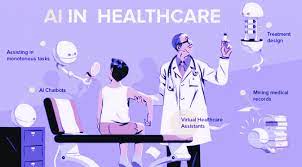
10 AI Healthcare Trends Shaping the Future (2025 & Beyond) Artificial intelligence is transforming healthcare at an unprecedented pace. With a projected 49% CAGR through 2030 (MarketsandMarkets) and generative AI accelerating innovation, hospitals, clinics, and insurers are integrating AI into clinical workflows, diagnostics, and operations. Here are the 10 biggest AI healthcare trends to watch: 1. AI Chatbots for Patient Engagement “AI chatbots cut our call center volume by 30% while improving response times.” —Jordan Archer, COO, Tryon Medical Partners 2. AI-Powered Clinical Documentation 3. Unstructured Data Analysis 4. AI Radiology & Imaging Assistants 5. Robotic Surgery & Automation 6. AI in Physical Therapy 7. AI-Generated Fitness & Wellness Plans 8. Automated Revenue Cycle Management 9. Predictive Supply Chain Optimization 10. AI-Driven Business Strategy Challenges: Equity & Adoption While AI offers immense potential, smaller clinics and rural hospitals risk falling behind due to: “We must ensure equitable access—AI shouldn’t just benefit large health systems.” —Dr. Margaret Lozovatsky, AMA The Future of AI in Healthcare ✅ 2025-2030: AI becomes standard in EHRs, diagnostics, and surgery✅ Generative AI drafts treatment plans, research papers, and insurance appeals✅ Regulatory frameworks evolve to ensure safety & fairness Bottom Line: AI isn’t replacing doctors—it’s empowering them to work smarter, faster, and more precisely. Which trend will impact your organization most? Like Related Posts Who is Salesforce? Who is Salesforce? Here is their story in their own words. From our inception, we’ve proudly embraced the identity of Read more Salesforce Unites Einstein Analytics with Financial CRM Salesforce has unveiled a comprehensive analytics solution tailored for wealth managers, home office professionals, and retail bankers, merging its Financial Read more AI-Driven Propensity Scores AI plays a crucial role in propensity score estimation as it can discern underlying patterns between treatments and confounding variables Read more Tectonic’s Successful Salesforce Track Record Salesforce Technology Services Integrator – Tectonic has successfully delivered Salesforce in a variety of industries including Public Sector, Hospitality, Manufacturing, Read more

Read More
Natural Language Processing Explained

Exploring 3 Types of Natural Language Processing in Healthcare

Healthcare generates vast amounts of unstructured, text-based data—primarily in the form of clinical notes stored in electronic health records (EHRs). While this data holds immense potential for improving patient outcomes, extracting meaningful insights from it remains a challenge. Natural language processing (NLP) offers a solution by enabling healthcare stakeholders to analyze and interpret this data efficiently. NLP technologies can support population health management, clinical decision-making, and medical research by transforming unstructured text into actionable insights. Despite the excitement around NLP in healthcare—particularly amid clinician burnout and EHR inefficiencies—its two core components, natural language understanding (NLU) and natural language generation (NLG), receive less attention. This insight explores NLP, NLU, and NLG, highlighting their differences and healthcare applications. Understanding NLP, NLU, and NLG While related, these three concepts serve distinct purposes: Healthcare Applications NLP technologies offer diverse benefits across clinical, administrative, and research settings: 1. NLP in Clinical and Operational Use Cases Real-World Examples: 2. NLU for Research & Chatbots While less widely adopted than NLP, NLU shows promise in: 3. NLG for Generative AI in Healthcare Challenges & Barriers to Adoption Despite their potential, NLP technologies face several hurdles: 1. Data Quality & Accessibility 2. Bias & Fairness Concerns 3. Regulatory & Privacy Issues 4. Performance & Clinical Relevance The Future of NLP in Healthcare Despite these challenges, NLP, NLU, and NLG hold tremendous potential to revolutionize healthcare by:✔ Enhancing clinical decision-making✔ Streamlining administrative workflows✔ Accelerating medical research As the technology matures, addressing data, bias, and regulatory concerns will be key to unlocking its full impact. Like Related Posts Who is Salesforce? Who is Salesforce? Here is their story in their own words. From our inception, we’ve proudly embraced the identity of Read more Salesforce Marketing Cloud Transactional Emails Salesforce Marketing Cloud Transactional Emails are immediate, automated, non-promotional messages crucial to business operations and customer satisfaction, such as order Read more Salesforce Unites Einstein Analytics with Financial CRM Salesforce has unveiled a comprehensive analytics solution tailored for wealth managers, home office professionals, and retail bankers, merging its Financial Read more AI-Driven Propensity Scores AI plays a crucial role in propensity score estimation as it can discern underlying patterns between treatments and confounding variables Read more

Read More
gettectonic.com