

ROI Archives - gettectonic.com - Page 10
Technical Debt

Understanding and Managing Technical Debt in Salesforce

Salesforce is a powerful and dynamic CRM platform with a vast array of tools and features. Given its complexity, users must make critical decisions daily—whether creating custom objects, automating workflows, nurturing leads, or developing applications. Each choice impacts how effectively Salesforce is utilized, influencing both short-term success and long-term sustainability. However, users often opt for the quickest solution rather than the most robust one. While this may provide immediate results, it can lead to inefficiencies and challenges over time. This is where technical debt comes into play. What Is Technical Debt in Salesforce? Technical debt refers to the hidden cost an organization incurs when prioritizing speed over quality in software development and system configuration. It results from taking shortcuts that may seem convenient at first but ultimately require additional work—often in the form of rework, maintenance, or system inefficiencies. A Real-World Analogy Imagine you’re on a trek and encounter two paths leading to the same destination. The shorter route is steep and exhausting, while the longer path includes rest stops and is easier on your body. Although the shorter path may seem efficient, it leaves you drained. Similarly, in Salesforce, quick fixes—such as writing redundant code, skipping documentation, or excessive customization—may seem efficient initially but create long-term complications, leading to technical debt. Common Causes of Technical Debt in Salesforce Types of Technical Debt in Salesforce Identifying and Measuring Technical Debt To assess technical debt, consider both business-related and technical questions: Business-Related Questions Technical Questions How to Avoid Technical Debt in Salesforce Final Thoughts Technical debt is an inevitable challenge in any complex system, but with proactive planning and best practices, it can be minimized. The key is to prioritize sustainability over speed—choosing well-structured, scalable solutions rather than quick fixes that may lead to costly rework in the future. By maintaining best practices, regular system reviews, and strategic planning, organizations can optimize their Salesforce environment for efficiency, scalability, and long-term success. Like Related Posts Who is Salesforce? Who is Salesforce? Here is their story in their own words. From our inception, we’ve proudly embraced the identity of Read more Salesforce Marketing Cloud Transactional Emails Salesforce Marketing Cloud Transactional Emails are immediate, automated, non-promotional messages crucial to business operations and customer satisfaction, such as order Read more Salesforce Unites Einstein Analytics with Financial CRM Salesforce has unveiled a comprehensive analytics solution tailored for wealth managers, home office professionals, and retail bankers, merging its Financial Read more AI-Driven Propensity Scores AI plays a crucial role in propensity score estimation as it can discern underlying patterns between treatments and confounding variables Read more

Read More
The Growing Role of AI in Cloud Management

The Growing Role of AI in Cloud Management

AI technologies are redefining cloud management by automating IT systems, improving security, optimizing cloud costs, enhancing data management, and streamlining the provisioning of AI services across complex cloud ecosystems. With the surging demand for AI, its ability to address technological complexities makes a unified cloud management strategy indispensable for IT teams. Cloud and security platforms have steadily integrated AI and machine learning to support increasingly autonomous IT operations. The rapid rise of generative AI (GenAI) has further spotlighted these AI capabilities, prompting vendors to prioritize their development and implementation. Adnan Masood, Chief AI Architect at UST, highlights the transformative potential of AI-driven cloud management, emphasizing its ability to oversee vast data centers hosting millions of applications and services with minimal human input. “AI automates tasks such as provisioning, scaling, cost management, monitoring, and data migration,” Masood explains, showcasing its wide-ranging impact. From Reactive to Proactive Cloud Management Traditionally, CloudOps relied heavily on manual intervention and expertise. AI has shifted this paradigm, introducing automation, predictive analytics, and intelligent decision-making. This evolution enables enterprises to transition from reactive, manual management to proactive, self-optimizing cloud environments. Masood underscores that this shift allows cloud systems to self-manage and optimize with minimal human oversight. However, organizations must navigate challenges, including complex data integration, real-time processing limitations, and model accuracy concerns. Business hurdles like implementation costs, uncertain ROI, and maintaining the right balance between AI automation and human oversight also require careful evaluation. AI’s Transformation of Cloud Computing AI has reshaped cloud management into a more proactive and efficient process. Key applications include: “AI enhances efficiency, scalability, and flexibility for IT teams,” says Agustín Huerta, SVP of Digital Innovation at Globant. He views AI as a pivotal enabler of automation and optimization, helping businesses adapt to rapidly changing environments. AI also automates repetitive tasks such as provisioning, performance monitoring, and cost management. More importantly, it strengthens security across cloud infrastructure by detecting misconfigurations, vulnerabilities, and malicious activities. Nick Kramer of SSA & Company highlights how AI-powered natural language interfaces simplify cloud management, transforming it from a technical challenge to a logical one. With conversational AI, business users can manage cloud operations more efficiently, accelerating problem resolution. AI-Enabled Cloud Management Tools Ryan Mallory, COO at Flexential, categorizes AI-powered cloud tools into: The Rise of Self-Healing Cloud Systems AI enables cloud systems to detect, resolve, and optimize issues with minimal human intervention. For instance, AI can identify system failures and trigger automatic remediation, such as restarting services or reallocating resources. Over time, machine learning enhances these systems’ accuracy and reliability. Key Applications of AI in Cloud Management AI’s widespread applications in cloud computing include: Benefits of AI in Cloud Management AI transforms cloud management by enabling autonomous systems capable of 24/7 monitoring, self-healing, and optimization. This boosts system reliability, reduces downtime, and provides businesses with deeper analytical insights. Chris Vogel from S-RM emphasizes that AI’s analytical capabilities go beyond automation, driving strategic business decisions and delivering measurable value. Challenges of AI in Cloud Management Despite its advantages, AI adoption in cloud management presents challenges, including: AI’s Impact on IT Departments AI’s growing influence on cloud management introduces new responsibilities for IT teams, including managing unauthorized AI systems, ensuring data security, and maintaining high-quality data for AI applications. IT departments must provide enterprise-grade AI solutions that are private, governed, and efficient while balancing the costs and benefits of AI integration. Future Trends in AI-Driven Cloud Management Experts anticipate that AI will revolutionize cloud management, much like cloud computing reshaped IT a decade ago. Prasad Sankaran from Cognizant predicts that organizations investing in AI for cloud management will unlock opportunities for faster innovation, streamlined operations, and reduced technical debt. As AI continues to evolve, cloud environments will become increasingly autonomous, driving efficiency, scalability, and innovation across industries. Businesses embracing AI-driven cloud management will be well-positioned to adapt to the complexities of tomorrow’s IT landscape. Like Related Posts Who is Salesforce? Who is Salesforce? Here is their story in their own words. From our inception, we’ve proudly embraced the identity of Read more Salesforce Unites Einstein Analytics with Financial CRM Salesforce has unveiled a comprehensive analytics solution tailored for wealth managers, home office professionals, and retail bankers, merging its Financial Read more AI-Driven Propensity Scores AI plays a crucial role in propensity score estimation as it can discern underlying patterns between treatments and confounding variables Read more Tectonic’s Successful Salesforce Track Record Salesforce Technology Services Integrator – Tectonic has successfully delivered Salesforce in a variety of industries including Public Sector, Hospitality, Manufacturing, Read more

Read More
Generative AI and Service Cloud

Generative AI and Service Cloud

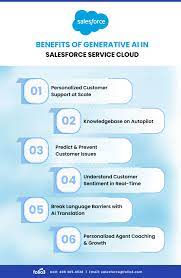
Salesforce Service Cloud users are set to receive more Einstein 1 generative AI tools in June and October. A key development is the expansion of automated customer conversations across more sales and marketing platforms. Generative AI and Service Cloud family of tools is growing. This insight aims to uncover the numerous use cases of generative AI in the modern contact center. We’ll help you understand how generative AI can fast track your contact center’s efficiency, improve data analysis capabilities, streamline QA and coaching processes, and make customers’ experiences better. Today, Salesforce launched Unified Conversations for WhatsApp, which automates bot responses to customer inquiries related to targeted marketing messages on the popular messaging app. Additionally, Salesforce plans to extend support to Line, a messaging app popular in Japan, later this year. These services are built on Salesforce’s Einstein 1 generative AI platform. The platform’s bots aggregate structured and unstructured CRM, product, service, and other data through Salesforce Data Cloud to generate personalized responses. These new features enable conversations to be routed to the digital channels where a Salesforce user’s customers are the most active. And to move omnichannel as customers needs change. Salesforce is also introducing a “bring your own channel” connector to support digital channels not natively covered by the platform. Current examples might include TikTok, Discord, and South Korea’s KakaoTalk, according to Ryan Nichols, Chief Product Officer for Salesforce Service Cloud. Generative AI and Service Cloud “It’s about getting data from all your conversations with customers from Service Cloud into Data Cloud and using that to not just deliver excellent customer service, but also grow your business,” Nichols said. Salesforce Einstein Conversation Mining, a Service Cloud feature currently in beta, aggregates conversations across customer channels to surface insights on the topics customers need help with. This aims to turn inbound customer service from a cost center into a revenue center, a goal long pursued at conferences like Dreamforce and ICMI. This massive change drives more than revenue, it drives ROI. Performance metrics such as time-to-answer and hold-time reduction have traditionally pressured agents to minimize call duration to retain their jobs. Now Salesforce is going to help them. While some skeptics question if generative AI can achieve this ambitious goal, Constellation Research analyst Liz Miller suggests it might be possible. Having previously managed a contact center herself, Miller recognizes the transformative potential of generative AI. With the aid of data, bots, and copilot counterparts assisting humans, agents could save time and access the right information to upsell customers during service engagements. Here are some of the ways Generative AI will change customer service forever. 1. Monitor and Ensure Compliance Maintaining compliance is crucial for fostering customer trust, preserving a positive brand image, and avoiding hefty privacy and compliance fines. In a contact center, compliance mistakes can quickly escalate into costly lawsuits and revenue losses. Generative AI allows your compliance team to proactively manage compliance by quickly identifying trends and addressing issues in real time. Instead of waiting for a compliance issue to escalate, you can fine-tune your AI model to provide compliance insights whenever necessary. For instance, you can ask: This approach offers more comprehensive insights than scorecards, which often lack context and accuracy. Generative AI’s analytical capabilities provide actionable insights to improve compliance across your contact center. 2. Get Insights About Your Call Center Performance at a Glance Generative AI language models make it easier than ever to gain insights into your contact center’s performance. Simply ask the model for the information you need. For example, you can inquire about the real-time average handling time (AHT) by asking, “What is the average handling time today?” But that’s just the beginning. With an advanced language model, you can compare metrics across different quarters or generate ideas for coaching plans by asking for each agent‘s strengths and weaknesses and suggestions for improvement. 3. Automate Post-Call Work Generative AI assistants can act as real-time notetakers, summarizing 100% of calls and freeing agents from manual note-taking. This automation makes after-call work effortless, generating comprehensive and compliant notes with a single click. 4. Capture Coachable Moments Easily Incorporating real-world coachable moments into your sessions is essential for tangible performance improvements. Generative AI can identify areas where agents typically struggle without requiring hours of call listening and note-checking. Traditional methods mean compromising on the specificity of coaching due to time constraints, especially when managing large teams. Generative AI solutions, however, enable call center managers to obtain detailed insights about each agent’s performance quickly. This allows for personalized coaching plans that address individual shortcomings efficiently. You can ask: 5. Improve Decision Making With Efficient Root-Cause Analysis Effective decision-making can transform your contact center. However, many managers struggle to identify the root causes of performance issues. Generative AI algorithms can analyze vast amounts of data and customer interactions, uncovering patterns and trends in customer and agent behavior. These insights help pinpoint the issues most impacting performance and customer satisfaction, allowing you to make informed decisions. The process is nearly fully automated, freeing your team from time-consuming data collection tasks. 6. Reduce Manual Work and Focus on Improvement Improving contact center performance requires extensive data, which is resource-intensive to collect manually. Generative AI simplifies this by analyzing customer interactions and providing actionable insights on demand. This saves time and money, allowing you to focus on improvements that deliver a higher ROI. 7. Scale What Works Discovering and scaling best practices is essential for team-wide success. Generative AI and Natural Language Processing (NLP) models can analyze customer interactions to identify effective strategies and coaching opportunities. For example, if a representative handles challenging situations well, AI can generate tips for other team members based on these successful interactions. Generative AI can identify top-performing agents and analyze their calls to extract best practices, providing a more comprehensive approach than focusing on a single agent. Queries you might use include: 8. Generate Agent Scripts Generative AI enables you to draft and fine-tune agent scripts for various customer interactions. Instead of relying

Read More
SDK

SDK

An SDK (Software Development Kit) is a collection of tools, libraries, code samples, and documentation that developers use to build applications for a specific platform or operating system. It’s essentially a toolkit that simplifies the development process, providing the resources needed to create software efficiently.  Key aspects of an SDK: Examples of SDKs: Benefits of using an SDK: Like Related Posts Who is Salesforce? Who is Salesforce? Here is their story in their own words. From our inception, we’ve proudly embraced the identity of Read more Salesforce Marketing Cloud Transactional Emails Salesforce Marketing Cloud Transactional Emails are immediate, automated, non-promotional messages crucial to business operations and customer satisfaction, such as order Read more Salesforce Unites Einstein Analytics with Financial CRM Salesforce has unveiled a comprehensive analytics solution tailored for wealth managers, home office professionals, and retail bankers, merging its Financial Read more AI-Driven Propensity Scores AI plays a crucial role in propensity score estimation as it can discern underlying patterns between treatments and confounding variables Read more

Read More
Connections and State of AI

Connections and State of AI

Salesforce Unveils Latest State of Marketing Study Ahead of Annual Connections Conference CHICAGO, May 21, 2024 – As Salesforce gears up for its annual Connections marketing and commerce conference, the company has released the ninth edition of its State of Marketing study. This year’s conference, themed around AI, marketing, and commerce, sets the stage for a deep dive into the future of these interconnected fields. AI Takes Center Stage: The study, drawing insights from over 4,800 marketers across 29 countries, reveals that AI is both the top implementation priority and the biggest challenge for marketers in the coming year. An impressive 63% of marketers currently use generative AI, with an additional 35% planning to adopt the technology within the next 18 months. Key AI applications identified include automating customer interactions, generating content, analyzing performance, automating data integration, and driving real-time best offers. Regional Variations: While AI is a global priority, regional differences are notable. In the US, AI implementation ranks second to improving ROI/attribution, whereas in the UK, it doesn’t even make the top five priorities. Despite these differences, both US and UK marketers cite AI implementation as their third greatest challenge. Countries prioritizing AI include South Korea, UAE, Argentina, Germany, Italy, Japan, Poland, Portugal, and Spain. Interestingly, AI does not feature in the top five priorities for India and Singapore. Challenges in AI Implementation: Across the board, data exposure and leakage are the top concerns related to generative AI, followed by a lack of necessary data, unclear strategy or use cases, fear of inaccurate outputs, and concerns about copyright/IP issues. These challenges vary by industry. For instance, government and media/entertainment sectors worry about AI job displacement, while other sectors focus on biases, brand adherence, and general distrust of AI. Data Integration Struggles: Marketers use an average of nine different tactics to capture customer data, including customer service interactions (88%), transaction data (82%), mobile apps (82%), web registrations (82%), and loyalty programs (80%). However, integrating this data into a unified system remains a significant challenge. Only 31% of marketers are fully satisfied with their ability to unify customer data, and many still rely on IT support for basic marketing tasks. The Personalization Paradox: Despite technological advances, fewer than six in 10 marketers can fully personalize familiar channels like email and mobile messaging. This gap highlights the ongoing struggle to meet rising customer expectations for personalized experiences. Steve Hammond, EVP and GM of Marketing Cloud at Salesforce, emphasizes the importance of personalization at scale: “Customers want to feel like they’re more than just a number. They want relevant experiences that create relationships. But personalization is still a challenge, especially at massive scale.” Looking Ahead: The findings from the State of Marketing study will undoubtedly fuel discussions at Connections. While the potential of AI is exciting, the need for a solid data foundation is critical for realizing its benefits. As the conference unfolds, diginomica’s Jon Reed will be on the ground in Chicago, providing updates on key insights and discussions. About Salesforce: Salesforce is the leading AI CRM, empowering companies to connect with their customers through a unified platform that combines CRM, AI, data, and trust. For more information, visit www.salesforce.com. Like Related Posts Who is Salesforce? Who is Salesforce? Here is their story in their own words. From our inception, we’ve proudly embraced the identity of Read more Salesforce Marketing Cloud Transactional Emails Salesforce Marketing Cloud Transactional Emails are immediate, automated, non-promotional messages crucial to business operations and customer satisfaction, such as order Read more Salesforce Unites Einstein Analytics with Financial CRM Salesforce has unveiled a comprehensive analytics solution tailored for wealth managers, home office professionals, and retail bankers, merging its Financial Read more AI-Driven Propensity Scores AI plays a crucial role in propensity score estimation as it can discern underlying patterns between treatments and confounding variables Read more

Read More
Sales Prospecting Tools

Sales Prospecting Tools

The Complete Guide to Sales Prospecting Tools Sales prospecting tools: Two men examining a touchscreen displaying dashboards and charts. With the right tools, you can spend more time building relationships that convert prospects into loyal customers. Learn how technology can help you identify and engage the right prospects more efficiently. Selling has become more challenging, with 69% of sales professionals agreeing that their jobs are harder now. That’s why sales prospecting tools are crucial—they streamline the process, making it faster and more accurate. When equipped with the right tools, you can focus more on nurturing customer relationships, turning prospects into long-term clients. In this guide, we’ll explore what sales prospecting tools are, key features to look for, and the biggest benefits they provide. What Are Sales Prospecting Tools? Sales prospecting tools are software solutions designed to help sales teams identify, engage, and convert potential customers. These tools enhance the sales prospecting process, enabling sales reps to quickly and effectively reach new buyers. They often integrate with existing platforms, such as Customer Relationship Management (CRM) software and email marketing systems, to optimize outreach and engagement. Typically, prospecting tools focus on outbound marketing, helping sales reps connect with potential customers who may not yet be familiar with the company or product. Types of Sales Prospecting Tools Selecting the right sales prospecting tool depends on your current prospecting methods and future goals. Below are the most common categories of prospecting tools: Lead Generation Tools Lead generation tools help sales teams identify prospects who are ready to purchase. These tools streamline workflows, enhance productivity, and flag potential buyers based on their online activity. For example, they might alert a rep when a prospect searches for solutions related to your product or service. Some lead generation tools also enable mass outreach, such as power dialers that allow sales reps to call multiple prospects simultaneously. Choosing the right lead generation tool depends on how your target customers prefer to engage. For instance, if you have better results from social media interactions than phone calls, a power dialer may not be the best fit. Evaluate your analytics and future goals to determine which tool will maximize your success. CRM Software CRM software manages all customer and prospect interactions across sales, service, marketing, and more. Acting as a single source of truth, CRM platforms centralize all sales activity in one location, allowing leaders to assign prospects and track progress more effectively. With AI-powered features, CRM tools can guide reps on the next best steps and personalize workflows, improving conversion rates. CRMs also provide critical insights for targeting prospects more likely to convert. Social Media Prospecting Tools Social media has become a powerful channel for sales prospecting. Specialized tools scrape social platforms for data to help sales reps identify prospects ready for outreach. For instance, they can track user activity related to the business problem your product solves and notify reps when users engage with relevant content. The integration of AI in social media prospecting tools has further boosted their effectiveness. As AI continues to evolve, expect more sophisticated features in this space. Why Are Sales Prospecting Tools Important? In today’s competitive market, your prospects are also being contacted by your competitors—most of whom are using advanced sales prospecting tools. If you’re not using similar tools, you risk falling behind. Sales prospecting tools help level the playing field by streamlining research and outreach, allowing reps to connect with the right prospects at the right time. However, these tools must be used strategically. Simply contacting more people won’t guarantee more sales. Personalization and targeting remain key. Using the insights provided by these tools, sales reps can tailor their messages and approaches, making each outreach effort more effective. Benefits of Using Sales Prospecting Tools When fully integrated into your sales processes, prospecting tools can deliver substantial benefits, including: Key Features to Look for in Sales Prospecting Tools To ensure your sales prospecting tool adds value to your business, consider the following features: Compliance Keeping up with constantly changing rules around prospecting—especially across different channels—can be daunting. A good prospecting tool automates compliance, ensuring your emails, calls, and social media outreach meet best practices and regulations. Ease of Use Your prospecting tool should simplify your workflow, not complicate it. Look for intuitive interfaces and tools that can automate repetitive tasks, such as dialing multiple numbers or sending emails in bulk. AI-Powered Analytics Tools with AI capabilities can generate valuable insights, such as identifying the best time to call a prospect or suggesting which channel is most likely to yield a response. System Integration Your prospecting tool should seamlessly integrate with existing systems, such as CRMs and marketing automation platforms, to ensure data flows smoothly and insights are actionable across your entire workflow. Customizable and Scalable Your sales process is unique to your business. Opt for customizable and scalable tools that can adapt as your needs change, ensuring you get maximum ROI from your investment. Make Prospecting Work for Your Business Without the right tools, your team is at a disadvantage compared to competitors using advanced sales prospecting technologies. Finding a tool with the right features and customizing it for your specific needs—such as pricing structures and campaign strategies—can empower your team to prospect more efficiently, yielding better results in less time. Content updated October 2024. Like Related Posts Who is Salesforce? Who is Salesforce? Here is their story in their own words. From our inception, we’ve proudly embraced the identity of Read more Salesforce Marketing Cloud Transactional Emails Salesforce Marketing Cloud Transactional Emails are immediate, automated, non-promotional messages crucial to business operations and customer satisfaction, such as order Read more Salesforce Unites Einstein Analytics with Financial CRM Salesforce has unveiled a comprehensive analytics solution tailored for wealth managers, home office professionals, and retail bankers, merging its Financial Read more AI-Driven Propensity Scores AI plays a crucial role in propensity score estimation as it can discern underlying patterns between treatments and confounding variables Read more
Read More
MuleSoft B2B and B2C With AI

MuleSoft B2B and B2C With AI

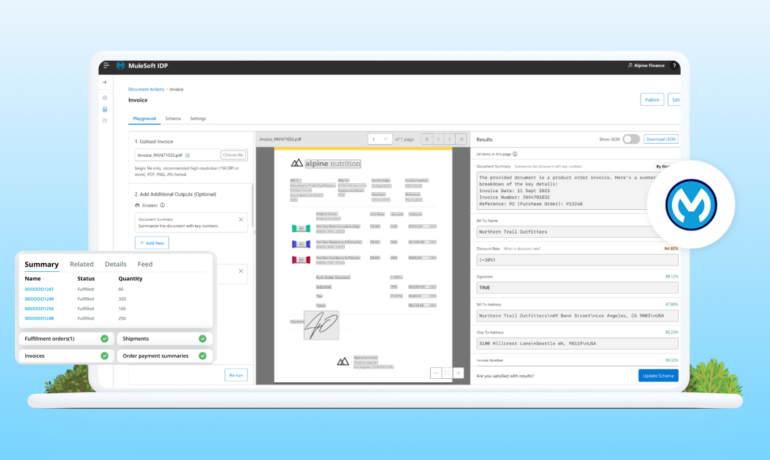
Salesforce yesterday announced new solutions to help streamline and accelerate end-to-end order lifecycle management: MuleSoft’s Anypoint Partner Manager with Intelligent Document Processing (IDP) and MuleSoft Accelerator for Salesforce Order Management. MuleSoft B2B and B2C With AI. Together, these business-to-business (B2B) and business-to-consumer (B2C) integration solutions make it easier to connect essential data across third-party applications, Salesforce OMS, and partner ecosystems – all within MuleSoft. Enhanced with AI, these new solutions help IT teams unify data from multiple data and system sources to achieve end-to-end order visibility, improved efficiency, and customer satisfaction. Why it matters: IT teams are inundated with requests to integrate disparate systems and adopt different technologies. And IT teams in retail, consumer goods, manufacturing, logistics, and healthcare must manage the thousands of daily transactions between suppliers and buyers across the supply chain ecosystem. To add to the complexity, 75% of B2B digital sales occur via standardized Electronic Data Interchange (EDI) and specialized solutions are needed to handle these transactions. Go deeper: Anypoint Partner Manager with IDP is a cloud-native B2B integration solution that accelerates partner onboarding and operational management of both API and EDI-based transactions through the commerce and supply chain lifecycle. It provides visibility tools to accurately monitor the health of partner transactions along with key business and operational insights like overall order frequency and volume, shipment statuses, and more. By utilizing IDP, developers can leverage AI to extract, read, and store unstructured data from documents such as invoice and purchase order PDFs, surfacing it in systems of record and order management systems like Salesforce OMS. IT and business teams can rapidly develop integrations and APIs, monitor and manage their performance, and secure them in compliance with partner requirements, all through a single pane of glass. New capabilities of MuleSoft B2B and B2C With AI include: MuleSoft Accelerator for Salesforce OMS makes it easier and faster to achieve end-to-end order visibility across channels from a centralized hub. The accelerator includes pre-built APIs, connectors, implementation templates, and other technical assets for Anypoint Platform to unify B2B orders with Salesforce OMS and connect all B2B and B2C orders to enterprise resource planning (ERP) systems. By leveraging the available out-of-the-box integration assets, customers can significantly reduce the development time required for integrating systems and accelerate time to market. MuleSoft B2B and B2C With AI. New capabilities of this offering include: Industry Use Cases: Customer perspective: “We were struggling with disjointed technology that was causing order and shipping delays while hampering our ability to innovate across our ecosystem,” said Jeff Blank, VP, Finance & Infrastructure at Jillamy. “MuleSoft’s Anypoint Partner Manager helped accelerate our partner onboarding processes with seamless B2B integration and more efficient management of our EDI transactions.” Salesforce perspective: “B2B and B2C integrations are critical to the success of supply chain management. From getting berries out of the farm or medical devices to hospitals, organizations across the globe are looking for a unified solution to manage and securely monitor their business partner transactions. With Anypoint Partner Manager and MuleSoft Accelerator for OMS, our customers can use our technology to build a composable business ecosystem that meets business partner compliance standards and drives end-to-end supply chain and commerce processes with efficiency, visibility, and speed.” – Andrew Comstock, VP, Product Management With Anypoint Partner Manager and MuleSoft Accelerator for OMS, our customers can use our technology to build a composable business ecosystem that meets business partner compliance standards and drives end-to-end supply chain and commerce processes with efficiency, visibility, and speed. Andrew Comstock, VP, Product Management Like Related Posts Who is Salesforce? Who is Salesforce? Here is their story in their own words. From our inception, we’ve proudly embraced the identity of Read more Salesforce Marketing Cloud Transactional Emails Salesforce Marketing Cloud Transactional Emails are immediate, automated, non-promotional messages crucial to business operations and customer satisfaction, such as order Read more Salesforce Unites Einstein Analytics with Financial CRM Salesforce has unveiled a comprehensive analytics solution tailored for wealth managers, home office professionals, and retail bankers, merging its Financial Read more AI-Driven Propensity Scores AI plays a crucial role in propensity score estimation as it can discern underlying patterns between treatments and confounding variables Read more
Read More
Salesforce-Powered Nonprofit Events

Salesforce-Powered Nonprofit Events

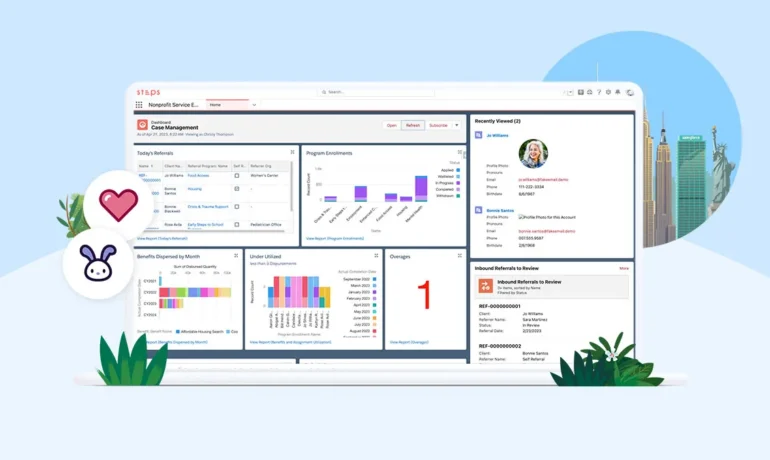
Salesforce has cemented its position as the #1 CRM, becoming an essential tool for businesses improving their marketing, sales, and support processes. But there’s another powerful feature you should explore: managing events directly within Salesforce. Salesforce’s versatility allows you to organize a successful event of any size, whether it’s online, offline, or a hybrid meeting. However, like any business endeavor, a well-thought-out strategy is crucial to ensure your event planning turns into a major success. In this insight, you’ll learn how events contribute to a business’s lifecycle, how to manage them effectively, and the essential tools you’ll need for successful event management in Salesforce. The Role of Events in Nonprofits If your company hasn’t yet ventured into event organization, it’s time to reconsider. Events are a great way to fuel engagement, foster data-driven decisions, and build a thriving community. On a larger scale, event planning offers a range of business benefits, including: Common Event Management Challenges Even with the best intentions, event planning comes with challenges that can derail your efforts if not addressed. Let’s review some common challenges and how Salesforce can help: How Salesforce Elevates Event Management Salesforce brings significant advantages to event planning, offering: Your Salesforce Event Planning Checklist To ensure your event management with Salesforce is effective, follow this simple checklist: Our Thoughts Building a robust event management process with Salesforce is not only a logical choice but a strategic one. It ensures smooth event execution, supports business growth, and boosts your brand’s equity. By leveraging the right tools, such as Salesforce, your event planning process becomes more efficient, data-driven, and ultimately more successful. For expert support in managing Salesforce-powered events, consider reaching out to a partner like Tectonic to guide you through the process. Like1 Related Posts Who is Salesforce? Who is Salesforce? Here is their story in their own words. From our inception, we’ve proudly embraced the identity of Read more Salesforce Marketing Cloud Transactional Emails Salesforce Marketing Cloud Transactional Emails are immediate, automated, non-promotional messages crucial to business operations and customer satisfaction, such as order Read more Salesforce Unites Einstein Analytics with Financial CRM Salesforce has unveiled a comprehensive analytics solution tailored for wealth managers, home office professionals, and retail bankers, merging its Financial Read more AI-Driven Propensity Scores AI plays a crucial role in propensity score estimation as it can discern underlying patterns between treatments and confounding variables Read more

Read More
Salesforce Implementation Solutions

Salesforce Implementation Solutions Are Here!

Tectonic is Pleased to Announce Salesforce Implementation Solutions! The world’s #1 CRM platform has just received a new function in deliverability. Salesforce Implementation Solutions from Tectonic are pre-planned, flxed rate priced, low technical debt solution to Salesforce implementations. Designed with the SMB in mind, Tectonic’s Salesforce Implementation Solutions get you up and running quickly on the Salesforce solutions you need. Finding the right mix of Salesforce products can be as challenging as finding the right Salesforce partner. Tectonic has custom designed Salesforce Implementation Solutions to help ease the integration to the Salesforce platform. Sometimes called quickstarts, jumpstarts, or even accelorators, Salesforce Implementation Solutions are designed to get you set up right and fast, to see the value from your Salesforce investment. Tectonic has tailored our packages to address specific business needs. Pre-defined Salesforce Deliverables at a Fixed Price The Salesforce Implementation Solutions experts at Tectonic will enable you to deploy Salesforce in weeks not months to maximize efficiency. Whether you are seeking a marketing platform solution, a healthcare CRM, personalization, feedback management, or core Salesforce platform capabilities we have you covered. Tectonic gets you started on Salesforce quickly and affordably, without compromising on quality. These fast implementation solutions help you hit the ground running. It doesn’t matter if you’ve never used Salesforce, never purchased a Salesforce license, or have been using the simple, out-of-the-box version. Our team of Salesforce experts will identify and implement what is critical for your business’s immediate success. Thereby giving you the functionality that can develop and grow along with your business at minimal cost, and lightning speed. Why Salesforce Implementation Solutions? From kick off call and discovery to UAT and launch, these packages are here for quick and easy implementation service. With a flat fee, you know your project will be completed on time and budget. When you are seeking a basic platform stand-up, you don’t need to be bombarded with endless choices and decisions. With the help of our certified Salesforce professionals, you will receive expert guidance and support as we implement your new system with a focus on maximizing functionality. You want an implementation with a proven roadmap. Implementation solutions include a range of tools and resources, such as a personalized onboarding plan, training resources, and pre-built solutions, that can help reduce the time it takes to implement Salesforce. This can be especially helpful if you are new to Salesforce or if you need to get your implementation completed in a short time frame. Efficiency, speed, and success are the promises of Tectonic Salesforce Implementation Solutions. Salesforce is your customer success platform, designed to help you sell, service, market, analyze, and connect with your customers. Interested in making the most of Salesforce? Tectonic’s implementation solutions get your business or nonprofit up and running in weeks. Automation is one of the big keys to managing tons of data. Our implementations get you where you need to be in no time flat. Salesforce CRM isn’t just a solution to automate processes, manage workflows, and corral data. Salesforce can jumpstart your digital transformation. Tectonic’s Salesforce implementations avoid the unexpected costs of an implementation. Fixed price packages prevent surprises. Tectonic provides niche, high quality, service-oriented Salesforce implementation, customization, and managed services. The best time to embark on your transformation was 5 years ago. The second best time is right now.  Tectonic Salesforce implementation solutions, or quickstarts, are limited engagement implementations. They zero in on key planning and decision making, standard and custom configurations, and essential training to get up and running lightning fast. Therefore our solutions provide immediate benefits and ROI. Tectonic even offers implementations for upgrading versions and clouds within Salesforce. These all-in-one solutions take the guesswork out of implementing Salesforce with a proven partner to guide you every step of the way. Learn about all Tectonic’s Salesforce Implementation Solutions here. If you have other needs you’d like to address in a flat bundled project, contact us today. Like2 Related Posts Who is Salesforce? Who is Salesforce? Here is their story in their own words. From our inception, we’ve proudly embraced the identity of Read more Salesforce Marketing Cloud Transactional Emails Salesforce Marketing Cloud Transactional Emails are immediate, automated, non-promotional messages crucial to business operations and customer satisfaction, such as order Read more Salesforce Unites Einstein Analytics with Financial CRM Salesforce has unveiled a comprehensive analytics solution tailored for wealth managers, home office professionals, and retail bankers, merging its Financial Read more AI-Driven Propensity Scores AI plays a crucial role in propensity score estimation as it can discern underlying patterns between treatments and confounding variables Read more

Read More
Salesforce Experience Cloud Summer 24 Release Notes

Salesforce Experience Cloud Summer 24 Release Notes

Customization is key, and Experience Cloud is here to help you deliver. Salesforce Experience Cloud Summer 24 Release Notes. Integrate enhanced LWR sites with Data Cloud to gain deeper insights into site visitor interactions. Elevate your site with new styling features for forms and buttons, streamlined search options, and increased control over the layout and spacing of your LWR sites. Improve your visitor login experience with a new integration framework for headless login and guest user identity flows. Stay productive on the go with a collection of updates to the Mobile Publisher app. Salesforce Experience Cloud Summer 24 Release Notes Like Related Posts Who is Salesforce? Who is Salesforce? Here is their story in their own words. From our inception, we’ve proudly embraced the identity of Read more Salesforce Marketing Cloud Transactional Emails Salesforce Marketing Cloud Transactional Emails are immediate, automated, non-promotional messages crucial to business operations and customer satisfaction, such as order Read more Salesforce Unites Einstein Analytics with Financial CRM Salesforce has unveiled a comprehensive analytics solution tailored for wealth managers, home office professionals, and retail bankers, merging its Financial Read more AI-Driven Propensity Scores AI plays a crucial role in propensity score estimation as it can discern underlying patterns between treatments and confounding variables Read more

Read More
salesforce unified knowledge

The Low-Code Revolution

The Low-Code Revolution: How Salesforce is Democratizing CRM Customization Redefining CRM Development Through Visual Innovation Salesforce has pioneered a fundamental shift in customer relationship management by embracing low-code/no-code technology, transforming how organizations customize their CRM platforms. This revolutionary approach enables business users across departments to actively participate in solution development through intuitive visual interfaces rather than complex programming. The low-code movement represents more than just simplified development—it’s a strategic empowerment of business teams to rapidly adapt systems to evolving needs without creating IT bottlenecks. By 2025, Gartner predicts 70% of new applications will use low-code/no-code technologies, with Salesforce positioned at the forefront of this transformation. Understanding the Low-Code/No-Code Paradigm Visual Development for Business Agility Low-code/no-code platforms replace traditional programming with: This approach creates a spectrum of capability: The Strategic Advantages of Salesforce’s Approach 1. Accelerated Digital Transformation 2. Cost-Effective Innovation 3. Cross-Functional Collaboration Salesforce’s Low-Code Ecosystem Core Platform Capabilities Expanding Possibilities Real-World Impact Across Industries Financial Services A regional bank reduced loan processing time by 40% by enabling loan officers to build their own workflow automations using Salesforce Flow. Healthcare A hospital network created a patient intake portal in three days using Lightning App Builder, eliminating a six-month development backlog. Retail A global retailer empowered store managers to build custom inventory apps, improving stock accuracy by 25% without IT involvement. The Future of Enterprise Development Salesforce’s low-code strategy represents more than just simplified tools—it’s redefining the relationship between business needs and technical solutions. Key emerging trends include: Implementing a Successful Low-Code Strategy Organizations maximizing Salesforce’s low-code potential typically: Conclusion: The Democratization of Digital Transformation Salesforce’s low-code/no-code revolution represents a fundamental shift in how businesses approach CRM customization and digital innovation. By empowering business users to become active participants in solution development, organizations can achieve: As the platform continues to evolve, Salesforce is positioned to lead the next wave of enterprise software—where the power to transform business processes resides not just with technical teams, but across the entire organization. This democratization of development capability marks a new era of business agility and competitive advantage. Content updated April 2025. Like Related Posts Who is Salesforce? Who is Salesforce? Here is their story in their own words. From our inception, we’ve proudly embraced the identity of Read more Salesforce Marketing Cloud Transactional Emails Salesforce Marketing Cloud Transactional Emails are immediate, automated, non-promotional messages crucial to business operations and customer satisfaction, such as order Read more Salesforce Unites Einstein Analytics with Financial CRM Salesforce has unveiled a comprehensive analytics solution tailored for wealth managers, home office professionals, and retail bankers, merging its Financial Read more AI-Driven Propensity Scores AI plays a crucial role in propensity score estimation as it can discern underlying patterns between treatments and confounding variables Read more

Read More
Data Cloud and Snowflake Bidrectional Data Sharing

Data Cloud and Snowflake Bidrectional Data Sharing

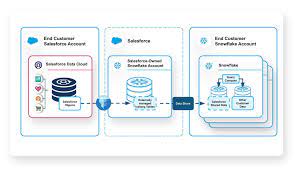
Salesforce Data Cloud and Snowflake are excited to announce that bidirectional data sharing between Snowflake, the Data Cloud company, and Salesforce Data Cloud is now generally available. In September, we introduced the ability for organizations to leverage Salesforce data directly in Snowflake via zero-ETL data sharing, enabling unified customer and business data, accelerating decision-making, and streamlining business processes. Today, we’re thrilled to share that customers can now also share Snowflake data into the Salesforce Data Cloud, using the same zero-ETL innovation to reduce friction and quickly surface powerful insights across sales, service, marketing, and commerce applications. Data Cloud and Snowflake Bidrectional Data Sharing. Data Cloud and Snowflake Bidrectional Data Sharing Enterprises generate valuable customer data within Salesforce applications, while increasingly relying on Snowflake as their preferred data platform for storing, modeling, and analyzing their full data estate. This integration between Salesforce and Snowflake minimizes friction, data latency, scale limitations, and data engineering costs associated with using these two leading platforms. The Snowflake Marketplace also offers customers the opportunity to acquire new data sets to enhance or fill gaps in their existing business data, driving innovation. By combining enterprise data and third-party data from Snowflake Marketplace with valuable customer data from Salesforce applications, organizations can unify their data and build powerful AI solutions to surface rich insights, driving superior and differentiated customer experiences. “Zero-ETL data sharing between Salesforce Data Cloud and Snowflake is game-changing. It has opened up new frontiers of data collaboration. We’re excited to see how customers are powering their customer data analytics and developing innovative AI solutions with near real-time data from Salesforce and Snowflake, generating incredible business value. Now that this integration is generally available, this kind of innovation will be broadly accessible,” says Christian Kleinerman, SVP of Product, Snowflake. Power Personalized Experiences with Salesforce and Snowflake Data sharing between Salesforce Data Cloud and Snowflake brings together holistic insights, empowering multiple customer-facing departments within any organization to create a truly robust customer 360. As Snowflake’s Chief Marketing Officer, Denise Persson, often states, a true, enterprise-wide customer 360 is the beating heart of a modern, customer-facing organization. The applicability of this integration spans various industries and unlocks new growth opportunities. For example: The bidirectional integration enables data sharing across business systems, Salesforce clouds, and operational systems, facilitating data set analysis and future action planning. This brings actionable insights and drives actions, unleashing a new level of customer experience and business productivity. Like Related Posts Who is Salesforce? Who is Salesforce? Here is their story in their own words. From our inception, we’ve proudly embraced the identity of Read more Salesforce Marketing Cloud Transactional Emails Salesforce Marketing Cloud Transactional Emails are immediate, automated, non-promotional messages crucial to business operations and customer satisfaction, such as order Read more Salesforce Unites Einstein Analytics with Financial CRM Salesforce has unveiled a comprehensive analytics solution tailored for wealth managers, home office professionals, and retail bankers, merging its Financial Read more AI-Driven Propensity Scores AI plays a crucial role in propensity score estimation as it can discern underlying patterns between treatments and confounding variables Read more
Read More
Top AI Tools Shaping Business Success

Top AI Tools Shaping Business Success

Top AI Tools Shaping Business Success in 2024 In the dynamic world of business, staying ahead means embracing the latest technologies. Artificial Intelligence (AI) is no longer just a buzzword—it’s a transformative force that helps businesses operate more efficiently, make smarter decisions, and enhance customer experiences. As we move through 2024, the AI tool ecosystem is rapidly expanding, offering innovative solutions to automate tasks, gain deep insights, and improve customer engagement. Below, we explore the top AI tools that are shaping the future of business. StoryChief is a comprehensive content marketing platform that simplifies the creation and distribution of content through AI. From ideation to optimization, it leverages machine learning to help businesses generate high-quality, engaging content at scale. Key Features: Pricing: Plans start with a free tier, with paid options ranging from $40 to $500 per month. Developed by OpenAI, ChatGPT is a versatile language model capable of generating human-like text. It excels in content creation, customer support, and data analysis. Key Use Cases: Pricing: API access with usage-based pricing. Perplexity AI is an advanced search engine that provides accurate, summarized answers to complex queries using natural language processing (NLP). Key Features: Pricing: Free version available, with Pro version at $20/month offering enhanced features. Zapier connects over 5,000 apps, enabling automation of repetitive tasks across your tech stack with AI-powered tools that simplify complex automations. Key Features: Pricing: Free plan available for up to 100 tasks per month; paid plans start at $19.99/month. Grammarly is an AI-driven writing assistant that enhances the quality of written communication, ensuring clarity, conciseness, and error-free content. Key Features: Pricing: Free version available; Premium plans start at $12/month for individuals and $25/user/month for businesses. Typeframes simplifies video creation with AI, turning scripts or images into professional-quality videos with animations, transitions, and voiceovers. Key Features: Pricing: Plans start at $29/month, with higher-tier options available. Chatbase enables businesses to build intelligent chatbots and virtual assistants that handle a wide range of customer service inquiries. Key Features: Pricing: Free plan available with limited message credits; paid plans start at $19/month. Secta is an AI-powered headshot generator that creates professional-quality headshots from user-submitted photos, ideal for businesses needing polished profile pictures. Key Features: Pricing: Pay-as-you-go at $49 per headshot session. Voicenotes is an AI-driven transcription tool that converts voice memos into concise summaries and action items, perfect for capturing important information efficiently. Key Features: Pricing: Free plan available; paid plans start at $10/month, with lifetime payment options. Notion AI enhances the popular Notion productivity platform with AI-powered writing assistance, content summarization, and database management. Key Features: Pricing: Available as an add-on at $10 per user per month, with discounts for annual plans. Choosing the Right AI Tools for Your Business Selecting the right AI tools involves considering several factors: By evaluating these aspects, you can effectively leverage AI to enhance efficiency, drive growth, and maintain a competitive edge in 2024. Like Related Posts Who is Salesforce? Who is Salesforce? Here is their story in their own words. From our inception, we’ve proudly embraced the identity of Read more Salesforce Marketing Cloud Transactional Emails Salesforce Marketing Cloud Transactional Emails are immediate, automated, non-promotional messages crucial to business operations and customer satisfaction, such as order Read more Salesforce Unites Einstein Analytics with Financial CRM Salesforce has unveiled a comprehensive analytics solution tailored for wealth managers, home office professionals, and retail bankers, merging its Financial Read more AI-Driven Propensity Scores AI plays a crucial role in propensity score estimation as it can discern underlying patterns between treatments and confounding variables Read more

Read More
Learning AI

AI Success is a Team Sport

The contemporary workplace is currently experiencing a profound transformation. The Future of Jobs Report from the World Economic Forum predicts that AI will replace approximately 85 million jobs by 2025, while concurrently generating around 97 million AI-related jobs. AI Success is a Team Sport and will require hiring and training people. This significant shift necessitates a reevaluation of work dynamics, introducing new roles that involve collaboration between “humans, machines, and algorithms.” Amidst this transformative period, AI provides opportunities for organizations to reimagine existing roles, offer upskilling opportunities, and design innovative positions to meet evolving needs. For leaders in the data domain, the crucial task is to assess which jobs could benefit from AI. This requires a thorough understanding of organizational tasks, skills, and strategic goals, complemented by a scalable change management process to accommodate the growth of AI initiatives. To pinpoint relevant jobs, the following steps can be taken: Despite 67% of global business leaders considering the use of generative AI, an equal number of IT leaders acknowledge a skills gap among their employees. “I think most business leaders have a good sense of what the key jobs are inside their organizations. Of those key jobs, what are the good candidates for AI? I think it’s important for any executive—data or not—to understand what they are and plan accordingly.” SOLOMON KAHN DATA LEADERSHIP COLLABORATIVE  The implementation of AI necessitates a specialized team, encompassing roles from project managers to domain experts. The composition of the team depends on the project’s complexity, scope, budget, and overall strategic objectives. But to be sure, AI Success is a Team Sport. Key roles for AI initiatives include: AI acts as a disruptor to traditional business practices, and this disruption is viewed positively. The bonuses far outweigh the challenges. The new generation of user-friendly AI technologies, such as generative AI, has moved beyond the hype cycle, offering applications that generate personalized offers and automated chatbots capable of solving complex customer support issues. In this era powered by AI, data leaders play a pivotal role in driving transformative change. Like1 Related Posts Who is Salesforce? Who is Salesforce? Here is their story in their own words. From our inception, we’ve proudly embraced the identity of Read more Salesforce Marketing Cloud Transactional Emails Salesforce Marketing Cloud Transactional Emails are immediate, automated, non-promotional messages crucial to business operations and customer satisfaction, such as order Read more Salesforce Unites Einstein Analytics with Financial CRM Salesforce has unveiled a comprehensive analytics solution tailored for wealth managers, home office professionals, and retail bankers, merging its Financial Read more AI-Driven Propensity Scores AI plays a crucial role in propensity score estimation as it can discern underlying patterns between treatments and confounding variables Read more

Read More
gettectonic.com