

Salesforce Sales Analytics Archives - gettectonic.com
advanced analytics

Maximizing Sales Performance with Salesforce Sales Analytics

Salesforce, a leading CRM platform, provides powerful sales analytics tools that empower businesses to make data-driven decisions, boost productivity, and drive revenue growth. This guide highlights the importance of Salesforce Sales Analytics, its key features, and how to leverage them to optimize your sales team’s performance. Key Features of Salesforce Sales Analytics 1. Reports and Dashboards Salesforce’s reporting capabilities enable users to create custom dashboards and reports for real-time insights into lead conversion, sales performance, and other critical metrics. These visual tools help businesses track trends and make informed decisions effortlessly. 2. Einstein Analytics Powered by AI and machine learning, Einstein Analytics offers: 3. Sales Cloud Analytics Sales Cloud Analytics helps businesses: 4. Forecasting Tools Salesforce’s AI-powered forecasting tools provide accurate revenue projections by analyzing: How Different Teams Benefit from Sales Analytics ✅ Executives – Gain a high-level view of sales, service, and pipeline performance with real-time dashboards highlighting key business metrics. ✅ Sales Managers – Monitor team performance, track quota attainment, analyze pipeline changes, and optimize sales cycles to accelerate deal closures. ✅ Sales Representatives – Get insights into personal sales performance, pipeline activities, and quota attainment, allowing for quicker decision-making and identification of new business opportunities. ✅ Operations Teams – Analyze sales performance by customer, region, and source to optimize negotiation strategies and business development efforts. Setting Up the Salesforce Sales Analytics App 1. Launch Analytics Studio Navigate to Analytics Studio via the Sales Home page and click on the Apps button. 2. Search for Sales Analytics If the Sales Analytics App does not appear by default, use the search bar to locate it. 3. Access the Default Dashboard The default dashboard provides key metrics, including: 4. Customize Widgets Modify data representation by selecting the Edit button and customizing widgets to align with your business needs. 5. Adjust Goal Widgets Update goal widgets to match your sales targets and business objectives. 6. Explore Additional Dashboards Salesforce offers role-specific dashboards for Sales Managers, Executives, and other stakeholders to gain tailored insights. 7. Utilize the Lens Feature for Visualizations Leverage Lens to create object-specific visualizations, such as opportunities by time, stage, owner, and more. Conclusion Integrating Salesforce Sales Analytics with Tableau CRM creates a comprehensive Business Intelligence (BI) solution. However, businesses looking for a simpler or more cost-effective alternative may consider exporting Salesforce data into third-party analytics platforms for additional flexibility and ease of use. By leveraging Salesforce Sales Analytics, businesses can enhance forecasting, improve decision-making, and drive sales performance with real-time insights. Like1 Related Posts Who is Salesforce? Who is Salesforce? Here is their story in their own words. From our inception, we’ve proudly embraced the identity of Read more Salesforce Marketing Cloud Transactional Emails Salesforce Marketing Cloud Transactional Emails are immediate, automated, non-promotional messages crucial to business operations and customer satisfaction, such as order Read more Salesforce Unites Einstein Analytics with Financial CRM Salesforce has unveiled a comprehensive analytics solution tailored for wealth managers, home office professionals, and retail bankers, merging its Financial Read more AI-Driven Propensity Scores AI plays a crucial role in propensity score estimation as it can discern underlying patterns between treatments and confounding variables Read more
Read More
Salesforce Sales Analytics

Salesforce Sales Analytics App

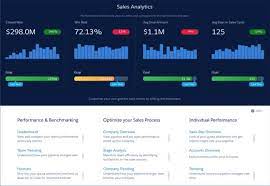
Sales Analytics empowers users to leverage the analytical capabilities of Analytics within Sales Cloud, accessible on any device supporting Analytics functionality. Featuring intuitive visualizations derived from Salesforce data, Sales Analytics facilitates a swift transition from insights to actionable strategies, enabling users to transform data into informed and intelligent sales decisions. The Salesforce Sales Analytics App provides improved visibility across departments. Built by Salesforce Built by Salesforce, Sales Analytics streamlines the analysis of Sales Cloud data. Whether you’re an executive, manager, sales representative, or involved in operations, Sales Analytics offers an elevated level of insight into your Salesforce data. Begin with the Sales Analytics Home dashboard to gain insights into recent wins, win rates, and average deal amounts. Dive deeper into other dashboards that utilize Sales Cloud Collaborative Forecasts to showcase quotas, aiding in precise forecasting. Executives benefit from a comprehensive overview highlighting pipeline and sales and service business performance, along with insights into top deals. Managers can access leaderboards displaying team key performance indicators (KPIs) and delve into specific details about quotas, pipeline changes, team trends, and average sales cycle time. Reps can monitor their own quota attainment, bookings, and pipeline activities, while operations staff can analyze performance by geography, source, and customer to identify trends and expedite new deals. App creation is simplified with Sales Analytics, conducting a compatibility check against your org to ensure the inclusion of all necessary data for app datasets and dashboards. If any data is missing, error messages guide you on the required additions before app creation. Once compatibility is confirmed, you have two options: Post-app creation, explore Sales Cloud data seamlessly across any device supporting CRM Analytics. The intuitive CRM Analytics interface delivers actionable insights promptly. Constantly allowing for in-depth exploration and customization of Sales Analytics tailored to your business requirements. Prebuilt dashboards in Sales Analytics feature key performance indicators (KPIs) for managing pipeline, visualizing quota data, fine-tuning forecasts, understanding business performance drivers, visualizing trends, and assigning actions. Use these dashboards to provide swift answers to business-related queries, ensuring value extraction from Salesforce data. Sales Analytics also incorporates lenses—focused visualizations providing greater detail about sales KPIs, enhancing dashboards. Upon creating Sales Analytics, the app automatically generates datasets based on existing Salesforce data. By encompassing standard and custom fields. These datasets fuel the dashboards and lenses. Instantly delivering insights necessary for effective business management. Users can further create custom lenses and dashboards utilizing the data within the Sales Analytics dataset. CRM Analytics, the rebranded Tableau CRM from Salesforce, represents a dynamic evolution from its previous incarnation, Einstein Analytics. Like1 Related Posts Salesforce Marketing Cloud Transactional Emails Salesforce Marketing Cloud Transactional Emails are immediate, automated, non-promotional messages crucial to business operations and customer satisfaction, such as order Read more Asset Management Salesforce Can Salesforce do asset management? You can manage assets in Consumer Goods (desktop) and in the Consumer Goods offline mobile Read more Lookup Relationship in Salesforce What is Lookup relationship in Salesforce? Salesforce’s lookup relationships is a significant capability that allows users to connect two objects Read more Listview in Salesforce What is a listview in Salesforce? A list view is a filtered list of records where you can view records Read more

Read More
gettectonic.com