Social Media Archives - gettectonic.com - Page 9
einstein discovery dictionary

Einstein Discovery Dictionary

Familiarize yourself with terminology that is commonly associated with Einstein Discovery. Actionable VariableAn actionable variable is an explanatory variable that people can control, such as deciding which marketing campaign to use for a particular customer. Contrast these variables with explanatory variables that can’t be controlled, such as a customer’s street address or a person’s age. If a variable is designated as actionable, the model uses prescriptive analytics to suggest actions (improvements) the user can take to improve the predicted outcome. Actual OutcomeAn actual outcome is the real-world value of an observation’s outcome variable after the outcome has occurred. Einstein Discovery calculates model performance by comparing how closely predicted outcomes come to actual outcomes. An actual outcome is sometimes called an observed outcome. AlgorithmSee modeling algorithm. Analytics DatasetAn Analytics dataset is a collection of related data that is stored in a denormalized, yet highly compressed, form. The data is optimized for analysis and interactive exploration. AttributeSee variable. AverageIn Einstein Discovery, the average represents the statistical mean for a variable. BiasIf Einstein Discovery detects bias in your data, it means that variables are being treated unequally in your model. Removing bias from your model can produce more ethical and accountable models and, therefore, predictions. See disparate impact. Binary Classification Use CaseThe binary classification use case applies to business outcomes that are binary: categorical (text) fields with only two possible values, such as win-lose, pass-fail, public-private, retain-churn, and so on. These outcomes separate your data into two distinct groups. For analysis purposes, Einstein Discovery converts the two values into Boolean true and false. Einstein Discovery uses logistic regression to analyze binary outcomes. Binary classification is one of the main use cases that Einstein Discovery supports. Compare with multiclass classification. CardinalityCardinality is the number of distinct values in a category. Variables with high cardinality (too many distinct values) can result in complex visualizations that are difficult to read and interpret. Einstein Discovery supports up to 100 categories per variable. You can optionally consolidate the remaining categories (categories with fewer than 25 observations) into a category called Other. Null values are put into a category called Unspecified. Categorical VariableA categorical variable is a type of variable that represents qualitative values (categories). A model that represents a binary or multiclass classification use case has a categorical variable as its outcome. See category. CategoryA category is a qualitative value that usually contains categorical (text) data, such as Product Category, Lead Status, and Case Subject. Categories are handy for grouping and filtering your data. Unlike measures, you can’t perform math on categories. In Salesforce Help for Analytics datasets, categories are referred to as dimensions. CausationCausation describes a cause-and-effect relationship between things. In Einstein Discovery, causality refers to the degree to which variables influence each other (or not), such as between explanatory variables and an outcome variable. Some variables can have an obvious, direct effect on each other (for example, how price and discount affect the sales margin). Other variables can have a weaker, less obvious effect (for example, how weather can affect on-time delivery). Many variables have no effect on each other: they are independent and mutually exclusive (for example, win-loss records of soccer teams and currency exchange rates). It’s important to remember that you can’t presume a causal relationship between variables based simply on a statistical correlation between them. In fact, correlation provides you with a hint that indicates further investigation into the association between those variables. Only with more exploration can you determine whether a causal link between them really exists and, if so, how significant that effect is .CoefficientA coefficient is a numeric value that represents the impact that an explanatory variable (or a pair of explanatory variables) has on the outcome variable. The coefficient quantifies the change in the mean of the outcome variable when there’s a one-unit shift in the explanatory variable, assuming all other variables in the model remain constant. Comparative InsightComparative insights are insights derived from a model. Comparative insights reveal information about the relationships between explanatory variables and the outcome variable in your story. With comparative insights, you isolate factors (categories or buckets) and compare their impact with other factors or with global averages. Einstein Discovery shows waterfall charts to help you visualize these comparisons. CorrelationA correlation is simply the association—or “co-relationship”—between two or more things. In Einstein Discovery, correlation describes the statistical association between variables, typically between explanatory variables and an outcome variable. The strength of the correlation is quantified as a percentage. The higher the percentage, the stronger the correlation. However, keep in mind that correlation is not causation. Correlation merely describes the strength of association between variables, not whether they causally affect each other. CountA count is the number of observations (rows) associated with an analysis. The count can represent all observations in the dataset, or the subset of observations that meet associated filter criteria.DatasetSee Analytics dataset. Date VariableA date variable is a type of variable that contains date/time (temporal) data.Dependent VariableSee outcome variable. Deployment WizardThe Deployment Wizard is the Einstein Discovery tool used to deploy models into your Salesforce org. Descriptive InsightsDescriptive insights are insights derived from historical data using descriptive analytics. Descriptive insights show what happened in your data. For example, Einstein Discovery in Reports produces descriptive insights for reports. Diagnostic InsightsDiagnostic insights are insights derived from a model. Whereas descriptive insights show what happened in your data, diagnostic insights show why it happened. Diagnostic insights drill deeper into correlations to help you understand which variables most significantly impacted the business outcome you’re analyzing. The term why refers to a high statistical correlation, not necessarily a causal relationship. Disparate ImpactIf Einstein Discovery detects disparate impact in your data, it means that the data reflects discriminatory practices toward a particular demographic. For example, your data can reveal gender disparities in starting salaries. Removing disparate impact from your model can produce more accountable and ethical insights and, therefore, predictions that are fair and equitable. Dominant ValuesIf Einstein Discovery detects dominant values in a variable, it means that the data is unbalanced. Most values are in the same category, which can limit the value of the analysis. DriftOver time, a deployed model’s performance can drift, becoming less accurate in predicting outcomes. Drift can occur due to changing factors in the data or in your business environment. Drift also results from now-obsolete assumptions built into the story

Read More
Marketing Cloud Tik Tok

Marketing Cloud Tik Tok

TikTok Introduces No-Code Integration for Salesforce Marketing Cloud TikTok has launched a no-code integration for Salesforce Marketing Cloud, designed to help advertisers transfer leads generated by their campaigns to Salesforce in real-time. This new integration ensures that leads captured on TikTok are automatically synced to Salesforce Marketing Cloud, eliminating the need for manual lead downloads by advertisers. Benefits of the Integration: Salesforce first enabled Commerce Cloud users to sell through TikTok in July 2022, positioning TikTok alongside other major social media channels like Facebook, Instagram, and Snapchat. This broadened the marketing and sales avenues for merchants. The new TikTok integration is available on Salesforce’s enterprise cloud marketplace, AppExchange, for businesses utilizing the Salesforce Marketing Cloud. Why This Integration Matters: Introducing TikTok AdZ: Filling the Gap in Salesforce Marketing Cloud Salesforce Marketing Cloud’s Advertising Studio did not previously integrate with TikTok, leaving a significant gap in the market. The new app, TikTok AdZ, created by Cezium, fills this gap by integrating TikTok advertising with marketing and CRM data, adding value in four key ways: 1. Acquisition: 2. Nurturing: 3. Retention: 4. Media Bidding Optimization: Key Features of TikTok AdZ: Target Using First-Party Data:With third-party cookies depreciating, TikTok AdZ allows advertisers to use first and second-party data for targeted ads, ensuring compliance with consumer privacy laws. Growth of Brand Awareness:Build a strong follower base on TikTok by creating custom audiences from existing customers or email subscribers and targeting them with exclusive promotions, influencer campaigns, and product demos. Audience Matching:Utilize TikTok’s lookalike audience feature to target users similar to your existing audience, increasing the likelihood of conversion. Audience Suppression:Optimize advertising spend by suppressing ads for unsatisfied customers or recent complainers, focusing on audiences more likely to convert. Use TikTok in Journey Builder:Leverage unified data to create personalized, contextual, and human engagements across marketing, commerce, service, and sales through multi-step automation in Journey Builder. Hyper-Personalization:Enhance personalization efforts with features like geotargeting, upselling and cross-selling, seasonal promotions, abandoned browse retargeting, and abandoned cart recovery. Summary As one of the largest social platforms globally, TikTok is essential for modern advertising strategies. TikTok AdZ streamlines the process, offering the tools needed to create personalized and effective ads that target the right audience on TikTok. Embrace this powerful integration to stay ahead of the competition, streamline lead generation, and watch your conversion rates soar. Reach out to your TikTok Rep or Salesforce Account Executive to get started today. Like Related Posts Who is Salesforce? Who is Salesforce? Here is their story in their own words. From our inception, we’ve proudly embraced the identity of Read more Salesforce Marketing Cloud Transactional Emails Salesforce Marketing Cloud Transactional Emails are immediate, automated, non-promotional messages crucial to business operations and customer satisfaction, such as order Read more Salesforce Unites Einstein Analytics with Financial CRM Salesforce has unveiled a comprehensive analytics solution tailored for wealth managers, home office professionals, and retail bankers, merging its Financial Read more AI-Driven Propensity Scores AI plays a crucial role in propensity score estimation as it can discern underlying patterns between treatments and confounding variables Read more


Read More
multi-channel campaigns

Multi-Channel Campaigns

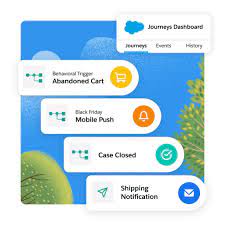
Leveraging Salesforce for Multi-Channel Campaign Management with Tectonic In today’s dynamic marketing landscape, businesses need to connect with their audience across multiple channels—email, social media, web, and beyond. Managing these campaigns effectively can feel like juggling too many balls at once, especially when aiming to maintain consistent messaging, track performance, and maximize ROI. That’s where Salesforce, paired with expertise from Tectonic, makes all the difference. Salesforce simplifies multi-channel campaign management, helping businesses stay organized, boost engagement, and achieve measurable results. Let’s dive into how this powerful platform, supported by Tectonic’s expertise, takes campaign management to the next level. The Challenge Marketing teams often face obstacles like: The Solution: Streamlined Multi-Channel Campaign Management Salesforce, with Tectonic as your trusted partner, transforms the complexity of multi-channel campaigns into a streamlined and effective process. By integrating channels, automating workflows, and delivering real-time insights, businesses can engage their audience and achieve exceptional results. 1. Centralized Campaign Planning Salesforce Marketing Cloud provides a centralized platform for planning and managing campaigns across channels—email, SMS, social media, and paid ads—all from one dashboard. This unified view ensures messaging and branding stay consistent while fostering seamless collaboration across teams. Tectonic enhances this process by ensuring your Salesforce environment is optimized for your specific needs. 2. Personalized Messaging at Scale Salesforce’s AI-powered tools, such as Einstein AI, analyze customer data to craft personalized content for every audience segment. These tools allow businesses to create tailored emails, ads, and social media posts that resonate with specific groups. With Tectonic’s guidance, you can implement personalization strategies that drive engagement and conversions to new heights. 3. Real-Time Performance Tracking Salesforce consolidates campaign performance data into a single platform, providing real-time metrics like open rates, click-through rates, social engagement, and conversions. Customizable dashboards allow your team to monitor results at a glance, enabling quick adjustments for maximum impact. Tectonic can help design these dashboards for clarity and actionable insights. 4. Automation for Efficiency Managing multi-channel campaigns involves countless tasks, but Salesforce automates processes such as scheduling, triggering emails, and personalizing messaging based on user behavior. By streamlining these repetitive tasks, your team can focus on creativity and strategy. Tectonic’s expertise ensures these automations are tailored to fit your business workflows perfectly. 5. Seamless Integration Across Channels Salesforce integrates with platforms like Google Ads, Facebook, LinkedIn, and Instagram, consolidating data into one ecosystem. This eliminates the need for manual data collection, saving time and improving accuracy. Tectonic ensures these integrations are set up seamlessly, so you can focus on running impactful campaigns. Strategies for Success with Salesforce Why Tectonic + Salesforce? Tectonic combines deep Salesforce expertise with a keen understanding of marketing challenges to help you fully unlock the platform’s potential. Together, Salesforce and Tectonic empower businesses to achieve more efficient, impactful, and ROI-driven campaigns. Ready to revolutionize your multi-channel marketing strategy? Let Tectonic guide you to Salesforce success. Content updated December 2024. Like Related Posts Who is Salesforce? Who is Salesforce? Here is their story in their own words. From our inception, we’ve proudly embraced the identity of Read more Salesforce Marketing Cloud Transactional Emails Salesforce Marketing Cloud Transactional Emails are immediate, automated, non-promotional messages crucial to business operations and customer satisfaction, such as order Read more Salesforce Unites Einstein Analytics with Financial CRM Salesforce has unveiled a comprehensive analytics solution tailored for wealth managers, home office professionals, and retail bankers, merging its Financial Read more AI-Driven Propensity Scores AI plays a crucial role in propensity score estimation as it can discern underlying patterns between treatments and confounding variables Read more
Read More
Benefits of Salesforce Experience Cloud

Benefits of Salesforce Experience Cloud

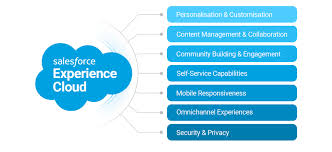
Salesforce Experience Cloud: Transforming Digital Customer Engagement To understand the Benefits of Salesforce Experience Cloud we must understand what a customer or partner portal is intended to do. Salesforce Experience Cloud, previously known as Community Cloud, is a powerful digital experience platform (DXP) designed to help organizations create and deliver exceptional, customer-centric experiences across multiple channels. This platform goes beyond community management, offering tools for building and managing websites, portals, mobile apps, and integrating social media. Benefits of Salesforce Experience Cloud explored. Built on Salesforce Customer 360, Experience Cloud gives businesses a comprehensive view of their customers by connecting data from various sources. With these insights, businesses can create personalized experiences tailored to each customer’s preferences and needs. Organizations can use Experience Cloud to design portals, websites, and communities, providing seamless access to relevant information, collaboration tools, and resources. The platform’s flexibility allows businesses to enhance customer satisfaction, improve partner collaboration, and boost employee productivity. Key Benefits of Salesforce Experience Cloud Salesforce Experience Cloud offers numerous benefits that help businesses deliver seamless experiences across the customer journey. Here are some of its key advantages: 1. Seamless Integration Experience Cloud integrates effortlessly with other Salesforce products like Sales Cloud and Service Cloud, providing a unified platform for comprehensive customer management. 2. Scalability and Customization The platform is highly scalable, allowing businesses to expand their communities as they grow. With extensive customization options, businesses can tailor the platform to meet their specific needs and branding requirements. 3. Security and Trust Salesforce is known for its robust security features, ensuring customer data is protected at all times. Businesses can confidently manage sensitive customer information within Experience Cloud. 4. Extensive AppExchange Ecosystem Salesforce’s AppExchange marketplace provides access to a wide range of pre-built integrations and apps that enhance the functionality of Experience Cloud, allowing businesses to customize and extend their platform capabilities. Real-World Uses of Salesforce Experience Cloud Salesforce Experience Cloud is used by businesses across various industries to improve customer engagement, enhance collaboration, and boost productivity. Some key use cases include: 1. Partner Portals Experience Cloud enables businesses to create dedicated partner portals where partners can collaborate with internal teams, access resources, and share leads. This accelerates partner engagement and streamlines business processes. 2. Self-Service Portals Businesses can offer 24/7 self-service portals, allowing customers to access product information, troubleshoot common issues, and track their interactions. These portals help reduce the workload on support teams and enhance customer satisfaction. 3. Customer Communities Experience Cloud allows businesses to create customer communities where users can find personalized content, engage with other users, and access self-service resources. This promotes collaboration and reduces the strain on customer support teams. 4. Employee Communities Internal employee communities serve as hubs for company-wide communication, training, and collaboration. Employees can access resources, share knowledge, and seek support, ultimately boosting engagement and productivity. 5. Branded Mobile Apps Businesses can use Experience Cloud to develop branded mobile apps that give customers, partners, and employees convenient access to services, resources, and information on the go. 6. Social Media Integration Experience Cloud integrates with popular social media platforms, allowing businesses to engage with customers directly, share content, and respond to inquiries. Top Features of Salesforce Experience Cloud Salesforce Experience Cloud is packed with features that enhance customer engagement, streamline operations, and improve overall efficiency: Companies Using Salesforce Experience Cloud Nike and PUMA leverage Experience Cloud for personalization. Nike’s loyalty program and Puma’s mobile shopping experience are enhanced by the platform’s built-in mobile UX design and technical architecture, resulting in better customer engagement and increased sales. Bank of America and Wells Fargo use Experience Cloud to offer customer support through self-service portals and community forums, improving customer satisfaction and gathering valuable feedback. IBM uses the platform to create collaborative communities for employees and customers alike. With integrated tools like Salesforce Einstein and IBM Watson, the company has enhanced internal collaboration and customer service. Hulu uses Salesforce to power its Help Center, where customers can find answers, engage with other viewers, and leave feedback that shapes Hulu’s content. OpenTable relies on Experience Cloud for its Diner Help portal, a one-stop shop for dining-related queries, enhancing the user experience and operational efficiency. Choosing the Right Salesforce Experience Cloud Partner for Implementation When implementing Salesforce Experience Cloud, choosing the right partner is crucial to ensure success. Look for a partner with: With the right partner, like Tectonic, businesses can fully grasp the power of Salesforce Experience Cloud to deliver exceptional digital experiences that foster customer loyalty, drive business growth, and improve operational efficiency. Content updated October 2024. Like Related Posts Who is Salesforce? Who is Salesforce? Here is their story in their own words. From our inception, we’ve proudly embraced the identity of Read more Salesforce Marketing Cloud Transactional Emails Salesforce Marketing Cloud Transactional Emails are immediate, automated, non-promotional messages crucial to business operations and customer satisfaction, such as order Read more Salesforce Unites Einstein Analytics with Financial CRM Salesforce has unveiled a comprehensive analytics solution tailored for wealth managers, home office professionals, and retail bankers, merging its Financial Read more AI-Driven Propensity Scores AI plays a crucial role in propensity score estimation as it can discern underlying patterns between treatments and confounding variables Read more

Read More
Salesforce AI

Salesforce Einstein and Social Studio

The digital era (sometimes considered the third industrial revolution) has transformed the dynamics of customer-business interactions, demanding a proactive approach to customer engagement across diverse channels. Navigating this ever-evolving world is essential for business success, and Social Studio is a valuable asset in this endeavor. Social Studio, in conjunction with Einstein AI, plays a pivotal role in achieving social media success. Recognizing the significance of social media in shaping brand identity and fostering customer relationships, marketers are tasked with maintaining an active and responsive presence across various social media platforms. This challenge is met by Social Studio, offering a centralized hub for comprehensive social media management. This platform facilitates content planning and publication, team collaboration, content approval, audience engagement, and performance analysis. Equipped with advanced scheduling tools, user-friendly content creation features, and customizable approval rules, Social Studio ensures the safeguarding of your brand’s integrity across multiple platforms and messaging. Notably, Social Studio seamlessly integrates with Salesforce Marketing Cloud, providing an all-encompassing solution for efficient social media management. Its capabilities extend to user role management, image classification through Einstein Vision, and process automation using macros. With Social Studio, users gain access to a unified platform for content creation, scheduling, and monitoring, audience interaction, and performance analysis. Whether collaborating within a team or managing multiple accounts, Social Studio streamlines social media efforts, empowering users to achieve their goals. Embrace the advantages of this robust tool for an enhanced social media experience! Social Studio is a one-stop solution to manage, schedule, create, and monitor posts. You can organize posts by brand, region, or multiple teams and individuals in a unified interface. Social Studio offers powerful real-time publishing and engagement. Social Studio offers powerful real-time publishing and engagement platform for content marketers, plus the comprehensive content performance by social network and time frame. A single interface offers a fully customizable team-based collaboration platform that analyzes channel and content performance. Analyze current trends and recommend new content ideas. With Social Studio you can: Social Studio Components Social Studio is made up of these components: Note: Salesforce will sundown Social Studio on November 18, 2024, but some users will lose access before then if their contract expires sooner.  Salesforce recommends retrieving your Social Studio data at least 90 days before the Order End Date of your Marketing Cloud Social Studio Product(s) or November 18, 2024, whichever is sooner.  The digital, or third industrial revolution is the shift from mechanical and analogue electronic technologies from the Industrial Revolution towards digital electronics which began in the latter half of the 20th century.  This was prompted with the adoption and evolution of digital computers. (source) Like Related Posts Who is Salesforce? Who is Salesforce? Here is their story in their own words. From our inception, we’ve proudly embraced the identity of Read more Salesforce Marketing Cloud Transactional Emails Salesforce Marketing Cloud Transactional Emails are immediate, automated, non-promotional messages crucial to business operations and customer satisfaction, such as order Read more Salesforce Unites Einstein Analytics with Financial CRM Salesforce has unveiled a comprehensive analytics solution tailored for wealth managers, home office professionals, and retail bankers, merging its Financial Read more AI-Driven Propensity Scores AI plays a crucial role in propensity score estimation as it can discern underlying patterns between treatments and confounding variables Read more
Read More
Salesforce Marketing Cloud Personalization

AI and Marketing Personalization

AI Personalization Marketing: The Future of Customized Advertising Artificial intelligence (AI) is revolutionizing advertising by replacing generic mass marketing campaigns with highly targeted and relevant ads personalized through AI technology. Advanced AI and machine learning capabilities enable businesses to tailor and optimize marketing messages at scale. By leveraging extensive data insights, AI empowers businesses to understand customer needs and preferences on a personal level, allowing for customized messages and recommendations throughout the buyer’s journey. 5 Benefits of AI Personalization in Marketing Practical Applications of AI-Based Personalization in Marketing AI significantly enhances marketing effectiveness by analyzing extensive customer data to inform targeted campaigns. According to Babak Hodjat, CTO of Cognizant, integrating AI with business data empowers decision-making and drives key performance indicators. Explore more insights from Babak Hodjat in eWeek’s interview on AI’s transformative impact on marketing. AI-Powered Tools for Enhanced Personalization Challenges and Considerations for AI Personalization Implementation Implementing AI personalization presents challenges such as costs, ethical concerns, and data privacy considerations. Businesses must ensure transparent data practices and compliance with regulations like GDPR and CCPA to mitigate risks associated with data security and bias in AI algorithms. Best Practices for Effective AI Personalization Marketing Successful AI personalization strategies begin with clearly defined goals, ethical data practices, and the strategic use of AI tools to optimize marketing efforts. Regular monitoring and refinement based on data-driven insights ensure continuous improvement in campaign effectiveness and customer engagement. Conclusion AI personalization is reshaping marketing by delivering tailored experiences that drive customer engagement and business growth. Strategic implementation of AI tools enables marketers to unlock new levels of personalization while navigating ethical considerations and regulatory requirements. Embracing AI in marketing empowers brands to connect with customers on a deeper level, fostering loyalty and driving sustainable business success. Like Related Posts Who is Salesforce? Who is Salesforce? Here is their story in their own words. From our inception, we’ve proudly embraced the identity of Read more Salesforce Marketing Cloud Transactional Emails Salesforce Marketing Cloud Transactional Emails are immediate, automated, non-promotional messages crucial to business operations and customer satisfaction, such as order Read more Salesforce Unites Einstein Analytics with Financial CRM Salesforce has unveiled a comprehensive analytics solution tailored for wealth managers, home office professionals, and retail bankers, merging its Financial Read more AI-Driven Propensity Scores AI plays a crucial role in propensity score estimation as it can discern underlying patterns between treatments and confounding variables Read more
Read More
Salesforce Einstein and Einstein Automate

AI Fundamentals

The concept of Artificial Intelligence (AI) has long been a fascination for storytellers and sci-fi enthusiasts. However, for a considerable period, most individuals didn’t give AI much serious consideration, perceiving it as a distant futuristic sci-fi possibility. Nevertheless, researchers and computer scientists have been actively working to transform the dream of AI into a tangible reality, leading some to insist that we have already entered the Age of AI. The AI Fundamentals explained. While the extent of AI’s integration into our daily lives remains uncertain, it is evident that meaningful conversations about AI require a shared vocabulary and a solid foundation of core concepts. Presently, asking ten people to define artificial intelligence is likely to yield ten different answers. This insight attempts to establish a common understanding by exploring AI’s current capabilities and digging into the methodologies employed by computer scientists in creating remarkable AI systems. AI Fundamentals Defining AI proves challenging due to distorted perceptions influenced by science fiction narratives portraying AI as a potentially malevolent force. Additionally, our tendency to benchmark AI against human intelligence contributes to this challenge. And I don’t want AI to be able to write a blog post as well as me! Acknowledging the vast spectrum of intelligence in the animal kingdom, as well as the diversity in human intelligence, prompts a need to view artificial intelligence through a similar lens. As humans we may think we are a lot smarter than a bird. But I don’t know how to fly, do you? AI Capabilities Recognizing specific AI capabilities tailored to distinct tasks is crucial, dispelling the notion of a universally proficient AI, known as general AI, which remains a distant goal. AI currently exists in specialized forms, each excelling at particular jobs. Key AI capabilities fall into several categories: It’s safe to say, artificial intelligence encompasses computer abilities associated with human intuition, inference, and reasoning. Presently, AI skills are highly specialized, covering categories like numeric predictions and language processing. The evolving landscape of AI offers a glimpse into the transformative potential of this technology, emphasizing its current application in specific domains. Like1 Related Posts Who is Salesforce? Who is Salesforce? Here is their story in their own words. From our inception, we’ve proudly embraced the identity of Read more Salesforce Marketing Cloud Transactional Emails Salesforce Marketing Cloud Transactional Emails are immediate, automated, non-promotional messages crucial to business operations and customer satisfaction, such as order Read more Salesforce Unites Einstein Analytics with Financial CRM Salesforce has unveiled a comprehensive analytics solution tailored for wealth managers, home office professionals, and retail bankers, merging its Financial Read more AI-Driven Propensity Scores AI plays a crucial role in propensity score estimation as it can discern underlying patterns between treatments and confounding variables Read more

Read More
gettectonic.com