
Software Archives - gettectonic.com - Page 10
10 Top AI Jobs in 2025

10 Top AI Jobs in 2025

10 Top AI Jobs in 2025 As we approach 2025, the demand for AI expertise is on the rise. Companies are seeking professionals with a strong background in AI, paired with practical experience. This insight explores 10 of the top AI jobs, the skills they require, and the industries that are driving AI adoption. If you are of the camp worrying about artificial intelligence replacing you, read on to see how you can leverage AI to upskill your career. AI is increasingly becoming an integral part of our lives, influencing various sectors from healthcare and finance to manufacturing, retail, and education. It is automating routine tasks, enhancing user experiences, and improving decision-making processes. AI is transitioning from data centers into everyday devices such as smartphones, IoT devices, and autonomous vehicles, becoming more efficient and safer thanks to advancements in real-time processing, lower latency, and enhanced privacy measures. The ethical use of AI is also at the forefront, emphasizing fairness, transparency, and accountability in AI models and decision-making processes. This proactive approach to ethics contrasts with past technological advancements, where ethical considerations often lagged behind. The rapid growth of AI translates to an increasing number of job opportunities. Below, we discuss the skills sought in AI specialists, the industries adopting AI at a fast pace, and a rundown of the 10 hottest AI jobs for 2025. Top AI Job Skills While many programmers are self-taught, the AI field demands a higher level of expertise. An analysis of 15,000 job postings found that 77% of AI roles require a master’s degree, while only 8% of positions are available to candidates with just a high school diploma. Most job openings call for mid-level experience, with only 12% for entry-level roles. Interestingly, while remote work is common in IT, only 11% of AI jobs offer fully remote positions. Being a successful AI developer requires more than coding skills; proficiency in core AI programming languages (like Python, Java, and R) is essential. Additional skills in communication, digital marketing strategies, effective collaboration, and analytical abilities are also critical. Moreover, a basic understanding of psychology is beneficial for simulating human behavior, and knowledge of AI security, privacy, and ethical practices is increasingly necessary. Industries Embracing AI Certain sectors are rapidly adopting AI technologies, including: 10 Top AI Jobs AI job roles are evolving quickly. Specialists are increasingly in demand over generalists, with a focus on deep knowledge in specific areas. Here are 10 promising AI job roles for 2025, along with their expected salaries based on job postings. As AI continues to evolve, these roles will play a pivotal part in shaping the future of various industries. Preparing for a career in AI requires a combination of technical skills, ethical understanding, and a willingness to adapt to new technologies. As we’ve seen with Salesforce a push for upskilling in artificial intelligence is here. Like Related Posts Who is Salesforce? Who is Salesforce? Here is their story in their own words. From our inception, we’ve proudly embraced the identity of Read more Salesforce Marketing Cloud Transactional Emails Salesforce Marketing Cloud Transactional Emails are immediate, automated, non-promotional messages crucial to business operations and customer satisfaction, such as order Read more Salesforce Unites Einstein Analytics with Financial CRM Salesforce has unveiled a comprehensive analytics solution tailored for wealth managers, home office professionals, and retail bankers, merging its Financial Read more AI-Driven Propensity Scores AI plays a crucial role in propensity score estimation as it can discern underlying patterns between treatments and confounding variables Read more

Read More
Evaluating RAG With Needle in Haystack Test

Agentic RAG

Agentic RAG: The Next Evolution of AI-Powered Knowledge Retrieval From RAG to Agentic RAG: A Paradigm Shift in AI Applications While Retrieval-Augmented Generation (RAG) dominated AI advancements in 2023, agentic workflows are now driving the next wave of innovation in 2024. By integrating AI agents into RAG pipelines, developers can build more powerful, adaptive, and intelligent LLM-powered applications. This article explores:✔ What is Agentic RAG?✔ How it works (single-agent vs. multi-agent architectures)✔ Implementation methods (function calling vs. agent frameworks)✔ Enterprise adoption & real-world use cases✔ Benefits & limitations Understanding the Foundations: RAG & AI Agents What is Retrieval-Augmented Generation (RAG)? RAG enhances LLMs by retrieving external knowledge before generating responses, reducing hallucinations and improving accuracy. Traditional (Vanilla) RAG Pipeline: Limitations of Vanilla RAG: ❌ Single knowledge source (no dynamic tool integration).❌ One-shot retrieval (no iterative refinement).❌ No reasoning over retrieved data quality. What Are AI Agents? AI agents are autonomous LLM-driven systems with: The ReAct Framework (Reason + Act) What is Agentic RAG? Agentic RAG embeds AI agents into RAG pipelines, enabling:✅ Multi-source retrieval (databases, APIs, web search).✅ Dynamic query refinement (self-correcting searches).✅ Validation of results (quality checks before generation). How Agentic RAG Works Instead of a static retrieval step, an AI agent orchestrates: Agentic RAG Architectures 1. Single-Agent RAG (Router) 2. Multi-Agent RAG (Orchestrated Workflow) Implementing Agentic RAG Option 1: LLMs with Function Calling Example: Function Calling with Ollama python Copy def ollama_generation_with_tools(query, tools_schema): # LLM decides tool use → executes → refines response … Option 2: Agent Frameworks Why Enterprises Are Adopting Agentic RAG Real-World Use Cases 🔹 Replit’s AI Dev Agent – Helps debug & write code.🔹 Microsoft Copilots – Assist users in real-time tasks.🔹 Customer Support Bots – Multi-step query resolution. Benefits ✔ Higher accuracy (validated retrievals).✔ Dynamic tool integration (APIs, web, databases).✔ Autonomous task handling (reducing manual work). Limitations ⚠ Added latency (LLM reasoning steps).⚠ Unpredictability (agents may fail without safeguards).⚠ Complex debugging (multi-agent coordination). Conclusion: The Future of Agentic RAG Agentic RAG represents a leap beyond traditional RAG, enabling:🚀 Smarter, self-correcting retrieval.🤖 Seamless multi-tool workflows.🔍 Enterprise-grade reliability. As frameworks mature, expect AI agents to become the backbone of next-gen LLM applications—transforming industries from customer service to software development. Ready to build your own Agentic RAG system? Explore frameworks like LangChain, CrewAI, or OpenAI’s function calling to get started. Like Related Posts Who is Salesforce? Who is Salesforce? Here is their story in their own words. From our inception, we’ve proudly embraced the identity of Read more Salesforce Unites Einstein Analytics with Financial CRM Salesforce has unveiled a comprehensive analytics solution tailored for wealth managers, home office professionals, and retail bankers, merging its Financial Read more AI-Driven Propensity Scores AI plays a crucial role in propensity score estimation as it can discern underlying patterns between treatments and confounding variables Read more Tectonic’s Successful Salesforce Track Record Salesforce Technology Services Integrator – Tectonic has successfully delivered Salesforce in a variety of industries including Public Sector, Hospitality, Manufacturing, Read more
Read More
Sales Incentives That Work

Sales Incentives That Work

Sales Incentives That Actually Work Spooktacular Sales incentives to kick off your Halloween. Sales Incentives That Work are an essential tool to encourage and reward desired behaviors within a sales team. They serve as a motivational driver, helping teams achieve their goals while reinforcing the company’s objectives. Incentivizing a team goes beyond merely showing up for work—it involves sparking enthusiasm and a genuine drive to exceed expectations. With the right incentive program, companies can energize their teams, ensuring they come to work motivated and ready to achieve results. Below is a guide on different types of sales incentives, their impact on performance, and best practices for creating an effective incentive program. What Are Sales Incentives? Sales incentives are rewards offered to sales representatives in addition to their base pay for exceptional performance, typically when they meet or exceed sales targets. While monetary rewards such as bonuses are common, sales incentives can take many forms, all aimed at motivating the sales force toward specific goals. Types of Sales Incentives There are five main categories of sales incentives, each tailored to motivate different roles and sales activities: How Sales Incentives Motivate a Team Sales incentives work by reinforcing the behaviors a company wants its team to prioritize. For highly competitive reps, the prospect of a reward adds an extra layer of motivation. For others who may not be as driven by competition, incentives provide tangible goals to strive toward. Moreover, well-structured incentive programs can enhance job satisfaction, decrease turnover, and ensure top performers stay motivated. 10 Effective Sales Incentives While monetary rewards are often the most straightforward incentive, incorporating a mix of creative rewards can enhance a company’s incentive program. Some ideas include: Best Practices for Implementing Sales Incentives A well-designed sales incentive program ensures both clarity and motivation. Some best practices for implementation include: Measuring the Impact of Sales Incentives To gauge the success of a sales incentive program, companies should track key performance indicators (KPIs) like overall sales, new and returning customer numbers, program costs versus ROI, employee turnover, and employee satisfaction. Monitoring these metrics ensures that the program aligns with both sales goals and employee satisfaction. Tectonic’s Final Thoughts Sales incentives are an effective way to drive performance and boost morale. By designing a simple, clear, and motivating incentive program, companies can align their sales goals with individual motivation, ensuring both business success and employee satisfaction. If you need assistance utilizing sales incentives and your Salesforce platform, contact Tectonic today. Like Related Posts Who is Salesforce? Who is Salesforce? Here is their story in their own words. From our inception, we’ve proudly embraced the identity of Read more Salesforce Marketing Cloud Transactional Emails Salesforce Marketing Cloud Transactional Emails are immediate, automated, non-promotional messages crucial to business operations and customer satisfaction, such as order Read more Salesforce Unites Einstein Analytics with Financial CRM Salesforce has unveiled a comprehensive analytics solution tailored for wealth managers, home office professionals, and retail bankers, merging its Financial Read more AI-Driven Propensity Scores AI plays a crucial role in propensity score estimation as it can discern underlying patterns between treatments and confounding variables Read more

Read More
Market Insights and Forecast for Quote Generation Software

Market Insights and Forecast for Quote Generation Software

Market Insights and Forecast for Quote Generation Software for Salesforce (2024-2031): Key Players, Technology Advancements, and Growth Opportunities A recent research report by WMR delves into the Quote Generation Software for Salesforce Market, offering over 150 pages of in-depth analysis on business strategies employed by both leading and emerging industry players. The study provides insights into market developments, technological advancements, drivers, opportunities, and overall market status. Understanding market segments is essential to identify key factors driving growth. Comprehensive Market Insights The report provides an extensive analysis of the global market landscape, including business expansion strategies designed to increase revenue. It compiles critical data about target customers, evaluating the potential success of products and services prior to launch. The research offers valuable insights for stakeholders, including detailed updates on the impact of COVID-19 on business operations and the broader market. The report assesses whether a target market aligns with an enterprise’s goals, emphasizing that market success hinges on understanding the target audience. Key Players Featured: Market Segmentation By Types: By Applications: Geographical Overview The Quote Generation Software for Salesforce Market varies significantly across regions, driven by factors such as economic development, technical advancements, and cultural differences. Businesses looking to expand globally must account for these variations to leverage local opportunities effectively. Key regions include: Competitive Landscape The report offers a detailed competitive analysis, highlighting: Highlights from the Report Key Market Questions Addressed: Reasons to Purchase this Report: This report provides a valuable roadmap for businesses aiming to navigate the evolving Quote Generation Software for Salesforce Market, helping them make informed decisions and strategically position themselves for growth. Like Related Posts Who is Salesforce? Who is Salesforce? Here is their story in their own words. From our inception, we’ve proudly embraced the identity of Read more Salesforce Marketing Cloud Transactional Emails Salesforce Marketing Cloud Transactional Emails are immediate, automated, non-promotional messages crucial to business operations and customer satisfaction, such as order Read more Salesforce Unites Einstein Analytics with Financial CRM Salesforce has unveiled a comprehensive analytics solution tailored for wealth managers, home office professionals, and retail bankers, merging its Financial Read more AI-Driven Propensity Scores AI plays a crucial role in propensity score estimation as it can discern underlying patterns between treatments and confounding variables Read more

Read More
AI FOMO

AI FOMO

Enterprise interest in artificial intelligence has surged in the past two years, with boardroom discussions centered on how to capitalize on AI advancements before competitors do. Generative AI has been a particular focus for executives since the launch of ChatGPT in November 2022, followed by other major product releases like Amazon’s Bedrock, Google’s Gemini, Meta’s Llama, and a host of SaaS tools incorporating the technology. However, the initial rush driven by fear of missing out (FOMO) is beginning to fade. Business and tech leaders are now shifting their attention from experimentation to more practical concerns: How can AI generate revenue? This question will grow in importance as pilot AI projects move into production, raising expectations for financial returns. Using AI to Increase Revenue AI’s potential to drive revenue will be a critical factor in determining how quickly organizations adopt the technology and how willing they are to invest further. Here are 10 ways businesses can harness AI to boost revenue: 1. Boost Sales AI-powered virtual assistants and chatbots can help increase sales. For example, Ikea’s generative AI tool assists customers in designing their living spaces while shopping for furniture. Similarly, jewelry insurance company BriteCo launched a GenAI chatbot that reduced chat abandonment rates, leading to more successful customer interactions and potentially higher sales. A TechTarget survey revealed that AI-powered customer-facing tools like chatbots are among the top investments for IT leaders. 2. Reduce Customer Churn AI helps businesses retain clients, reducing revenue loss and improving customer lifetime value. By analyzing historical data, AI can profile customer attributes and identify accounts at risk of leaving. AI can then assist in personalizing customer experiences, decreasing churn and fostering loyalty. 3. Enhance Recommendation Engines AI algorithms can analyze customer data to offer personalized product recommendations. This drives cross-selling and upselling opportunities, boosting revenue. For instance, Meta’s AI-powered recommendation engine has increased user engagement across its platforms, attracting more advertisers. 4. Accelerate Marketing Strategies While marketing doesn’t directly generate revenue, it fuels the sales pipeline. Generative AI can quickly produce personalized content, such as newsletters and ads, tailored to customer interests. Gartner predicts that by 2025, 30% of outbound marketing messages will be AI-generated, up from less than 2% in 2022. 5. Detect Fraud AI is instrumental in detecting fraudulent activities, helping businesses preserve revenue. Financial firms like Capital One use machine learning to detect anomalies and prevent credit card fraud, while e-commerce companies leverage AI to flag fraudulent orders. 6. Reinvent Business Processes AI can transform entire business processes, unlocking new revenue streams. For example, Accenture’s 2024 report highlighted an insurance company that expects a 10% revenue boost after retooling its underwriting workflow with AI. In healthcare, AI could streamline revenue cycle management, speeding up reimbursement processes. 7. Develop New Products and Services AI accelerates product development, particularly in industries like pharmaceuticals, where it assists in drug discovery. AI tools also speed up the delivery of digital products, as seen with companies like Ally Financial and ServiceNow, which have reduced software development times by 20% or more. 8. Provide Predictive Maintenance AI-driven predictive maintenance helps prevent costly equipment downtime in industries like manufacturing and fleet management. By identifying equipment on the brink of failure, AI allows companies to schedule repairs and avoid revenue loss from operational disruptions. 9. Improve Forecasting AI’s predictive capabilities enhance planning and forecasting. By analyzing historical and real-time data, AI can predict product demand and customer behavior, enabling businesses to optimize inventory levels and ensure product availability for ready-to-buy customers. 10. Optimize Pricing AI can dynamically adjust prices based on factors like demand shifts and competitor pricing. Reinforcement learning algorithms allow businesses to optimize pricing in real time, ensuring they maximize revenue even as market conditions change. Keeping ROI in Focus While AI offers numerous ways to generate new revenue streams, it also introduces costs in development, infrastructure, and operations—some of which may not be immediately apparent. For instance, research from McKinsey & Company shows that GenAI models account for only 15% of a project’s total cost, with additional expenses related to change management and data preparation often overlooked. To make the most of AI, organizations should prioritize use cases with a clear return on investment (ROI) and postpone those that don’t justify the expense. A focus on ROI ensures that AI deployments align with business goals and contribute to sustainable revenue growth. Like Related Posts Who is Salesforce? Who is Salesforce? Here is their story in their own words. From our inception, we’ve proudly embraced the identity of Read more Salesforce Marketing Cloud Transactional Emails Salesforce Marketing Cloud Transactional Emails are immediate, automated, non-promotional messages crucial to business operations and customer satisfaction, such as order Read more Salesforce Unites Einstein Analytics with Financial CRM Salesforce has unveiled a comprehensive analytics solution tailored for wealth managers, home office professionals, and retail bankers, merging its Financial Read more AI-Driven Propensity Scores AI plays a crucial role in propensity score estimation as it can discern underlying patterns between treatments and confounding variables Read more

Read More
AI Innovation at Salesforce

AI Innovation at Salesforce

AI innovation is advancing at an unprecedented pace, unlike anything I’ve seen in nearly 25 years at Salesforce. It’s now a top priority for every CEO, CTO, and CIO I speak with. As a trusted partner, we help customers innovate, iterate, and navigate the evolving AI landscape. They recognize AI’s immense potential to revolutionize every aspect of business, across all industries. While they’re already seeing significant advancements, we are still just scratching the surface of AI’s full transformational promise. They seek AI technologies that will enhance productivity, augment employee performance at scale, improve customer relationships, and ultimately drive rapid time to value and higher margins. That’s where our new Agentforce Platform comes in. Agentforce represents a breakthrough in AI, delivering on the promise of autonomous AI agents. These agents perform advanced planning and decision-making with minimal human input, automating entire workflows, making real-time decisions, and adapting to new information—all without requiring human intervention. Salesforce customers are embracing Agentforce and integrating it with other products, including Einstein AI, Data Cloud, Sales Cloud, and Service Cloud. Here are some exciting ways our customers are utilizing these tools: Strengthening Customer Relationships with AI Agents OpenTable is leveraging autonomous AI agents to handle the massive scale of its operations, supporting 60,000 restaurants and millions of diners. By piloting Agentforce for Service, they’ve automated common tasks like account reactivations, reservation management, and loyalty point expiration. The AI agents even answer complex follow-up questions, such as “when do my points expire in Mexico?”—a real “wow” moment for OpenTable. These agents are redefining how customers engage with companies. Wiley, an educational publisher, faces a seasonal surge in service requests each school year. By piloting Agentforce Service Agent, they increased case resolution by 40-50% and sped up new agent onboarding by 50%, outperforming their previous systems. Harnessing Data Insights The Adecco Group, a global leader in talent solutions, wanted to unlock insights from its vast data reserves. Using Data Cloud, they’re connecting multiple Salesforce instances to give 27,000 recruiters and sales staff real-time, 360-degree views of their operations. This empowers Adecco to improve job fill rates and streamline operations for some of the world’s largest companies. Workday, a Salesforce customer for nearly two decades, uses Service Cloud to power customer service and Slack for internal collaboration. Our new partnership with Workday will integrate Agentforce with their platform, creating a seamless employee experience across Salesforce, Slack, and Workday. This includes AI-powered employee service agents accessible across all platforms. Wyndham Resorts is transforming its guest experience by using Data Cloud to harmonize CRM data across Sales Cloud, Marketing Cloud, and Service Cloud. By consolidating their systems, Wyndham anticipates a 30% reduction in call resolution time and an overall enhanced customer experience through better access to accurate guest and property data. Empowering Employees Air India, with ambitions to capture 30% of India’s airline market, is using Data Cloud, Service Cloud, and Einstein AI to unify data across merged airlines and enhance customer service. Now, human agents spend more time with customers while AI handles routine tasks, resulting in faster resolution of 550,000 monthly service calls. Heathrow Airport is focused on improving employee efficiency and personalizing passenger experiences. Service Cloud and Einstein chatbots have significantly reduced call volumes, with chatbots answering 4,000 questions monthly. Since launching, live chat usage has surged 450%, and average call times have dropped 27%. These improvements have boosted Heathrow’s digital revenue by 30% since 2019. Driving Productivity and Margins Aston Martin sought to improve customer understanding and dealer collaboration. By adopting Data Cloud, they unified their customer data, reducing redundancy by 52% and transitioning from six data systems to one, streamlining operations. Autodesk, a leader in 3D design and engineering software, uses Einstein for Service to generate AI-driven case summaries, cutting the time spent summarizing customer chats by 63%. They also use Salesforce to enhance data security, reducing ongoing maintenance by 30%. Creating a Bright Future for Our Customers For over 25 years, Salesforce has guided customers through transformative technological shifts. The fusion of AI and human intelligence is the most profound shift we’ve seen, unlocking limitless potential for business success. Join them at Dreamforce next month, where we’ll celebrate customer achievements and share the latest innovations. Like Related Posts Who is Salesforce? Who is Salesforce? Here is their story in their own words. From our inception, we’ve proudly embraced the identity of Read more Salesforce Marketing Cloud Transactional Emails Salesforce Marketing Cloud Transactional Emails are immediate, automated, non-promotional messages crucial to business operations and customer satisfaction, such as order Read more Salesforce Unites Einstein Analytics with Financial CRM Salesforce has unveiled a comprehensive analytics solution tailored for wealth managers, home office professionals, and retail bankers, merging its Financial Read more AI-Driven Propensity Scores AI plays a crucial role in propensity score estimation as it can discern underlying patterns between treatments and confounding variables Read more
Read More
Salesforce Government Cloud Premium

Salesforce Government Cloud Premium

Software company Salesforce announced on Monday that it has rolled out a new version of its government cloud that has Top Secret authorization and is geared toward U.S. national security agencies and intelligence organizations.

The new offering, called Government Cloud Premium, is hosted on Amazon Web Services’ Top Secret cloud.

Read More
AI Agents and Digital Transformation

AI Agents and Digital Transformation

In the rapidly developingng world of technology, Artificial Intelligence (AI) is revolutionizing industries and reshaping how we interact with digital systems. One of the most promising advancements within AI is the development of AI agents. These intelligent entities, often powered by Large Language Models (LLMs), are driving the next wave of digital transformation by enabling automation, personalization, and enhanced decision-making across various sectors. AI Agents and digital transformation are here to stay. What is an AI Agent? An AI agent, or intelligent agent, is a software entity capable of perceiving its environment, reasoning about its actions, and autonomously working toward specific goals. These agents mimic human-like behavior using advanced algorithms, data processing, and machine-learning models to interact with users and complete tasks. LLMs to AI Agents — An Evolution The evolution of AI agents is closely tied to the rise of Large Language Models (LLMs). Models like GPT (Generative Pre-trained Transformer) have showcased remarkable abilities to understand and generate human-like text. This development has enabled AI agents to interpret complex language inputs, facilitating advanced interactions with users. Key Capabilities of LLM-Based Agents LLM-powered agents possess several key advantages: Two Major Types of LLM Agents LLM agents are classified into two main categories: Multi-Agent Systems (MAS) A Multi-Agent System (MAS) is a group of autonomous agents working together to achieve shared goals or solve complex problems. MAS applications span robotics, economics, and distributed computing, where agents interact to optimize processes. AI Agent Architecture and Key Elements AI agents generally follow a modular architecture comprising: Learning Strategies for LLM-Based Agents AI agents utilize various learning techniques, including supervised, reinforcement, and self-supervised learning, to adapt and improve their performance in dynamic environments. How Autonomous AI Agents Operate Autonomous AI agents act independently of human intervention by perceiving their surroundings, reasoning through possible actions, and making decisions autonomously to achieve set goals. AI Agents’ Transformative Power Across Industries AI agents are transforming numerous industries by automating tasks, enhancing efficiency, and providing data-driven insights. Here’s a look at some key use cases: Platforms Powering AI Agents The Benefits of AI Agents and Digital Transformation AI agents offer several advantages, including: The Future of AI Agents The potential of AI agents is immense, and as AI technology advances, we can expect more sophisticated agents capable of complex reasoning, adaptive learning, and deeper integration into everyday tasks. The future promises a world where AI agents collaborate with humans to drive innovation, enhance efficiency, and unlock new opportunities for growth in the digital age. AI Agents and Digital Transformation By partnering with AI development specialists at Tectonic, organizations can access cutting-edge solutions tailored to their needs, positioning themselves to stay ahead in the rapidly evolving AI-driven market. Agentforce Like Related Posts Who is Salesforce? Who is Salesforce? Here is their story in their own words. From our inception, we’ve proudly embraced the identity of Read more Salesforce Marketing Cloud Transactional Emails Salesforce Marketing Cloud Transactional Emails are immediate, automated, non-promotional messages crucial to business operations and customer satisfaction, such as order Read more Salesforce Unites Einstein Analytics with Financial CRM Salesforce has unveiled a comprehensive analytics solution tailored for wealth managers, home office professionals, and retail bankers, merging its Financial Read more AI-Driven Propensity Scores AI plays a crucial role in propensity score estimation as it can discern underlying patterns between treatments and confounding variables Read more

Read More
Data Labeling

Data Labeling

Data Labeling: Essential for Machine Learning and AI Data labeling is the process of identifying and tagging data samples, essential for training machine learning (ML) models. While it can be done manually, software often assists in automating the process. Data labeling is critical for helping machine learning models make accurate predictions and is widely used in fields like computer vision, natural language processing (NLP), and speech recognition. How Data Labeling Works The process begins with collecting raw data, such as images or text, which is then annotated with specific labels to provide context for ML models. These labels need to be precise, informative, and independent to ensure high-quality model training. For instance, in computer vision, data labeling can tag images of animals so that the model can learn common features and correctly identify animals in new, unlabeled data. Similarly, in autonomous vehicles, labeling helps the AI differentiate between pedestrians, cars, and other objects, ensuring safe navigation. Why Data Labeling is Important Data labeling is integral to supervised learning, a type of machine learning where models are trained on labeled data. Through labeled examples, the model learns the relationships between input data and the desired output, which improves its accuracy in real-world applications. For example, a machine learning algorithm trained on labeled emails can classify future emails as spam or not based on those labels. It’s also used in more advanced applications like self-driving cars, where the model needs to understand its surroundings by recognizing and labeling various objects like roads, signs, and obstacles. Applications of Data Labeling The Data Labeling Process Data labeling involves several key steps: Errors in labeling can negatively affect the model’s performance, so many organizations adopt a human-in-the-loop approach to involve people in quality control and improve the accuracy of labels. Data Labeling vs. Data Classification vs. Data Annotation Types of Data Labeling Benefits and Challenges Benefits: Challenges: Methods of Data Labeling Companies can label data through various methods: Each organization must choose a method that fits its needs, based on factors like data volume, staff expertise, and budget. The Growing Importance of Data Labeling As AI and ML become more pervasive, the need for high-quality data labeling increases. Data labeling not only helps train models but also provides opportunities for new jobs in the AI ecosystem. For instance, companies like Alibaba, Amazon, Facebook, Tesla, and Waymo all rely on data labeling for applications ranging from e-commerce recommendations to autonomous driving. Looking Ahead Data tools are becoming more sophisticated, reducing the need for manual work while ensuring higher data quality. As data privacy regulations tighten, businesses must also ensure that labeling practices comply with local, state, and federal laws. In conclusion, labeling is a crucial step in building effective machine learning models, driving innovation, and ensuring that AI systems perform accurately across a wide range of applications. Like Related Posts Who is Salesforce? Who is Salesforce? Here is their story in their own words. From our inception, we’ve proudly embraced the identity of Read more Salesforce Marketing Cloud Transactional Emails Salesforce Marketing Cloud Transactional Emails are immediate, automated, non-promotional messages crucial to business operations and customer satisfaction, such as order Read more Salesforce Unites Einstein Analytics with Financial CRM Salesforce has unveiled a comprehensive analytics solution tailored for wealth managers, home office professionals, and retail bankers, merging its Financial Read more AI-Driven Propensity Scores AI plays a crucial role in propensity score estimation as it can discern underlying patterns between treatments and confounding variables Read more
Read More
Ambient AI Enhances Patient-Provider Relationship

Ambient AI Enhances Patient-Provider Relationship

How Ambient AI is Enhancing the Patient-Provider Relationship Ambient AI is transforming the patient-provider experience at Ochsner Health by enabling clinicians to focus more on their patients and less on their screens. While some view technology as a barrier to human interaction, Ochsner’s innovation officer, Dr. Jason Hill, believes ambient AI is doing the opposite by fostering stronger connections between patients and providers. Researchers estimate that physicians spend over 40% of consultation time focused on electronic health records (EHRs), limiting face-to-face interactions. “We have highly skilled professionals spending time inputting data instead of caring for patients, and as a result, patients feel disconnected due to the screen barrier,” Hill said. Additionally, increased documentation demands related to quality reporting, patient satisfaction, and reimbursement are straining providers. Ambient AI scribes help relieve this burden by automating clinical documentation, allowing providers to focus on their patients. Using machine learning, these AI tools generate clinical notes in seconds from recorded conversations. Clinicians then review and edit the drafts before finalizing the record. Ochsner began exploring ambient AI several years ago, but only with the advent of advanced language models like OpenAI’s GPT did the technology become scalable and cost-effective for large health systems. “Once the technology became affordable for large-scale deployment, we were immediately interested,” Hill explained. Selecting the Right Vendor Ochsner piloted two ambient AI tools before choosing DeepScribe for an enterprise-wide partnership. After the initial rollout to 60 physicians, the tool achieved a 75% adoption rate and improved patient satisfaction scores by 6%. What set DeepScribe apart were its customization features. “We can create templates for different specialties, but individual doctors retain control over their note outputs based on specific clinical encounters,” Hill said. This flexibility was crucial in gaining physician buy-in. Ochsner also valued DeepScribe’s strong vendor support, which included tailored training modules and direct assistance to clinicians. One example of this support was the development of a software module that allowed Ochsner’s providers to see EHR reminders within the ambient AI app. “DeepScribe built a bridge to bring EHR data into the app, so clinicians could access important information right before the visit,” Hill noted. Ensuring Documentation Quality Ochsner has implemented several safeguards to maintain the accuracy of AI-generated clinical documentation. Providers undergo training before using the ambient AI system, with a focus on reviewing and finalizing all AI-generated notes. Notes created by the AI remain in a “pended” state until the provider signs off. Ochsner also tracks how much text is generated by the AI versus added by the provider, using this as a marker for the level of editing required. Following the successful pilot, Ochsner plans to expand ambient AI to 600 clinicians by the end of the year, with the eventual goal of providing access to all 4,700 physicians. While Hill anticipates widespread adoption, he acknowledges that the technology may not be suitable for all providers. “Some clinicians have different documentation needs, but for the vast majority, this will likely become the standard way we document at Ochsner within a year,” he said. Conclusion By integrating ambient AI, Ochsner Health is not only improving operational efficiency but also strengthening the human connection between patients and providers. As the technology becomes more widespread, it holds the potential to reshape how clinical documentation is handled, freeing up time for more meaningful patient interactions. Like Related Posts Who is Salesforce? Who is Salesforce? Here is their story in their own words. From our inception, we’ve proudly embraced the identity of Read more Salesforce Unites Einstein Analytics with Financial CRM Salesforce has unveiled a comprehensive analytics solution tailored for wealth managers, home office professionals, and retail bankers, merging its Financial Read more AI-Driven Propensity Scores AI plays a crucial role in propensity score estimation as it can discern underlying patterns between treatments and confounding variables Read more Tectonic’s Successful Salesforce Track Record Salesforce Technology Services Integrator – Tectonic has successfully delivered Salesforce in a variety of industries including Public Sector, Hospitality, Manufacturing, Read more

Read More
Salesforce Automotive Cloud

Salesforce Automotive Cloud

What is Salesforce Automotive Cloud? In September 2022, Salesforce introduced Automotive Cloud, a robust all-in-one platform tailored for the automotive industry. At first glance, it appears to be an ideal solution for businesses in this sector, but how well does it serve car dealerships? Drawing on experience both as a former auto dealership employee and in building Salesforce Dealership Management Systems (DMS), an in-depth exploration was undertaken to determine if this platform genuinely meets the needs of dealerships. What is a Dealership Management System (DMS)? A Dealership Management System (DMS) is a comprehensive software suite designed to manage the daily operations of a car dealership. It includes modules for sales, service, inventory management, vehicle lifecycle management, customer relationship management (CRM), and more. Essentially, it acts as the dealership’s corporate operating system, housing and processing customer data to generate valuable insights. What Does This Mean for Salesforce Consultants? Salesforce consultants with specialized expertise often find it easier to secure jobs and command higher rates compared to their generalist peers. This is especially true in niche areas like Automotive Cloud, where demand for specialized knowledge is high, and businesses are willing to invest in quality resources. In today’s uncertain economic climate, job security is a priority. Developing expertise in niche areas like Automotive Cloud can be a strategic move. As more car dealerships adopt this new technology, consultants with relevant experience will find ample opportunities to leverage their skills and meet the growing demand for DMS solutions. First Impressions of Automotive Cloud At first glance, Automotive Cloud offers a promising set of tools for managing various aspects of dealership operations, from sales and service to inventory management and CRM. However, initial impressions were mixed. Some features, like Vehicle Definitions, were initially overwhelming and unclear in their application. For example, while Automotive Cloud aggregates information about a specific vehicle model and its components (like engine, transmission, etc.), it lacks a CPQ (Configure Price Quote) feature. This omission is disappointing, as CPQ is crucial for configuring vehicles within the Salesforce interface. However, fear not, as third party CPQ tools are available. On the flip side, Automotive Cloud’s vehicle lifecycle management features are impressive. It allows for comprehensive tracking of a vehicle’s lifecycle, including purchase, maintenance, and decommissioning cycles. This is especially beneficial for dealerships, as much of their profit comes from post-sale services like warranty maintenance. What Salesforce Products Does It Use? A closer examination of the components within Automotive Cloud reveals that it is a mix of several Salesforce products, including: Additionally, Automotive Cloud includes customizations specifically designed for the automotive industry. For those interested in a more in-depth understanding, the Automotive Cloud documentation provides detailed explanations of the platform’s use cases. Automotive Cloud Data Model One of the first steps in exploring a new product is examining its data model, which provides insights into the product’s design and intended use. In Automotive Cloud, Salesforce focuses on several key dimensions: A Quick Overview of Capabilities Based on a thorough understanding of dealership operations, Automotive Cloud’s features most relevant to car dealers were evaluated: Is Salesforce Automotive Cloud Worth Learning for Car Dealers? The verdict is mixed. Automotive Cloud is not a perfect DMS for dealerships; it includes excessive features that may go unused while missing some critical functionalities. However, it is a great fit for auto manufacturers or distributors due to its built-in functionality for managing dealerships and manufacturing-related tasks. Is it worth learning? Absolutely. Automotive Cloud is a new offering from Salesforce, and currently, there isn’t an “Accredited Professional” badge available for it. By diving into Automotive Cloud early, Salesforce consultants can gain an edge over their peers and attract more employers. Moreover, Automotive Cloud combines multiple Salesforce Clouds, making it an excellent opportunity to learn Salesforce and familiarize oneself with complex data models. With its limited number of Flows and code, the learning curve is manageable, offering consultants a chance to build custom solutions that could become a selling point in their careers. Like1 Related Posts Who is Salesforce? Who is Salesforce? Here is their story in their own words. From our inception, we’ve proudly embraced the identity of Read more Salesforce Marketing Cloud Transactional Emails Salesforce Marketing Cloud Transactional Emails are immediate, automated, non-promotional messages crucial to business operations and customer satisfaction, such as order Read more Salesforce Unites Einstein Analytics with Financial CRM Salesforce has unveiled a comprehensive analytics solution tailored for wealth managers, home office professionals, and retail bankers, merging its Financial Read more AI-Driven Propensity Scores AI plays a crucial role in propensity score estimation as it can discern underlying patterns between treatments and confounding variables Read more

Read More
Generative AI Replaces Legacy Systems

Generative AI Replaces Legacy Systems

Generative AI Will Overtake Legacy Stack Vendors With the rise of generative AI, legacy software vendors like Appian, IBM, Salesforce, SAP, Pegasystems, IFS, Oracle, Software AG, TIBCO, and UIPath are becoming increasingly obsolete. These vendors represent the old guard, clinging to outdated business process automation systems, while the future clearly belongs to AI-driven innovation. Back in the early 2010s, discussions around dynamic processes—self-assembling workflows created by artificial intelligence—were already gaining traction. The vision was to bypass the need for traditional process mapping or manually designing new interfaces. Instead, AI would dynamically generate processes in response to specific tasks, allowing for far greater flexibility and adaptability. However, business rules within BPMS (Business Process Management Systems) often imposed constraints that limited decision-making flexibility. Today, this vision is finally within reach. Many traditional stack vendors are scrambling to integrate generative AI into their offerings in a desperate bid to remain relevant. But the truth is, generative AI renders these vendors largely unnecessary. For instance, Pegasystems, like many others, now incorporates generative AI into its software, but users are still bound to old workflows and low-code development systems. The reliance on building processes, regardless of AI assistance, keeps them stuck in the past. Across the board—whether it’s ERP, CRM, or RPA—vendors such as Salesforce, SAP, and IFS remain tethered to their outdated systems, even though they possess all the necessary data, both structured and unstructured, to benefit from a simpler, AI-powered approach. All that’s needed is a generative AI layer on top to handle tasks like customer complaints. Consider a customer complaint scenario: traditionally, a complaint is processed through a defined workflow, often requiring the creation of expensive, custom SaaS solutions. But what if an LLM (Large Language Model) could handle this instead? The LLM could analyze the complaint, extract key information, assess urgency through sentiment analysis, and generate a custom workflow on the fly. It could even generate backend code in real-time to process refunds or update databases, all without relying on legacy front-end systems. The LLM’s ability to create and execute dynamic workflows eliminates the need for static business processes. The AI generates temporary code and UI elements to handle a specific interaction, then discards them once the task is complete. This shifts the focus away from traditional, bloated enterprise systems and towards dynamic, JIT (Just-In-Time) interactions that are tailored to each individual customer. The efficiency gains are not in cutting jobs but in eliminating the need for costly, antiquated software and lengthy digital transformation programs. Generative AI doesn’t require massive ERP or CRM implementations, and businesses can converse directly with customer data through AI, bypassing the need for complex system integrations. Master Data Management, which once consumed millions of dollars and years of effort, is now positioned to become a simple, AI-powered solution. Enterprises already have well-structured and clean data, and adding a generative AI layer could remove the need for integrating or syncing legacy systems. The era of major vendors selling AI-enhanced solutions built on top of decaying software stacks is coming to an end. The idea of using generative AI as the foundation for a new business operating system, without the need for bloated, legacy software, is increasingly appealing. With the global workflow automation market projected to grow to .4 billion by 2030, the future clearly belongs to AI-driven solutions. Like Related Posts Who is Salesforce? Who is Salesforce? Here is their story in their own words. From our inception, we’ve proudly embraced the identity of Read more Salesforce Marketing Cloud Transactional Emails Salesforce Marketing Cloud Transactional Emails are immediate, automated, non-promotional messages crucial to business operations and customer satisfaction, such as order Read more Salesforce Unites Einstein Analytics with Financial CRM Salesforce has unveiled a comprehensive analytics solution tailored for wealth managers, home office professionals, and retail bankers, merging its Financial Read more AI-Driven Propensity Scores AI plays a crucial role in propensity score estimation as it can discern underlying patterns between treatments and confounding variables Read more
Read More
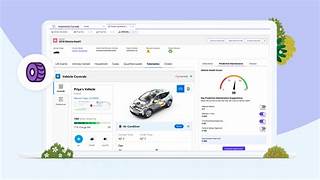
AI is revolutionizing BI by transforming it from a retrospective tool into a proactive, real-time decision-making engine.

AI Startup Sierra

Bret Taylor, the board chairman of OpenAI, appeared on CNBC’s “Squawk on the Street” to discuss his AI startup, Sierra, which he co-founded in March 2023. Sierra focuses on helping businesses build AI agents that can directly interact with customers, offering capabilities such as answering questions, automating processes, and performing tasks traditionally handled on websites. “This is how companies will offer a branded customer experience capable of having conversations and handling everything you can do on the website,” Taylor explained. Sierra is already valued at approximately $4 billion, and Taylor expressed enthusiasm for building a long-lasting enterprise. Commenting on the current “AI wave,” Taylor predicted the rise of at least 10 “meaningful” enterprise software companies and at least one trillion-dollar consumer company. He also touched on the ongoing discussion around tech regulation, emphasizing that Silicon Valley should focus more on empowering smaller tech companies rather than breaking up larger ones. He noted that the U.S. remains a top destination for entrepreneurs due to its access to capital and relatively light regulation, warning that overly complex regulations could inadvertently strengthen incumbents by increasing challenges for startups. Taylor’s role at OpenAI became more prominent after CEO Sam Altman was temporarily ousted in November. Since then, he has been guiding the company through a period of transition, including leadership changes and its shift toward becoming a for-profit entity. Like Related Posts Who is Salesforce? Who is Salesforce? Here is their story in their own words. From our inception, we’ve proudly embraced the identity of Read more Salesforce Unites Einstein Analytics with Financial CRM Salesforce has unveiled a comprehensive analytics solution tailored for wealth managers, home office professionals, and retail bankers, merging its Financial Read more AI-Driven Propensity Scores AI plays a crucial role in propensity score estimation as it can discern underlying patterns between treatments and confounding variables Read more Tectonic’s Successful Salesforce Track Record Salesforce Technology Services Integrator – Tectonic has successfully delivered Salesforce in a variety of industries including Public Sector, Hospitality, Manufacturing, Read more

Read More
gettectonic.com