Data Labeling: Essential for Machine Learning and AI
Data labeling is the process of identifying and tagging data samples, essential for training machine learning (ML) models. While it can be done manually, software often assists in automating the process. Data labeling is critical for helping machine learning models make accurate predictions and is widely used in fields like computer vision, natural language processing (NLP), and speech recognition.
How Data Labeling Works
The process begins with collecting raw data, such as images or text, which is then annotated with specific labels to provide context for ML models. These labels need to be precise, informative, and independent to ensure high-quality model training.
For instance, in computer vision, data labeling can tag images of animals so that the model can learn common features and correctly identify animals in new, unlabeled data. Similarly, in autonomous vehicles, labeling helps the AI differentiate between pedestrians, cars, and other objects, ensuring safe navigation.
Why Data Labeling is Important
Data labeling is integral to supervised learning, a type of machine learning where models are trained on labeled data. Through labeled examples, the model learns the relationships between input data and the desired output, which improves its accuracy in real-world applications. For example, a machine learning algorithm trained on labeled emails can classify future emails as spam or not based on those labels.
It’s also used in more advanced applications like self-driving cars, where the model needs to understand its surroundings by recognizing and labeling various objects like roads, signs, and obstacles.
Applications of Data Labeling
- Natural Language Processing (NLP): Data labeling helps in tasks like sentiment analysis and chatbots by tagging specific text elements for better understanding.
- Computer Vision: It assists in interpreting digital images and videos by adding relevant tags.
- Speech Recognition: Labels are applied to audio segments, helping models recognize speech patterns and convert audio to text.
The Data Labeling Process
Data labeling involves several key steps:
- Data Collection: Gathering raw data and preparing it for the model.
- Data Tagging: Applying labels to give context to the data.
- Quality Assurance (QA): Ensuring labels are accurate, which forms the “ground truth” for the model.
- Training: The ML model learns patterns based on the labeled data.
Errors in labeling can negatively affect the model’s performance, so many organizations adopt a human-in-the-loop approach to involve people in quality control and improve the accuracy of labels.
Data Labeling vs. Data Classification vs. Data Annotation
- Data Labeling: Predefined labels are applied to data points to give the ML model context for learning.
- Data Classification: Data is categorized, often in a binary manner, like classifying emails as spam or not.
- Data Annotation: Offers deeper context by tagging data points with detailed information, especially useful in fields like autonomous driving.
Types of Data Labeling
- Image and Video Labeling: Used in applications like healthcare diagnostics and object recognition in self-driving cars.
- Text Labeling: Helps models understand human language for applications like NLP.
- Audio Labeling: Used in speech recognition to tag audio segments.
Benefits and Challenges
Benefits:
- Accurate Predictions: Properly labeled data helps models make better predictions.
- Data Usability: Labeled data enhances the model’s ability to focus on relevant features.
- Increased Innovation: Streamlining data labeling frees up workers for more creative tasks.
Challenges:
- Cost: Labeling, especially manual, can be expensive.
- Time and Effort: Manual labeling takes longer than automated processes.
- Human Error: Incorrect labeling can lead to poor model performance.
Methods of Data Labeling
Companies can label data through various methods:
- Crowdsourcing: Using a third-party platform for large-scale labeling.
- Outsourcing: Hiring freelance workers to label data.
- In-House: Using internal staff for the task.
- Synthetic Labeling: Generating new data from existing datasets to increase efficiency.
Each organization must choose a method that fits its needs, based on factors like data volume, staff expertise, and budget.
The Growing Importance of Data Labeling
As AI and ML become more pervasive, the need for high-quality data labeling increases. Data labeling not only helps train models but also provides opportunities for new jobs in the AI ecosystem.
For instance, companies like Alibaba, Amazon, Facebook, Tesla, and Waymo all rely on data labeling for applications ranging from e-commerce recommendations to autonomous driving.
Looking Ahead Data tools are becoming more sophisticated, reducing the need for manual work while ensuring higher data quality. As data privacy regulations tighten, businesses must also ensure that labeling practices comply with local, state, and federal laws.
In conclusion, labeling is a crucial step in building effective machine learning models, driving innovation, and ensuring that AI systems perform accurately across a wide range of applications.

Who is Salesforce? Here is their story in their own words. From our inception, we've proudly embraced the identity of Read more

Salesforce Marketing Cloud Transactional Emails are immediate, automated, non-promotional messages crucial to business operations and customer satisfaction, such as order Read more

Salesforce has unveiled a comprehensive analytics solution tailored for wealth managers, home office professionals, and retail bankers, merging its Financial Read more
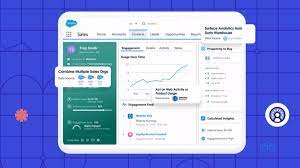
AI plays a crucial role in propensity score estimation as it can discern underlying patterns between treatments and confounding variables Read more