
Transparency Archives - gettectonic.com - Page 2
AI evolves with tools like Agentforce and Atlas

How the Atlas Reasoning Engine Powers Agentforce

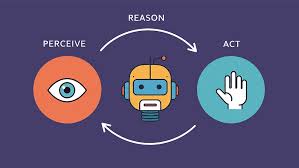
Autonomous, proactive AI agents form the core of Agentforce. But how do they operate? A closer look reveals the sophisticated mechanisms driving their functionality. The rapid pace of AI innovation—particularly in generative AI—continues unabated. With today’s technical advancements, the industry is swiftly transitioning from assistive conversational automation to role-based automation that enhances workforce capabilities. For artificial intelligence (AI) to achieve human-level performance, it must replicate what makes humans effective: agency. Humans process data, evaluate potential actions, and execute decisions. Equipping AI with similar agency demands exceptional intelligence and decision-making capabilities. Salesforce has leveraged cutting-edge developments in large language models (LLMs) and reasoning techniques to introduce Agentforce—a suite of ready-to-use AI agents designed for specialized tasks, along with tools for customization. These autonomous agents can think, reason, plan, and orchestrate with remarkable sophistication, marking a significant leap in AI automation for customer service, sales, marketing, commerce, and beyond. Agentforce: A Breakthrough in AI Reasoning Agentforce represents the first enterprise-grade conversational automation solution capable of proactive, intelligent decision-making at scale with minimal human intervention. Several key innovations enable this capability: Additional Differentiators of Agentforce Beyond the Atlas Reasoning Engine, Agentforce boasts several distinguishing features: The Future of Agentforce Though still in its early stages, Agentforce is already transforming businesses for customers like Wiley and Saks Fifth Avenue. Upcoming innovations include: The Third Wave of AI Agentforce heralds the third wave of AI, surpassing predictive AI and copilots. These agents don’t just react—they anticipate, plan, and reason autonomously, automating entire workflows while ensuring seamless human collaboration. Powered by the Atlas Reasoning Engine, they can be deployed in clicks to revolutionize any business function. The era of autonomous AI agents is here. Are you ready? Like Related Posts Who is Salesforce? Who is Salesforce? Here is their story in their own words. From our inception, we’ve proudly embraced the identity of Read more Salesforce Marketing Cloud Transactional Emails Salesforce Marketing Cloud Transactional Emails are immediate, automated, non-promotional messages crucial to business operations and customer satisfaction, such as order Read more Salesforce Unites Einstein Analytics with Financial CRM Salesforce has unveiled a comprehensive analytics solution tailored for wealth managers, home office professionals, and retail bankers, merging its Financial Read more AI-Driven Propensity Scores AI plays a crucial role in propensity score estimation as it can discern underlying patterns between treatments and confounding variables Read more

Read More
designing ai agents the right way

Designing AI Agents the Right Way

Designing AI agents effectively involves a structured approach, starting with defining clear objectives and aligning them with business needs. It also requires careful data collection and preparation, selecting the right machine learning models, and crafting a robust architecture. Finally, building in feedback loops and prioritizing continuous monitoring and improvement are crucial for success.  Here’s a more detailed breakdown: 1. Define Objectives and Purpose: 2. Data Collection and Preparation: 3. Choose the Right Models and Tools: 4. Design the Agent Architecture: 5. Training and Refinement: 6. Testing and Validation: 7. Deployment, Monitoring, and Iteration: 8. Key Considerations: By following these principles, you can design AI agents that are not only effective but also robust, scalable, and aligned with your business objectives. Like Related Posts Who is Salesforce? Who is Salesforce? Here is their story in their own words. From our inception, we’ve proudly embraced the identity of Read more Salesforce Unites Einstein Analytics with Financial CRM Salesforce has unveiled a comprehensive analytics solution tailored for wealth managers, home office professionals, and retail bankers, merging its Financial Read more AI-Driven Propensity Scores AI plays a crucial role in propensity score estimation as it can discern underlying patterns between treatments and confounding variables Read more Tectonic’s Successful Salesforce Track Record Salesforce Technology Services Integrator – Tectonic has successfully delivered Salesforce in a variety of industries including Public Sector, Hospitality, Manufacturing, Read more

Read More
Patient Misidentification

Patient Misidentification

Patient Misidentification: A Costly Challenge for Healthcare—Can the MATCH IT Act Help? The Growing Problem of Patient Misidentification Patient misidentification poses serious risks to interoperability, patient safety, and privacy. Without widely adopted industry standards for patient matching, errors and duplicate records persist, leading to medical mistakes, denied claims, and increased costs. The Financial and Clinical Toll Research highlights the staggering financial impact of patient misidentification: Beyond financial losses, misidentification leads to: Legislative Action: The MATCH IT Act To address these issues, U.S. Representatives Mike Kelly (R-Pa.) and Bill Foster (D-Ill.) reintroduced the Patient Matching and Transparency in Certified Health IT (MATCH IT) Act in March 2025 (originally proposed in February 2024). Key Goals of the MATCH IT Act Industry Support The Patient ID Now coalition—including AHIMA, HIMSS, CHIME, and Intermountain Health—endorses the MATCH IT Act, calling it a critical step toward:✔ Reducing misidentification errors✔ Improving patient privacy✔ Strengthening interoperability The Road Ahead If passed, the MATCH IT Act could transform patient matching by:✅ Setting clear standards for health IT systems✅ Reducing costly errors and claim denials✅ Enhancing patient safety and data exchange As healthcare embraces AI and digital transformation, standardized patient identification is more crucial than ever. Will this legislation be the solution the industry needs? Key Takeaway: Patient misidentification is a billion-dollar problem—but with structured policies like the MATCH IT Act, healthcare may finally see better accuracy, safety, and cost savings. Like Related Posts Who is Salesforce? Who is Salesforce? Here is their story in their own words. From our inception, we’ve proudly embraced the identity of Read more Salesforce Unites Einstein Analytics with Financial CRM Salesforce has unveiled a comprehensive analytics solution tailored for wealth managers, home office professionals, and retail bankers, merging its Financial Read more AI-Driven Propensity Scores AI plays a crucial role in propensity score estimation as it can discern underlying patterns between treatments and confounding variables Read more Tectonic’s Successful Salesforce Track Record Salesforce Technology Services Integrator – Tectonic has successfully delivered Salesforce in a variety of industries including Public Sector, Hospitality, Manufacturing, Read more
Read More
What is Einstein Used for in Salesforce?

Unlocking the Full Potential of Salesforce Einstein

Unlocking the Full Potential of Salesforce Einstein: A Strategic Guide Moving Beyond Basic AI Features While standard Einstein features provide value, the true competitive advantage comes from custom AI solutions tailored to your unique business processes. Here’s how leading organizations are pushing Einstein’s capabilities further: Custom AI Model Development Real-World Custom Implementations: Cross-Functional AI Strategy Department-Specific AI Roadmaps Team Key Use Cases Success Metrics Sales Deal stagnation alertsOptimal contact timing 20% reduction in stalled deals Service Case severity predictionAuto-routing 15% faster resolution Marketing Content engagement scoringChurn risk segmentation 30% higher campaign ROI Operations Inventory demand forecastingResource allocation 25% waste reduction Implementation Tip: Start with one high-impact department before enterprise rollout. Technical Implementation Framework Data Preparation Checklist Model Selection Guide Pro Tip: Use Einstein’s AutoML to test multiple approaches before custom development. Overcoming Adoption Challenges Trust-Building Playbook Skills Development Plan Advanced Integration Patterns Combine Einstein With: Example Architecture: Measuring AI Success Key Performance Indicators: Continuous Improvement Cycle: Getting Started with Advanced Einstein *”Companies that customize AI solutions see 3-5x greater ROI than those using only out-of-the-box features.”* – Forrester Research Transform your Einstein implementation from basic scoring to strategic advantage with tailored AI solutions. Like Related Posts Who is Salesforce? Who is Salesforce? Here is their story in their own words. From our inception, we’ve proudly embraced the identity of Read more Salesforce Marketing Cloud Transactional Emails Salesforce Marketing Cloud Transactional Emails are immediate, automated, non-promotional messages crucial to business operations and customer satisfaction, such as order Read more Salesforce Unites Einstein Analytics with Financial CRM Salesforce has unveiled a comprehensive analytics solution tailored for wealth managers, home office professionals, and retail bankers, merging its Financial Read more AI-Driven Propensity Scores AI plays a crucial role in propensity score estimation as it can discern underlying patterns between treatments and confounding variables Read more

Read More
Is the Future Agentic for ERP?

Agentic AI Explained

Agentic AI: Autonomous Intelligence for Dynamic Problem-Solving What Is Agentic AI? Agentic AI refers to artificial intelligence systems designed to operate autonomously, pursuing defined goals with minimal human oversight. Unlike traditional AI, which follows predefined rules, agentic AI learns, adapts, and makes independent decisions—functioning as a proactive “agent” rather than a reactive tool. Core Characteristics of Agentic AI Feature Description Autonomy Operates independently, making decisions without constant human input. Goal-Driven Behavior Actively pursues objectives, optimizing actions for efficiency and success. Adaptive Learning Continuously improves by processing new data and adjusting strategies. Complex Problem-Solving Handles multi-step challenges by analyzing context and long-term implications. Multi-Technique Integration Combines machine learning, generative AI, NLP, and reasoning models for advanced decision-making. Agentic AI vs. Traditional AI Aspect Traditional AI Agentic AI Decision-Making Follows predefined rules; requires human input. Makes autonomous decisions. Adaptability Limited learning capabilities. Continuously evolves based on experience. Task Scope Narrow, task-specific automation. Broad, goal-oriented problem-solving. Human Dependency High (needs supervision). Low (self-sufficient). Key Applications of Agentic AI 1. Customer Service 2. Business Intelligence 3. Software Development 4. Cybersecurity 5. Autonomous Systems The Future of Agentic AI Agentic AI represents a paradigm shift—moving beyond automation to proactive, self-improving intelligence. As these systems advance, they will:✔ Reduce operational costs by minimizing human oversight.✔ Enhance efficiency through dynamic adaptation.✔ Unlock new possibilities in healthcare, logistics, and scientific research. Challenges to Address: Final Thoughts Agentic AI is redefining how intelligent systems interact with the world—not just executing tasks, but strategizing, learning, and acting independently. Businesses adopting this technology will gain a competitive edge through smarter, faster, and more adaptive solutions. Like Related Posts Who is Salesforce? Who is Salesforce? Here is their story in their own words. From our inception, we’ve proudly embraced the identity of Read more Salesforce Unites Einstein Analytics with Financial CRM Salesforce has unveiled a comprehensive analytics solution tailored for wealth managers, home office professionals, and retail bankers, merging its Financial Read more AI-Driven Propensity Scores AI plays a crucial role in propensity score estimation as it can discern underlying patterns between treatments and confounding variables Read more Tectonic’s Successful Salesforce Track Record Salesforce Technology Services Integrator – Tectonic has successfully delivered Salesforce in a variety of industries including Public Sector, Hospitality, Manufacturing, Read more

Read More
More Cool AI Tools

Demystifying AI: Separating Fact from Fiction

1. The Consciousness Conundrum Myth: AI possesses human-like intelligence and consciousnessReality: Today’s AI, including advanced generative models, operates through pattern recognition—not genuine understanding. These systems process language statistically, without consciousness or emotional experience. Key Insight: AI can write poetry but doesn’t feel inspiration; it analyzes medical images without comprehending suffering. 2. The Future of Work Myth: AI will make human workers obsoleteReality: While AI automates 40-50% of repetitive tasks (McKinsey), it’s creating more jobs than it eliminates. The World Economic Forum predicts AI will generate 97 million new roles by 2025 focused on AI management, training, and ethical oversight. 3. The Bias Blind Spot Myth: AI delivers perfectly objective decisionsReality: A 2023 Stanford study found commercial AI systems exhibit demographic biases at alarming rates. For example: Solution: Regular bias audits and diverse training datasets are essential. 4. Emotional Intelligence Limits Myth: AI experiences human emotionsReality: While sentiment analysis achieves 85-90% accuracy in detecting emotions from text (MIT Tech Review), these systems simulate empathy without experiencing it—like a sophisticated mood ring. 5. The AGI Mirage Myth: Superintelligent AI is imminentReality: Current narrow AI excels at specific tasks but lacks the generalized reasoning of a five-year-old. OpenAI’s GPT-4 scores ~158 on IQ tests (human average: 100), yet fails at basic physical reasoning that toddlers master. 6. Transparency Spectrum Myth: All AI decisions are unexplainableReality: Tools like LIME and SHAP now visualize how models weigh factors in: Emerging Standard: The EU AI Act mandates explainability for high-risk applications. 7. Cost Realities Myth: AI implementation requires massive investmentReality: Cloud-based AI services now offer: 8. The Creativity Gap Myth: AI can replace human ingenuityReality: While AI generates plausible ideas, humans dominate in: 9. The Human-AI Partnership Myth: AI systems are autonomousReality: Every successful AI implementation requires: 10. ROI Realities Myth: AI guarantees business successReality: A 2024 Gartner survey found only 53% of AI projects move past pilot stage. Success factors include: Moving Forward Wisely Understanding these realities helps organizations: “The greatest danger of artificial intelligence isn’t that it will rebel against us, but that we’ll attribute superhuman capabilities to what is ultimately sophisticated pattern matching.”—Adapted from Pedro Domingos, “The Master Algorithm” Like Related Posts Who is Salesforce? Who is Salesforce? Here is their story in their own words. From our inception, we’ve proudly embraced the identity of Read more Salesforce Unites Einstein Analytics with Financial CRM Salesforce has unveiled a comprehensive analytics solution tailored for wealth managers, home office professionals, and retail bankers, merging its Financial Read more AI-Driven Propensity Scores AI plays a crucial role in propensity score estimation as it can discern underlying patterns between treatments and confounding variables Read more Tectonic’s Successful Salesforce Track Record Salesforce Technology Services Integrator – Tectonic has successfully delivered Salesforce in a variety of industries including Public Sector, Hospitality, Manufacturing, Read more

Read More
Why Domain-Specific AI Models Are Outperforming Generic LLMs in Enterprise Applications

Mastering AI Agents: From Basics to Multi-Agent Systems

AI agents represent one of the most transformative trends in artificial intelligence, potentially surpassing the impact of next-generation foundation models. As Andrew Ng highlighted: “AI agent workflows will drive massive progress this year—perhaps even more than new foundation models. This is a critical trend for anyone in AI to watch.” What Are AI Agents? AI agents are autonomous entities powered by large language models (LLMs) that can: They represent a shift from passive AI (providing information) to active AI (executing tasks). For example: Why AI Agents Matter Key Components of an AI Agent Building a Multi-Agent System Multi-agent architectures outperform single-agent approaches by distributing tasks. Example workflow: Performance Boost: Challenges & Future Directions Conclusion AI agents are redefining automation, offering unprecedented efficiency and problem-solving capabilities. While challenges remain, their potential to revolutionize industries—from finance to healthcare—is undeniable. Ready to explore AI agents? Start building today. Like Related Posts Who is Salesforce? Who is Salesforce? Here is their story in their own words. From our inception, we’ve proudly embraced the identity of Read more Salesforce Unites Einstein Analytics with Financial CRM Salesforce has unveiled a comprehensive analytics solution tailored for wealth managers, home office professionals, and retail bankers, merging its Financial Read more AI-Driven Propensity Scores AI plays a crucial role in propensity score estimation as it can discern underlying patterns between treatments and confounding variables Read more Tectonic’s Successful Salesforce Track Record Salesforce Technology Services Integrator – Tectonic has successfully delivered Salesforce in a variety of industries including Public Sector, Hospitality, Manufacturing, Read more

Read More

GDPR Compliance Checklist for US Companies

The GDPR is a comprehensive data privacy law from the EU, designed to enhance data protection and give individuals greater control over their personal information. Non-compliance with the GDPR can result in substantial fines, reaching up to 4% of global revenue or €20 million, depending on the severity of the violation.

Read More
gettectonic.com